 |
 Amateur Radio Weekly – Issue 142
 14 January 2017 | by
Winter Field Day should bring two worlds together
Deliberately stepping away from a comfortable home operating position to practice ham radio in poor conditions is not an idea too many amateurs find appealing, yet it is a situation that radio amateurs should be familiar with before it actually happens.
Off Grid Ham
5 Reasons to get an Amateur Radio (Ham) License
Amateur (Ham) radio is a service and a hobby. People use it every day as a means of communication around town and around the world.
Average Guy Tech
My TenTec Eagle sounds better than my Elecraft KX3
The KX3 is more fatiguing to listen to than the Eagle because it presents more noise in the audio.
Ham Radio QRP
Remote Ham Radio operation through a Raspberry Pi
I set up remote operation on my ham radio through a Wifi network, over a VPN, and around the world using a Raspberry Pi.
Standard Thoughts
Why even good antennas need good coax cable
The difference is noticeably audible and can bee seen in the spectrum.
Bonito Newsroom
WxBot: An APRS weather forecast auto responder
Send an APRS message to WXBOT and receive back a weather forecast for your location.
KI6WJP
PyQSO: A logging tool for Amateur Radio Operators on Linux
PyQSO provides a simple graphical interface through which users can manage information about the contacts/QSOs they make with other operators on the air.
CHRISTIANJACOBS.UK
hamClock for OS X
Displays your local time, UTC time, and ID timer.
ShiftKeySoftware
Video
The Art of Making a Nixie Tube
I discovered nixie tubes in 2011 and since then, I’ve devoted all my time to studies of nixie tubes and its manufacturing processes.
Dalibor Farny
120 watt foldable solar panel setup
Today we setup the PowerFilm 120 Watt Foldable Solar Panel and Sunsaver 10 solar controller in the field and made a contact on the 20 meter band.
YouTube
How to use a multimeter
Digital multimeters are indispensable tools that allow you to analyze circuits and diagnose problems in your electrical design.
SparkFun Electronics
Ham Radio smartphone
An Android smartphone with built in VHF or UHF transmitter.
HamRadioConcepts
Amateur Radio Weekly is curated by Cale Mooth K4HCK. Sign up free to receive ham radio's most relevant news, projects, technology and events by e-mail each week at http://www.hamweekly.com.
630m Thriving
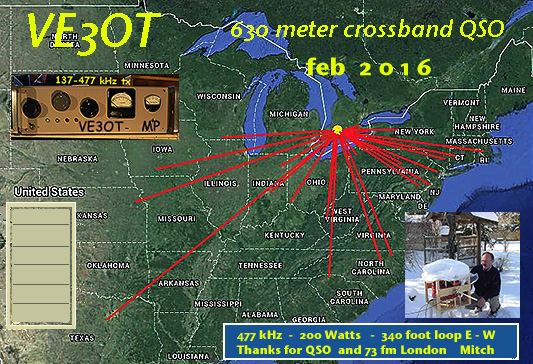
Fritz Raab, the ARRL's 600-Meter Experimental Group coordinator, recently released his quarterly report, with highlights being reported in the ARRL News.
In it, Raab tell us:
"Band activity has been very high, and there are often more WSPR stations — more than 110 stations — on 472 kHz than on 80 or 160 meters!"
"In a sense, 630 meters has become a mainstream ham band, in spite of not being authorized in the US".
"The paths to VK and JA have remained good. This was not the case last year, so perhaps it is an effect of the coming solar minimum. Many reports have been received for WSPR transmissions with relatively moderate power. There have been a number of polar and high-latitude openings to LA2XPA from North America. Many long-time operators say that they have never seen anything like that. There have also been a number of openings from the US west coast deep into Europe."
The ARRL's full report can be read here.
Also touched upon was the upcoming "Midwinter 630m Operating Activity", the second such February event ... this year to be held February 4-5th.
Stay tuned here for further details. Highlighting the event will be another opportunity for U.S. and Canadian amateurs to attempt CW crossband contacts with six Canadian stations operating on specified frequencies in the 630m band. Canadians will listen for callers on specified frequencies within the 160, 80 and 40m bands. Previous events have had much success, with Transcontinental and Transpacific CW crossband contacts being completed by many stations.
A detailed schedule of frequencies and times will be published as the event draws closer but in the meantime, see if you can keep February 4th (Saturday night) open for some 630m crossband excitement!
Steve McDonald, VE7SL, is a regular contributor to AmateurRadio.com and writes from British Columbia, Canada. Contact him at [email protected].
See You In The ‘Linc’!
 |
| courtesy: WØVLZ |
The Antique Wireless Association's (AWA) annual roll-out of the Linc Cundall (W2LC) Memorial CW Contest takes place this coming Wednesday and Saturday. Activity starts at 2300Z on both days and continues for 24 hours. Linc Cundall was one of the the three founders of the AWA, back in 1952, along with Bruce Kelley (W2ICE) and George Batterson (W2GB).
Over the decades, the AWA has been one of the chief proponents for the preservation of radio history, in all of its forms ... including the restoration and active use of vintage radio equipment. The AWA celebrates vintage amateur radio with several 'on-air' events each year including the premier event, the '1929 Bruce Kelley Contest'.
The annual 'Linc' CW party encourages all amateurs, including non-AWA members, to utilize their pre-1950 radios ... those designed and built before 1950 as well as homebrew reproductions of popular pre-'50's designs. Participants are encouraged to call 'CQ AWA AWA' on 160, 80 or 40m CW... suggested 'window frequencies' are outlined in the rules page which can be found here. Active discussion and promotion regarding the upcoming event may be found on Yahoo's AWAGroup reflector.
If you have an older radio (receiver or transmitter) that qualifies ... this includes any of your WWII surplus! ... hopefully you can spark-up for the event.
No older gear? Don't let that stop you from getting in on the fun, as modern rigs can be used as well, with the object of working as many AWA vintage stations as possible ... no excuses!
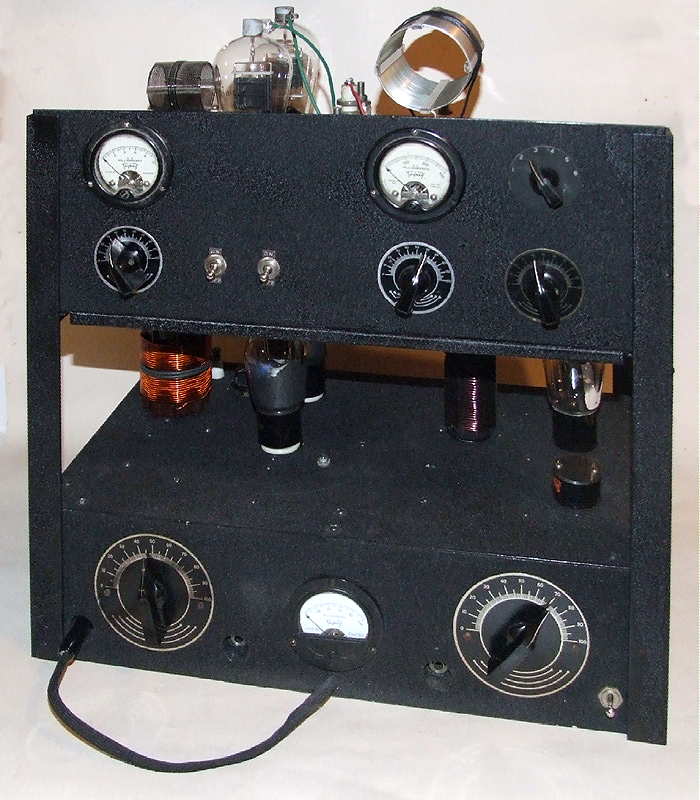
The above photo illustrates some of the beautiful homebrew work being done by Neil, WØVLZ, who was the chief inspiration for my own involvement in '29 activity. It will be hard to visit his amazing pages without getting hooked, so you have been warned!
My present 'vintage on-air' shelf beside the main operating table has been occupied now for several years by my Tri-Tet-Ten but with the likely demise of further 10m work, it's time to exchange it with something that I can use more often.
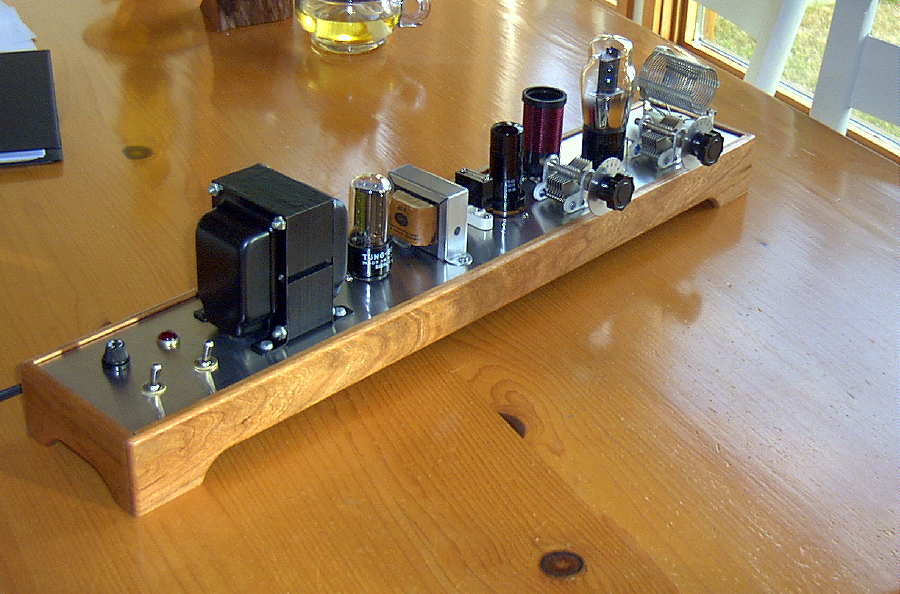
I hope to set up my homebrew 'Longfeller', shown below, inspired by the original design published in July, 1946 QST. My Longfeller operates on all bands from 160-10m, and should be ideal for the upcoming activity nights.
Please do consider getting on the air for this annual event, no matter what radios that you have ... it's especially nice to hear the sounds of these old radios that are fast disappearing. Events like this keep these great sounds alive.
See you in the 'Linc'!
Steve McDonald, VE7SL, is a regular contributor to AmateurRadio.com and writes from British Columbia, Canada. Contact him at [email protected].
See You In The ‘Linc’!
|
| courtesy: WØVLZ |
The Antique Wireless Association's (AWA) annual roll-out of the Linc Cundall (W2LC) Memorial CW Contest takes place this coming Wednesday and Saturday. Activity starts at 2300Z on both days and continues for 24 hours. Linc Cundall was one of the the three founders of the AWA, back in 1952, along with Bruce Kelley (W2ICE) and George Batterson (W2GB).
Over the decades, the AWA has been one of the chief proponents for the preservation of radio history, in all of its forms ... including the restoration and active use of vintage radio equipment. The AWA celebrates vintage amateur radio with several 'on-air' events each year including the premier event, the '1929 Bruce Kelley Contest'.
The annual 'Linc' CW party encourages all amateurs, including non-AWA members, to utilize their pre-1950 radios ... those designed and built before 1950 as well as homebrew reproductions of popular pre-'50's designs. Participants are encouraged to call 'CQ AWA AWA' on 160, 80 or 40m CW... suggested 'window frequencies' are outlined in the rules page which can be found here. Active discussion and promotion regarding the upcoming event may be found on Yahoo's AWAGroup reflector.
If you have an older radio (receiver or transmitter) that qualifies ... this includes any of your WWII surplus! ... hopefully you can spark-up for the event.
No older gear? Don't let that stop you from getting in on the fun, as modern rigs can be used as well, with the object of working as many AWA vintage stations as possible ... no excuses!
The above photo illustrates some of the beautiful homebrew work being done by Neil, WØVLZ, who was the chief inspiration for my own involvement in '29 activity. It will be hard to visit his amazing pages without getting hooked, so you have been warned!
My present 'vintage on-air' shelf beside the main operating table has been occupied now for several years by my Tri-Tet-Ten but with the likely demise of further 10m work, it's time to exchange it with something that I can use more often.
I hope to set up my homebrew 'Longfeller', shown below, inspired by the original design published in July, 1946 QST. My Longfeller operates on all bands from 160-10m, and should be ideal for the upcoming activity nights.
Please do consider getting on the air for this annual event, no matter what radios that you have ... it's especially nice to hear the sounds of these old radios that are fast disappearing. Events like this keep these great sounds alive.
See you in the 'Linc'!
Steve McDonald, VE7SL, is a regular contributor to AmateurRadio.com and writes from British Columbia, Canada. Contact him at [email protected].
ICQ Podcast Episode 228 – TKEY-1 Mini Touch Key
In this episode, Martin M1MRB / W9ICQ is joined by Leslie Butterfield G0CIB, Edmund Spicer M0MNG and Matthew Nassau M0NJX to discuss the latest Amateur / Ham Radio news. Colin M6BOY rounds up the news in brief, and this episode’s features: TKEY-1 Mini Touch Key.
We would like to thank our monthly and annual donors for keeping the podcast advert free. To donate, please visit - http://www.icqpodcast.com/donate
- Ham Radio Club Public Interaction
- 5 MHz for Ireland
- New Australian 60m Band
- Ofcom Changes Callsign Policy
- Management Restructure at HRD
- 10 GHz for 3 Euros
- FCC Rejects Amplifier Waiver Request
- Canada’s Special Sesquicentennial Prefixes
Colin Butler, M6BOY, is the host of the ICQ Podcast, a weekly radio show about Amateur Radio. Contact him at [email protected].
ICQ Podcast Episode 228 – TKEY-1 Mini Touch Key
In this episode, Martin M1MRB / W9ICQ is joined by Leslie Butterfield G0CIB, Edmund Spicer M0MNG and Matthew Nassau M0NJX to discuss the latest Amateur / Ham Radio news. Colin M6BOY rounds up the news in brief, and this episode’s features: TKEY-1 Mini Touch Key.
We would like to thank our monthly and annual donors for keeping the podcast advert free. To donate, please visit - http://www.icqpodcast.com/donate
- Ham Radio Club Public Interaction
- 5 MHz for Ireland
- New Australian 60m Band
- Ofcom Changes Callsign Policy
- Management Restructure at HRD
- 10 GHz for 3 Euros
- FCC Rejects Amplifier Waiver Request
- Canada’s Special Sesquicentennial Prefixes
Colin Butler, M6BOY, is the host of the ICQ Podcast, a weekly radio show about Amateur Radio. Contact him at [email protected].
CW Filter for my FT-857D
Last year I decided that I wanted to learn and use CW. To that end, I enrolled and completed the CW Academy Level 1 class with the CW Ops group (http://www.cwops.org/cwacademy.html). I have 2 CW QSO’s under my belt and I need to get on the air and make some more. Ion preparation for that, I decided to get the 500Hz CW Filter to add to my FT-857D. The radio has two slots for optional filters. Looking online, it seems the filters for the FT-857D are getting harder to find. I found one on INRAD’s web site and ordered one. It came a few days later and sat on my desk for a couple days. being Saturday and getting some things done, I decided to install it. I found it’s really very easy to install this filter.
To start with, there are 7 screws that hold on the top cover of the radio. 2 on each side and 3 on the top. The labels are simply my way of remember where things go in the back of the radio while it’s in my portable rack.

After removing the cover the locations for the filters are in the back left corner, as shown in the lower left portion of the photo below.

An up close look.

The filter is pretty easy to orient. There are 3 pins on one and and 4 on the other so it’s hard to get it backwards. There was also a reminder from INRAD that the circuit board went down and the label faces up. Here is after the installation which is simply pressed in.

After the installation, I wanted to make sure it was recognized by the radio so I powered it in and looked at the filter menu option and the 500Hz filter showed up as option B.

Now all I have to do is get on the air! When I do that, I will try to remember to make a video demonstrating how the filter affects reception of CW signals.
If you have a FT-857(D) and would like a CW filter for it, you might put this project on your list. I can imagine a day when these filters are really hard to find!
73!
K5UNX


Wayne Patton, K5UNX, is a regular contributor to AmateurRadio.com and writes from Arkansas, USA. Contact him at [email protected].
 Ham Radio Deluxe |
 W5SWL Electronics |
 Ham Radio Prep |
 KB3IFH QSL Cards  Hip Ham Shirts  HamRadioAuctions HamRadioAuctions Reliance Antennas Reliance Antennas Enigma Shop Enigma Shop |  morseDX  Ni4L Antennas  R&L Electronics R&L Electronics antennas.us antennas.us QRV QRV |
- Matt W1MST, Managing Editor
