 |
 Upgrade to K1EL Winkeyer USB
 22 April 2017 | by
 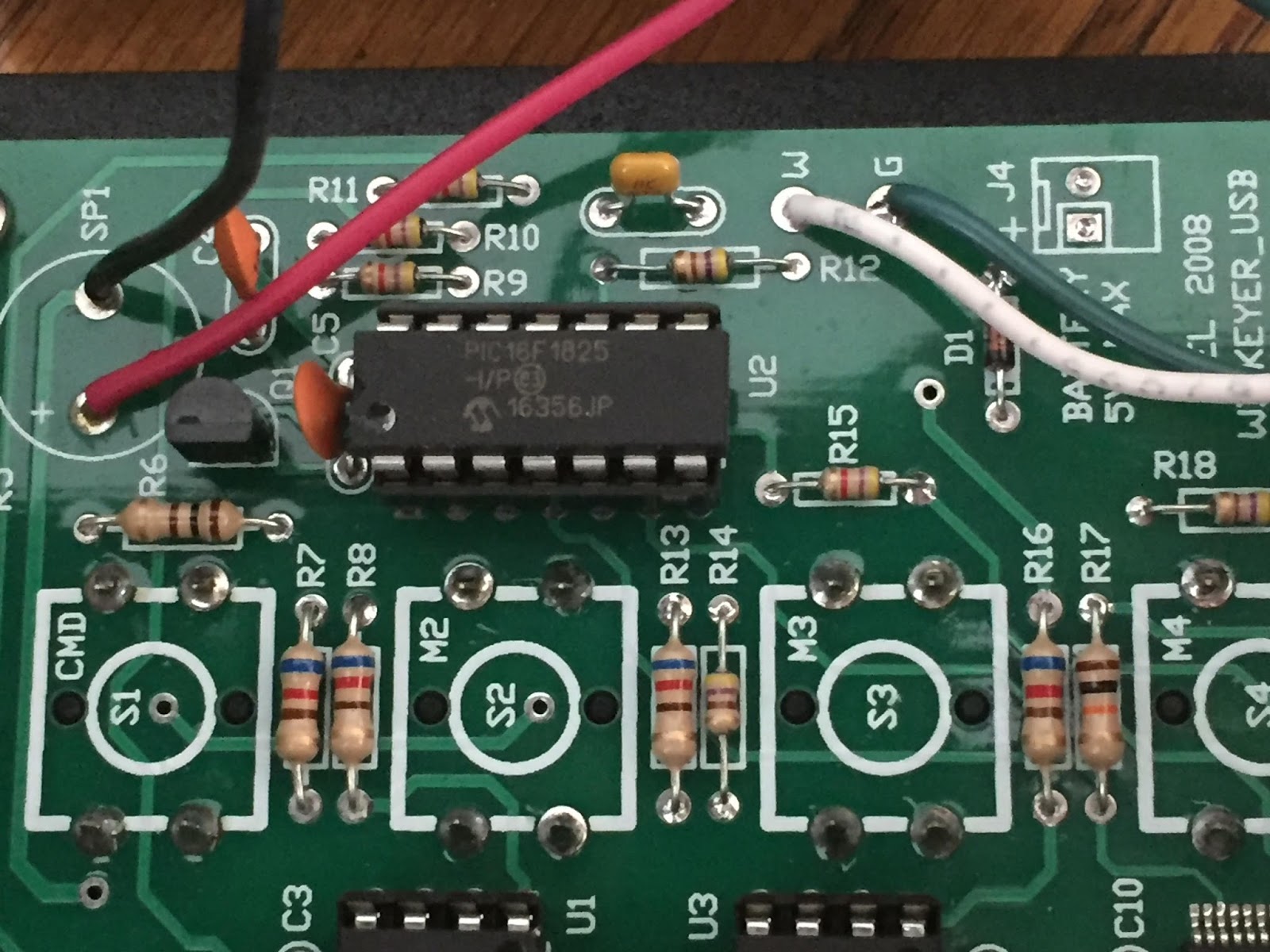 |
| New IC chip installed |
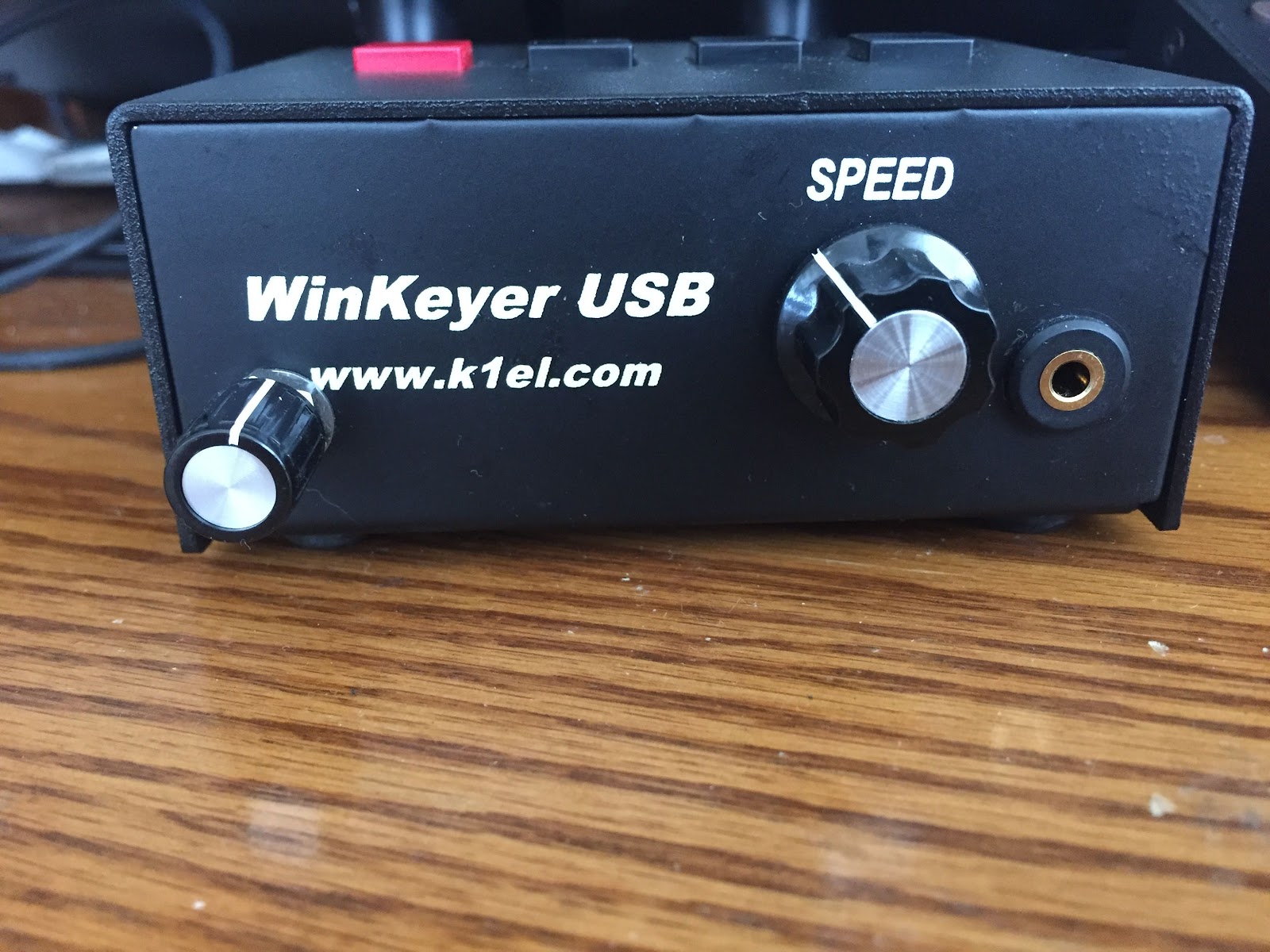 |
| With added volume and headphone jack |
Mike Weir, VE9KK, is a regular contributor to AmateurRadio.com and writes from New Brunswick, Canada. Contact him at [email protected].
Amateur Radio Weekly – Issue 155

Low-Cost 10 GHz SSB Receiver
This set-up should be capable of receiving the amateur radio transponder on the geostationary satellite Es’Hail 2 that is expected to be launched in early 2018.
AMSAT UK
FCC proposes huge fine on New York Police radio jammer
The FCC has proposed a fine of more than $400,000 on a Queens, New York, man who has admitted making unauthorized transmissions on New York City Police Department radio frequencies.
ARRL
A better way to put a PL-259 on RG-58 coax
A soldering technique that seems to simplify assembly of PL-259s with RG-58 cable.
KB6NU
Tracking North Korean Numbers
The announcements typically take between 5 to 10 minutes to read dependent on the number of digits passed.
K2DLS
How to survive the Total Solar Eclipse of 2017
We’re just 18 weeks away from the “Great American Total Solar Eclipse” that will darken skies across the continental U.S. on Aug. 21. Are you ready for it?
space.com
Apollo 16, 45th Anniversary Special Event
Apollo 16 was the first mission to visit the lunar highlands. John Young and Charles Duke spent 71 hours on the surface
NN4SA
Mastr 3 UHF Low Pass Filter Testing
One piece I see myself being able to use elsewhere is the final low-pass filters from the power amplifiers.
The Life of Kenneth
Morsum Magnificat available for free download
The Morse Magazine, otherwise known as “MM”, contained a vast amount of information and illustrations of interest to Morse operators.
Southgate
Packet Pad app
Packet Pad lets you view Packet Radio transmissions on your iOS device.
Packet Pad
Video
Locating HF Interference in the home
After walking around with a portable receiver and failing to find the source, all house power was turned off and the interference was gone. You won’t believe the eventual culprit!
YouTube
Installing A Mag Mount On A Fiberglass RV Roof
The Motorhome Ham Station starts to come along.
K6UDA Radio
Amateur Radio Weekly is curated by Cale Mooth K4HCK. Sign up free to receive ham radio's most relevant news, projects, technology and events by e-mail each week at http://www.hamweekly.com.
Capulin Mountain (W5N/SG-009) VHF SOTA
Joyce (K0JJW) and I were driving back to Colorado from Texas on Highway 87 that goes right past Capulin Mountain in the Capulin Volcano National Monument. Capulin is a dormant volcano with a large crater on top, a great place to visit if you ever in the area. Oh, and it’s a Summits On The Air (SOTA) peak, too (W5N/SG-009). Obviously, I thought it was a great opportunity to activate it for SOTA. There’s only one problem: this summit is out in the middle of nowhere so making some contacts on 2 meters was not going to be easy. (Yeah, I have been doing SOTA activations only on VHF.) In many locations, I just put out a call (or many calls) on 146.52 MHz and I eventually get my 4 QSOs to qualify for SOTA activation points. This works near populated areas and places where there is significant tourist traffic.
Capulin Mountain is in NE New Mexico, about 150 miles from Colorado Springs, 200 miles from Denver and about 190 miles to Albuquerque. These distances are all workable with a decent weak-signal station on 2 meters. But I was going to be operating at QRP power levels and a small 3-element yagi antenna. I concluded that this activation was still possible but it depended on getting some of the weak-signal VHF guys on the air so I had someone to work. So I put the word out to some of the VHF enthusiasts in the Rocky Mountain area asking for help. I received a good response which was encouraging so I published a schedule for Tuesday afternoon, starting at 19:30 UTC, 1:30 pm local.
The national monument is easy to access, just a few miles from the highway. I have an annual national parks pass, so we did not have to pay an entrance fee. This satellite photo of the monument, shows the crater and the access road that winds around it. The parking area is visible on the west side of the crater (zoom in).
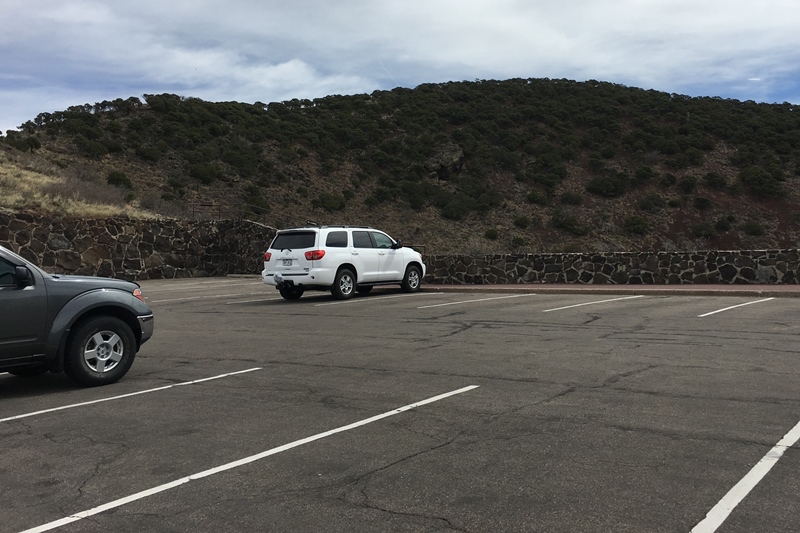
The parking lot is not within the SOTA activation zone, but an easy hike up the ridge got us to the summit. For VHF, I wanted to be as high as possible anyway with a 360-degree view. There is a trail that goes completely around the crater rim, also crossing the summit. It is a short hike on a paved trail, a bit steep in spots but nothing difficult. We did encounter some extremely annoying gnats that swarmed around us the entire time.
We got to the summit earlier than planned, around 17:30 UTC, started calling on 146.52 fm and 144.200 ssb without much luck. Finally, I caught WE7L in Elizabeth, CO (DM79) on 2m cw at 19:05 utc. He was weak but very readable. I think I was pointing the antenna a little too far east…later he came in stronger when I directed the antenna further west. After that I worked Arne N7KA (DM65) near Albuquerque and K9VSW (DM76) near Taos. Once I got my antenna zero’d in on K9VSW, I was able to work him on ssb. Some time later, I heard Lou K0RI calling from the Colorado Springs area. He was loud enough that I heard him off the side of the antenna, still pointed at Albuquerque. Lou was running 160w to a 17-element 2M5WL yagi at 75 feet.
| Time | Call | Band | Mode | Grid |
|---|---|---|---|---|
| 19:05z | WE7L | 144MHz | CW | DM79 |
| 19:10z | N7KA | 144MHz | CW | DM65 |
| 19:12z | K9VSW | 144MHz | CW | DM76 |
| 19:15z | K9VSW | 144MHz | SSB | DM76 |
| 19:53z | K0RI | 144MHz | SSB | DM78 |
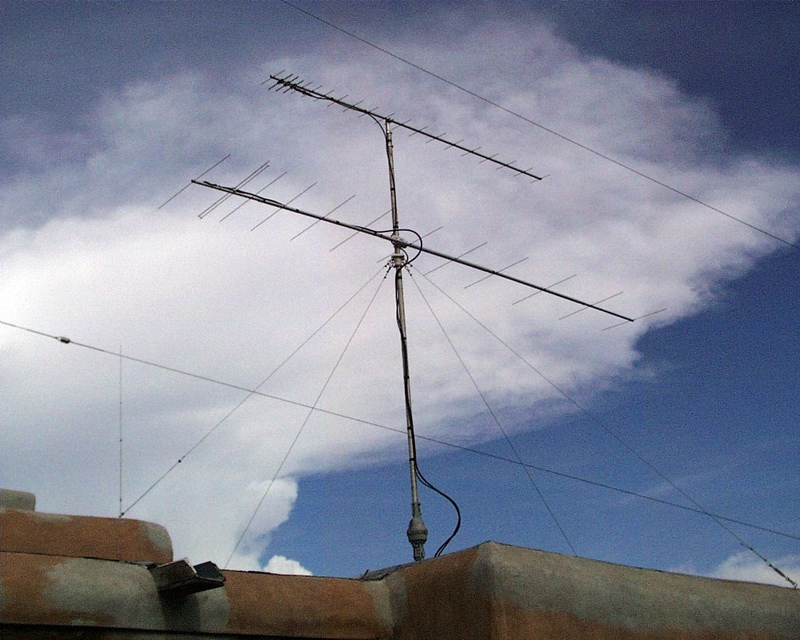
I heard some other stations but was not able to work them. The challenge was quite clear: most VHF enthusiasts are running 150W or more of RF power, while I had the FT-817 max’d out at 5W. This is quite an imbalance, easier for me to hear them than they could hear me. Clearly, cw saved the day, punching through with minimal signal levels.
My best DX for the day was N7KA at 229 miles. Actually, this is an all time best distance for me on 2m while doing a SOTA activation. I recently worked W9RM from Mount Herman at 170 miles and was pretty happy with that. We had signal to spare that day, so I figured I could do better. Also, I had previously worked 160 miles using FM between two Colorado 14ers. See
Pikes Peak to Mt Sneffels – 160 Miles.
I really, really, really appreciate the hams that got on the air to try and work me on Capulin. I could not have activated the summit without those skilled radio operators and their capable VHF stations.
73, Bob K0NR
The post Capulin Mountain (W5N/SG-009) VHF SOTA appeared first on The KØNR Radio Site.
Bob Witte, KØNR, is a regular contributor to AmateurRadio.com and writes from Colorado, USA. Contact him at [email protected].
Hunting For NDBs In CLE218
 |
| 'XX-344' - Abbotsford, BC |
This coming weekend will see another CLE challenge. This time the hunting grounds will be: 335.0 - 349.9 kHz.
For those unfamiliar with this monthly activity, a 'CLE' is a 'Co-ordinated Listening Event', as NDB DXers around the world focus their listening time on one small slice of the NDB spectrum.
A nice challenge in this one is to hear the Abbotsford NDB, 'XX', on 344 kHz. 'XX' is located about 40 miles east of Vancouver International (YVR) and a few miles SW of the Abbotsford Airport, YVR's alternate for those foggy winter nights. 'XX' is a 500-watter and is well heard, having been logged from the east coast to Hawaii and is a good propagation indicator for listeners in eastern North America. Look for 'XX' on 344.404 kHz with your receiver in the CW mode.
When tuning for NDBs, put your receiver in the CW mode and listen for the NDB's CW identifier, repeated every few seconds. With your receiver in the CW mode, listen for U.S. NDB identifiers approximately 1 kHz higher or lower than the published transmitted frequency since these beacons are tone-modulated with a 1020 Hz tone approximately.
For example, 'AA' in Fargo, MN, transmits on 365 kHz and its upper sideband CW identifier is tuned at 366.025 kHz while its lower sideband CW ident can be tuned at 363.946 kHz. Its USB tone is actually 1025 Hz while its LSB tone is 1054 Hz.
Often, one sideband will be much stronger than the other so if you don't hear the first one, try listening on the other sideband.
Canadian NDBs normally have an USB tone only, usually very close to 400 Hz. They also have a long dash (keydown) following the CW identifier.
All NDBs heard in North America will be listed in the RNA database (updated daily) while those heard in Europe may be found in the REU database. Beacons heard outside of these regions will be found in the RWW database.
From CLE organizer Brian Keyte, G3SIA, comes the usual 'heads-up':
Hello all
Our 218th Co-ordinated Listening Event is less than a week away.
Just a normal CLE using a busy range of frequencies which usually attracts a lot of interest.
First-timers' CLE logs will also be very welcome, as always.
Days: Friday 21 April - Monday 24 April
Times: Start and end at midday, your LOCAL time
Range: 335.0 - 349.9 kHz
Please join us wherever you are - just log the NDBs you can identify
having their nominal frequencies in the range (it includes 335 kHz
but not 350 kHz) and any UNIDs that you come across there too.
We last concentrated on these frequencies for CLE200 in Nov. 2015
when 55 of us joined in.
73
Brian
----------------------------------------------------------
From: Brian Keyte G3SIA ndbcle'at'gmail.com
Location: Surrey, SE England (CLE coordinator)
----------------------------------------------------------
(Reminder: You could use any one remote receiver for your loggings,
stating its location and owner - with their permission if required.
A remote listener may NOT also use another receiver, whether local or
remote, to obtain further loggings for the same CLE).
These listening events serve several purposes. They:
- determine, worldwide, which beacons are actually in service and on-the-air so the online database can be kept up-to-date
- determine, worldwide, which beacons are out-of-service or have gone silent since the last CLE covering this range
- will indicate the state of propagation conditions at the various participant locations
- will give you an indication of how well your LF/MF receiving system is working
- give participants a fun yet challenging activity to keep their listening skills honed
Final details can be found at the NDB List website, and worldwide results, for every participant, will be posted there a few days after the event. If you are a member of the ndblist Group, results will also be e-mailed and posted there.
The very active Yahoo ndblist Group is a great place to learn more about the 'Art of NDB DXing' or to meet other listeners in your region. There is a lot of good information available there and new members are always very welcome. As well, you can follow the results of other CLE participants from night to night as propagation is always an active topic of discussion.
If you are contemplating getting started on 630m, listening for NDBs is an excellent way to test out your receive capabilities as there are several NDBs located near this part of the spectrum.
You need not be an ndblist member to participate in the CLEs and all reports, no matter how small, are of much value to the organizers.
'First-time' logs are always VERY welcome!
Reports may be sent to the ndblist or e-mailed to either myself or CLE co-ordinator, Brian Keyte (G3SIA), whose address appears above.
Please ... give the CLE a try ... then let us know what NDB's can be heard from your location! Your report can then be added to the worldwide database to help keep it up-to-date.
Good hunting!
Steve McDonald, VE7SL, is a regular contributor to AmateurRadio.com and writes from British Columbia, Canada. Contact him at [email protected].
Hunting For NDBs In CLE218
|
| 'XX-344' - Abbotsford, BC |
This coming weekend will see another CLE challenge. This time the hunting grounds will be: 335.0 - 349.9 kHz.
For those unfamiliar with this monthly activity, a 'CLE' is a 'Co-ordinated Listening Event', as NDB DXers around the world focus their listening time on one small slice of the NDB spectrum.
A nice challenge in this one is to hear the Abbotsford NDB, 'XX', on 344 kHz. 'XX' is located about 40 miles east of Vancouver International (YVR) and a few miles SW of the Abbotsford Airport, YVR's alternate for those foggy winter nights. 'XX' is a 500-watter and is well heard, having been logged from the east coast to Hawaii and is a good propagation indicator for listeners in eastern North America. Look for 'XX' on 344.404 kHz with your receiver in the CW mode.
When tuning for NDBs, put your receiver in the CW mode and listen for the NDB's CW identifier, repeated every few seconds. With your receiver in the CW mode, listen for U.S. NDB identifiers approximately 1 kHz higher or lower than the published transmitted frequency since these beacons are tone-modulated with a 1020 Hz tone approximately.
For example, 'AA' in Fargo, MN, transmits on 365 kHz and its upper sideband CW identifier is tuned at 366.025 kHz while its lower sideband CW ident can be tuned at 363.946 kHz. Its USB tone is actually 1025 Hz while its LSB tone is 1054 Hz.
Often, one sideband will be much stronger than the other so if you don't hear the first one, try listening on the other sideband.
Canadian NDBs normally have an USB tone only, usually very close to 400 Hz. They also have a long dash (keydown) following the CW identifier.
All NDBs heard in North America will be listed in the RNA database (updated daily) while those heard in Europe may be found in the REU database. Beacons heard outside of these regions will be found in the RWW database.
From CLE organizer Brian Keyte, G3SIA, comes the usual 'heads-up':
Hello all
Our 218th Co-ordinated Listening Event is less than a week away.
Just a normal CLE using a busy range of frequencies which usually attracts a lot of interest.
First-timers' CLE logs will also be very welcome, as always.
Days: Friday 21 April - Monday 24 April
Times: Start and end at midday, your LOCAL time
Range: 335.0 - 349.9 kHz
Please join us wherever you are - just log the NDBs you can identify
having their nominal frequencies in the range (it includes 335 kHz
but not 350 kHz) and any UNIDs that you come across there too.
We last concentrated on these frequencies for CLE200 in Nov. 2015
when 55 of us joined in.
73
Brian
----------------------------------------------------------
From: Brian Keyte G3SIA ndbcle'at'gmail.com
Location: Surrey, SE England (CLE coordinator)
----------------------------------------------------------
(Reminder: You could use any one remote receiver for your loggings,
stating its location and owner - with their permission if required.
A remote listener may NOT also use another receiver, whether local or
remote, to obtain further loggings for the same CLE).
These listening events serve several purposes. They:
- determine, worldwide, which beacons are actually in service and on-the-air so the online database can be kept up-to-date
- determine, worldwide, which beacons are out-of-service or have gone silent since the last CLE covering this range
- will indicate the state of propagation conditions at the various participant locations
- will give you an indication of how well your LF/MF receiving system is working
- give participants a fun yet challenging activity to keep their listening skills honed
Final details can be found at the NDB List website, and worldwide results, for every participant, will be posted there a few days after the event. If you are a member of the ndblist Group, results will also be e-mailed and posted there.
The very active Yahoo ndblist Group is a great place to learn more about the 'Art of NDB DXing' or to meet other listeners in your region. There is a lot of good information available there and new members are always very welcome. As well, you can follow the results of other CLE participants from night to night as propagation is always an active topic of discussion.
If you are contemplating getting started on 630m, listening for NDBs is an excellent way to test out your receive capabilities as there are several NDBs located near this part of the spectrum.
You need not be an ndblist member to participate in the CLEs and all reports, no matter how small, are of much value to the organizers.
'First-time' logs are always VERY welcome!
Reports may be sent to the ndblist or e-mailed to either myself or CLE co-ordinator, Brian Keyte (G3SIA), whose address appears above.
Please ... give the CLE a try ... then let us know what NDB's can be heard from your location! Your report can then be added to the worldwide database to help keep it up-to-date.
Good hunting!
Steve McDonald, VE7SL, is a regular contributor to AmateurRadio.com and writes from British Columbia, Canada. Contact him at [email protected].
Our hats off to Bob Heil K9EID
If you follow Bob Heil’s show Ham Nation you’ve surely noticed that he’s taken a keen interest in reviving the Amateur Radio tradition of project building. Here is Ham Nation episode 292 where they walk through an easy pine board power supply project:
There’s no better way to learn than by doing. Luckily, we’re experiencing a real renaissance in kit building and general tinkering. It’s a great trend!
If you haven’t taken the time to subscribe to Ham Nation’s YouTube channel, head on over and check it out. It’s well worth your time!
Matt Thomas, W1MST, is the managing editor of AmateurRadio.com. Contact him at [email protected].
Out portable on the Lincolnshire Wolds
Following a recent presentation at the South Kesteven ARS by David Gordon G6ENN where he talked about his successful portable operating I was encouraged to constructed a simple dual band 'flower pot' antenna (design from VK2ZOI) using some RG58 coax and 25mm conduit.
 | |
| Completed 2m/70cm Flower Pot |
My previous attempts at portable operating have largely involved HF and slightly heavy equipment (my Yaesu FT-857D and Sealed Lead Acid batteries) but I decided this time to try VHF/UHF as we were going to one of the highest spots in the area. This allowed me to travel light just taking along a Baofeng UV-5R and the antenna sticking out of the rucksack.
 |
| Just setting off with Boris & Eddie |
Parking up in Donington on Bain we had a short 4 mile circular walk planned allowing the wife to collect a dozen geocaches along the way with a short detour at the top to visit RAF Stenigot. The walk climbs to the top of a hill, but it isn't a long ascent by any means or overly strenuous. The view back included the impressive Belmont Transmission Tower (just visible over my shoulder in the picture above) which before it was shortened in 2010 was reputably the tallest structure of its type in the world.
 | |
| Belmont Transmission Tower |
The Lincolnshire Wolds is the highest area on the East of England between Yorkshire and Kent and so there are many structures that take advantage of the elevation. In addition to Belmont we could see the Radar station at Wolds Top/Normanby Hill and Lincoln Cathedral in the distance, but we were interested in what was in front of us the remains of RAF Stenigot.
 | ||
| The tower at RAF Steingot, clearly visible as we climbed |
 | |
| View back |
After the Second World War, the site was retained and in 1959 it was upgraded to a communications relay site as part of the NATO ACE High system, which involved adding four tropospheric scatter dishes. The site was decommissioned in the late 1980s and was mostly demolished by 1996 but the toppled dishes remain.
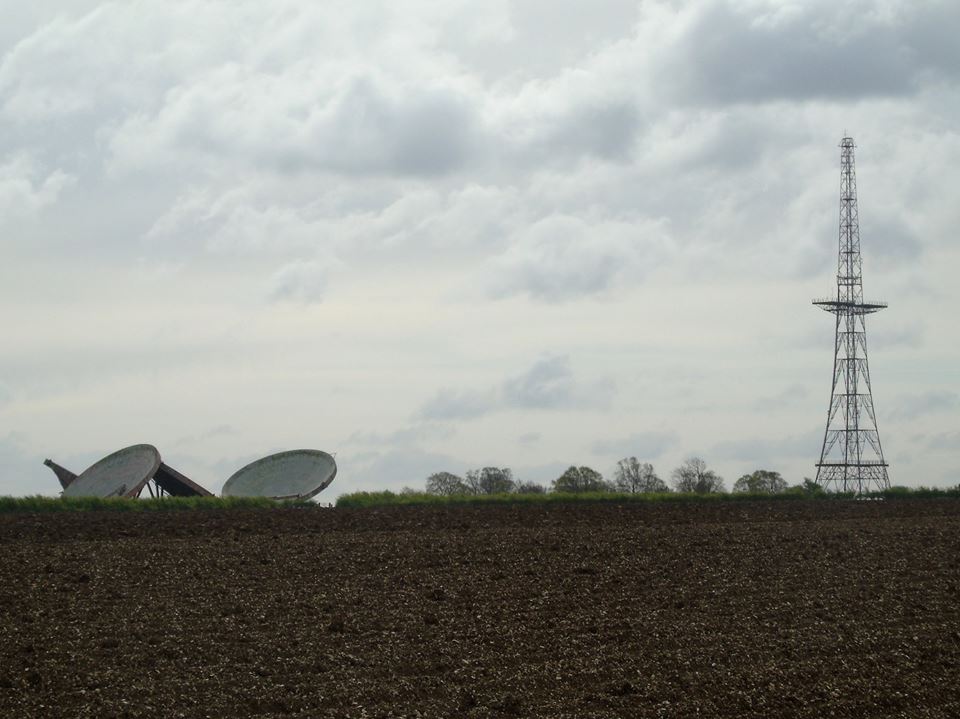 |
| View of RAF Stenigot |
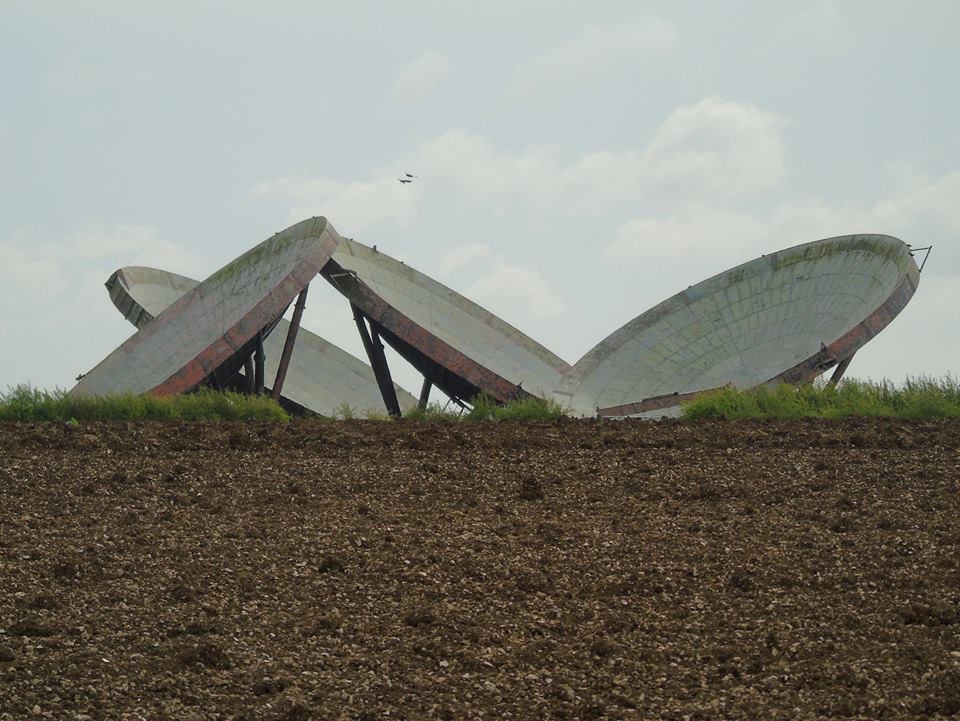 | |
| The dishes as seen from the footpath |
 |
| At the gate (locked) to the site |
 |
| View looking towards the radar tower |
 |
| Yours truly |
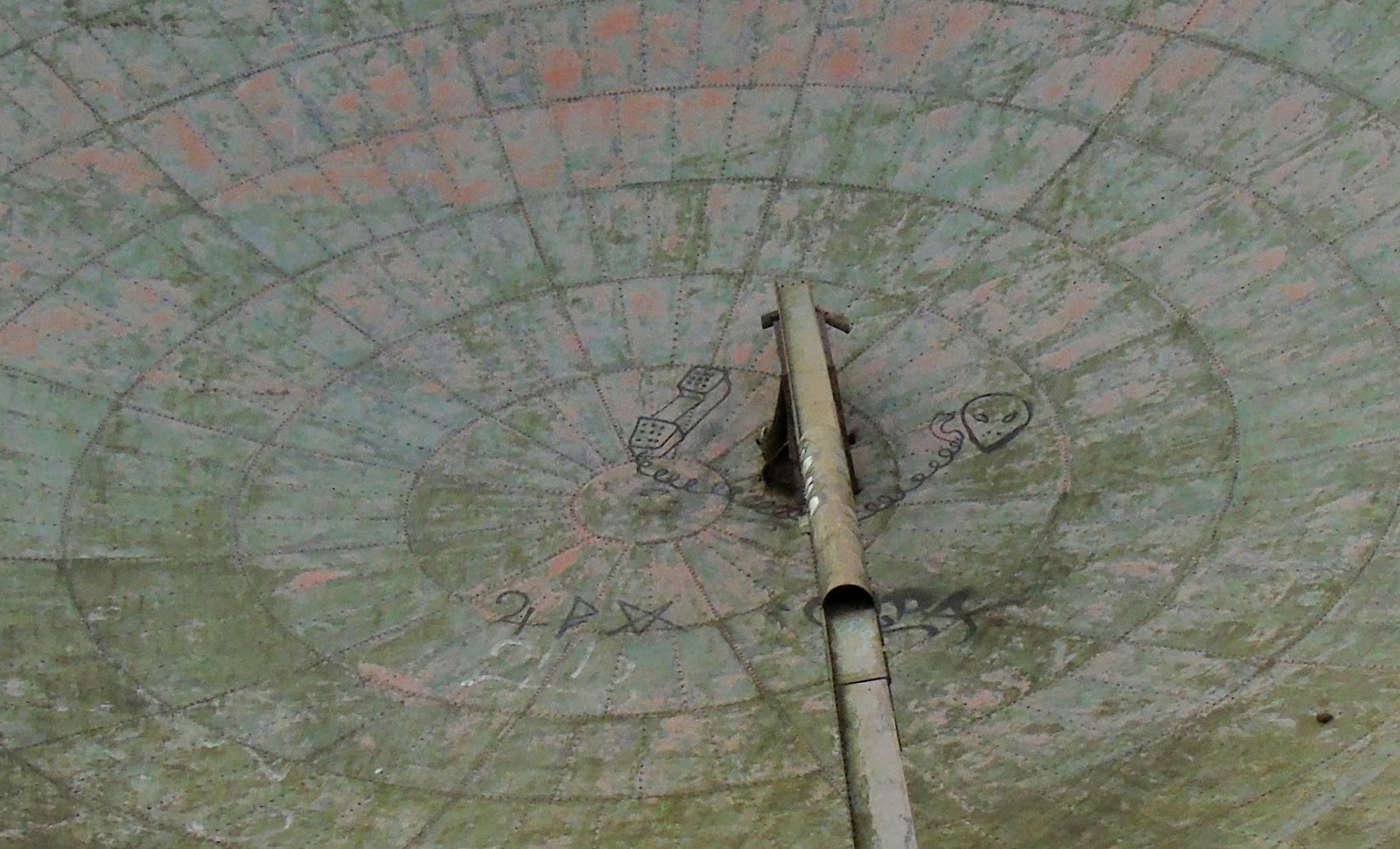 |
| ET Phone Home! |
 |
| CQ CQ M0NRD/P |
 |
| The Chain Home Radar tower |
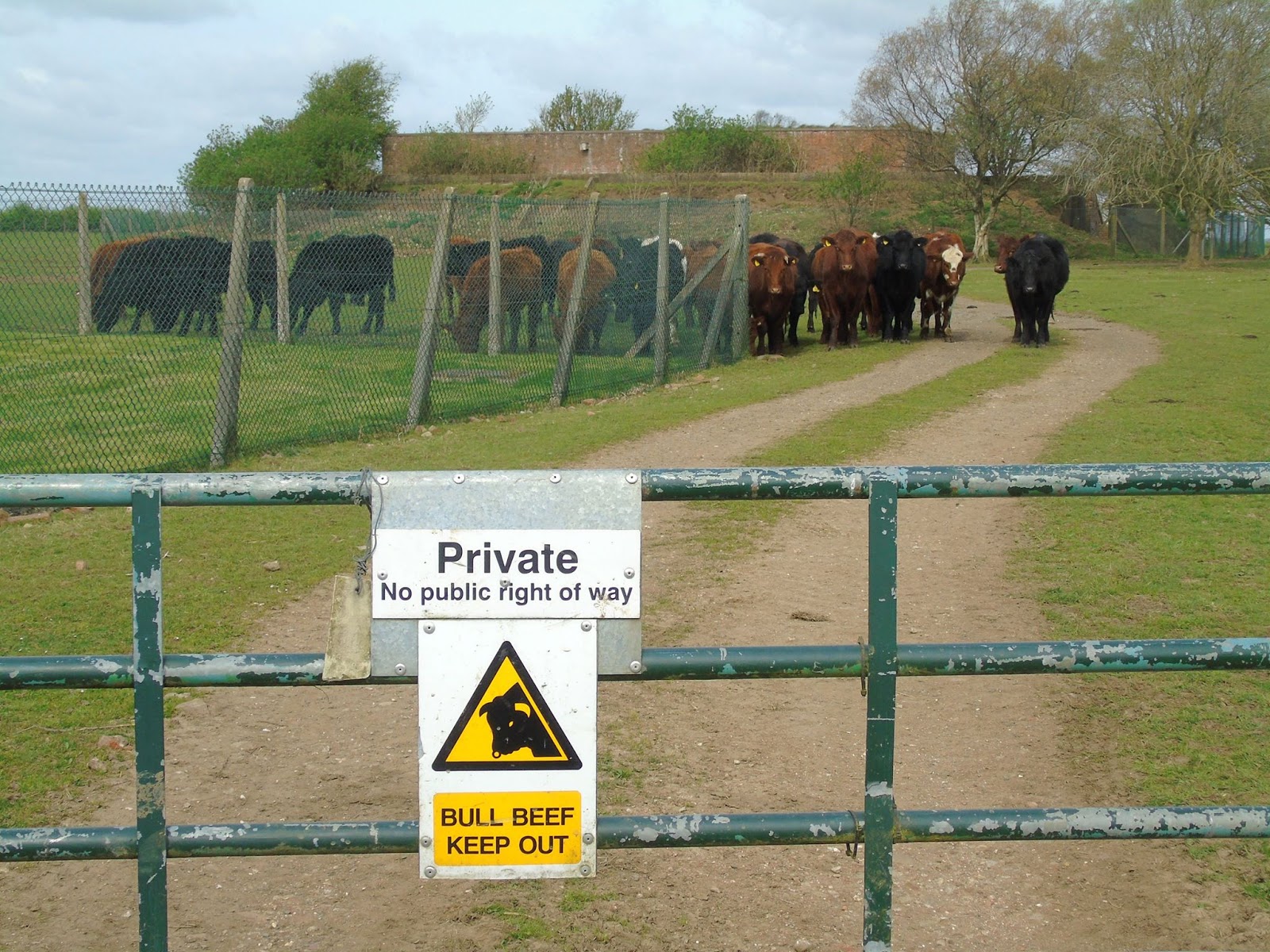 | |
| The "Heavy Mob" Security Patrol |
What's more you aren't far from the Lincolnshire Coast, so after our walk we went to Mablethorpe for the afternoon and fish and chips which were well received.
 |
| Eddie enjoying his fish and chips |
Andrew Garratt, MØNRD, is a regular contributor to AmateurRadio.com and writes from East Midlands, England. Contact him at [email protected].
 Ham Radio Deluxe |
 W5SWL Electronics |
 Ham Radio Prep |
 KB3IFH QSL Cards  Hip Ham Shirts  HamRadioAuctions HamRadioAuctions Reliance Antennas Reliance Antennas Enigma Shop Enigma Shop |  morseDX  Ni4L Antennas  R&L Electronics R&L Electronics antennas.us antennas.us QRV QRV |
- Matt W1MST, Managing Editor
