 |
 Heathkit has a new product out.
 21 July 2017 | by
  |
| The HM-1002 |
The spec's are below:
Power / SWR / Return Loss Accuracy:
- Meter: 2% nominal for Power, SWR, Return Loss.
- Sensors: Specs vary per sensor model. 5% or better when assembled as directed (no promises yet but we actually hope to beat 2%).
Frequency Accuracy & Precision: 6-digit precision, displaying 100Hz units with +/- 100Hz accuracy for MF, HF, 6 meters. Accuracy and precision always depend on sensor as well as meter. Frequency measurement requires a Heathkit® frequency-capable sensor; one is provided with each meter purchase.
Range: Frequency and power range depend on the sensor model(s) in use. With standard sensor, meter range is 50mW to 2kW power (17dBm to 63dBm) nominal, and 1.6MHz to 54MHz frequency nominal, when assembled as directed. (Subject to change) As with any power device, true SWR handling capability varies with sensor and depends on applied power level, and we will report lab results here as they are confirmed.
Front panel: Sensor/mode cluster, power cluster, SWR/return cluster, color graphic LCD display, calibrated DigilogTM bargraph, configurable visual alert.
Rear panel: Power jacks, sensor jacks, digital jack, audio annunciator.
Enclosure: Hardwood sides, plastic top/bottom, screwless top & front design with integral feet (patent pending).
Size: Approx. 2.2" high x 5.5" wide x 4.75" deep (6 x 14 x 12cm).
Weight: 1 lb (0.5 kg) nominal.
Included: All kit parts, any required assembly hex wrenches, one sensor, silver solder, one six-foot (2m) indoor sensor cable.
Compliance/legal: RoHS. Optional AC power adapter is UL approved. Patent pending.
AC power: Optional AC adapter accepts 90-130 VAC 60 Hz pure sine wave (North American standard), approx. 4 watts. 6ft (1.9m) power cord. (UK, Europe: 50 Hz compatible, but requires a different power adapter.*)
DC power: Accepts 12VDC nominal. Anderson PowerPole jack.
Tools required: Low-wattage soldering iron, wire cutters, needlenose pliers.
RFI/EMC & safety: No switching power supply brick. No mains line voltage (no 120VAC or 230VAC) in the box.
Accessories: (Coming soon) AC adapters, cables, more sensor models.
The cost for all this is 575.00 U.S.
Mike Weir, VE9KK, is a regular contributor to AmateurRadio.com and writes from New Brunswick, Canada. Contact him at [email protected].
On this day, 48 years ago

Larry Makoski, W2LJ, is a regular contributor to AmateurRadio.com and writes from New Jersey, USA. Contact him at [email protected].
On this day, 48 years ago
Larry Makoski, W2LJ, is a regular contributor to AmateurRadio.com and writes from New Jersey, USA. Contact him at [email protected].
RepeaterBook – A FREE Online Repeater Directory – ETH078

In this episode of the Everything Ham Radio Podcast, we talk with Garrett Dow, KD6KPC, the creator of RepeaterBook.com. RepeaterBook is a free online repeater directory that covers all of the US and Canada as well as several other countries around the world.
You can use RepeaterBook directly from its website, or through its app. You can find the app on IOS, Android and Kindle. RepeaterBook has done a great job on getting and maintaining the information of about 35,000 repeaters thank in a large part to about 95 admins that maintain the records in their assigned areas and from the ham community at large.
Make sure you give the interview a listen and check out the show notes.
Curtis Mohr, K5CLM, is the author/owner of Everything Ham Radio Blog and Youtube channel. Contact him at [email protected].
QRP from the Seashore
Judy and I drove over to the beach today. It was glorious! We got lots of sun, had a fantastic walk, and I operated in the CWT sprint for a few minutes. The highlight of the operating was making a beach-to-beach QRP QSO with K4KRW in North Carolina.

We drove over to Rye Harbor in the morning and had a picnic lunch as soon as we arrived. Then we walked a couple of miles along the beach. After this Judy lay down on the shore to soak up some sun. I rode my bike about a half mile inland to play radio for a while. I’d brought a kite, but there wasn’t quite enough wind to lift an antenna… so I went in search of some trees. I found a wildlife area not too far from the road. A narrow path leads through the woods to a platform overlooking a beautiful inland marsh.

Except for the heat (high 80s in the shade), the spot was perfect. I had a 30 foot tree nearby and set up the wire as a sloper. The little deck even had a chair and a bench to operate on. I ran the KX3 on 20 meters and right away worked IK0YVV in Italy. Marco gave me a 559. Then I worked Gilly, WA5SNL in Texas. He also gave me a 559.

After signing I tuned up to the QRP frequency. K4KRW, Richard, was calling CQ. To my delight, he was operating from a beach in North Carolina with a KX3 and an end-fed wire. But… his wire was lifted by a kite! After arriving home, I found an email from Richard with a photo of his operating position.

We had a great QSO and exchanged 559 signal reports. What a thrill to work another KX3 operator on the beach!
Now the CWT sprint had started and I joined in. I only operated for 10 minutes, because by now my shirt was drenched and I’d had enough of this heat. Here’s my log. I’ve changed it to reflect the other station’s QTH instead of the CWOPS member number used in the real exchange:
19 Jul-17 1840 14.028 IK0YVV CW 559 579 Italy Marco
19 Jul-17 1848 14.029 WA5SNL CW 559 579 TX Gilly
19 Jul-17 1854 14.060 K4KRW CW 559 559 NC Richard
19 Jul-17 1902 14.036 AA3B CW 599 599 PA Bud
19 Jul-17 1903 14.035 K9CT CW 599 599 IL Craig
19 Jul-17 1903 14.034 AD8J CW 599 599 NC John
19 Jul-17 1905 14.032 K4RO CW 599 599 TN Kirk
19 Jul-17 1907 14.026 N4ZZ CW 599 599 TN Doc
19 Jul-17 1908 14.036 N2SR CW 599 599 NJ Tom
19 Jul-17 1909 14.034 NR4M CW 599 599 VA Steve
With this I packed up and headed back to Rye Harbor. This is really a beautiful spot. Wild rugosa roses form a hedge along the road and fill the air with fragrance. Next to the harbor is a little state park with facilities. It’s a perfect place to spend the day.

Jim Cluett, W1PID, is a regular contributor to AmateurRadio.com and writes from New Hampshire, USA. Contact him at [email protected].
Chameleon CHA P Loop review
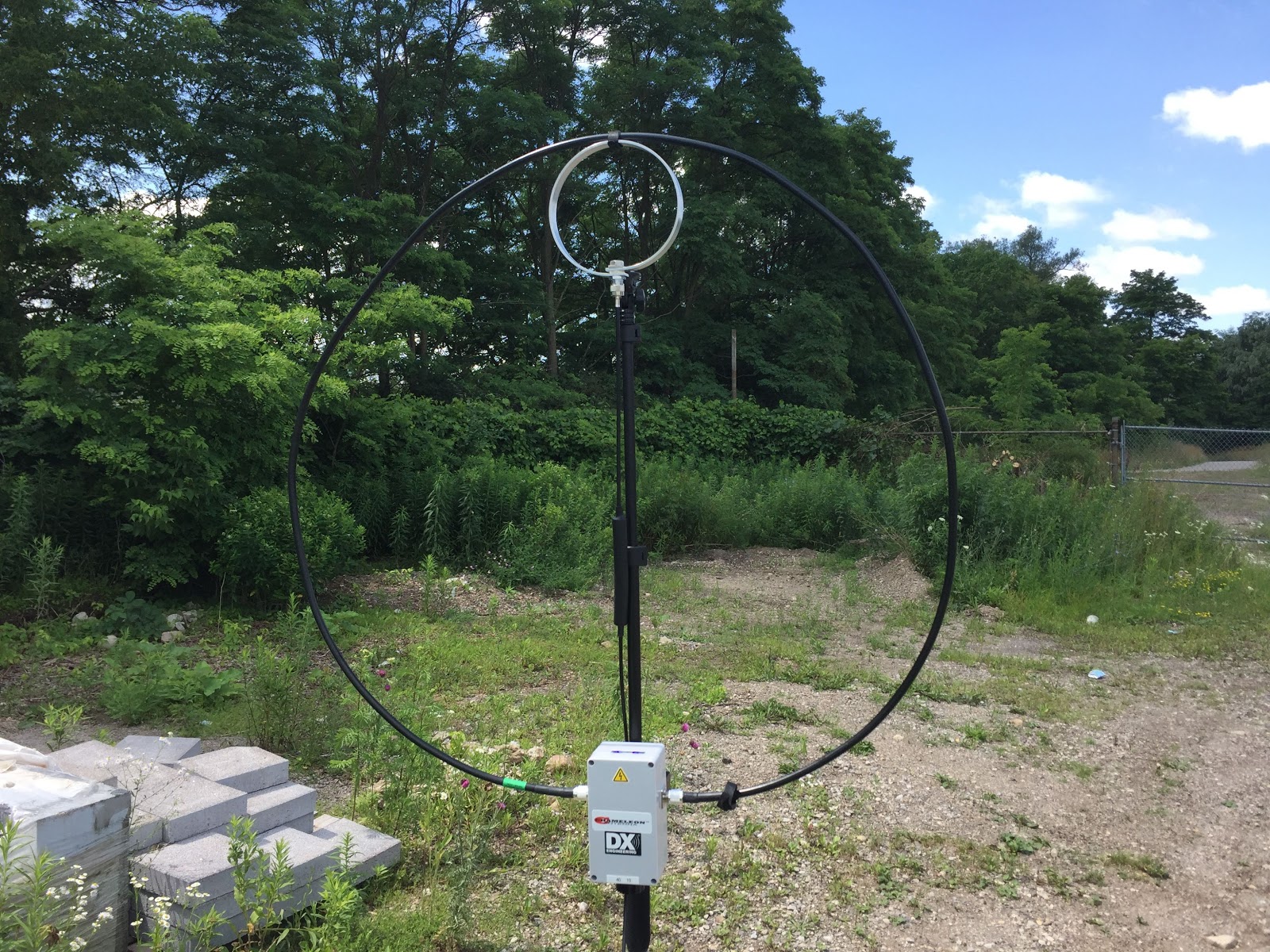 |
| The Chameleon CHA P Loop antenna |
- It has a very small foot print when setup and is very portable which makes it easy for traveling on foot or bike.
- In very little time you can get very proficient as setting up the antenna.
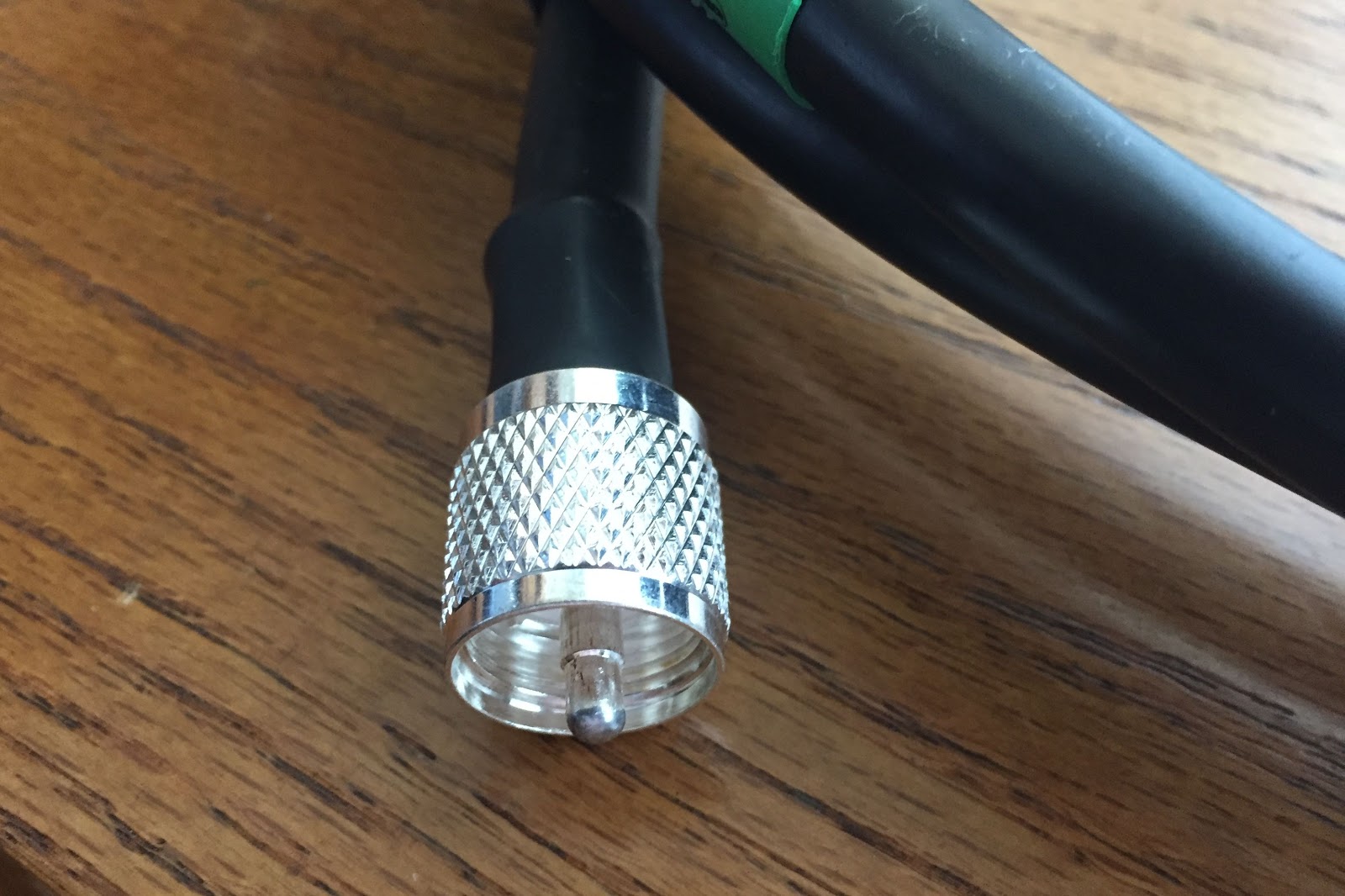
- The Loop (LMR-400) section and PL-259 connectors are very good quality and also they are fitted with heat shrink to add a nice water tight fit.
- The tuning box is sealed and weather proof just for those days when Murphy decides to bring some rain on your portable operations.
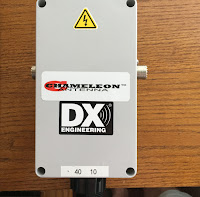
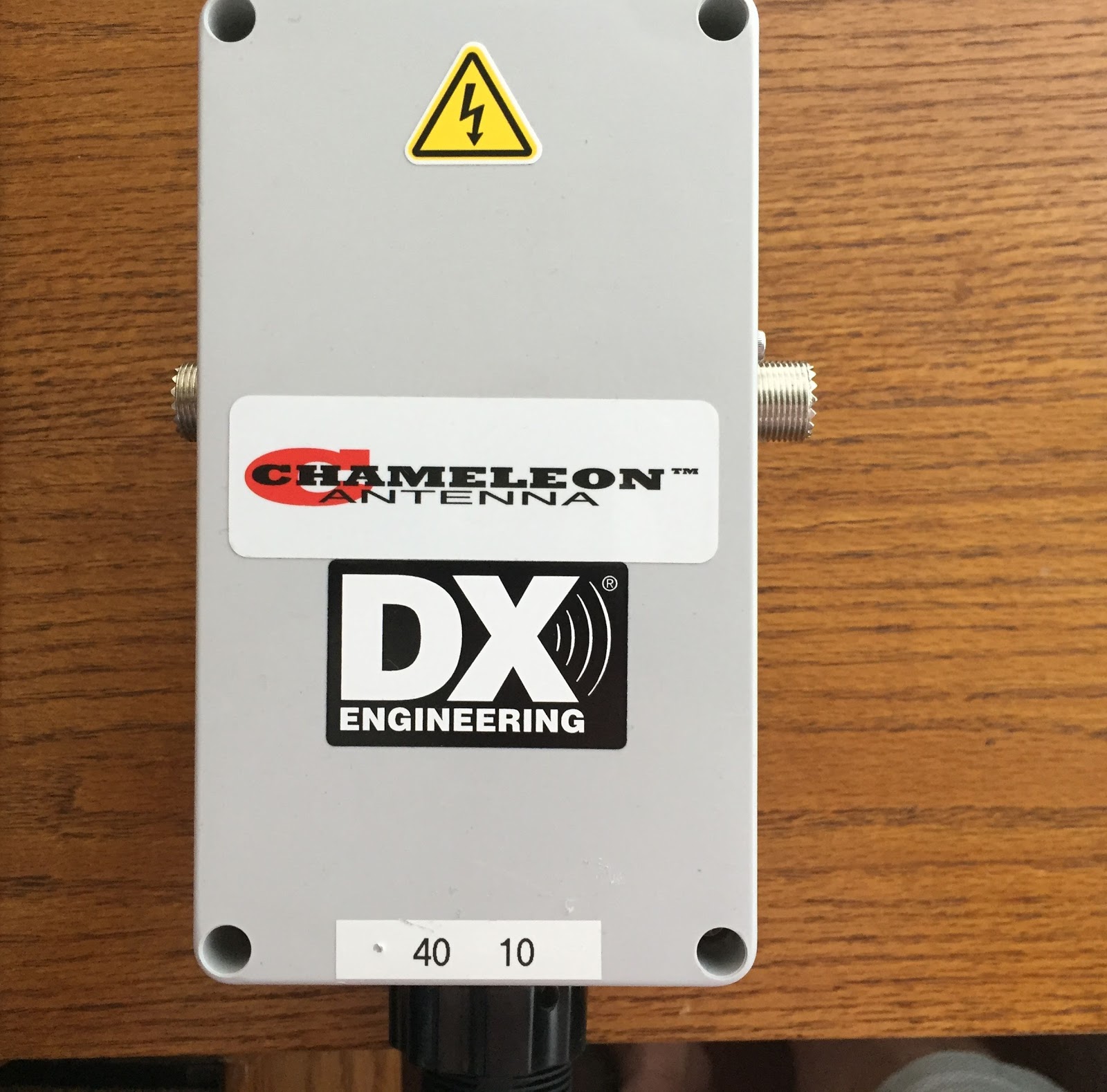
The tuning box - The 6:1 reduction gear makes tuning accurate and finding the peak noise level very fast. On the tuning box I added a 40-10 meter decal to remind me of tuning direction. Also I added the DX Engineering sticker as I am blown away with their customer service.
- I was able to successfully tune the loop to at least 1.3:1 on all bands wether is was 10m or 40 meters.
- Once the antenna was tuned to the lowest SWR and you move away from the antenna the SWR does not change. In the past with other loop antennas I have used the tuning know was on the top of the tuning box. Your hand being in the loop would affect the SWR and once your hand was removed the SWR would change and this made tuning frustrating. Other loops did not have the 6:1 gear reduction and finding the sweet spot and lowest SWR was a challenge. The slightest touch of the tuning knob threw the SWR off and often you would have to start over again.
- On the base of the handle is a 1/4-20 female thread that makes putting this antenna on a tripod a breeze. Other loops I have used do not have this and I had to make up a homemade mount.
- RG-58 with integrated RFI choke feed-line decouples the Faraday coupling loop from the radio which is essential to prevent SWR fluctuation while rotating the antenna or moving the coax cable around.
- If you have an HOA situation and getting on the air is a challenge this antenna could be the answer for you.
Quality PL-259 on Loop
- The coax that runs from the antenna to the rig is only 12 feet and longer would had been better but that is my humble opinion. In all fairness the other portable loops I have own I had the same issue. Now Chameleon does offer coax with the RF choke in a 50 foot length for 65.00.
- The telescoping mast seems a bit delicate and could if your not careful become damaged making the antenna unless until it's replaced.
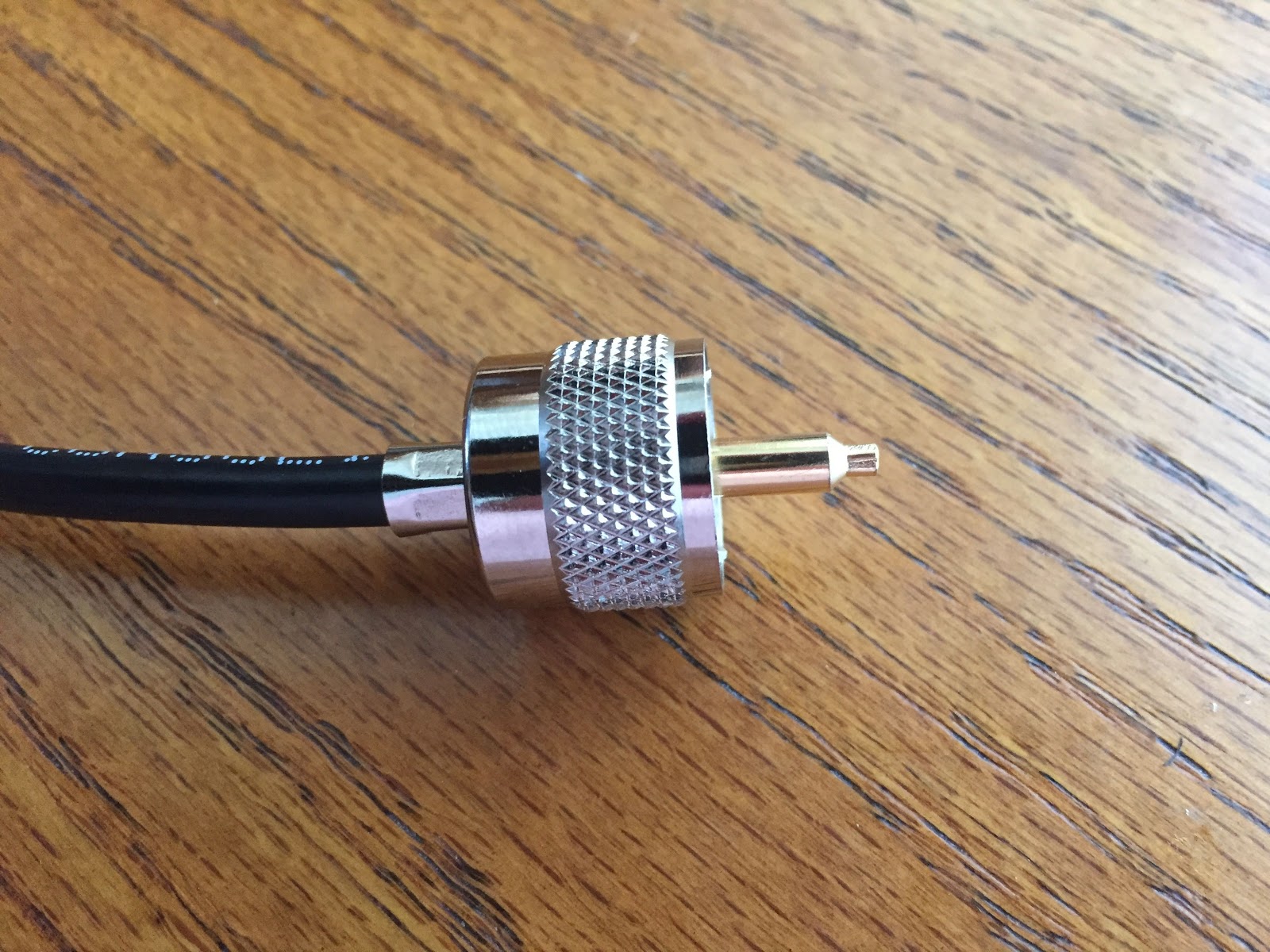
- I noticed right away the PL-259 connectors on the feed line are the crimp type and look of low grade quality. In my opinion this makes for a very weak point in the antennas construction. The loop section has quality grade PL-259 but this was skipped with the feed line.
Crimped PL-259 - The carry bag it comes with is defective right off the self and admitted so by Chameleon. I'm not going to go into detail about that here but you can read my post about it HERE.
Mike Weir, VE9KK, is a regular contributor to AmateurRadio.com and writes from New Brunswick, Canada. Contact him at [email protected].
Chameleon CHA P Loop review
|
| The Chameleon CHA P Loop antenna |
- It has a very small foot print when setup and is very portable which makes it easy for traveling on foot or bike.
- In very little time you can get very proficient as setting up the antenna.
- The Loop (LMR-400) section and PL-259 connectors are very good quality and also they are fitted with heat shrink to add a nice water tight fit.
- The tuning box is sealed and weather proof just for those days when Murphy decides to bring some rain on your portable operations.
The tuning box - The 6:1 reduction gear makes tuning accurate and finding the peak noise level very fast. On the tuning box I added a 40-10 meter decal to remind me of tuning direction. Also I added the DX Engineering sticker as I am blown away with their customer service.
- I was able to successfully tune the loop to at least 1.3:1 on all bands wether is was 10m or 40 meters.
- Once the antenna was tuned to the lowest SWR and you move away from the antenna the SWR does not change. In the past with other loop antennas I have used the tuning know was on the top of the tuning box. Your hand being in the loop would affect the SWR and once your hand was removed the SWR would change and this made tuning frustrating. Other loops did not have the 6:1 gear reduction and finding the sweet spot and lowest SWR was a challenge. The slightest touch of the tuning knob threw the SWR off and often you would have to start over again.
- On the base of the handle is a 1/4-20 female thread that makes putting this antenna on a tripod a breeze. Other loops I have used do not have this and I had to make up a homemade mount.
- RG-58 with integrated RFI choke feed-line decouples the Faraday coupling loop from the radio which is essential to prevent SWR fluctuation while rotating the antenna or moving the coax cable around.
- If you have an HOA situation and getting on the air is a challenge this antenna could be the answer for you.
Quality PL-259 on Loop
- The coax that runs from the antenna to the rig is only 12 feet and longer would had been better but that is my humble opinion. In all fairness the other portable loops I have own I had the same issue. Now Chameleon does offer coax with the RF choke in a 50 foot length for 65.00.
- The telescoping mast seems a bit delicate and could if your not careful become damaged making the antenna unless until it's replaced.
- I noticed right away the PL-259 connectors on the feed line are the crimp type and look of low grade quality. In my opinion this makes for a very weak point in the antennas construction. The loop section has quality grade PL-259 but this was skipped with the feed line.
Crimped PL-259 - The carry bag it comes with is defective right off the self and admitted so by Chameleon. I'm not going to go into detail about that here but you can read my post about it HERE.
Mike Weir, VE9KK, is a regular contributor to AmateurRadio.com and writes from New Brunswick, Canada. Contact him at [email protected].
 Ham Radio Deluxe |
 W5SWL Electronics |
 Ham Radio Prep |
 KB3IFH QSL Cards  Hip Ham Shirts  HamRadioAuctions HamRadioAuctions Reliance Antennas Reliance Antennas Enigma Shop Enigma Shop |  morseDX  Ni4L Antennas  R&L Electronics R&L Electronics antennas.us antennas.us QRV QRV |
- Matt W1MST, Managing Editor
