 |
 LHS Episode #194: Dumpster Diving
 17 July 2017 | by
  In this episode of Linux in the Ham Shack, topics include 630-meter operation, Boy Scouts in West Virginia, slow scan television via the ISS, supercomputing, Linux on your laptop, interesting ham radio projects for Linux, running Windows applications on Linux and much more. Thanks for tuning in, we appreciate it!
73 de The LHS Crew
Russ Woodman, K5TUX, co-hosts the Linux in the Ham Shack podcast which is available for download in both MP3 and OGG audio format. Contact him at [email protected].
AmateurLogic 106: Field Day At The W5JDX Shack
AmateurLogic.TV Episode 106 is now available for download.
Field Day At The W5JDX and Ozone Shacks. Peter mods his BitX transceiver. Emile at the Jupiter Light House. And an old school Megger.
1:12:41
George Thomas, W5JDX, is co-host of AmateurLogic.TV, an original amateur radio video program hosted by George Thomas (W5JDX), Tommy Martin (N5ZNO), Peter Berrett (VK3PB), and Emile Diodene (KE5QKR). Contact him at [email protected].
Skunked on my day out.
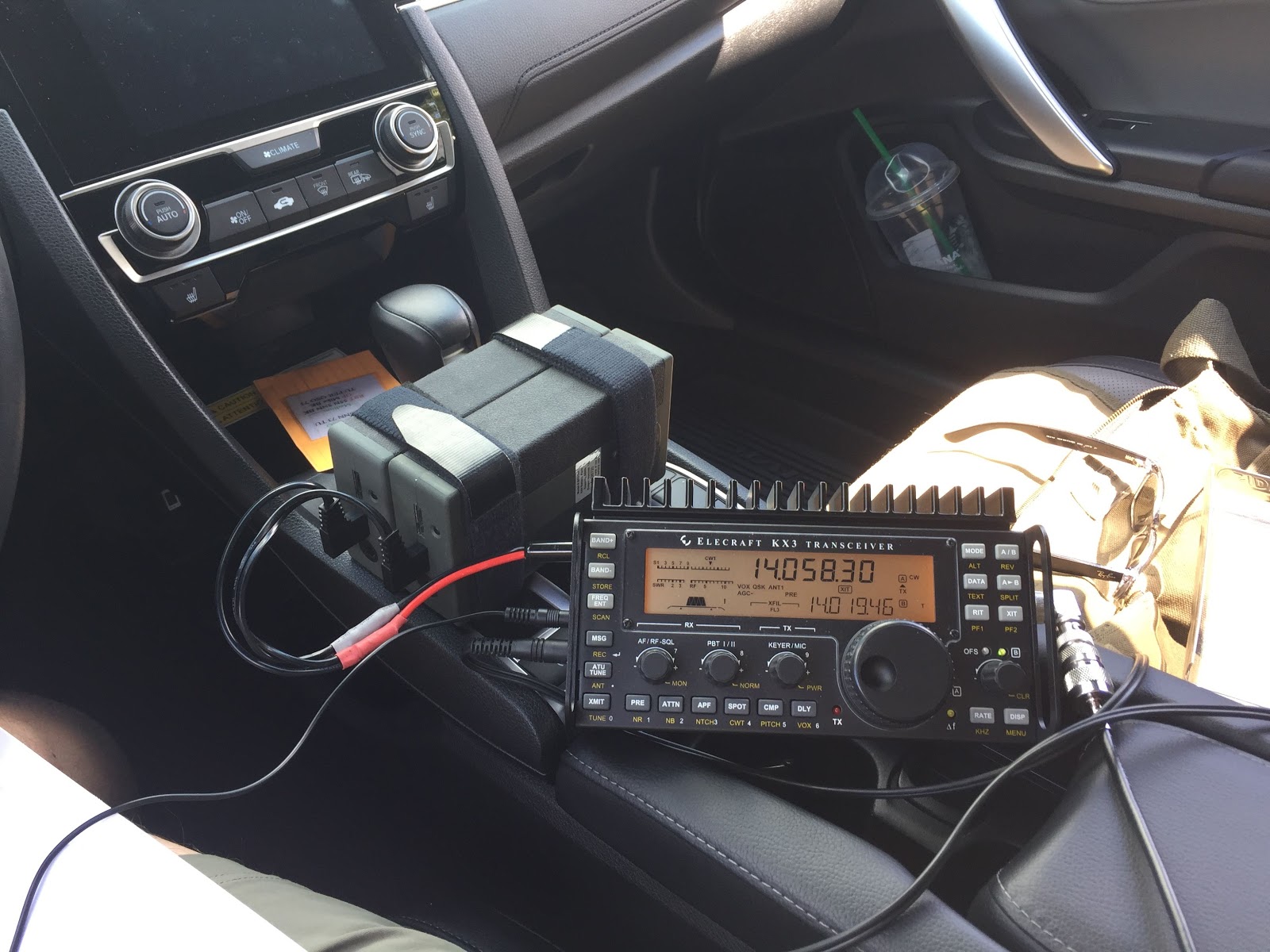 |
| The setup in the car |
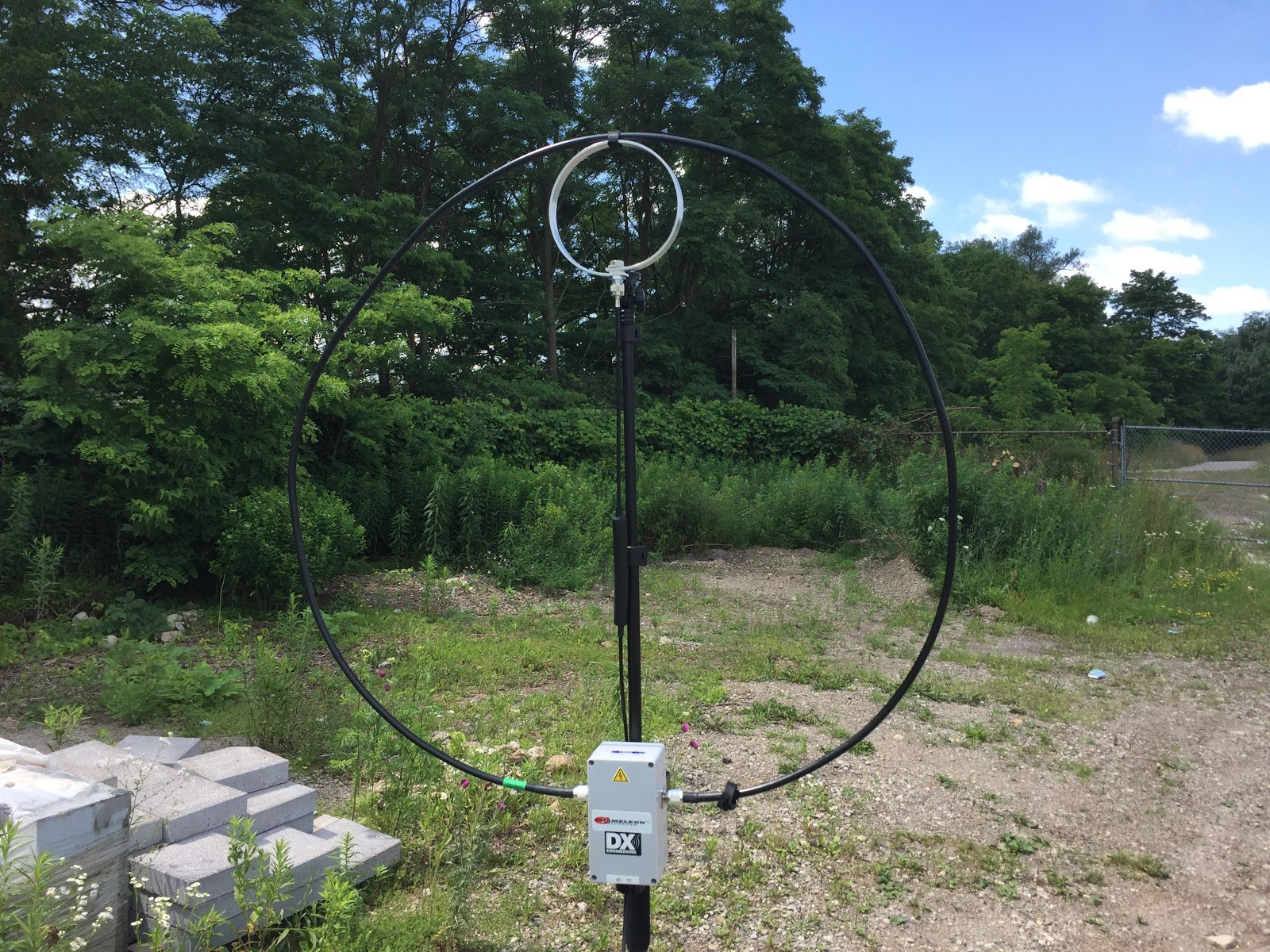 |
| The CHA P loop |
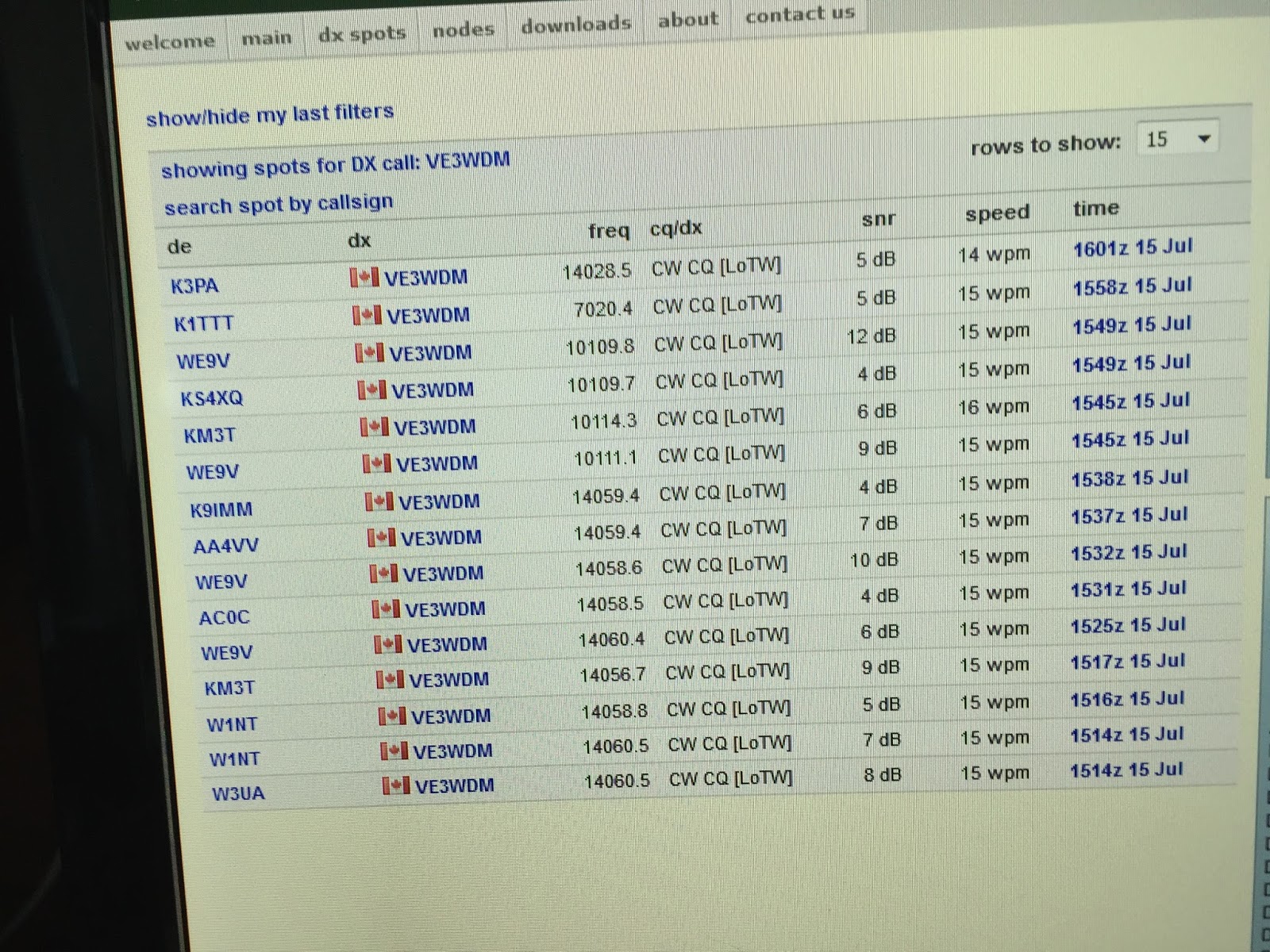 |
| Reverse Beacon Network |
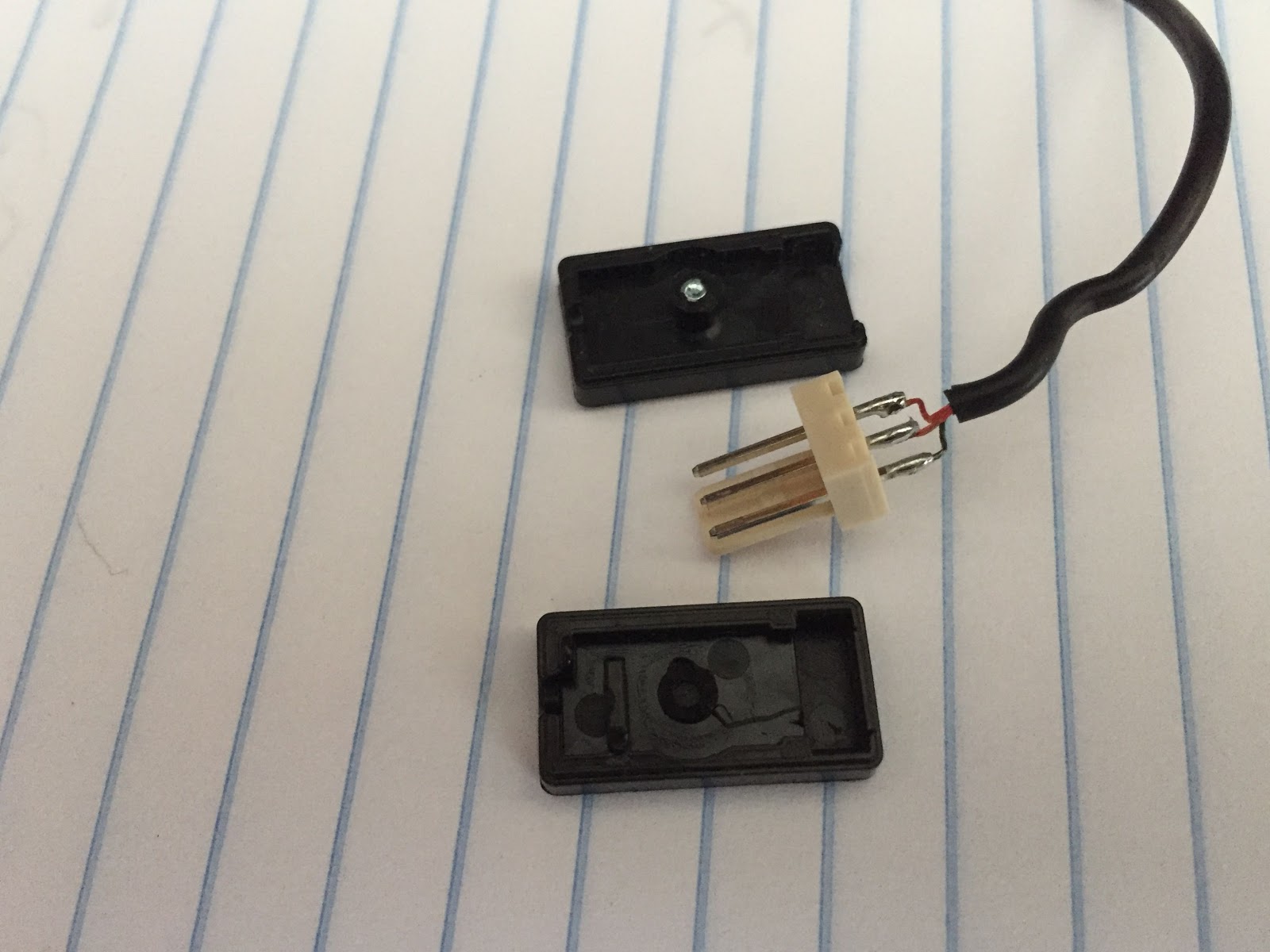 |
| The broken connector |
Mike Weir, VE9KK, is a regular contributor to AmateurRadio.com and writes from New Brunswick, Canada. Contact him at [email protected].
Skunked on my day out.
|
| The setup in the car |
|
| The CHA P loop |
|
| Reverse Beacon Network |
|
| The broken connector |
Mike Weir, VE9KK, is a regular contributor to AmateurRadio.com and writes from New Brunswick, Canada. Contact him at [email protected].
WWV’s New Antenna On 25MHz – QSA?
 |
| New Turnstile Antenna / WWV - 25MHz |
Last week's ARRL announcement regarding WWV's new circular polarized Turnstile antenna tests on their 25MHz transmitter quickly garnered my interest.
Their 25MHz signal used to be heard world-wide on F2 until it was dropped in 1977, but somewhat surprisingly, was resurrected in 2014.
I recall hearing its 2nd harmonic on sporadic-E very routinely on 50.000MHz when I first became active on 6m back in the late 60's. Back then it was also not uncommon to hear the 3rd and 4th harmonics of ship CW stations operating on 12 and 16MHz, at the very low end of 6m and just below the band edge on 49MHz.
 |
| 6m Prop Indicator From The 70's! |
Having not listened for WWV's 25MHz signal for several decades, I set up yesterday to see if it could be heard here in mid-summer. Using my Perseus SDR and my LF/MF inverted-L, self-resonant in the middle of the broadcast-band (gosh knows what the pattern looks like up on 25MHz!), I started monitoring just after lunch. I could detect their carrier which was very weak but steady, probably arriving on ionospheric scatter via the e-layer.
A few hours later I re-checked after hearing a few Colorado signals on 6m Es and sure enough, there they were with a fairly robust signal. It too, was no doubt arriving via sporadic-E as it was again today during another widespread Es opening from the PNW to as far south as Puerto Rico.
Here is a recording of the 25MHz signal made this morning with my Perseus SDR along with a comparison recording of their 20MHz signal, made about 30 seconds later.
There is not a lot of difference between the two and both run similar powers ... 2.5kW on 20MHz and 2kW on 25MHz. The 20MHz system uses a half-wave vertical on a 7.5m tower while the 25MHz outlet uses the crossed-dipole circular polarized Turnstile shown at the top of the blog.
Reception reports of their 25MHz signal are being sought and can be e-mailed to WWV at this address.
Steve McDonald, VE7SL, is a regular contributor to AmateurRadio.com and writes from British Columbia, Canada. Contact him at [email protected].
WWV’s New Antenna On 25MHz – QSA?
|
| New Turnstile Antenna / WWV - 25MHz |
Last week's ARRL announcement regarding WWV's new circular polarized Turnstile antenna tests on their 25MHz transmitter quickly garnered my interest.
Their 25MHz signal used to be heard world-wide on F2 until it was dropped in 1977, but somewhat surprisingly, was resurrected in 2014.
I recall hearing its 2nd harmonic on sporadic-E very routinely on 50.000MHz when I first became active on 6m back in the late 60's. Back then it was also not uncommon to hear the 3rd and 4th harmonics of ship CW stations operating on 12 and 16MHz, at the very low end of 6m and just below the band edge on 49MHz.
|
| 6m Prop Indicator From The 70's! |
Having not listened for WWV's 25MHz signal for several decades, I set up yesterday to see if it could be heard here in mid-summer. Using my Perseus SDR and my LF/MF inverted-L, self-resonant in the middle of the broadcast-band (gosh knows what the pattern looks like up on 25MHz!), I started monitoring just after lunch. I could detect their carrier which was very weak but steady, probably arriving on ionospheric scatter via the e-layer.
A few hours later I re-checked after hearing a few Colorado signals on 6m Es and sure enough, there they were with a fairly robust signal. It too, was no doubt arriving via sporadic-E as it was again today during another widespread Es opening from the PNW to as far south as Puerto Rico.
Here is a recording of the 25MHz signal made this morning with my Perseus SDR along with a comparison recording of their 20MHz signal, made about 30 seconds later.
There is not a lot of difference between the two and both run similar powers ... 2.5kW on 20MHz and 2kW on 25MHz. The 20MHz system uses a half-wave vertical on a 7.5m tower while the 25MHz outlet uses the crossed-dipole circular polarized Turnstile shown at the top of the blog.
Reception reports of their 25MHz signal are being sought and can be e-mailed to WWV at this address.
Steve McDonald, VE7SL, is a regular contributor to AmateurRadio.com and writes from British Columbia, Canada. Contact him at [email protected].
Amateur Radio Weekly – Issue 165

Sexism in Amateur Radio
Be aware of your unconscious biases.
KD2GTM
New FT8 digital mode from K1JT
This is an incredibly fast mode but not as sensitive as JT65/JT9 as it decodes only down to -20dB.
PE4BAS
Amateur Radio Parity Act introduced to Senate
Parity Act would direct the Federal Communications Commission (FCC) to provide regulatory parity for amateur radio operators.
Senator Roger Wicker
Virginia Tech, Radford University teams readying for eclipse
Three teams of students and faculty from Virginia Tech will be spread out to measure the eclipse’s effects on low frequency radar waves.
The Roanoke Times
New Podcast: The Field Radio Podcast
The Field Radio Podcast is dedicated to exploring the amateur radio hobby through the lens of getting you and your gear outdoors.
HamRadio360
Steps to lower Noise Floor and revitalize AM Radio
Background noise interference is degrading the quality of broadcast reception, two-way communications, mobile cellphone services and every other form of wireless communications used today at an alarming rate.
Radio World
Raspberry Pi rival delivers a 4K Android computer for just $25
The Rock64 Media Board Computer may be a similar size to the best-selling $35 Raspberry Pi but its specs help it to stand apart.
TechRepublic
Decode HD Radio on RTL-SDR
A cybersecurity researcher has cracked the codec used by the NRSC-5-C standard for US based terrestrial digital radio.
K2DLS
Porch portable
During a break visiting relatives in Western NC I went outside, threw my end-fed antenna up into a tree, sat on the front porch swing, and worked stations in Maine, Kansas and Cuba.
Ham Radio QRP
Video
Battery-free cellphone
Harvests energy via ambient RF signals.
University of Washington
Lightbulb vs radio beacon
N1SPY completed a project to make an ultra low power signal (QRP) travel around the world. His radio beacon used less power than a small light bulb.
YouTube
Parks on the Air & outdoor Ham Radio fun
Join me as I activate McKinney Falls State Park in Austin, TX.
K5ACL
2m SOTA Summit pileup
A flurry of Summit to summit (S2S) calls were received from fellow activators out on other SOTA summits.
M0JCQ’s SOTA Channel
Getting Started on 6 meters, the magic band
If you are not familiar with this “Magic Band,” check out this video and join the fun.
HamRadioConcepts
Amateur Radio Weekly is curated by Cale Mooth K4HCK. Sign up free to receive ham radio's most relevant news, projects, technology and events by e-mail each week at http://www.hamweekly.com.
 Ham Radio Deluxe |
 W5SWL Electronics |
 Ham Radio Prep |
 KB3IFH QSL Cards  Hip Ham Shirts  HamRadioAuctions HamRadioAuctions Reliance Antennas Reliance Antennas Enigma Shop Enigma Shop |  morseDX  Ni4L Antennas  R&L Electronics R&L Electronics antennas.us antennas.us QRV QRV |
- Matt W1MST, Managing Editor
