 |
 First SOTA Activation for W0C/SP-055
 1 August 2017 | by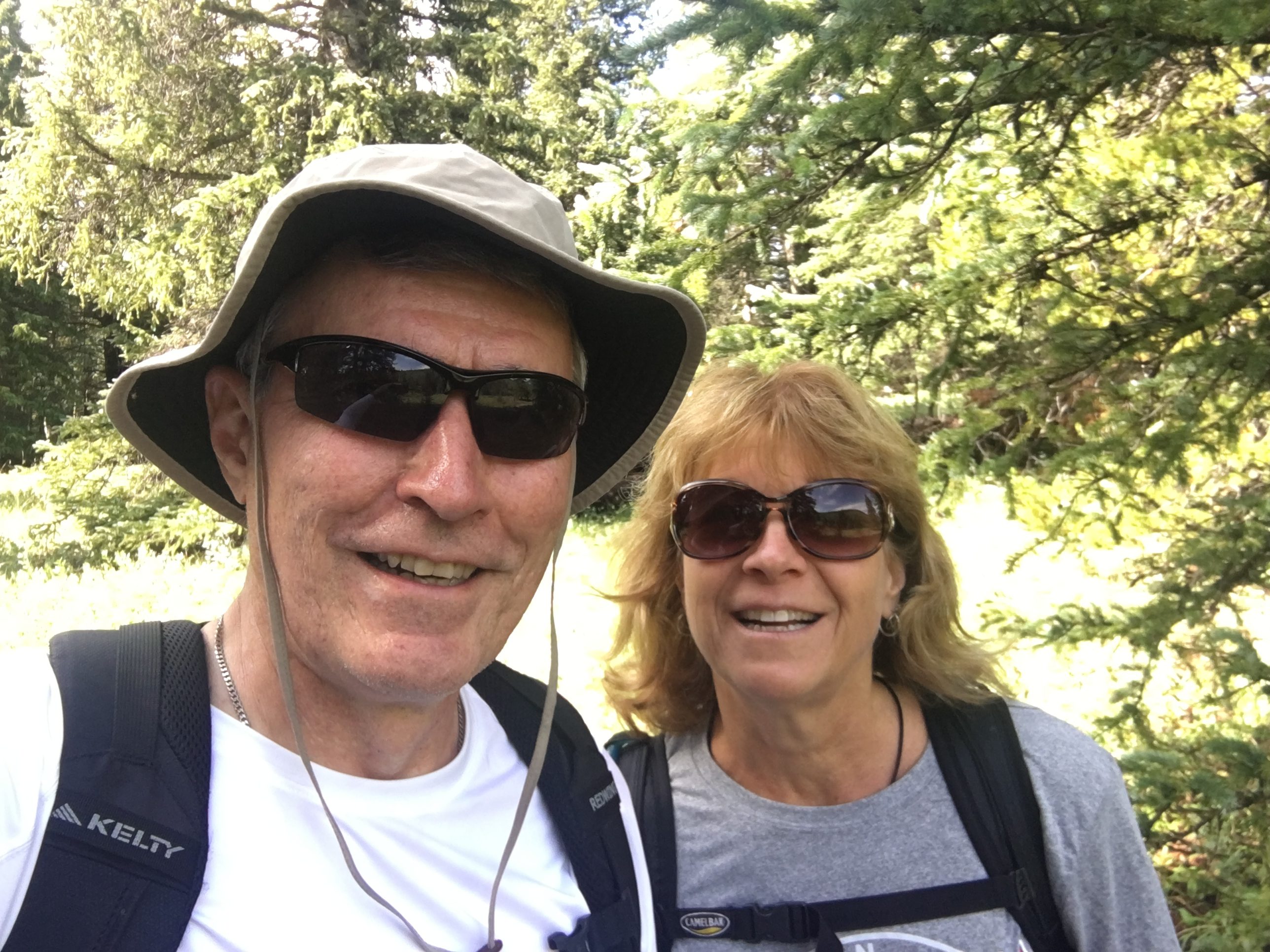
For several years, I’ve had my eye on an unnamed summit (12132) in the Buffalo Peaks Wilderness Area (W0C/SP-055). No one had activated it for Summits On The Air (SOTA) probably because the summit is somewhat remote. I originally thought I would have to do many miles of bushwhacking from the north to get to get to the top. After studying a few maps and trail descriptions, I eventually found a route from the east that is not too difficult.
My hiking partner Joyce/K0JJW and I started at Lynch Creek Trailhead, which is about 9 miles west of Highway 285 on FS 431, also known as Buffalo Peaks Road. The USFS Pike National Forest map is a good reference for finding the trailhead. We followed Salt Creek Trail #618 for about 1 mile to connect to the Tumble Creek Trail #617. These are well-used and well-maintained trails and a joy to walk on. We had been doing too much off-trail hiking lately, so this was a very nice change. The trails are marked by signs at the junction and are easy to follow.
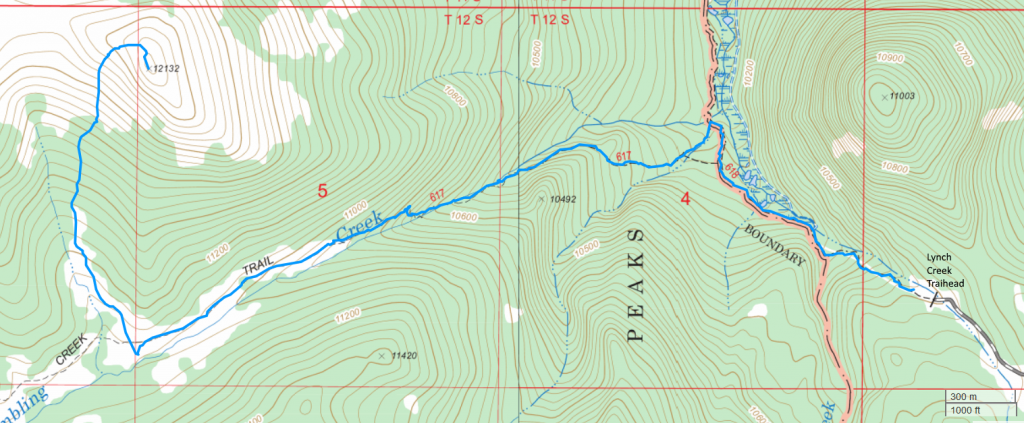
We considered ascending the east side of the mountain but concluded that we’d end up hiking through some dense forest, which usually means downed timber and slow progress. Instead, we approached the summit from the south, leaving Trail 617 about three miles in from the trailhead, and heading uphill through a grassy meadow. There is a large beaver pond to the south at the point where we left the trail, so that makes for a good landmark. You can’t completely avoid the trees on this path but they are sparse enough to easily walk through. Near the summit, the easiest path hooks around to approach the summit from the west, avoiding some steep rocks on the south side of the summit. (Actually, we went straight up the rocks on the ascent and decided to avoid them on the descent.)
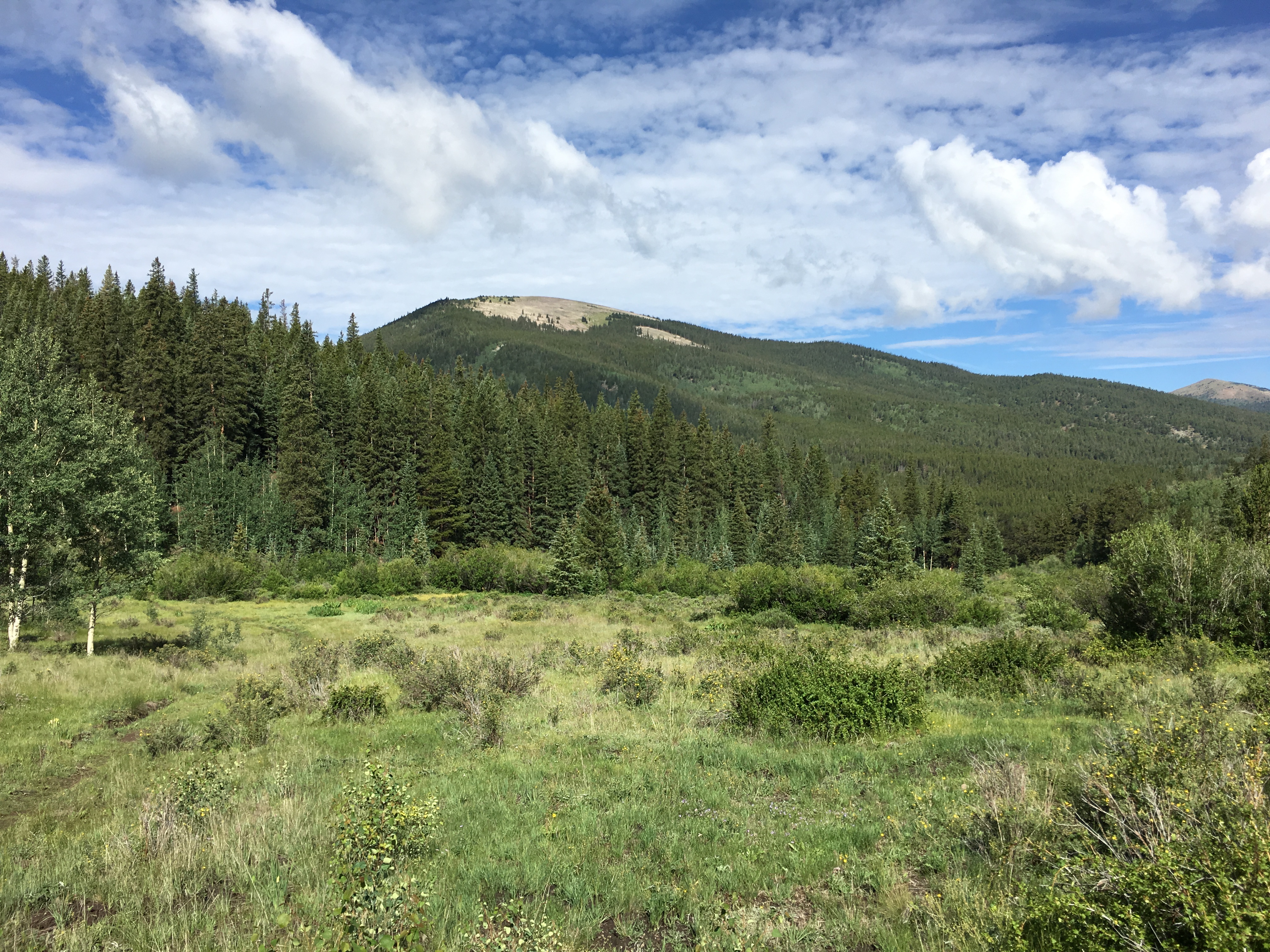
The summit is above treeline and relatively flat, offering excellent views in all directions.
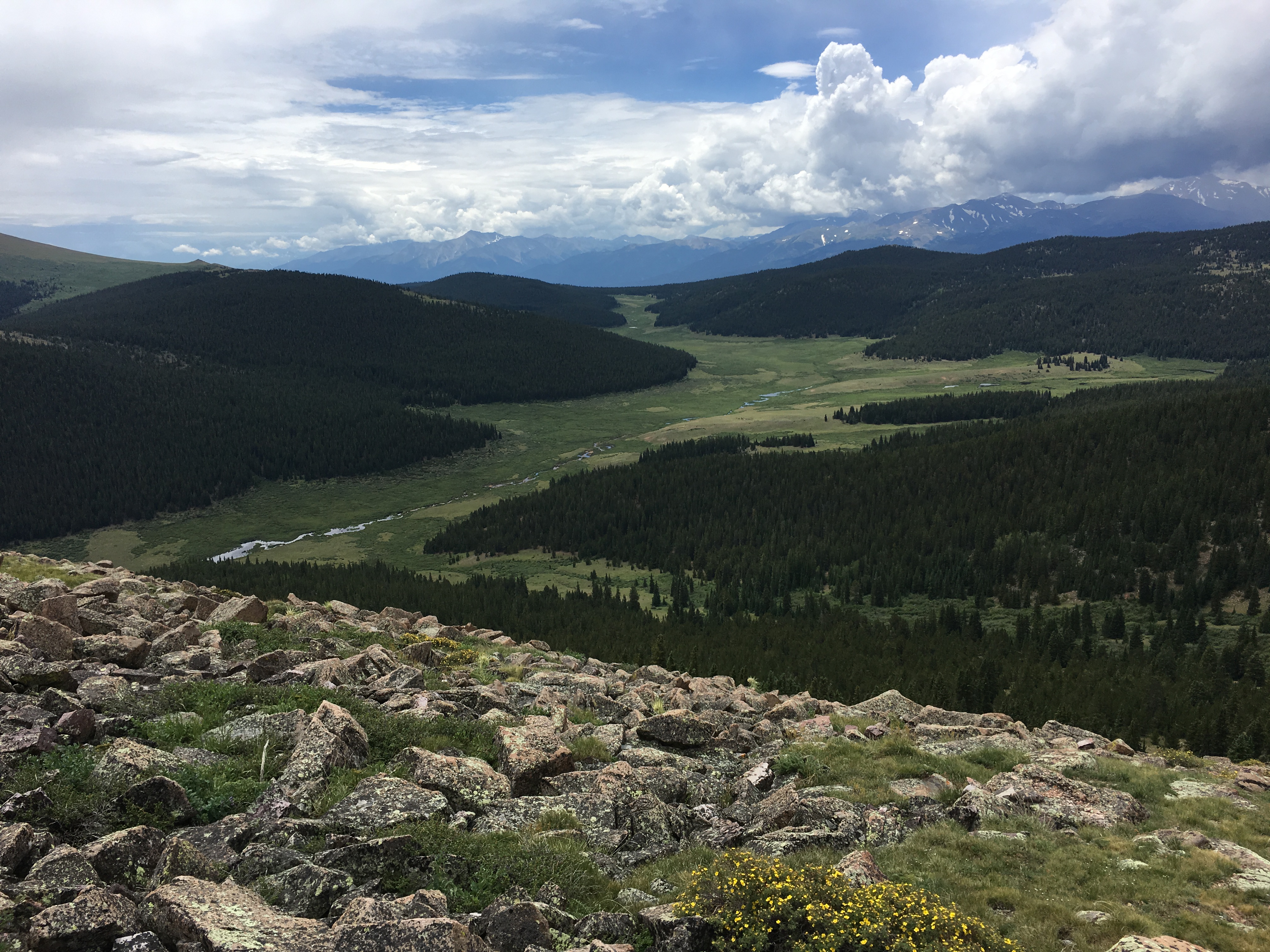
Joyce and I both got on the air and made calls on 146.52 and 446.00 MHz using handheld VHF/UHF radios. We just used vertical antennas and didn’t bother to assemble the yagi antennas. Thanks to these stations that we worked that day: W0BV, W0DLE, N0VXE, K0RCW, K9LNH and KD0VHD.
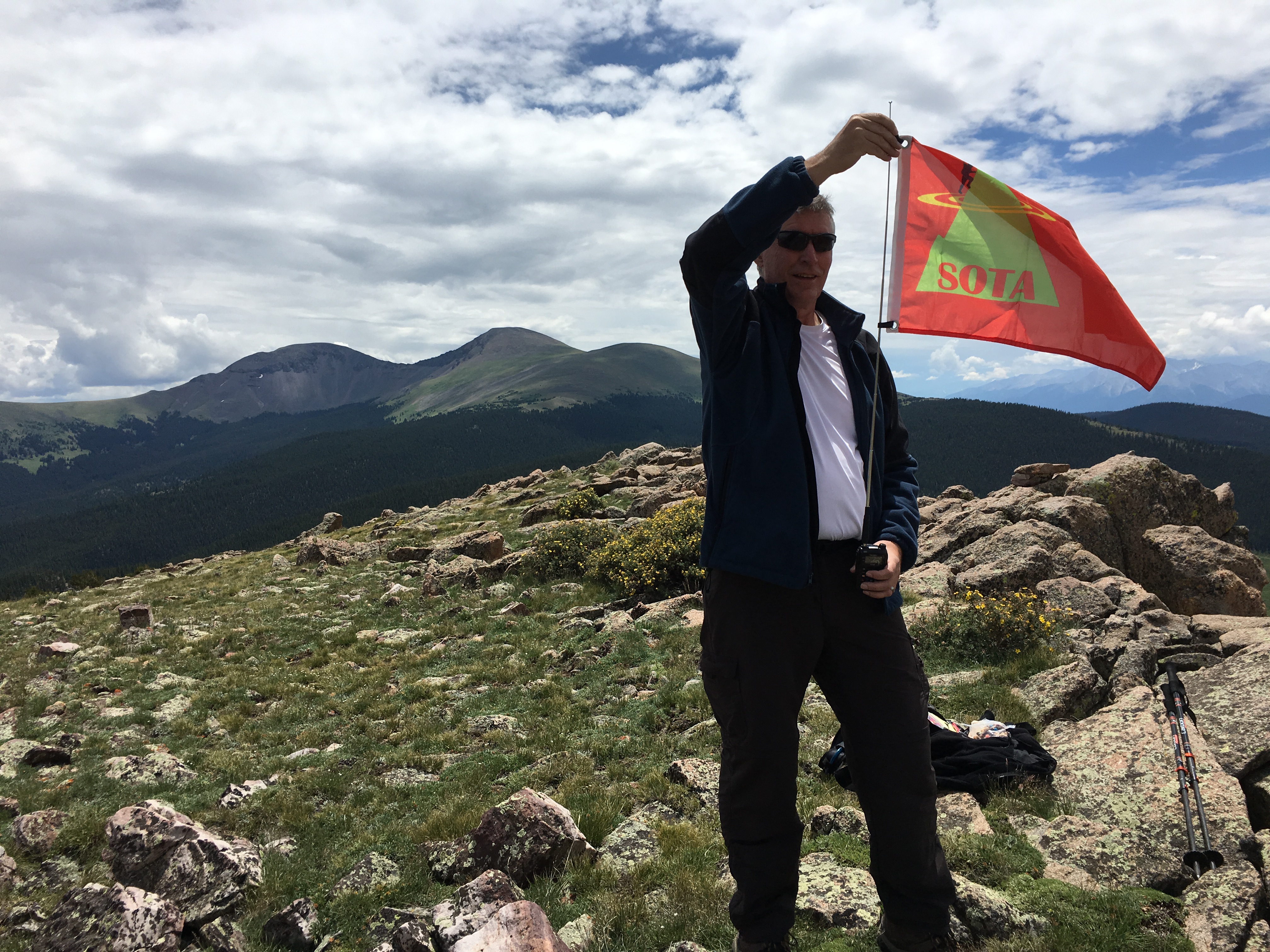
The GPS app on my smartphone indicated the one-way distance at just under 4 miles, with an elevation gain of 2000 feet. The actual elevation gain may be slightly more than that due to some ups and downs on the trail. This is one of those hikes that we’ll probably do again in the future. It has an enjoyable mix of good trails, rolling streams, green meadows, great views and a pleasant summit.
73, Bob K0NR
The post First SOTA Activation for W0C/SP-055 appeared first on The KØNR Radio Site.
Bob Witte, KØNR, is a regular contributor to AmateurRadio.com and writes from Colorado, USA. Contact him at [email protected].
Flight of the Bumble Bee QRP contest
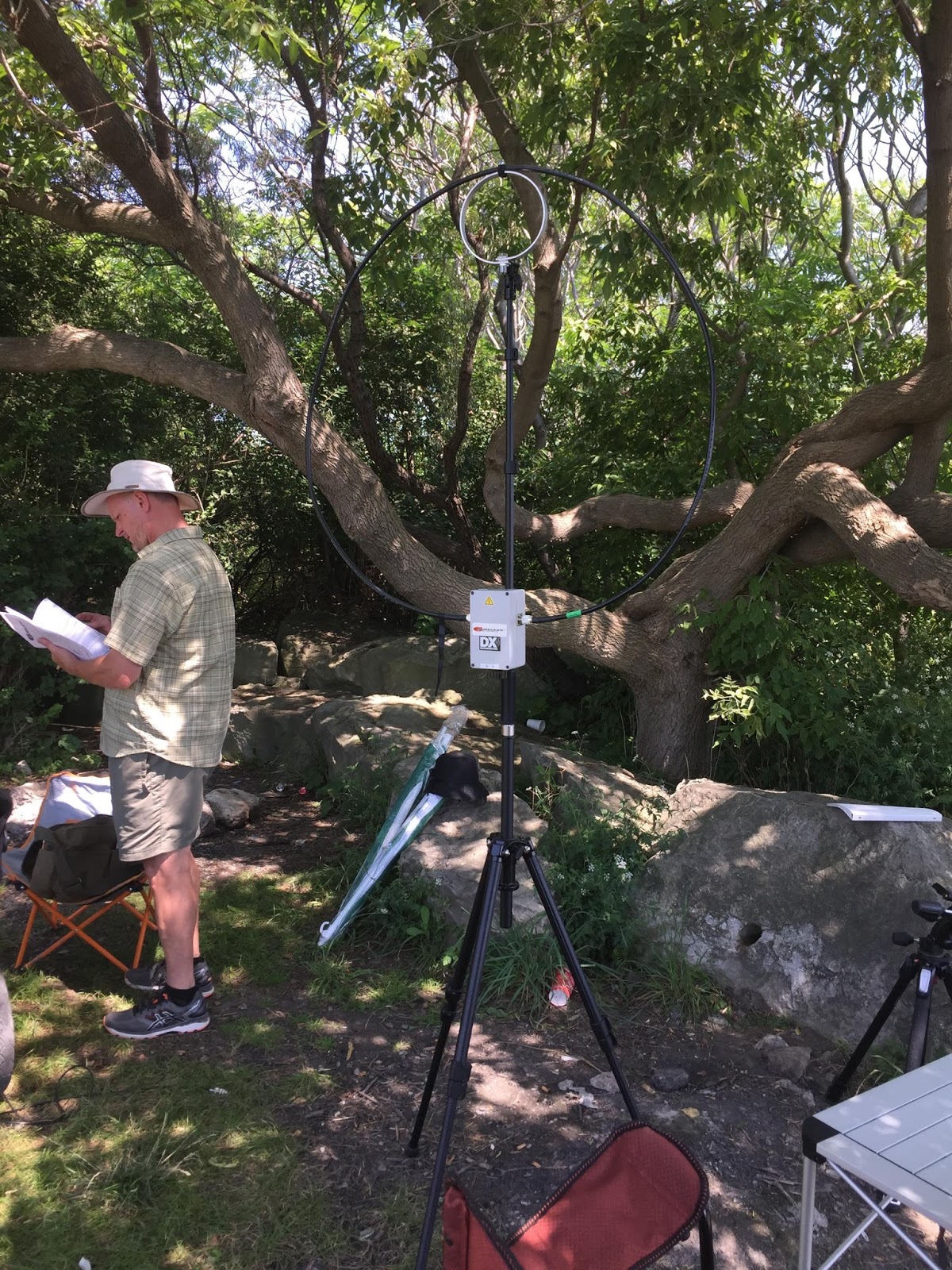 |
| Setting up |
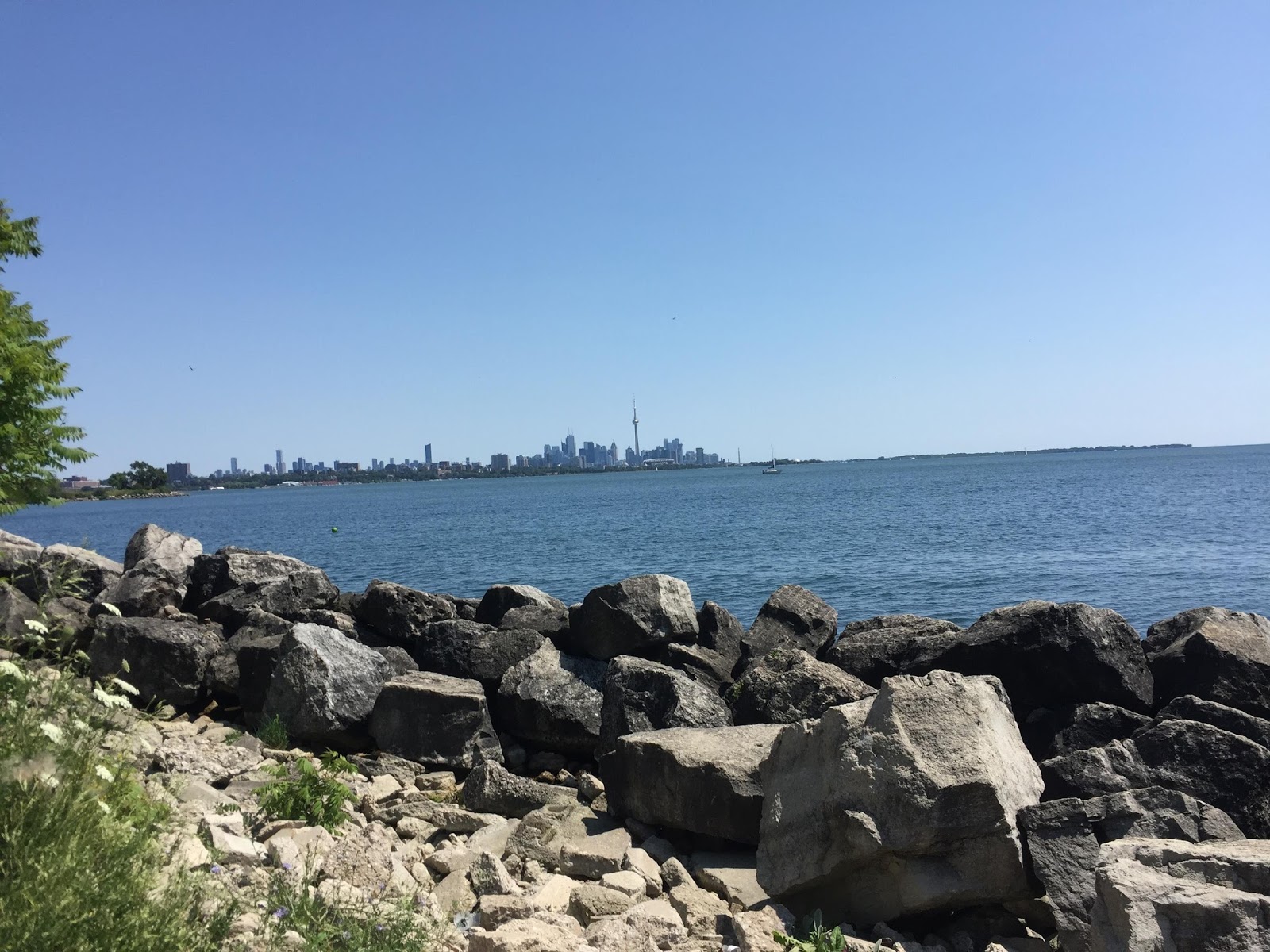 |
| The view from the op table |
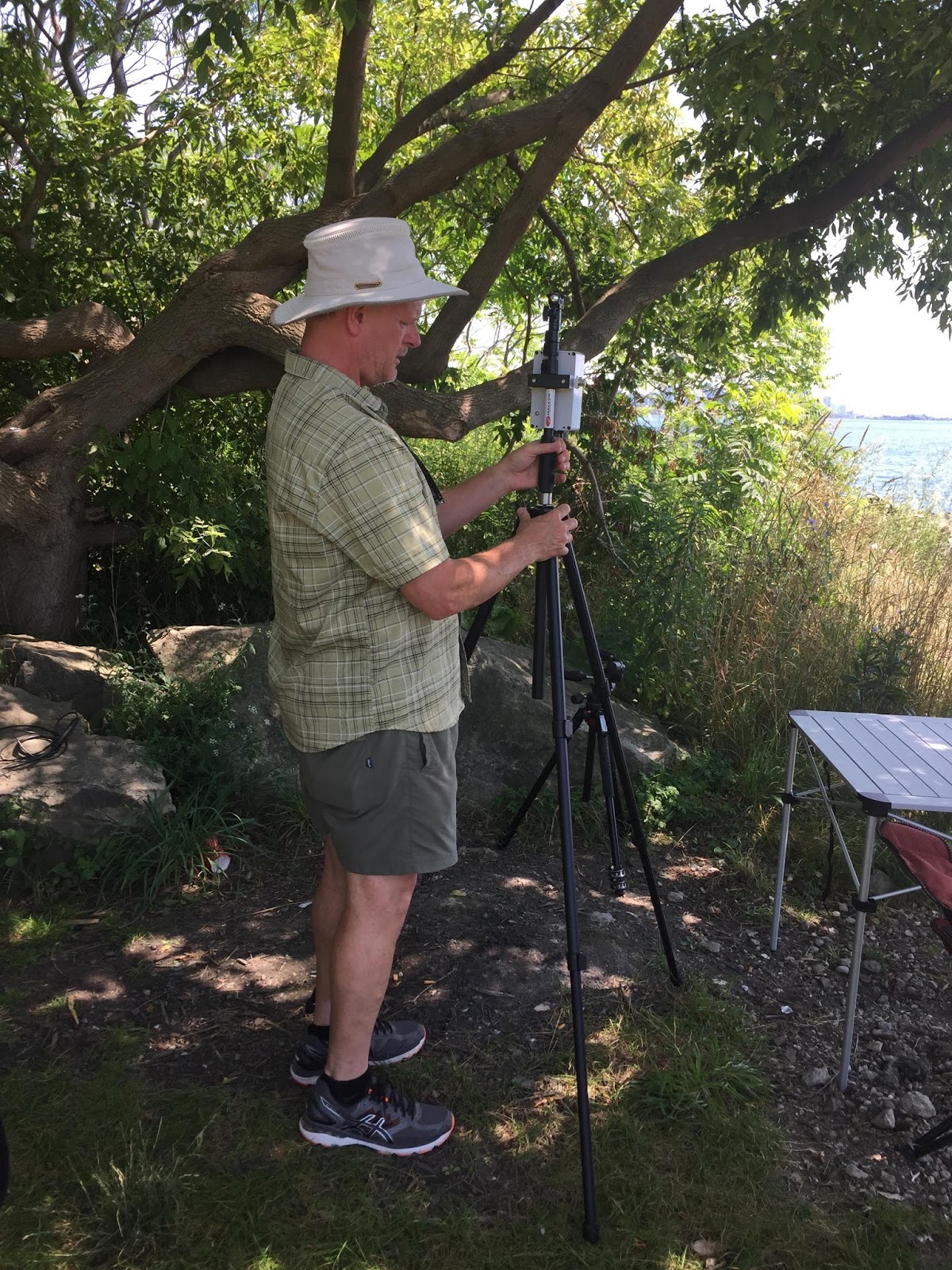 |
| Setting up the loop |
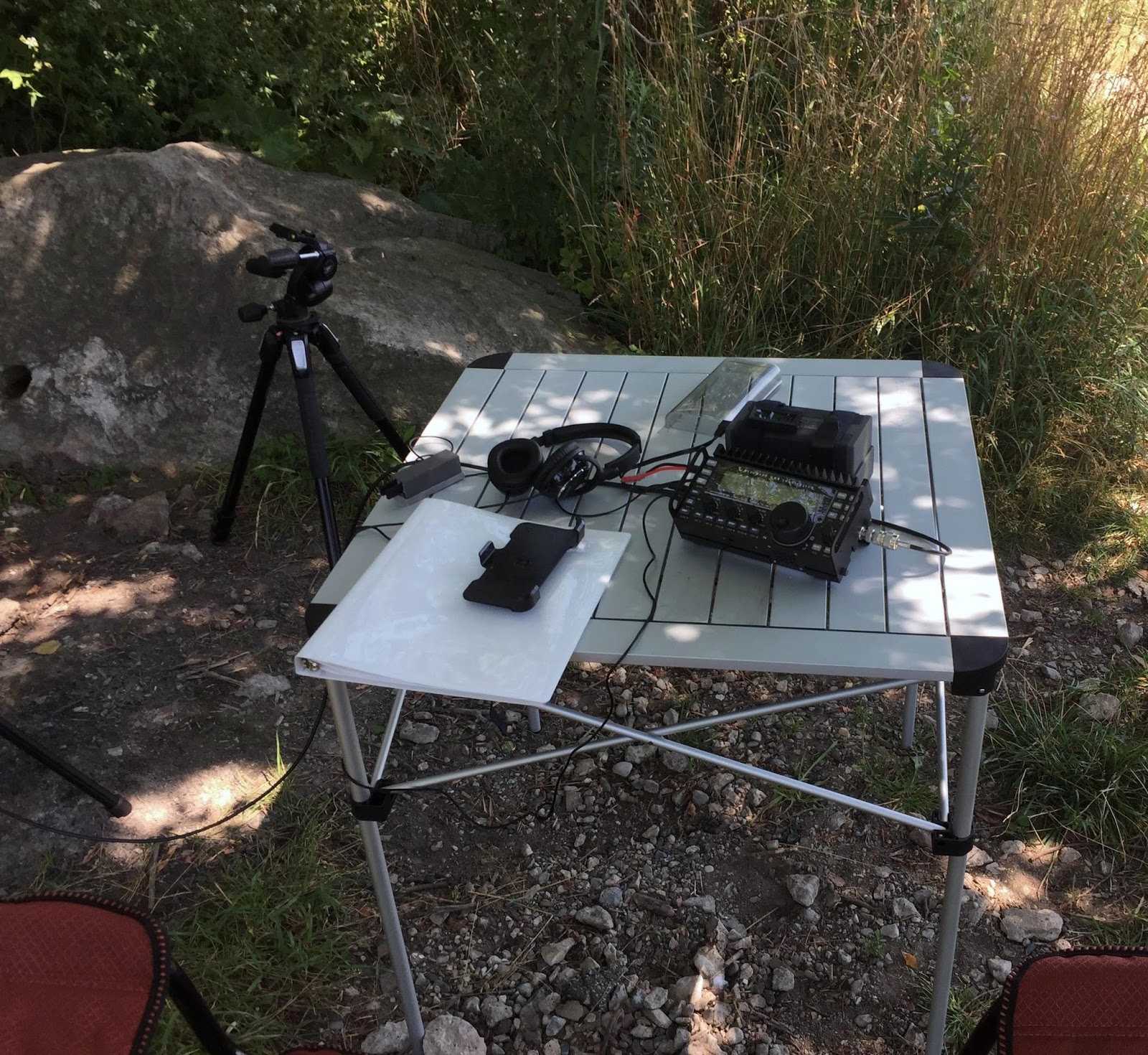 |
| The outdoor shack. |
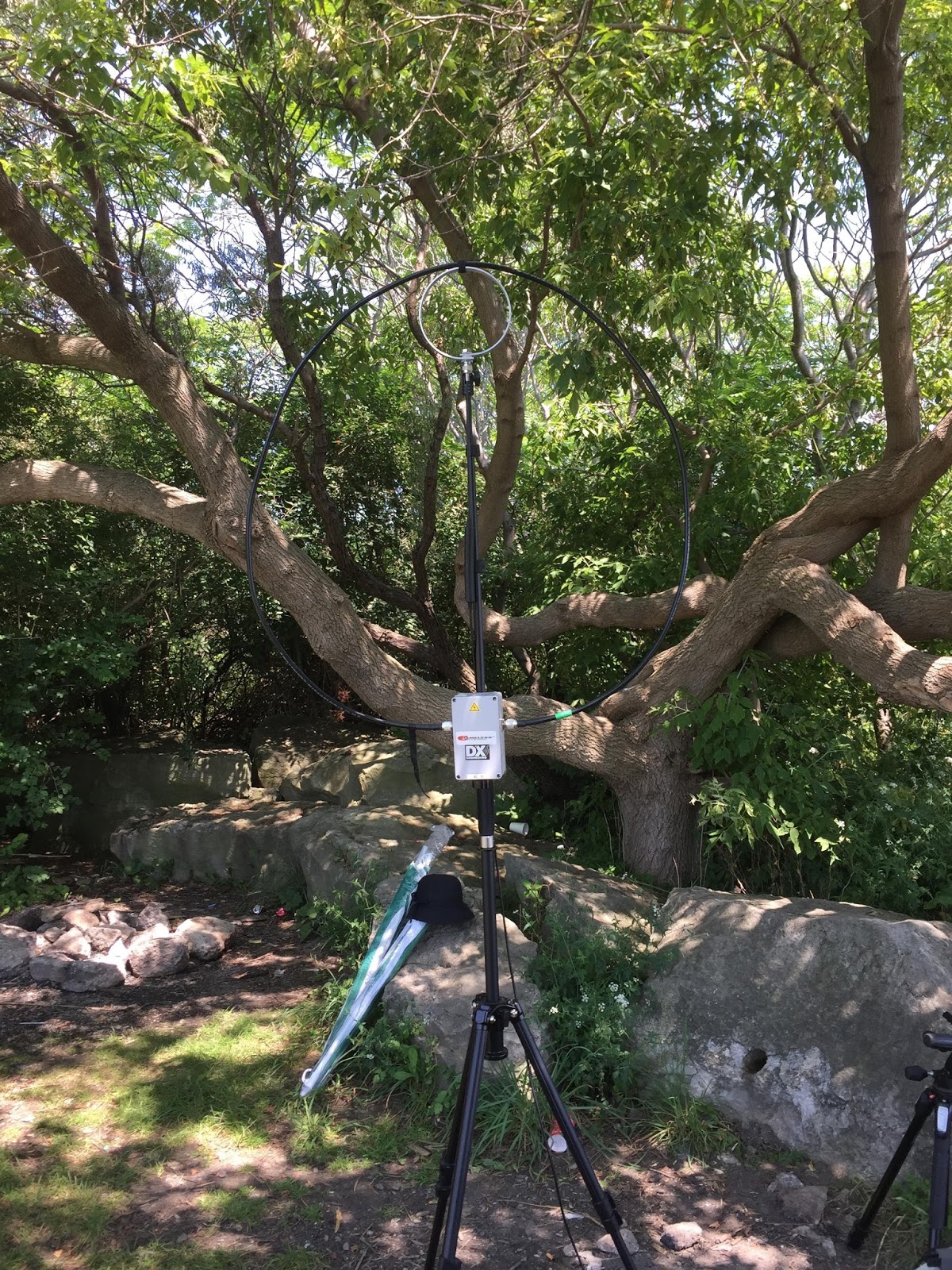 |
| Chameleon CHA P |
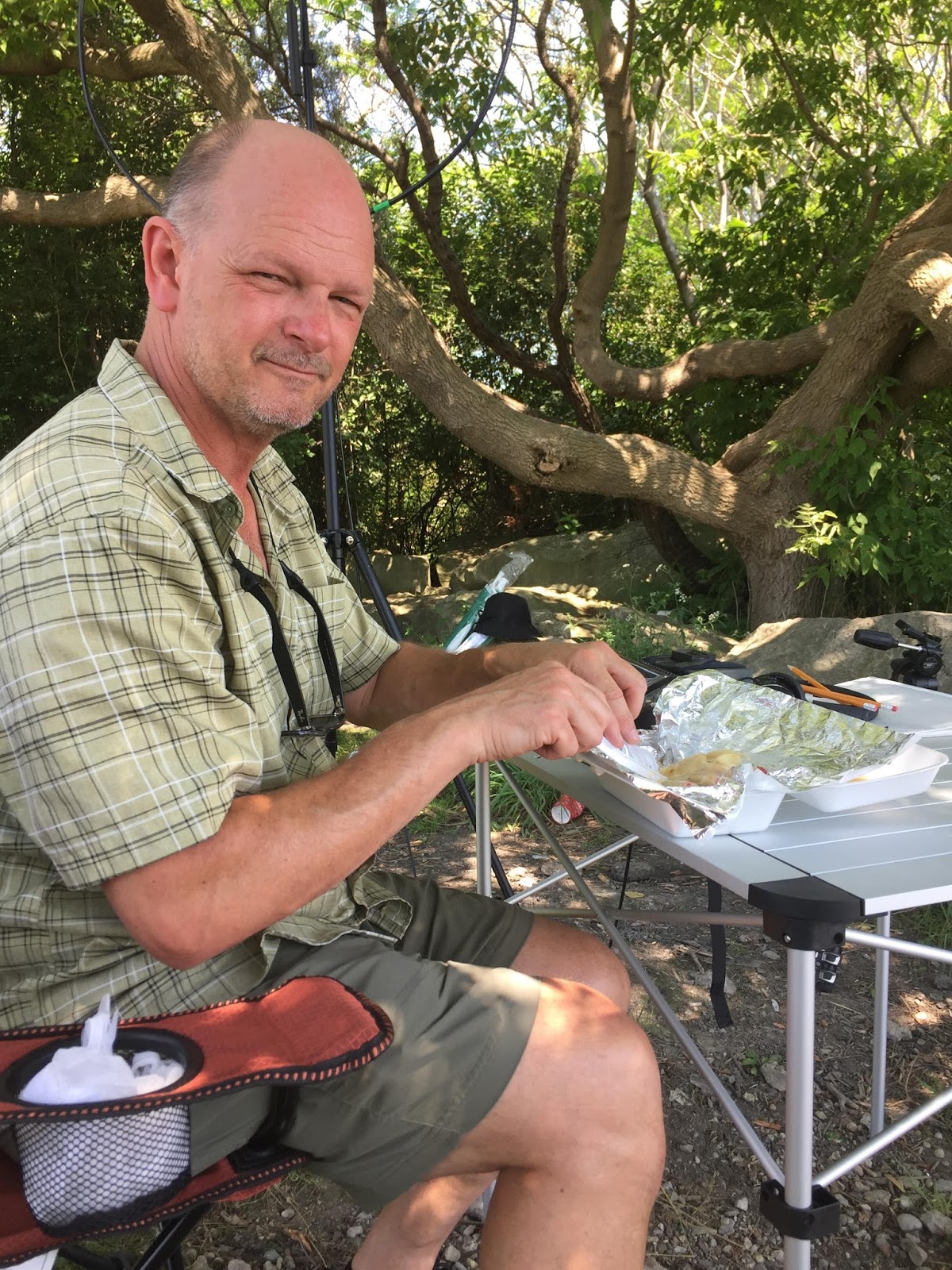 |
| Fuelling up before |
Mike Weir, VE9KK, is a regular contributor to AmateurRadio.com and writes from New Brunswick, Canada. Contact him at [email protected].
Flight of the Bumble Bee QRP contest
|
| Setting up |
|
| The view from the op table |
|
| Setting up the loop |
|
| The outdoor shack. |
|
| Chameleon CHA P |
|
| Fuelling up before |
Mike Weir, VE9KK, is a regular contributor to AmateurRadio.com and writes from New Brunswick, Canada. Contact him at [email protected].
The Spectrum Monitor — August, 2017
 Stories you’ll find in our August, 2017 issue:
Rocky Mountain Ham Radio Microwave Backbone and DMR Repeater Network
By Wayne Heinen N0POH
The Rocky Mountain Ham Radio deployed analog repeater sites all along the Front Range of Colorado and had been linking them via the Internet for years. Due to the cost and reliability factors of commercial Internet, the club had been looking for a ham radio spectrum-based transport method for their IP needs which have been steadily growing over the years. What was needed was a digital link that could be created between the various mountain top sites, an IP based network of their own design that would be controlled by the club. Wayne explains how they did it.
Intro to Scanning Today
By Bob Grove W8JHD
The requirements of scanner listeners have been changing since the very first radios capable of tuning the public service bands were manufactured. While some analog scanners available today are still useful, many listener in more urban areas need significant upgrades to their listening posts to continue listening. Bob explains which radios are best for each technology today.
TSM Reviews: W4OP Loop Antenna
By Thomas Witherspoon K4SWL
Last year Thomas caught a bug: the National Parks on the Air (NPOTA) bug. He found NPOTA the perfect excuse to play radio outdoors. From August to December 2016, he activated ninety-one NPOTA National Parks running QRP (low power). To do so he needed a stand-alone antenna small enough to set up easily, rugged enough to do so many times and capable enough to make contacts from some very remote spots. The W4OP loop filled the bill.
Using Weak Signal Modes for Propagation, RFI, and Antenna Analysis
By Robert Gulley AK3Q
Digital mode operating has changed everything for many hams looking for a way around the disappearing solar cycle. WSJT-X weak-signal software, which includes JT65, JT9, MSK144, JT8 and other specialized transmission modes for moonbounce, meteor scatter and aircraft scatter has extended two-way amateur communications on bands that otherwise might not be used. Robert has also discovered that these programs are an excellent resource for identifying and studying propagation, Radio Frequency Interference (RFI) and antenna characteristics.
US TV Channel Assignments: Part 3
By Mike Kohl
This third installment in the series on the repacking of the TV band continues with the identification of significant communities within each designated marketing area (DMA). Markets numbering from 151 to 248 are covered this month.
Scanning America
By Dan Veeneman
Winnebago County (IL), Broward County (FL)
Federal Wavelengths
By Chris Parris
Joint Base Lewis McChord, Washington
Utility Planet
By Hugh Stegman
Watching the Eclipse with a Radio
Shortwave Utility Logs
By Hugh Stegman and Mike Chace-Ortiz
VHF and Above
By Joe Lynch N6CL
Honey, I Shrunk the Loop
Digital Voice
By Cory Sickles WA3UVV
Feels Like the First Time
Amateur Radio Insights
By Kirk Kleinschmidt NT0Z
RG-6: It’s Still a Steel
Radio 101
By Ken Reitz KS4ZR
Connection Complications: Troubleshooting 101
Radio Propagation
By Tomas Hood NW7US
Coronal Mass Ejection Science
World of Shortwave Listening
By Rob Wagner VK3BVW
The Use and Abuse of SINPO
The Shortwave Listener
By Fred Waterer
Radio from Four Continents via Shortwave and Internet
Amateur Radio Astronomy
By Stan Nelson KB5VL
New Callisto Devices
The Longwave Zone
By Kevin O’Hern Carey WB2QMY
630-Meter Band Plan Takes Shape
Adventures in Radio Restoration
By Rich Post KB8TAD
Heathkit HG-10B VFO
Antenna Connections
By Dan Farber AC0LW
Stealth: A Philosophy and a Methodology
The Spectrum Monitor is available in PDF format which can be read on any desktop, laptop, iPad®, Kindle® Fire, or other device capable of opening a PDF file. Annual subscription is $24. Individual monthly issues are available for $3 each.
Ken Reitz, KS4ZR, is publisher and managing editor of The Spectrum Monitor. Contact him at [email protected].
Win 1,000 Free QSL Cards!

AmateurRadio.com is offering a free prize drawing!
With the help of our generous sponsor, KB3IFH QSL Cards,
we’re holding a giveaway for 1,000 free full-color premium photo QSL cards.
This is a US$121 value and open to all licensed hams in the USA.
Matt Thomas, W1MST, is the managing editor of AmateurRadio.com. Contact him at [email protected].
July’s EME Window
 With QSLs still arriving from previous 2m EME action, I was looking extra forward to late July's very short window.
When last month's activity was interrupted by my 140W brick amplifier catching fire, I was anxious to see if my repairs and homebrew RFC would still allow me to play on the moon. With July's best-positioned moonrises being too close to the sun (which was also rising at the same time), I was only able to spend a short time over two days before the moon travelled too far to the south and into my neighbour's trees.


Luckily I was rewarded with what seemed like very good lunar conditions, enabling me to easily work six different stations ... three of them being all-time new ones and boosting my EME initials total to 112.
I2FAK Franco / 16x19 el array
RK3FG Anatoly / 4x15 el array
G4SWX John / 4x16 el array
F4DJK Paul / 4x11 el array / #110
F5AQX Andre / 4x11 el array / #111
DL9DBJ Hartmut / 4x10 el array / #112
In addition, DL1VPL told me that he was able to copy me with his single 12el Yagi during the QSO with I2FAK! Needless to say, a contact between two single Yagi stations would be truly remarkable. I've only been able to copy a single Yagi station once over the years.
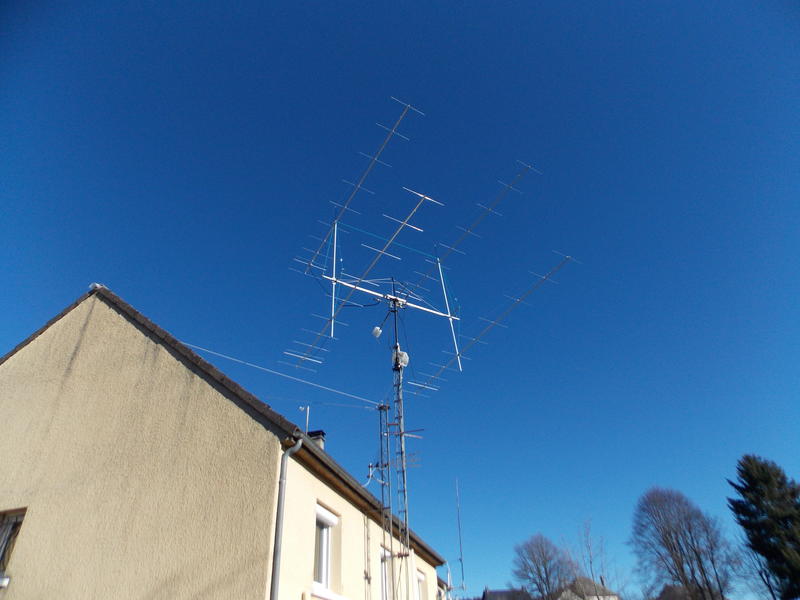 |
| F4DJK's 4x11 el array |
 | |||||
| F5AQX's 4x11 el array |
 |
| DJ9DBJ's 4x10 el array |
I was gratified to see that letting the smoke out of my little amplifier last month apparently caused no permanent damage and the repair seems to be holding up ... but I'll leave the bottom off for now just in case it gets any more crazy ideas.
Steve McDonald, VE7SL, is a regular contributor to AmateurRadio.com and writes from British Columbia, Canada. Contact him at [email protected].
July’s EME Window
With QSLs still arriving from previous 2m EME action, I was looking extra forward to late July's very short window.When last month's activity was interrupted by my 140W brick amplifier catching fire, I was anxious to see if my repairs and homebrew RFC would still allow me to play on the moon. With July's best-positioned moonrises being too close to the sun (which was also rising at the same time), I was only able to spend a short time over two days before the moon travelled too far to the south and into my neighbour's trees.
Luckily I was rewarded with what seemed like very good lunar conditions, enabling me to easily work six different stations ... three of them being all-time new ones and boosting my EME initials total to 112.
I2FAK Franco / 16x19 el array
RK3FG Anatoly / 4x15 el array
G4SWX John / 4x16 el array
F4DJK Paul / 4x11 el array / #110
F5AQX Andre / 4x11 el array / #111
DL9DBJ Hartmut / 4x10 el array / #112
In addition, DL1VPL told me that he was able to copy me with his single 12el Yagi during the QSO with I2FAK! Needless to say, a contact between two single Yagi stations would be truly remarkable. I've only been able to copy a single Yagi station once over the years.
|
| F4DJK's 4x11 el array |
| |||||
| F5AQX's 4x11 el array |
|
| DJ9DBJ's 4x10 el array |
I was gratified to see that letting the smoke out of my little amplifier last month apparently caused no permanent damage and the repair seems to be holding up ... but I'll leave the bottom off for now just in case it gets any more crazy ideas.
Steve McDonald, VE7SL, is a regular contributor to AmateurRadio.com and writes from British Columbia, Canada. Contact him at [email protected].
 Ham Radio Deluxe |
 W5SWL Electronics |
 Ham Radio Prep |
 KB3IFH QSL Cards  Hip Ham Shirts  HamRadioAuctions HamRadioAuctions Reliance Antennas Reliance Antennas Enigma Shop Enigma Shop |  morseDX  Ni4L Antennas  R&L Electronics R&L Electronics antennas.us antennas.us QRV QRV |
- Matt W1MST, Managing Editor
