 |
 Opinions About ARRL Petition to FCC: Expand Technician HF Privileges!
 30 March 2018 | by
 In this video, I expound on another point of view regarding the ARRL petition to the FCC. The petition requests an expansion of operating privileges of Technician-class operators in the USA. The ARRL believes that giving broader shortwave access, using digital communications, to Technicians, will better entice the Techs to upgrade to General or Amateur Extra. In this video, I discuss this a bit.
If you are wondering why I’ve made a few videos about this topic, when the topic has been the hot item on many forums already, I believe that the drama will not cease until well after the FCC makes a decision, because this is a relevant topic, and one that has a significant impact on the amateur radio community at large. It is not a trivial conversation about which type of coax is best suited for Arctic field activity.
After some replies came from various viewers, I clarify my point. I stand corrected.
I failed to mention that there are a limited few slices of VOICE (SSB) spectrum on HF that the petition seeks for the Tech licensee. The ARRL states, “ARRL has asked the FCC to expand HF privileges for Technician licensees to include limited phone privileges on 75, 40, and 15 meters, plus RTTY and digital mode privileges on 80, 40, 15, and 10 meters.”
More specifically, “ARRL proposes to provide Technician licensees, present and future, with phone privileges at 3.900 to 4.000 MHz, 7.225 to 7.300 MHz, and 21.350 to 21.450 MHz, plus RTTY and digital privileges in current Technician allocations on 80, 40, 15, and 10 meters. The ARRL petition points out the explosion in popularity of various digital modes over the past 2 decades. Under the ARRL plan, the maximum HF power level for Technician operators would remain at 200 W PEP. The few remaining Novice licensees would gain no new privileges under the League’s proposal.” Reference: http://www.arrl.org/news/arrl-requests-expanded-hf-privileges-for-technician-licensees
My point holds: give some reason to desire to upgrade to a higher class. Do this by granting HF operations on lower bands (lower in frequency than 10 Meters), with more than a CW-only privilege.
If a tech can only use CW on 80m, but doesn’t know CW, then it is likely she won’t ever try making contacts on 80m. Hence, no exposure to the magic of 80-meter DX. If, however, the Tech can dabble with digital or limited SSB, on 80m, then she gets a real, practical exposure to the magic, and may well upgrade. Why do you think a General, who has limits, would ever upgrade? What am I missing here?
The following video expands this idea:
[embedyt] https://www.youtube.com/watch?v=83I3EEQxfZA[/embedyt]
The truth is, I see a strong argument for just ONE license, permanent. Or a temporary entry-level training ticket, then the permanent. But, that would make us like some other countries. That can’t be good.
The original video to which this new video continues is here:
[embedyt]https://www.youtube.com/watch?v=BWSAvDWE3Js[/embedyt]
Some viewers are asking me why I am making a video while driving. They try to convince me that talking while driving is too distracting. My answer is here:
[embedyt]https://www.youtube.com/watch?v=pyNHKViyCGE[/embedyt]
73 de NW7US
Visit, subscribe: NW7US Radio Communications and Propagation YouTube Channel
CLE 230 Results
If you have joined the NDB List group, a copy of these will have already been sent to your mailbox.
It seems that compared to the last time these same frequencies were searched (CLE 213 Nov '16), my results were a little poorer, with 36 beacons heard this time versus 52 for the previous effort.
Propagation varied over the three night event depending upon what part of the world you were listening from and as usual, when there has been some recent coronal hole induced geomagnetic disturbance, the further away from the auroral zone you were, the better the prop seemed to be. The third and final night saw summer-like lightning noise for most North American listeners and the next several CLE weekends will be lucky to escape these rising levels until late in the fall ... but don't give up as there can be some great propagation in the summer and those quiet nights do come around when you least expect them.
In spite of the poor propagation here, there were some unusual quirks. Many of the 25 watt, normally easy NDBs from the central and southern states, were missing in action ... yet on all three nights, both FIS in Key West, Florida and SQT, up the coast on Florida's central eastern shoreline, were easy copy for several hours.
I can only guess that the reason for this is that both of these are 'big' beacons ... big antennas and power in the 300W plus class. They just managed to power through in spite of the poor propagation.
 |
| FIS - 332 kHz Key West, Florida (aka: The 'Fish Hook' beacon) |
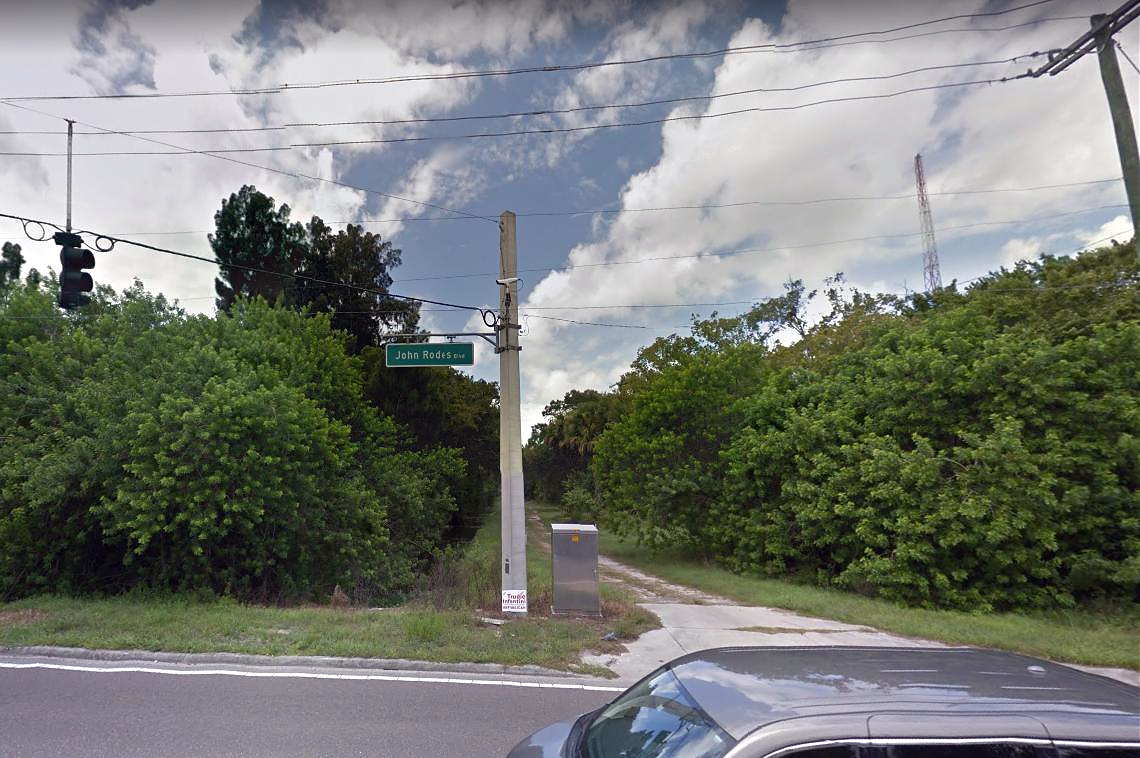 |
| SQT - 257 kHz Melbourne, Florida |
The other surprise was a loud signal on all three nights from FS in Sioux Falls, South Dakota, yet there was not even a hint of many of the other regular midwestern stations. Its reported 300W and 60' vertical is no doubt the reason.
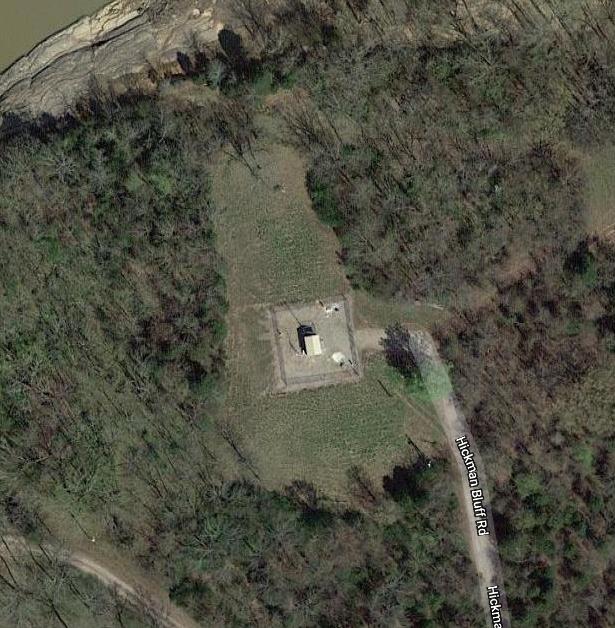 |
| FS - 245 kHz Sioux Falls, South Dakota |
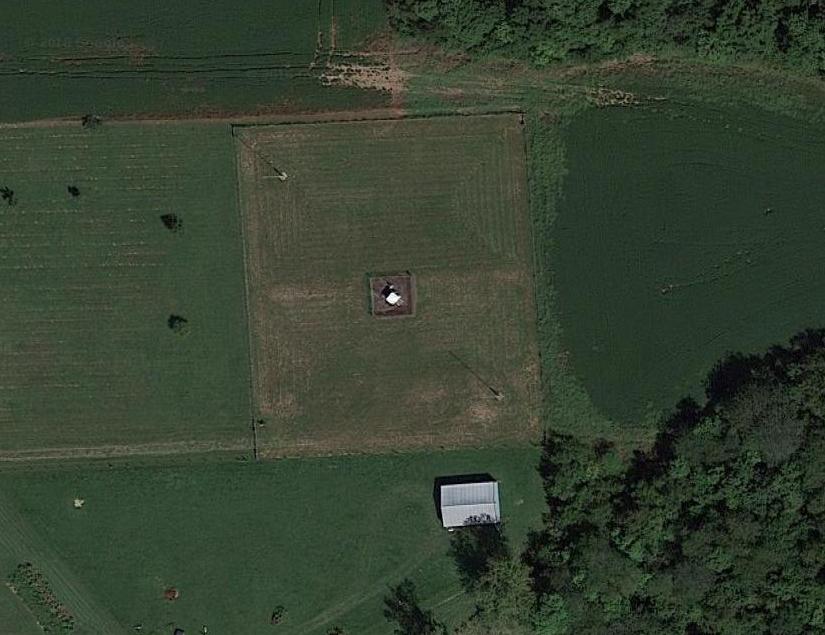 |
| DD - 253 kHz Columbus Ohio |
I managed only 36 stations but spent little time on Friday since conditions were truly dreadful.
25 04:00 240.0 BVS Burlington, WA, USA
25 08:00 241.0 YLL Lloydminster, AB, CAN
25 04:00 242.0 ZT Port Hardy, BC, CAN
25 04:00 242.0 XC Cranbrook, BC, CAN
25 07:00 244.0 TH Thompson, MB, CAN
25 05:00 245.0 YZE Gore Bay, ON, CAN
25 13:00 245.0 HNS Haines, ALS
25 06:00 245.0 FS Sioux Falls, SD, USA
25 08:00 245.0 CB Cambridge Bay, NU, CAN
25 08:00 245.0 AVQ Marana, AZ, USA
25 06:00 246.0 ZXJ Fort St. John, BC, CAN
25 07:00 248.0 ZZP Queen Charlotte Is, BC, CAN
25 04:00 248.0 WG Winnipeg, MB, CAN
25 07:00 248.0 QL Lethbridge, AB, CAN
25 07:00 248.0 QH Watson Lake, YT, CAN
25 09:00 248.0 PQF Mesquite, TX, USA
25 10:00 250.0 FO Flin Flon, MB, CAN
25 04:00 251.0 YCD Nanaimo, BC, CAN
25 11:00 251.0 OSE Bethel, ALS
25 04:00 251.0 AM Amarillo, TX, USA
25 07:00 253.0 GB Marshall, MN, USA
25 09:00 253.0 DD Commercial Point, OH, USA
25 09:00 254.0 ZYC Calgary, AB, CAN
25 09:00 254.0 SM Fort Smith, AB, CAN
25 09:00 254.0 EV Inuvik, NT, CAN
25 06:00 256.0 LSO Kelso, WA, USA
25 08:00 256.0 EB CFB Edmonton, AB, CAN
25 04:00 257.0 XE Saskatoon, SK, CAN
26 06:00 257.0 SQT Melbourne, FL, USA
25 04:00 257.0 LW Kelowna, BC, CAN
25 04:00 257.0 HCY Cowley, WY, USA
25 04:00 258.0 ZSJ Sandy Lake, ON, CAN
25 09:00 420.0 FQ East Chain, MN, USA
26 06:00 421.0 VLY McKenney, TX, USA
26 06:00 426.0 EN Council Bluffs, IA, USA
25 07:00 428.0 POH Pocahontas, IA, USA
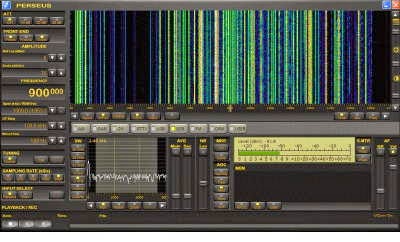
As usual, my receiver of choice was the Perseus SDR in combination with my MF inverted-L, tuned to 300kHz.
The very active NDB Group.io List is a great place to learn more about the 'Art of NDB DXing' or to meet other listeners in your region. There is a lot of good information available there and new members are always very welcome. As well, you can follow the results of other CLE participants from night to night as propagation is always an active topic of discussion.
Steve McDonald, VE7SL, is a regular contributor to AmateurRadio.com and writes from British Columbia, Canada. Contact him at [email protected].
#POTA Activation of JD Mac Arthur SP in South Florida
This, my second POTA activation, was a much bigger su ccess (39 qso’s in an hour) than the first (a mere dozen), despite #2 being on a weekday afternoon vs. Sunday for #1. I attribute this to my savvy scheduling to avoid ARRL’s DX Contest and at the same time, ARRL’s respectful consideration for a Big Gun like me in not trying to compete! As the Borg said, “Resistance is Futile.”
The other big factor was getting a few hams to spot me on the clusters. I was quite surprised, and thrilled actually, to be the subject of a pileup for a few minutes. Imagine, lil’ ol’ me, being sought after; I hardly knew how to handle the fame!
Things started kinda slow, my first contact being a ham about two miles away; I’m thinking, oh boy, this’ll be a long afternoon. Will I ever get the requisite ten qso’s to count a POTA activation? I tried to spot myself but on Dxsummit.fi it is so awkward to do on your smartphone. With ten thumbs like me, mistakes are made. I did ask several hams to spot me and soon a few did, and then I was in demand, even at 4pm on a Tuesday afternoon. I never knew there were so many retired or unemployed hams sitting around bored during the day. From South Florida I worked hams in NY, CT, MI, PA, MN, AZ, CA, England and Spain!
I used my link dipole antenna up approx 24′ at the apex, set for 20m. By closing a pair of links, it can be reset for 30 or 40 meters. I built this antenna a while back, and tuned and trimmed it carefully for each of these bands, so no tuner necessary. I’ve tried a PAR EndFedz and a homebrew Buddipole for HF and this is the best for me, thus far.


From left to right: the dipole (made of speaker wire) rolled up on custom deluxe wire winder; middle, the handsomely crafted center SO; and right, the links for 30m, left open so antenna resonates at the shorter 20m cut. Note “stress relief” at the SO and use of safety pins to carry the tension of the dipole when hoisted. Below is pic of my antenna launching tool; it was too heavy at first so I drank half the contents. Also below is a pic of my tie down line, fluorescent builder’s twine. I’ve decided to be stealthier in the future and will change that out for something that’ll blend better.


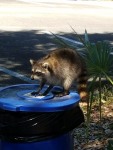
I want to be stealthier so I don’t draw attention to my station and my suspicious behaviors. Even though I have a right to be there at a picnic table not all Park Rangers got the memo and some may think they should run me off. Last week a Ranger did stop by and I thought “well, here we go,” but actually he just wanted to chat; his Dad had been a ham, so I tried to recruit him. I had another visitor, too; note to self, don’t operate so close to garbage cans!

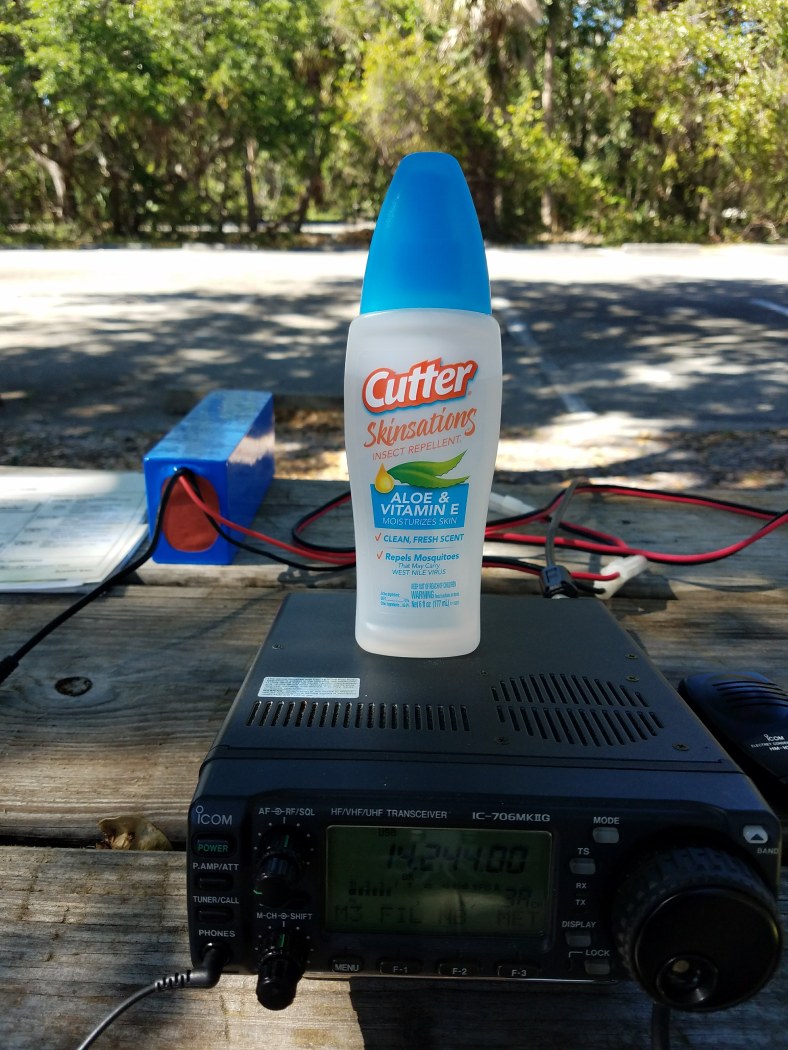
And finally, a note to the wise for operating out of doors in Florida; bring your bottle!
This is Wayne, k4wk, http://www.hamdom.com. Thanks for listening; you’re in the log.
Wayne Robertson, K4WK, is a regular contributor to AmateurRadio.com and writes from Georgia, USA.
LHS Episode #217: A Punch in the Facebag
 Welcome to Episode 217 of Linux in the Ham Shack. In this episode, the hosts touch on upcoming hamfests and Hamvention 2018, FCC workshops on disaster preparedness, DX opportunities on 10 Meters, the death of Facebook, new and update ham radio software on Github and much more. Thanks for listening and please don't forget to donate to or share our Hamvention 2018 campaign. Thanks a bunch!
73 de The LHS Crew
Russ Woodman, K5TUX, co-hosts the Linux in the Ham Shack podcast which is available for download in both MP3 and OGG audio format. Contact him at [email protected].
Weekly Propagation Summary – 2018 Mar 26 16:10 UTC
Here is this week’s space weather and geophysical report, issued 2018 Mar 26 0143 UTC.
Highlights of Solar and Geomagnetic Activity 19 – 25 March 2018
Solar activity was very low. The sun was spotless and absent of significant flare activity. No Earth-directed CMEs were observed during the period.
No proton events were observed at geosynchronous orbit.
The greater than 2 MeV electron flux at geosynchronous orbit was at high levels on 19-25 March.
Geomagnetic field activity reached G1 (Minor) storm levels on 19 March and active levels on 23-25 March due to the influence of recurrent, negative polarity CH HSS effects. Quiet to unsettled conditions were observed on 20-22 March.
Forecast of Solar and Geomagnetic Activity 26 March – 21 April 2018
Solar activity is expected to be at very low levels throughout the outlook period.
No proton events are expected at geosynchronous orbit.
The greater than 2 MeV electron flux at geosynchronous orbit is expected to be at high levels on 26-28, 30-31 March and 01-02, 12-21 April. Normal to moderate levels are expected for the rest of the period.
Geomagnetic field activity is likely to be at G1 (Minor) storm levels on 26 March and 12 April with active periods likely on 26, 29-30 March, and 11-15, 19, 21 April due to effects from multiple, recurrent CH HSSs. Quiet to unsettled levels are expected for the remainder of the outlook period.
Don’t forget to visit our live space weather and radio propagation web site, at: http://SunSpotWatch.com/
Live Aurora mapping is at http://aurora.sunspotwatch.com/
If you are on Twitter, please follow these two users: 1. https://Twitter.com/NW7US 2. https://Twitter.com/hfradiospacewx
Check out the stunning view of our Sun in action, as seen during the last five years with the Solar Dynamics Observatory (SDO): https://www.youtube.com/watch?v=zXN-MdoGM9g
= = = = =
BOOK SALE: Space Weather and Sun Science – get these from Amazon, and help us stay online!
NOTICE: When you buy this (or any item after starting with this link), you are helping us keep our SunSpotWatch.com and other resources “on the air” (up and running!). In other words, you are helping the entire community. So, check out this book:
Here is the link to Amazon: http://g.nw7us.us/fbssw-aSWSC
We’re on Facebook: http://NW7US.us/swhfr
Visit, subscribe: NW7US Radio Communications and Propagation YouTube Channel
The rise and rise of FT8
There is no doubt in my mind that FT8 has been phenomenal.
Every day this new digital mode seems to attract more and more people. It works with the briefest of openings and the software needed is free. It takes up about 60Hz only and works with weak signals. On a recent (rare for me) visit to 20m, DX from all over the world was spotted.
Even on 2m VHF, most days I spot signals from all over western Europe under flat conditions even with my omni antenna.
What will the Es season bring on 6m this year with this mode?
See https://sites.google.com/site/g3xbmqrp3/hf/hf-ft8

Roger Lapthorn, G3XBM, is a regular contributor to AmateurRadio.com and writes from Cambridge, England.
Ham College 39
Ham College episode 39 is now available for download.
General Amateur Radio Exam questions part 10. Digital Modes pt 2, Interference.
58:18
George Thomas, W5JDX, is co-host of AmateurLogic.TV, an original amateur radio video program hosted by George Thomas (W5JDX), Tommy Martin (N5ZNO), Peter Berrett (VK3PB), and Emile Diodene (KE5QKR). Contact him at [email protected].
 Ham Radio Deluxe |
 W5SWL Electronics |
 Ham Radio Prep |
 KB3IFH QSL Cards  Hip Ham Shirts  HamRadioAuctions HamRadioAuctions Reliance Antennas Reliance Antennas Enigma Shop Enigma Shop |  morseDX  Ni4L Antennas  R&L Electronics R&L Electronics antennas.us antennas.us QRV QRV |
- Matt W1MST, Managing Editor
