 |
 My 2018 Novice Rig Roundup (NRR) Highlights
 14 March 2018 | by
  |
| courtesy: arrl.org |
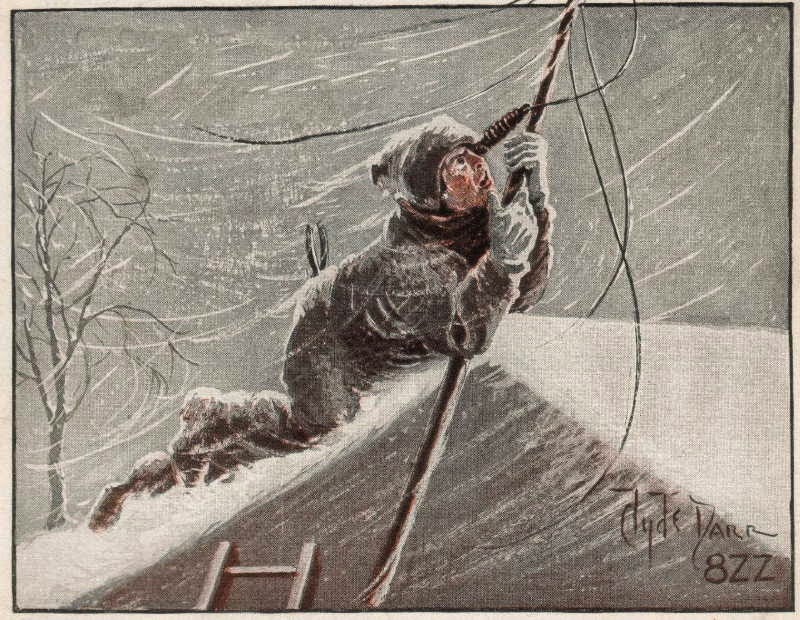
Well this year's NRR has come and gone, providing a full nine days of CW fun for those of us that love old radios.
Once again, the ether filled with signals spawned from the old classic Novice-class workhorses that many of today's 'seasoned' amateurs used in their first stations, way back in their teen years. In many respects, the NRR is as close to a real time machine that you'll find, allowing participants to experience the joys, and sometimes the frustrations, of operating CW with their favorite old rigs from the past.
For me, just like last year, the NRR once again provided many notable highlights over the nine day event.
Almost topping the list was just experiencing the variety of old classics and hearing how well almost all of them sounded. Numerous Knight T-60s, Drake 2NTs, Heath DX-40s, Johnson Adventurers and Eico 720s, along with a nice variety of homebrew MOPAs and one-tube power oscillators graced the nightly airwaves. These oft-forgotten shelf-queens always seem to develop super-powers, far beyond their expectations, when the NRR rolls around!
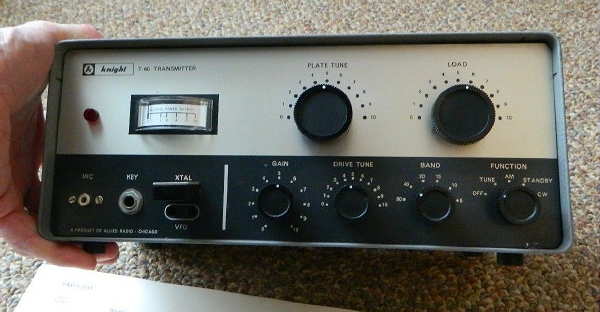
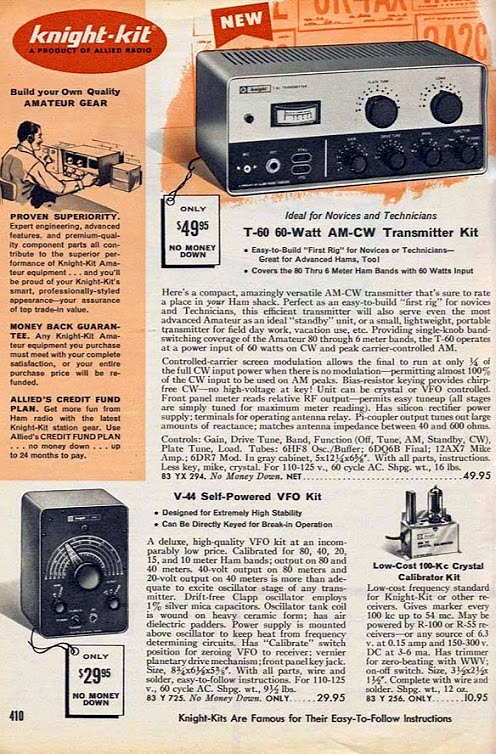
I was really surprised to work so many T-60s, a small and inexpensive 60 watt transmitter kit from 1962 using a popular 6DQ6 television sweep tube ... one never expected to achieve such RF greatness! I was very impressed with every one that I heard.
What radio-struck pre-Novice teen, dreaming about getting on the air, could resist a clever ad like this.
Scott, KA9P's 80m T-60 signal sounded as sweet as it looks in his 2018 setup, paired with his Heathkit HR-10B inhaler.
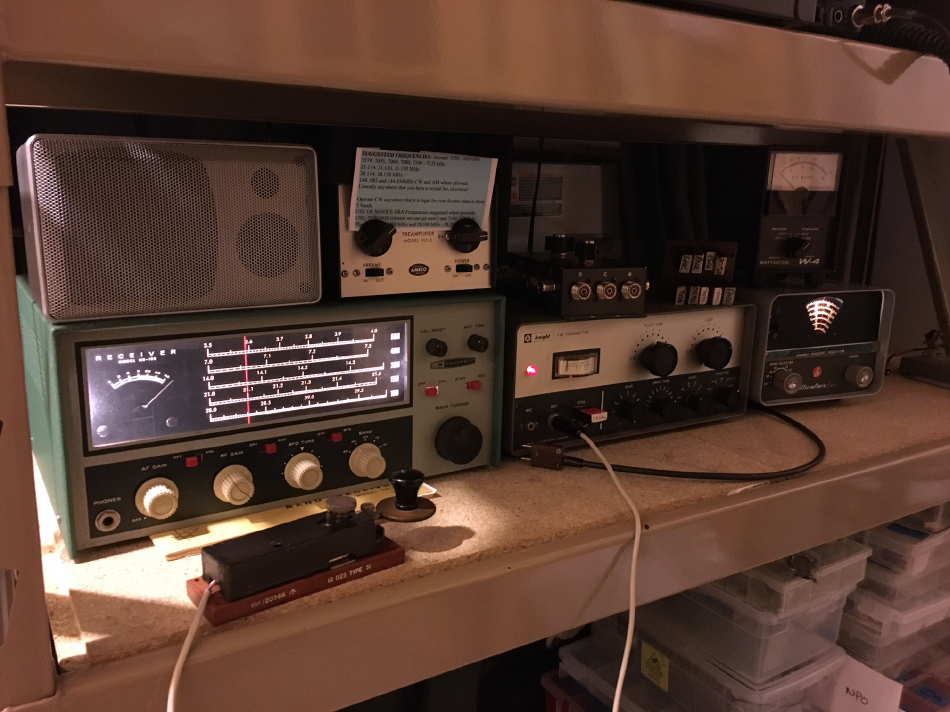 |
| KA9P 2018 NRR station with RAF Vulcan bomber Type 51 hand pump |
Right up there with the plethora of T-60s was the Drake 2NT, another great sounding radio and also my choice for this year's event. My summer refurbishing project, described here, proved a worthy companion, although my much-treasured VF-1 VFO's short term drift probably had my 2NT getting red in the face whenever I took her off of crystal control to scurry around the band, seeking out the CQ'ers. I've had a love-hate relationship with the VF-1 ever since buying my first one back in '63!
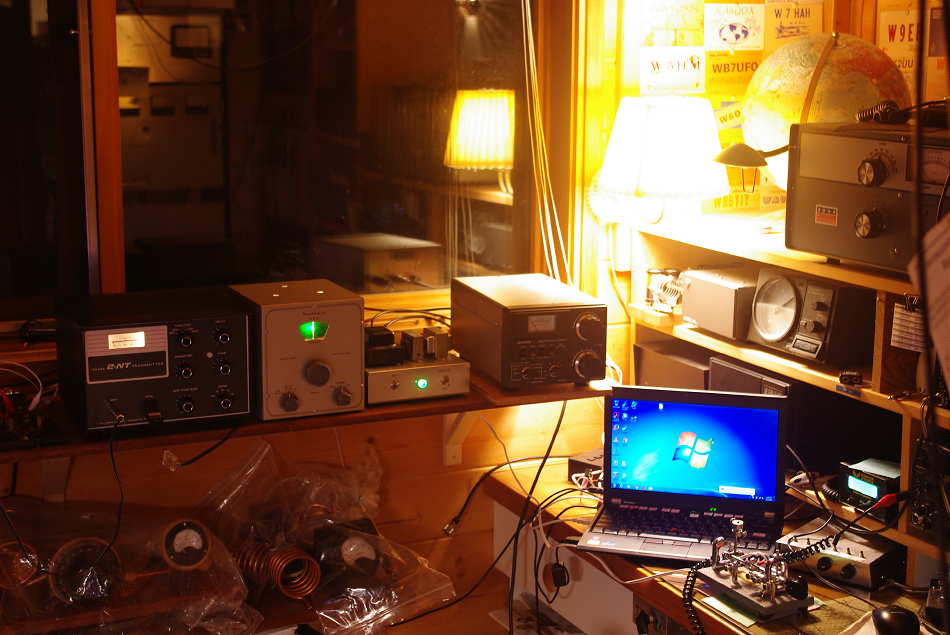 |
| VE7SL 2018 NRR with 2NT, VF-1 and my Original '63 Vibroplex |
Yet another 2NT packed a powerful punch from West Virginia, keyed by Dave, W3NP, when we exchanged 579 reports on 40m, 45 minutes before sunset.
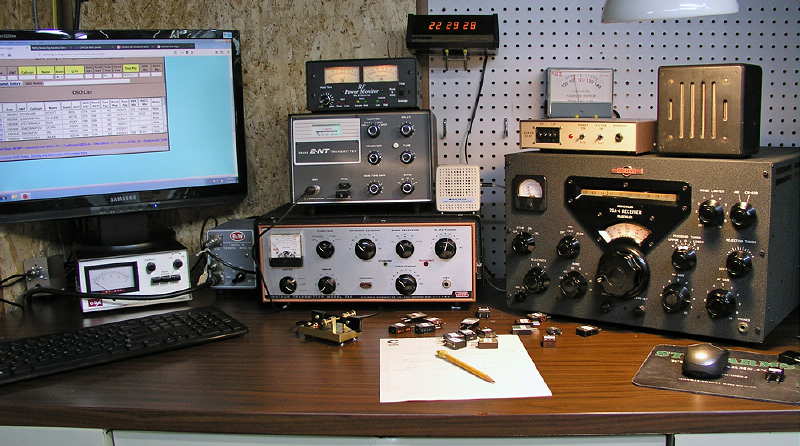 |
| W3NP - 2018 NRR setup |
I made three contacts on 15m this year: W5IQS in Texas, K2YWE in Maryland and WN4NRR in Florida, whose S9 reply to my 'CQ NRR' just about took my head off ... what a nice surprise to hear the booming signal from Bry's 2NT powerhouse. Dan, K2YWE, was no slouch either, as his Globe Scout was music to my ears when his signal quickly rose out of the noise just long enough to make the coast-to-coast journey. If the predictions for future solar cycles become reality, there may be many more NRRs before we experience the magic of 15m once again.
 |
| K2YWE's Globe Scout and Adventurer were worked on all three bands! |
My NRR exchanges with George, N3GJ (KA3JWJ) in Pennsylvania, truly demonstrated just how well the low bands were performing. More than an hour before my local sunset, I responded to his 569 40m 'CQ NRR' only to learn that his signal, now reaching a solid 579, was coming from an original Ameco AC-1! This one-tube crystal-controlled power oscillator has, over the years, reached Holy Grail status among many amateurs. Originals are guarded like precious jewels and handed down from father to son ... or in George's case, from uncle to nephew!
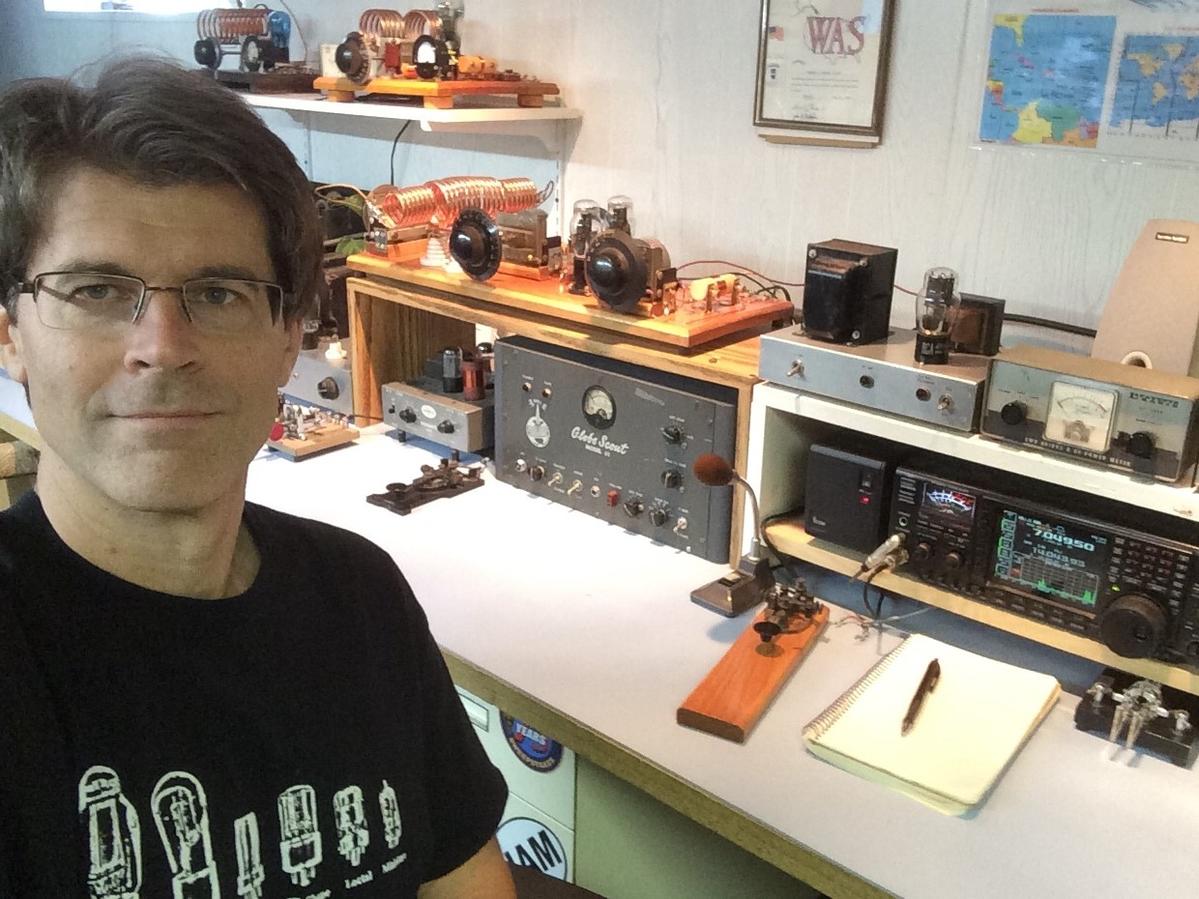 |
| N3GJ and his all powerful original AC-1 |
Heathkits were plentiful too, with the DX-60 seeming to be the rig of choice, often paired with the matching HG-10 VFO. Both Mark, VA7MM and Gary, W8PU, packed a wallop with these fine examples.
 |
| VA7MM - 2018 NRR set-up |
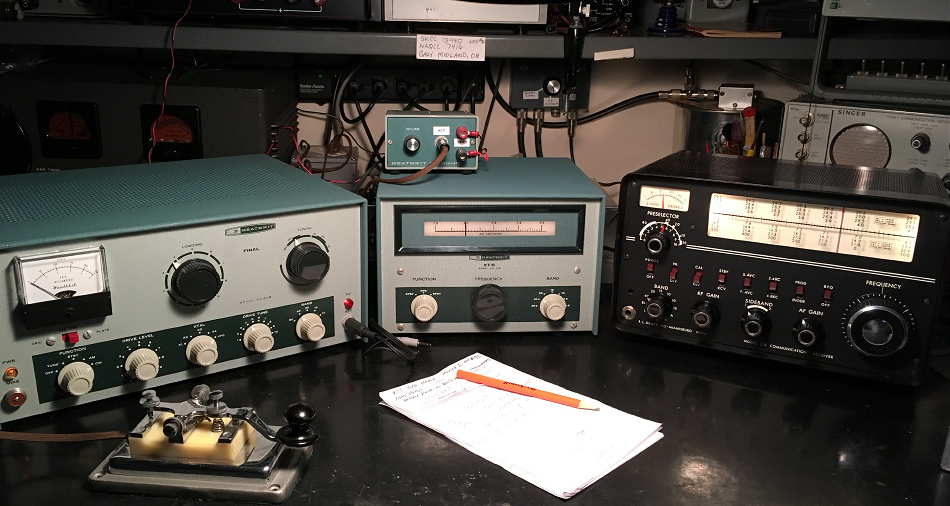 |
| W8PU - 2018 NRR set-up |
But it wasn't just DX-60s representing Benton Harbor engineering in the NRR. All of these neat old Heaths made it out to the west coast, sometimes on both 40 and 80. KN8RHM's (Rick) HW-16 made it here on 40m with a solid signal almost every night, while KE4OH (Steve) sported a modernized DX-20 in the form of Heath's HX-11. Steve even received the highly-treasured 'OO' report for his NRR chirp ... good job!
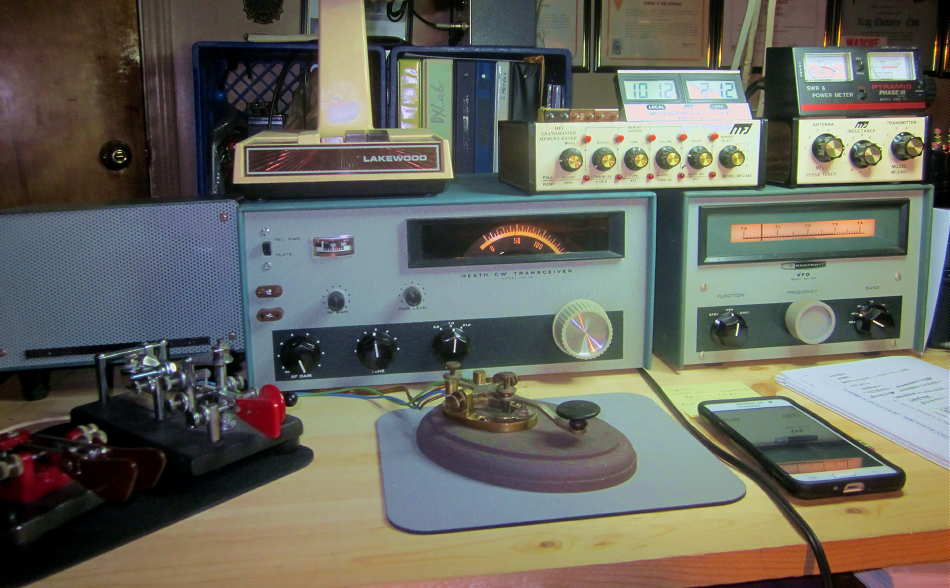 |
| KN8RHM - HW-16 NRR set-up |
 |
| KE4OH - HX-11 NRR station |
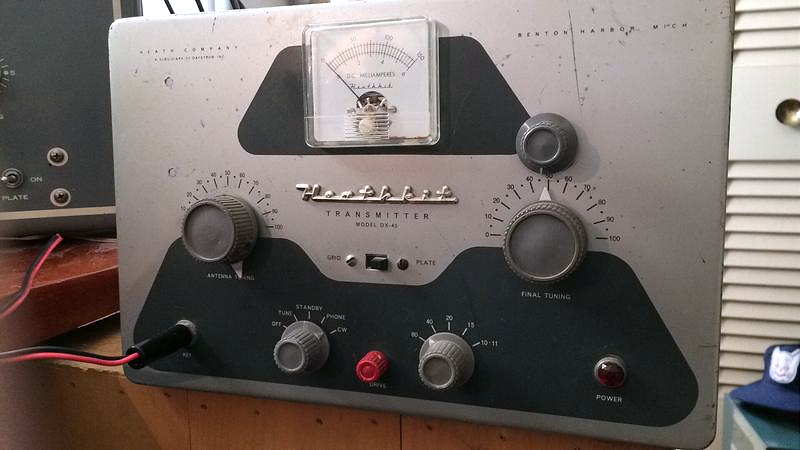 |
| N3PDT - DX-40 NRR transmitter |
Rich, WN7NRR / AG5M operating in nearby Washington state put some of his 44 crystals to work with his HW-16 ... that's some collection!
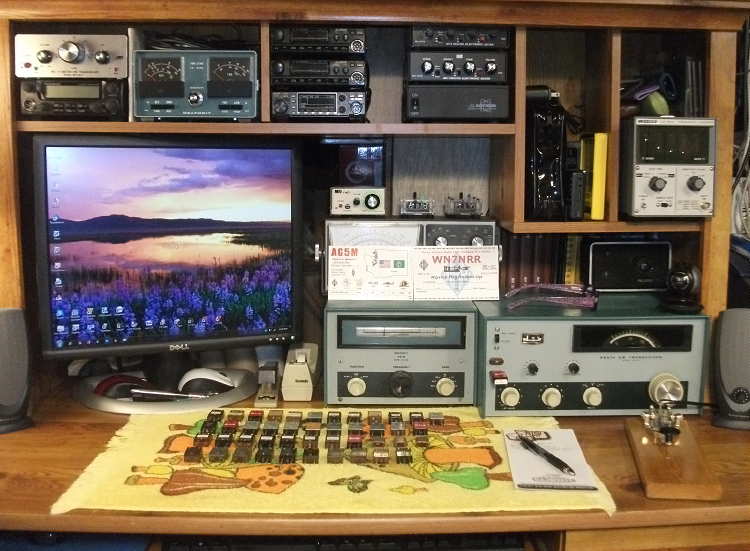 |
| WN7NRR - HW-16 NTT set-up |
Howie, WB2AWQ in Reno, was using his homebrew pair of 807s, driven with a Millen 90700 swing-arm VFO from 1945. Most shacks worldwide, including the Novices, found plenty of use for the 807 as they were dirt-cheap in the post war surplus market. The filament has a beautiful illumination and if a bit gassy as most are by now, emit a wonderous blue glow with each press of the key.
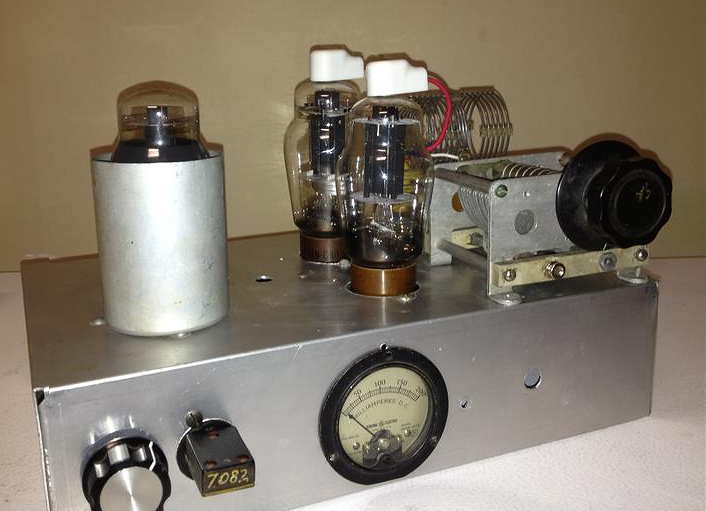 |
| WB2AWQ - 807s |
 |
| Millen VFO from 1945 at WB2AWQ |
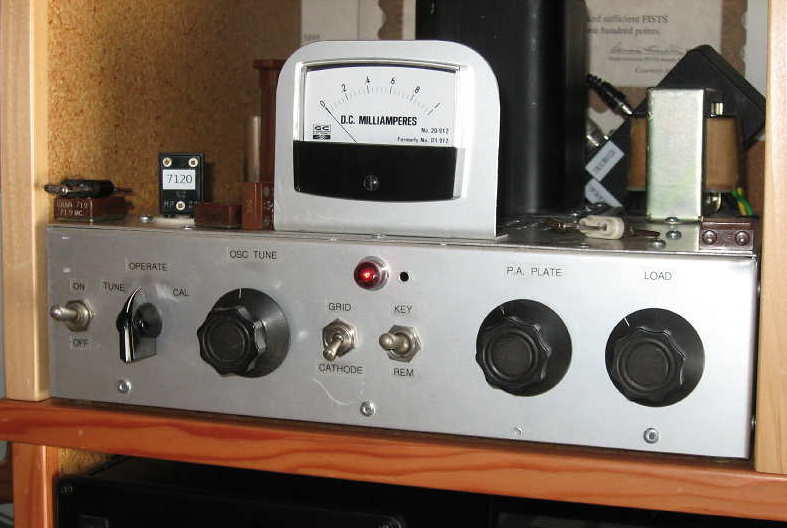 |
| KD7JG's 1625 NRR mainstay |
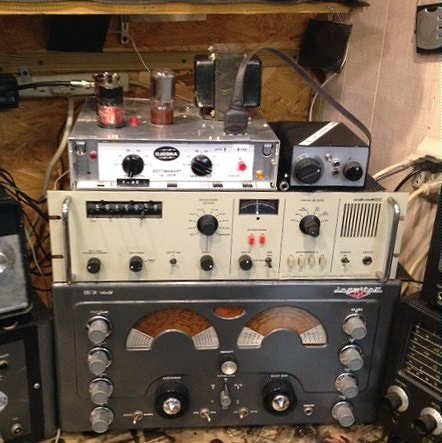 |
| K4IBZ's 10 watter |
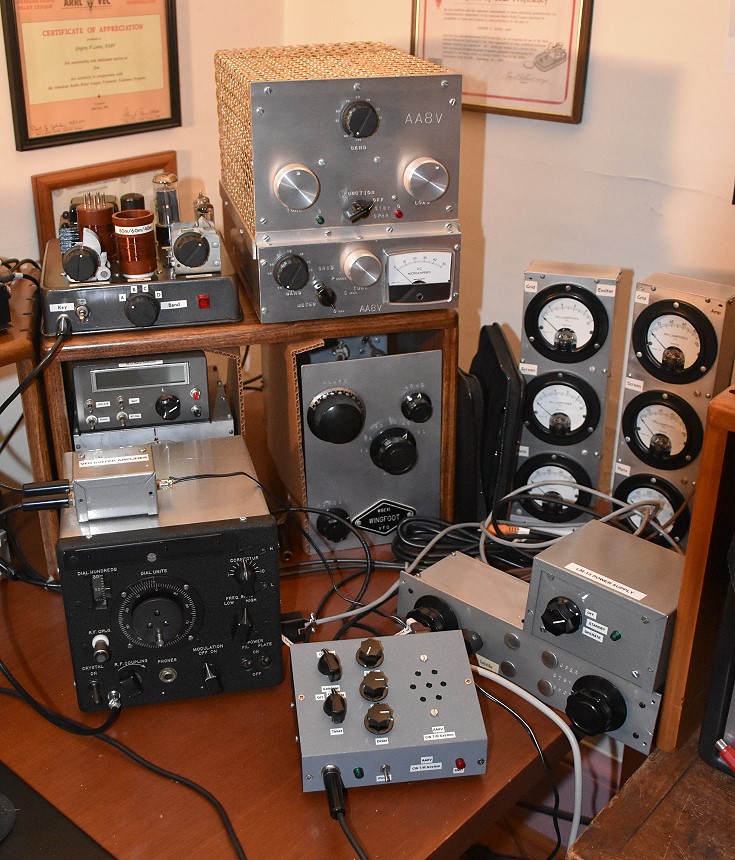 |
| AA8V's homebrew NRR stack |
 |
| VE3BDV / VE3AWA - 50C5 Bare - Essentials power oscillator |
I finished up the NRR with 123 contacts, a lot better than last year's event when I was running the Longfeller at 5 watts.
If you think that you might enjoy participating in the next event then now is the time to start preparing ... just 353 more sleeps until the 2019 NRR begins!!
Steve McDonald, VE7SL, is a regular contributor to AmateurRadio.com and writes from British Columbia, Canada. Contact him at [email protected].
VK9AR A Wonderful IOTA Expedition Experience
Going to Australia was a bucket list item for me and to check it off with such an adventure as the VK9AR expedition was a wonderful treat.
Mike Crownover, AD5A, is a regular contributor to AmateurRadio.com and writes from Texas, USA. Contact him at [email protected].
Weekly Propagation Summary – 2018 Mar 12 16:10 UTC

Here is this week’s space weather and geophysical report, issued 2018 Mar 12 0049 UTC.
Highlights of Solar and Geomagnetic Activity 05 – 11 March 2018
Solar activity was very low throughout the period.
No proton events were observed at geosynchronous orbit.
The greater than 2 MeV electron flux at geosynchronous orbit reached moderate levels on 10 Mar with normal levels observed through the remainder of the week.
Geomagnetic field activity reached active levels late on 09 Mar and early on 10 Mar due to the combined influences of a coronal hole high speed stream and a weak transient solar wind feature.
Forecast of Solar and Geomagnetic Activity 12 March – 07 April 2018
Solar activity is expected to continue at very low levels throughout the outlook period.
No proton events are expected at geosynchronous orbit.
The greater than 2 MeV electron flux at geosynchronous orbit is expected to reach high levels on 18-25 Mar with moderate levels expected on 17, 26-30 Mar. Normal flux levels are expected throughout the remainder of the outlook period.
Geomagnetic field activity is expected to reach G1 (Minor) geomagnetic storm levels on 18 and 26 Mar and active levels are expected on 15-17, and 21 Mar due to the influences of multiple, recurrent coronal hole high speed streams. Generally quiet and quiet to unsettled conditions are expected for the rest of the outlook period as a nominal solar wind regime prevails.
Don’t forget to visit our live space weather and radio propagation web site, at: http://SunSpotWatch.com/
Live Aurora mapping is at http://aurora.sunspotwatch.com/
If you are on Twitter, please follow these two users: 1. https://Twitter.com/NW7US 2. https://Twitter.com/hfradiospacewx
Check out the stunning view of our Sun in action, as seen during the last five years with the Solar Dynamics Observatory (SDO): https://www.youtube.com/watch?v=zXN-MdoGM9g
= = = = =
BOOK SALE: Space Weather and Sun Science – get these from Amazon, and help us stay online!
NOTICE: When you buy this (or any item after starting with this link), you are helping us keep our SunSpotWatch.com and other resources “on the air” (up and running!). In other words, you are helping the entire community. So, check out this book:
Here is the link to Amazon: http://g.nw7us.us/fbssw-aSWSC
We’re on Facebook: http://NW7US.us/swhfr
Visit, subscribe: NW7US Radio Communications and Propagation YouTube Channel
LHS Episode #213: HF Antenna Woes
 Welcome to Episode 213 of Linux in the Ham Shack. In this episode, the hosts discuss the proper installation of HF antennas, the HF Voyager project, FT-8 DXpeditions, Ubuntu 18.04 and Discourse, picking OSS licenses, the new release of WSJT-X and much more. Thank you for listening!
73 de The LHS Crew
Russ Woodman, K5TUX, co-hosts the Linux in the Ham Shack podcast which is available for download in both MP3 and OGG audio format. Contact him at [email protected].
Amateur Radio Weekly – Issue 197

The HF Voyager Project
Jupiter Research Foundation Amateur Radio Club has integrated an HF transceiver with an autonomous ocean-going drone. Our mission is to deploy a ham radio station that roams the world’s oceans while providing an opportunity for amateur radio operators everywhere to make contacts with rare locations.
JRFARC
ARRL repurposes AM broadcast transmitter for Ham Radio use
Thanks to a joint effort by ARRL and the Vintage Radio and Communications Museum of Connecticut (VRCMCT), a classic Gates BC-1T AM broadcast transmitter will enjoy a second life on the Amateur Radio bands for occasional use under W1AW.
ARRL
Alexa Skill: Band conditions
This skill uses the information from http://www.bandconditions.com/ and can help Amateur Radio operators quickly get information about current band conditions on a scale from “dead” to “great.”
AC4PA
How to make a MMDVM Digital Repeater
After following this article you will be able to put together a multimode amateur digital repeater that can be connected to the internet for world wide digital communication.
San Antonio Digital Radio Club
The Army’s costly quest for the perfect radio continues
The decisions that the Department of Defense made about its “radios of the future” more than 20 years ago are still having an impact on the communications gear the military services purchase today.
Ars Technica
Will the FCC sink pirate radio in Colorado?
Word spread quickly about the mysterious unmarked black SUV parked at a highway exit just outside the town of Ward, CO.
Westword
Valerie, NV9L, is Amateur of the Year
Hotzfeld is a co-host of the netcast Ham Nation and has created several how-to videos on YouTube for the ham radio community.
ARRL
The QCX 5W CW Transceiver from QRP Labs
The board is top quality, and comes with the two SMT devices already soldered on. They are the Si5351, which is the heart of the synthesized VFO, and the FST3253, which is used for the quadrature sampling detector. Inside the red packing is the LCD module.
AA7EE
Solar power in a can
Already designed to resist the elements, [bennelson] is using a 50cal. ammo can for a portable enclosure. Inside, he’s siliconed a 15AH, 12V lead-acid battery in the centre to maintain balance and to leave room for the wiring and storage.
Hack A Day
Veteran long distance walker to use 2m on his latest 900 mile walk
Fifty-nine year old Paul Truswell, M3WHO, of Macclesfield, Cheshire, will shortly be starting a 900-mile walk south to north across Great Britain.
Southgate
Video
Ham radio helps WA9SZL find his voice
Johnnie Mayfield began using ham radio when he was young, and the hobby has helped in real emergencies, including the time he spent days relaying information during a blizzard.
WRAL
Amateur Radio Weekly is curated by Cale Mooth K4HCK. Sign up free to receive ham radio's most relevant news, projects, technology and events by e-mail each week at http://www.hamweekly.com.
Need a Vacuum Tube?
Superstore for Vacuum Tubes
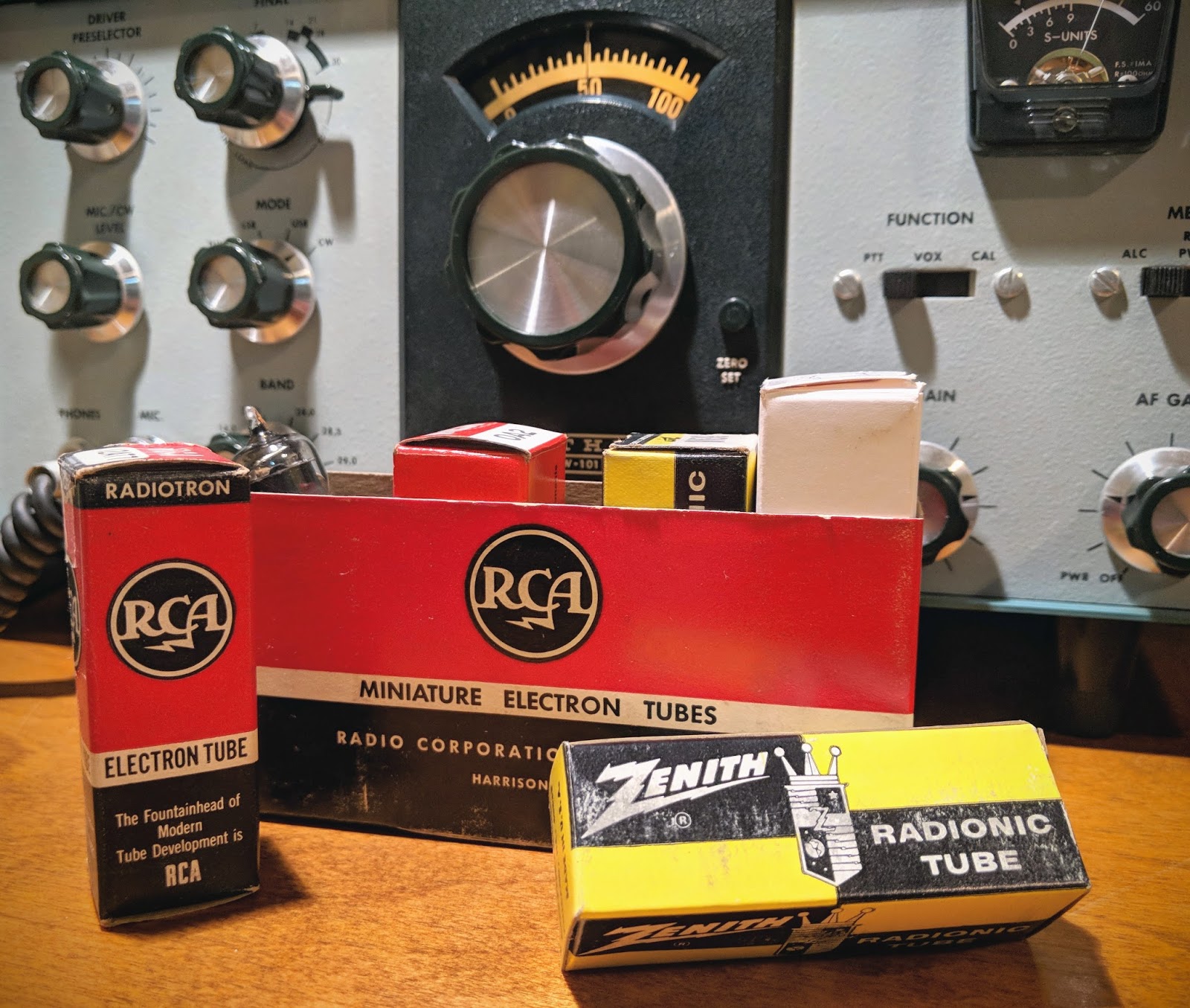
So if you've been looking for a good source for all your classic vacuum tube needs visit...
Richard Carpenter, AA4OO, is a regular contributor to AmateurRadio.com and writes from North Carolina, USA. Contact him at [email protected].
Oscilloscope now on the bench
Tektronix 475 Oscilloscope and Android Signal Generator App
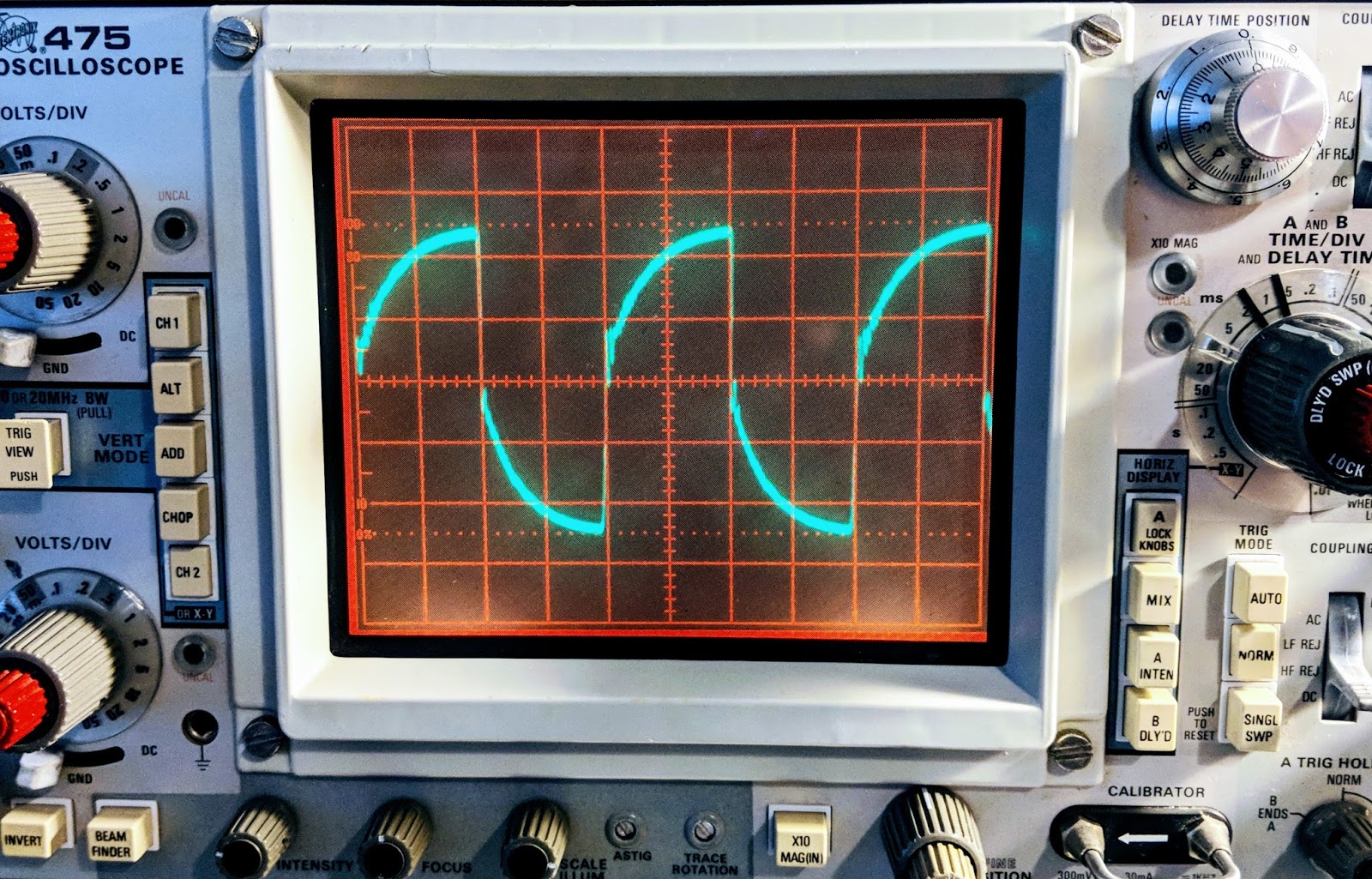 |
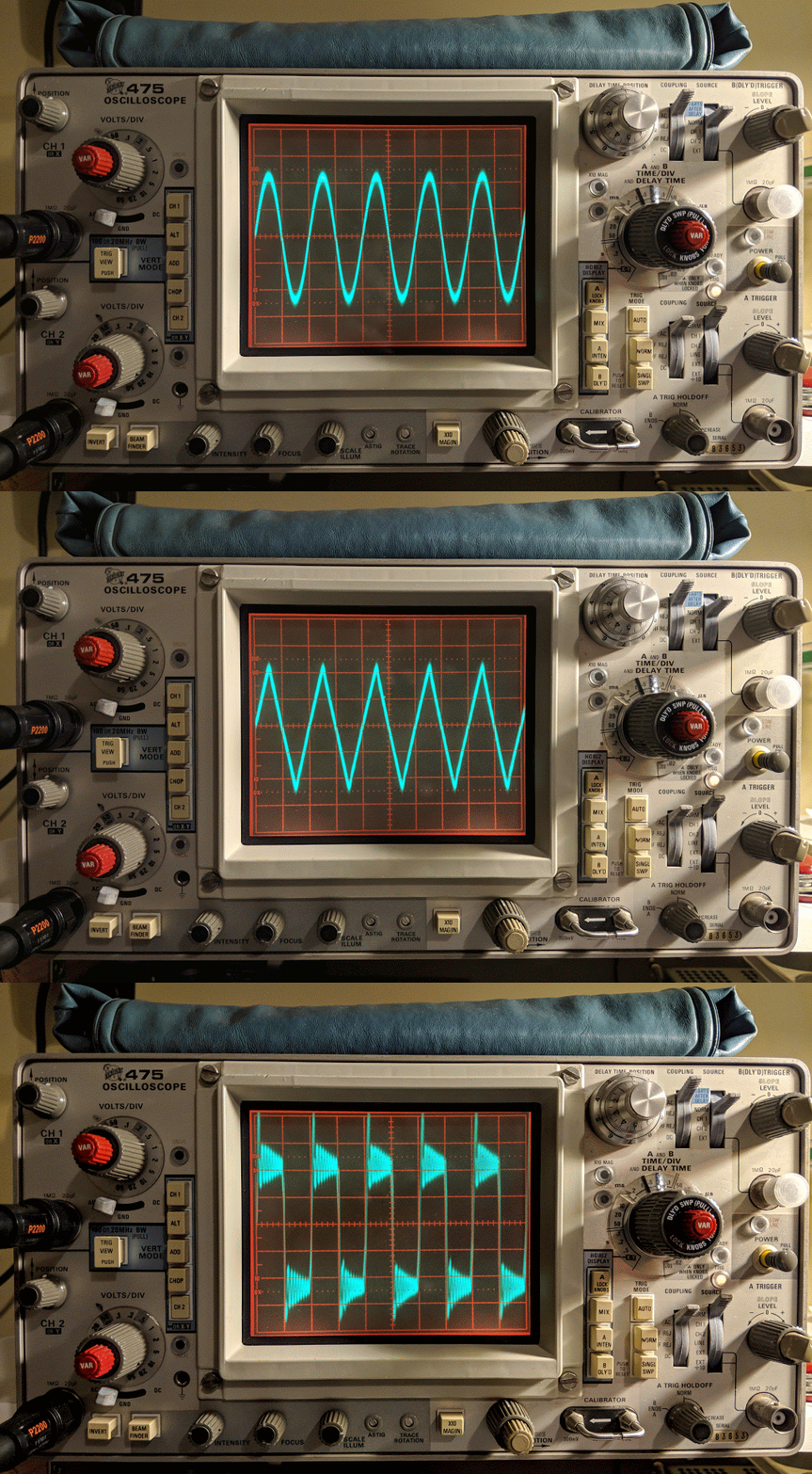
| Watching a capacitor charge 250 times a second The lines are a bit wide because the signal source was noisy |
Tek 475 Specs
- Bandwidth -- 200 MHz (475), AC cutoff 10 Hz, switchable BW limit 20 MHz
- Rise time -- 1.75 ns (475)
- Deflection -- 2 mV/Div to 5 V/Div, 1-2-5
- Cascaded mode -- 400 μV/Div, 50 MHz with CH1 input connected to CH2 VERT SIG OUT
- Time base -- 10 ns/Div to 500 ms/Div, 1-2-5, and ×10 magnifier
- Input impedance -- 1 MΩ // 20 pF
- Triggering -- 0.3 Div (int) or 50 mV (ext) to 40 MHz, increasing to 1.5 Div/250 mV at 200 MHz; AC coupling >60 Hz; LF REJ >50 kHz, HF REJ <50 khz="" li="">
- X bandwidth -- 3 MHz
- Z axis input -- 5 Vp-p, 50 MHz
- Calibrator -- 1 kHz, 30 mA / 300 mV square wave
- Outputs -- CH2 Vert Signal Out, 20 mV/Div into 1 MΩ or 10 mV/Div into 50 Ω; A and B +GATE OUT, +5 V; Probe power jack
- CRT -- 8 × 10 cm², P31 phosphor (P11 opt.)
- Power -- 110, 115, 120, 220, 230 or 240 VAC ±10%, 48-440 Hz, max. 100 W
Real knobs and switches
An oscilloscope needs a function generator
 |
| Frequency Generator App set to 1 kHz |
Square Wave?
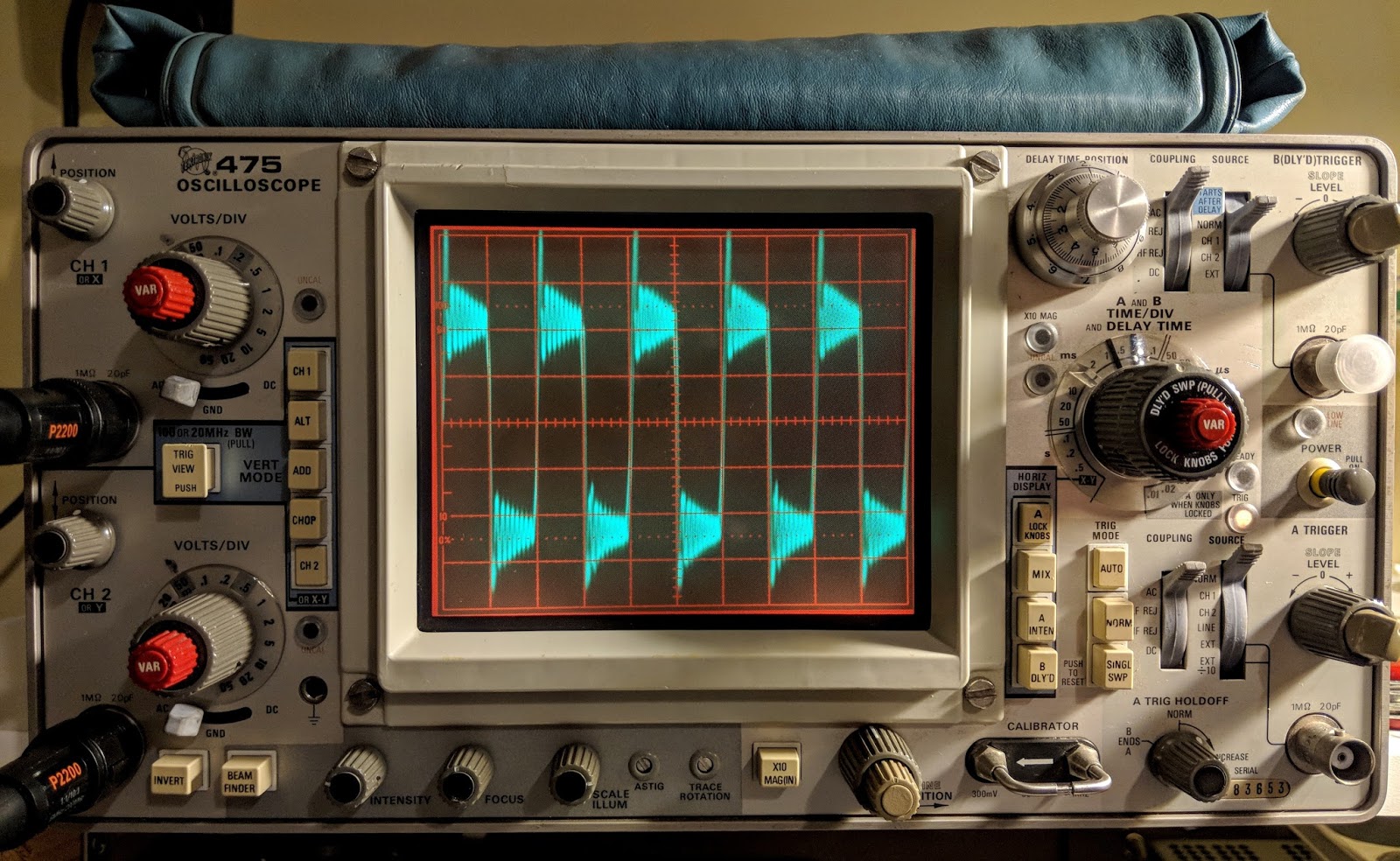 |
| Square waves are not |
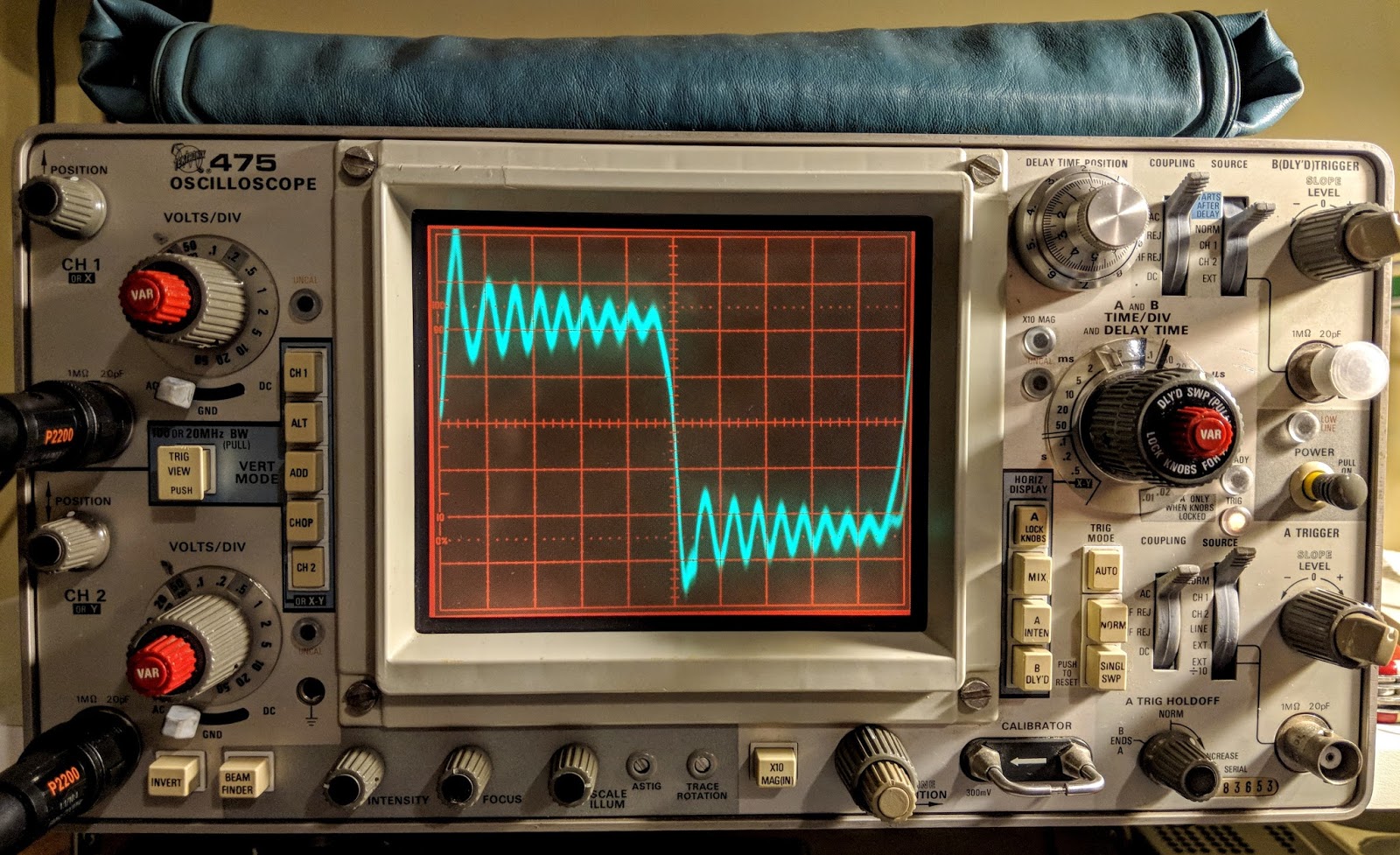 |
| Reduce the time base to zoom in |
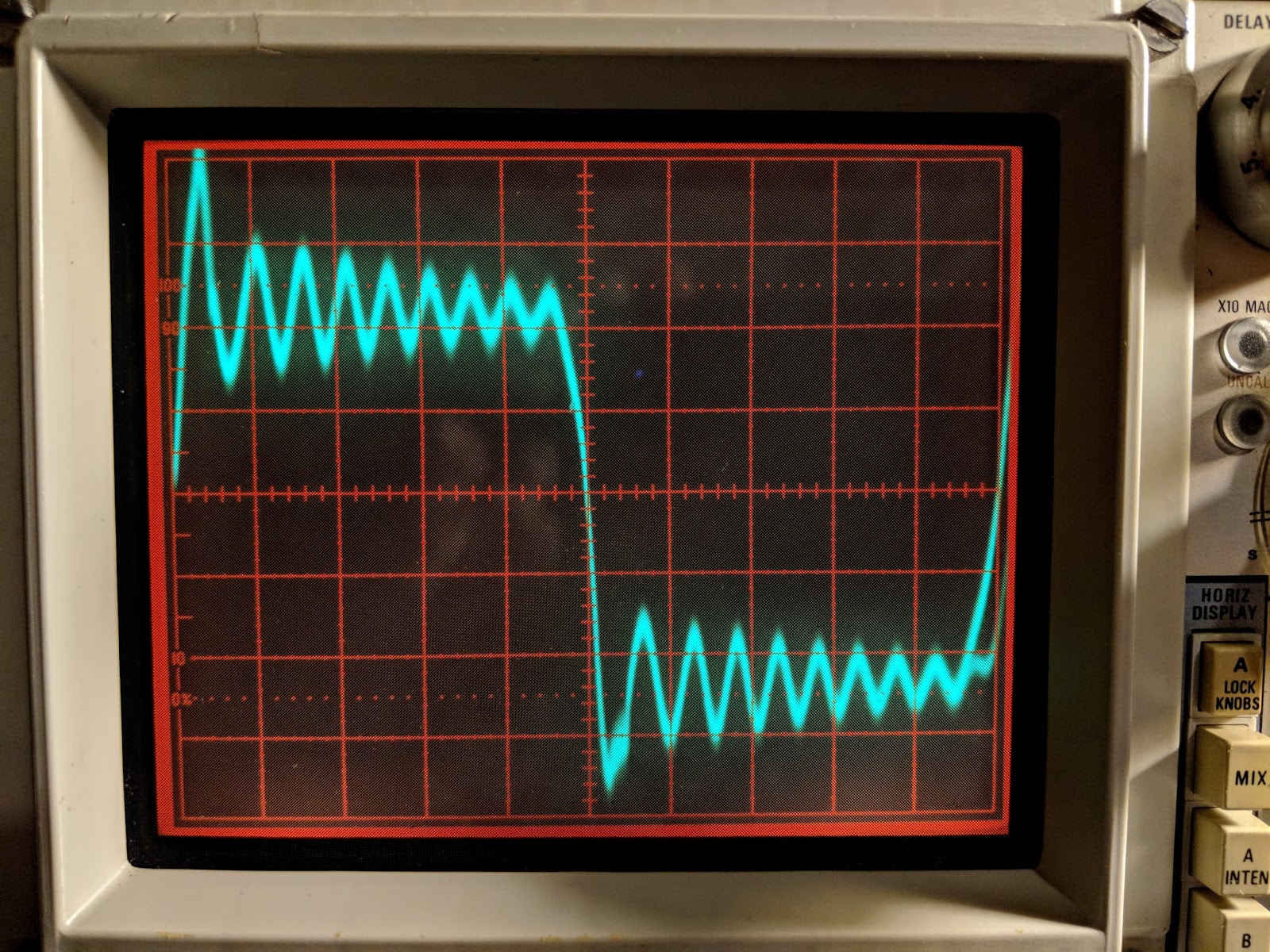 |
| Yea, square wave.... not so much |
The square wave is bad but sine and triangle waves look good until the frequency get's near the top of the range or the amplitude is raised too high.  |
| Sine Waves look good |
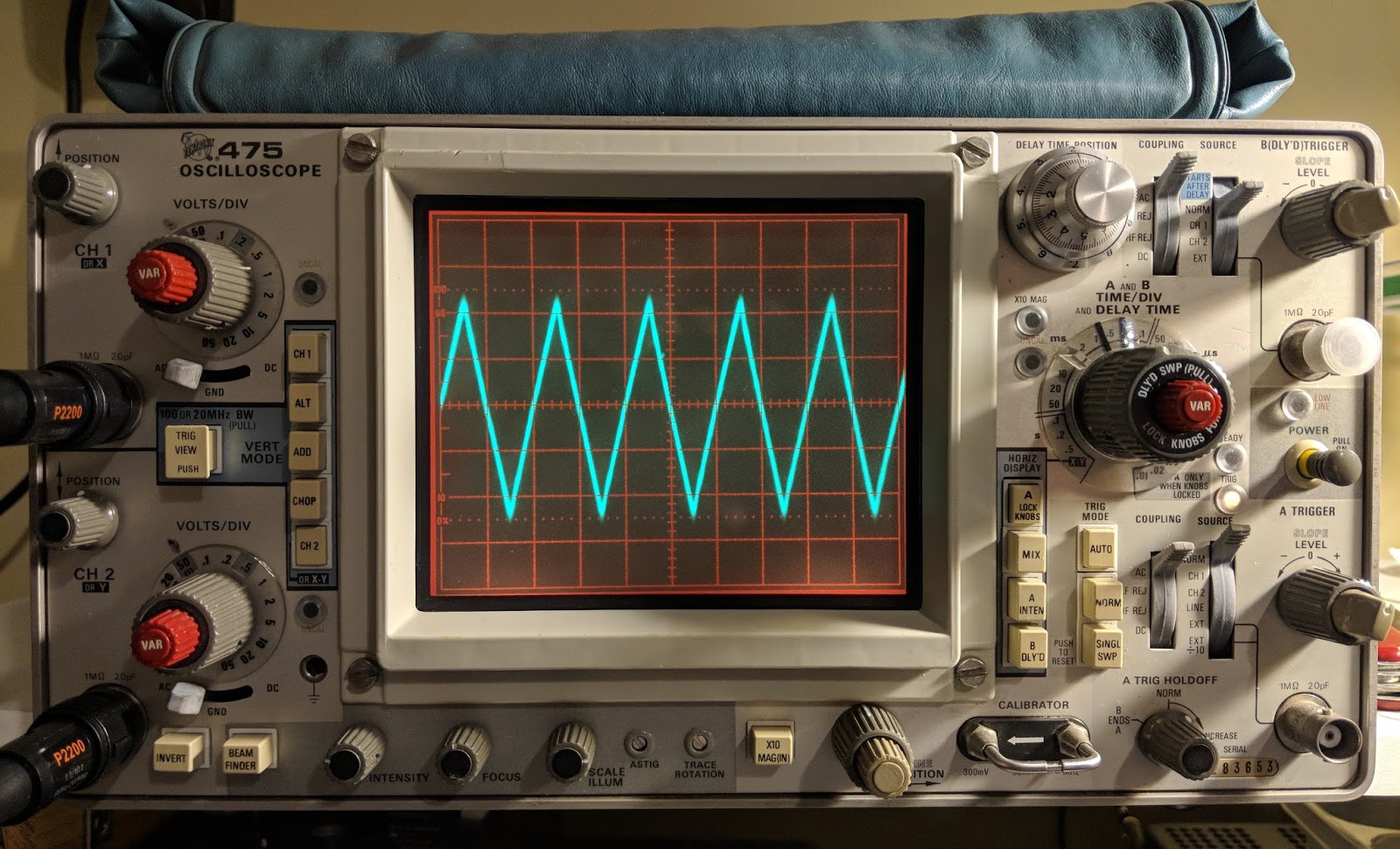 |
| Triangle waves are on as well until you go up in frequency |
The free app is inadequate for bench testing
Only the beginning
That's all for now
Sow lower your power and sample it with a scope
72/73
Richard AA4OO
Richard Carpenter, AA4OO, is a regular contributor to AmateurRadio.com and writes from North Carolina, USA. Contact him at [email protected].
 Ham Radio Deluxe |
 W5SWL Electronics |
 Ham Radio Prep |
 KB3IFH QSL Cards  Hip Ham Shirts  HamRadioAuctions HamRadioAuctions Reliance Antennas Reliance Antennas Enigma Shop Enigma Shop |  morseDX  Ni4L Antennas  R&L Electronics R&L Electronics antennas.us antennas.us QRV QRV |
- Matt W1MST, Managing Editor
