 |
 At The Dials
 17 January 2018 | by
  |
| Courtesy |
A recent never-ending series of equipment breakdowns, repairs, computer software problems, along with everyday household duties, has kept me away from blogging longer than usual.
However, the recent arrival of a fresh 'off the press' 2018 World Radio Television Handbook (WRTH) has really augmented my rekindled interest in what initially hooked me on the magic of radio ... tuning around the international shortwave bands.
The last time I purchased a WRTH was more than 40 years ago, but other than the information between its covers, the book still looks much the same as it did back in the good old days. There is a lot to digest in this book and although it's likely that a lot of it could be found on the Internet, it would probably take weeks of sleuthing to find it ... there is just a ton of valuable information here to accommodate the varied interests of radio fanatics.
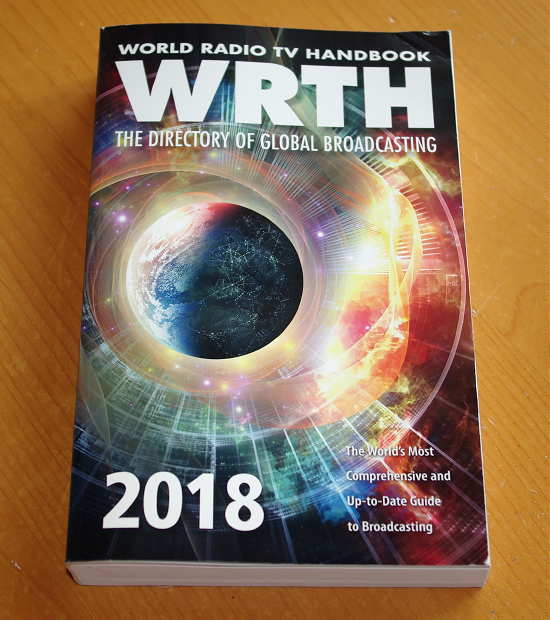 As always, the first section of the book is devoted to technical articles or equipment reviews with the remainder being a quick-find reference guide of maps, frequency lists, broadcast schedules and mailing / e-mail contact info for those that like to gather QSLs. At 672 pages, the WRTH is a valuable tool in your listening arsenal and well worth the cost.
I often read comments on various reflectors of just how few international shortwave stations there are and that tuning through the bands often reveals little to be heard. There is no question that the number of SW stations on the air today is much less than it was a few decades ago, but there are still a huge number of stations to target throughout the various SW bands and a lot of DX challenges yet to be found on the international bands.
For example, one such challenge comes to mind for west coast DXers ... and that is India. Signals on any band, from India to western Canada, have always been difficult. All India Radio (AIR) has 22 shortwave transmitters, operating from a half-dozen different sites ... hearing all sites from here on the various bands would keep one pretty busy for some time. To make it even more interesting, AIR still responds to listener reception reports with a QSL ... and who doesn't like a real 'paper' QSL!
Here is a quick tune through the 31m SW band this morning, at around 10:20 a.m. local time, on my FT-1000mp Mark V and 40m half-sloper. Although approaching the lowest part of a very poor solar cycle (Cycle 24, the weakest in the past 100 years), witness the activity on a day of very poor HF propagation ... there are still a good number of signals to seek out.
With the present low solar flux, it's usually the lower SW bands that really come to life, with the bands bursting with signals from shortly before sunset into the dawn.
In addition to the WRTH, there are several great reference sites on the internet as well as some wonderfully helpful blogs devoted to SW radio listening.
Here are the sites I find myself returning to quite often:
Yahoo Group's Primetimeshortwave
Worldwide DX Club News
Eibi Shortwave Time / Frequency Schedules
Shortwave Info
Hard-Core-DX Daily News
Blogs:
Mount Eveyln DX Report
The SWLing Post
Bulgarian DX Blog
South East Asia DXing
There are probably more but these ones are good. In addition, there are a lot of great Facebook sites that deal with SW radio and much interesting discussion is available there via a quick search.
Now it's back to the repair bench to hopefully finish everything off for some time, but maybe you can find a few spare hours to have a closer listen to the international SW bands and see what you can dig up.
SHORTWAVE BROADCAST BANDS
2300 - 2495 120m
3200 - 3400 90m
3900 - 4000 75m
4750 - 5060 60m
5850 - 6200 49m
7100 - 7350 41m
9400 - 9900 31m
11600 - 12050 25m
13570 - 13800 22m
15100 - 15800 19m
17480 - 17900 16m
18900 - 19020 15m
21450 - 21850 13m
25600 - 26100 11m
Steve McDonald, VE7SL, is a regular contributor to AmateurRadio.com and writes from British Columbia, Canada. Contact him at [email protected].
What Got You Interested in Radio? What Hooked You? (Story Time, with Video)
What got you interested in radio? What hooked you?
I’ve been asked, “What got you interested in radio, space weather, and the science of radio-wave propagation?”
Here’s a short answer as to why (and when) I became a radio enthusiast. It all started…
[embedyt] https://www.youtube.com/watch?v=0XBth62JgwA[/embedyt]
https://www.youtube.com/watch?v=0XBth62JgwA
The following picture is of my first shortwave radio, discovered in my home sometime between 1971 and 1973: a Sony portable transistorized four-band radio receiver. This was my very first shortwave radio (well, truthfully, it was my dad’s). This radio is responsible for my love of radio, electronics, and communications.
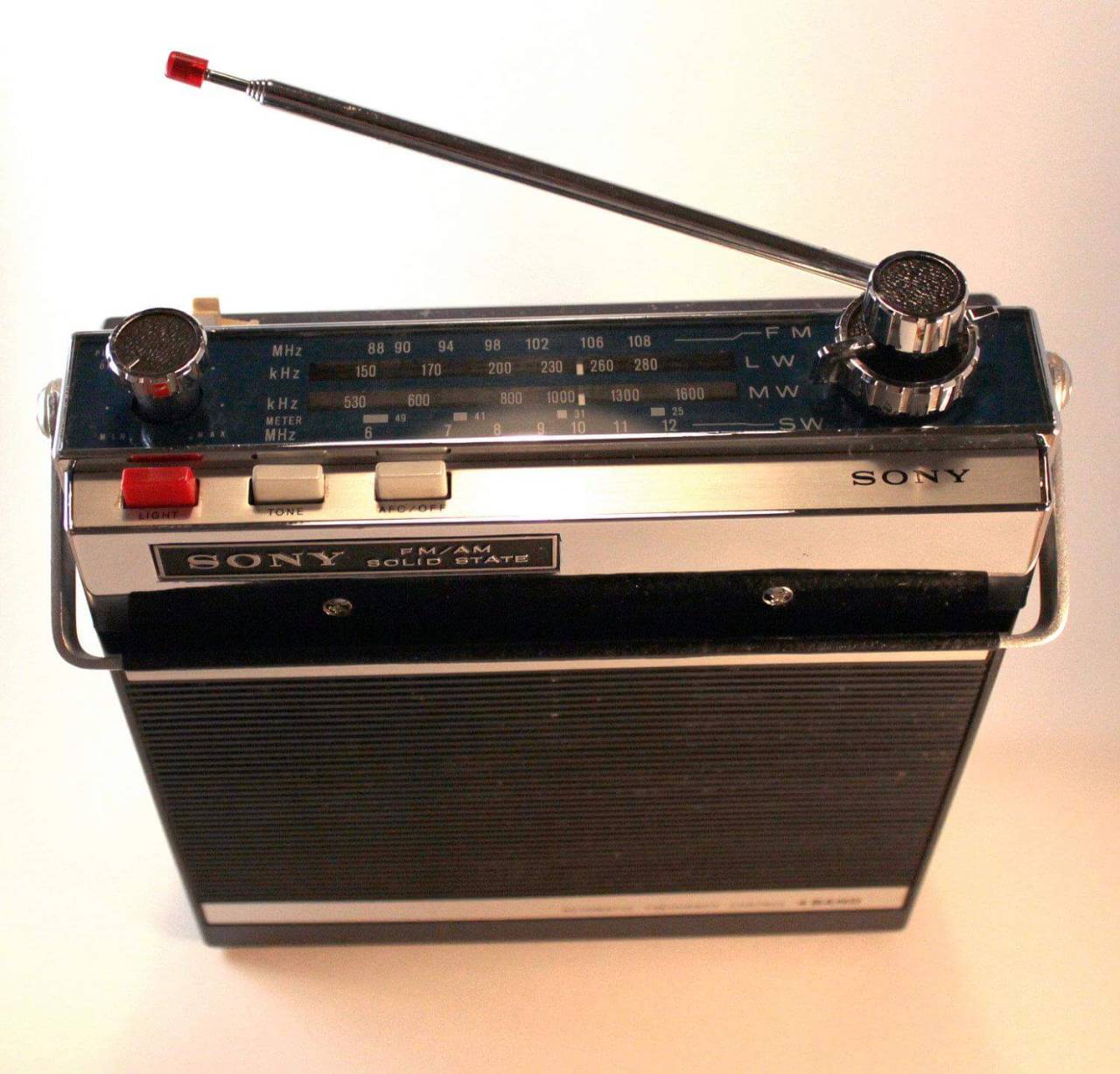
Sony Portable 4-Band Radio – the model 7F-74DL (my First Radio)
I still use this, sometimes, when listening to late-night AM-broadcast-band-radio DX. It is horrible for shortwave radio listening, as it has no noise blanker. For MW (Medium-wave) AM Broadcast DXing at night, it is excellent. The internal bar antenna is very directional so I can rotate the radio around until I get the best reception of some station. Back when I was a child, that made the radio very fun to use.
This next radio is a really capable military surplus radio circa WWII or shortly after (the late 1940s, early 1950s). This radio was my world starting around 1975. From Medium-wave to Shortwave, this radio could hear a pin drop around the world! Many late nights when I was supposed to be sleeping, I was up with the light dimmed and the tubes singing signals from exotic places.
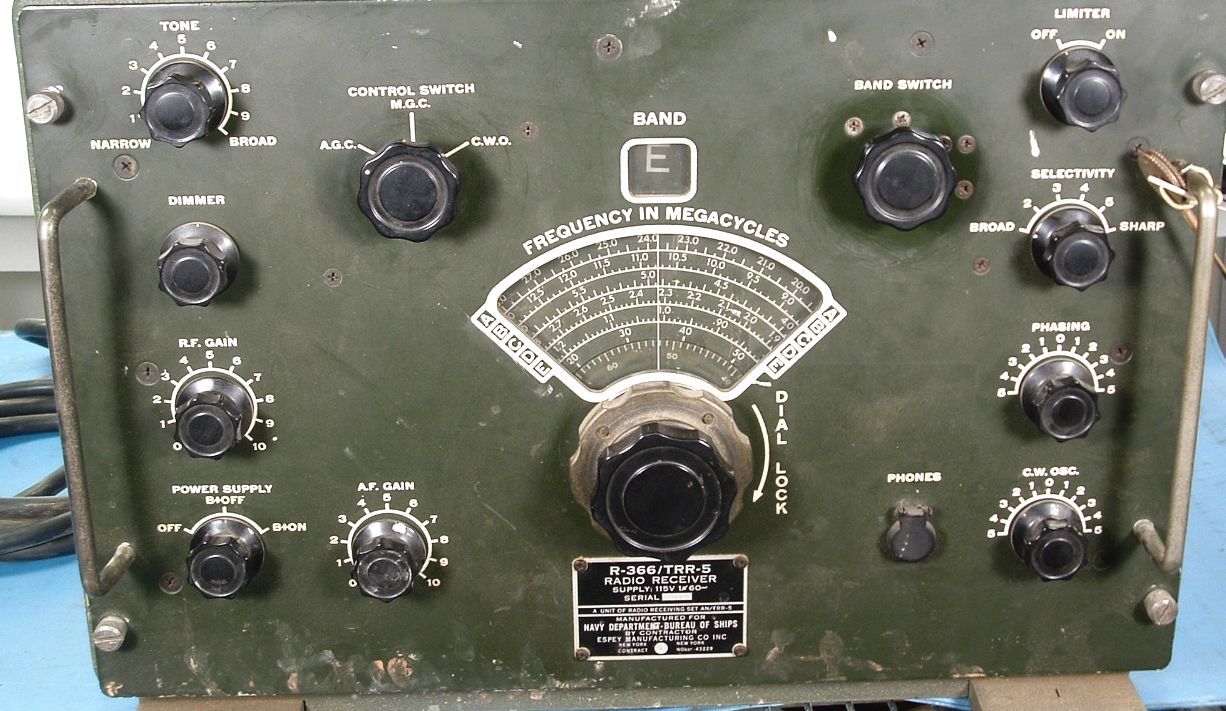
Espey R366 Tube Receiver (my Second Radio)
What is your story?73 de NW7US
Addendum:
https://www.youtube.com/watch?v=y8bBM9Dy38o
[embedyt] https://www.youtube.com/watch?v=y8bBM9Dy38o[/embedyt]
Visit, subscribe: NW7US Radio Communications and Propagation YouTube Channel
M328 LCR-T4 an updated version of M328 LCR Transistor tester.
I wrote about the original M328 Chinese kit sometime ago, which I had to build to prove to myself that VK3YE's capacitance offset error problem was a calibration error:
http://g1kqh.blogspot.co.uk/2015/02/building-m328-component-tester-1.html
http://g1kqh.blogspot.co.uk/2015/02/building-m328-component-tester-2.html
However there is now a newer pre built SMD version (M328 LCR-T4) which came into my hands recently, all that you have to do is kit it together with a prebuilt case and a 9V battery NO SOLDERING: (Cost less than £8 inc case inc delivery).
This version has the advantage of being ready built with ZIF skt, and supports a better LCD full sized display!
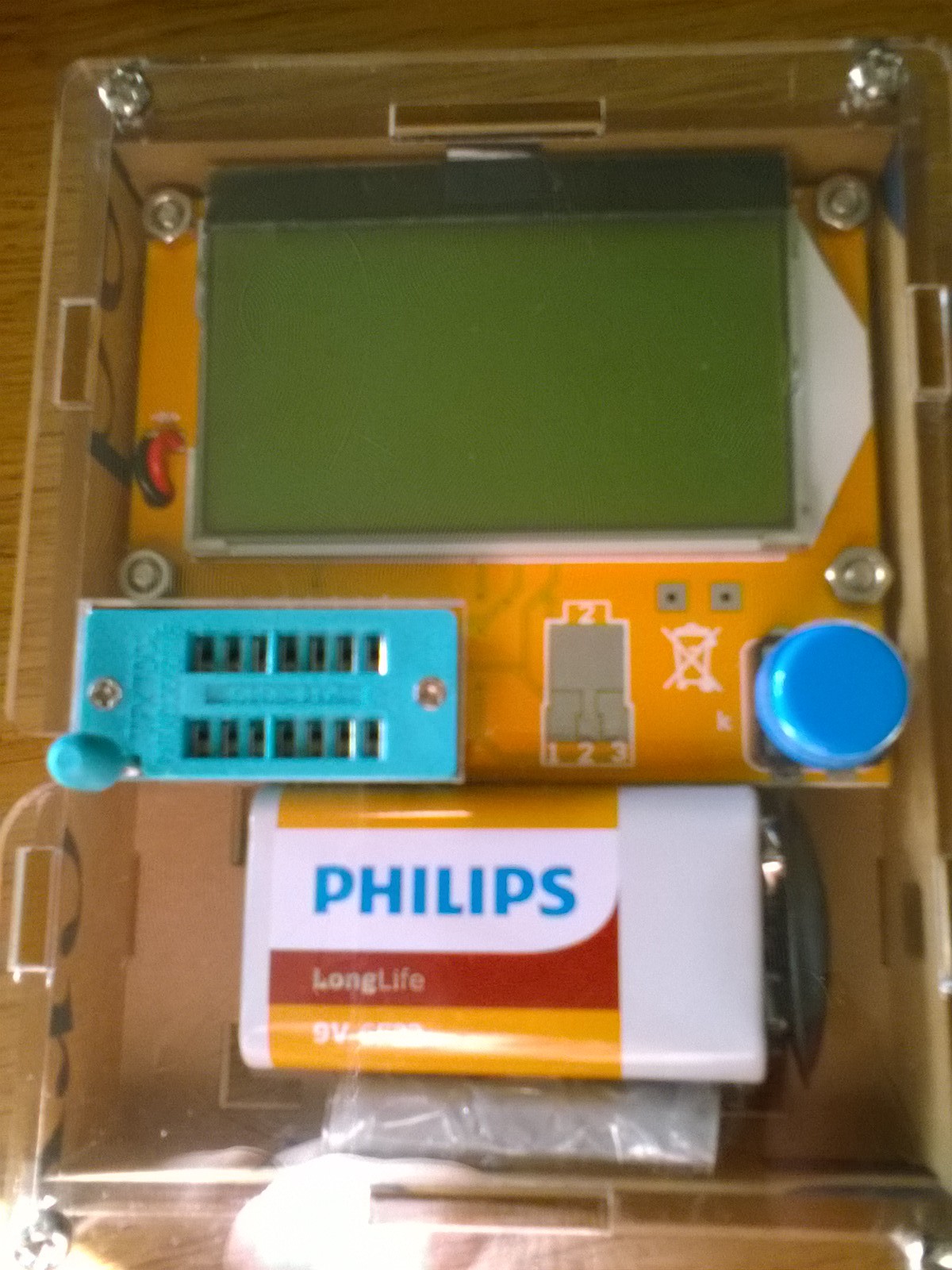
I like this for it's ability to identify "any" transistor, or diode, you seem to throw at it. Displaying the gain figures of, and whatever way around the device is plugged into the ZIF socket, it has the ability to identify the pin out configuration, and if it is PNP or NPN, or even a FET. so you do not have to keep getting the semiconductor book out or downloading the data sheet for the pin data.
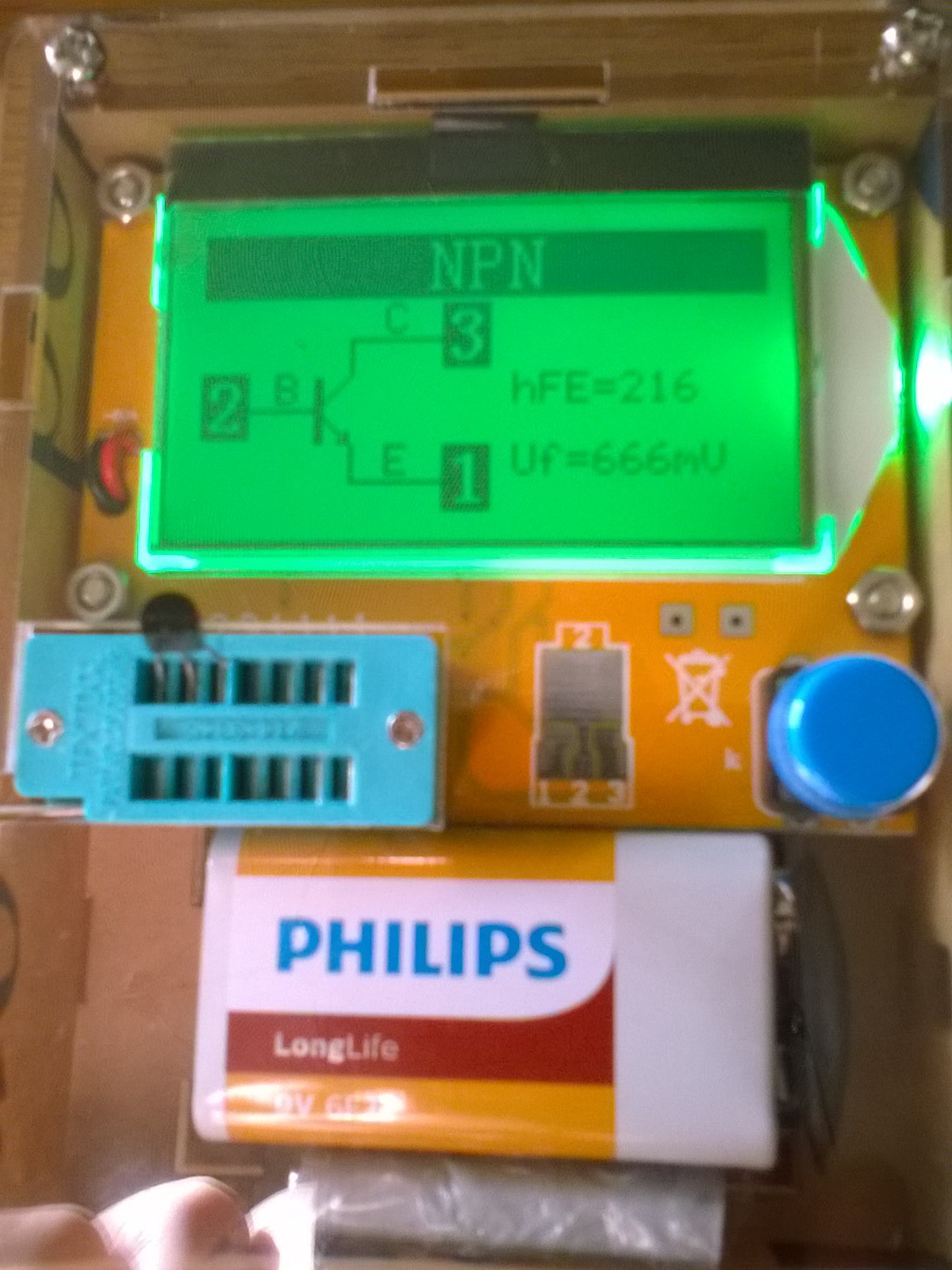
I thought this version was so good! I got G4WIF of the GQRP club recently to include it into the new Tribal Knowledge - Test Equipment document here
Steve, G1KQH, is a regular contributor to AmateurRadio.com and writes from England. Contact him at [email protected].
LHS Episode #203: Choosing Your Linux Distribution
 In Episode #203 of Linux in the Ham Shack, your hosts take a deep dive into the factors you should consider when choosing a Linux distribution that suits you. These are tips you can use when your computer will be used for personal use, ham shack use, office use or any other type of computing. Thank you for listening!
73 de The LHS Crew
Russ Woodman, K5TUX, co-hosts the Linux in the Ham Shack podcast which is available for download in both MP3 and OGG audio format. Contact him at [email protected].
AmateurLogic 113: IR CAD Weather Meter
AmateurLogic.TV Episode 113 is now available for download.
Peter experiments with infrared remote control. Tommy fiddles with Tinkercad. Emile becomes an amateur weather scientist. George tests a variety of components with an ohmmeter.
1:22:57
George Thomas, W5JDX, is co-host of AmateurLogic.TV, an original amateur radio video program hosted by George Thomas (W5JDX), Tommy Martin (N5ZNO), Peter Berrett (VK3PB), and Emile Diodene (KE5QKR). Contact him at [email protected].
Amateur Radio Weekly – Issue 189

Fox-1D launched, initial telemetry received
Initial telemetry values appear nominal.
AMSAT
Ham Radio 360: FaradayRF – Open Source Digital Radio
We pull back the veil and get a glimpse of the future… “Challenging the notion of making a contact.”
Ham Radio 360
ARRL revises changes to Articles of Association and By-Laws
The ARRL Executive Committee is scaling back proposed changes to its Articles of Association and By-Laws.
CQ Magazine
Monitoring power meters with an RTL-SDR
And with one simple command, I was reading the power (and probably water) meters for my entire neighborhood.
kroy.io
Baofeng APRS PTT controller
Baofeng radios trigger the ptt by shorting the sleeves of the two audio connectors. I isolated the audio lines with two audio transformers and set up the pi to trigger the transistor with a GPIO pin.
awsh.org
TyMD380toolz for Tytera MD-380
Now that I have the worldwide database of DMR users loaded onto the radio, its like having caller ID on my HT.
K0NR
Amateur astronomers track secretive spy satellites for fun
If Zuma is still up there, there’s a small group of people who will be ready and watching for it to reappear in a week, when its projected orbit should bring it out of Earth’s shadow and into the daylight.
Popular Science
Why a maritime forecast is so beloved in the United Kingdom
This weather report has been making waves for 150 years.
Atlas Obscura
Video
How Hedy Lamarr changed the world with radio
An overview of frequency hopping.
ARRL
A tip to keep track of charged batteries
This is a little cheap tip I picked up to keep track of the status of multiple charges batteries.
WI9LL
N4KGL FM satellite setup
This is my gear I am using for operating on FM amateur radio satellites like SO-50.
N4KGL
Pocket DATV
Minimal Digital TV chain: Transmitter and Receiver. Hardware used on Tx: PiZero, Picam, LimeSDR Mini. Hardware used on Rx: Raspberry Pi 2, RTL-SDR
YouTube
Amateur Radio Weekly is curated by Cale Mooth K4HCK. Sign up free to receive ham radio's most relevant news, projects, technology and events by e-mail each week at http://www.hamweekly.com.
LHS Episode #202: The Weekender
 Welcome to the first edition of LHS "The Weekender." We will be recording these every other Thursday night. They are a round-table done on Mumble wherein we talk about stuff that interests us, recommendations on fun things to do for the weekend: Stuff to do, stuff to eat, stuff to drink. Lots of stuff. You're encouraged to join on future episodes. Check the IRC chat room topic or the homepage for information on the Mumble connection and join us for a fun time. Cheers.
73 de The LHS Crew
Russ Woodman, K5TUX, co-hosts the Linux in the Ham Shack podcast which is available for download in both MP3 and OGG audio format. Contact him at [email protected].
 Ham Radio Deluxe |
 W5SWL Electronics |
 Ham Radio Prep |
 KB3IFH QSL Cards  Hip Ham Shirts  HamRadioAuctions HamRadioAuctions Reliance Antennas Reliance Antennas Enigma Shop Enigma Shop |  morseDX  Ni4L Antennas  R&L Electronics R&L Electronics antennas.us antennas.us QRV QRV |
- Matt W1MST, Managing Editor
