 |
 Amateur Radio Weekly – Issue 211
 14 July 2018 | by
Ham radio technology used in Thailand cave rescue
UK radio amateur John Hey G3TDZ (SK) designed the special low frequency radio equipment, the Heyphone, used in the recent cave rescue in Thailand.
Southgate
SDR: Direction finding techniques
Public KiwiSDRs distributed around the world can be used to pinpoint the physical locations of any 0 – 30 MHz transmitter using the TDoA technique.
RTL-SDR
New: No Nonsense Amateur Radio Podcast
The No Nonsense Amateur Radio Podcast is a discussion of where we are in amateur radio and where we’re going. It is a production of Dan, KB6NU, and Tom, KB5RF.
No Nonsense Podcast
A short guide on baluns
Unless precautions are taken to minimize it, all coax fed antennas will have significant current flowing on the outside of the coax shield while transmitting.
Surrey Amateur Radio Club
ARRL contest award certificates now available for download
This new online certificate feature will offer enhanced content over what has been offered previously on ARRL certificates.
ARRL
88 MHz Trans-Atlantic signals heard in Ireland
Northern Ireland managed to hear a Canadian radio station across the Atlantic at 88 MHz.
EI7GL
W6/NC-353, Burdell Mountain – 2018
I did this summit late last year as my first morse code activation. Last time it was a combo POTA/SOTA activation. This time would be only SOTA. And it was a heck of a lot warmer too!
KE6MT
Shortwave radio listening continues its steep decline
Shortwave audiences are virtually disappearing in Pakistan, and down substantially in Nigeria.
BBC
3D printed 10KV tuning capacitor
I will show you how to build a super-cheap tuning capacitor that will tolerate up to 10,000 Volts of RF and allow you to use up to about 100 Watts of RF into my 14MHz (20m) antenna.
The SWLing Post
Directive Systems 2 Meter Rover Yagi
With an 8 foot boom, it’s just the right size to fit on the roof of my SUV for transport and works great on the fiberglass push-up mast.
K5ND
Video
Make your own LED battery level indicator
In this video I will show you how we can use the classic LM3914 IC to create an LED Battery Level Indicator.
YouTube
Get Amateur Radio Weekly in your inbox.
Sign-up here
Amateur Radio Weekly is curated by Cale Mooth K4HCK. Sign up free to receive ham radio's most relevant news, projects, technology and events by e-mail each week at http://www.hamweekly.com.
My New 80 / 40m Antenna
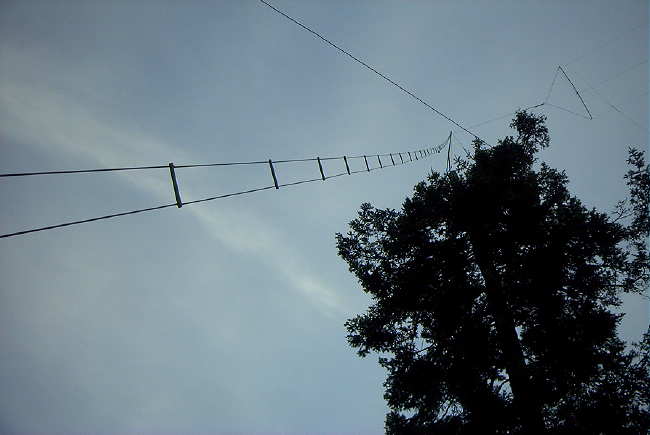 |
| 80 / 40m wire vertical groundplanes, now removed |
For the past several years I have employed wire vertical groundplane antennas for both 80 and 40m, mounted a few feet from the ocean.
In the fall I layout the ground radials on the grass and in the spring, roll all of them up again. The main reason for going to the vertical was to eliminate problems with my 80 / 40m half-slopers when using my 1929 single tube power oscillators during the windy conditions usually encountered during the mid-winter '29 BK QSO Party.
The flexing between the tower's telescoping mast sections and the Yagi antennas that form part of the sloper's 'top hat' , cause the half-sloper's impedance or resonance to change ever so slightly. The directly-coupled oscillators respond to these minute antenna changes by constantly shifting frequency by several hundred Hertz, as their output load changes. These high winds can make the low-power oscillator difficult to copy under weak signal conditions as it suddenly jumps frequency. The verticals were immune to this 'wind effect' and performed very well ... sort of.
I've noticed, over the years, that the verticals seemed to produce a much better signal out on the eastern edges of the continent than they do in the central states and in the closer western (PNW) states. I decided to see if an inverted-V might produce a higher takeoff angle and give me a better signal in mid-continent and an 'OK' one on the east coast. The half-slopers on the other hand, always seem to produce a good signal both near and far, but could usually not be used with the one-tube power oscillators when it was windy ... which, during winter here on the coast, is a lot of the time!
Following the removal of the old wire verticals and several days of antenna building, the new 80 / 40m dual inverted-Vs were hoisted to the top of my 85' Balsam. After pruning for resonance, I have been able to run some comparisons between the 40m V and my present 40m half-sloper. The 80m half-sloper had already been decommissioned as it required the changing of a jumper to use and I was never able to resonate it properly for some reason. Oddly there was no problem with either the 40m or 160m half slopers, fed at the same point, as both resonated easily.
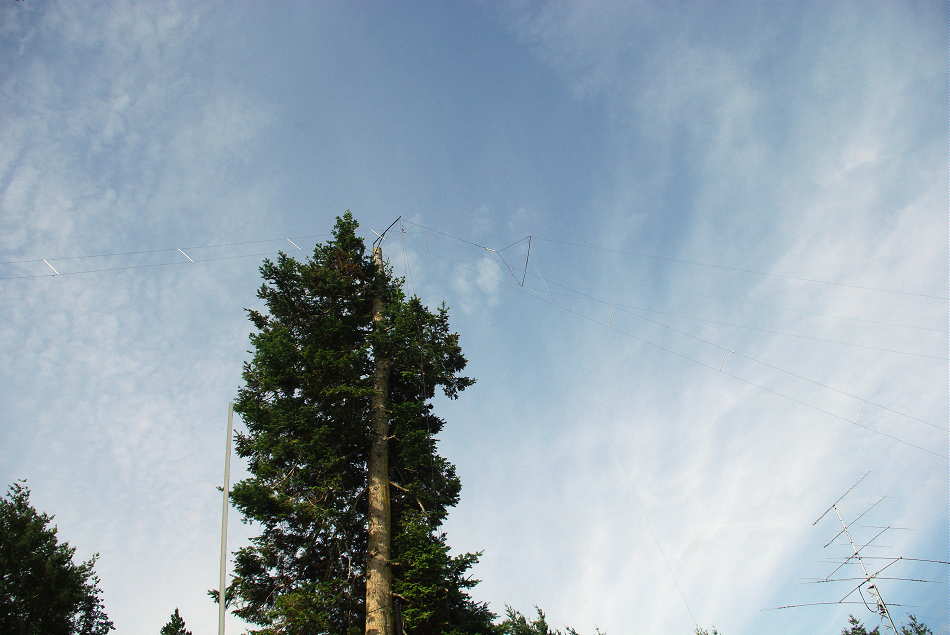 |
| The new 80 / 40m dual inverted-V dipoles |
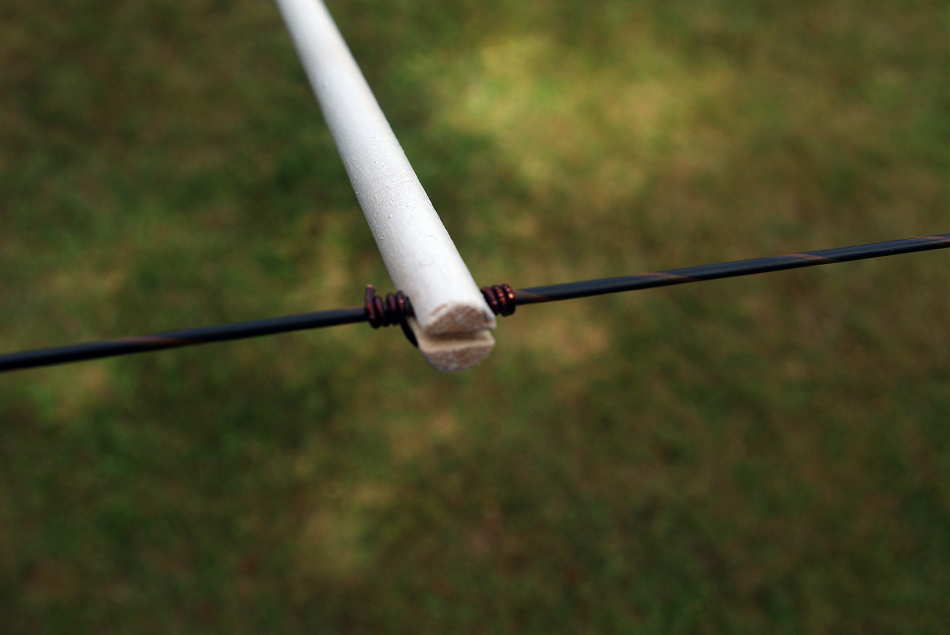
The dual dipoles, both resonated to the CW portion of each band, are separated every 10' by 24" varnished and painted hardwood spreaders.
The old 40m sloper has always been a really great performing antenna (except for the power oscillator / mast flexing problem) and it was the one used for my 300mW Tuna Tin Worked All States, back in the fall of 2000. I've had good success with both the 40m version and the 160m version, with 159 countries now confirmed on topband using the diminutive 130' wire.
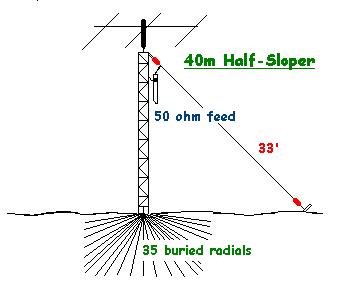
The 'Half-Sloper' was given a close analysis by antenna guru Jack Belrose, VE2CV, and described in QST of May, 1980. In his article, "The Half Sloper - Successful Deployment is an Enigma", he found that the radiation pattern was almost identical to that of a top-loaded monopole, fed against ground. The radiation field was largely vertically polarized and omni-directional while a lesser component, about 10db down, was horizontally polarized and coming from the sloping wire. The horizontal component had a figure-eight radiation pattern, slightly favoring the direction of the wire. He suggests that this antenna should be avoided due to the difficulty in getting it properly tuned.
My own experience with half-slopers have been mostly very positive, in spite of the tuning problems with the 80m version. To me, it seems like an ideal low band antenna for the small backyard, if you can get it to tune correctly. Assuming you already have a tower with some beams to add top-loading, hanging half slopers for the low bands takes up very little space. With omni-directional low angle radiation along with some higher angle horizontal radiation, all in a small footprint, what could be better for a simple wire antenna? Well, hopefully, my new high inverted-V!
For the past couple of weeks, as described earlier, I have been comparing the new 40m inverted-V against my 40m half-sloper, 'A-B' style, in real time, using the KiwiSDR network of online receivers. It seems that about 75% of the time, my old half-sloper, is just a few db better than the new V ... after all of the work involved, these results were both surprising and somewhat disappointing!
Perhaps I shouldn't be surprised after all, since the inverted-V configuration for a dipole is certainly less than ideal and the included angle in my antenna's normal position is only about 90 degrees. As well, the feedline attenuation losses for the new antenna are about 1db higher than those of the sloper. During the winter, I will be able to move one leg over to the far side of my neighbour's property which will open the apex up to a full 180 degrees. Recent testing at this angle has made the antennas neck and neck with one beating the other about 50% of the time, but the inverted-V is always better to the closer states.
Unfortunately, I have nothing to compare the new 80m antenna against but from listening to the signal on various SDR's around the continent and into the Caribbean, I have every confidence in it providing a much better signal than I have previously been able to muster on that band ... it should really help during the '29 BK QSO Party and the next NRR CW Party.
So what has been accomplished with the new installation? I have gained what appears to be a very good performer on 80m, as well as a 40m antenna that seems to be as good as the known good performing half-sloper, and should not cause any frequency-hopping with the one-tube power oscillators. My signal into the nearby PNW and central states has been improved. As well, now I can also avoid the annual radial deployment and retrieval needed for the wire verticals.
I'm still testing both antennas but conditions have been less than co-operative over the past few weeks. Hopefully when propagation picks up again, some of the European and far out Pacific SDRs can be used to further compare the two antennas ... there may yet be more to come!
Steve McDonald, VE7SL, is a regular contributor to AmateurRadio.com and writes from British Columbia, Canada. Contact him at [email protected].
LHS Episode #235: Linux App Package Deep Dive
 Greetings and many welcomes to Episode 235 of Linux in the Ham Shack. In this episode, your hosts take a relatively deep dive into some new methods for distributing software packages in Linux and potentially other operating systems. Specifically mentioned are snaps, appimage and flatpak as well as discussion of other information relevant to distributing and installing software on Linux systems. Hope you enjoy--and thank you for listening!
73 de The LHS Crew
Russ Woodman, K5TUX, co-hosts the Linux in the Ham Shack podcast which is available for download in both MP3 and OGG audio format. Contact him at [email protected].
Signal Butte (W0C/FR-165): SOTA Activation

Signal Butte (W0C/FR-165) is a popular Summits On The Air (SOTA) summit about 8 miles north of Florrisant, Colorado. Joyce/K0JJW and I had this one on our SOTA list for a while now and finally got around to activating it. At an elevation of only 9459 feet, it is not a big mountain but it provides a spectacular 360 degree view of the surrounding area. Signal Butte is within the Hayman Wildfire burn area from June 2002 and you can still clearly see the effects of that fire.

To get to the trailhead, consult the USFS Pike National Forest Map. Drive to the trailhead using FS 362, then turning onto FS 362A which leads to a well-used parking area. These roads are easy-peasy 4WD and high-clearance 2WD is probably sufficient.

The well-constructed trail is only a half mile long and 540 feet vertical, with many tight switchbacks and rock steps. I’d call this a good visitor hike because it will get most people huffing and puffing so they feel like they really did some climbing but then reward them with outstanding views on top.

On the Air
We both operated mostly on 2m FM (146.52 MHz) with the Yaesu FT-90 cranking out 30W into an 3-element yagi antenna. The best DX for the day was Dave/N0KM about 107 miles away in the San Luis valley (DM67vr). Note that our signals had to find their way across several mountain ranges for us to make contact. Who says VHF is only line of sight?
Steve/WG0AT showed up on Mount Herman (W0C/FR-063) for a summit-to-summit SOTA QSO. Then later, Doug/KD5OUG called us from the summit of Mount Evans (W0C/FR-003) for another summit-to-summit contact. Apparently Doug was just playing tourist and decided to pull out his 2m HT and give a call. Thanks to these stations that contacted us: K0LJW, W0RW, WG0AT, KC0PBR, K0MGL, KD0MRC, N0KM, N0EMU, KD0VHD, K0PV, K0PWO, W0BV, WB0TGE, K0GPA, K0TPC, WZ0N, KD0OUG

As you can see from the photos, the weather was excellent so we really enjoyed being on this summit. We both really enjoyed this summit and we will probably be back. This one is highly recommended because of the easy access, reasonable difficulty, established trail and excellent radio and optical horizons.
73, Bob K0NR
The post Signal Butte (W0C/FR-165): SOTA Activation appeared first on The KØNR Radio Site.
Bob Witte, KØNR, is a regular contributor to AmateurRadio.com and writes from Colorado, USA. Contact him at [email protected].
That ol’ Summertime Classic

OK, so maybe I'm an Amateur Radio and QRP nerd, but what is more sublime than sitting somewhere in a nice shady spot on a hot summer day, making contact after contact with QRP friends around the USA and the rest of the world? The breeze in your face, the Bumblebees buzzing, the bands hooping with CW?
That's right ....... nothing!
This year, the last Sunday in July falls on July 29th and the contest runs from 1700 to 2100 UTC. So grab your radio, a hunka wire and make like a bee and get out to the field and pollinate those frequency bands! Get out of that musty ol' shack and enjoy the beautiful weather and sunshine. These are the things I dream about while I'm shoveling the pile of frozen over, rock hard slush that the snow plow leaves at the end of my driveway after every big snowfall.
For the rules, please go to http://arsqrp.blogspot.com/
For the roster, please go to https://docs.google.com/spreadsheets/d/1OzR8FvgVX9J2U0BsjPPg7uzqbuv4C93IAmf7hr8_5GY/edit#gid=0
72 de Larry W2LJ - Bumblebee # 12
QRP - When you care to send the very least!
Larry Makoski, W2LJ, is a regular contributor to AmateurRadio.com and writes from New Jersey, USA. Contact him at [email protected].
Weekly Propagation Summary – 2018 Jul 09 16:10 UTC
Here is this week’s space weather and geophysical report, issued 2018 Jul 09 0254 UTC.
Highlights of Solar and Geomagnetic Activity 02 – 08 July 2018
Solar activity was very low levels through most of the reporting period. However, on 06 Jul, A C1 flare was observed at 06/2007 UTC from an area of enhanced flux, as observed in STEREO AHEAD 195 imagery, from around the E. limb. The area later rotated onto the visible disk as spotless plage. Several DSFs were observed on 05 Jul from the NE quadrant, though none were thought to have produced Earth-directed CMEs.
A coronal dimming in the SW quadrant was observed in SDO/AIA 193, around 04/2325 UTC, which was followed by an observation of a slow-moving CME first observed in STEREO AHEAD COR2 imagery beginning around 04/0324 UTC. No clear signature was observed in SOHO LASCO C2 or C3 imagery. Modeling of the event suggested the possibility of an Earth-directed component becoming geoeffective sometime after 09 Jul.
No proton events were observed at geosynchronous orbit.
The greater than 2 MeV electron flux at geosynchronous orbit was at moderate to high levels on 02-04 Jul and decreased to normal to moderate levels on 05-08 Jul.
Geomagnetic field activity ranged from quiet to G1 (Minor) geomagnetic storm levels. Quiet conditions were observed from 02-04 Jul. A SSBC on 05 Jul increased total magnetic field strength to 12 nT and solar wind speeds to around 450 km/s. The field response increased from quiet to an isolated period of G1 (Minor) storm levels. Wind speeds continued between 400-525 km/s for the remainder of the reporting period; however, only quiet conditions were observed after 06/0300 UTC.
Forecast of Solar and Geomagnetic Activity 09 July – 04 August 2018
Solar activity is expected to be at very low levels throughout the outlook period.
No proton events are expected at geosynchronous orbit.
The greater than 2 MeV electron flux at geosynchronous orbit is expected to range from normal to high levels. Normal to moderate levels are expected from 09-20 Jul and 01-04 Aug; moderate to high levels are expected from 21-31 Jul. All enhancements in electron flux are anticipated in response to recurrent CH HSSs.
Geomagnetic field activity is expected to range from quiet to G1 (Minor) geomagnetic storm levels. A slow-moving CME, first observed early on 05 Jul, is forecast to cause active levels on 09 Jul and unsettled levels on 10 Jul. Influences from multiple, recurrent, CH HSSs are expected to increase geomagnetic activity to unsettled levels on 16 Jul, 21 Jul and 24 Jul; active levels are likely on 15 Jul, 20 Jul, 22 Jul; G1 (Minor) storm levels are likely on 23 Jul. The remainder of the forecast period is expected to produce quiet levels under nominal solar wind conditions.
Don’t forget to visit our live space weather and radio propagation web site, at: http://SunSpotWatch.com/
Live Aurora mapping is at http://aurora.sunspotwatch.com/
If you are on Twitter, please follow these two users: 1. https://Twitter.com/NW7US 2. https://Twitter.com/hfradiospacewx
– – – – – – – – – – – – –
Be sure to subscribe to our space weather and propagation email group, on Groups.io
https://groups.io/g/propagation-and-space-weather
Spread the word!
– – – – – – – – – – – – –
Links of interest:
+ Amazon space weather books: http://g.nw7us.us/fbssw-aSWSC
+ https://Twitter.com/NW7US
+ https://Twitter.com/hfradiospacewx
Space Weather and Ham Radio YouTube Channel News:
I am working on launching a YouTube channel overhaul, that includes series of videos about space weather, radio signal propagation, and more.
Additionally, I am working on improving the educational efforts via the email, Facebook, YouTube, Tumblr, and other activities.
You can help!
Please consider becoming a Patron of these space weather and radio communications services, beginning with the YouTube channel:
https://www.patreon.com/NW7US
The YouTube channel:
https://YouTube.com/NW7US
..
Visit, subscribe: NW7US Radio Communications and Propagation YouTube Channel
My change of direction leads me to this………..
 |
| At times it did not go as anticipated |
 |
| The fun begins |
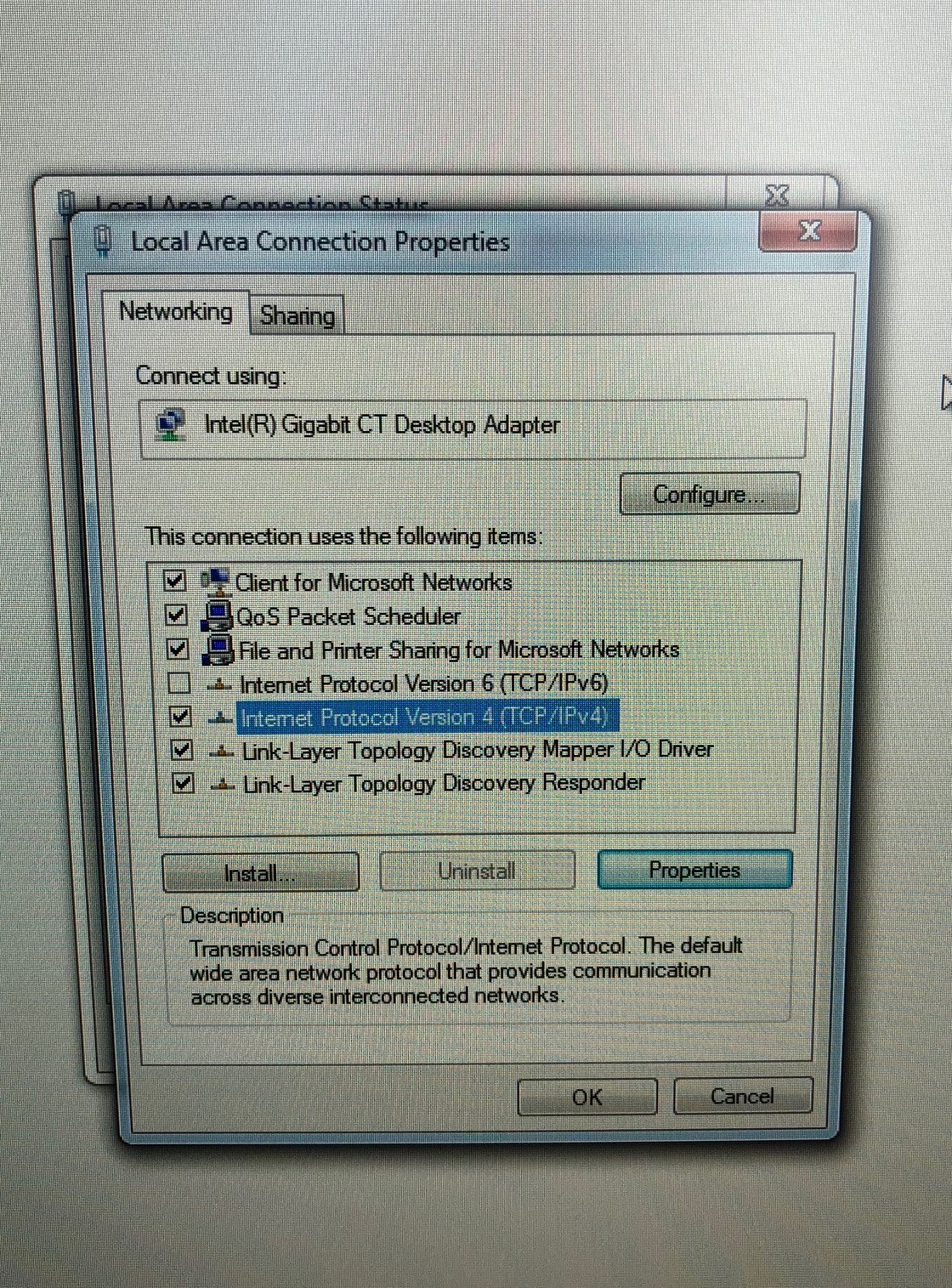
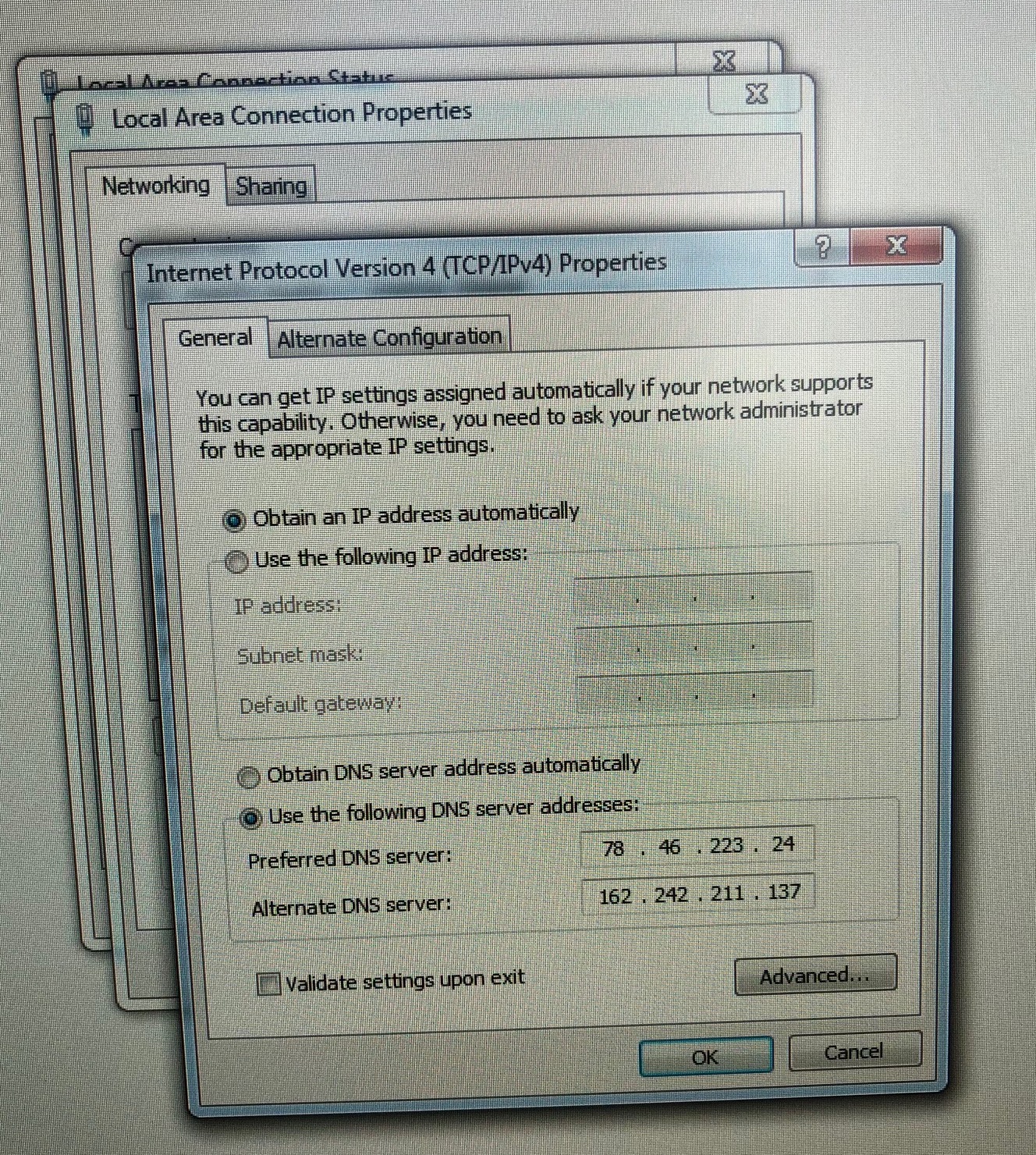
At this point (don't get me wrong I'm still having a blast) I am learning about all about static IP address, Dynamic IP address, just plan old IP address and finally Subnet mask. Oh and believe me I never knew how fast things can go wrong if your not really sure about these settings and the numbers you place in set empty spaces.
 |
| The numbers game begins |
Mike Weir, VE9KK, is a regular contributor to AmateurRadio.com and writes from New Brunswick, Canada. Contact him at [email protected].
 Ham Radio Deluxe |
 W5SWL Electronics |
 Ham Radio Prep |
 KB3IFH QSL Cards  Hip Ham Shirts  HamRadioAuctions HamRadioAuctions Reliance Antennas Reliance Antennas Enigma Shop Enigma Shop |  morseDX  Ni4L Antennas  R&L Electronics R&L Electronics antennas.us antennas.us QRV QRV |
- Matt W1MST, Managing Editor
