 |
 G3XBM the PYE PF1 nostalgia
 27 December 2018 | by
 Rogers recent ramble here made me reach for the desk drawer. Out I pulled a PF1 receiver still complete with case.

I cut my teeth on a PF1 with my first taste of 70cm receive back in the early 1980's. What I seem to remember I picked up quite a few of these at a radio rally for about £5 each! But the crystal was about the same price again, which was required to replace the original to get them working on one lonely channel, or tuned up on a single repeater frequency, in my case being Stafford GB3ZI (433.275MHz). What I seem to remember tune up was quite a fiddle, they used to break into oscillation, as the pull was quite a bit out of the zone of where they had originally been working in the commercial world.
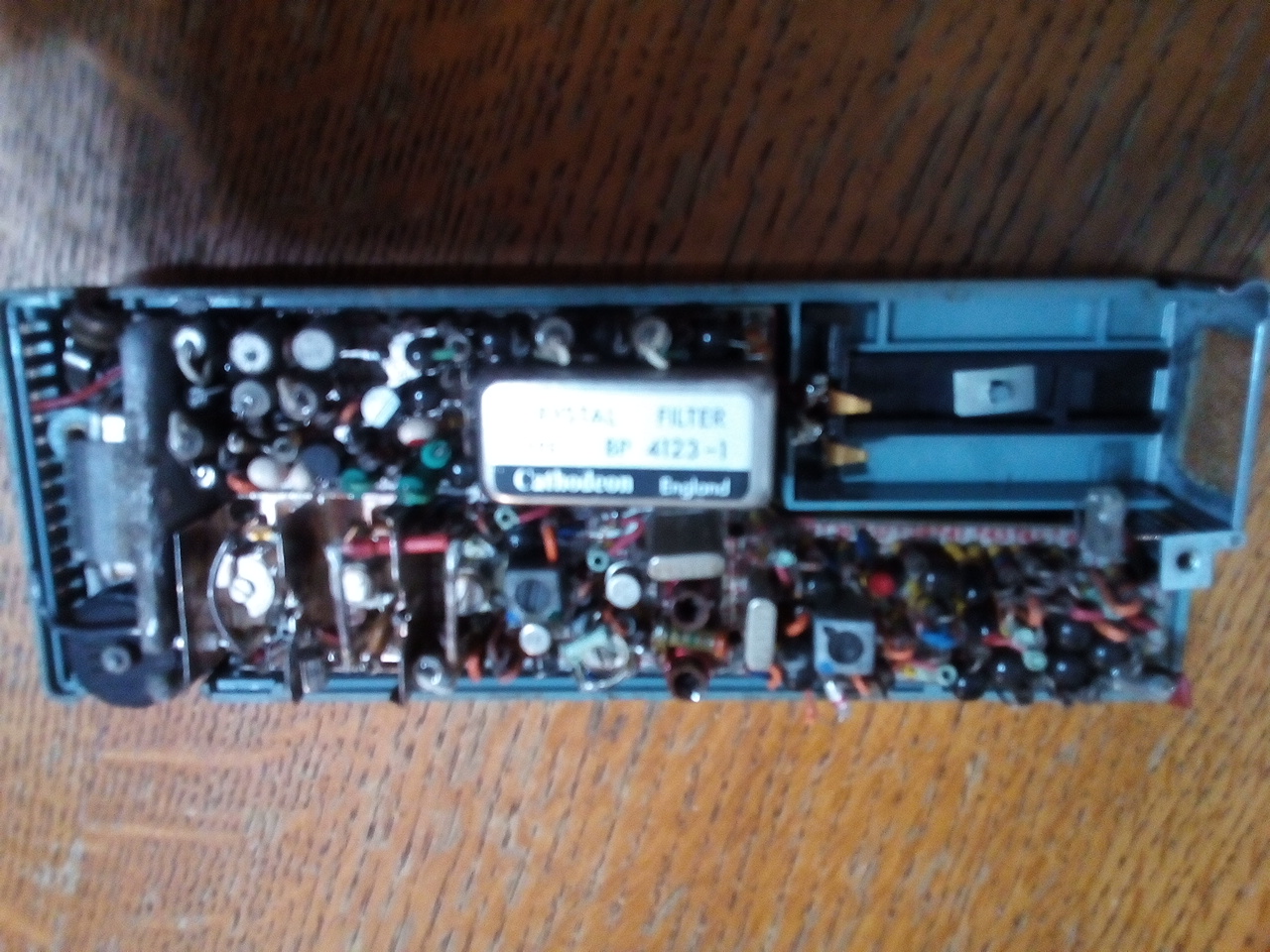
This one has seen better days, but most of it is still quite complete apart from the metal shield over the front end. The battery was rechargeable 9V long time expired, but soldering in a 3F23 or PP3 would make it burst into life. So as you can see I have been around quite a while to remember the older PYE generation, but not quite as long as G3XBM. :-)
Steve, G1KQH, is a regular contributor to AmateurRadio.com and writes from England. Contact him at [email protected].
Striving for a better bandwidth
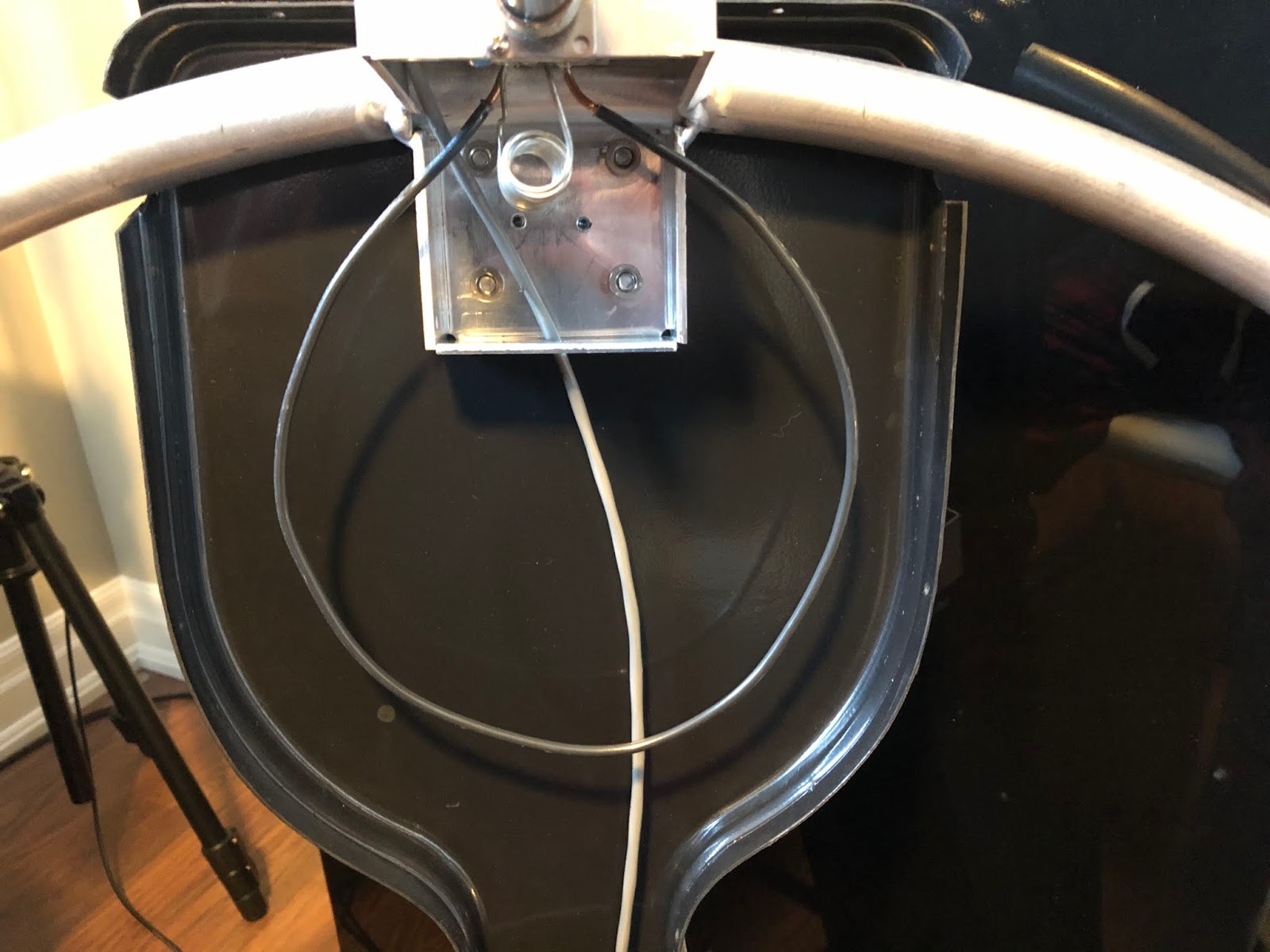 |
| Original shape of coupling loop |
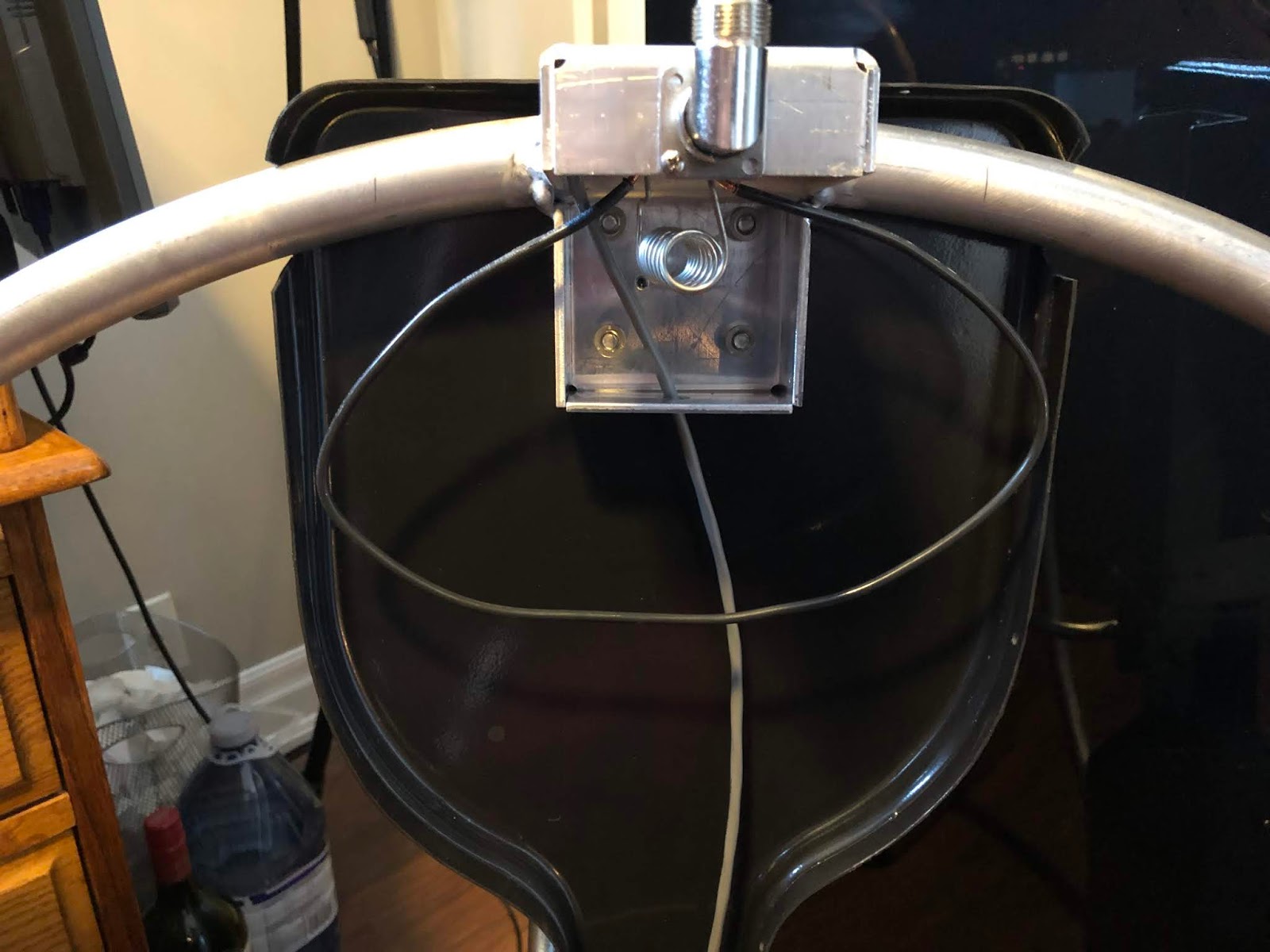 |
| New and improved shape |
Mike Weir, VE9KK, is a regular contributor to AmateurRadio.com and writes from New Brunswick, Canada. Contact him at [email protected].
Vintage Radio Reading
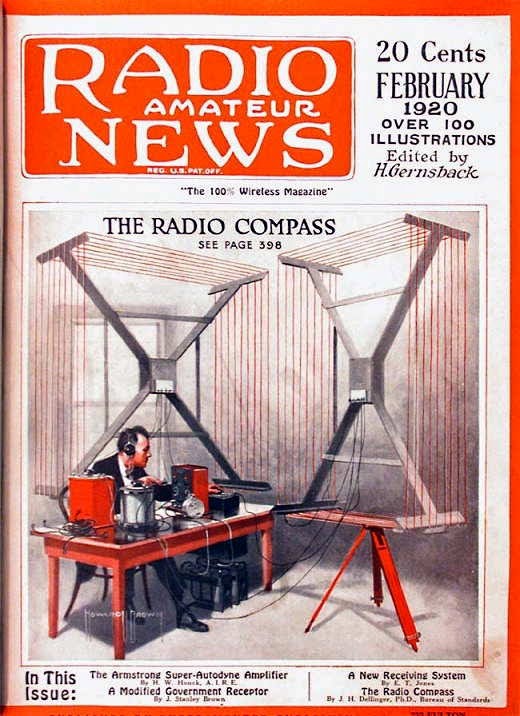 I really love old radio magazines, especially those from the 30's, but to purchase any original copies today is very costly. If you grew up in the 50's or earlier and became hooked by the magic of radio as I and thousands of other kids did, then you no doubt recall the plethora of great monthly magazines devoted to 'radio'.
 Now, thanks to AmericanRadioHistory.com, most of those great old hobby magazines of the past can be viewed online and enjoyed once again.
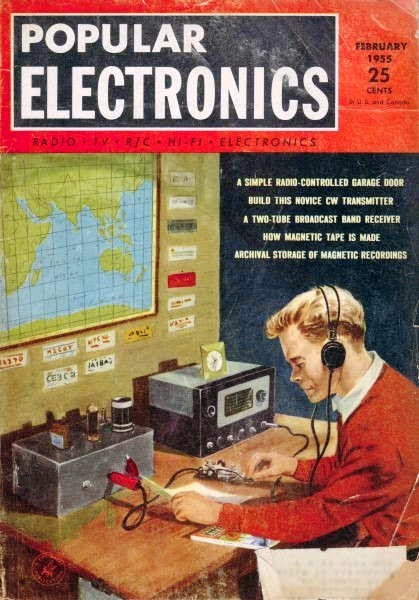 Just a few of the many magazines available are: Radio Craft, Short Wave Radio, Radio, Radio World, White's Radio Log, Popular Radio, Popular Electronics and Radio Amateur News, later to become Radio News.
As a pre-teen short-wave listener in the late 50's, I couldn't wait to get my hands on the latest edition of Popular Electronics, stuffed with its latest SW broadcast news, frequency lists and DX stories.
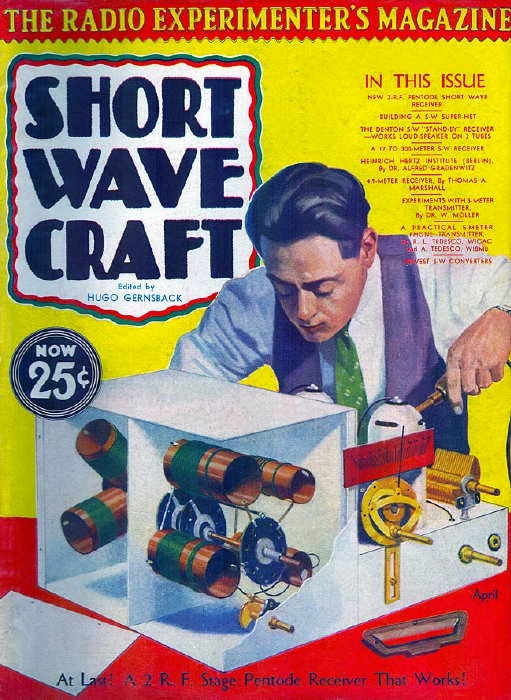
Thanks to David Gleason's work, I always have several of my favorite classics downloaded to my I-Pad's bookshelf for offline reading. With hundreds of recent updates this spring, there appears to be a lifetime of vintage reading now available!
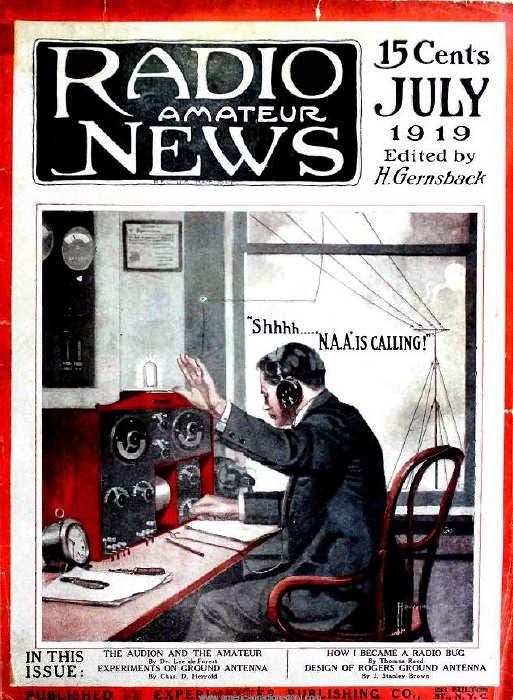
As a builder of vintage-style radios, particularly transmitters, I can often find new inspiration from the magazines particularly devoted to ham radio. If your workshop library is lacking in vintage reference material, you need look no further than this site for a vast source of building inspiration....transmitters of all description along with receivers from crystal tuners to complex multi-tube designs.
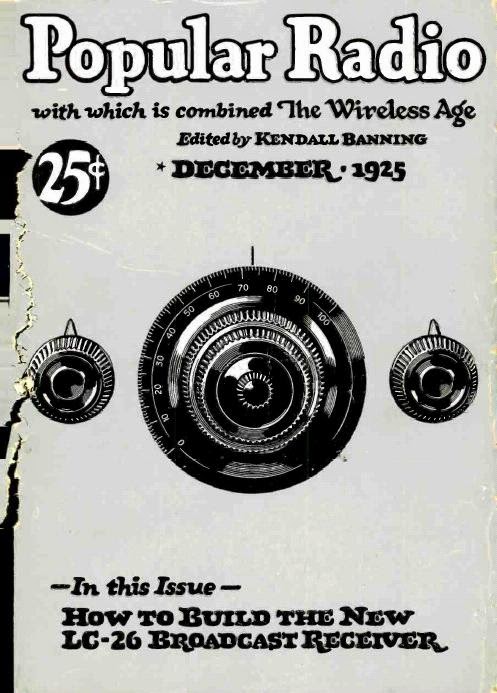 So many of these early publications were the brainchild of Hugo Gernsback, a prolific writer and editor of both technical and science fiction magazines but sometimes blurring the boundaries of each! I suspect that his wide variety of radio publications had some significant role in the way radio so quickly transformed the world.
 Even in the 50's, long after the 'golden years' of radio, it was not uncommon to still see radio antennas on most houses, at least in my neighbourhood!
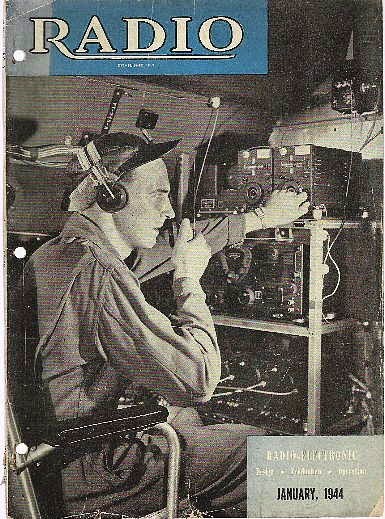
If you haven't visited this wonderful resource yet, I'm sure you will be amazed at what you find.
Steve McDonald, VE7SL, is a regular contributor to AmateurRadio.com and writes from British Columbia, Canada. Contact him at [email protected].
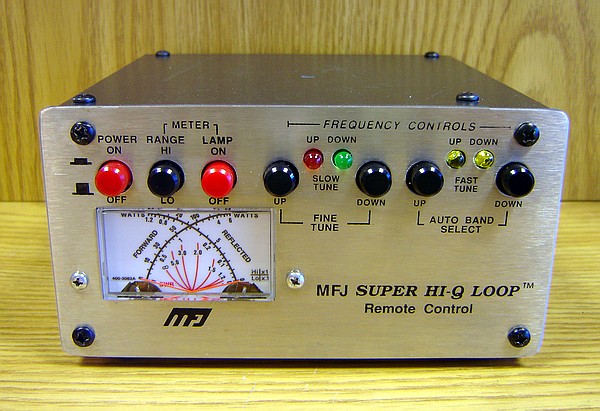
Tweaking the MFJ 1788 mag loop
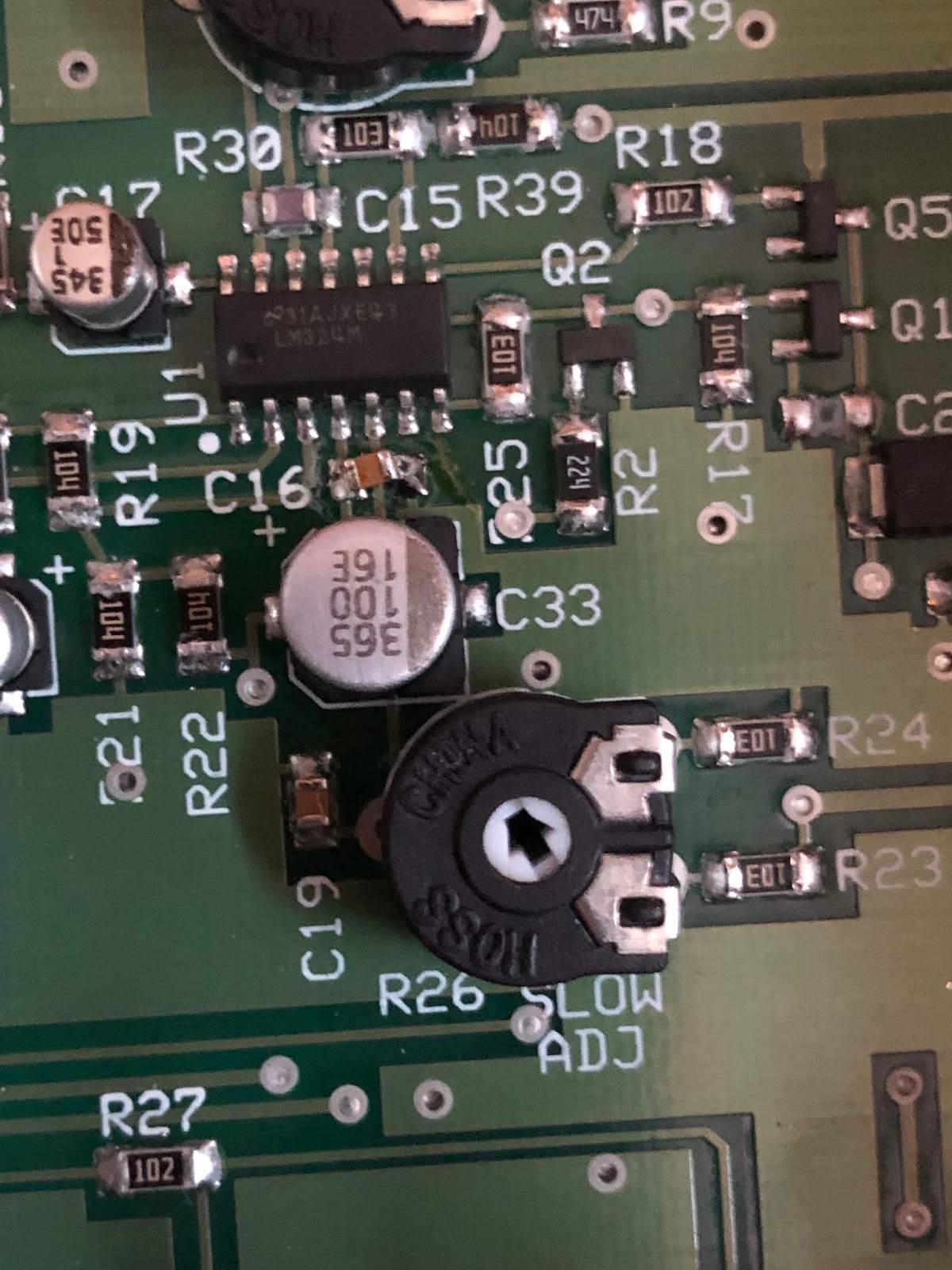 |
| The slow adjustment resistor |
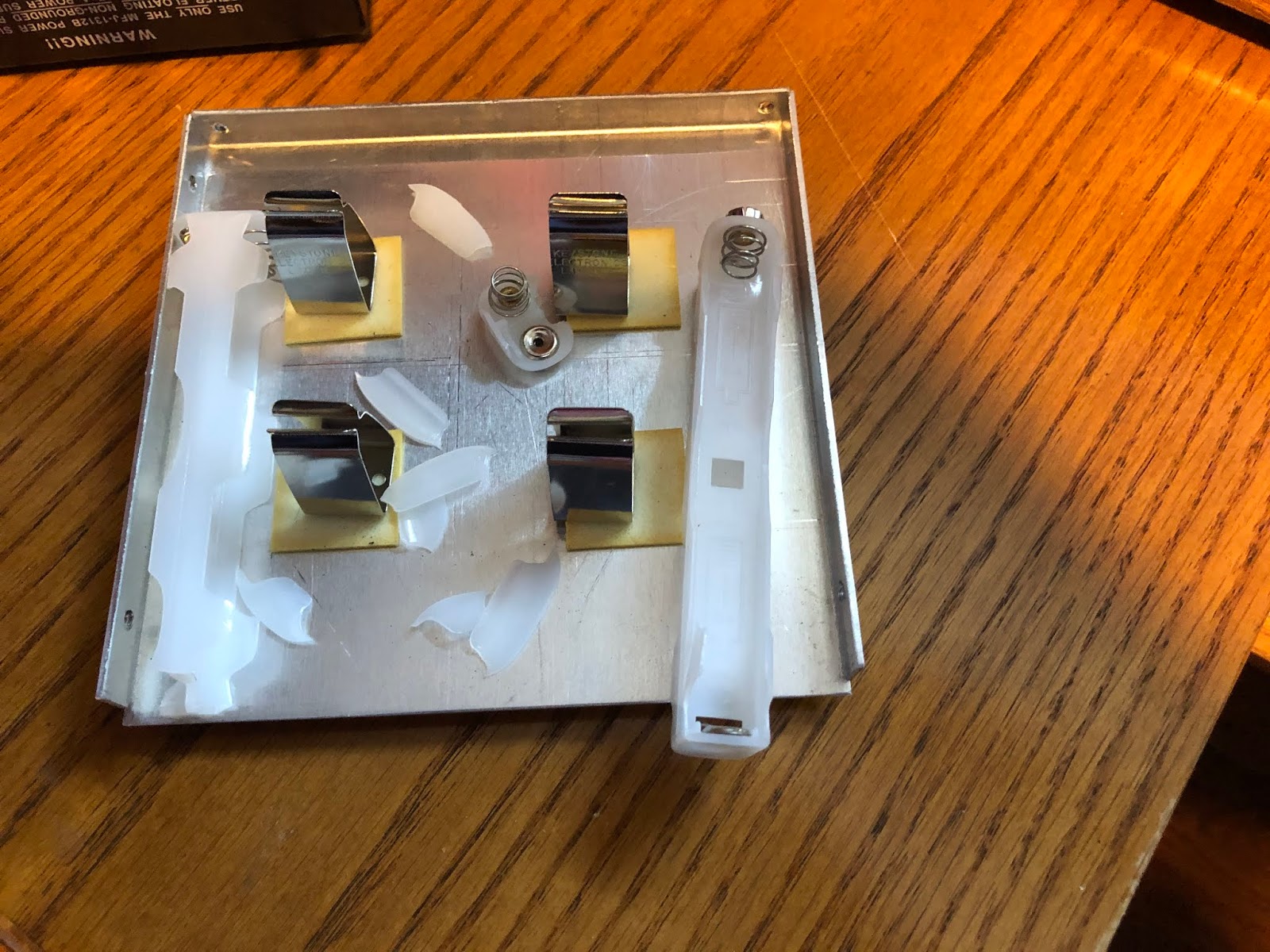 |
| What was left of battery holders |
Mike Weir, VE9KK, is a regular contributor to AmateurRadio.com and writes from New Brunswick, Canada. Contact him at [email protected].
ICQ Podcast Episode 283 – When HF is Quiet
In this episode, Martin M1MRB is joined by Chris Howard M0TCH , Martin Rothwell M0SGL, Dan Romanchik KB6NU, Ed Durrant DD5LP and Frank Howell K4FMH to discuss the latest Amateur / Ham Radio news. Colin M6BOY rounds up the news in brief and this episode’s feature is When HF is Quiet.
ICQ AMATEUR/HAM RADIO PODCAST DONORS
We would like to thank David Cripps (G7IDB) and Bill Seward (KG4SAQ) along with our monthly and annual subscription donors for keeping the podcast advert free. To donate, please visit - http://www.icqpodcast.com/donate
- National Security Risks with Amateur Radio Violations
- The CWops Award 2019 for advancing the art of CW
- 1940s Radio Times now online
- WSJT-X 2.0 Full Release now Available
- "Suspicious" Post Office Package Was Ham Radio Equipment
- Worked All Postcodes
- 2018 QST Antenna Design Competition Winners Announced
- Scouts at AJ2019 Awaiting Amateur Radio Call
- Logbook of The World Tops 1 Billion QSO Records
- New Amateur Radio Packet Gear for International Space Station
Colin Butler, M6BOY, is the host of the ICQ Podcast, a weekly radio show about Amateur Radio. Contact him at [email protected].
Amateur Radio Weekly – Issue 227

Holiday Serenade on Sideband from Antarctica
This year, Ham Radio operators and SWLs around the world are invited to listen in and email listener reports.
ARRL
AO-85 battery issues
Today the nominally 3.6v pack was down to 2.8v at the end of the eclipse. That is dangerously low.
AMSAT
Logbook of The World Tops 1 Billion QSO Records
A more important statistic may be the nearly 187 million contacts confirmed via LoTW over its 15-year history.
ARRL
FT8DMC: FT8 Digital Mode Club
Everyone with a love of FT8 is welcome to join our club. All FT8DMC members are eligible to participate in various club’s activities and award programmes.
FT8DMC
[PDF] Satellite Roving in the Northwest Territories
A young ham braves rough, snowy terrain to activate rare grids.
QST Magazine
How-to: Ham Desk Project
The last Ham Radio shack desk I ever need.
K0PIR
A Look At Foot Switches
Foot switches were never a must-have Amateur Radio accessory… that is until I started contesting about 12 years ago.
VE7SAR
How-to: Receive HF SSTV with Raspberry Pi and RTL-SDR
You can also use this system to receive SSTV from the ISS (International Space Station) at 145.800 Mhz.
IT9YBG
Video
DRAWS Ham Radio Digi Mode HAT for Raspberry Pi First Look
DRAWS HAT makes integrating the Raspberry Pi with an HF radio easier and less expensive than ever before.
OH8STN
Feld Hell in action
First test with two Hell machines.
YouTube
Get Amateur Radio Weekly in your inbox.
Sign-up here
Amateur Radio Weekly is curated by Cale Mooth K4HCK. Sign up free to receive ham radio's most relevant news, projects, technology and events by e-mail each week at http://www.hamweekly.com.
The Beginnings of the FM Band, the Story of EICO, and DX’ing with AM Transistor Radios
 Stories you’ll find in our December, 2018 edition:
The Beginnings of FM Radio Broadcasting
By John F. Schneider W9FGH
We take broadcasting on the FM band for granted today, but getting to this point required early proponents of FM broadcasting to fight every step of the way. Among FM foes were the giants of AM broadcasting; the emerging powers behind television; that rascal David Sarnoff of RCA; even the FCC itself and the fact that there were only 25 FM receivers in the entire world. John explains all the things you don’t know about FM radio (including the fact that Edwin Armstrong didn’t invent that method of modulation—by a long shot) and how FM almost died in the aftermath of World War II.
The EICO story; the Electronic Instrument Company and its Kits
By Rich Post KB8TAD
Founded in 1945 by Harry R. Ashley, with an investment of $1,500, EICO was a competitor of Heathkit and Allied Knight-kits in the heyday of kit-built test equipment, audio products and ham gear. All those kits are now in the nostalgia category, but because they were well documented, mostly put together with screws rather than rivets, they can still be repaired and used. In fact, Rich tells us that some of the ham and audio gear and certain useful pieces of test equipment have become quite collectible. Rich also explains how, despite a shift to consumer electronics audio gear, like Heathkit and Allied Radio, EICO never made it past the computer era.
Classic Rock Era is Alive on Shortwave
By Ken Reitz KS4ZR
There’s something about Classic Rock music that just won’t fade. And, anyone who remembers shortwave radio programming in the 1970s and 80s, knows that rock music was readily found on the shortwave bands from the BBC and VOA’s regular music programming to private American shortwave stations such as WRNO “The Rock of New Orleans,” and Radio New York Worldwide. But thanks to programming on WTWW, WRMI, Radio New Zealand International and the Mighty KBC, the bands are alive once more with the pulsing sounds of Classic Rock.
BCB DX’ing With That Old Transistor Radio
By Richard Fisher, KI6SN
You have to wonder how many AM transistor radios have been relegated to the back of our junk drawers because “they just don’t work very well.” A reasonable guess would be in the seven figures over the decades. For strong local stations that may be just fine, but for the BCB DXer, the shrinking antennas bring awfully discouraging results. These transistor portables are more prone to local manmade interference as well. Richard shows us an easy and inexpensive solution to this dilemma in a tunable AM broadcast band loop antenna. Follow his step-by-step instructions and make even your transistor radios perform.
Scanning America
By Dan Veeneman
Fayette County (GA) and Intro to ULS
Federal Wavelengths
By Chris Parris
Federal Wavelengths 2018 Wrap Up
Milcom
By Larry Van Horn N5FPW
Monitoring Santa Claus, NORAD and Combat Air Patrols
Utility Planet
By Hugh Stegman
Chasing Italian MF Coastal Stations
Shortwave Utility Logs
By Hugh Stegman and Mike Chace-Ortiz
VHF and Above
By Joe Lynch N6CL
CubeSats go to Mars
Digitally Speaking
By Cory GB Sickles WA3UVV
Complex Simplex
Amateur Radio Insights
By Kirk Kleinschmidt NT0Z
Confessions of an Autotuner Abuser
Radio 101
By Ken Reitz KS4ZR
Chasing AM Band DX: Then and Now
Radio Propagation
By Tomas Hood NW7US
Winter DX is at the Door
The World of Shortwave Listening
By Rob Wagner VK3BVW
Propagation Tools, Wire Antennas and DX News
The Shortwave Listener
By Fred Waterer
New Programming from Spain and Greece Plus: Christmas Around the World
Amateur Radio Satellites
By Keith Baker KB1SF/VA3KSF
Amateur Radio Satellite Primer (Continued)
The Longwave Zone
By Kevin O’Hern Carey WB2QMY
SDR Startup: It’s a Wrap!
Adventures in Radio Restorations
By Rich Post KB8TAD
Recollecting My First EICO: The 425 Oscilloscope
Antenna Connections
By Dan Farber AC0LW
First Antenna: The Selection Process
The Spectrum Monitor is available in PDF format which can be read on any desktop, laptop, iPad®, Kindle® Fire, or other device capable of opening a PDF file. Annual subscription is $24. Individual monthly issues are available for $3 each.
Ken Reitz, KS4ZR, is publisher and managing editor of The Spectrum Monitor. Contact him at [email protected].
 Ham Radio Deluxe |
 W5SWL Electronics |
 Ham Radio Prep |
 KB3IFH QSL Cards  Hip Ham Shirts  HamRadioAuctions HamRadioAuctions Reliance Antennas Reliance Antennas Enigma Shop Enigma Shop |  morseDX  Ni4L Antennas  R&L Electronics R&L Electronics antennas.us antennas.us QRV QRV |
- Matt W1MST, Managing Editor
