 |
 My 2019 Novice Rig Roundup Summary
 14 March 2019 | by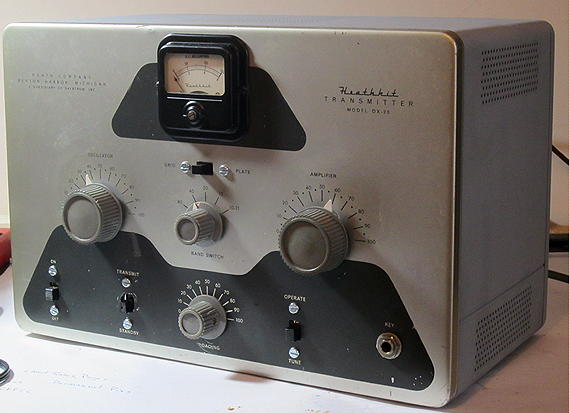
Once again the Novice Rig Roundup (NRR) has come and gone ... and once again, it was the most enjoyable 'contest' of the year for me.
What I have come to enjoy most about the NRR is that most participants do not really treat it as a contest but more as an opportunity to spend some relaxing CW time enjoying some of their favorite vintage rigs ... spread out over nine days of activity. Since there was never a Novice-class program in Canada, I was never a Novice, but the NRR brings back all of the good memories experienced as a newly-licenced radio-crazed 15 year old operator!
Back in those times, there was a gratifying sense of achievement with every contact. My clap-trap collection of parts and tin gutter-pipe verticals, mounted atop our old four-story city house, magically sent my tiny signal from coast to coast and over the pole.
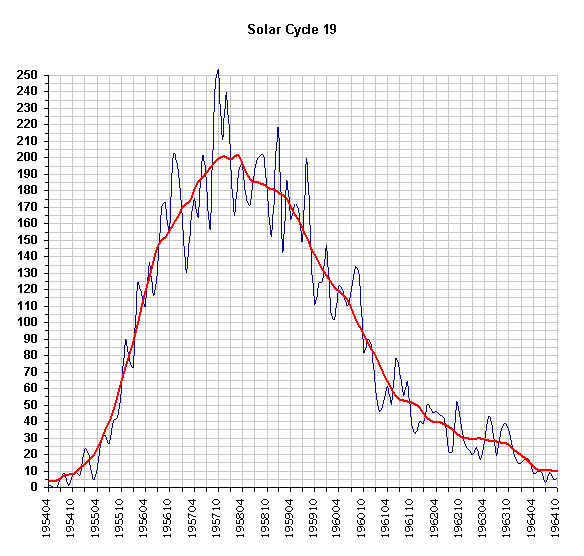
Those were the dying days of big-daddy Cycle 19, and my station was proof that just a tiny bit of RF was all that was needed under such amazing solar conditions.
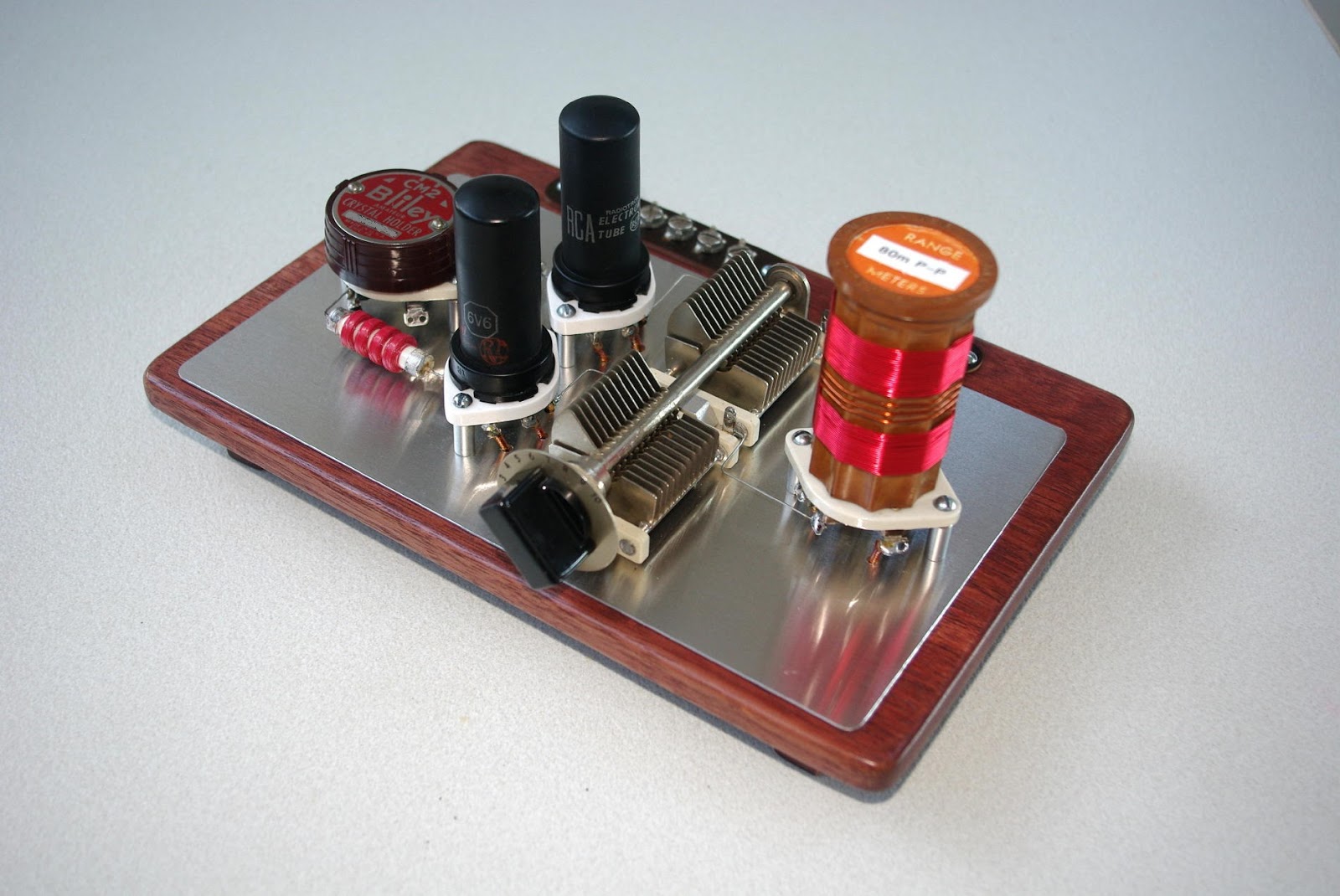
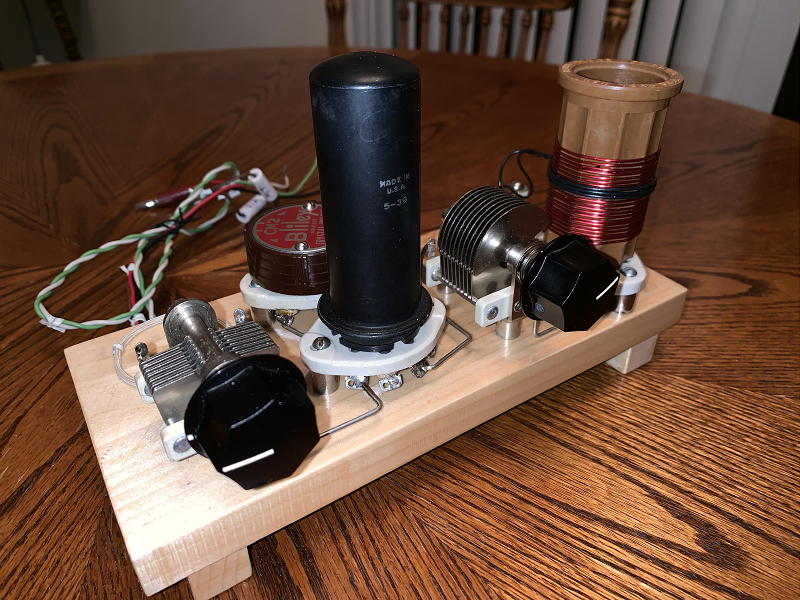
This year's NRR began by making a couple of contacts with my Drake 2NT and VF-1 VFO but my newly-finished 1936-style Jones Push Pull Oscillator was begging to be put to the test. This meant that the remainder of the week would be spent using crystal-control and in all likelihood, sending a hundred or more 'CQ NRR's, hopefully attracting some of the crowd.
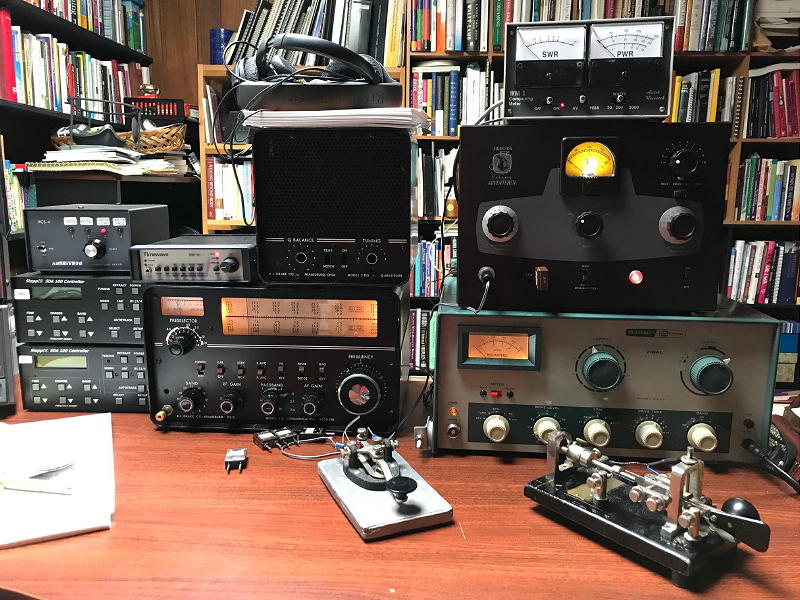
Due to previous commitments, I missed a few nights of operating but ended up with 53 NRR contacts in 23 different states or provinces. Operating on 40m in the late afternoon and then for a short period on 80m after dinner, proved to be the best use of my time, as usually, much of the eastern activity had closed shop for the night, just as the band was getting good. There were two nights of superb 80m propagation but with very little NRR activity ... unfortunately for many participants, late-night operating (even with wonderful propagation) is not in the cards for those that must rise early for work the next morning!
There were several highlights for me once again and being able to create them while using my new homebrew rig was very gratifying.
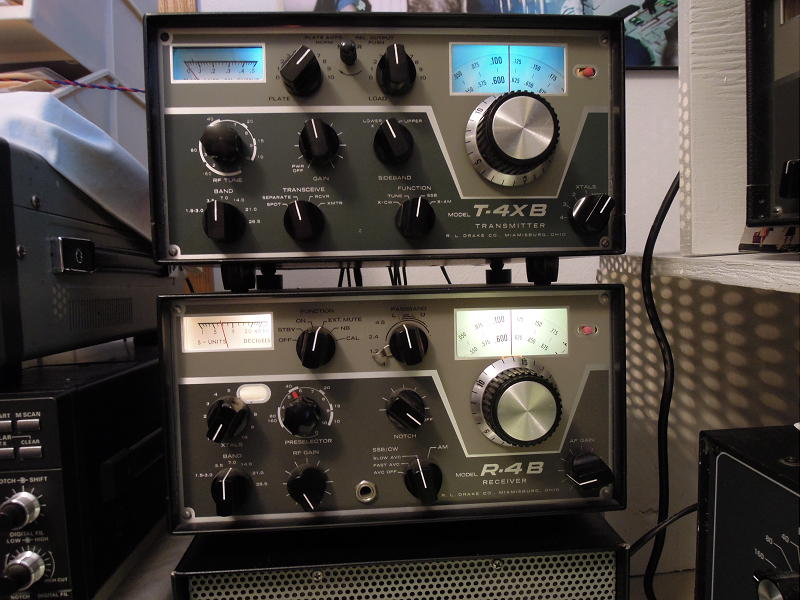
Roger, VA1RST, back in Halifax, Nova Scotia, was one east-coaster that seemingly cherished the midnight-oil! His great Drake 2B ears were able to copy the little 'Jones' on 80m with no problem and his participation added an exotic DX-flavor to the NRR.
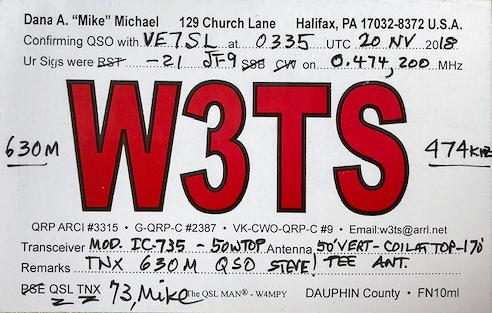
Michael, W3TS, managed to squeeze enough RF from his one-tube 6AG7 crystal oscillator to be heard and worked here on both 40 and 80m, with a respectable 559 on 40 and 569 on 80!
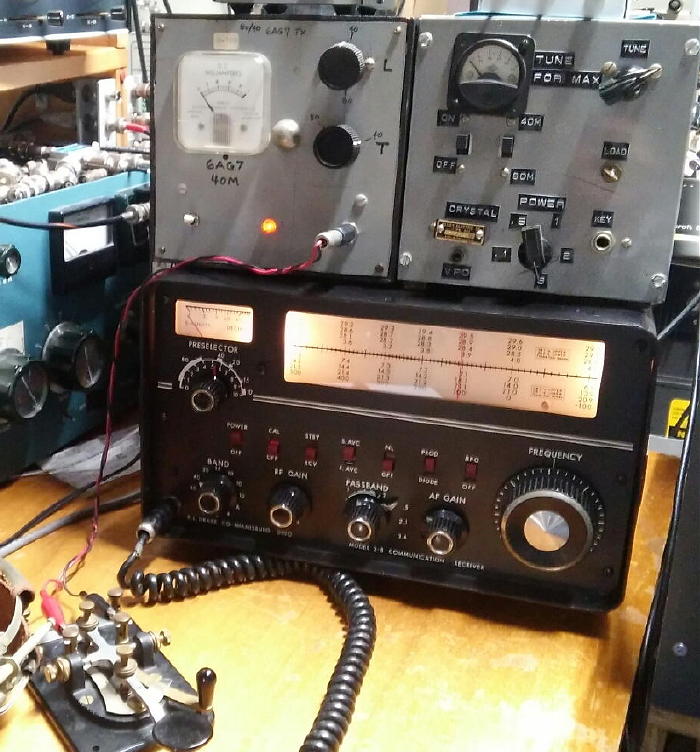
It wasn't until after the NRR was over that I realized why Mike's call was familiar as we had worked a couple of times already this winter on the 630m band (475kHz) ...doh!
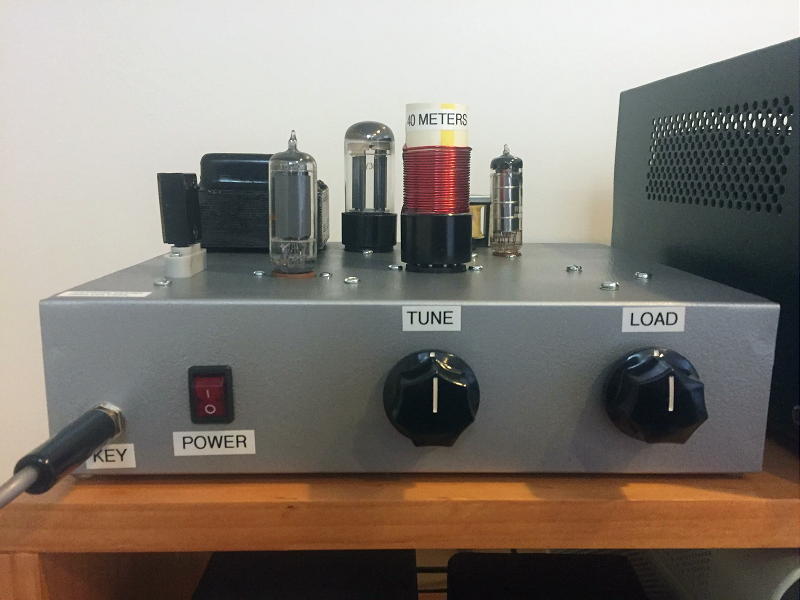
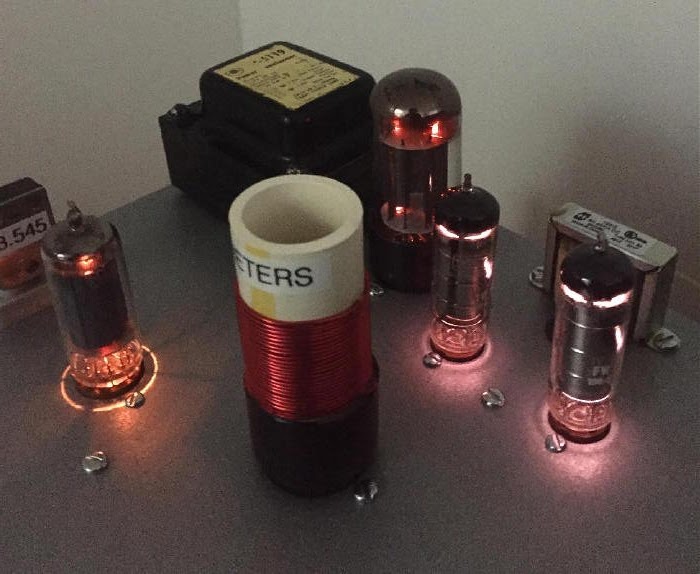
More transcon magic was made when Tom, K3AJ, finessed a few watts from his single 6CL6 crystal-controlled DX-machine to the west coast on both 80 and 40m. The propagation gods must have been paying close attention as his 40m signal was a solid 579 while his late-night 80m signal was a whopping 589 here ... 80m propagation just like the good old days!
Not to be outdone by Tom, ex-Nebraskan Andy, KØSM in New York, kept his vintage '42' clipped together long enough to be worked back here as well. With just a couple of watts from the early '30s tube, his signal was no problem on both bands.
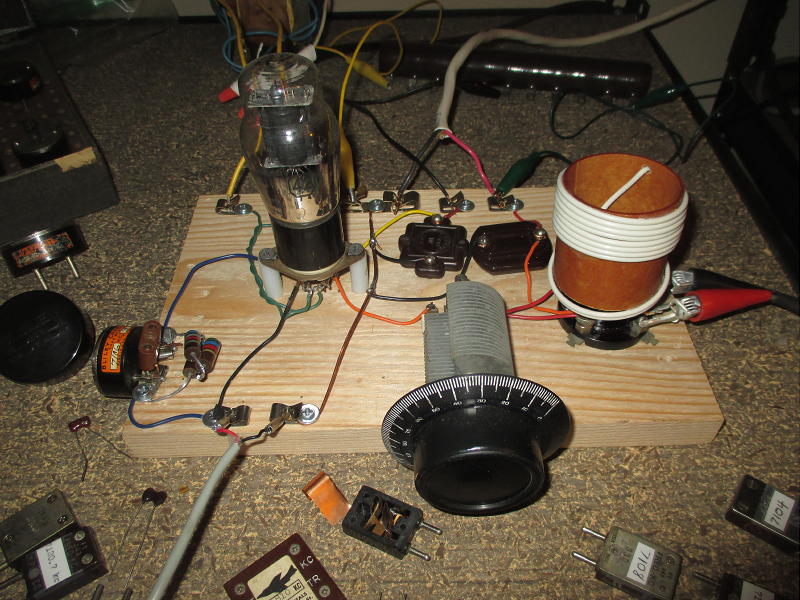
Gary, W8PU, with his newly-built mid-30s 6L6 tri-tet oscillator, was another treat from the east when his 559 80m signal arrived here from Ohio in good form.
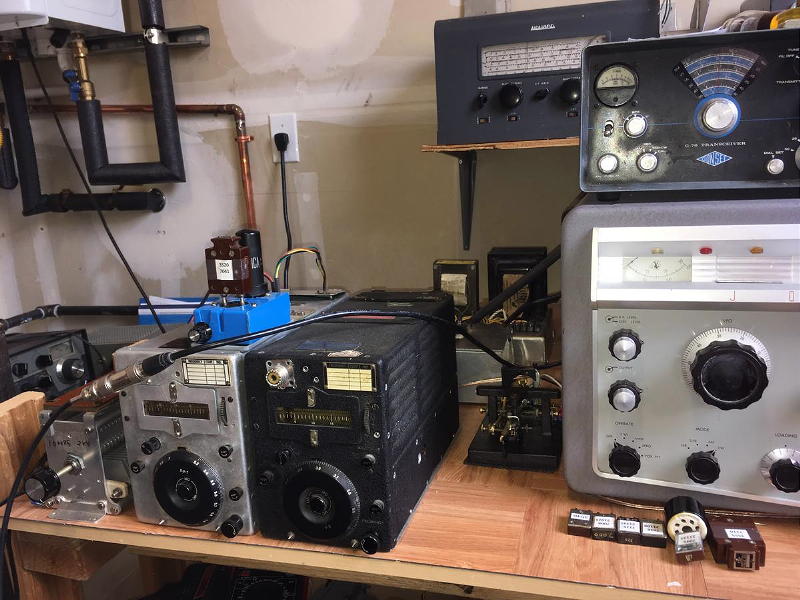
A little closer to home, WB2AWQ, Howie down in Reno, had a whopping signal all week whenever I heard him on 40m. Howie can always be counted upon for 'NV' in most vintage rig operating events, including the 1929 BK Party. This time 'round, he was using his BC-458A, crystal-controlled at 35 watts out. It's a good bet that hundreds of Novices got their start with a surplus Command set such as this, which often sold for just a few dollars in the 50s ... still new in the box!
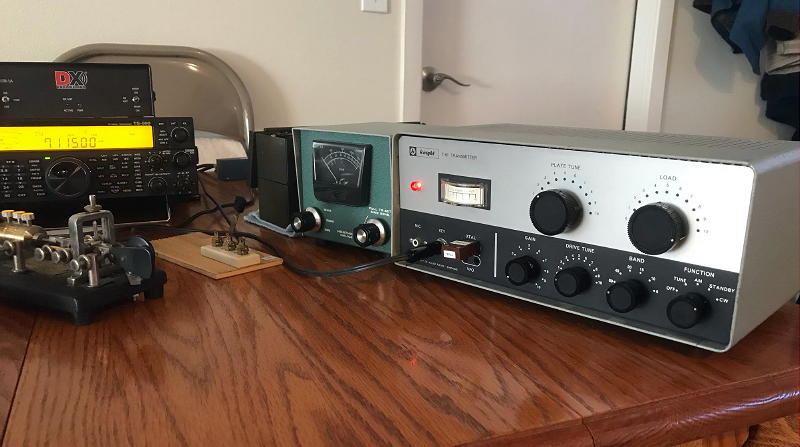
Even closer was new Oregonian, Dave, WB7WHG, who was still getting set up at his new location on the east side of the Cascades in Bend. Dave keyed his Knight T-60 for our NRR contacts on both 80 and 40 and was very much louder than when I used to work him at his midwest WB9WHG QTH!
The T-60 is a popular choice among NRR ops and it's diminutive size is somewhat misleading as the current-hungry sweep tube used in the PA stage packs a big wallop. If you happen upon one of these under a fleamarket table, don't pass it up ... it"s a lethal NRR weapon!
Heathkit stations were as popular in the NRR as they were in countless Novice shacks decades ago ... and they sound just as good now as they did back then.
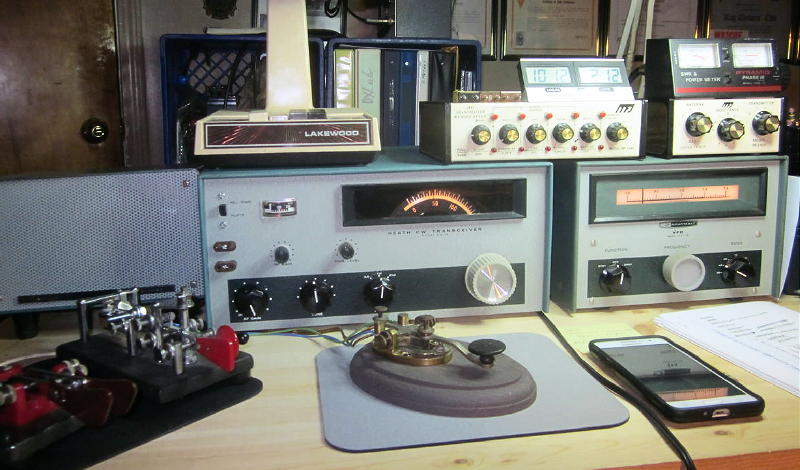
KN8RHM (N8XI), Rick, made Michigan proud with his HW-16 transceiver, while Mark, VA7MM, handed out 126 contacts from western Canada with his all Heath vintage station. His newly added homebrew TR switching system provided hands-free break-in, saving wear and tear on the DX-60's precious function switch.
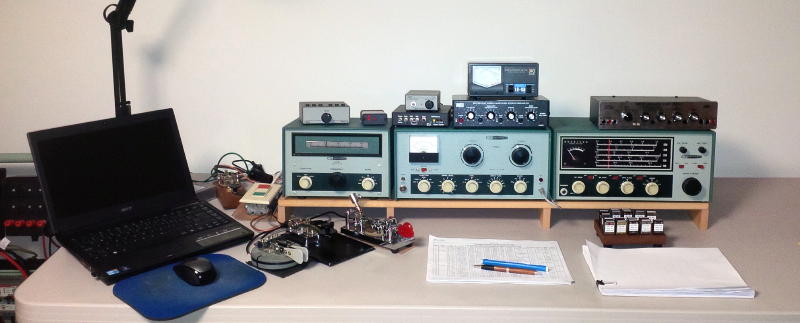
Not many Viking Rangers were heard this year but the one keyed by Markus, VE7CA, sounded very 50s-like with its oscillator being crystal-controlled for the event.
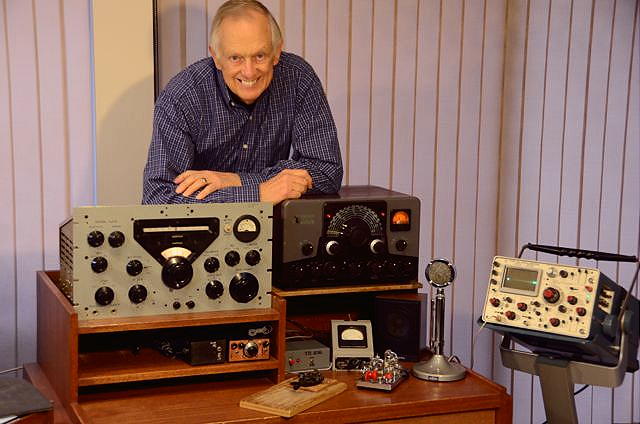
K9SB, Tim, used his Johnson Adventurer and Hallicrafters SX-101A vintage setup as well as a vintage Drake station to hand out 'IL' to many NRR ops.

There seems to be no shortage of era-appropriate Novice gear out there but as the years progress, it will get harder and harder to find and probably more expensive to own. It's wonderful to see so many amateurs that understand and appreciate this older gear and are doing their best to keep it all working ... and the NRR is just one of many opportunities to let these old beauties demonstrate their capabilities.
From what I can tell, NRR activity continues to increase every year and will hopefully be even bigger next year. If you were a participant, don't forget to get your log completed along with your photos and soapbox comments, all of which can be done through the NRR website here. If you enjoyed the NRR, all run by volunteers, consider making a small monetary donation to keep the event going. You can do this via the NRR site as well.
If you're one of the many NRR participants that didn't want the event to end, don't forget that every Monday is the NRN (Novice Rig Night). A short 'CQ NRN' in the usual CW watering-holes, will often provide some nice rag chew time with like-minded operators.
Thanks to all organizers and participants for the CW fun and for another great ride in the NRR time-machine ... see you again next year!
Steve McDonald, VE7SL, is a regular contributor to AmateurRadio.com and writes from British Columbia, Canada. Contact him at [email protected].
Top Ten FT8 Advantages For Slackers
We just got back from a very enjoyable trip to Roatan Island that included 8 friends vacationing together. The snorkeling and beach time were lots of fun. We stayed at the Seaside Inn, highly recommended.

Of course, I took along some ham radio gear and made radio contacts from the island using the Slacker DXpedition method. The station was a Yaesu FT-991 driving an end-fed half wave wire antenna, cut for either 20m or 40m. I operating as K0NR/HR9 and my co-slacker Denny was on the air as KB9DPF/HR9. (Reciprocal licensing info is available from the Radio Club De Honduras.) We started out on SSB but that was tough going with poor propagation, so we soon found that FT8 was more effective.

We were pleasantly surprised with how well FT8 worked out for us as it was very compatible with the Slacker DXpedition philosophy. Here are the Top Ten Reasons to Use FT8 for Island Time DX:
- You can listen to your “island time” playlist while working DX.
- You don’t annoy your fellow vacationers by screaming into the microphone.
- You don’t have to worry about remembering proper phonetics.
- You can read the other station’s QRZ page while the computer completes the contact.
- You have time to visit the restroom without missing any contacts.
- You can upload your log to LoTW while operating.
- You have time to mix up a rum punch while making QSOs.
- It doesn’t matter if you slur your speech a bit due to that extra rum punch.
- If the run rate is really slow, the pc screensaver will kick in to entertain you.
- You can actually make contacts when propagation sucks.
The post Top Ten FT8 Advantages For Slackers appeared first on The KØNR Radio Site.
Bob Witte, KØNR, is a regular contributor to AmateurRadio.com and writes from Colorado, USA. Contact him at [email protected].
LHS Episode #274: JS8Coin

Hello and welcome to the latest episode of Linux in the Ham Shack. In this week's short topic show, the hosts discuss Virginia students building and launching satellites, amateur radio inspiring the EPA, BitCoin via radio, the Linux Kernel vs. PMEM, HL7 and Open Source and much, much more. Thank you for listening and for all your support.
73 de The LHS Crew
Russ Woodman, K5TUX, co-hosts the Linux in the Ham Shack podcast which is available for download in both MP3 and OGG audio format. Contact him at [email protected].
SK Rev George Dobbs G3RJV.
For sometime I have known that G3RJV had not been too well, I have not made much noise about it on here, as I think he would of wanted it that way.
I understand George Passed away in the early hours of this morning, "my birthday" how am I ever going to live that one down every March 11th.
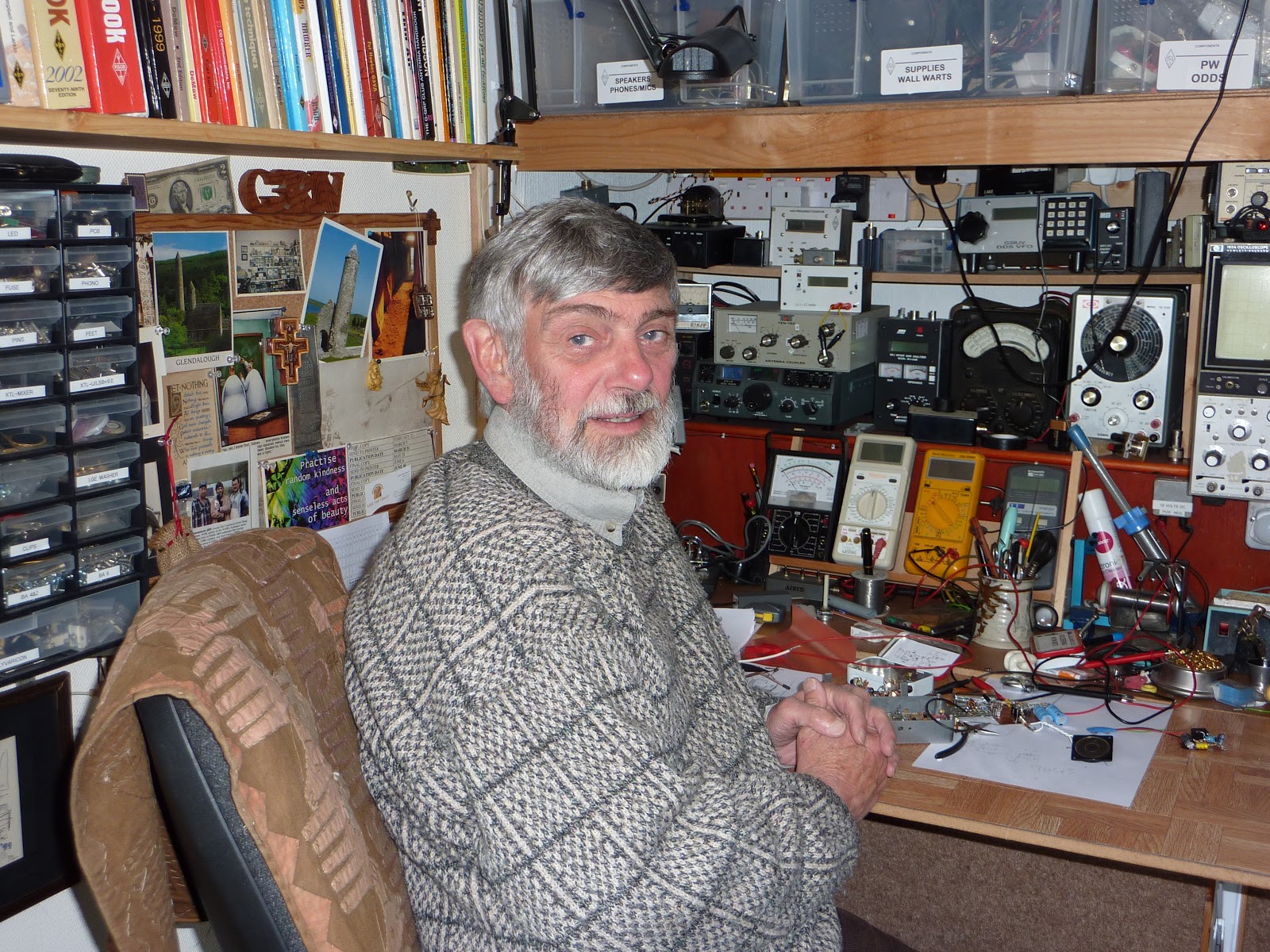
For sure George is never going to be forgotten by the GQRP club which he started back in 1974 and continues to flourish by an ever growing active membership, along with Sprat the magazine which he edited until his last 12 months. All the QRP books he written and co wrote, along with his monthly pages with Practical Wireless "Carrying on the Practical Way", encouraging those from a start, to where they actually understood the basics of radio, developing from a simple diode to using a couple of transistors, that made something that really worked and was useful. Of course my first contact with George Dobbs was when I built his 3 transistor radio from the Ladybird book back in the mid 70's.
How shall I remember him, well he will be up there with the greats of QRP, the Sudden is one radio that comes to mind, a design that showed all the basics of radio with minimum parts. Oh yes his encouragement, if he thought you had got it, he bent over to help, endorsing my Blog in it's early days The Reverend reviewed I guess he liked what I had written, even though I may be a bit slow at times. The references to G3RJV's work will never be forgotten and won't, and must be brought to the forefront for new audiences to see and understand, helping them to learn the basics from the start.
To Georges Wife and family, I send out my sincere condolences, he will be missed!
Steve, G1KQH, is a regular contributor to AmateurRadio.com and writes from England. Contact him at [email protected].
Where I am now
Just a quick note before I move on to more important things:
There is a lot of sad things going on in my life at the moment, that is one big major reason I am not fulfilling the full potential of this blog with what I set out from the begining to do.
This will stagger on in this sameway for sometime in the future, most of my Amateur Radio antics has been on hold for the last 18 months or so, I see no light at the end of the tunnel.
Thanks to you all that visit, I know you are looking in.
Steve, G1KQH, is a regular contributor to AmateurRadio.com and writes from England. Contact him at [email protected].
Amateur Radio Weekly – Issue 232

2019 State of the Hobby Survey
This is the third annual State of the Hobby survey. 2018 came booming in with nearly 3,000 responses.
N8RMA
So Now What?
ARRL is launching a new bi-weekly podcast geared to those who are just getting started on their Amateur Radio adventure.
ARRL
Light up 2 Meters Night – an FM Simplex event
Taking place on March, 24, 2019, from 6-8pm local time.
W5KV
The $50 Ham: Getting Your Ticket Punched
Today we start a new series dedicated to amateur radio for cheapskates.
Hack A Day
New DMR network: QRM_Network
This is a good place to experiment with new hardware and software.
KC3OL
My return to Ham Radio
This story is about my observations after returning to the hobby after a long absence. How has amateur radio changed?
VE7SAR
Ham Radio EMCOMM Go Kit
When building a go kit you should think about what you need the kit to do and how you will be using it.
High On Solder
Best handheld Radio for preparedness?
The Yaesu VX-6R and VX-7R are excellent handheld radios for those interested in communications preparedness.
OH8STN
HRPT stations worldwide
These are Stations from Radio Amateurs that Receive HRPT images in L-Band from Polar Orbiting Weather Satellites.
Tynet.eu
Video
Testing the Medium Wave capabilities of a Kenwood TH-D74A
Medium Wave reception test of an unlikely receiver.
YouTube
Making a paper cup microphone for less than $10
You can make a microphone out of a paper cup, some magnets, and some wire.
LeoMakes
Get Amateur Radio Weekly in your inbox.
Sign-up here
Amateur Radio Weekly is curated by Cale Mooth K4HCK. Sign up free to receive ham radio's most relevant news, projects, technology and events by e-mail each week at http://www.hamweekly.com.
2019 Ham Radio ‘State of the Hobby” Survey
 The 2019 State of the Hobby Survey, a comprehensive questionnaire for ham radio operators (and other interested participants), opened this week and will be available throughout March.
 Dustin Thomas, N8RMA, got the idea for a comprehensive ham radio survey while browsing Reddit back in 2017. “I started to notice an influx of surveys being posted, almost all in regards to highly specific topics in amateur radio,” he says. “I made sure to complete the surveys but always wondered what the results were. So I decided to host my own survey, make it broad enough for anyone in this diverse hobby (not easy) and publish the results as hard as I solicited responses.”
First licensed in 2014, Dustin upgraded to General in 2015 and looks forward to reaching Extra. His personal ham radio interests include contesting, DX, and Field Day operations. But as he got into the hobby, he wondered where it was headed. They survey is a way for him to make a meaningful contribution toward the hobby’s future.
“I always wanted some baseline questions to compare from year to year, as well as specific issues impacting amateur radio today,” he says. “The State of the Hobby was born.”
Dustin pointed out some highlights — and surprises — from the 2018 State of the Hobby survey:
- Concerns over HOA’s came in as the third most reported issue (fourth overall as the biggest single issue) yet 75% of respondents reporting not being effected by an HOA
- Respondents ranked HF award nets (such as 3905 Century Club and OMISS) very low – on par with believing there should be a code requirement for licensing
- 68% of respondents claimed to have talked with a new ham in the last 12 months
- DMR seems to be growing in terms of local repeaters, outranking both YSF and D-Star
Why should you bother to take the survey?
“It’s important for independent bodies (independent from the ARRL or commercial organizations with unknown agendas) to solicit and publish the opinions of ham radio operators,” Dustin says.
“This survey will give us insight into what is working and what is not, new or emerging trends in modes or activities, and successful ways to increase membership and licensing.”
He said interest in the survey has surprised him and that several clubs have reached our to say they’ve used insight from the survey to promote ham radio and establish new activities.
Dustin hopes to get more opinions this year from folks who may be studying for their license, or on the fence about whether to get involved. “This year I’ve also included a second for those not yet licensed, but who are interested,” he says. “This will give us a great insight into how new operators are preparing, what works / what doesn’t, and what recently caused them to be interested.”
More information:
https://www.radiosoth.org/2019/03/2019-state-of-hobby-survey.html
2019 survey link:
https://goo.gl/forms/fllqlu7kRkq0enAg1
Matt Thomas, W1MST, is the managing editor of AmateurRadio.com. Contact him at [email protected].
 Ham Radio Deluxe |
 W5SWL Electronics |
 Ham Radio Prep |
 KB3IFH QSL Cards  Hip Ham Shirts  HamRadioAuctions HamRadioAuctions Reliance Antennas Reliance Antennas Enigma Shop Enigma Shop |  morseDX  Ni4L Antennas  R&L Electronics R&L Electronics antennas.us antennas.us QRV QRV |
- Matt W1MST, Managing Editor
