 |
 LHS Episode #284: The Weekender XXVIII
 10 May 2019 | by
It's time once again for The Weekender. This is our bi-weekly departure into the world of amateur radio contests, open source conventions, special events, listener challenges, hedonism and just plain fun. Thanks for listening and, if you happen to get a chance, feel free to call us or e-mail and send us some feedback. Tell us how we're doing. We'd love to hear from you.
73 de The LHS Crew
Russ Woodman, K5TUX, co-hosts the Linux in the Ham Shack podcast which is available for download in both MP3 and OGG audio format. Contact him at [email protected].
A new “touch” paddle for the shack.
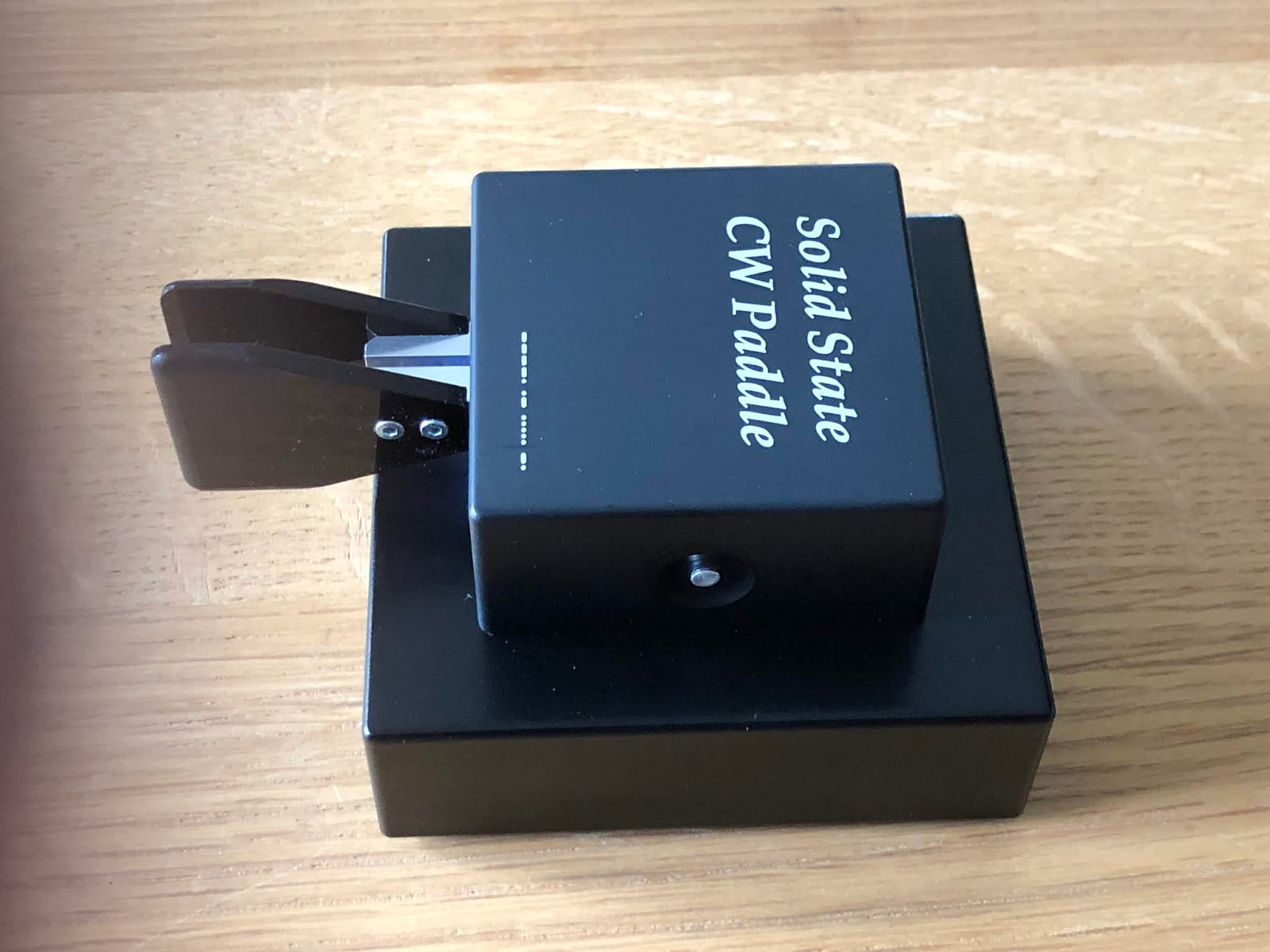
- No moving parts to ware or make a clicking noise.
- You just turn it off when not in use so no accidental dit's or dahs sent when inadvertently touching the paddle.
- There is not maintenance (other than changing the batteries) no periodic mechanical adjustments.
- If you have owned a iambic key there really is no learning curve just turn in on and away you go.
The only adjustment that you may want to do is adjust the touch sensitivity with the key factory set at 10 grams and adjustable to 50 grams in 5 gram steps. Seeing this is a touch paddle depending on your "touch" you may want to increase or decrease the sensitivity. I seemed to be happy with were it was factory set to at 10 grams.
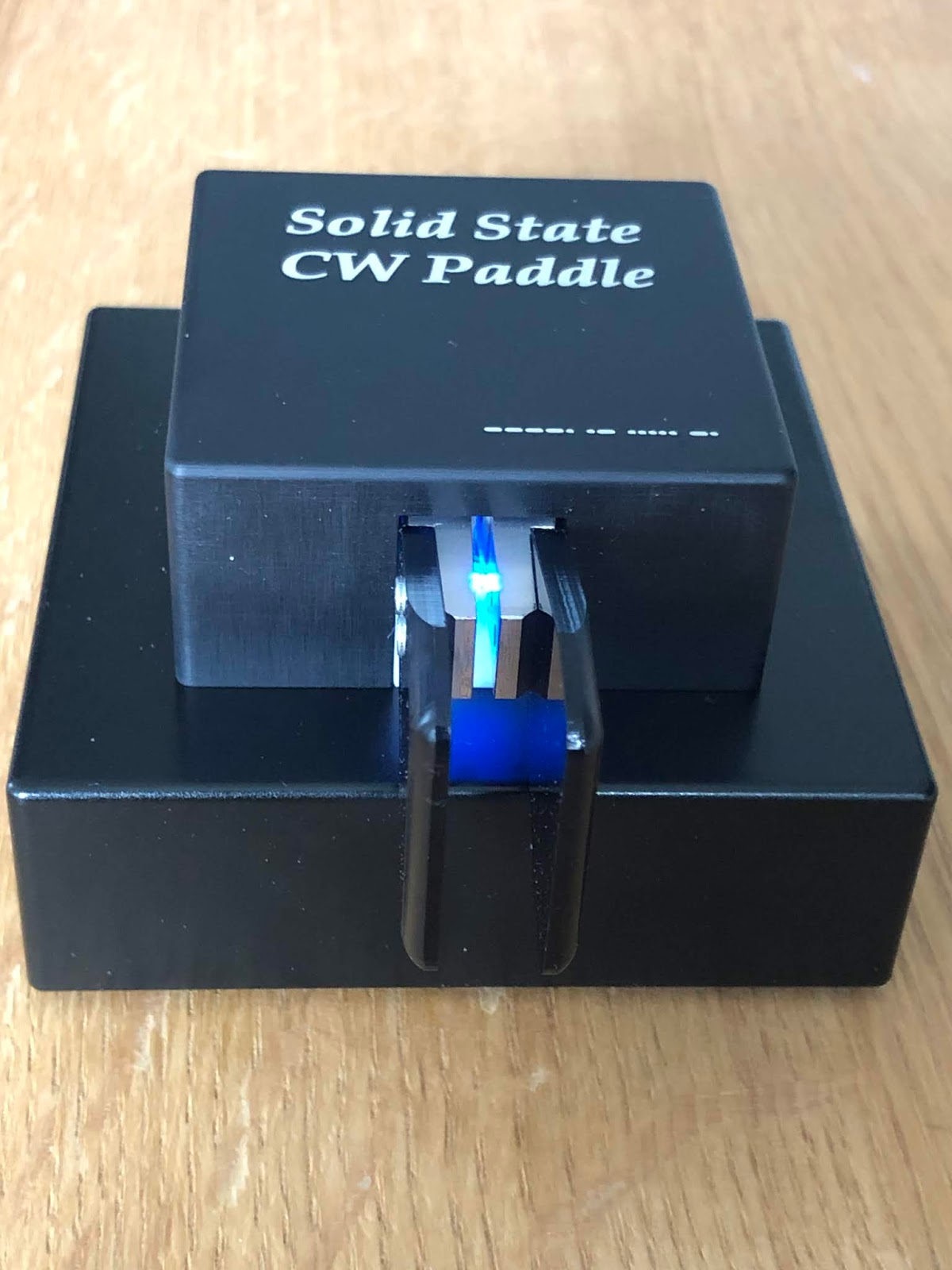
The only other menu change you can do is place the keyer in contest mode and what this means is the keyer will not time out and turn off on you. Normally If you forget to turn the paddle off it will do so after 40 minutes of non operation.
To enter contest mode make sure the key is off then push and hold the on button until the LED flashes then release the button. So in a nut shell to adjust the key paddle touch sensitivity start with the key turned on and hold the power button. To put the key in contest mode (meaning it will not turn off on it's own) start with the key off and hold the power button.
The key is very well made and the base is 1.8 kilo's so it's not going anywhere on your desk as you use it.
The last item I wanted to mention was yes it does take batteries (2 AAA) according to Neno's instructions the battery life should be up to 800 operating hours. The blue LED which is on during operation will indicate low battery life when it gets dim. So you do have an indication when its time to change out the batteries. Finally the paddle is warrantied for 24 months from date of purchase.

Mike Weir, VE9KK, is a regular contributor to AmateurRadio.com and writes from New Brunswick, Canada. Contact him at [email protected].
Hams prepare for 2019 Scout Pacific Jamboree at Camp Barnard
 I wanted to share that I will once again be running a Ham Radio Station at the BC/Yukon Pacific Scout Jamboree being held July 6 – 13 at Camp Barnard in Sooke BC Canada, a 250 acre scout camp on Young Lake.
I ran this same station in 2015 and of the 3,000 scouts attending the Jamboree, some 350 of them came to our Ham Radio Station to earn a Ham Radio badge at Camp Barnard.
 We anticipate the same number of scouts, (i.e. boys and girls aged 11 – 14 years old), to attend this year’s Jamboree and a similar number, (350 – 400) to visit our station to earn a badge. Our club call sign is VE7SHR (i.e. for Scout Ham Radio).
A Scout Pacific (BC / Yukon) Jamboree like other Jamborees are held every 4 years. In 2015 it was the first Jamboree at Camp Barnard in many years and cost over a million dollars to put on with improvements and additions to roads, water and power lines, added washroom facilities, dock extension, food deliveries, fire, police and medical preparations, (i.e. we have an onsite hospital set up), etc. etc. and requires hundreds of volunteers.
Having just earned my VA7RTB Ham Radio Certification in early 2015, along with the Camp Ranger Willy Burrows VE7WRB, and with the 2015 Pacific Scout Jamboree only months away, we decided to try our hand at running a Ham Radio Station. Help from a much more experienced advanced Ham, Chris Carr VE7BAC, from BC’s mainland didn’t hurt either!
As a volunteer organization and little money however, we put the word out to the local Ham community for the donation of any used / unwanted Ham Radio equipment. We were overwhelmed with the response with donations of radios, towers, antennas, coaxial cables, power supplies etc. etc. We also were given permission to share the archery room to create a permanent Ham Shack as seen in the pictures below which needed some extensive renovations to accommodate us.
 Although a lot of the equipment donated was outdated or not working, there were some very usable pieces, plus the donations that Chris brought over from his scrounging over on the mainland, made our shack operational. One bonus was being able to purchase a brand new Yaesu FT-8800 from the Jamboree fund for our permanent shack.
So, with a 20’ X 20’ rented army tent, we set up our Ham Shack and waited for all 3000 youth to arrive, but not sure how much interest our station would actually generate. Well, we didn’t have to wait long, as scouts, (i.e. boys and girls aged, 11 – 14), seemed to gravitate to us and were keen to earn a “generic” Ham Radio badge. Being located next to the badge trading station didn’t hurt either. We were however, in fact blown away by the interest and enthusiasm of the youth. Originally we had them complete six activities to earn a badge, however as we were quickly running out of badges, we upped the requirements to completing 9 activities, and still we ran out of badges in the end.
As an example of the positive responses we got, Chris said that we had more youth attend our station on day one, than attended the week long Ham Station a year earlier at the “Canadian Jamboree” that was host to 2 & 1/2 times as many scouting youth as our provincial Jamboree. It was also great to have the youth make HF contact with other Hams in Alaska, Russia, the Virgin Islands, a weather ship at sea and even Disneyland.
Other events at the 2015 Pacific Jamboree included, canoeing, rock climbing, an overnight hike, scuba diving, visiting the town of Sooke, log rolling, a variety of arts and crafts, robotics, swimming, log pole climbing and ax throwing, to mention a few.
So, with the 2015 Pacific Jamboree over, we immediately set our sights on planning for 2019. We continued to try and improve our equipment, designed a more Ham Radio specific badge, (as seen in the email below), and looked at some new activities to involve the youth in such as Morse Code keying, and having them look up available Call Signs. We have also, as in the last Jamboree, invited local Hams to either come out and assist us, or at least call in to our station on their radios. We are also negotiating with another Ham to borrow his 30’ Ham Radio trailer to be present on site at the Jamboree.
We are also looking at setting up a second Ham Shack location on site as it is a larger space and can accommodate bigger groups throughout the year. (We haven’t determined yet exactly which frequencies we will be monitoring but that will come.)
 So what’s next? We have already heard that the Francophone Scouts are scheduled to hold their Jamboree at Camp Barnard in 2020,as well as the Girl Guides holding there SOAR Jamboree there that same year. Again, some 3,000 Girl Guides are planning to attend. Plans are in the works for both of these events, for us to offer a Ham Radio Station. We also plan to participate in the “Scout Jamboree On The Air” (JOTA), held every October, and we do smaller presentations to Beaver, Cub and Scout groups throughout the year when asked.
Ron Bilinsky, VA7RTB, is a special contributor to AmateurRadio.com and writes from British Columbia, Canada.
LHS Episode #283: The Dr. Bill Show

Welcome to Episode 283 of Linux in the Ham Shack. In this short topic episode, the discuss the new weak signal mode FT4, amateur radio at the World Scout Jamboree, the Northwest Linuxfest, Fedora Core 30 and much more. Thank you for listening and hope to see everyone at Hamvention 2019!
73 de The LHS Crew
Russ Woodman, K5TUX, co-hosts the Linux in the Ham Shack podcast which is available for download in both MP3 and OGG audio format. Contact him at [email protected].
Weekly Propagation Summary – 2019 May 06 16:10 UTC
Here is this week’s space weather and geophysical report, issued 2019 May 06 0135 UTC.
Highlights of Solar and Geomagnetic Activity 29 April – 05 May 2019
Solar activity was at very low to low levels. New Region 2740 (N08, L=307, class/area Dho/280 on 05 May) produced a pair of C-class flares, the largest a C2/Sf observed at 04/2243 UTC. No Earth-directed CMEs were observed in available coronograph imagery.
No proton events were observed at geosynchronous orbit.
The greater than 2 MeV electron flux at geosynchronous orbit was at normal levels on 29 Apr – 01 May and reached high levels on 02-05 May. The maximum electron flux was 6,160 pfu observed at 03/1930 UTC.
Geomagnetic field activity ranged from quiet to active levels through the period. Quiet levels were observed on 29-30 Apr under a nominal solar wind regime. Late on 01 May through midday on 02 May, unsettled to active levels were observed under an enhanced solar wind environment due to influence from a negative polarity CH HSS. During this time frame, wind speeds peaked at near 565 km/s, total field reached 11 nT, while the Bz component reached a maximum southward extent of -10 nT. On 03-04 May, field conditions were at quiet to unsettled levels as negative polarity CH HSS influence continued. By 05 May, quiet conditions were observed under waning CH HSS influence.
Forecast of Solar and Geomagnetic Activity 06 May – 01 June 2019
Solar activity is expected to be at very low levels, with low levels likely through 20 May due to activity from Region 2740 and the return of old Region 2739 (N06, L=266). Very low conditions are anticipated after 20 May.
No proton events are expected at geosynchronous orbit.
The greater than 2 MeV electron flux at geosynchronous orbit is expected to be at moderate to high levels on 06-12 May, and again on 29 May – 01 Jun, due to CH HSS influence. Normal to moderate levels are expected on 13-28 May.
Geomagnetic field activity is expected to range from quiet to active levels. Unsettled to active conditions are expected on 06-07 May and again on 28-31 May. Both enhancements in geomagnetic activity are due to recurrent, negativity polarity CH HSSs. The remainder of the outlook period is expected to be at quiet levels.
Don’t forget to visit our live space weather and radio propagation web site, at: http://SunSpotWatch.com/
Live Aurora mapping is at http://aurora.sunspotwatch.com/
If you are on Twitter, please follow these two users: 1. https://Twitter.com/NW7US 2. https://Twitter.com/hfradiospacewx
– – – – – – – – – – – – –
Be sure to subscribe to our space weather and propagation email group, on Groups.io
https://groups.io/g/propagation-and-space-weather
Spread the word!
– – – – – – – – – – – – –
Links of interest:
+ Amazon space weather books: http://g.nw7us.us/fbssw-aSWSC
+ https://Twitter.com/NW7US
+ https://Twitter.com/hfradiospacewx
Space Weather and Ham Radio YouTube Channel News:
I am working on launching a YouTube channel overhaul, that includes series of videos about space weather, radio signal propagation, and more.
Additionally, I am working on improving the educational efforts via the email, Facebook, YouTube, Tumblr, and other activities.
You can help!
Please consider becoming a Patron of these space weather and radio communications services, beginning with the YouTube channel:
https://www.patreon.com/NW7US
The YouTube channel:
https://YouTube.com/NW7US
..
Visit, subscribe: NW7US Radio Communications and Propagation YouTube Channel
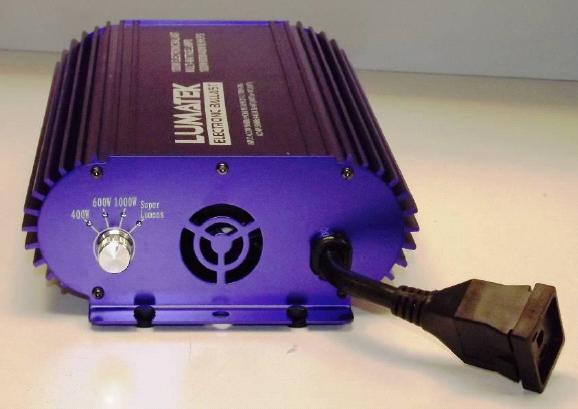
More ‘Hydroponic’ RF
 |
| courtesy: ARRL |
Today's blog is a repost from August, 2015.
I see that the ARRL has filed three more formal complaints to the FCC concerning the bone-crushing HF emissions being produced by off-the-shelf grow light ballasts. The complaint also includes detailed lab data collected on all three devices and it is not pretty. One wonders why it is necessary at all that the ARRL be the industry watchdog instead of the FCC ... why aren't they being more diligent in filtering out these products before they hit the market? If importers and dealers are simply bypassing regulations for the sake of a quick-buck, then heavy fines must be imposed until someone 'gets the message'.
Some of the test products were ordered and purchased through Amazon and through Sears ... the ARRL's thorough report makes it obvious that rules are being ignored and amateurs are paying the price.
“The level of conducted emissions from [these devices] is so high that, as a practical matter, one RF ballast operated in a residential environment would create preclusive interference to Amateur radio HF communications throughout entire neighborhoods,” ARRL General Counsel Chris Imlay, W3KD, wrote in each complaint. The devices exceeded conducted emission limits under all test conditions, “sometimes by extreme margins, throughout most of the HF range ...”
In a similar vein as its recent complaint about marketing of certain RF lighting devices by The Home Depot, the ARRL pointed out that there were no FCC labels on two of the devices mentioned nor any FCC compliance information “anywhere in the documentation, or in or on the box, or on the device itself,” in violation of FCC Part 18 rules.
The League asked the FCC to require removal of all such illegal “grow light” devices from retail sale and marketing and the recall of those devices already sold or available for retail sale, and it said the device importers should be subject to a forfeiture proceeding.
With the proliferation of both legal and illegal 'hydroponic' operations, this kind of QRN is probably just the tip of the iceberg. It's good to see the ARRL slowly pounding away at the rule-breakers on behalf of American amateurs.
I see these same devices being sold on E-Bay, where presumably, they could be purchased worldwide and installed anywhere. As well, several of the U.S. online dealers state "We ship to Canada" ... just great.
Hopefully Industry Canada and RAC are gearing-up for the fight.
Steve McDonald, VE7SL, is a regular contributor to AmateurRadio.com and writes from British Columbia, Canada. Contact him at [email protected].
Bummer: Work Howard Event Canceled
A solid 1960’s saying for disappointing but not tragic events was … bummer! That’s fitting for this announcement from the ARRL with the ICQ Podcast’s endorsement. We’d certainly not want an event, no matter how exciting, to get the W1AW station license in dutch with Part 97. After all, the League should lead by setting examples of following the rules.

“Put Howard to Work” Event Canceled
05/03/2019
Earlier this week, ARRL announced that ARRL CEO Howard Michel, WB2ITX, would be on the air at W1AW on Monday, May 13, giving ARRL members a chance to chat with the CEO and get to know him better as a ham. An issue was raised, however, that this event may pose a potential FCC rule violation.
The particular rule is §97.113: “A station is also not allowed to transmit communication in which the station licensee or control operator has a pecuniary interest, including communications on behalf of an employer.”
Given that ARRL is Michel’s employer and that an effort was made to publicize an event at which members of the organization could chat with the CEO, such an event could be perceived as a benefit to the organization. So, out of an abundance of caution and to avoid any potential violation of FCC rules, or even the appearance of a violation, Michel has decided to cancel plans for the “Put Howard to Work” event.
“I’ve operated W1AW before and will continue to do so in the future,” Michel said. “I hope to meet many of you on the air, but only as part of my regular ham radio activities and not as part of an ARRL-promoted event.”
The “Put Howard to Work!” event was conceived by the ICQ Amateur/Ham Radio Podcast, on which Michel was a guest on March 31. “We are disappointed, of course, at this turn of events but fully understand and endorse ARRL’s decision,” said ICQ Podcast Presenter Frank Howell K4FMH.
Frank Howell, K4FMH, is a regular contributor to AmateurRadio.com and writes from Mississippi, USA. Contact him at [email protected].
 Ham Radio Deluxe |
 W5SWL Electronics |
 Ham Radio Prep |
 KB3IFH QSL Cards  Hip Ham Shirts  HamRadioAuctions HamRadioAuctions Reliance Antennas Reliance Antennas Enigma Shop Enigma Shop |  morseDX  Ni4L Antennas  R&L Electronics R&L Electronics antennas.us antennas.us QRV QRV |
- Matt W1MST, Managing Editor
