 |
 ICQ Podcast Episode 310 – Grow, Merge or Disband your Amateur Radio Club!
 27 October 2019 | by
 In this episode, Martin M1MRB is joined by Chris Howard M0TCH, Martin Rothwell M0SGL, Frank Howell K4FMH, Ed Durrant DD5LP and Bill Barnes N3JIX to discuss the latest Amateur / Ham Radio news. Colin M6BOY rounds up the news in brief and this episode’s feature is Grow, Merge or Disband your Amateur Radio Club!
ICQ AMATEUR/HAM RADIO PODCAST DONORS
We would like to thank our monthly and annual subscription donors for keeping the podcast advert free. To donate, please visit - http://www.icqpodcast.com/donate
- PACTOR Developer SCS Announces Monitoring Software - Can Online Ham Radio Exams Improve Accessibility? - Inspiring Youth with Science in Space - Michigan State University Amateur Radio Club Celebrates Centennial with Second-Century Special Event - New ARRL Online Groups for More Direct Communications - Amateur Radio Operator Faces Fine for Blocking Other Amateurs - RSGB Youth Team Recruiting - December is YOTA Month
Colin Butler, M6BOY, is the host of the ICQ Podcast, a weekly radio show about Amateur Radio. Contact him at [email protected].
Ham College 58
Ham College episode 58 is now available for download.
General Amateur Radio Exam part 29. General questions pool updates 1 of 3.
01:06:31
George Thomas, W5JDX, is co-host of AmateurLogic.TV, an original amateur radio video program hosted by George Thomas (W5JDX), Tommy Martin (N5ZNO), Peter Berrett (VK3PB), and Emile Diodene (KE5QKR). Contact him at [email protected].
LHS Episode #309: The Weekender XXXVI

It's time once again for The Weekender. This is our bi-weekly departure into the world of amateur radio contests, open source conventions, special events, listener challenges, hedonism and just plain fun. Thanks for listening and, if you happen to get a chance, feel free to call us or e-mail and send us some feedback. Tell us how we're doing. We'd love to hear from you.
73 de The LHS Crew
Russ Woodman, K5TUX, co-hosts the Linux in the Ham Shack podcast which is available for download in both MP3 and OGG audio format. Contact him at [email protected].
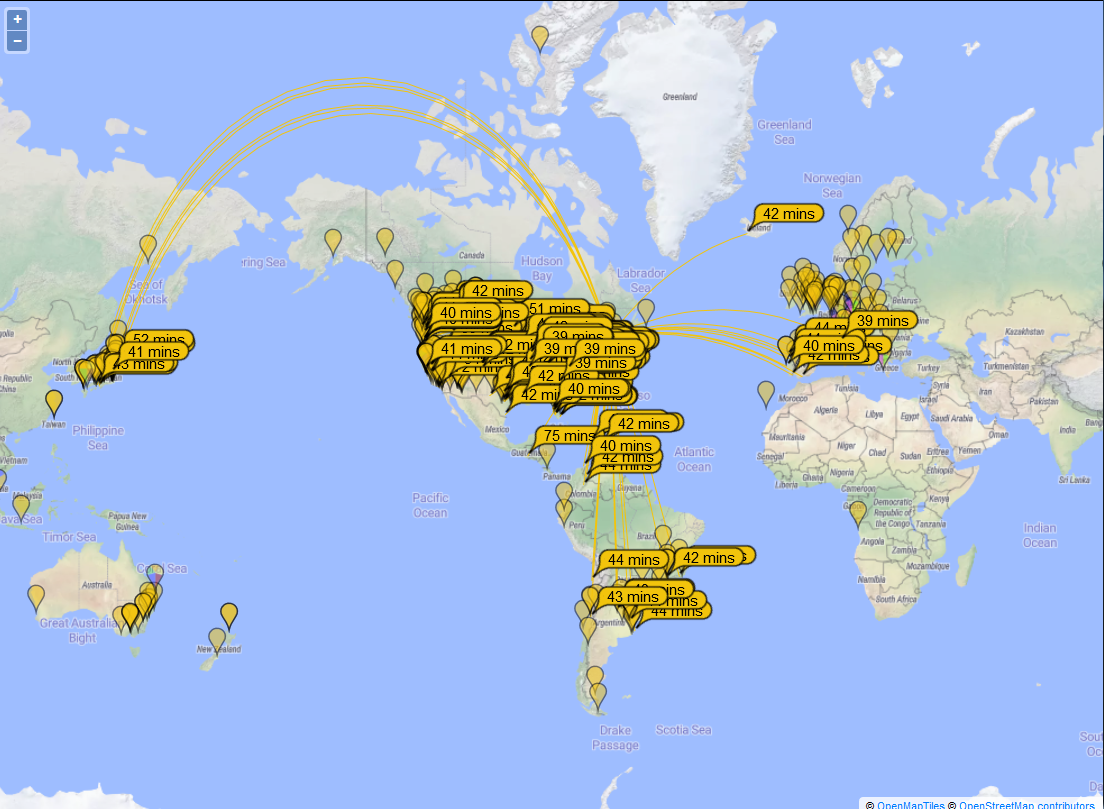
Fun with FT-8.
 |
| Those hearing me on 20m FT-8 |
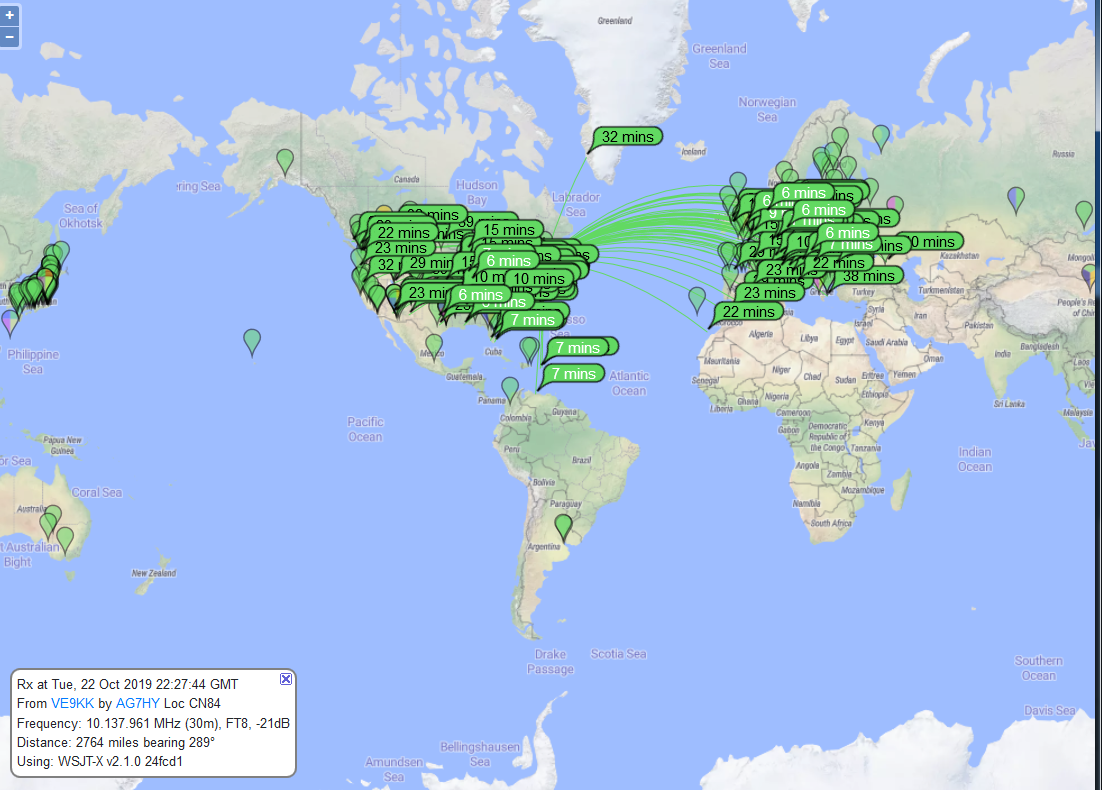 |
| Those hearing me on 30m FT-8 On 20m I was being heard in Japan, South America, Central America, Europe(including Iceland) and all over the U.S. On 30m FT-8 the food gates opened to Europe and all over the U.S but Japan closed down. Overall I am very pleased with how my Endfed antenna preformed this evening. |
Mike Weir, VE9KK, is a regular contributor to AmateurRadio.com and writes from New Brunswick, Canada. Contact him at [email protected].
LHS Episode #308: Ciao, Enzo

Welcome to Episode 308 of Linux in the Ham Shack. In this short-topic episode, the hosts discuss the JOTA/JOTI weekend, Homebrew Heroes, youths as the future of amateur radio, GNU, Perl, OpenLibra, open hardware, FOSS satellites and much more. Thank you for tuning in. We appreciate you all.
73 de The LHS Crew
Russ Woodman, K5TUX, co-hosts the Linux in the Ham Shack podcast which is available for download in both MP3 and OGG audio format. Contact him at [email protected].
Weekly Propagation Summary – 2019 Oct 21 16:10 UTC
Here is this week’s space weather and geophysical report, issued 2019 Oct 21 0358 UTC.
Highlights of Solar and Geomagnetic Activity 14 – 20 October 2019
Solar activity was very low. The solar disk was spotless throughout the period. No Earth-directed CMEs were observed.
No proton events were observed at geosynchronous orbit.
The greater than 2 MeV electron flux at geosynchronous orbit reached moderate levels on 14-15 Oct and again on 17-20 Oct with a peak flux of 777 pfu observed at 14/1500 UTC.
Geomagnetic field activity ranged from quiet to unsettled levels. Solar wind speed was mostly in the 300-400 km/s range but increased to 400-440 km/s on 16-17 Oct. Total field ranged from 1-8 nT. The geomagnetic field responded with mostly quiet conditions with isolated unsettled periods on 15 and 20 Oct.
Forecast of Solar and Geomagnetic Activity 21 October – 16 November 2019
Solar activity is expected to be at very low levels for the forecast period.
No proton events are expected at geosynchronous orbit.
The greater than 2 MeV electron flux at geosynchronous orbit is expected to reach moderate levels on 24 Oct, 04-11 Nov, and again on 13-16 Nov. High levels are expected on 25 Oct-03 Nov due to coronal hole high speed stream (CH HSS) influence.
Geomagnetic field activity is expected to reach unsettled to active levels on 21-22 Oct and 24-29 Oct with G1 (Minor) geomagnetic storm levels likely on 24-25 Oct due to recurrent CH HSS activity.
Don’t forget to visit our live space weather and radio propagation web site, at: http://SunSpotWatch.com/
Live Aurora mapping is at http://aurora.sunspotwatch.com/
If you are on Twitter, please follow these two users: 1. https://Twitter.com/NW7US 2. https://Twitter.com/hfradiospacewx
– – – – – – – – – – – – –
Be sure to subscribe to our space weather and propagation email group, on Groups.io
https://groups.io/g/propagation-and-space-weather
Spread the word!
– – – – – – – – – – – – –
Links of interest:
+ Amazon space weather books: http://g.nw7us.us/fbssw-aSWSC
+ https://Twitter.com/NW7US
+ https://Twitter.com/hfradiospacewx
Space Weather and Ham Radio YouTube Channel News:
I am working on launching a YouTube channel overhaul, that includes series of videos about space weather, radio signal propagation, and more.
Additionally, I am working on improving the educational efforts via the email, Facebook, YouTube, Tumblr, and other activities.
You can help!
Please consider becoming a Patron of these space weather and radio communications services, beginning with the YouTube channel:
https://www.patreon.com/NW7US
The YouTube channel:
https://YouTube.com/NW7US
..
Visit, subscribe: NW7US Radio Communications and Propagation YouTube Channel
Comparing receive signals with and without 1:1 balun.
 |
| 20m without balun |
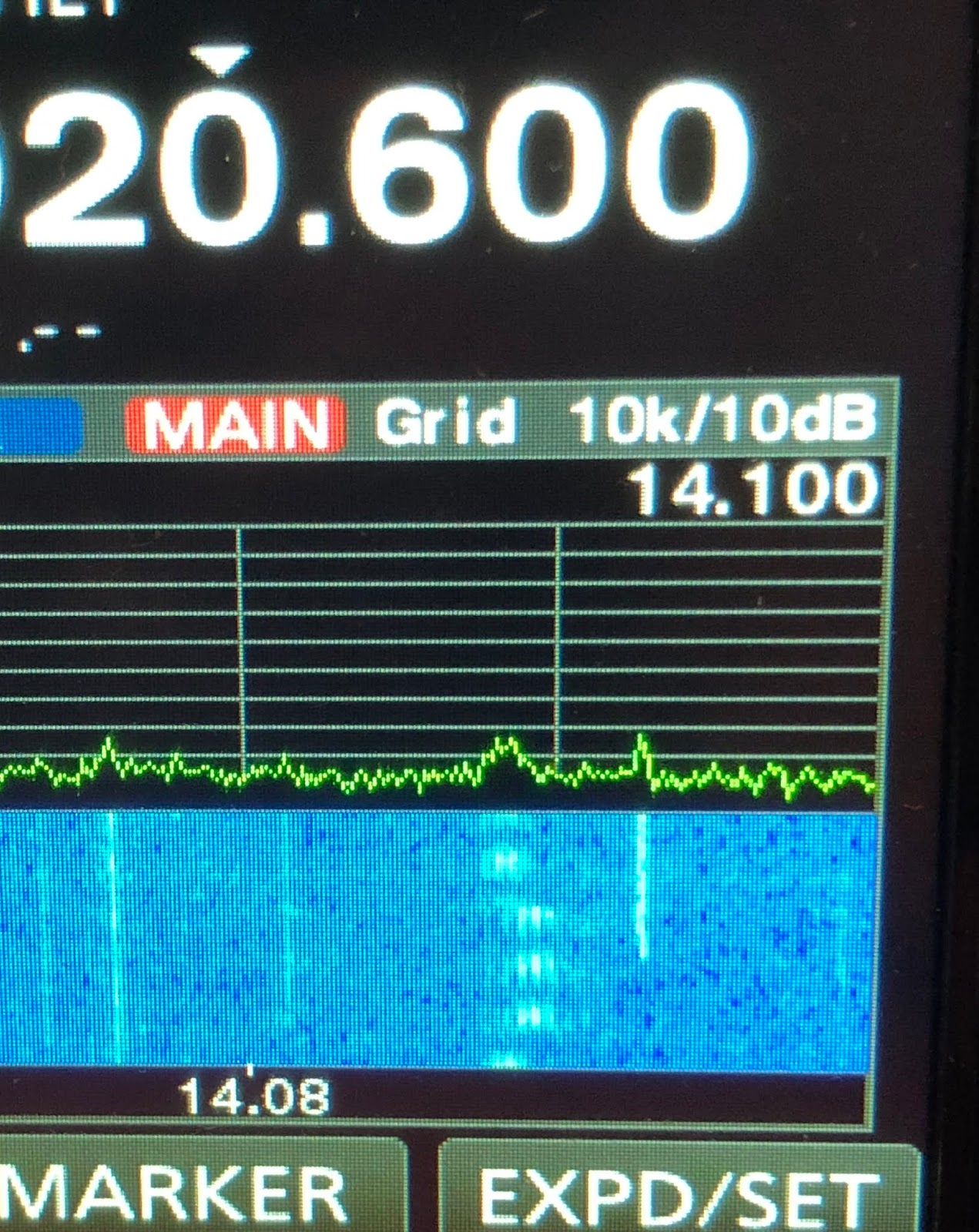
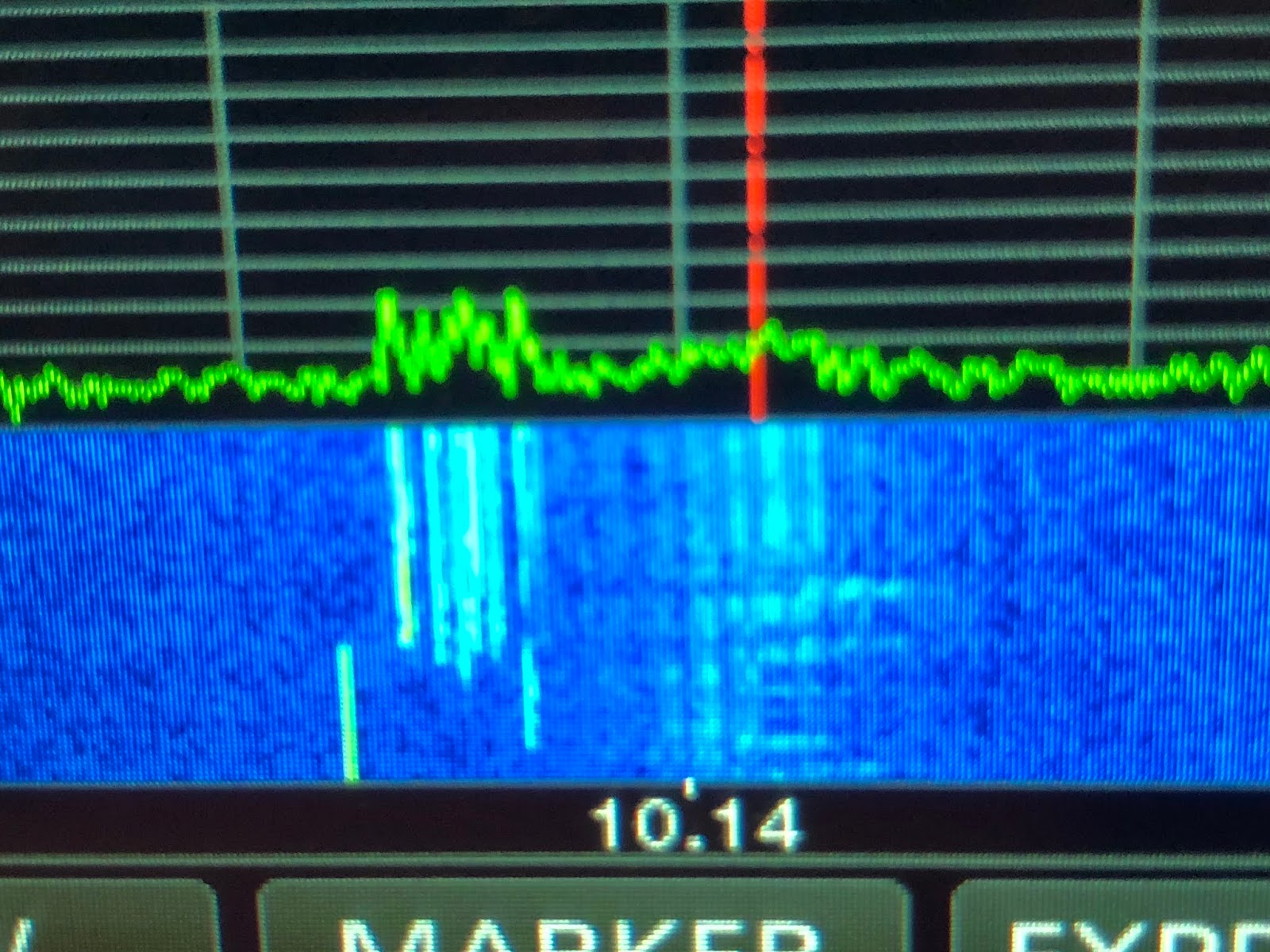
14.100 to cover the CW and digi section of the band. The local time was in around 22:37 and without Balun Designs 1:1 balun installed the section of 20m from 14.000 to 14.100 showed some what I called washout sections. I did notice around the 14.040 mark there is some RFI on the waterfall. When I moved the VFO over to that section the RFI was very faint. Also a very faint indication of RFI on the waterfall just past the
 |
| 20m with balun |
When the 1:1 balun was introduced the band cleaned up regarding the washed out sections. I was able to see digi signals, in the posted picture the digi signals are almost gone from the waterfall. There was some CW signals close to the noise floor that I was able to hear (not shown in the picture). I did notice the RFI what was in the waterfall without the balun installed is gone BUT after the balun was installed at 14.080 there was a stronger RFI signal and I could hear it very well when tuned to it. This RFI was not there all the time I would say it was on and off. Not sure what it is but that is not the purpose of this post.....save that for another post.
 |
| 20m RFI without balun |
 |
| 20m RFI with balun |
 |
| 30m without balun. |
Because it was later in the evening 40m seemed to really shine when I preformed the comparison with and without the balun installed. The span on 40m was 7.000 to 7.100. Without the balun there was some CW signals as well as some digi signals that I noticed. I was pleased with what I saw until I placed the balun in the picture. This cleared up the band and I was able to see more CW signals and the digi section was much more pronounced. I also noticed according to the S-meter with the balun was in around S-4 and without just over S-5.
I am very pleased how the balun has improved the reception end of things.
 |
| 30m with balun |
 |
| 30m digi signal with something to the right? |
 |
| 40m without balun |
 |
| 40m with balun |
Mike Weir, VE9KK, is a regular contributor to AmateurRadio.com and writes from New Brunswick, Canada. Contact him at [email protected].
 Ham Radio Deluxe |
 W5SWL Electronics |
 Ham Radio Prep |
 KB3IFH QSL Cards  Hip Ham Shirts  HamRadioAuctions HamRadioAuctions Reliance Antennas Reliance Antennas Enigma Shop Enigma Shop |  morseDX  Ni4L Antennas  R&L Electronics R&L Electronics antennas.us antennas.us Ears to Our World Ears to Our World |
- Matt W1MST, Managing Editor
