 |
 ICQ Podcast Episode 314 – Low Band VHF
 22 December 2019 | by
 In this episode, Martin M1MRB is joined by Chris Howard M0TCH, Martin Rothwell - M0SGL, Frank Howell - K4FMH, Ed Durrant - DD5LP and Bill Barnes - N3JIX to discuss the latest Amateur / Ham Radio news. Colin M6BOY rounds up the news in brief and this episode’s feature is - Low Band VHF.
ICQ AMATEUR/HAM RADIO PODCAST DONORS
We would like to thank Scott McDonald (KA9P), Richard Drexel (K4RJD) and Bill Seward (W4EXT) and our monthly and annual subscription donors for keeping the podcast advert free. To donate, please visit - http://www.icqpodcast.com/donate
- Ham Radio to Encourage Student Interest in Science - FT4 and JS8 Added to the RFzero - African Parks-on-the-Air Programme - Library artwork honours STEM teacher Barbara Ranson formerly AAØI - ARRL Reshapes its Podcast Offerings for 2020 - DRM Tests from Hungary on 26 MHz continue into 2020 - TM70TAAF Special Event - Australian 70cms Digital Record Extended to 2806 kms!
Colin Butler, M6BOY, is the host of the ICQ Podcast, a weekly radio show about Amateur Radio. Contact him at [email protected].
LHS Episode #318: The Weekender XXXIX

In this episode, the last episode of 2019, the hosts turn The Weekender into a roundtable free-for-all where fans of the show could join us on Mumble and talk about anything they wanted to. We touch on amateur radio, Linux, open source, sociology, thoughts about the past and the future and throw in a healthy dose of hedonism. Thank you to everyone who participated and who listens to our program. May you have a wonderful holiday season and a prosperous new decade.
73 de The LHS Crew
Russ Woodman, K5TUX, co-hosts the Linux in the Ham Shack podcast which is available for download in both MP3 and OGG audio format. Contact him at [email protected].
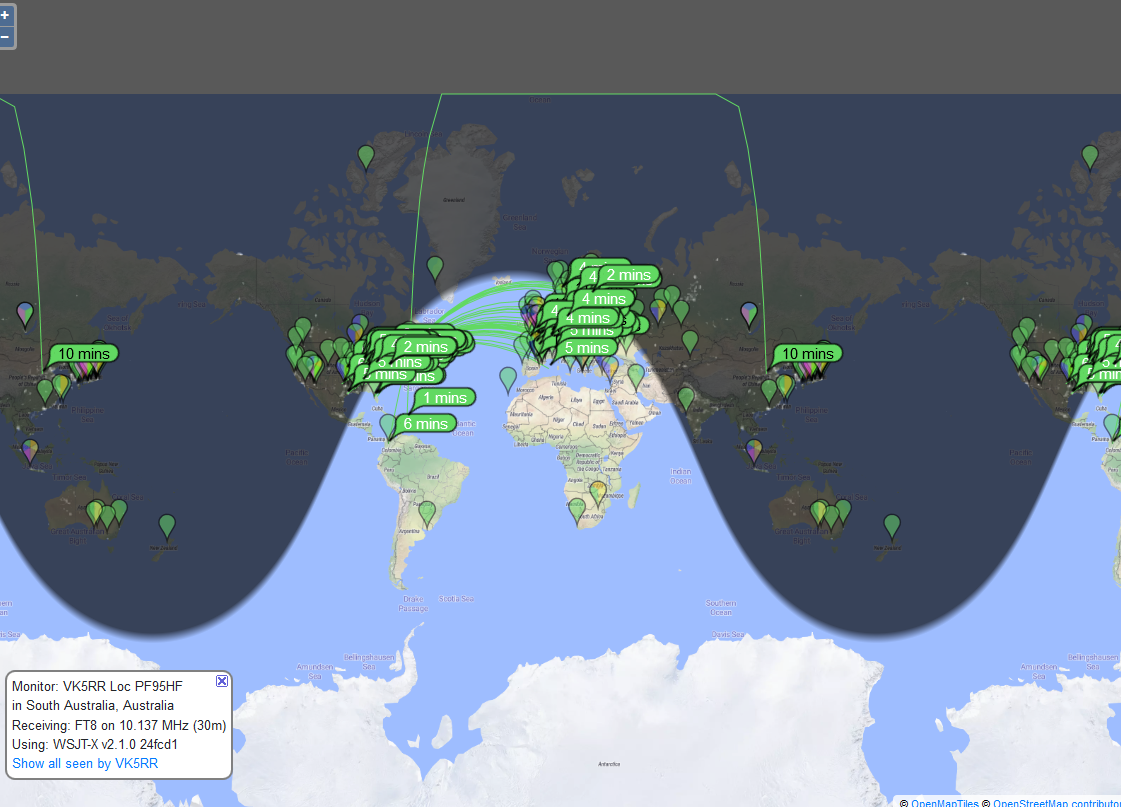
Spotted in China on FT8
Mike Weir, VE9KK, is a regular contributor to AmateurRadio.com and writes from New Brunswick, Canada. Contact him at [email protected].
Toroid choke adventure
 |
| Snap on Choke |
A few weeks ago I was on my radio and once again I experienced some RFI issues with my PC and my morse code key. On my PC the mouse was moving all over the screen and the morse code key when using it I had extra dots and dits being sent. I use snap on chokes but I have seen in the past the chokes have become unsnapped and the choke is not able to do its job 100%. After my mouse and morse code key issues I move my radio desk out to look behind and have a look at the installed chokes. I was not surprised to see a number of chokes that were unsnapped. It was time for me to take this issue head on and solve it once and for all. I decided to put toroid chokes on each end of each
 |
| Not sure if this is normal |
Mike Weir, VE9KK, is a regular contributor to AmateurRadio.com and writes from New Brunswick, Canada. Contact him at [email protected].
LHS Episode #317: One More Probe

Welcome to Episode 317 of Linux in the Ham Shack. In this episode, the hosts (minus Bill) talk about some of the best Open Source of 2019, Santa on the Air, Ofcom, inter-satellite communication, ksnip, QEMU, open-source oscilloscopes and much more. Thank you for listening and we hope you have a great week and a happy holiday season.
73 de The LHS Crew
Russ Woodman, K5TUX, co-hosts the Linux in the Ham Shack podcast which is available for download in both MP3 and OGG audio format. Contact him at [email protected].
FT8 … Such A Tease
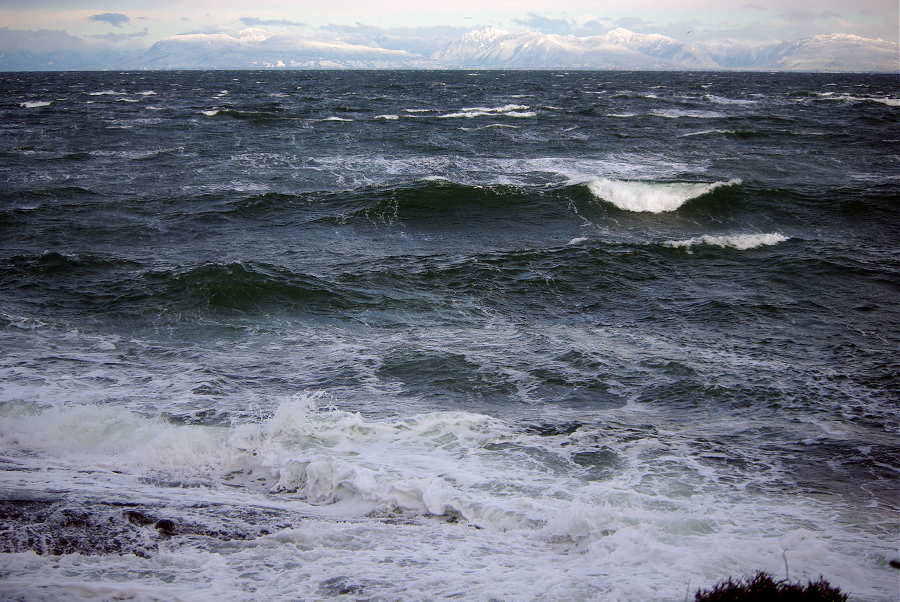 |
| Looking towards EU over Georgia Strait, last winter |
With the continued tsunami of FT8 activity on the HF bands, I decided to have a look at what was happening in the FT8 segment of 160m.
On Saturday afternoon, about ninety minutes before my local sunset here in south west British Columbia, I set my receiver and 160m half-sloper to work, along with WSJT-X, on 1840kHz USB mode.
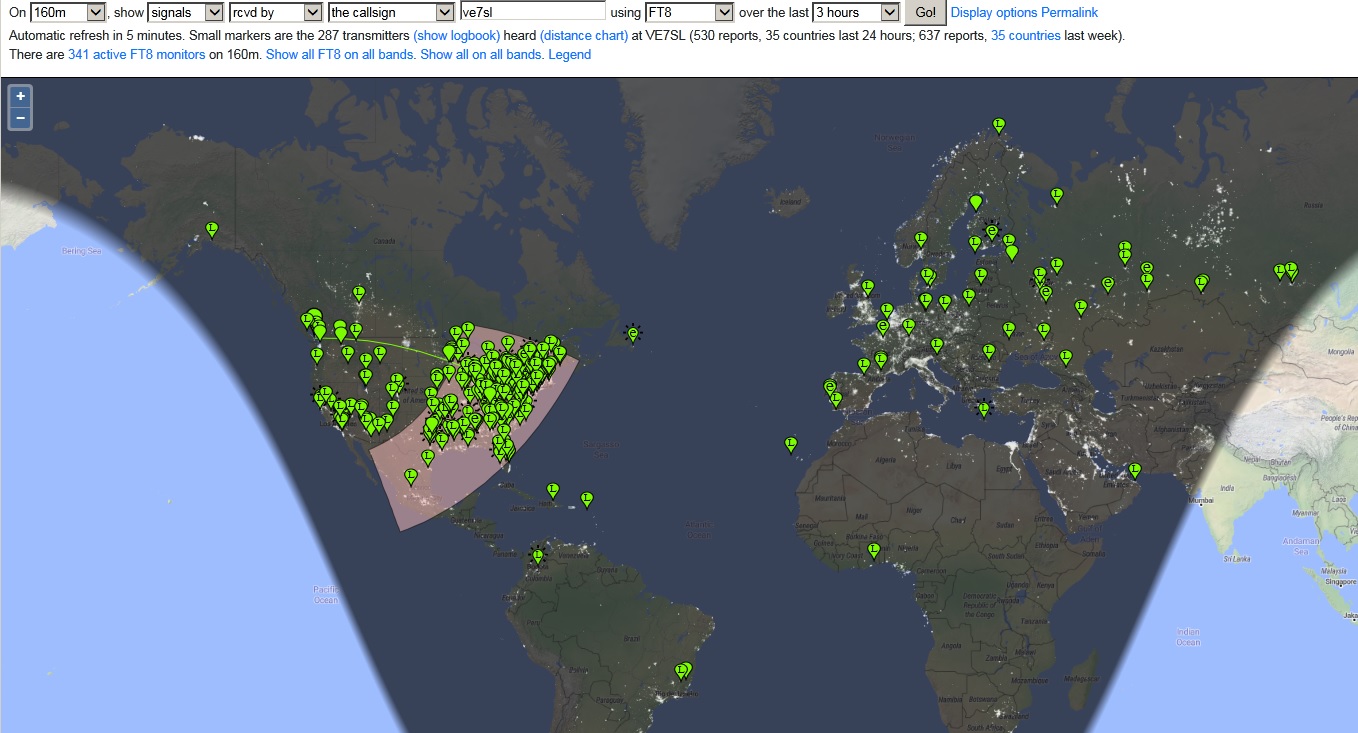
Although still in broad daylight, the waterfall was immediately flooded with signals! As I started to pay closer attention, I realized that many of the signals were from Europe! Many were audible while the rest were fast-approaching that level, being stronger than -20db. I let the receiver run for another few hours and took a screen capture of my PSK Reporter screen, illustrating what had been decoded over that time span:
 |
| courtesy: https://www.pskreporter.info/pskmap.html |
Checking other NW or VE7 monitors during the same time span showed no EU decodes at all, which I found surprising ... perhaps I missed someone. My location here on the eastern shoreline of Mayne Island looks towards EU and many other directions directly over a large body of saltwater ocean, Georgia Strait. The photo above was taken last winter, through the living room window. It is also very quiet, electrically, with little or no noise most of the time.

It appears that the lack of man-made noise combined with the theoretical 6db saltwater horizon gain (being realized), is enough to allow these signals to be heard. Signals continued to be decoded as darkness approached but at around 1800 local time, began to drop off ... evidently this appears to be a sunset enhancement, similar to what I often see to the east coast on the 630m band.
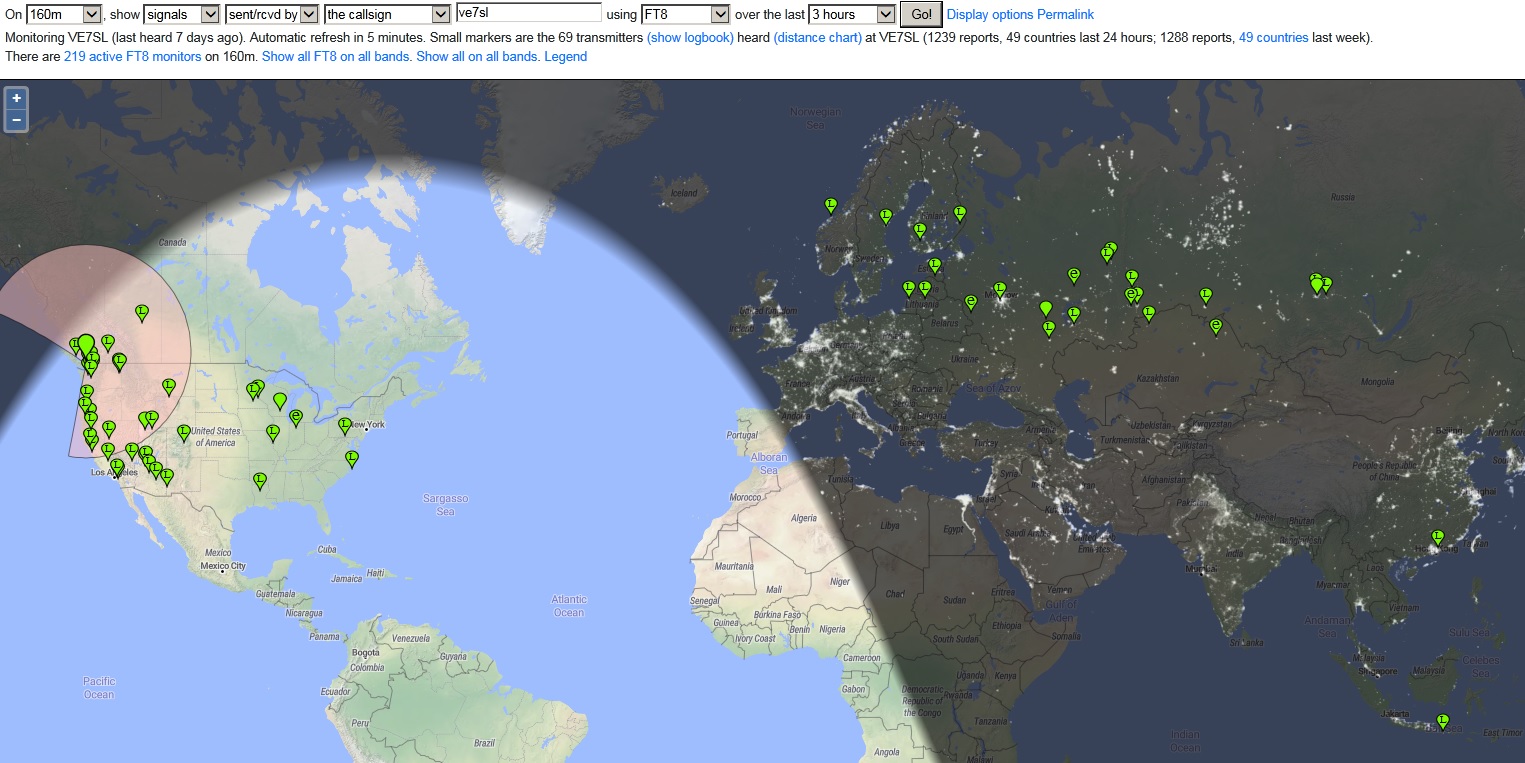
Now here’s where it gets even more interesting, as my decodes for the ninety minutes before and after local sunrise indicated a similar pattern!
The most probable path for these signals, around sunrise, would be via the long path in darkness. Although there is no saltwater directly behind me, it seems that the 'quietness' may be enough to do the job. Here’s the slightly post-sunrise screen cap from PSK Reporter:
 |
| courtesy: https://www.pskreporter.info/pskmap.html |
FT8 is surely a tempting seductress. So far I have resisted the fast-growing urge to spark-up in this mode on 160m ... but I may be growing weaker. This all looks so very interesting.
Steve McDonald, VE7SL, is a regular contributor to AmateurRadio.com and writes from British Columbia, Canada. Contact him at [email protected].
Weekly Propagation Summary – 2019 Dec 16 16:10 UTC
Here is this week’s space weather and geophysical report, issued 2019 Dec 16 0128 UTC.
Highlights of Solar and Geomagnetic Activity 09 – 15 December 2019
Solar activity was very low throughout the period. No active regions with sunspots were observed and no earth-directed CMEs were detected in satellite imagery.
No proton events were observed at geosynchronous orbit.
The greater than 2 MeV electron flux at geosynchronous orbit was at normal and normal to moderate levels throughout the week.
Geomagnetic field activity was quiet to unsettled on 09 and 11 Dec with quiet conditions observed throughout the remainder of the period.
Forecast of Solar and Geomagnetic Activity 16 December – 11 January 2020
Solar activity is expected to be very quiet throughout the outlook period.
No proton events are expected at geosynchronous orbit.
The greater than 2 MeV electron flux at geosynchronous orbit is expected to reach high levels on 21-25 Dec. Normal and normal to moderate flux levels are expected throughout the remainder of the period.
Geomagnetic field activity is expected to reach active levels on 18-19 Dec due to recurrent CH HSS influence. Quiet and quiet to unsettled conditions are expected to persist throughout the remainder of the outlook period.
Don’t forget to visit our live space weather and radio propagation web site, at: http://SunSpotWatch.com/
Live Aurora mapping is at http://aurora.sunspotwatch.com/
If you are on Twitter, please follow these two users: 1. https://Twitter.com/NW7US 2. https://Twitter.com/hfradiospacewx
– – – – – – – – – – – – –
Be sure to subscribe to our space weather and propagation email group, on Groups.io
https://groups.io/g/propagation-and-space-weather
Spread the word!
– – – – – – – – – – – – –
Links of interest:
+ Amazon space weather books: http://g.nw7us.us/fbssw-aSWSC
+ https://Twitter.com/NW7US
+ https://Twitter.com/hfradiospacewx
Space Weather and Ham Radio YouTube Channel News:
I am working on launching a YouTube channel overhaul, that includes series of videos about space weather, radio signal propagation, and more.
Additionally, I am working on improving the educational efforts via the email, Facebook, YouTube, Tumblr, and other activities.
You can help!
Please consider becoming a Patron of these space weather and radio communications services, beginning with the YouTube channel:
https://www.patreon.com/NW7US
The YouTube channel:
https://YouTube.com/NW7US
..
Visit, subscribe: NW7US Radio Communications and Propagation YouTube Channel
 Ham Radio Deluxe |
 W5SWL Electronics |
 Ham Radio Prep |
 KB3IFH QSL Cards  Hip Ham Shirts  HamRadioAuctions HamRadioAuctions Reliance Antennas Reliance Antennas Enigma Shop Enigma Shop |  morseDX  Ni4L Antennas  R&L Electronics R&L Electronics antennas.us antennas.us QRV QRV |
- Matt W1MST, Managing Editor
