 |
 Chat From a Quarantined Software Engineer – Welfare Check!
 20 April 2020 | by
 This is a welfare check on you. Please leave a comment on how you are faring, what is happening in your situation with the lock-down.
Are you quarantined? Working from home? Did you lose your job? How are you doing during this crazy time?
What is going on with you during this challenging situation?
I talk about what I’m doing, too. I’m quarantined at home. I can work from home, as I am a senior software engineer. I can do my job by remote access to a virtual workstation, through a secure VPN connection. I’m blessed that I still can work during this lock-down.
But, I have a medical emergency – a dental problem – and trying to be seen by a dentist is difficult, because all of the local dentists were told to shut down their daily business and quarantine. Only emergency appointments are being made! I was finally, after two days of phone calls, able to schedule an emergency visit to my dentist!
I want to know: How do you use amateur radio, now that we are all stuck at home? Are you using ham radio more, now? Less?
Please leave a comment to let me know how you are doing, and answer the other questions, too. I hope to hear from you.
I hope to meet you on the shortwave amateur radio bands. I am usually using Olivia, or Morse code CW. More information about Olivia: http://OliviaDigitalMode.net.
Be healthy, be safe, stay sane!
Visit, subscribe: NW7US Radio Communications and Propagation YouTube Channel
LHS Episode #339: The Weekender XLVI

It's time once again for The Weekender. This is our bi-weekly departure into the world of amateur radio contests, open source conventions, special events, listener challenges, hedonism and just plain fun. Thanks for listening and, if you happen to get a chance, feel free to call us or e-mail and send us some feedback. Tell us how we're doing. We'd love to hear from you.
73 de The LHS Crew
Russ Woodman, K5TUX, co-hosts the Linux in the Ham Shack podcast which is available for download in both MP3 and OGG audio format. Contact him at [email protected].
World Amateur Radio Day 630m Activity!
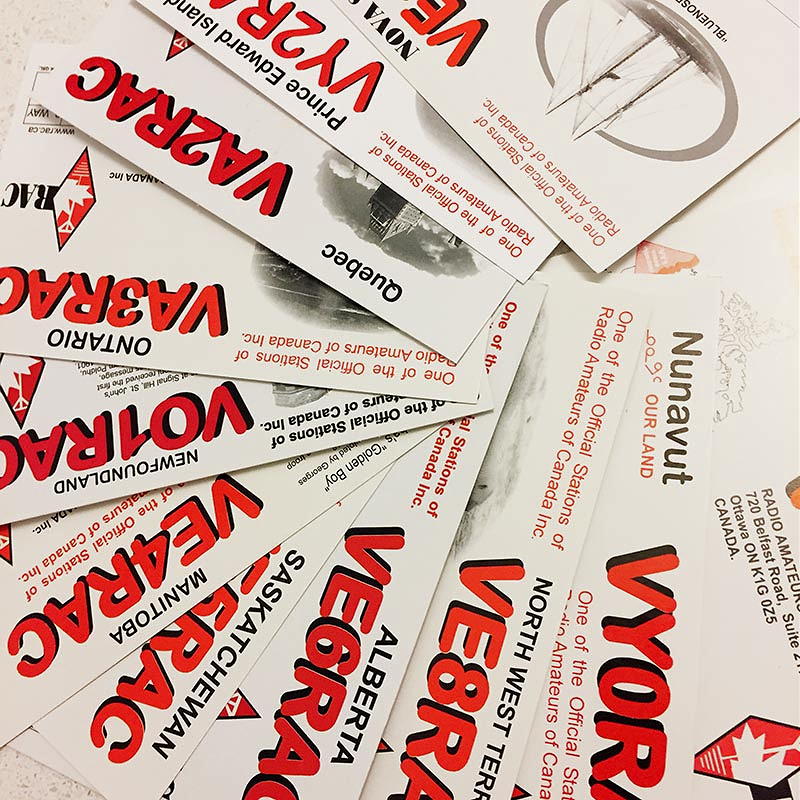
Steve McDonald, VE7SL, is a regular contributor to AmateurRadio.com and writes from British Columbia, Canada. Contact him at [email protected].
YouTubers Hamfest on May 16th, 2020!
This is going to be the first-ever, largest-ever, YouTube collaborative effort to support ALL Amateur Radio Vendors, personnel, promoters, subscribers and sustainers during the would-be weekend of Hamvention 2020. Join us as we interview and promote all of the great people who make our hobby the best on Earth! 8am EST on Saturday May 16th – this is going to be a BLAST!
[embedyt] https://www.youtube.com/watch?v=hDSwpQfMET0[/embedyt]
Jason Johnston, KC5HWB, is a regular contributor to AmateurRadio.com and writes from Texas, USA. Contact him at [email protected].
A funny thing happened on the way down the hall to work today…….

What was going through my mind was how was the radio and Julies' new company PC and internet phone going to react to my Icom 7610? All was good and the only issue was her two monitors would wake up from sleep when I transmitted on certain bands (40m and 60m) I had this same issue with my PC and I added snap on toroids and it did the trick. So I did the same to Julies monitors and the problem was solved. We were operating both PC's from a wifi connection and Julie felt her PC was running a bit slow. It was no big deal for me to run a LAN cable from the modem to a gigabit ethernet network switch in our office. Julie was thrilled as was I too as both our connections were much faster. Now here is the catch.....I was on my PC today looking up some info regarding the upcoming weekend QSO parties. Julie was on a call and all of a sudden her call dropped and a type of busy signal was going off in her ear. I was not on my radio and only my PC. The day before I was on my PC while Julie was working away and without issue. When I shut my PC down her phone reset and all was good again. My way to deal with this is to think about what was different from yesterday and today when the issue happened. The only difference I could think of is we are off the wifi and on LAN connection. What this has to do with this new issue is beyond me but I left Julies PC on the LAN connection and I moved my PC back over to the wifi connection. After I did this and many tests all was ok.......I have no idea why both PC's being on LAN would cause this issue as with both being on wifi or one on wifi and one on LAN there was no issue. All that concerns me is that Juile's PC is working without issue and can get on my PC and my rig. My question is does anyone out there have any idea why I had the issue?
Mike Weir, VE9KK, is a regular contributor to AmateurRadio.com and writes from New Brunswick, Canada. Contact him at [email protected].
Troubleshooting a Radio Interference Problem
I recently encountered a problem when using my Yaesu FT-950. Sometime during the CQ WW WPX Contest, I noticed an annoying tone (“a birdie”) in my receiver. I’ve had this radio for many years, used it quite a bit and this was the first time I encountered this problem. It struck me as very odd because it did not go away when I disconnected the antenna and it did not change frequency when I tuned around.
I immediately had visions of needing to tear the radio apart or send it back to Yaesu for repair. Instead, this happened…
When it comes to troubleshooting problems, it usually pays to fiddle around with it and see what happens.
The post Troubleshooting a Radio Interference Problem appeared first on The KØNR Radio Site.
Bob Witte, KØNR, is a regular contributor to AmateurRadio.com and writes from Colorado, USA. Contact him at [email protected].
Online US Ham Radio Exams
The COVID-19 global pandemic has certainly had a major impact to all of us. While I certainly don’t need to point out all the pain points, for those who may stumble onto this blog posting you’re either interested in getting your ham radio license, planning to upgrade your license, already licensed at the level you want to be or just simply wanting to read the entire Internet while you are quarantined at home with nothing better to do. If you fall into the latter category, then you’ve pretty much reached the end of the line. 
Controversy Galore
I’m sure the very mention of moving away from the standard VE exam process has some old men stirred up beyond imagination. I get it…I really do. The most obvious concern of course would be some form of cheating. I’ve also heard concerns that this new method of remote testing will replace the in-person exam process forever. Then there’s the category of just being reluctant to change and the idea of “this is how we’ve always done it” mentality. For those who are always reluctant to change, may I suggest reading a book titled “Who Moved My Cheese”, available on Amazon. But I digress.
The Right Move
I personally support this idea of conducting online ham radio exams. I believe the technology exists to be able to conduct a secure exam process and I believe within the hobby and service of amateur radio we have the resources to make this happen. After all, one of the key points of our “Radio Amateur’s Code” is being Progressive!
More Information
Richard Bateman, KD7BBC who is also the owner of HamStudy.org recently recorded a short video discussing how he (and others) are working to help bring Online Amateur Radio exams to the US very soon. I’ve embedded the video below for your ease in viewing.
Final Thoughts
As I said at the beginning, I do understand the concern some amateurs have regarding the subject of online exam testing. But I have a greater concerns over how this pandemic will impact our hobby. I truly believe the efforts being led by Richard will only do our hobby good. I’m sure at some point life will get back to some kind of normal. I’m certainly looking forward to finding out just what the new normal will be.
What do you think?
Until next time…
73 de KDØBIK (Jerry)
Jerry Taylor, KD0BIK, is a regular contributor to AmateurRadio.com and writes from Colorado, USA. He is the host of the Practical Amateur Radio Podcast. Contact him at [email protected].
 Ham Radio Deluxe |
 W5SWL Electronics |
 Ham Radio Prep |
 KB3IFH QSL Cards  Hip Ham Shirts  HamRadioAuctions HamRadioAuctions Reliance Antennas Reliance Antennas Enigma Shop Enigma Shop |  morseDX  Ni4L Antennas  R&L Electronics R&L Electronics antennas.us antennas.us QRV QRV |
- Matt W1MST, Managing Editor
