 |
 ICQ Podcast Episode 320 – Kit Building Tips
 15 March 2020 | by
 In this episode, Martin M1MRB is joined by Chris Howard M0TCH, Martin Rothwell M0SGL, Ed Durrant DD5LP and Frank Howell K4FMH to discuss the latest Amateur / Ham Radio news. Colin M6BOY rounds up the news in brief and this episode’s feature is - Kit Building Tips.
ICQ AMATEUR/HAM RADIO PODCAST DONORS
We would like to thank David Strachan (2M0WHX) and Terry Bradford and our monthly and annual subscription donors for keeping the podcast advert free. To donate, please visit - http://www.icqpodcast.com/donate
- Clubs as Hubs? - New Ham Radio Syllabus: Exam Pass Rate Figures Released - Motorola wins Copyright Infringement Case against Hytera - RSGB Exam Papers - Attracting youth to ham radio: Get out of their way! - A Working Scale Model of a HF Curtain - Ofcom Stops Issuing Short Full Calls - New QO-100 Band Plan Announced - Hamvention Officials Keeping an Eye on Coronavirus
Colin Butler, M6BOY, is the host of the ICQ Podcast, a weekly radio show about Amateur Radio. Contact him at [email protected].
AmateurLogic 141: The Great Toilet Paper Famine
AmateurLogic.TV Episode 141 is now available for download.
RSPDUO Tone and DCS Decoding, Exploring RigPi Deeper, Coronavirus Hoarding, and more.
1:17:39
Download
YouTube
George Thomas, W5JDX, is co-host of AmateurLogic.TV, an original amateur radio video program hosted by George Thomas (W5JDX), Tommy Martin (N5ZNO), Peter Berrett (VK3PB), and Emile Diodene (KE5QKR). Contact him at [email protected].
Why did I overlook the simple?
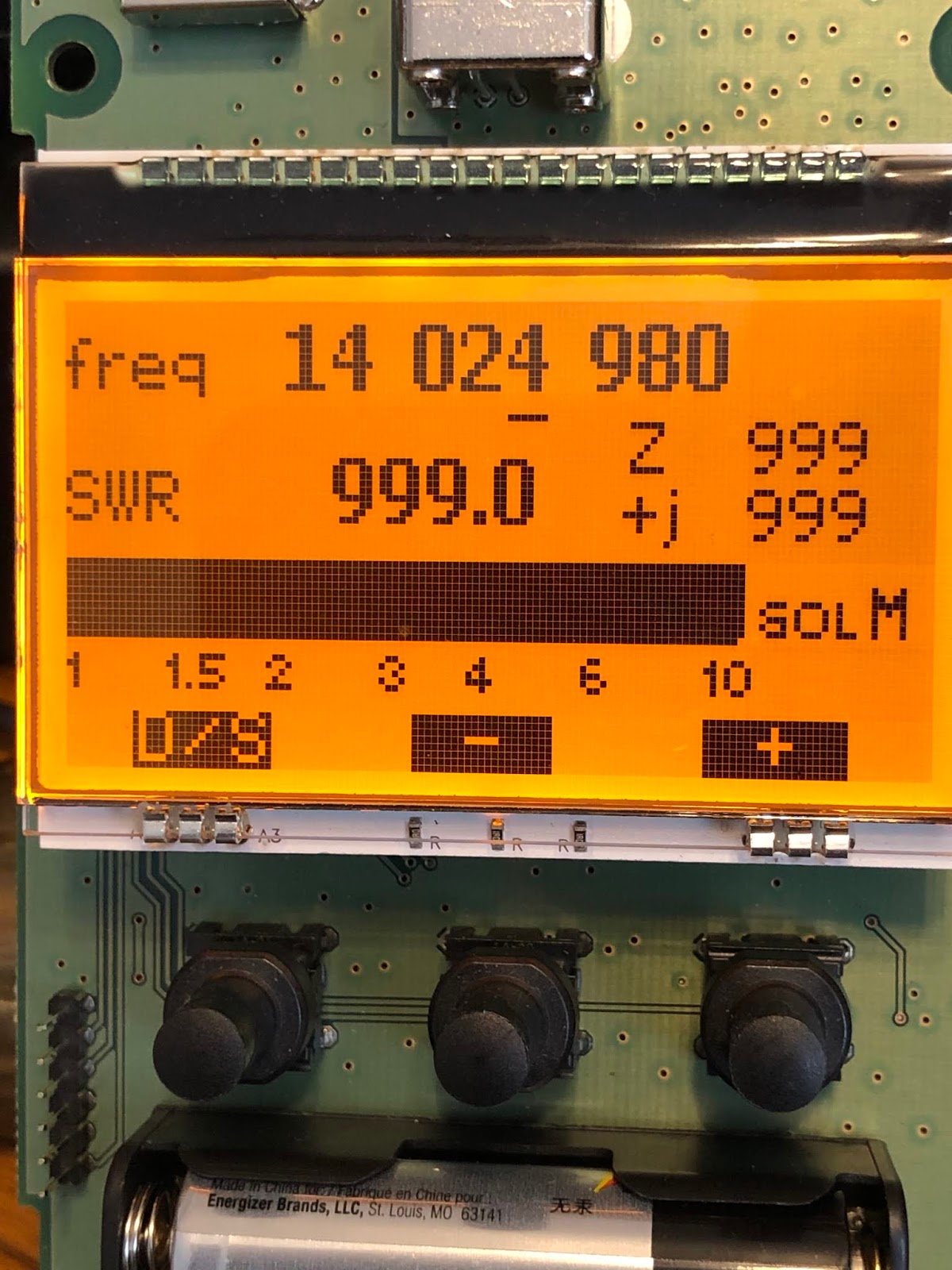 |
| What is going on? |
 |
| The issue |
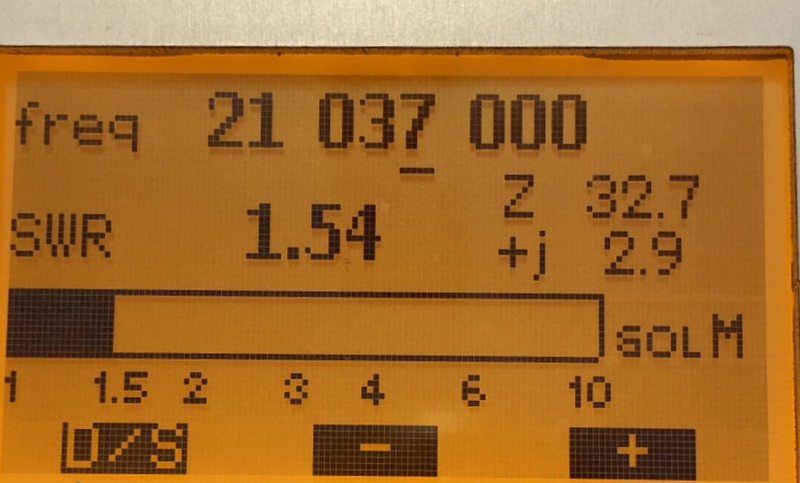 |
| All is well |
Mike Weir, VE9KK, is a regular contributor to AmateurRadio.com and writes from New Brunswick, Canada. Contact him at [email protected].
Hamvention vs Coronavirus
Mike Weir, VE9KK, is a regular contributor to AmateurRadio.com and writes from New Brunswick, Canada. Contact him at [email protected].
LHS Episode #331: Roundtable Q&A

Hello and welcome to Episode 331 of Linux in the Ham Shack. In this episode, we bring listeners on to talk with us and field questions from the chat. We discuss Hamvention and COVID-19, FT-8, antenna designs, amateur radio exams, new acquisitions and much, much more. Thank you to all who participated and thank you to all our supporters, Patreons and benefactors. We couldn't do this without you.
73 de The LHS Crew
Russ Woodman, K5TUX, co-hosts the Linux in the Ham Shack podcast which is available for download in both MP3 and OGG audio format. Contact him at [email protected].
Weekly Propagation Summary – 2020 Mar 09 16:10 UTC

Here is this week’s space weather and geophysical report, issued 2020 Mar 09 0528 UTC.
Highlights of Solar and Geomagnetic Activity 02 – 08 March 2020
Solar activity was very low. A new spot group emerged in the SE quadrant on 07 Mar and was numbered Region 2758 (S29, L=229, class/area Cro/020 on 08 Mar). No Earth-directed CMEs were observed during the reporting period.
No proton events were observed at geosynchronous orbit.
The greater than 2 MeV electron flux at geosynchronous orbit was at normal to moderate levels with a peak flux of 923 pfu observed at 02/1455 UTC.
Geomagnetic field activity ranged from quiet to unsettled levels. Solar wind parameters were slightly enhanced midday on 02 Mar as solar wind speed reached a peak of 488 km/s at 02/1318 UTC, likely due to a connection with an extension off the southern crown, polar coronal hole high speed stream (CH HSS). Solar wind speed gradually diminished to nominal levels by 04 Mar. The geomagnetic field responded with mostly quiet conditions with an isolated unsettled period observed on 04 Mar.
Forecast of Solar and Geomagnetic Activity 09 March – 04 April 2020
Solar activity is expected to continue at very low levels.
No proton events are expected at geosynchronous orbit.
The greater than 2 MeV electron flux at geosynchronous orbit is expected to reach high levels on 19-21 Mar due to CH HSS influence.
Geomagnetic field activity is expected to be reach unsettled levels on 10-11, 18-20, 27-28 Mar and active levels on 19 and 27 Mar due to recurrent CH HSS effects. Mostly quiet levels are expected for the remainder of the outlook period.
Don’t forget to visit our live space weather and radio propagation web site, at: http://SunSpotWatch.com/
Live Aurora mapping is at http://aurora.sunspotwatch.com/
If you are on Twitter, please follow these two users: 1. https://Twitter.com/NW7US 2. https://Twitter.com/hfradiospacewx
– – – – – – – – – – – – –
Be sure to subscribe to our space weather and propagation email group, on Groups.io
https://groups.io/g/propagation-and-space-weather
Spread the word!
– – – – – – – – – – – – –
Links of interest:
+ Amazon space weather books: http://g.nw7us.us/fbssw-aSWSC
+ https://Twitter.com/NW7US
+ https://Twitter.com/hfradiospacewx
Space Weather and Ham Radio YouTube Channel News:
I am working on launching a YouTube channel overhaul, that includes series of videos about space weather, radio signal propagation, and more.
Additionally, I am working on improving the educational efforts via the email, Facebook, YouTube, Tumblr, and other activities.
You can help!
Please consider becoming a Patron of these space weather and radio communications services, beginning with the YouTube channel:
https://www.patreon.com/NW7US
The YouTube channel:
https://YouTube.com/NW7US
..
Visit, subscribe: NW7US Radio Communications and Propagation YouTube Channel
Mobile DC Power: One Fuse or Two?
[My apologies. I fumble-fingered WordPress and published a draft version of this article that was incomplete. This is the corrected version. ]
Sometime during the 20th Century, I learned that fuses (or circuit breakers) are used in electrical circuits to prevent catastrophic failure. Fuses open in response to an electrical fault that causes excessive current to flow. The job of the fuse is to minimize the damage and keep things from catching on fire. When I started installing amateur transceivers into vehicles, I learned that you should connect wires directly to the car battery (or darn close) and you should fuse both the positive and negative power leads. I was surprised by the need for two fuses, but there are technical arguments for it. Besides, the transceiver manufacturers recommend it in their manuals. (See figure below.)

I am focusing this discussion on a typical 2m/70cm FM transceiver installation – that is what I have the most experience with and that is the most common ham mobile installation. Such a radio typically draws ~10 A on transmit, so the DC power is usually fused with something like a 15 A (or 20 A) fuse. Keep in mind that a 15 A fuse is not going to protect delicate circuitry but might stop more serious damage or fire.
Connect To The Battery?
Alan/K0BG has an excellent website that provides guidance on mobile radio installations. He points out that modern vehicles usually have an Electrical Load Detector (ELD) inserted into the negative lead of the battery, so that the vehicle control systems can monitor the state of the battery. It is important to connect your radio on the “other side” of the ELD, near where it connects to the vehicle chassis. Oh, and never use the existing vehicle wiring to power your radio (especially not the 12 V accessory plug).

One Fuse or Two Controversy
Recently, I became aware of controversy with regard to proper fusing. Some people are questioning the practice of fusing both DC power leads, while others are vigorously defending it.
For example, there is a lively eham.net discussion here. Ed/W1RFI provides some useful insight on the ARRL forum. Alan/K0BG covers the topic of DC power on his wiring and grounding page. Tom/W8JI argues for the one fuse approach on his website.
What Do The Manufacturers Say?
Generally, you should follow the advice of the manufacturer on any equipment installation, so I took a look at a few owner’s manuals. Most (or all?) of the manuals for the amateur gear show the two fuse method. See the ICOM example below. (Note that they don’t show the presence of the ELD.)

I also took a look at some commercial land mobile radio manuals. Motorola shows the single fuse approach.

Hytera also shows a single fuse in its land mobile manuals.

ICOM makes both amateur and commercial land mobile gear, so I wondered what they recommend for their land mobile product line. Ha, funny thing, they show two fuses, with a comment that says, “Depending on version, the fuse holder may not be attached to the black cable.” Well, isn’t that special?

So is the two-fuse thing some kind of ancient amateur radio practice and the land mobile industry has gone a different path? Sometimes industries adopt “standard” approaches and then forget why with time.
Some Circuit Analysis
After reading through all of the arguments, I tried to distill them down to their essence. I created a wiring diagram that may help explain the concepts. Or maybe not. An automobile is a complex electrical and electronic system, so any practical diagram risks oversimplifying the situation. But here’s my best shot at it.

The center of the diagram shows the body/chassis of the vehicle which is connected to the negative lead of the battery, through the ELD. The transceiver is directly connected to the + terminal of the battery (via Fuse 1) and the chassis side of the ELD (via Fuse 2). The engine starter is connected to the battery with heavy cables and is also connected to the body/chassis. While there are a large number of other electrical devices in a modern vehicle, only one is shown here as an example (with a switch and fuse).
The circuit shows the antenna connected to the radio with a coaxial cable. The shield of that cable is almost always grounded to the vehicle chassis at the antenna. (Magnetic mount antennas are one exception and I am sure there are others.) I can say that every mobile installation I’ve ever done had the coaxial cable connected to the chassis. This is an important point because it provides a chassis connection for the transceiver at point C (whether you wanted it or not). There may be other ways that a transceiver is connected to chassis (point B), including the mounting bracket, external speaker, microphone or other accessories.
Arguments For and Against
The argument for fusing the negative lead is to protect against return current from other devices that find its way back to the battery through the transceiver’s negative power lead. For example, the starter could have a fault in its negative cable, causing the current to flow through the chassis to the transceiver and back to the battery. The starter current can be hundreds of amperes which would likely overload the radio wire which is sized for 15 amperes. The fuse will open and protect the negative lead (and maybe the radio, to some extent).
The argument against fusing the negative lead is that if the fuse opens up, it could cause problems. Suppose Fuse 2 opens up due to some transient condition. If the transceiver is completely isolated, Fuse 2 would remove power from the transceiver. However, the return path at the antenna coax (point C) will most likely allow the radio to continue functioning using the coax as the negative return. Typically, this is RG-58 or similar cable, which is not intended to carry significant DC current and may fry under the load. If the current is coming from a fault in the starter wiring (big current), this is going to be a bad day for your mobile.
My Conclusions
I think both arguments have merit but choosing one fuse or two requires estimating which problem is most likely and judging the overall impact of the fault. The negative lead fuse can do only one thing well: protect the negative lead. It might provide some protection to the transceiver but there are a lot of sensitive circuits inside the radio that will get destroyed with 15 A flowing. Again, the connection at point C means that the radio will be connected to chassis and current can flow.
If Fuse 2 is eliminated it allows for the flow of high currents through the negative lead of the transceiver. This is not desirable but is it better or worse than the current flowing through the coax shield? Probably better. If a high current device (the starter) has a wiring failure that dumps large currents into the chassis, it may find a number of return paths. Lots of current is going to flow somewhere and potentially cause damage, with or without a negative lead fuse.
I will note that bonding the transceiver to the vehicle chassis has some benefit (point B in the diagram). You may or may not have this connection depending on how you mounted the radio. This electrical connection can shunt any currents away from the coaxial cable, hopefully doing less damage that way.
What am I going to do? My future mobile installations will have only one fuse in the positive lead. I’ll also bond the radio body to the vehicle chassis, with a hefty, low-resistance connection.
My existing mobile installations all have two fuses. I won’t be changing them out because the risk of inducing a problem with the negative lead fuse is rather low. I don’t see the negative lead fuse as a big risk. If you choose to follow the amateur radio manufacturer’s two fuse recommendation, I understand.
A Request
The amateur radio equipment manufacturers need to give this issue a fresh look. At a minimum, the presence of ELD’s needs to be addressed and the common recommendation of wiring directly to the battery is obsolete. But the one-fuse-or-two issue should also get a careful look by the manufacturer’s engineering teams.
That’s my analysis. What do you think?
(Runs and ducks for cover.)
Note: This article is my technical opinion but my attorney says to tell you that you are responsible if you destroy your vehicle while wiring up your transceiver.
The post Mobile DC Power: One Fuse or Two? appeared first on The KØNR Radio Site.
Bob Witte, KØNR, is a regular contributor to AmateurRadio.com and writes from Colorado, USA. Contact him at [email protected].
 Ham Radio Deluxe |
 W5SWL Electronics |
 Ham Radio Prep |
 KB3IFH QSL Cards  Hip Ham Shirts  HamRadioAuctions HamRadioAuctions Reliance Antennas Reliance Antennas Enigma Shop Enigma Shop |  morseDX  Ni4L Antennas  R&L Electronics R&L Electronics antennas.us antennas.us Ears to Our World Ears to Our World |
- Matt W1MST, Managing Editor
