 |
 Handiham World for 25 November 2009
 25 November 2009 | by
 Welcome to Handiham World!
Handiham Headquarters will be closed for the United States Thanksgiving holiday
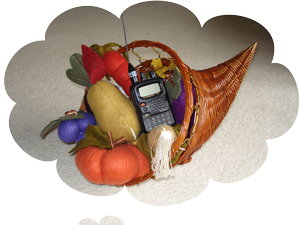
Handiham Headquarters will be closed for the United States Thanksgiving holiday on Thursday and Friday, November 26-27, 2009. An audio lecture notification will be sent out early, on Wednesday instead of Friday.
By the way, what do you have to be thankful for? Here is my list of ham radio stuff, in no particular order:
I am thankful for…
- Antennas that stay up & keep working through the entire Minnesota winter. (You haven’t experienced real cold until you’ve handled aluminum tubing or scaled a tower in January up here on the frozen tundra.)
- ARRL. I couldn’t get along without my [email protected] address and monthly QST, but I can also rest easy knowing that the League is our advocate on so many fronts.
- The way most ham radio gear keeps working year after year, reliably delivering good service, when consumer-grade electronics have long since given up the ghost.
- Repeater owners who welcome activity on their machines.
- Echolink, IRLP, and WIRES.
- The Internet and all of the ham radio applications it makes possible.
- Hams who design circuits or write software for the rest of us.
- Elmers who help newbies and oldbies (Is that a real word?)
- Solar cycle 24. Better late than never.
- Nets. I love the way we can stay connected in our “virtual communities” on the air.
- Our Handiham members, be they regular members, supporters, or volunteers. Talk about communities – they are the best!
- Radio clubs. Sometimes you need to just meet other hams face to face.
- The manufacturers and dealers who work so hard to make amateur radio technology available to us.
- People who step up to the plate to teach ham radio classes. They are responsible for keeping amateur radio healthy by training new operators.
- Anyone who funds, plans, or goes on a DXpedition. What these folks do for amateur radio really pushes the limits, and if you don’t believe me, take a look at some of the DXpedition videos.
- Volunteer examiners and their VECs. Having had to travel long distances to take most of my exams at FCC offices, I really appreciate the volunteers who offer convenient, friendly, local exam sessions, giving freely of their own time and talent to help others become hams for the first time or to step up the ladder to General or Extra.
- Contest planners, QSL managers, people who serve on committees, hamfest organizers, authors, publishers, and all of the others who work behind the scenes to enrich our radio experiences.
- DSP. Good grief, how could we stand all of that noise we used to endure before ClearSpeech speakers and the digital signal processing now standard in every transceiver?
- Anyone brave and patient enough to be a net control station.
- My understanding family, including my XYL, Susie, who encourages me to “get on the air” or “give that guy a call” when we hear someone calling on a repeater as we travel in the car, my son Will, KC0LJL, who writes software for me, and my dog Jasper, who keeps me company in the ham shack.
- And all of my ham radio friends! Without real people, ham radio would just be a bunch of stuff. Now, don’t get me wrong; I like all of the equipment and gadgetry, but what really makes ham radio special for me is… YOU!
For Handiham World, I’m…
Patrick Tice, [email protected] , wishing all of our readers and listeners a wonderful holiday week and a happy Thanksgiving.

Pat Tice, WA0TDA, is the manager of HANDI-HAM and a regular contributor to AmateurRadio.com. Contact him at [email protected].
ICQ Podcast Series Two Episode Twenty-Four (22 November 2009) – Microwave Review
- Licence validation period extended
- GB3WX 6m/10m crossband repeater
- WA6ITF retires from Fox TV
- Whip Competition
- Frequency Measuring Test
- Ham couple save man's life
- AMSAT "Student Membership"
- New Bent Element Yagi tested
- Hams exempt from new cellphone law
- Happy Birthday OSCAR 7
- Trinidad & Tobago 5 MHz operation?
- Finland gets access to 70 MHz
- Norwegian amateurs get 3 new bands
- Donation to Irish Society
Your feedback, Hints, Tips and Tricks, and Alun Cross begin_of_the_skype_highlighting end_of_the_skype_highlighting, G4WGE joins use to review Microwaving
Colin Butler, M6BOY, is the host of the ICQ Podcast, a weekly radio show about Amateur Radio. Contact him at [email protected].
Waiting for Baudot
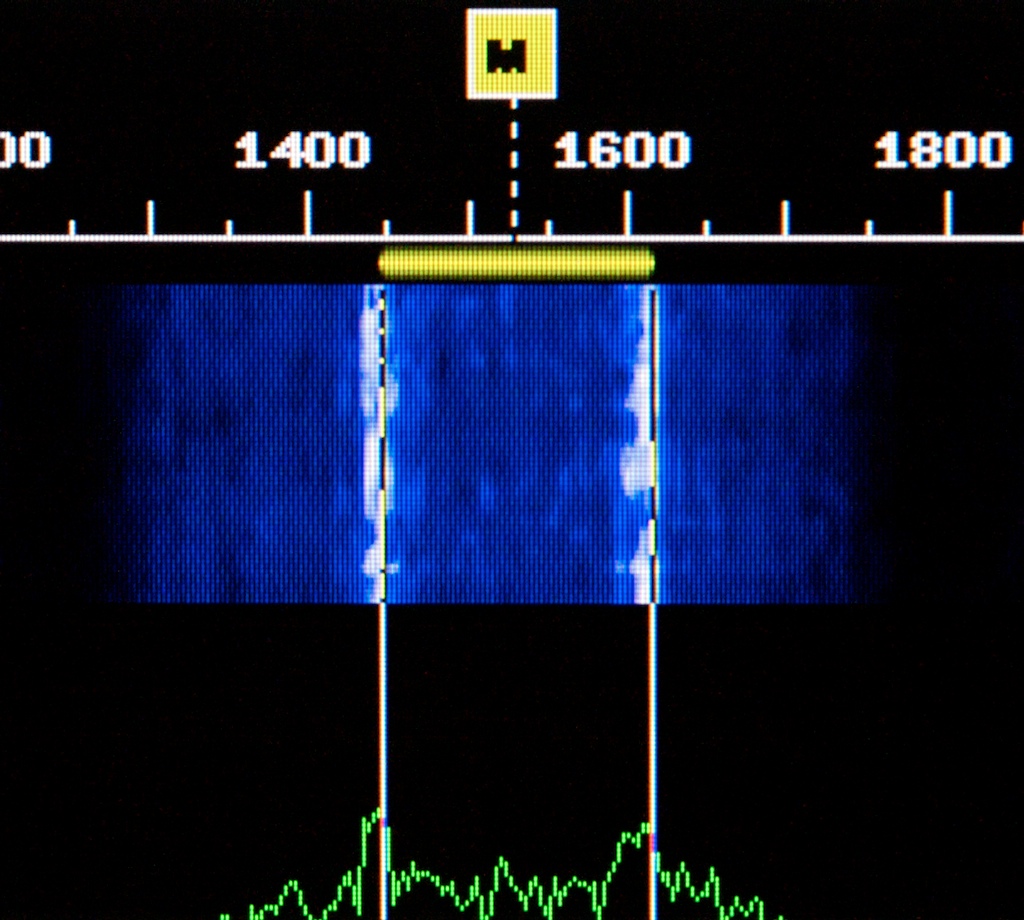
I just submitted my meager log from last weekend’s WAE RTTY test — just 45 QSOs and a whopping claimed score of 1,530. I only operated for a few morning hours (between 1125-1345 on Saturday and 1245-1700 on Sunday) in order to give DM780 a try at good ol’ fashioned 170/45 Baudot, a mode I haven’t worked since days of yore with the trusty old KAM and a terminal program. High time to give the new technologies a try, said I.


Paul Lannuier, WW2PT, is a regular contributor to AmateurRadio.com and writes from Texas, USA. Contact him at [email protected].
Handiham World for 18 November 2009
Welcome to Handiham World!
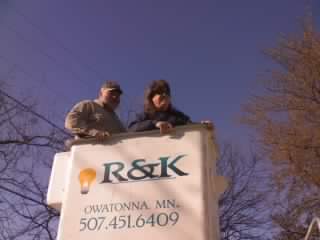
Image: Matt, KA0PQW, and the bucket truck lift operator, Jeff, KC0UOW, ride the bucket up to do some antenna work. Photo courtesy Don Rice, N0BVE, taken during Matt’s antenna work in October. Don had just completed some work on Matt’s 220 MHz antennas, and Matt was headed up to do the final inspection.
It’s always a good idea to get your antenna work done before winter, especially if you live in Minnesota, as Matt, KA0PQW does. One may be blind, but that doesn’t mean you can’t do antenna work. Matt directs and does hands-on work on his antenna projects, and has some great helpers.
I have always recommended having at least one helper available for any antenna project that involves working on an elevated antenna system, whether it is on a roof or high on a tower. The reason, of course, is safety – if something goes wrong, the second person can provide assistance or call for help. Besides, most of these projects really do require at least one more set of hands – and eyes. You can use a spotter to check for hazards like power lines and buried pipes or cables. This goes for any ham radio operator, whether they are blind or sighted. I shudder to think of all the times I have not followed my own advice, but in my defense I was young and stupid. As a teenager, I navigated our family home’s rooftop like a monkey – stringing antennas, hurrying down to test for SWR, then running back up the ladder to the roof to make adjustments – all without anyone else around. When I bought a used tower, I was up and down that thing dozens and dozens of times. I did buy a Klein lineman’s belt but even so, I worked alone all too often. The closest call I ever had was on an old telescoping mast. I had just finished my antenna work and stepped onto the ground when the steel cable holding the top section snapped and the tower telescoped back down. A few seconds delay in getting off would have meant amputated fingers and toes! Worse yet, I did not have a helper around.
Well, I have learned a lot since then. I ask for help, so that I have someone there to do antenna work as well as to help us both stay safe. I plan to stay safe – and you know what? Staying safe means more happy years of ham radio fun!
For Handiham World, I’m…
Patrick Tice, [email protected]
Handiham Manager

Pat Tice, WA0TDA, is the manager of HANDI-HAM and a regular contributor to AmateurRadio.com. Contact him at [email protected].
LHS Episode #027: Where Are My Meds?
 We have topped 40,000 downloads! Thanks go out to all of our listeners and live webcast attendees for making Linux in the HAM Shack as popular as it is. Give yourselves a huge round of applause. We're also well on our way to our donation goal of $750 so we can buy booth space and Internet access at the Dayton Hamvention in Dayton, Ohio, in May of 2010. Thank you for all of your donations. Please keep them coming as you're able to send them in!
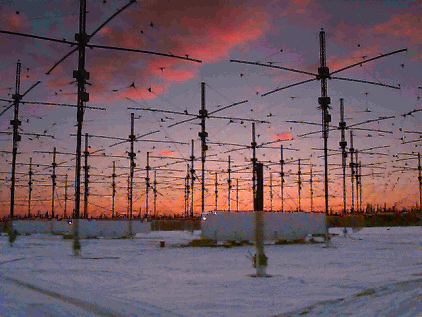
In this episode, we address listener feedback and comments, and then in a burst of inspiration invite listeners from the chat room to come onto the program for a lively and very fun roundtable discussion. Topics were varied, from portable antenna design, to life without Red Bull; from the HAARP VLF array in Alaska to D-STAR, PACTOR and other digital ham radio communication modes. And since I was on meds and Richard was off his, things got a little crazy towards the end.
We hope you enjoy this episode of Linux in the HAM Shack. Please leave us comments or questions on the web site or via voice mail at 888-455-0305. And send your best wishes to Bill, KA9WKA, who has taken on the responsibility of getting LHS's show notes out in a timely fashion. Thanks, Bill. You're a lifesaver!
73 de Russ, K5TUX
Russ Woodman, K5TUX, co-hosts the Linux in the Ham Shack podcast which is available for download in both MP3 and OGG audio format. Contact him at [email protected].
CQ WWDX SSB 1996: Lost Log Discovered!


Paul Lannuier, WW2PT, is a regular contributor to AmateurRadio.com and writes from Texas, USA. Contact him at [email protected].
Handiham World for 11 November 2009
Welcome to Handiham World!
The move, part 2
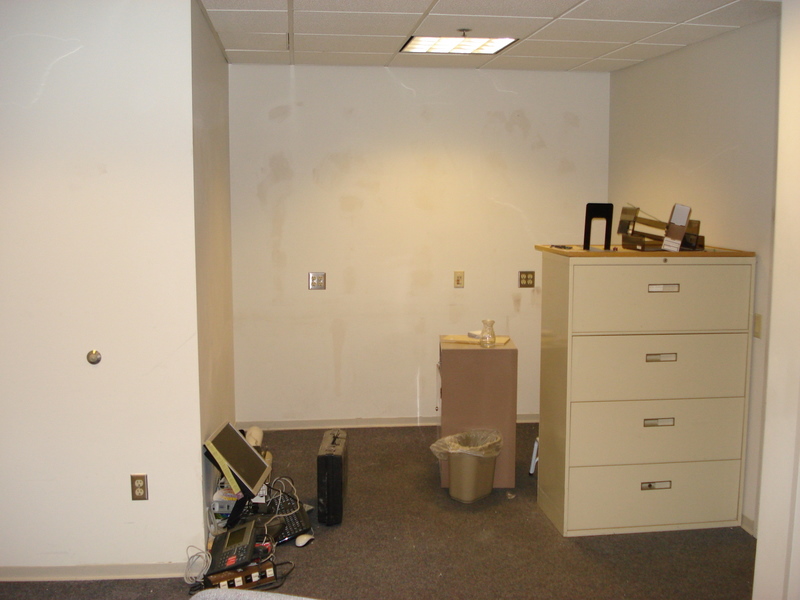
Image: Avery’s old office area showing one of our five big file cabinets that still needs to be moved.
We continue this week with our office move, this time moving Nancy’s office and the file cabinets. This is a big part of the move, and will likely cause some disruption in our regular work schedule. We ask for your patience, as phone calls and emails may take a bit longer to answer. I am still working on a solution for our telephone system, but for now all of my phone calls go directly to voice mail. As calls come in, I am notified of messages left on voice mail through an email message, so that I am able to return calls fairly quickly. Nancy is in the office today, but is using a cubicle in the hallway.
The movers will pick up the file cabinets and some other equipment on Thursday, November 12. Nancy plans to be in the office that day to make sure that all of the files and equipment are accounted for, while I will be waiting at Camp Courage to meet the movers and direct the placement of the five large horizontal file cabinets and the other furniture and equipment in our new office. Depending on my schedule for that day, I do still plan to check in to the regional PICONET on 3.925 MHz at 09:00 CST and the Handiham Echolink net at 11:00 CST. We still need to upgrade the antenna systems, so I will be limited to checking in to one or both nets via the Internet. I will try to contact Lyle, K0LR, our volunteer who maintains the Handiham Remote Base, when he runs the PICONET as the regular Thursday morning net control station.
We are still looking at more moving in the near future, too. Because we will be out at Camp Courage, we have decided that it is best to move our equipment storage and test gear out to camp. This means that the Handiham repair shop at Courage Center will close and make the move, though not immediately. I will enlist the help of some volunteers to make sure that the equipment is moved properly. While this decision means more work in the short term, I think we will benefit by having everything right where we need it. It does present a problem when people bring donations of radio gear to the Courage Center, but we think we can simply have the gear set aside for pick up and transport to Camp Courage as needed. We do plan to continue the equipment loan program when we get organized again, with donated gear first being distributed to our campers who need stations and accessories at the upcoming Handiham Radio Camp in late May, 2010.
Since our shop volunteers were all from the Twin Cities area, we will be on the lookout for hams who live close to our new location and who want to volunteer to check out donated ham radio equipment before it is distributed to our members. It should be noted that we do not repair the equipment anymore, as we did years ago. We check it to make sure that it is in working condition. Only the most minor repairs are possible these days, because the equipment is full of surface-mount devices and repairs are generally done by a well-equipped commercial repair facility that has access to modern instruments and a stock of replacement circuit boards. The old method of using basic test gear to track down faults to the component level is just not practical with the newer equipment.
So there is a lot to work out. We are making great progress, but there is more to do. We are rolling up our sleeves and getting right to work!
For Handiham World, I’m…
Patrick Tice, [email protected]
Handiham Manager

Pat Tice, WA0TDA, is the manager of HANDI-HAM and a regular contributor to AmateurRadio.com. Contact him at [email protected].
 Ham Radio Deluxe |
 W5SWL Electronics |
 Ham Radio Prep |
 KB3IFH QSL Cards  Hip Ham Shirts  HamRadioAuctions HamRadioAuctions Reliance Antennas Reliance Antennas Enigma Shop Enigma Shop |  morseDX  Ni4L Antennas  R&L Electronics R&L Electronics antennas.us antennas.us QRV QRV |
- Matt W1MST, Managing Editor
