 |
 Handiham World for 18 November 2009
 18 November 2009 | by
 Welcome to Handiham World!
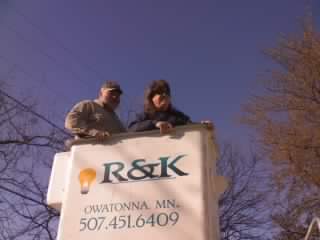
Image: Matt, KA0PQW, and the bucket truck lift operator, Jeff, KC0UOW, ride the bucket up to do some antenna work. Photo courtesy Don Rice, N0BVE, taken during Matt’s antenna work in October. Don had just completed some work on Matt’s 220 MHz antennas, and Matt was headed up to do the final inspection.
It’s always a good idea to get your antenna work done before winter, especially if you live in Minnesota, as Matt, KA0PQW does. One may be blind, but that doesn’t mean you can’t do antenna work. Matt directs and does hands-on work on his antenna projects, and has some great helpers.
I have always recommended having at least one helper available for any antenna project that involves working on an elevated antenna system, whether it is on a roof or high on a tower. The reason, of course, is safety – if something goes wrong, the second person can provide assistance or call for help. Besides, most of these projects really do require at least one more set of hands – and eyes. You can use a spotter to check for hazards like power lines and buried pipes or cables. This goes for any ham radio operator, whether they are blind or sighted. I shudder to think of all the times I have not followed my own advice, but in my defense I was young and stupid. As a teenager, I navigated our family home’s rooftop like a monkey – stringing antennas, hurrying down to test for SWR, then running back up the ladder to the roof to make adjustments – all without anyone else around. When I bought a used tower, I was up and down that thing dozens and dozens of times. I did buy a Klein lineman’s belt but even so, I worked alone all too often. The closest call I ever had was on an old telescoping mast. I had just finished my antenna work and stepped onto the ground when the steel cable holding the top section snapped and the tower telescoped back down. A few seconds delay in getting off would have meant amputated fingers and toes! Worse yet, I did not have a helper around.
Well, I have learned a lot since then. I ask for help, so that I have someone there to do antenna work as well as to help us both stay safe. I plan to stay safe – and you know what? Staying safe means more happy years of ham radio fun!
For Handiham World, I’m…
Patrick Tice, [email protected]
Handiham Manager

Pat Tice, WA0TDA, is the manager of HANDI-HAM and a regular contributor to AmateurRadio.com. Contact him at [email protected].
LHS Episode #027: Where Are My Meds?
 We have topped 40,000 downloads! Thanks go out to all of our listeners and live webcast attendees for making Linux in the HAM Shack as popular as it is. Give yourselves a huge round of applause. We're also well on our way to our donation goal of $750 so we can buy booth space and Internet access at the Dayton Hamvention in Dayton, Ohio, in May of 2010. Thank you for all of your donations. Please keep them coming as you're able to send them in!
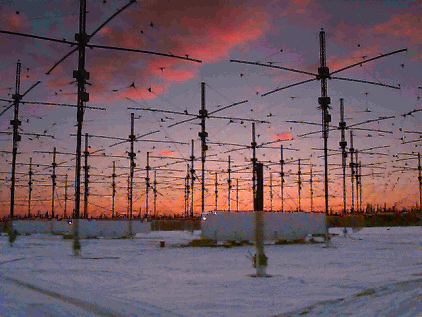
In this episode, we address listener feedback and comments, and then in a burst of inspiration invite listeners from the chat room to come onto the program for a lively and very fun roundtable discussion. Topics were varied, from portable antenna design, to life without Red Bull; from the HAARP VLF array in Alaska to D-STAR, PACTOR and other digital ham radio communication modes. And since I was on meds and Richard was off his, things got a little crazy towards the end.
We hope you enjoy this episode of Linux in the HAM Shack. Please leave us comments or questions on the web site or via voice mail at 888-455-0305. And send your best wishes to Bill, KA9WKA, who has taken on the responsibility of getting LHS's show notes out in a timely fashion. Thanks, Bill. You're a lifesaver!
73 de Russ, K5TUX
Russ Woodman, K5TUX, co-hosts the Linux in the Ham Shack podcast which is available for download in both MP3 and OGG audio format. Contact him at [email protected].
CQ WWDX SSB 1996: Lost Log Discovered!


Paul Lannuier, WW2PT, is a regular contributor to AmateurRadio.com and writes from Texas, USA. Contact him at [email protected].
Handiham World for 11 November 2009
Welcome to Handiham World!
The move, part 2
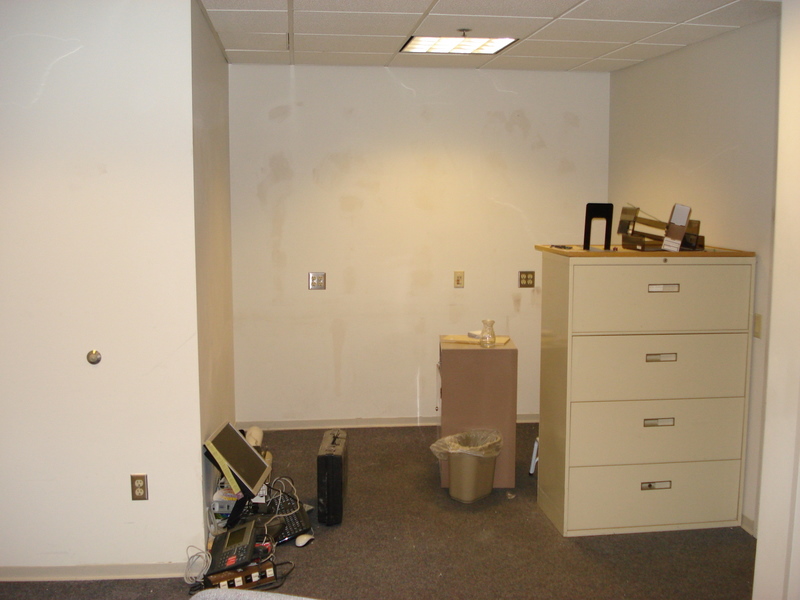
Image: Avery’s old office area showing one of our five big file cabinets that still needs to be moved.
We continue this week with our office move, this time moving Nancy’s office and the file cabinets. This is a big part of the move, and will likely cause some disruption in our regular work schedule. We ask for your patience, as phone calls and emails may take a bit longer to answer. I am still working on a solution for our telephone system, but for now all of my phone calls go directly to voice mail. As calls come in, I am notified of messages left on voice mail through an email message, so that I am able to return calls fairly quickly. Nancy is in the office today, but is using a cubicle in the hallway.
The movers will pick up the file cabinets and some other equipment on Thursday, November 12. Nancy plans to be in the office that day to make sure that all of the files and equipment are accounted for, while I will be waiting at Camp Courage to meet the movers and direct the placement of the five large horizontal file cabinets and the other furniture and equipment in our new office. Depending on my schedule for that day, I do still plan to check in to the regional PICONET on 3.925 MHz at 09:00 CST and the Handiham Echolink net at 11:00 CST. We still need to upgrade the antenna systems, so I will be limited to checking in to one or both nets via the Internet. I will try to contact Lyle, K0LR, our volunteer who maintains the Handiham Remote Base, when he runs the PICONET as the regular Thursday morning net control station.
We are still looking at more moving in the near future, too. Because we will be out at Camp Courage, we have decided that it is best to move our equipment storage and test gear out to camp. This means that the Handiham repair shop at Courage Center will close and make the move, though not immediately. I will enlist the help of some volunteers to make sure that the equipment is moved properly. While this decision means more work in the short term, I think we will benefit by having everything right where we need it. It does present a problem when people bring donations of radio gear to the Courage Center, but we think we can simply have the gear set aside for pick up and transport to Camp Courage as needed. We do plan to continue the equipment loan program when we get organized again, with donated gear first being distributed to our campers who need stations and accessories at the upcoming Handiham Radio Camp in late May, 2010.
Since our shop volunteers were all from the Twin Cities area, we will be on the lookout for hams who live close to our new location and who want to volunteer to check out donated ham radio equipment before it is distributed to our members. It should be noted that we do not repair the equipment anymore, as we did years ago. We check it to make sure that it is in working condition. Only the most minor repairs are possible these days, because the equipment is full of surface-mount devices and repairs are generally done by a well-equipped commercial repair facility that has access to modern instruments and a stock of replacement circuit boards. The old method of using basic test gear to track down faults to the component level is just not practical with the newer equipment.
So there is a lot to work out. We are making great progress, but there is more to do. We are rolling up our sleeves and getting right to work!
For Handiham World, I’m…
Patrick Tice, [email protected]
Handiham Manager

Pat Tice, WA0TDA, is the manager of HANDI-HAM and a regular contributor to AmateurRadio.com. Contact him at [email protected].
Reciprocity sometimes isn’t reciprocal; Why I didn’t operate from Mexico
I recently returned from a vacation in Mexico. We stayed at a beautiful resort in Nuevo Vallarta, just north of better-known Puerto Vallarta, and although there was plenty to do there (including doing nothing but lying around the pool sipping a cold drink), one thing that I was unable to do was to bring along my ham radio gear and operate. Although weight restrictions and the cost for additional bags are a concern, that wasn’t the issue. As with my trip to Grand Cayman a couple of years ago, I can fit most everything into either a backpack (to be used as a carry-on) or in between the bathing suits and t-shirts. The issue was that while there is a “bilateral reciprocal operating agreement” with Mexico, in this case the rules for Mexican amateurs operating within the US are very different than the rules for American amateurs operating in Mexico.
Here’s what the ARRL says (in part) about foreign amateurs operating in the US:
…if your country of citizenship and amateur license share a bilateral Reciprocal Operating Agreement with the US, the FCC allows foreign amateurs to operate with no permit. Simply carry your foreign amateur license and proof of your citizenship in that country. Identify using “W” and the number of the FCC call letter district in which you are operating followed by a slash and your non-US call sign, e.g. W3/G1ABC).
So this means that if XE9ZZ comes to the US and wishes to operate from my home state of New Jersey, he could get on the air and simply identify as W2/XE9ZZ. There are no forms to fill out, no visits to the FCC, no copies of passport pages or visas, and assuming that you are a Class I licensee in Mexico, you’ll have all the operating privileges of a US Amateur Extra license. I think that this is how things should work.
Unfortunately, for a US amateur to operate in Mexico a lot more paperwork, time, and money are involved. The detailed process has been explained very nicely on a page on DL6KAC’s web site and there is a lot of additional information available on WD9EWK’s site as well. To try to summarize the process briefly (and I’m glossing over a lot of the details), you need to fill out some forms, send in a bunch of documentation, including the application itself, a copy of your passport, a copy of your visa (which is issued when you enter the country as a tourist, which means you can’t really apply before you get there), a copy of your ham radio license, and information that proves that you have paid for the license. (You do this through a bank in Mexico). The current fee is 1025 pesos, which at the present time is about US$75. Of course, all the forms are in Spanish and translated copies are not acceptable, except if the particular official decides otherwise. (To be fair, this is reasonable, since Spanish is the official language in Mexico). Fortunately, US hams do not have to get a letter of invitation from a Mexican ham (non-US hams do), although I think that would be a relatively easy thing to get.
After you get all of that together, you either mail it or hand deliver it to the proper address (which is especially challenging if you don’t happen to be located in Mexico City), and then you wait.
As best I can tell, it can then take around 60 days to get your license, which is mailed to you at your address in Mexico. All of this makes it rather difficult for a casual tourist such as myself to operate from Mexico. To even have a chance of getting a license I’d have to find someone located within Mexico who’d be willing to handle some of these details for me, and I still can’t quite figure out how I’d get a visa in advance of actually being in the country. I suppose that if you spend a signficant amount of time there (a lot of Americans and Canadians have homes in and around Puerto Vallarta, and I’m sure elsewhere), then it would probably be worth the effort to do this.
By the way, once you get your license, you have the privileges of a Mexican Class I license (their highest-level license), but there are some restrictions: Unless you specifically ask for permission, you can’t operate from any Mexican Island, you cannot operate in a contest, nor can you be part of a DXpedition. (I’m not quite sure how simply visiting is different from a DXpedition.) Also, you must use your callsign as provided on that permit with an additional suffix if you travel outside of the callsign area for which it was issued. For instance, if I was issued XE2/K2DBK it would be fine to operate from Puerto Vallerta, but if I decided to visit Cancun, I’d have to identify as XE2/K2DBK/XE3. (Good thing you can’t operate in contests, that’s quite a mouthful!)
Clearly every country is going to have different rules governing their amateur radio service. It would be nicer if the processes were truly reciprocal.

David Kozinn, K2DBK, is a regular contributor to AmateurRadio.com and writes from New Jersey, USA. Contact him at [email protected].
LHS Episode #026: Junk in the Trunk
 Back from Baltimore and ready for more ham radio, Linux and Linux in the HAM Shack. I had originally planned to get this episode out before I left for the Large Installation System Administration conference in Maryland, but it didn't work out that way. I even brought all the audio with me to assemble the podcast during my off time at the conference. It turned out there wasn't any off time, so I wound up having to finish up when I got home. That being said, I have to admit this is my favorite episode so far. It seems like Richard and I are finally getting the hang of this podcast thing. We truly appreciate all our listeners. It makes the time, effort and money of putting out this program worth it.
In Episode #024, we bring you some final wrap-up from Ohio Linux Fest, including interviews with ham radio operators, Linux users, Beth Lynn Eicher from OLF, members of the Drupal project and more. We answer listener comments and questions, of which there are many, and I talk about my getting back on the air and include my new experiences with digital communication via ham radio, from PSK to IRLP. Grab a drink, sit back and enjoy this episode of Linux in the HAM Shack. And if you have a spare couple of dollars, drop them in the can so we can bring our show to the national ham radio convention in 2010: The Dayton Hamvention.
73 de Russ, K5TUX
Russ Woodman, K5TUX, co-hosts the Linux in the Ham Shack podcast which is available for download in both MP3 and OGG audio format. Contact him at [email protected].
ICQ Podcast Series Two Episode Twenty-Three (8 November 2009) – Vintage Wireless and Television Museum
- London 2012 Spectrum Plan
- Sweden withdraws noisy PLT equipment
- Black Isle VHF Repeater back on air
- Getting very serious with ham radio contest
- Icom UK on the move
- Hams woos kids at HMO Science Day
- Galway VHF Group RNLI operation
- Marconi Nobel 100 Award
- Space satellites made in Stevenage
- New 23cm D-STAR Group
- Galway APRS Digipeater
- Thailand's 7MHz expansion gets the go-ahead
- Higher capacity batteries
Vintage Wireless and Television Museum and upcoming events.
Colin Butler, M6BOY, is the host of the ICQ Podcast, a weekly radio show about Amateur Radio. Contact him at [email protected].
 Ham Radio Deluxe |
 W5SWL Electronics |
 Ham Radio Prep |
 KB3IFH QSL Cards  Hip Ham Shirts  HamRadioAuctions HamRadioAuctions Reliance Antennas Reliance Antennas Enigma Shop Enigma Shop |  morseDX  Ni4L Antennas  R&L Electronics R&L Electronics antennas.us antennas.us QRV QRV |
- Matt W1MST, Managing Editor
