 |
 Scrubbed out
 15 April 2010 | by
 One of the greatest uses of WSPR is to get accurate, real-world comparative reports on antennas. When comparing antennas in the past I have used two computers and two radios on two different frequencies using the same power and manually set the WSPR programs to both transmit on the next cycle so that they send their beacon signals simultaneously. During the transmission I set both programs back to “no transmit”. This way I get directly comparable reports from both antennas at the same time and I don’t have to worry about one transmission being received and reported by the other system.
Now, this is no longer possible. The WSPRnet website has implemented a “data scrubber” which will filter out invalid spots including bad calls (bogus decodes), bad timestamps, wrong band reports and duplicate reports. The latter are apparently the most common type of error, accounting for 1.7% of spots. I wasn’t aware this was that common, though it can happen due to reciprocal mixing in the receiver or the computer sound card. But one result of this is that you can no longer intentionally transmit two beacons at the same time using the same call, locator and power level, because if you do all but the strongest report will be filtered out.
I think this is an ill thought out move that will result in deleting valid spots just because they can’t be distinguished from invalid ones. The WSPR software does report the transmit frequency being used by each instance of the software so it should be possible in some cases to determine whether duplicate spots in the same timeslot are genuine or not. This won’t help those using hardware based WSPR transmitters that don’t connect to the website though.

Julian Moss, G4ILO, is a regular contributor to AmateurRadio.com and writes from Cumbria, England. Contact him at [email protected].
Safety mania
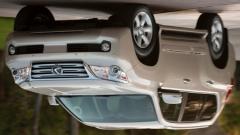 Troubled car maker Toyota has suspended sales of its Lexus GX 460 worldwide after the US consumer magazine Consumer Reports claimed that the vehicle could roll over.
“When pushed to its limits on our track’s handling course, the rear of the GX we bought slid out until the vehicle was almost sideways before the electronic stability control system was able to regain control,” the magazine claims. “We believe that in real-world driving, that situation could lead to a roll-over accident, which could cause serious injury or death.”
Let me get this straight. If you drive like an idiot, the vehicle is supposed to prevent you from suffering the consequences of your stupidity?
I think the nanny state safety obsession in the western world has got totally out of hand. I don’t know how we put the genie back in the bottle (or even whether the population as a whole feels the same way and would want to) but any political party that would repeal the health and safety legislation, outlaw the compensation culture and put the emphasis back on common sense, personal responsibility and the need to prove criminal negligence in order to win a claim in the event of an accident would get my vote.

Julian Moss, G4ILO, is a regular contributor to AmateurRadio.com and writes from Cumbria, England. Contact him at [email protected].
3830 Claimed Scores | 2010 Georgia QSO Party (GaQP) | Low Power
 In State Multi Single.
- WE4S | 478 CWdgQ | 284 SSB | 51 CWdgMult | 46 SSBMult | 20hrs | 120,280 Points [TCG].
- W4LHS | 235 SSB | 51 SSBMult | 12,012 Points [Coastal Amateur Radio].
- N4YT | 182 SSB | 37 SSBMult | 8hrs41mins | 6,734 [SECC].
n = 3 scores submitted in this category.
In State Single Operator.
- WF4W | 545 CWdgQ | 52 CWdgMult | 16hrs25mins | 56,680 Points [ACG].
- NA4BW | 227 CWdgQ | 145 SSB | 43 CWdgM | 36 SSBMult | 6hrs35mins | 47,321 Points [SECC].
- N4DU | 419 CWdgQ | 47 CWdgMult | 8hrs5mins | 39,386 Points [SECC].
n = 10 scores submitted in this category.
Out of State Single Operator.
- N2CU | 159 CWdgQ | 57 SSB | 91 CWdgMult | 30 SSBMult | 9hrs | 45,375 Points [Western NY DX Association].
- KB3LIX | 137 CWdgQ | 56 SSB | 87 CWdgMult | 37 SSBMult | 40,920 Points [Allegheny Valley Radio Club].
- N2AA | 180 Qs | 105 CWdgMult | 14hrs | 37,800 Points.
n = 36 scores submitted in this category.
Congratulations Tom, N2CU for leading the Western New York DX Association to the GaQP club banner position for the year.
73 from the shack relaxation zone.

Scot Morrison, KA3DRR, is a regular contributor to AmateurRadio.com and writes from California, USA.
Shootout on Tallentire Hill
 It has been a glorious day today. After lunch I set off for Tallentire Hill armed with the TH-205E and three antennas: a 2m telescopic quarter wave, a 45″ 2m 5/8 wave Black Whip telescopic from eBay seller jeepbangkok and the SOTA Beams MFD.
I set up the MFD in the vertical position strapped to a fence post and put out some calls. Despite my high elevation the 2m band was quiet and I only managed to raise “the usual suspects”. Richard MM1BHO/M heard me calling through the GB3DG repeater and we had a short QSO. Then Keith G0EMM heard me call on 145.500 MHz and was willing to spend a bit of time doing some antenna tests.
Prior to this I had heard a contact on the GB3CS repeater and had quickly swapped all three antennas to see what the difference was on receive. There was no noticeable difference between the MFD and the Black Whip but both were significantly superior to the 1/4 wave telescopic (which is itself an improvement over the short whips and “duckies” normally used with 2m handhelds.) However the signal was steady on the MFD whereas it varied depending on the position in which I was holding the TH-205E with the BNC mounted antenna. When using the MFD I was sitting on the ground so it was above my head and my body wasn’t interfering with reception. When using rig-mounted antennas it is best to stand up as an extra couple of feet above ground make a noticeable improvement. But it is also worth turning around and moving a short distance as the direction you are facing can make a big difference to signal strength.
Keith confirmed that there was no difference in my signal between the MFD and the 5/8 telescopic. I was 59 on both of them, whereas I was only 4 by 3 on the quarter wave. Keith also gave me my second unsolicited complimentary report on the TH-205E audio, saying it was “just like my voice.” I was using one of the cheap Kenwood speaker mikes which I bought on eBay originally for the TH-F7E.
We were then joined by Colin 2E0XSD who again said that I was the same strength, 59+ on both the MFD and the 5/8 wave. I was only 4 by 7 on the quarter wave.
After I finished the contact with Keith and Colin I tried some more calls. I was able to access the GB3CS repeater using the MFD and the 5/8 – when in the right position – but not with the quarter wave. Some repeaters I could hear but not access even with 3W, which is what the TH-205E appears to put out on “high power” with the 7.2V battery pack, but perhaps they don’t respond to 1750Hz tone-bursts.
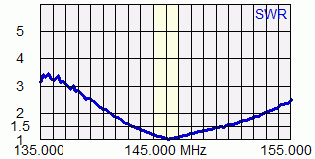 When I bought the Black Whip a few weeks ago I put it on the antenna analyzer and got this SWR curve. I seem to remember that I had to collapse the topmost section to get the SWR null spot on 145.000 MHz but I don’t suppose it makes any difference in practise.
I think the Black Whip 5/8 telescopic is a superb antenna for 2m FM use and well worth the few pounds it costs, as long as you have a radio that can handle it. The base is sprung to absorb any shocks but even with the HT Saver SMA to BNC adapter I was a little uncomfortable using it on the tiny TH-F7E. The big old TH-205E has no such problems with a large antenna, although its lower power output with the battery pack I have is a slight disadvantage.
Is it worth carrying the MFD instead of the 5/8, which telescopes down to the same length as a quarter wave telescopic antenna? Well, if you are using a modern hand-held radio then the MFD’s coaxial connection will avoid putting undue strain on the SMA connector. You can secure the MFD to a fence post or stuff the support mast in your rucksack allowing you to operate sitting down and even let go of the radio when receiving. The MFD is also convertible to a horizontal dipole for SSB use. So it still has several benefits. But I expect I will be taking the Black Whip on most of my hilltop outings.

Julian Moss, G4ILO, is a regular contributor to AmateurRadio.com and writes from Cumbria, England. Contact him at [email protected].
3830 Claimed Scores | 2010 Gagarin DX | Low Power
Single Operator All Band.
- Z35F (BALE) | 505 Qs | 40 Mults | 119,200 Points.
- UA4ALI | 614 Qs | 55 Qs | 16 Hrs | 96,360 Points.
- SQ6NTE | 149 Qs | 29 Mults | 26,564 Points.
- N2WN | 54 Qs | 14 Mults | 756 Points [TCG].
n = 4 scores submitted in this category.
Successful franchise building is an exercise in persistence, patience, imagination, and creativity. What lead to the success of World Wide DX, WPX, and International DX RadioSport events?
Contest on.

Scot Morrison, KA3DRR, is a regular contributor to AmateurRadio.com and writes from California, USA.
Wainwrights On The Air Blog
Just over a year ago I started Wainwrights On The Air (WOTA) as an adventure radio scheme to encourage people like myself to get out of the shack and up in the hills (or fells as they are known locally) of the English Lake District for a bit of fun with radio. You collect points by making contacts from the tops of the fells (which is called activating.) Armchair fellwalkers can also collect points by working stations on the tops of the fells (which is called chasing.) Certificates are awarded when you have made contacts from (or with) all of the fells in each of Alfred Wainwright’s seven Pictorial Guides, and for completing all 214 Wainwright fells.
 WOTA has been more successful at getting other people out on the fells than me. To date, Phil G4OBK has been the most active WOTA activator and has already claimed a certificate for activating all of the fells in the Pictorial Guide to the Eastern Fells. He has stated that he intends to do all the Wainwrights within two years. Now he has started a blog to describe his progress towards completing this challenge.
Called “Wainwrights On The Air”, Phil’s blog has details of the routes taken as well as the people contacted from the fells. It has some great pictures, too, that really capture the flavour of this beautiful part of England.
If you like operating radio from the great outdoors, if you are interested in the English Lake District or if you are thinking about becoming a WOTA activator yourself, I think you’ll enjoy Phil’s Wainwrights On The Air blog.

Julian Moss, G4ILO, is a regular contributor to AmateurRadio.com and writes from Cumbria, England. Contact him at [email protected].
Charger for the TH-205E
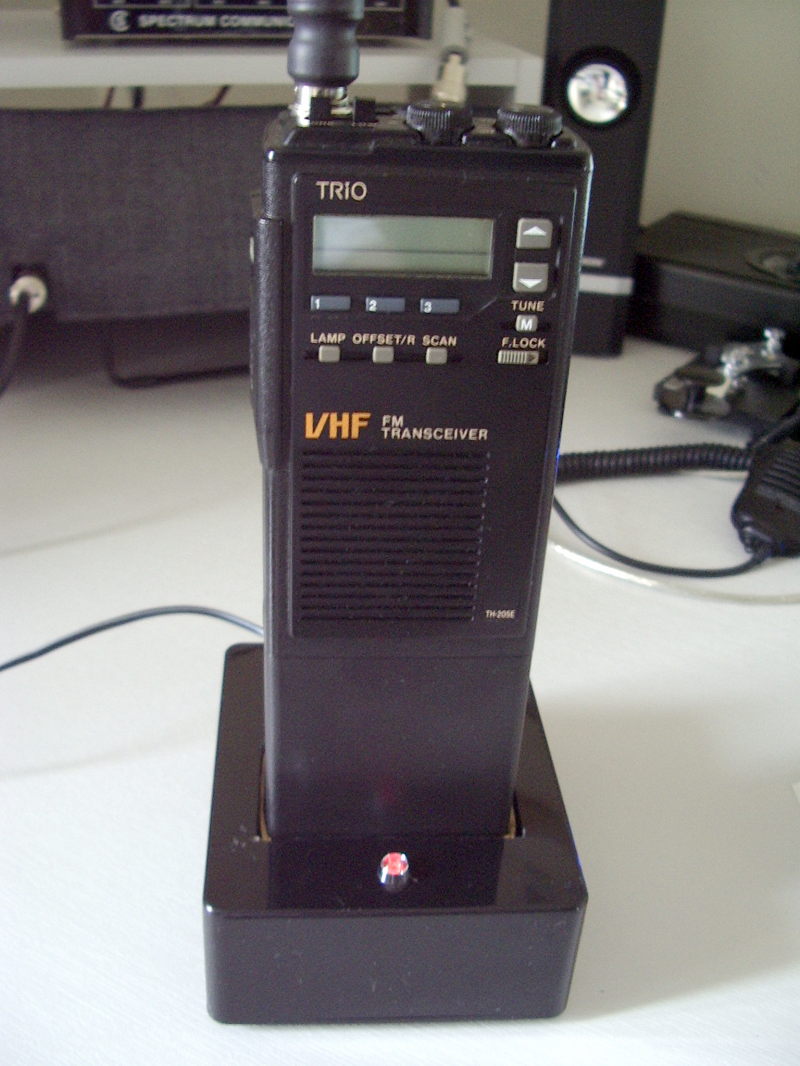 The TH-205E transceiver was finally restored to full working order yesterday. After some thought I finally decided how to fit the 3A diode that was somewhat larger than the recommended part which was unobtainable. I extended the left-over wires from the old fuse using thin wire taken from the leads of a small capacitor. I then shortened to a few millimetres and tinned the leads of the new diode. I wound the thin wires on to the stub leads of the diode and then soldered them whilst using tweezers as a heat sink on the thin wire to prevent the other end coming unsoldered.
The radio now works off its new battery. It made its first QSO with Derek G1GDB via the GB3LA repeater, and received complimentary reports on the audio. I even took it along to the Workington Radio Club meeting in case there was a “largest 2m hand-held” competition!
I also finished up the drop-in battery charger which I built using this circuit using an LM317T voltage regulator. It is simple to make and has an LED to show that it is charging. The hardest part was cutting the rectangular hole in the plastic project box. It’s best not to look too closely or you can see that the edges are not perfectly straight.
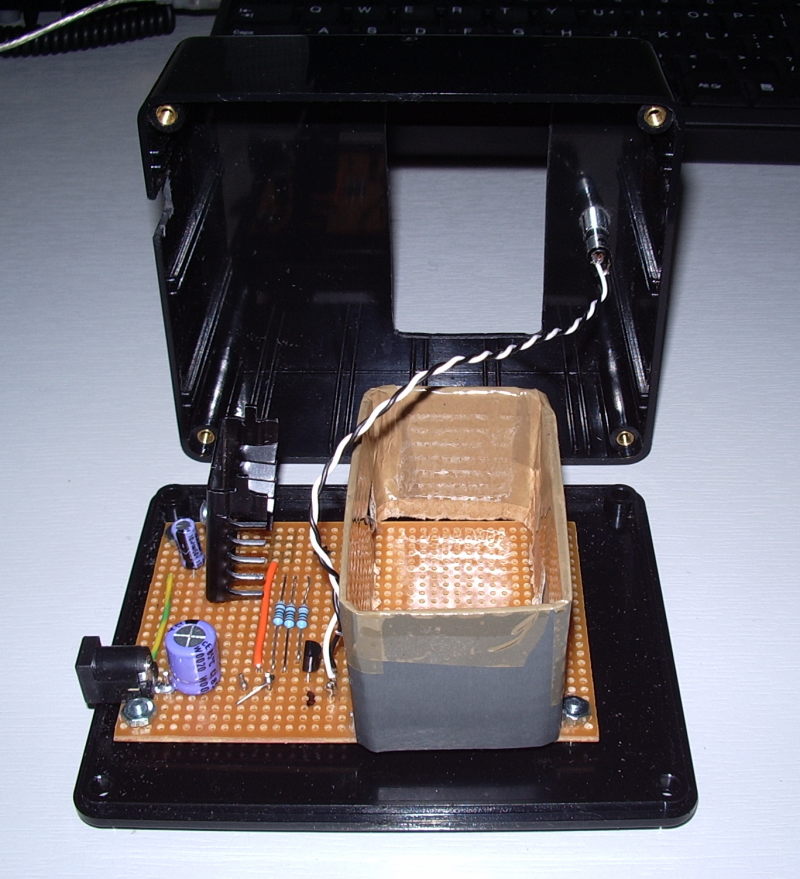 This picture shows an internal view of the charger. It doesn’t show the contacts for the charging tabs on the battery which were made from a paperclip. The sleeve that holds the radio or battery in position was cut from the cardboard box that my UNI-T Oscilloscope Digital Multimeter came in, and is super-glued to Veropins to hold it in place. Hopefully the heat sink for the LM317T will be adequate – the battery hasn’t lost the charge I gave it using the shack power supply so I haven’t yet had the chance to test it for a full 15 hours.

Julian Moss, G4ILO, is a regular contributor to AmateurRadio.com and writes from Cumbria, England. Contact him at [email protected].
 Ham Radio Deluxe |
 W5SWL Electronics |
 Ham Radio Prep |
 KB3IFH QSL Cards  Hip Ham Shirts  HamRadioAuctions HamRadioAuctions Reliance Antennas Reliance Antennas Enigma Shop Enigma Shop |  morseDX  Ni4L Antennas  R&L Electronics R&L Electronics antennas.us antennas.us QRV QRV |
- Matt W1MST, Managing Editor
