 |
 Another K3 panadapter option?
 8 June 2010 | by
 Cross Country Wireless recently introduced a new product, a built, boxed and ready to use SDR receiver that is optimized to work with the bog standard sound card provided with every computer. It covers two 48kHz segments which may be on one or two bands using a switched local oscillator. At £49.95 it looks like something of a bargain.
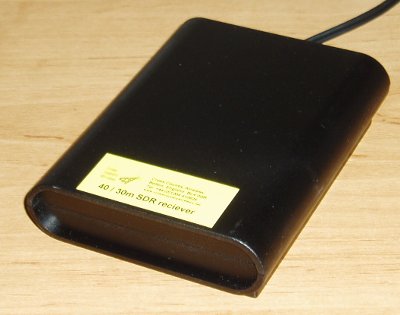 I was looking at the product’s web page this evening and the thought occurred to me that this might make a rather good inexpensive option for a panadapter for the Elecraft K3. It would need a different crystal to cover the K3 IF output frequency which is 8.215MHz, but that shouldn’t be a problem. CCW might even offer this as a stock option if there was a demand for it.
As the receiver covers 40m and 30m everything else should work OK unmodified. The key point would be whether there is adequate isolation to prevent the local oscillator leaking into the K3 IF and desensitizing the receiver – the reason why most people use a buffer amplifier when using SoftRock boards for this purpose.
I don’t have a great urge to have a panadapter display and I already have three sound cards (well, one and two USB sound modules) in use with my shack computer so this isn’t something I’m planning on trying. But I thought it might be worth mentioning the possibility for other K3 users. Even if the idea is a non-runner, the Cross Country Wireless receiver still looks like a very nice product.

Julian Moss, G4ILO, is a regular contributor to AmateurRadio.com and writes from Cumbria, England. Contact him at [email protected].
Better late than never?
Yesterday I was surprised to receive a package, by air mail, from Greece. It was the micro transceiver module I ordered at the beginning of April from Elcom Research. I was informed that it had been sent by registered air mail, but when it didn’t turn up and further emails went unanswered I opened a dispute with PayPal which was judged in my favour and the money was returned to my account on May 21st.
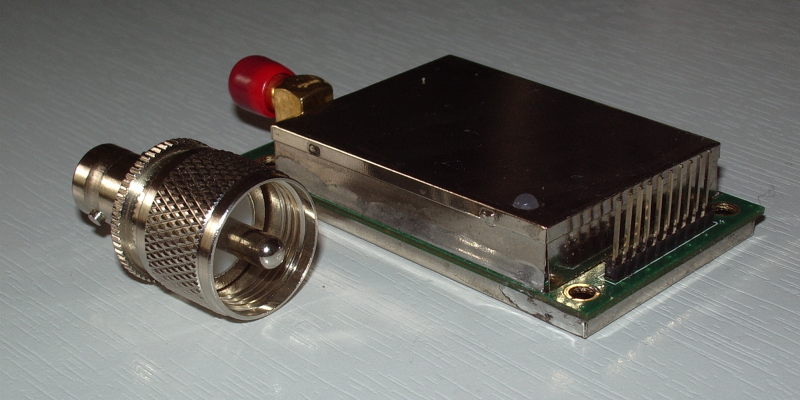 What I received was just what you see in the picture (less the PL259-BNC adapter which was included in the picture for scale). No documentation, no indication as to what the connections to the 10-pin connector are, nothing. It is completely unusable as sent. What’s more, the Elcom Research website I originally ordered it from now seems to be defunct. The only identification is the part number FC201SA on the circuit board. I typed that into Google and found that the module is an FC-201/SA Audio/Data RF Module manufactured by Friendcom in China. Google also turned up a PDF user manual on the Friendcom site, so I was able to download and print off that.
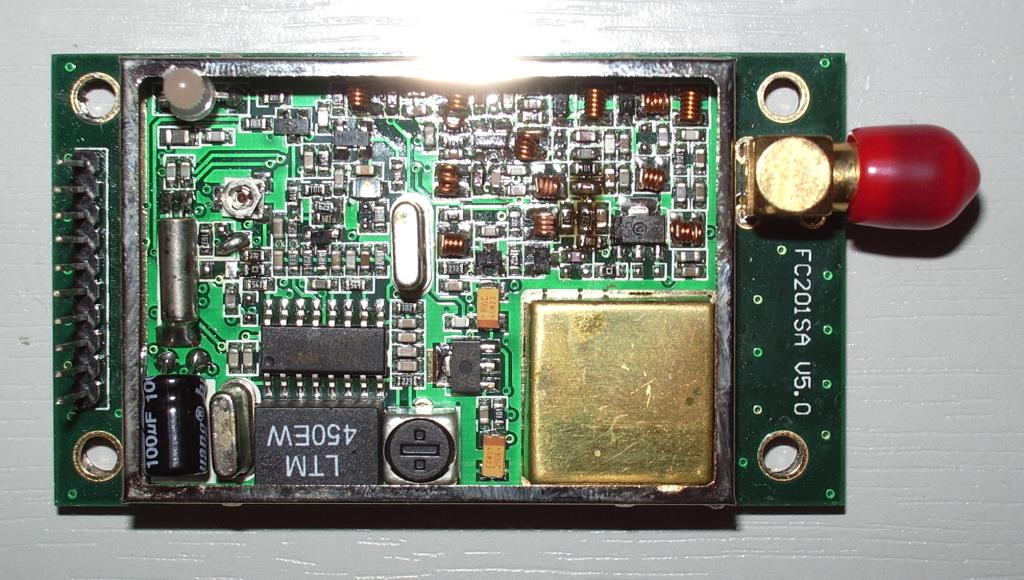 From the manual it appears that Friendcom would normally supply a cable for the 10-pin connector. I didn’t receive one. Without it I will have to solder directly to the pins, because although it looks like a standard 0.1in PCB header connector it isn’t. The pins have a spacing of about 1.8mm. I haven’t been able to find a mating connector, though I admit I haven’t looked at the professional parts suppliers as with minimum order quantities and so on it isn’t economic to order a single connector from them anyway.
My intention with this module had been to make a micro-power Echolink hotspot. As I no longer expected to receive it I had moved on from that idea, but now it’s here I guess I’ll have to pay for it. I don’t plan on doing anything with it until the autumn at least, as for me summer is not the time for constructional work.

Julian Moss, G4ILO, is a regular contributor to AmateurRadio.com and writes from Cumbria, England. Contact him at [email protected].
QSLing made easy
As regular visitors to the site will know, I’m a big fan of eQSL. I don’t need QSLs for awards because I don’t chase them, and in a hobby that has embraced the internet in just about every other aspect electronic QSLing seems to me to be the most logical way of confirming a contact that saves time and money. And more important than that, for me, is that it relieves me of a tiresome chore.
 So when I read about GlobalQSL in John Harper AE4X’s blog my immediate thought was: Why haven’t I come across this before? As you’ll see if you follow the links, it’s a service that prints QSLs on demand and sends them to the bureau. You export your log to an ADIF file, upload it to the service, pay, and the job is done. As with regular printing services there is a minimum order of 100 QSLs and the price drops if you send 1,000 or more. You can also order blanks to be sent to yourself for direct QSL requests.
There is a free QSL designer program (for Windows) that you can download from the GlobalQSL site and use to design your card. As you can see from the sample above (and others on the site) the results are very professional and leave nothing to be desired. You can order 10 samples sent to you from your design for $8 to test the quality.
I created an account (it’s free), logged in and found that there were 14 QSLs already printed and sent to me. I think GlobalQSL is a brilliant idea that retains the convenience of electronic QSLing but allows you to satisfy those contacts who prefer to receive real QSL cards.

Julian Moss, G4ILO, is a regular contributor to AmateurRadio.com and writes from Cumbria, England. Contact him at [email protected].
D-Star reaches Cumbria
Kudos to Lynn KJ4ERJ, developer of the brilliant APRS client APRSISCE. Yesterday he read my comment that the program doesn’t support transmit through the soundcard based AGWPE software yet, and today it does! So now my APRS beacons are braaping out over the Cumbrian airwaves.
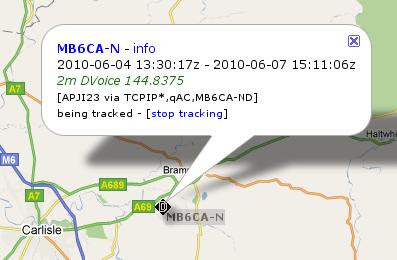
When I looked at the MB6CA coverage map I was reminded of a map I saw some years ago showing the spread of grey squirrels across the county. Overseas readers may not know that the grey squirrel is an illegal immigrant – from the US, no less – and it has been gradually wiping out our indigenous red squirrels, so that there are now only a few pockets of them left.
Will D-Star be the grey squirrel to analogue FM’s red, gradually increasing its territory as more and more people are persuaded to make the switch, until Icom ends up with a virtual monopoly over the VHF and UHF bands?

Julian Moss, G4ILO, is a regular contributor to AmateurRadio.com and writes from Cumbria, England. Contact him at [email protected].
K4UPG Back in Action!
Many work responsibilities have kept me off the air more than I’d like lately.
But we did manage to break away for a few days with family in Tennessee over Memorial Day. It was great to have an opportunity to get together with Chuck, AF4O the Hillybilly Bear and fellow Polar Bear QRP group member. We had an opportunity to work a bit of QRP portable in the Chickasaw State Forest in West Tennessee. It is a very natural and beautiful location and Chuck took me to his special spot in a very old and interesting cemetary set deep in the very tall hickory tree forest. Wow! I believe the latest date on the grave markers was 1927 and there were many from the early and mid 1800′s. It is a lovely and isolated spot.

K4UPG running a 30m EFHW sloper from the edge of the forest cemetary
Chuck said to bring along a screen shelter and I sure was glad I did! This was also a great spot for deer flies, hornets and other interesting biting bugs!
He had a nice setup and was running a random wire on 20m which he launched by throwing an antique glass insulator from an old telephone pole over a tree branch. He has a better arm than I do… think that heavy insulator would have broken my arm!
Back at the in-laws home in Jackson, I had some time to operate deck portable and was ably assisted by my niece Chloe. Conditions were horrible, but it was fun to be outside and hearing some sweet dits and dahs for a bit.
Now I am gearing up for the next outing of the Central Florida QRP group. The weather is HOT and the summer thunderstorms are back, but life and radio must go on… cu on the air!
72,
K4UPG

AF40 downs a Mountain Dew and doesn't miss a character of CW

Chloe gives me advice on copying cw through the QRN
Kelly McClelland, K4UPG, is a regular contributor to AmateurRadio.com and writes from Florida, USA. Contact him at [email protected].
Beach Boys Amateur Radio Club 2010 Field Day Prep
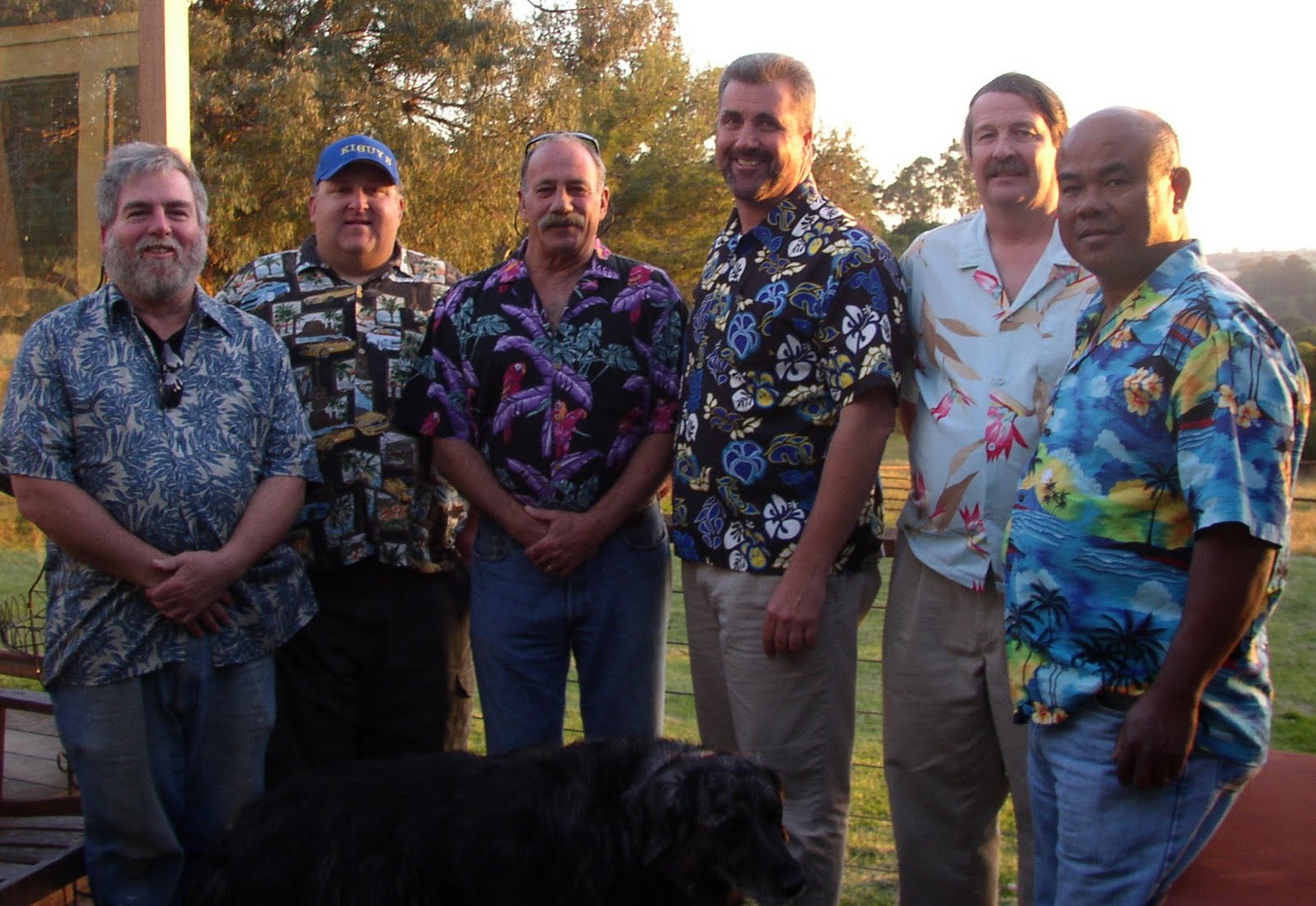 Photograph 1 Beach Boys Amateur Radio Club located near Pismo Beach, California. Our only requirement for membership is a willingness to enjoy ham radio and wear a Hawaiian print shirt.
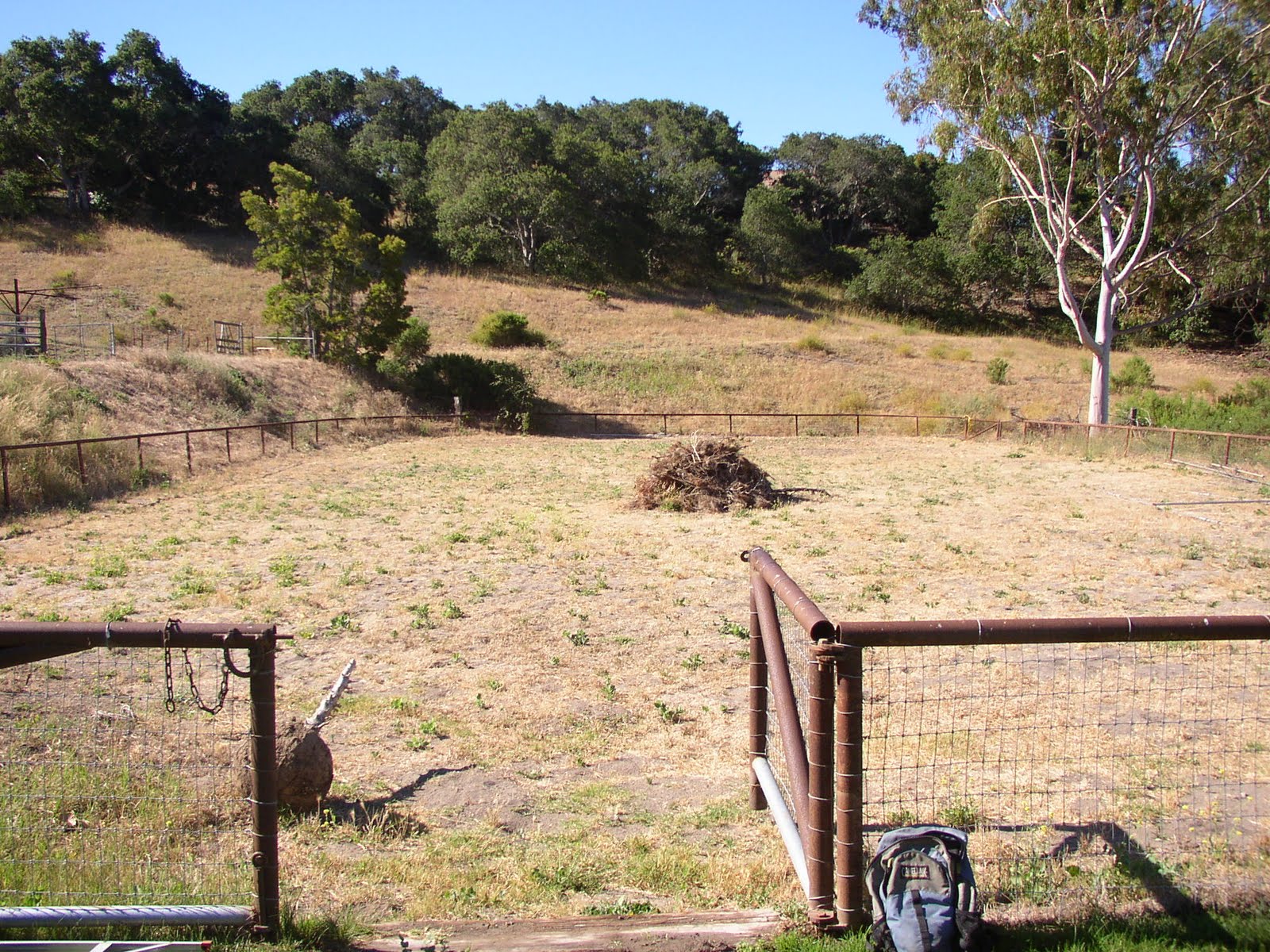 Photograph 2 is our field day site and note the arena’s metal fencing.
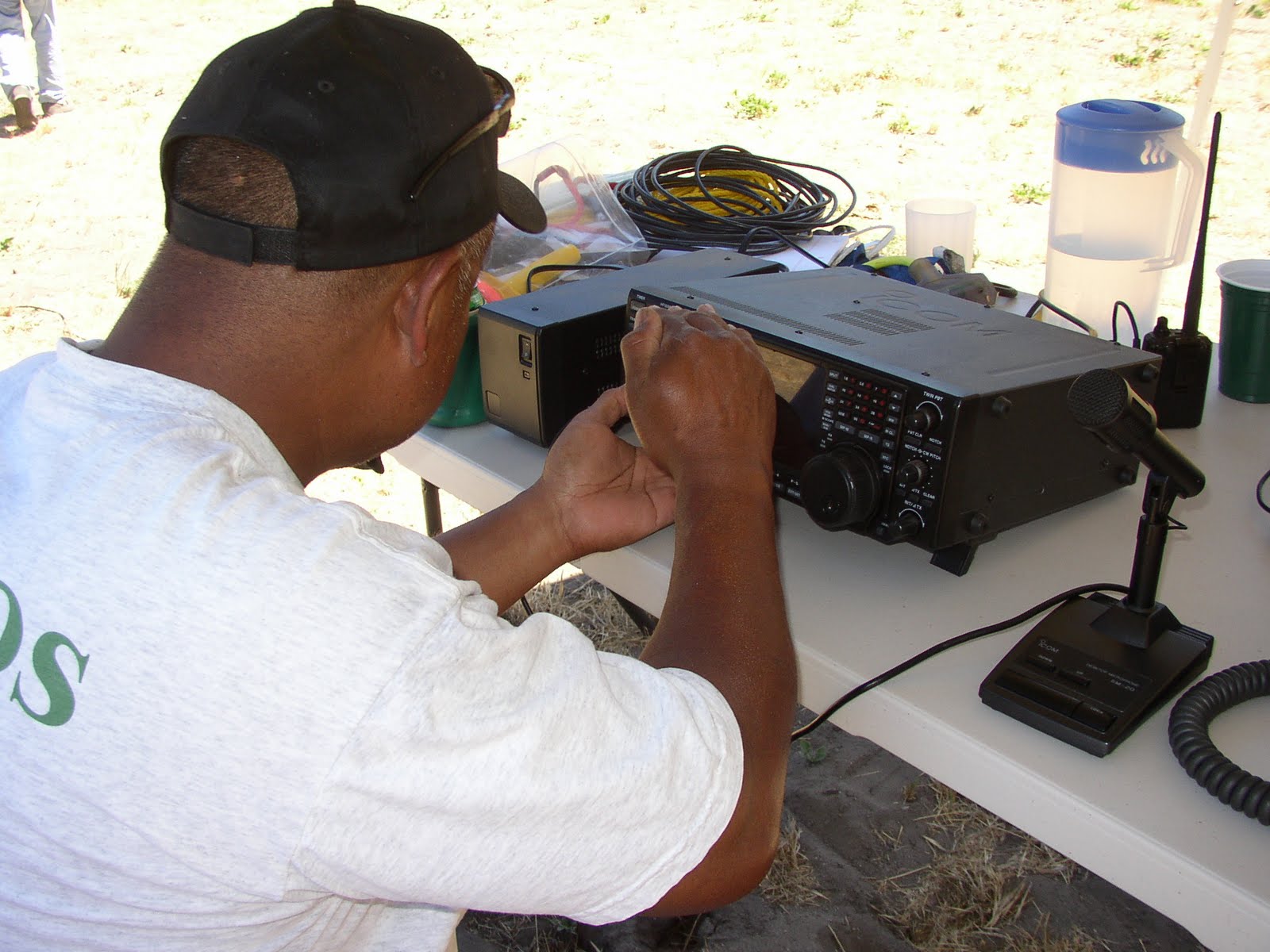 Photograph 3 is Emerito, N6ETO at the controls of an ICOM ProIII — one of two for this year.
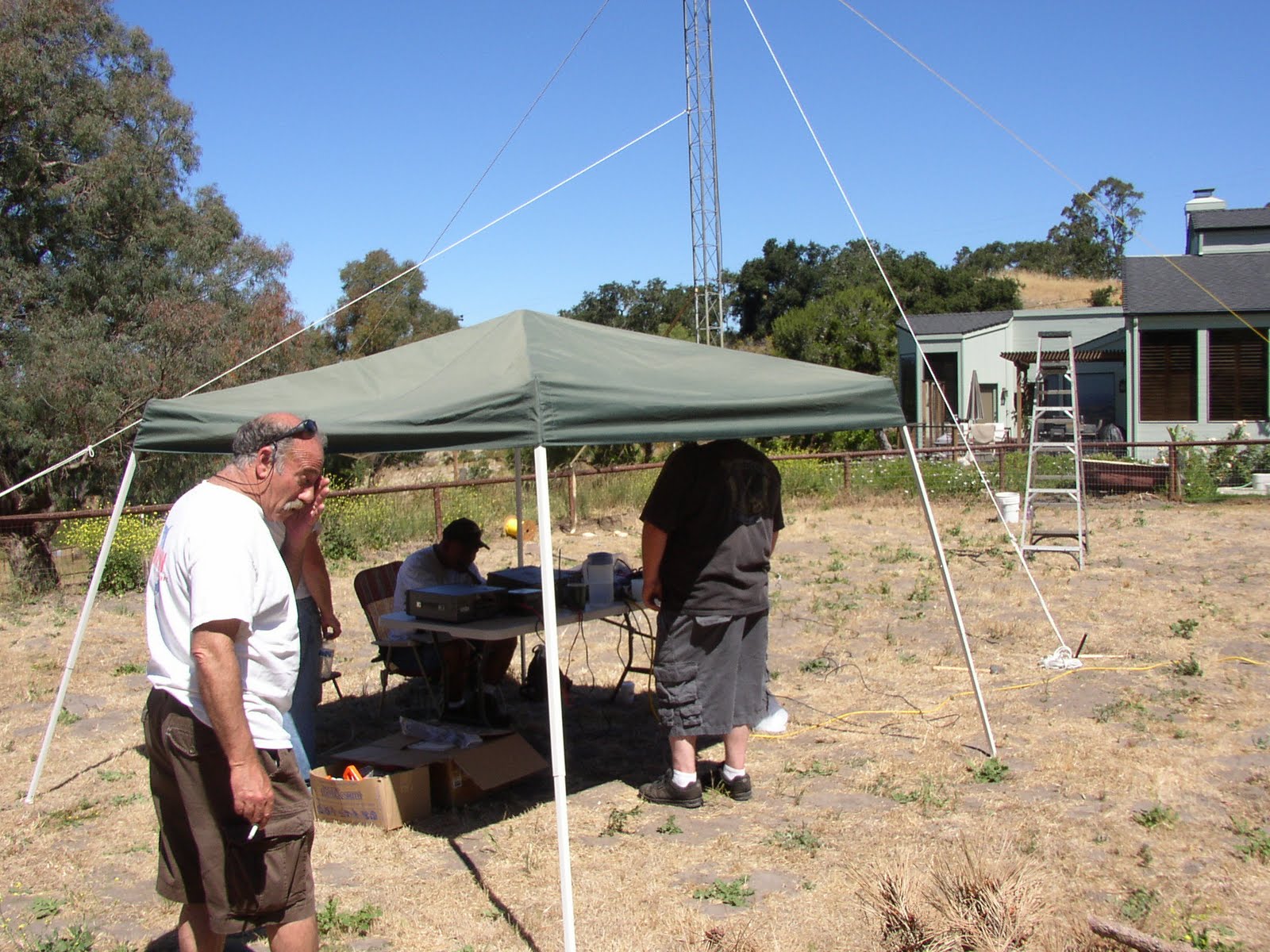 Photograph 4 is Fred, KI6QDH who is our local ham radio motivator and 6 meter grid square chaser.
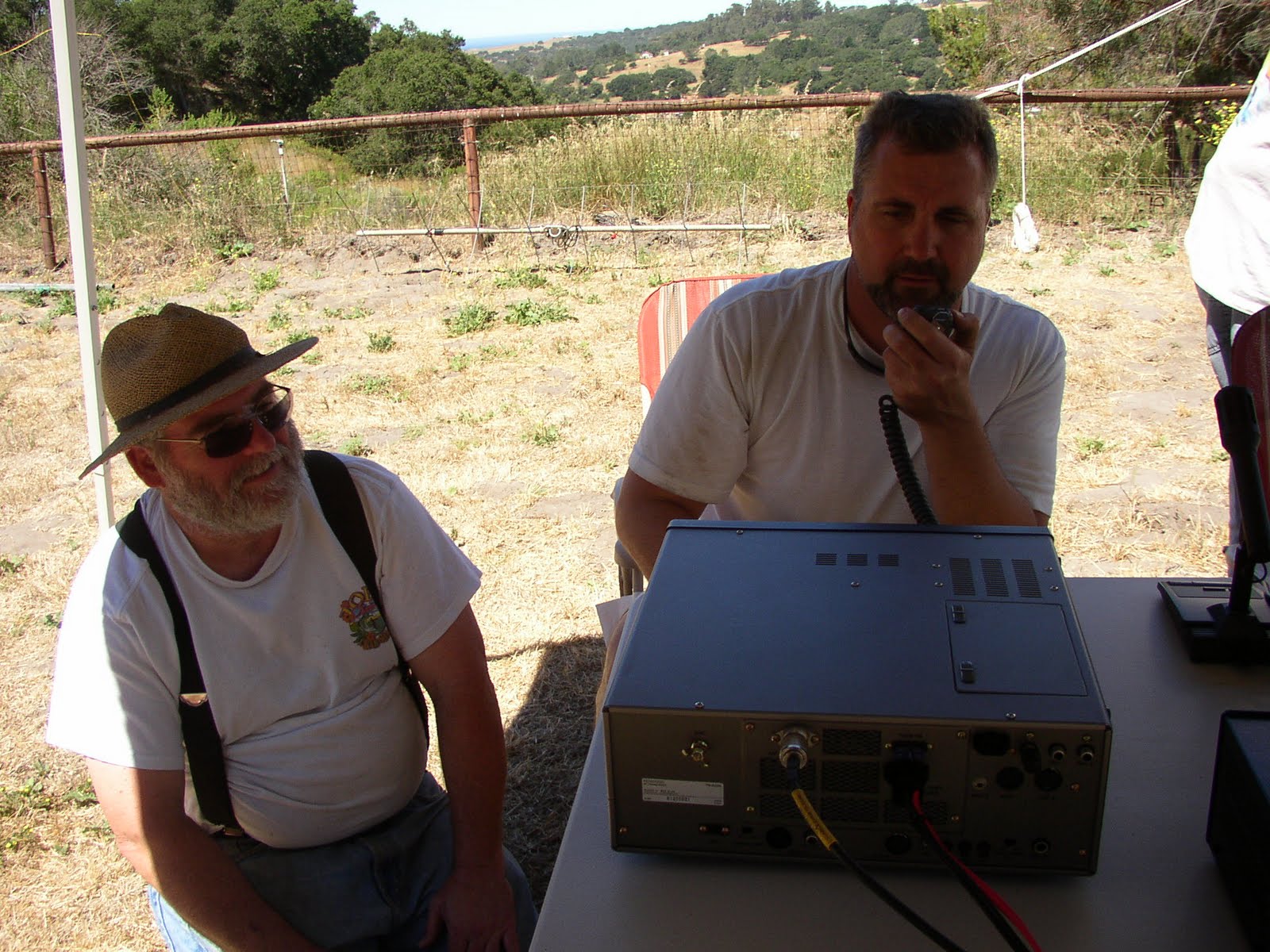 Photograph 5 taken of John, KG6RWF and I while operationally testing our field day equipment to include a Kenwood TS850S.
 Photograph 6 taken while I logged K6D a special event station commemorating donuts in Southern California.
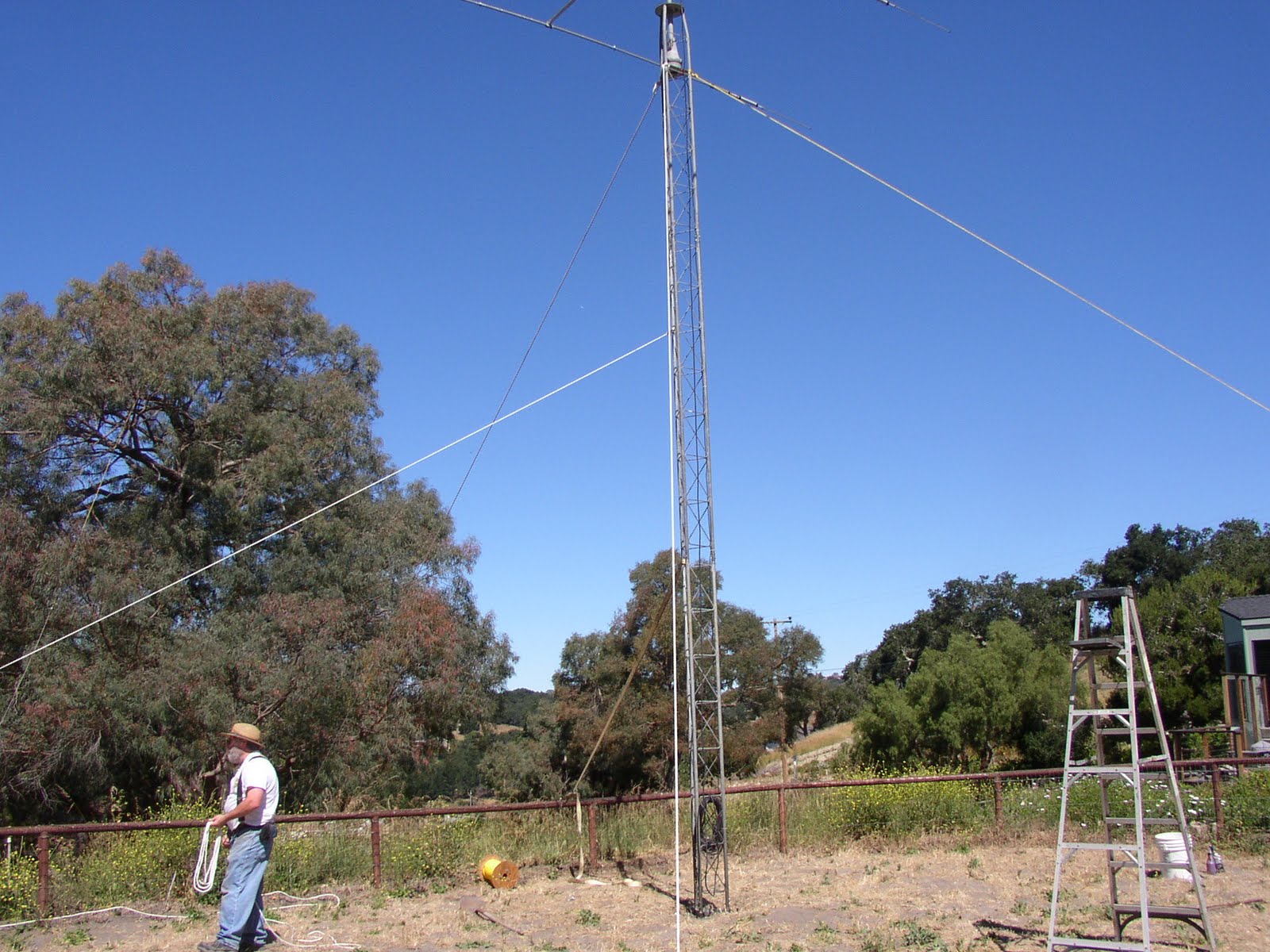 Photograph 7 taken after BBARC successfully deployed our field day tower. It is all about safety when working in and around a tower.
 Photograph 8 is our tri-bander waiting for signals. We heard E4X working a 5 KHz wide swarm on 20m Morse code this morning.
 Photograph 9 taken while we prepared the tower for deployment.
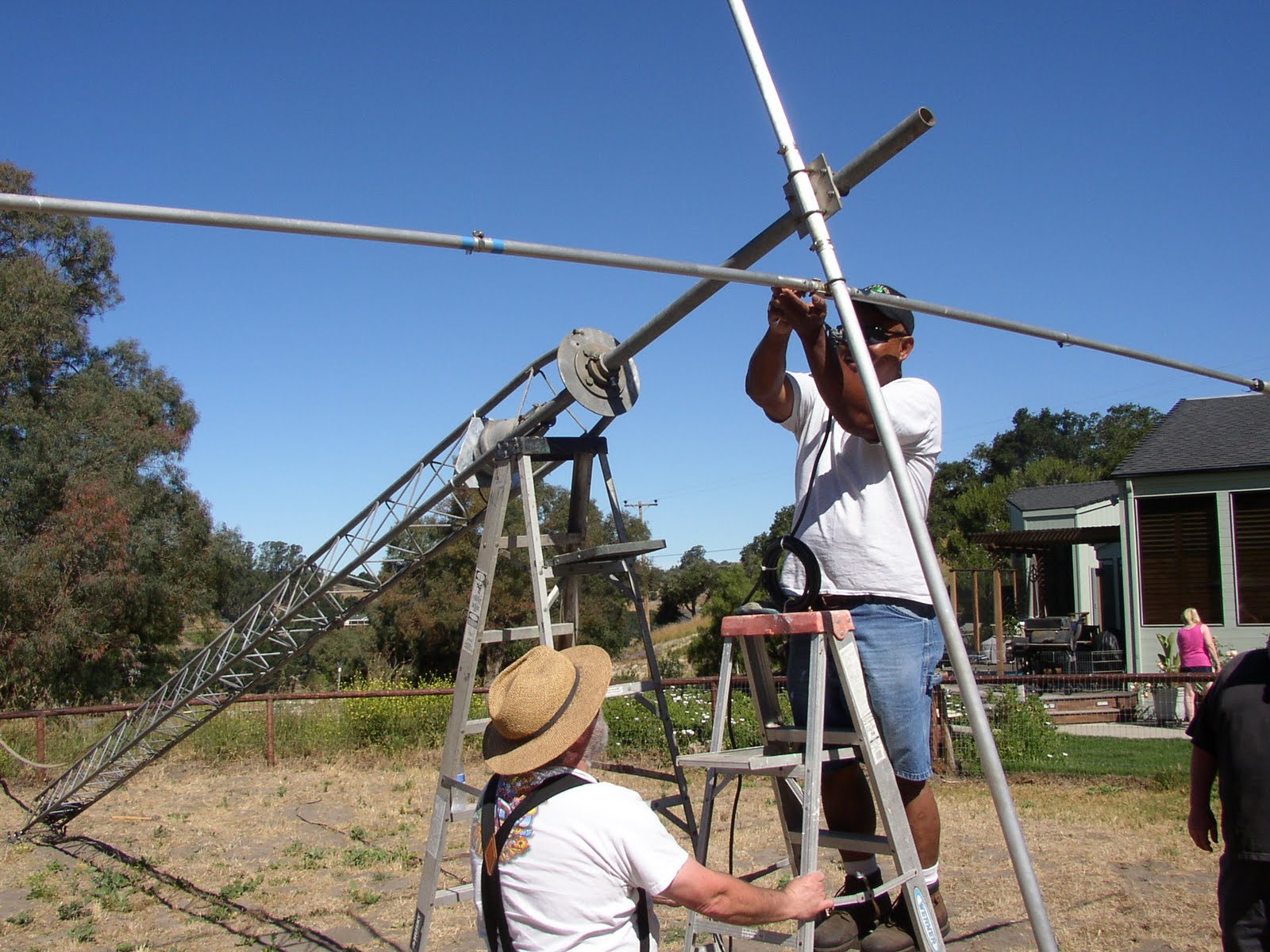 Photograph 10 taken of Emerito, N6ETO making an adjustment to the tri-bander driven element prior to hoisting operations.
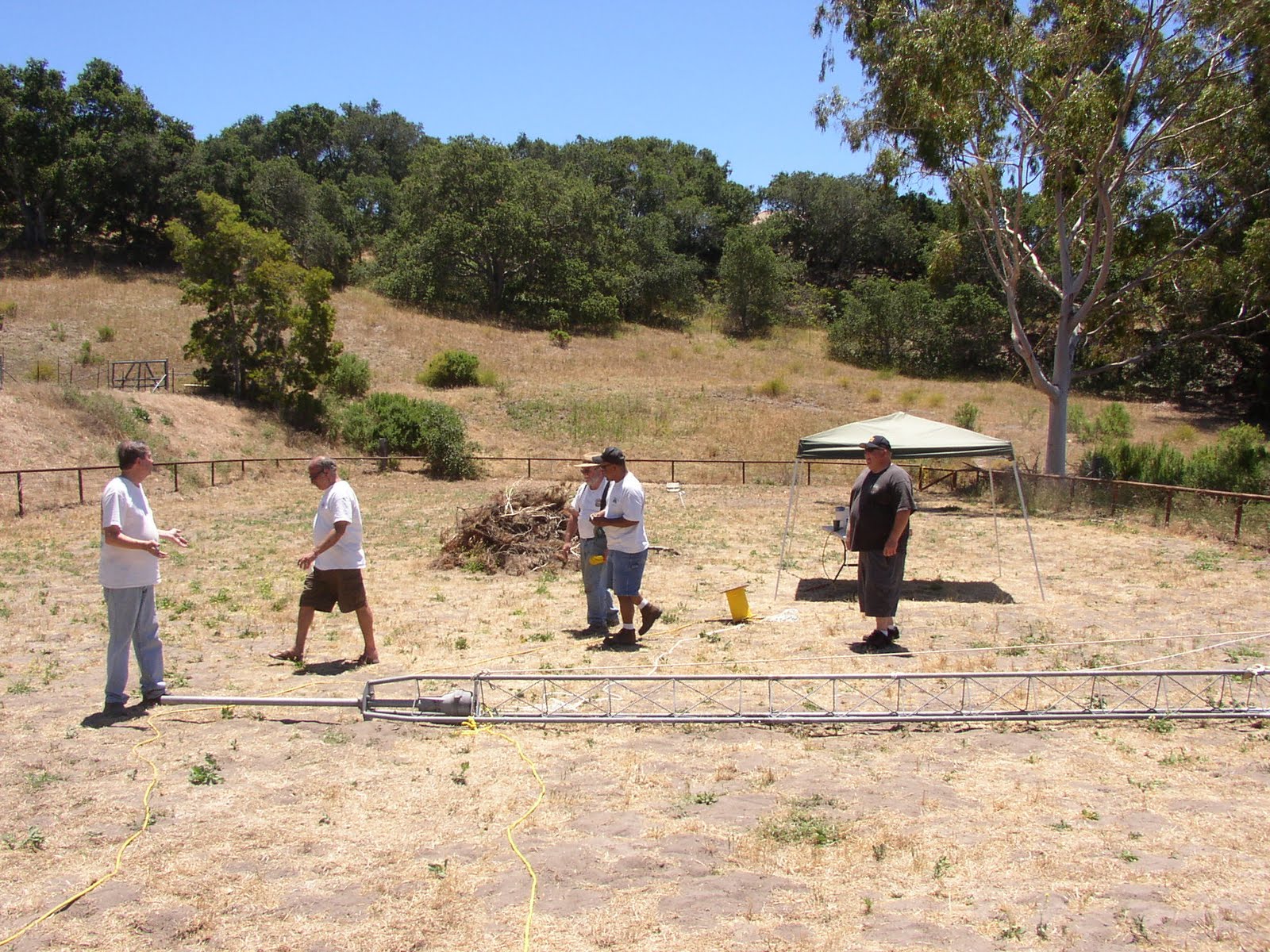 Photograph 11 is the tower after we successfully stowed our tri-bander antenna. Our goal was slow and steady as the tower made its descent. We are planning additional guys at the mid-section as well.
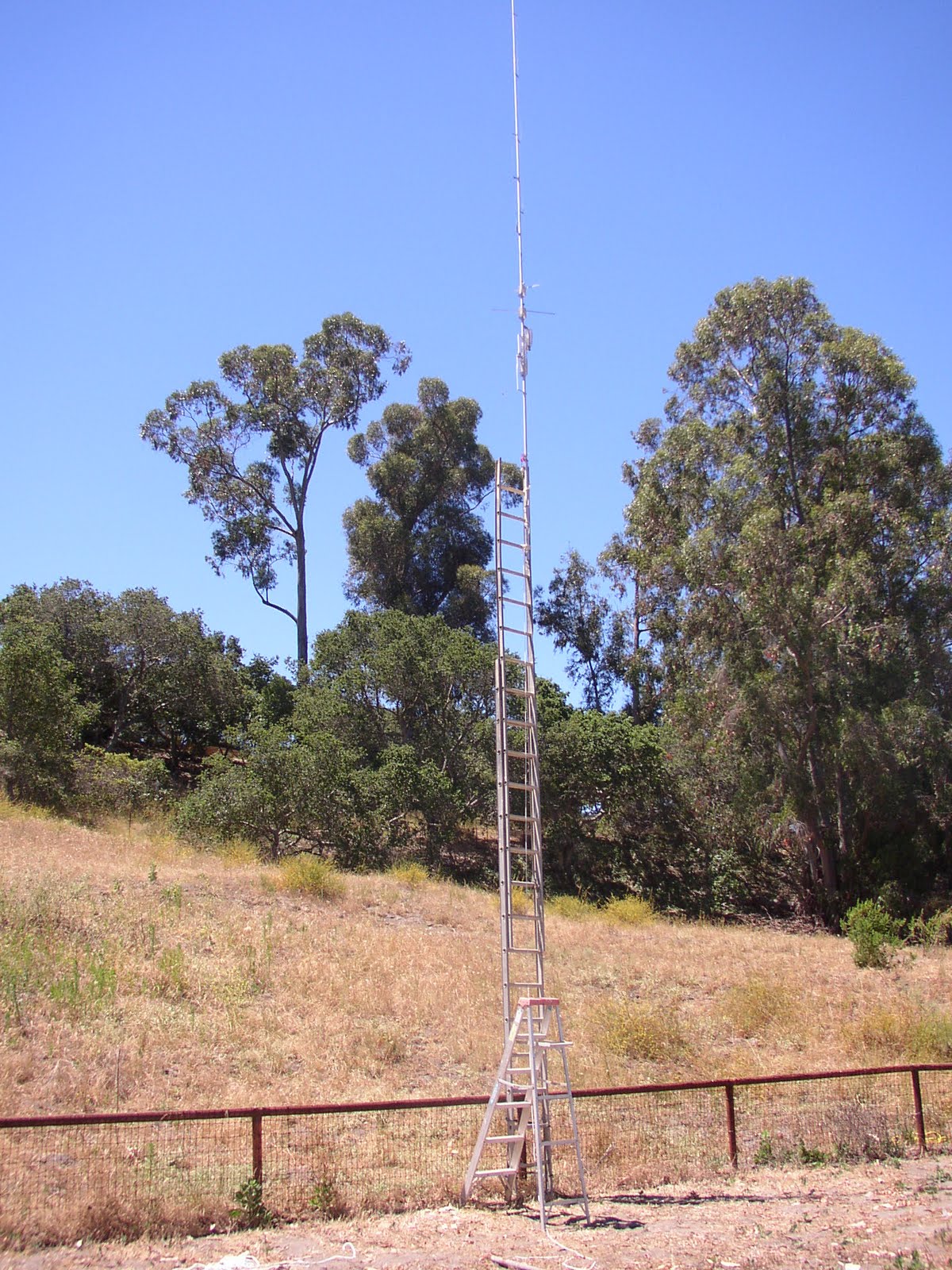 Photograph 12 is the Butternut HF9V at the opposite end of the arena. We will install a counterpoise system and ground to arena fencing prior to official operations.
73 from the shack relaxation zone.

Scot Morrison, KA3DRR, is a regular contributor to AmateurRadio.com and writes from California, USA.
QRP on Echolink
My gardener XYL Olga has been waiting for rain as eagerly as I have been hoping for a Sporadic-E opening on 2m and today she got what she hoped for. As I was shack-bound I decided to hook the IC-910H up to the computer.
A few days ago I noticed to my amazement that the accessory connector on the IC-910H is exactly the same as the one on the FT-817. I could have simply used the interface I used with the ‘817, except that I had shortened the serial cable to make it the same length as the audio cables when used with a USB to serial adapter. My new PC has two real serial ports one of which was earmarked for exactly this purpose so I had to make up a new, longer cable before I could get started.
On the audio side I needed to use a USB audio “dongle” as the on-board sound card is used by the K3. I already use a Daffodil USB sound adapter for the computer audio. The dongle I used for the IC-910H is an even cheaper, more basic one than the Daffodil and I had purchased it to make an interface for my Echolink node. It appears to be satisfactory for that. Hopefully it will also be good enough for 1200baud APRS packet using the AGWPE sound card software as well. I doubt that it would be good enough for any kind of weak signal work like WSPR, as I observed a few weeks ago that the Daffodil adapter could not reproduce my recordings of weak CW bounced off the Moon from Arecibo. But I don’t plan on doing EME or even WSPR or PSK31 on VHF anyway.
I set up APRSIS32 with the AGWPE software so I will be able to run an APRS gateway again when not needing the VHF radio for any other purpose. This may be useful as there seems to be an increase in APRS activity in the area. As well as Colin 2E0XSD getting set up on RF I have tracked G1TGY driving around the area. I’m not sure if I have the audio levels correct as I haven’t heard any APRS to see if I can decode it and APRSIS32 doesn’t support transmit through AGWPE yet.
I also installed the Echolink software on the shack computer and set up my Echolink node / hotspot. This is a personal node operated under the remote control provisions of my license so it is a bit wasteful that I have to generate 5W or RF – the minimum the IC-910H will go down to – and then dissipate it all in a dummy load to stop it being heard outside my property boundary. However it is nice to have the node available again as my back is playing up a bit today and it enables me to do some ham radio from a reclining chair downstairs or even lying on the bed if I need to.
Whilst setting up Echolink I noticed a conference called *QRP* which I hadn’t seen before. I see that several QRP bloggers have been trying Echolink recently so perhaps we could use this conference for an occasional get-together? I’ll connect to *QRP* more often over the next few days to see what if anything goes on there.

Julian Moss, G4ILO, is a regular contributor to AmateurRadio.com and writes from Cumbria, England. Contact him at [email protected].
 Ham Radio Deluxe |
 W5SWL Electronics |
 Ham Radio Prep |
 KB3IFH QSL Cards  Hip Ham Shirts  HamRadioAuctions HamRadioAuctions Reliance Antennas Reliance Antennas Enigma Shop Enigma Shop |  morseDX  Ni4L Antennas  R&L Electronics R&L Electronics antennas.us antennas.us QRV QRV |
- Matt W1MST, Managing Editor
