 |
 French get extra 40m allocation
 30 June 2010 | by
 Today French radio amateurs have finally been granted permission to operate in the region 7.1 to 7.2MHz. Vive la France!

Julian Moss, G4ILO, is a regular contributor to AmateurRadio.com and writes from Cumbria, England. Contact him at [email protected].
GPS Interference
A week ago I received a Yaesu VX-8GR VHF/UHF APRS hand held transceiver with GPS. The transceiver performs as expected except in one extremely annoying respect – its GPS takes a very long time to get an initial fix on its position after switching on the radio. It cannot get a fix from inside the shack at all. By contrast, my HTC smartphone will get a fix in a couple of minutes whilst sitting in its charger cradle on the shack desk. Or at least, it did.
This morning I noticed on aprs.fi that the last reported position of my smartphone, G4ILO-10, was somewhere in Somerset. I started the APRSISCE application with the intent of “bringing it back home” by sending a position report with the correct location. But after ten minutes the phone had not managed to get a fix.
I switched off all my radio equipment in case one of them was an interference source, and rebooted the phone, and eventually after several more minutes it obtained an accurate fix. I am beginning to suspect that something is interfering with GPS reception in the area of my house.
If you Google “GPS interference” you will find links to numerous articles and research papers raising concerns about what is apparently an increasingly common problem. One article states that a directional television receiving antenna widely available in the consumer market contains an amplifier which can emit spurious radiation in the GPS L1 frequency band with sufficient power to interfere with GPS reception at distances of 200 meters or more. Other potential interference sources include spurious outputs from TV transmitters.
Another website states that “We are seeing increasing evidence of GPS interference and also apparent erratic behaviour (e.g. mis-reported location)” and provides a form for reporting cases of interference. This page provides links to two reports on the issue which unfortunately require registration in order to access them.
Have other amateur GPS users experienced difficulty in receiving the satellites or an increase in inaccurate position reports? For many GPS applications the effects of this could have rather greater impact than a radio ham’s inability to report his position to aprs.fi. Perhaps the US administration was rather hasty in its decision to decommission Loran.

Julian Moss, G4ILO, is a regular contributor to AmateurRadio.com and writes from Cumbria, England. Contact him at [email protected].
D-STAR Illegal In the US and Now France
I'm sure Internet forum and 80 meter evening roundtable hamdom in the US is going to be confused over which side to take as many of the older crusty hams in our ranks hate D-STAR but also have a disdain for France, to the point of wanting to change the name of French Fries to Freedom Fries. It should make for some interesting conversations. But I digress.
Obligatory disclaimer: I don't hate D-STAR, I just have issues with the proprietary vocoder, and rest assured that the FCC has not declared D-STAR illegal in the US.

Anthony Good, K3NG, is a regular contributor to AmateurRadio.com and writes from Pennsylvania, USA. Contact him at [email protected].
Supporting D-STAR activity in France
You might remember that back in April, following a conversation with Neill, F5VLD, I wrote that I had learned that D-STAR activity (at least on-air) is illegal in France.
I read today on Twitter that there is a petition to support French amateurs in their campaign to use D-STAR. I’m not normally a fan of petitions – I’m more inclined to write or speak to the personal responsible – but on the other hand, a petition is a good measure of support.
So, anyway – here’s a link to the European Parliament petition

Tim Kirby, G4VXE, is a regular contributor to AmateurRadio.com and writes from Oxfordshire, England. Contact him at [email protected].
LHS Episode #042: 1.21 Gigahertz Badgers
 Yes, we’re running behind AGAIN. It’s the story of Linux in the Ham Shack lately. Because of that, this episode turned into an expose on our backlog of feedback. As it turns out, feedback is a good thing. We were able to address several questions and comments from listeners to the show. Hopefully the information we give out as answers to questions will also answer the questions and fulfill the needs of other listeners who are hoping someone will ask their questions for them. We’d like to encourage everyone to send in feedback and we will address it as soon as we’re able. You can send an e-mail to the show, call our hotline at +1-888-455-0305 or +1-417-200-4811, or leave us a comment on the Web site. We encourage all our listeners to tell us what you like, tell us what you don’t like, tell KA9WKA he’s awesome, ask a question, or just tell us whatever’s on your mind. Also, if you happen to have a few extra dollars kicking around, send us a donation to help with our expenses. Keep Linux in the Ham Shack moving into the future and we’ll give you proper recognition! And if you buy some of our cool swag, you’ll also be helping out the show. Thanks so much for being a part of our world. We love you. It’s a big ol’ love fest.
73 de The LHS Guys
Russ Woodman, K5TUX, co-hosts the Linux in the Ham Shack podcast which is available for download in both MP3 and OGG audio format. Contact him at [email protected].
D-Star illegal in France
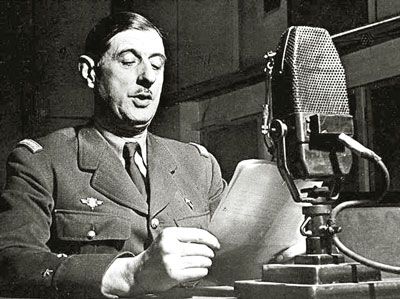 Steve, GW7AAV, was quick off the mark to post about the announcement yesterday on the website of DR@F, the French association of amateur digital mode operators, that D-Star has been ruled illegal in France. The reasons for the ruling, if I understand correctly, are that D-Star permits a radio to be connected to the internet (which is apparently illegal in France) and that it breaches rules prohibiting encrypted communications on grounds of national security because parts of the patented proprietary AMBE codec are undisclosed.
The group is appealing for all European amateurs to sign a petition to the European Parliament against the ban. No doubt this will have as much of an effect as the two petitions to the British Parliament to get interference-causing internet-over-mains-wiring devices banned. Issues like this illustrate what a hopeless idea the European Union really is as it attempts to harmonize things between member states while countries (especially France, which started the EU but implemented only the directives that suited it) stick tenaciously to their own different rules and regulations when they want to.
I’m not sure if it is true that French amateurs are not permitted to connect radios to the internet, as if it were, Echolink nodes and APRS gateways would also not be permitted, and a quick check of some relevant websites show several of each with F callsigns currently operating. As for the argument that transmissions are encrypted, whilst the closed and proprietary nature of the codec does prevent someone from designing their own decoder, the chips (and indeed D-Star radios) are readily obtainable allowing anyone who wishes to do so to monitor communications.
I am not, as regular readers know, a fan of D-Star, but this looks to me a bit like the result someone who is also anti D-Star trying to abuse their position to get it made illegal in France. I hope our French comrades are successful in getting this ban lifted.

Julian Moss, G4ILO, is a regular contributor to AmateurRadio.com and writes from Cumbria, England. Contact him at [email protected].
BBC to investigate interference complaints
Ofcom, the UK telecommunications regulatory authority, has announced that it will pass the responsibility for investigating reports of interference to TV and radio services to the BBC from July 1st. On that date, members of the public experiencing interference to radio or TV should lodge a complaint with the BBC using a web form, which may advise them of issues such as a local transmitter fault.
Some UK amateurs have expressed concern about the possible effect of this change, but I don’t consider it likely to make much difference. As far as I can see, Ofcom will still be responsible for issues of interference to amateur radio such as that caused by PLT devices. These days, TVI and BCI are fairly infrequently experienced and almost always caused by a poor or faulty antenna installation or receiving equipment. Putting the BBC in charge of investigating complaints of interference to its own services makes a lot of sense.

Julian Moss, G4ILO, is a regular contributor to AmateurRadio.com and writes from Cumbria, England. Contact him at [email protected].
 Ham Radio Deluxe |
 W5SWL Electronics |
 Ham Radio Prep |
 KB3IFH QSL Cards  Hip Ham Shirts  HamRadioAuctions HamRadioAuctions Reliance Antennas Reliance Antennas Enigma Shop Enigma Shop |  morseDX  Ni4L Antennas  R&L Electronics R&L Electronics antennas.us antennas.us QRV QRV |
- Matt W1MST, Managing Editor
