 |
 2010 September VHF Contest – Yuck!
 13 September 2010 | by
 This is going to be pretty short, because there’s not a whole lot to say. I had a few hours of free time this weekend to work in the ARRL September VHF QSO Party contest. I’m not really sure where the name “QSO Party” comes from, but this was one of the most boring parties that I’ve even been to. (For those of you who are unfamiliar, this is just another contest, hence my question about the name.) Typically band conditions for VHF contests aren’t terrific in September, but usually there are a reasonable number of people to work. This year wasn’t typical.
As with most of my contesting efforts, I participate on a part-time basis. I had a few hours Saturday afternoon and more hours Sunday afternoon. I think that my total operating time was around 6 hours, and for those 6 hours, I managed an average of about 7 1/2 QSOs per hour, for a grand total of 45 contacts. That was just plain awful. I only worked 6 meters, and had a total of 10 grids for the contest. Most of the folks who I spoke with were having similar results.
I generally like the VHF contests, particularly on 6m, because you never know when the band might open up and you’ll suddenly be able to work across the country. This year, the farthest contact that I had was in FM18 in Virginia to the south, and FM43 in Maine to the north. Usually there will be an opening down to the south or southwest, and typically I’ll pick up a few grids in Florida, but not this year.
A lot of that six hours was spent with either the voice or CW keyer sending my CQs while I occupied myself otherwise. (Sharon’s glad, because it gave me a chance to finally upgrade her computer from an ancient version of Eudora to the current version of Thunderbird. But I digress…)
The only consolation that I have is that it seems that the folks in my area were all in the same boat, but I can’t say that this was one of the more fun contests in recent memory.
Here’s my score summary:
Band Mode QSOs Pts Grd
50 CW 3 3 1
50 USB 42 42 9
Total Both 45 45 10
Score: 450
450 points? Seriously? Ouch. I miss 2006. (Ok, those were earlier in the summer, but they sure were a lot more fun.)

David Kozinn, K2DBK, is a regular contributor to AmateurRadio.com and writes from New Jersey, USA. Contact him at [email protected].
New England To Host WRTC2014!
Congratulations New England RadioSport enthusiasts for crafting an award winning proposal. Doug Grant, K1DG, Chairman, WRTC2014, Inc. stated in CQ Contest Reflector, “We consider this a great honor, and will work hard to make the event enjoyable and memorable for everyone involved.”
RadioSport Russia set the new standard and raised the bar for competitors and participants. A job well done that benefited the future of ham radio. We have an example of world class competition that speaks to international goodwill and the enduring spirit of wireless communications, nothing less than field day style, for the young at heart.
The task in New England is monumental and I’m hedging the assembled team of passionate volunteers and excellent leadership will produce one for ham radio’s history book. This is an exciting moment for RadioSport USA!
Contest on.
See Also.
World Radio Team Championship 2010 Russia.

Scot Morrison, KA3DRR, is a regular contributor to AmateurRadio.com and writes from California, USA.
ICQ Podcast Series Three Episode Nineteen – Rediscover Listening (12 September 2010)
Series Three Episode Nineteen of the ICQ Amateur / Ham Radio Podcast. News Stories include:
- Return of SumbandilaSat SO-67
- Amateur station seeks new home
- EAP Multi-band 2010
- New Lancashire RAYNET group
- Try amateur radio direction finding
- Bicycle tour needs more radio hams
- A very bright weekend for lighthouses
- RSGB Convention deep space lecture
- Open Source Digital Voice Codec
- Morse and Music
- Vuvuzela Morse Code
- Milestone for WIA Centenary Award
- New D-STAR repeater installed in ARRL lab
Your feedback, upcoming events, Hints, Tips and Tricks and Martin (M1MRB)discusses rediscovering listening.
Colin Butler, M6BOY, is the host of the ICQ Podcast, a weekly radio show about Amateur Radio. Contact him at [email protected].
Best 73 To N4EMG
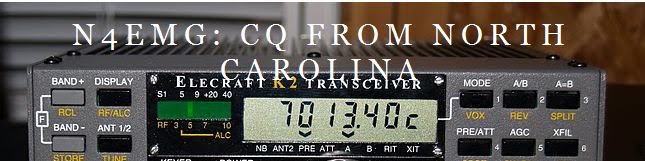 I want to thank Ed, N4EMG who helped bring ham radio blogging to the Internet and for sharing his personal journal as well. There is a season for everything. I’m experiencing that change when the leaves begin morphing while the deep slumber of winter is soon to arrive. I met a friend through the spirit of ham radio blogging and will miss Ed’s contribution.
Ed, please leave your blog, your contribution is part of ham radio’s history. Who knows what one year will bring or for that matter five years from now? We are among the early new media pioneers and now it is reaching ubiquity within our community.
Or, perhaps now is a good time for a vacation from the blog, gather new material without having to journal about what was learned. I’m having fun writing out traditional QSL cards and watching the mailbox. Finally, I’m getting after my basic awards like DXCC, WAS, and WAC as well. Likewise, I’m confirming counties and building up my grid square count. Today, KI6QDH and I worked on his 3-element tri-bander with its new 40 meter add on kit. What a hoot!
There is a season for everything and best 73 to Ed, N4EMG from the shack relaxation zone.

Scot Morrison, KA3DRR, is a regular contributor to AmateurRadio.com and writes from California, USA.
Hard drive failing
Two months ago I got a new Dell Inspiron laptop to use for my work. I have been very pleased with the computer which is quite fast and has a good keyboard and a very nice screen. However this afternoon I switched it on to do a bit of work and was typing away when the hard drive started making a noise like a cat with indigestion – which anyone who has ever done tech support will recognize as the sound of a hard drive attempting to read a bad sector.
Windows froze, there was no way out but to long-press the power switch, losing the work I had been doing. On start-up, Windows insisted on doing a disk check and printed up a lot of messages that appeared to be to do with errors on the hard drive. Eventually I was able to restart, Windows booted up and it seems to be working normally again. But my confidence in the system’s reliability has taken a blow. In my experience hard drives don’t malfunction once and then run perfectly for ever after. But there’s no sign of any fault now, so I have little option but to wait until the next time it starts making funny noises. 🙁

Julian Moss, G4ILO, is a regular contributor to AmateurRadio.com and writes from Cumbria, England. Contact him at [email protected].
Japan on 15m
This morning I worked Kei, JI1BBN, on 15m PSK31 using 50W to the MFJ magnetic loop in the attic.
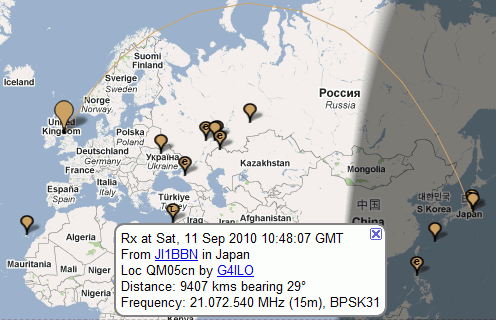
I heard several other DX stations on both the loop and the dipole, including DU3MEL in the Philippines whom I last worked in 2003, also on 15m. That was also the last time I worked Japan. Then I would only have been using QRP with my Elecraft K3, and the antenna would have been a horizontal loop of wire round the perimeter of the attic, with a 4:1 balun at the centre of one side, tuned using the K2 internal ATU.
What’s that about stealth antennas not working?

Julian Moss, G4ILO, is a regular contributor to AmateurRadio.com and writes from Cumbria, England. Contact him at [email protected].
The completed Warbler

Finished Warbler in box
A few weeks ago I finished the box to mount the Warbler. The connectors are all soldered directly to the pcb board so the alignment of holes had to be done carefully. When doing such layout and drilling I am always grateful of the ‘O’level in metalwork that I finished back in high school thirty years ago now. (As a sidenote I am currently reading ‘Shop Class as Soulcraft’ by Matthew Crawford which covers the recent decline of school shop classes).
The box is aluminium (showing my British origin with the spelling) and made by Hammond. To give it a nice finish I spray painted it with a couple of coats of Rustoleum Universal hammered spray paint and it came out rather well.

The painted surface showing the 'hammered' finish.
The box size is 4.5″×3.5″ so it makes quite a nice compact unit.
I need to look at the final output power of my Warbler as I think it is a little low, but it is performing well and I have made 80m PSK31 contacts out in Wisconsin, Illinois and North Carolina. As previously reported I have also used the Warbler for an Olivia contact. A great kit and I am looking forward to using it over the Winter when 80m conditions should be better than they are now. Unfortunately, it looks like Small Wonder Labs have dropped it from their current product line.


Alan Steele, VA3STL, is a regular contributor to AmateurRadio.com and writes from Ottawa, Ontario. Contact him at [email protected].
 Ham Radio Deluxe |
 W5SWL Electronics |
 Ham Radio Prep |
 KB3IFH QSL Cards  Hip Ham Shirts  HamRadioAuctions HamRadioAuctions Reliance Antennas Reliance Antennas Enigma Shop Enigma Shop |  morseDX  Ni4L Antennas  R&L Electronics R&L Electronics antennas.us antennas.us QRV QRV |
- Matt W1MST, Managing Editor
