 |
 Home-brew USB digimodes interface
 6 October 2010 | by
 My home made USB digital modes interface “SignaLink clone” has been completed. It has been in use for several days and is currently in use with my K2 for 30m APRS.
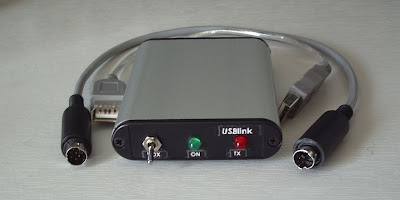 |
| USBlink interface with cables for FT-817 |
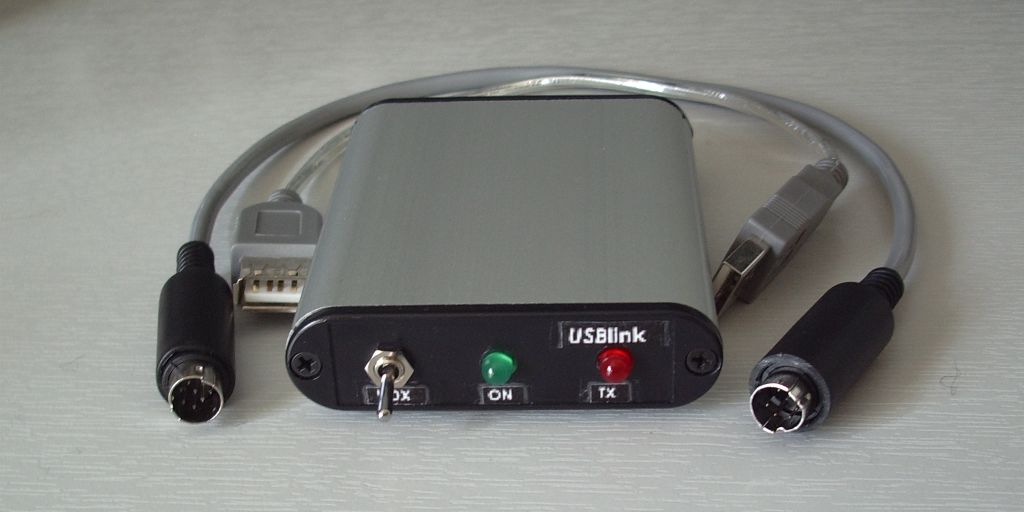
I have written up the project on the G4ILO’s Shack website. See home-brew USB digital modes interface.

Julian Moss, G4ILO, is a regular contributor to AmateurRadio.com and writes from Cumbria, England. Contact him at [email protected].
Amateur Radio for October 2010 arrived

Amateur Radio magazine for October 2010
Highlights from this month’s edition of Amateur Radio, published by the Wireless Institute of Australia include:
Commentary from WIA President Michael Owen VK3KI on the crucial role of the ITU, the global agency that sets the framework – regulations and frequency allocations – for hams wherever they live.
“Simply, it will not happen, whether it is good or bad, unless it happens first at the ITU.”
That simple proposition drives the whole four year planning process that culminates in a four week meeting in Geneva – WRC-12. Michael details the complex rounds of regional meetings and negotiations that lead up to that meeting.
“…this now never-ending series of meetings… Represents the focus of the protection and advancement of the interests of amateurs that face national societies like the WIA.”

The WIA's 'Tune-in to the World' logo
There’s also detail of the inaugural national day of amateur radio promotion aka the WIA National Field Day scheduled for Saturday 23 October. Professional marketing strategy has arrived to help lift public awareness of ham radio and recruitment to new levels. The article describes a range of merchandise related to the event as well as pointers to files to be used to print professionally designed signage for the day.

WIA clothing for the first National Field Day
There’s a report of the breaking of the national record for 47 GHz – 58 km. A wok lid held up one end of the successful attempt!
Paul McMahon VK3DIP presents the second part of his ‘Generic PC interface for the amateur experimenter’ with the focus on how to use the unit. This project was described in an earlier post.
There are reports and photos from the recent ILLW and an update on the growing amateur activity in Australia on 137 kHz and 500 kHz and info about this month’s JOTA, Jamboree of the Air 15-17 October.
Stephen Rapley, VK2RH, is a regular contributor to AmateurRadio.com and writes from New South Wales, Australia. Contact him at [email protected].
More Lessons from the Birds

The Biggest Bird in the Pond
On my morning walk yesterday, I had quite a treat. Sure wish I had taken the camera along. On the shore of the flood control pond that flows out into the golf course, were 4 fine Florida water birds. It is not common to see them bunched together like this. A Great Blue Heron, a Little Blue Heron, a Great Egret and a Comorant were lined up in a space of about 8-10 feet. There was a good bit of shoving and jockeying for position and they were working down the bank fishing in the same small spot.

Cormorant is like a living submarine or scuba diver
Made me think of the pileups a DX station creates… The comorant had a distinct advantage as the only real swimmer and diver of the bunch. It ranged up and down the bank picking off small fingerlings and bullying the other birds by swimming right up to their skinny legs and surfacing. Reminded me of some of the pileup busters I’ve observed from time to time.
At the same time, the little guy, the Little Blue Heron, and the regal looking, very white and tall Great Heron were left to glean around the edges and pick off the fish that were panic striken and confused by the other birds fishing in the midst. This reminded me of all the contests where I have to dodge the big birds and pick off what I can around the edges.
Funny thing is there are tens of thousands of fish all along the bank, not just where these birds were bunched up. What is it about us that piles us up and forces such fierce competition? Hmmm?
Yep, I am a devoted CPG (Contest Point Giver), who had a nice morning walk and got to see a great outdoors show for free. That is why I love operating QRP portable. Being outside and enjoying the free shows only adds to the enjoyment of the hobby and the friendships made on the air.
72,
Kelly K4UPG PB #173

Tall White Bird is really quite skittish

This little Blue Heron really gets around fast
Kelly McClelland, K4UPG, is a regular contributor to AmateurRadio.com and writes from Florida, USA. Contact him at [email protected].
Ham Radio’s Lost Future
There was a time when developments in the realm of amateur radio were relevant in relation to the rest of the world. In those days, a young man might become interested in the technology of radio and his first steps in that venture may have been as a radio amateur. Through building and experimentation this neophyte might eventually make a living as a radio and TV repairman, or find work as an electronics technician. He might even follow a path to becoming an electronics engineer developing new methods and hardware for commercial or military communication.
There was a thread of commonality between his hobby and his vocation. Radio amateurs were on the leading edge of discovery and experimentation and these developments were closely mirrored in the non-amateur world. In fact, what this fellow was doing on the workbench in his ham shack was often a step or two ahead of what he did for his employer.
But at some point in the flow of space and time, amateur radio reached a critical crossroad. It could proceed one direction into the future or choose the other direction – a long, and circuitous route back to the past.
For good or for bad, we chose to jettison the future and return to the past.
Consider carefully the position of amateur radio just prior to this crossroad. We had pioneered FM radio at VHF and UHF and had blanketed the countryside with repeaters such that an operator with a handheld radio could make contact with others far outside his line of site. We had already worked out the protocols and network topology necessary for passing data through the ether at rates comparable to landline methods of the age. And we had our own fleet of satellites that pioneered new methods in space communication as well as low-cost spacecraft construction and launch.
Future developments in the non-amateur world of radio from that point included cellular technology and the transmission of higher speed data over the air. Commercial applications for broadcast radio and television have changed radically and now include the imposition of digital methods. Military applications for secure battlefield communication use satellite and terrestrial means like mesh networking for voice and data transmission. Our homes, restaurants and coffee shops are bathed in RF transmitted data that keep our mobile devices connected to the Internet.
None of these “new” technologies would have been even the least bit foreign to the radio amateur had we taken the path to the future. Youngsters would have been encouraged to become involved in our hobby as it could very well lead to a rewarding career in one of many growing and lucrative technical fields – just like in the earlier days.
The most important point I want to make is this: technology didn’t pass amateur radio by because we weren’t intelligent enough to have adapted to the rapid changes it produced, we could have lead that revolution, ham radio enthusiasts were the proto-geeks on this planet.
No, technology didn’t abandon us, rather, we voluntarily chose a path that led back to the past and in so doing, watched the future march ahead without us.
My guess is that we chose this path because the future involved changes that seriously challenged the old dogmas. The old guy who could pound brass would be dimininshed in the new world while the young kid with the computer connected to his radio would be raised up and this was deemed unacceptable.
Of course there remain some facets of our hobby where higher tech methods are required. For instance, it would be difficult to argue that bouncing a radio signal off the moon and then receiving the echo from it isn’t one of the more challenging things that hams do. But consider how many amateurs are active in that pursuit and you must conclude that it’s a small fraction of even one percent of all licensees. Why? Probably because of the degree of technical difficulty required for success. It’s much easier, trivial in fact, to toss a wire over a tree limb and make a 40 meter CW contact; so more choose to do that instead.
Low-power enthusiasts, (QRP) have spent decades trying to make the point that HF communication is possible with practically nothing at all. That you or I could whip up a two-transistor transceiver in a single evening and make radio contacts with it is widely seen as the magic of radio among those in this camp, however, it really only serves to make the point that they have embraced the simplest, lowest elements of RF technology and have no intention of moving beyond it.
In selecting the path to the past, we also decided that the entertainment value of amateur radio was more important than the rapidly expanding field of communication technology.
Consider the many ways that we have made two-way radio a game. We chase DX until all of the countries of the world have been worked and then we invent new ones. Weekends are dedicated to non-stop operation with the goal being to earn the most points. We make radio contact with others and then trade post cards to prove that we actually did it. Certificates (wallpaper) of all kinds are offered for contact with specific stations or during specific events, etc.
The lingua franca of amateur radio is the Morse code and those who are proficient in CW are more valued than those who are not. Like Latin, it’s a dead language that is non-essential yet it serves as a powerful totem for an entire belief system internal to amateur radio and nothing else under the sun.
In selecting the path to the past, the hobby has determined that nostalgia is more important than innovation and therefore we must now depend upon nostalgia to drive future growth; this is a critical point.
The United States has a population with a soon coming glut (baby boomers) of new retirees. Folks like me who enjoy looking at the past as much or more than looking ahead. This is a ready-built market for nostalgic growth and we should anticipate that those who enjoy reading about the radio distress call from the Titanic, restoring old radios or building new equipment with vacuum tubes, etc. will swell our numbers for a season. It’s completely unsustainable over the longer-term, but it is here and now and it will contribute to some additional growth for the hobby.
Though ham radio is a delightful and enjoyable hobby, we are forced to own up to the consequences of the decision that was made not so long ago. Ham radio has become like an old trading post on a lonely stretch of Route 66 somewhere in the desert. You stop to admire the wooden Indian, the old time gas pumps and the soda machines. You snap a few pictures, buy a few trinkets for your niece and nephew and spend a moment warmly remembering what the Old West was like long ago.
And then you get into your car and return to the real world.
None of this will diminish the enjoyment that enthusiasts can derive from this unique hobby. There are people in the world who enjoy building old steam engines, restoring antique cars, and making butter by hand. Technology doesn’t always improve the quality of life and it has many unintended consequences. But reality demands that we acknowledge our proper place in the grand scheme of things, and when it comes to amateur radio, we are no longer of the same ilk as those who innovate and invent. It’s been decades since we last put a dent in the universe and it probably best we live out our days quietly playing with our radios.
Jeff Davis, KE9V, is a regular contributor to AmateurRadio.com and writes from Indiana, USA.
On To Something New
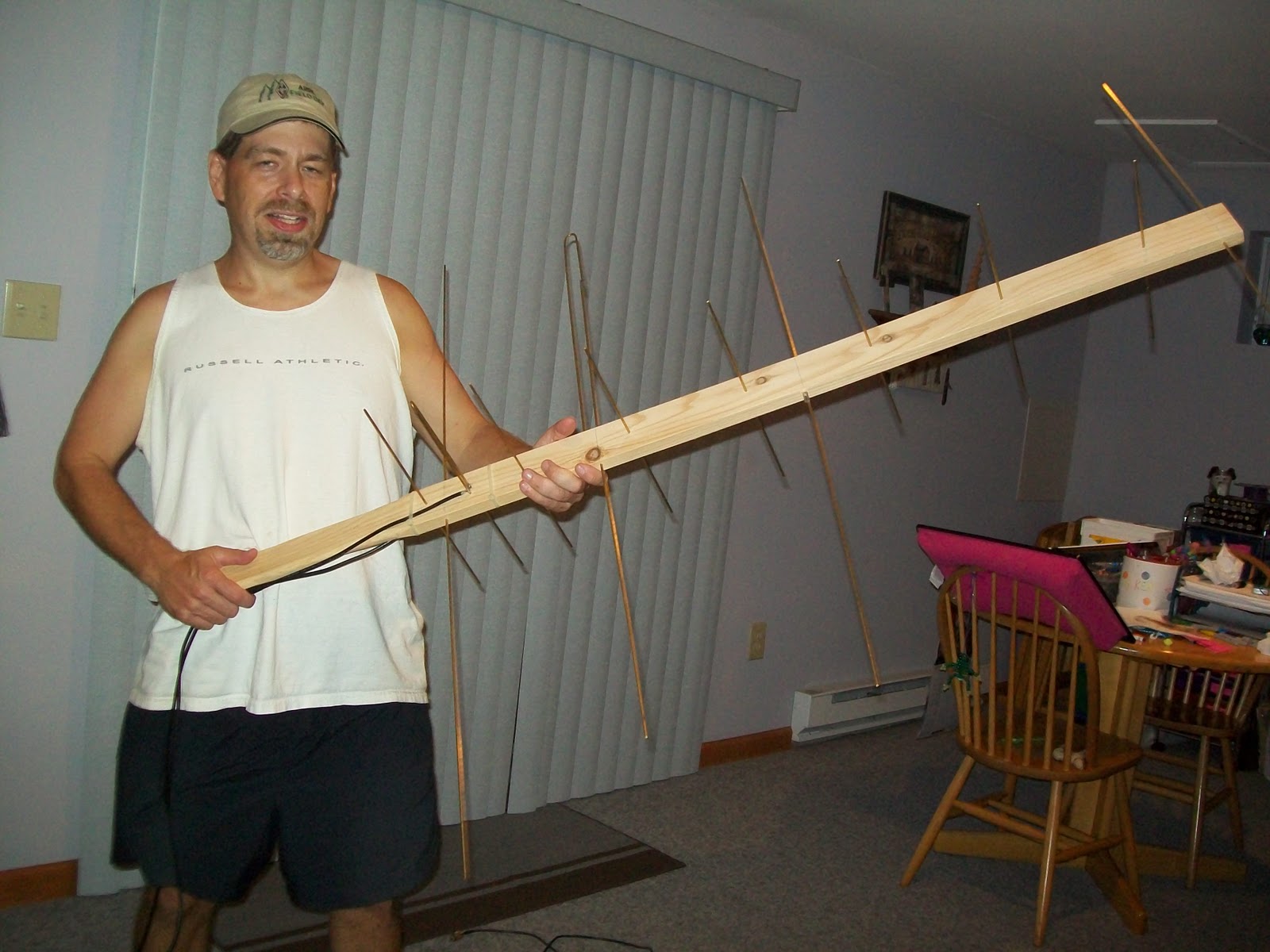
Inspired by Diana Eng, a few weeks ago I built a WA5VJB cheap dual-band yagi for 2m and 70cm. I thought I’d give satellite operation a try as nothing else is floating my boat right now in amateur radio.


On To Something New


Anthony Good, K3NG, is a regular contributor to AmateurRadio.com and writes from Pennsylvania, USA. Contact him at [email protected].
One worked, one confirmed
Yesterday I worked Kouichi, JI1FGX/DU9 operating from Mindanao Islands in the Philippines. I’d worked a DU back in 2002 but unfortunately have been unable to get a confirmation from him. His US manager hasn’t received logs from him in years, and as a result can’t confirm my contact. Kouichi was the first DU contact since then, and I was very happy to discover that he has an active manager in Japan, so my chances of getting a confirmation from him are excellent.
Along the same lines, today I received a QSL card back from the 3C9B DXpedition to Equatorial Guinea that I’d worked in June of this year. That confirms my 295th country in mixed mode and 218th confirmed on CW. (I see that I have about 35 countries on CW that I haven’t confirmed yet, I guess I’d better start getting some cards sent out.)
My numbers will change in about a week when the reorganization of the Netherlands Antilles results in a probable deletion of 2 entities and the addition of 4 or 5, but I’m very happy to be so close to 300.

David Kozinn, K2DBK, is a regular contributor to AmateurRadio.com and writes from New Jersey, USA. Contact him at [email protected].
 Ham Radio Deluxe |
 W5SWL Electronics |
 Ham Radio Prep |
 KB3IFH QSL Cards  Hip Ham Shirts  HamRadioAuctions HamRadioAuctions Reliance Antennas Reliance Antennas Enigma Shop Enigma Shop |  morseDX  Ni4L Antennas  R&L Electronics R&L Electronics antennas.us antennas.us QRV QRV |
- Matt W1MST, Managing Editor
