 |
 The Joy of Homebrew
 18 May 2011 | by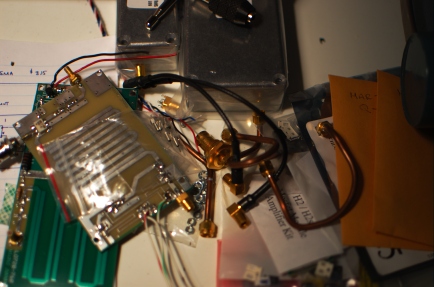
This is about building electronics, not making beer, at home; although, I am sure there are parallels. Three things brought me to writing this: 1. an eHam forum thread I responded to a few weeks ago; 2. the June 2011 issue of IEEE Microwave magazine (has articles by K2UYH, N2UO, and KK7B, perhaps others? thanks to W3KL via the PVRC reflector for bringing it to my attention since I let my IEEE/MTT membership lapse); and 3. a few minutes spent last night resuming a partially-completed Softrock kit gifted to me by a friend who decided to buy a FLEX-3000 instead.
Every once in a while, a thread appears on an amateur radio forum that goes a little bit like this, “Hi, I’m a new ham and I don’t have a lot of money to spend so I want to build an HF SSB station from scratch” or something similar. Somehow, somewhere, somebody has given the impression that it is less expensive to build your own amateur radio equipment than to buy it. That’s true in some circumstances, but certainly rarely for anything that is mature, mass-produced, and readily-available on the second-hand market. After all, there is nothing novel about a 100-watt superheterodyne HF SSB transceiver these days. The principal uncounted cost is the “engineering cost” associated with getting your first few projects working and keeping them working.
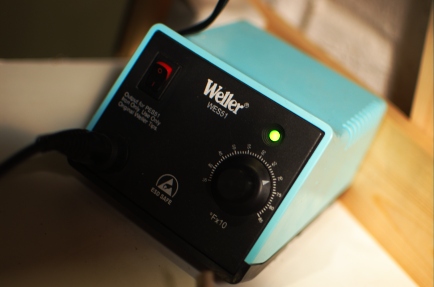
One of the first construction projects I undertook as a new ham was to build a Ramsey Electronics HR-20 (NE602-based) 20-meter receiver—$20 at a hamfest. It did actually work eventually—but this was a simple kit with maybe two dozen parts. Next, I built a ONER transmitter kit from now defunct 624 Kits. I think that was another $20. I never made any QSOs with that combination because I was always afraid of blowing out the receiver with the transmitter. The first thing that I built that I actually managed to make a QSO with was a Small Wonder Labs SW-40, which I still have. That set me back $55 and it did not work immediately. Suddenly, that’s over $100 by the time you include the money I spent on a soldering iron and solder. That’s one-third to half-way to a “real” used HF transceiver and I had two bands at 1 watt on CW only. Furthermore—these are all kits—they leverage economies of scale in purchasing parts from various vendors and they have instructions to help you along. And, I’d like to think that I was a relatively representative example of a recently-minted ham who had more ambition than money or skills…
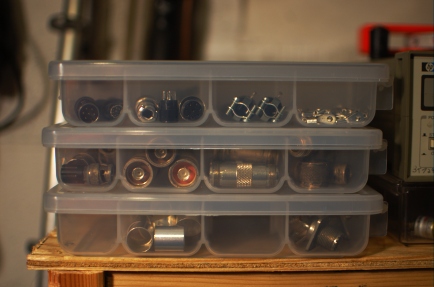
As I soldered down 1206-size (easy ones) SMT capacitors last night, I was thinking of times that I rushed through a homebrew or kit project just to get it on the air. In those instances the process was often, as I have belabored above, about saving money, not about the act of creating something. Last night was about creating, not saving, and that is the joy of homebrew.
Ethan Miller, K8GU, is a regular contributor to AmateurRadio.com and writes from Maryland, USA. Contact him at [email protected].
LHS Episode #061: I Am Cornholio
 One final notice before Hamvention is here. We’d sure like to visit with all of our listeners out in Dayton if you can make it. Hopefully we’ll be able to turn a bunch more ham radio enthusiasts onto the benefits of Linux while we’re there.
In this episode, your fearless hosts tackle some of the hard questions concerning Open Source, namely: 1) Can anyone in free software agree on a set of standards for documentation and development in order to help newer users join the community, and 2) If it is possible, would anyone want to do it? When we’re all done philosophizing, send us your thoughts. We want to know what YOU think.
Russ Woodman, K5TUX, co-hosts the Linux in the Ham Shack podcast which is available for download in both MP3 and OGG audio format. Contact him at [email protected].
PLT a threat to British intelligence gathering?
A report produced for the British intelligence gathering organization GCHQ claims that noise from power line networking devices is causing a detectable increase in interference at its monitoring stations and could adversely affect its operations. The report, which can be found on the website Ban PLT, was originally released by GCHQ’s Director of Engineering and Technology but has since been disowned by GCHQ which now claims it contained “inaccuracies.” The government organization also forced the online tech news journal The Register, which published an article containing details of the report, to remove the author’s identity from the article using measures designed, ironically, to suppress information that could be considered a threat to national security. So much for freedom of speech.
Ofcom meanwhile continues to deny that PLT devices cause a problem, stating that there have been “only” 272 complaints of interference (all from radio amateurs) and that of 233 cases referred to BT all but one have been resolved so there is nothing to worry about. Has pressure been brought from on high to force GCHQ to disown the report which is embarrassing to BT which has a couple of million of the Comtrend PLT devices installed nationwide? It is blatantly obvious that Ofcom couldn’t give a damn about the possible effects on a few hobbyists who don’t even pay a license for the spectrum they use. But a threat to the country’s ability to monitor the short waves to gather intelligence about potential security threats is something they would have had to take seriously.

Julian Moss, G4ILO, is a regular contributor to AmateurRadio.com and writes from Cumbria, England. Contact him at [email protected].
PLT a threat to British intelligence gathering?
A report produced for the British intelligence gathering organization GCHQ claims that noise from power line networking devices is causing a detectable increase in interference at its monitoring stations and could adversely affect its operations. The report, which can be found on the website Ban PLT, was originally released by GCHQ’s Director of Engineering and Technology but has since been disowned by GCHQ which now claims it contained “inaccuracies.” The government organization also forced the online tech news journal The Register, which published an article containing details of the report, to remove the author’s identity from the article using measures designed, ironically, to suppress information that could be considered a threat to national security. So much for freedom of speech.
Ofcom meanwhile continues to deny that PLT devices cause a problem, stating that there have been “only” 272 complaints of interference (all from radio amateurs) and that of 233 cases referred to BT all but one have been resolved so there is nothing to worry about. Has pressure been brought from on high to force GCHQ to disown the report which is embarrassing to BT which has a couple of million of the Comtrend PLT devices installed nationwide? It is blatantly obvious that Ofcom couldn’t give a damn about the possible effects on a few hobbyists who don’t even pay a license for the spectrum they use. But a threat to the country’s ability to monitor the short waves to gather intelligence about potential security threats is something they would have had to take seriously.
Julian Moss, G4ILO, is a regular contributor to AmateurRadio.com and writes from Cumbria, England. Contact him at [email protected].
Opening the case on an Ascom SE-550
I was talking to Rob, G4XUT yesterday about getting the case of an Ascom SE-550 open – in order to make some adjustments to the internal squelch pot.Rob very kindly put together a list of instructions on how to get the rig apart which I thought someone else might find of use. Thanks Rob!To get into the Ascom:-Assuming that the mobile bracket has already been removed.Disconnect the rear connector by loosening the retaining screw.Remove the Mic plug connector.Unplug the code plug which is above the mic connector.Remove the screw behind code plug.Detach the front panel with is hinged on the L/H side.Remove the 4 screws at the front and 4 screws at the rear.Carefully pull apart the two main boards from the main housing.Carefully re-assemble the two boards.Replace the front panel, code plug and the mic plug.Power up and adjust sq or whatever as required. Simples!!

Tim Kirby, G4VXE, is a regular contributor to AmateurRadio.com and writes from Oxfordshire, England. Contact him at [email protected].
Opening the case on an Ascom SE-550
I was talking to Rob, G4XUT yesterday about getting the case of an Ascom SE-550 open – in order to make some adjustments to the internal squelch pot.Rob very kindly put together a list of instructions on how to get the rig apart which I thought someone else might find of use. Thanks Rob!To get into the Ascom:-Assuming that the mobile bracket has already been removed.Disconnect the rear connector by loosening the retaining screw.Remove the Mic plug connector.Unplug the code plug which is above the mic connector.Remove the screw behind code plug.Detach the front panel with is hinged on the L/H side.Remove the 4 screws at the front and 4 screws at the rear.Carefully pull apart the two main boards from the main housing.Carefully re-assemble the two boards.Replace the front panel, code plug and the mic plug.Power up and adjust sq or whatever as required. Simples!!
Tim Kirby, G4VXE, is a regular contributor to AmateurRadio.com and writes from Oxfordshire, England. Contact him at [email protected].
LHS Episode #060: apt-get install make-pr0n-work
 Hello, faithful listeners and newcomers alike. A couple of big events are coming up. The first is the Dayton Hamvention, this weekend from May 20th through the 22nd. The other is the Southeast Linux Fest, from June 10th through the 12th. Linux in the Ham Shack will have a presence at both events and we hope to see everyone there. We will be having raffles for “quite good” prizes so you don’t want to miss that either.
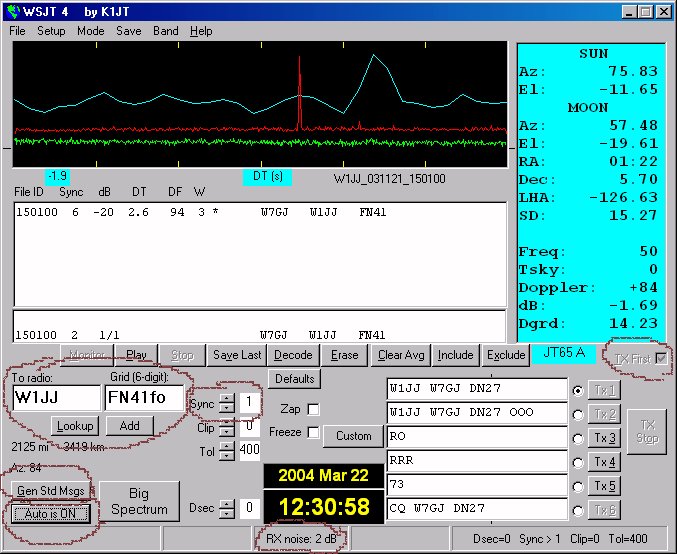
In this episode of our show, we catch up on almost all of our (very old) feedback and even manage to discuss a couple of items which may interest ham radio and Linux enthusiasts alike: JT65, a weak-signal digital mode, and codec2, a new audio codec designed for low bandwidth, telephone quality, error correction and to be free of patents or encumbrances of any kind. Enjoy.
Russ Woodman, K5TUX, co-hosts the Linux in the Ham Shack podcast which is available for download in both MP3 and OGG audio format. Contact him at [email protected].
 Ham Radio Deluxe |
 W5SWL Electronics |
 Ham Radio Prep |
 KB3IFH QSL Cards  Hip Ham Shirts  HamRadioAuctions HamRadioAuctions Reliance Antennas Reliance Antennas Enigma Shop Enigma Shop |  morseDX  Ni4L Antennas  R&L Electronics R&L Electronics antennas.us antennas.us QRV QRV |
- Matt W1MST, Managing Editor
