 |
 Accept credit cards and sell more at hamfests with free credit card reader
 4 May 2011 | by
A new electronic payment processing company called Square, named after the shape of their credit card reader that plugs into the audio jack of your smartphone, makes it possible for hams to inexpensively accept credit cards at hamfests. They charge a flat 2.75% of the transaction, but there is no per transaction fee, monthly fee, or equipment to buy or rent.
It’s brilliantly simple. Download and install the free app for iPhone, iPad or Android. Attach the reader to the audio jack of your phone. Enter the amount of the transaction on the screen, swipe the card, and have them sign on the touchscreen with their finger. Done. That’s it.
I think it’s a no-brainer. Apparently, so does Visa who made a “strategic investment” in the company just last week.
Here is a video demonstration:
Why is this great news for small-time sellers at ham radio swapmeets? Until now, it’s been prohibitively expensive and somewhat complicated for occasional sellers to setup for credit card processing. Anyone who has tried to price it out knows the drill: statement fees, gateway fees, transaction fees, and on and on. You simply had to do a certain amount of business each and every month to make even having the capability of accepting credit cards worthwhile. With Square, there is no transaction fee or monthly charge of any kind.
Without fail, it seems that I always run out of cash just about the time I spot a great deal on a piece of gear. The seller could accept a personal check, but if we’re talking about a pricey item then that’s a pretty risky proposition. They could use one of those “knuckle buster” card imprinters, but with those there is no real-time authorization and by the time you realize there is a problem a crook could be long gone. With Square, lack of available funds isn’t an issue. You’ll know if there is a problem right away.
Some people might balk at paying $13.75 in fees to sell a $500 radio. Compared to cash, it does cost more. But, think of it this way: accepting credit cards will give you access to a much wider selection of buyers. You’ll likely get a better price for your radio gear making the fee irrelevant.
Sign up for an account on their website and they’ll FedEx you a free credit card reader.
Editor’s note:
Some reader comments have expressed concern about chargebacks. Here is the relevant info from their website:
How Square protects you from disputes
One part of building any payment service is dealing with cardholder disputes. As with everything else at Square, we strive to make dealing with these as simple as possible and we’ll certainly never charge you for it. Read below for a guide on how this works.
- If one of your customers sees a charge they don’t recognize on their statement, they can call the toll-free number in the payment details that goes straight to us. We have all the information needed to look up the payment and help them get a better idea of what was sold. If we can’t find enough information about the purchase in your account, we’ll reach out to you and ask for more details so we can let your customer know.
- Sometimes, the customer may go straight to their bank before calling the number and dispute the charge. If that happens, we’ll get a letter from the customer’s bank telling us that this payment is in dispute. We will then contact you to gather more information so we can provide the issuing bank as many details as possible to get it resolved successfully.
Some of the information we can provide in order to resolve disputes are:
- Customer’s signature
- Description on what was sold
- Precise location data
- Whether the reader was used for the payment or not
Because descriptions help describe purchases to customers, we always recommend our users add a description for the item or service sold as well as issue receipts. Also, make sure that your Account page accurately represents your business name. A customer may not remember the charge if it reads “Joe Smith” instead of “Joe’s Coffee Shop.”
(via KB2MOB @ AmiZed Studios)
Matt Thomas, W1MST, is the managing editor of AmateurRadio.com. Contact him at [email protected].
Handiham World for 04 May 2011
Welcome to Handiham World!
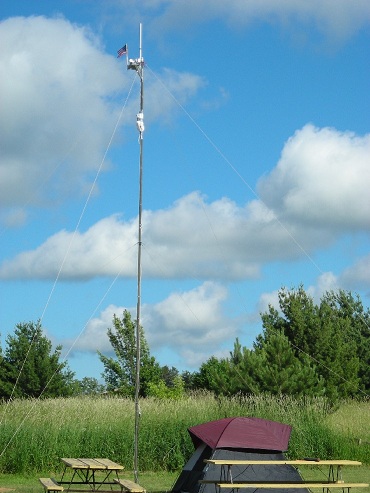
It’s May, and for many amateur radio clubs, the end of the regular meeting schedule. The summertime months are filled with other activities, and ham radio meetings are not really right up there on our list of priorities. When the weather finally gets nice, we want to head outdoors and forget about meetings.
That said, it does not mean that amateur radio disappears in the summertime. Consider the following ham radio highlights:
 | May and June are the traditional months when the six meter band perks up and band openings make it a lot easier to collect 6 meter QSOs toward “WAS”, or “Worked All States”. Listen on 50.125 MHz USB. Wikipedia tells us more: The 6-meter band is a portion of the VHF radio spectrum allocated to amateur radio use. Although located in the lower portion of the VHF band, it nonetheless occasionally displays propagation mechanisms characteristic of the HF bands. This normally occurs close to sunspot maximum, when solar activity increases ionization levels in the upper atmosphere. During the last sunspot peak of 2005, worldwide 6-meter propagation occurred making 6-meter communications as good as or in some instances and locations, better than HF frequencies. The prevalence of HF characteristics on this VHF band has inspired amateur operators to dub it the “magic band”. In the northern hemisphere, activity peaks from May through early August, when regular sporadic E propagation enables long-distance contacts spanning up to 2,500 kilometers (1,600 mi) for single-hop propagation. Multiple-hop sporadic E propagation allows intercontinental communications at distances of up to 10,000 kilometers (6,200 mi). In the southern hemisphere, sporadic E propagation is most common from November through early February. Read the entire article on Wikipedia; just search for “6-meter band”. |
| Dayton Hamvention® is in May, and will attract tens of thousands. Get details on Hamvention.org. This year’s show is May 20-22. The summer may bring other shows and fests, or perhaps ham radio flea markets near you! |
| ARRL Field Day is the last full weekend in June, which turns out to be the 25th and 26th this year. There will be many clubs, small groups, and individuals participating. Find a club or group with Field Day goals that fit your own idea of having fun, and go for it! You can always run your own single op station if you have an independent streak. |
| Ducting and Sporadic E propagation can come and go all summer long, and are usually surprising when they pop up unexpectedly. You may hear a two meter repeater from hundreds of miles away, or even farther. Communications beyond the line of sight are possible. |
| Public service events like parades and races are common in the summer months. They may provide opportunities for you and your radio club to provide volunteer communications. |
| Summer ham radio events like hidden transmitter hunts can combine being out of doors with ham radio direction finding fun. |
| Radio Camp! It’s August 8 through 23. Even if you can’t attend camp yourself, you can work us on the air and get a QSL card. |
| Vacation time? Take ham radio along. If you are taking a road trip, learn to use the tone search feature in your radio so that you will be able to find the repeater subaudible tones. The ARRL Repeater Directory is a must, too. |
| Skywarn! ARES®! The hot, humid summer days bring those dew points into the danger range and severe weather is a real possibility. Generally the severe weather season begins in the southern United States in the Spring and migrates northward, reaching the northern states in late Spring and early summer. Severe weather or other emergency situations can happen anytime, though. Amateur radio operators can make the difference in providing vital communications services. |
| Antenna projects: The best time is in the summer, not during a sleet storm in November or a blizzard in January. Get those antenna projects out of the way when the gettin’ is easy! |
| Back indoors… Yes, there will be some days when it is hot and humid outdoors, or raining buckets. Might as well get the ham shack cleaned up or work on a kit or other building project. |
| Those lazy days on the deck or patio? Spend at least part of them studying for your license upgrade. You folks studying for General will have to test using the old pool before July 1. |

With all the potential ham radio stuff going on in the summertime, who needs radio club meetings? Take some notes on the things you do all summer and you can give a report at your September radio club meeting: “What I did on my summer vacation.”
For Handiham World, I’m…
Pat Tice
[email protected]
Troubleshooting 101: Technology and obsolete media – some further thoughts.
Last week we posed this dilemma:
Help! My old computer died – and it really wasn’t that much of a surprise, since it was nearly 10 years old and didn’t really owe me anything. I love my new, faster replacement machine, but recently I decided that I needed to set up the memories in my trusty HT, and two things were pretty much deal-killers:
- My rig software was installed on the old machine, which is now dead, and the original installation disk is a 3.5″ floppy. My new machine doesn’t have a floppy drive!
- The interface cable that came with the rig uses a DB-9 serial interface, but my new machine doesn’t have one of those, either.
What can I do?
Several of you wrote to remind us that USB sticks are really coming down in price and going up in storage capacity. They make good substitutes for old media like floppy discs and can easily substitute for compact discs or DVDs when you are using netbook computers that don’t have DVD/CD drives. In addition, you can buy USB extension cables and “hubs” that add multiple USB jacks in case you have more USB devices than jacks to plug them into. USB stands for “universal serial bus”, and this type of serial port has overtaken the less-versatile DB-9 serial jack on many new machines. Universal means that there are technical standards applied across a broad range of uses for USB cables. You can get USB to DB-9 converters.
Our readers are correct – those little USB storage sticks are a substitute for traditional disc media. But there are some potential “gotchas”:
| Easy to lose because of small size, which can result in data loss with possible security and privacy implications. |
| Hard to label because of small size. |
| Because they stick out of the side of a laptop computer, they are easily bumped and that can result in the computer’s USB jack being damaged. |
| Prone to damage (such as going through the washing machine because of being forgotten in a pocket.) |
| The computer will attempt to reinstall drivers for the USB storage device if you plug it into different USB ports. This isn’t a big deal, but it can be annoying. |

Pat Tice, WA0TDA, is the manager of HANDI-HAM and a regular contributor to AmateurRadio.com. Contact him at [email protected].
Handiham World for 04 May 2011
Welcome to Handiham World!
It’s May, and for many amateur radio clubs, the end of the regular meeting schedule. The summertime months are filled with other activities, and ham radio meetings are not really right up there on our list of priorities. When the weather finally gets nice, we want to head outdoors and forget about meetings.
That said, it does not mean that amateur radio disappears in the summertime. Consider the following ham radio highlights:
| May and June are the traditional months when the six meter band perks up and band openings make it a lot easier to collect 6 meter QSOs toward “WAS”, or “Worked All States”. Listen on 50.125 MHz USB. Wikipedia tells us more: The 6-meter band is a portion of the VHF radio spectrum allocated to amateur radio use. Although located in the lower portion of the VHF band, it nonetheless occasionally displays propagation mechanisms characteristic of the HF bands. This normally occurs close to sunspot maximum, when solar activity increases ionization levels in the upper atmosphere. During the last sunspot peak of 2005, worldwide 6-meter propagation occurred making 6-meter communications as good as or in some instances and locations, better than HF frequencies. The prevalence of HF characteristics on this VHF band has inspired amateur operators to dub it the “magic band”. In the northern hemisphere, activity peaks from May through early August, when regular sporadic E propagation enables long-distance contacts spanning up to 2,500 kilometers (1,600 mi) for single-hop propagation. Multiple-hop sporadic E propagation allows intercontinental communications at distances of up to 10,000 kilometers (6,200 mi). In the southern hemisphere, sporadic E propagation is most common from November through early February. Read the entire article on Wikipedia; just search for “6-meter band”. |
| Dayton Hamvention® is in May, and will attract tens of thousands. Get details on Hamvention.org. This year’s show is May 20-22. The summer may bring other shows and fests, or perhaps ham radio flea markets near you! |
| ARRL Field Day is the last full weekend in June, which turns out to be the 25th and 26th this year. There will be many clubs, small groups, and individuals participating. Find a club or group with Field Day goals that fit your own idea of having fun, and go for it! You can always run your own single op station if you have an independent streak. |
| Ducting and Sporadic E propagation can come and go all summer long, and are usually surprising when they pop up unexpectedly. You may hear a two meter repeater from hundreds of miles away, or even farther. Communications beyond the line of sight are possible. |
| Public service events like parades and races are common in the summer months. They may provide opportunities for you and your radio club to provide volunteer communications. |
| Summer ham radio events like hidden transmitter hunts can combine being out of doors with ham radio direction finding fun. |
| Radio Camp! It’s August 8 through 23. Even if you can’t attend camp yourself, you can work us on the air and get a QSL card. |
| Vacation time? Take ham radio along. If you are taking a road trip, learn to use the tone search feature in your radio so that you will be able to find the repeater subaudible tones. The ARRL Repeater Directory is a must, too. |
| Skywarn! ARES®! The hot, humid summer days bring those dew points into the danger range and severe weather is a real possibility. Generally the severe weather season begins in the southern United States in the Spring and migrates northward, reaching the northern states in late Spring and early summer. Severe weather or other emergency situations can happen anytime, though. Amateur radio operators can make the difference in providing vital communications services. |
| Antenna projects: The best time is in the summer, not during a sleet storm in November or a blizzard in January. Get those antenna projects out of the way when the gettin’ is easy! |
| Back indoors… Yes, there will be some days when it is hot and humid outdoors, or raining buckets. Might as well get the ham shack cleaned up or work on a kit or other building project. |
| Those lazy days on the deck or patio? Spend at least part of them studying for your license upgrade. You folks studying for General will have to test using the old pool before July 1. |
With all the potential ham radio stuff going on in the summertime, who needs radio club meetings? Take some notes on the things you do all summer and you can give a report at your September radio club meeting: “What I did on my summer vacation.”
For Handiham World, I’m…
Pat Tice[email protected]
Troubleshooting 101: Technology and obsolete media – some further thoughts.
Last week we posed this dilemma:
Help! My old computer died – and it really wasn’t that much of a surprise, since it was nearly 10 years old and didn’t really owe me anything. I love my new, faster replacement machine, but recently I decided that I needed to set up the memories in my trusty HT, and two things were pretty much deal-killers:
- My rig software was installed on the old machine, which is now dead, and the original installation disk is a 3.5″ floppy. My new machine doesn’t have a floppy drive!
- The interface cable that came with the rig uses a DB-9 serial interface, but my new machine doesn’t have one of those, either.
What can I do?
Several of you wrote to remind us that USB sticks are really coming down in price and going up in storage capacity. They make good substitutes for old media like floppy discs and can easily substitute for compact discs or DVDs when you are using netbook computers that don’t have DVD/CD drives. In addition, you can buy USB extension cables and “hubs” that add multiple USB jacks in case you have more USB devices than jacks to plug them into. USB stands for “universal serial bus”, and this type of serial port has overtaken the less-versatile DB-9 serial jack on many new machines. Universal means that there are technical standards applied across a broad range of uses for USB cables. You can get USB to DB-9 converters.
Our readers are correct – those little USB storage sticks are a substitute for traditional disc media. But there are some potential “gotchas”:
| Easy to lose because of small size, which can result in data loss with possible security and privacy implications. |
| Hard to label because of small size. |
| Because they stick out of the side of a laptop computer, they are easily bumped and that can result in the computer’s USB jack being damaged. |
| Prone to damage (such as going through the washing machine because of being forgotten in a pocket.) |
| The computer will attempt to reinstall drivers for the USB storage device if you plug it into different USB ports. This isn’t a big deal, but it can be annoying. |
Pat Tice, WA0TDA, is the manager of HANDI-HAM and a regular contributor to AmateurRadio.com. Contact him at [email protected].
Dodd [LDW-174] all to myself
The weather forecast suggests that the fine spell we have enjoyed for the last few days – which has caused the G4ILO shorts to be brought out of the wardrobe unusually early – is going to end soon. So I thought I would try an activation this morning of the small summit of Dodd, LDW-174 for Wainwrights On The Air. Being a tightwad, I didn’t want to pay the Forestry Commission’s exorbitant charges to park at the visitor centre so I parked off the road at a spot about a mile north of the official car park. I’ll happily walk an extra two miles to save £6.50!
I was afraid this well-known parking spot would be full but in fact there were only two other cars there, a silver Nissan and an old BMW that was very dusty and looked suspiciously as if it might have been there a while. I set off along the path and had hardly walked a few paces when I saw some car keys in the undergrowth beside the path. “I bet they are BMW keys” I thought to myself as I picked them up and sure enough they were.
Now I had a dilemma. Perhaps someone had dropped their keys and would be coming back to look for them, so I should leave them where they were. It was just a gut instinct that made me suspect the BMW had been stolen and some thief had left it in this quiet spot and thrown away the keys before switching to another car. If it wasn’t a stolen car, surely it soon would be if I left the keys so close to the vehicle itself. So I decided to walk to the visitor centre and hand the keys in, explain what had happened and suggest they called the police to investigate.
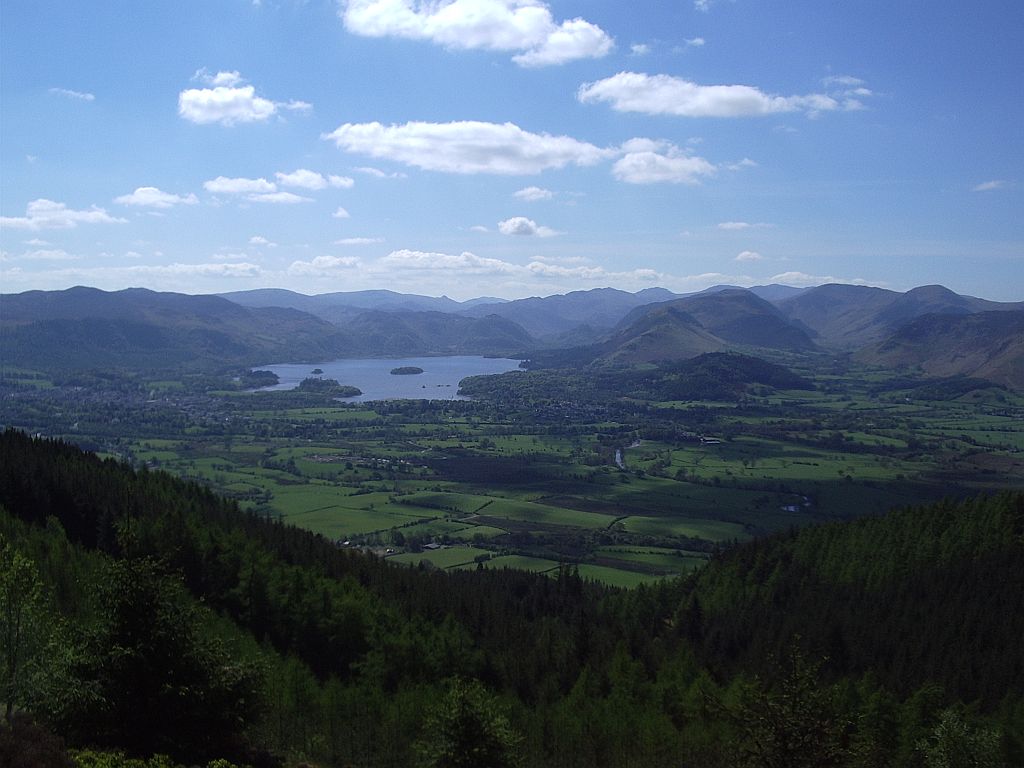
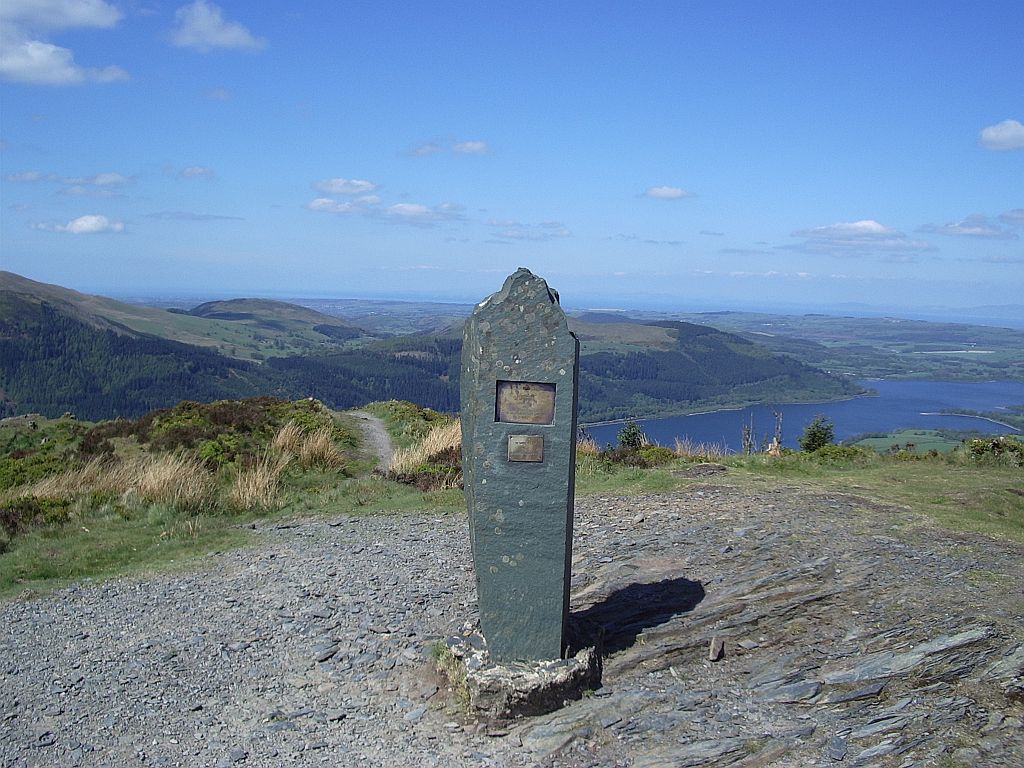
This I did, before beginning the ascent of Dodd up the forestry road. It is a rather dull plod until you reach the col between Dodd and the Ullock Pike ridge and the path curves round Dodd’s conical summit until this view over Derwentwater opens up. Then it is another short upward plod until you reach the summit (top picture.)
As I reached the higher altitudes it was clear that the stiff cold wind that has been a feature of the entire weekend and made conditions a lot less pleasant than the photos suggest was still with us. The WOTA Pole was still broken (and probably won’t be repaired) so in its place I was using my new rucksack mounted telescopic 5/8 vertical. This is the old telescopic 5/8 BNC antenna with a new more robust whip fitted to the spring/loading coil. Because the weight of the whip makes the spring bend over it is encased in a piece of plastic electrical conduit which is Araldited to the base of the telescopic whip. This fits into the base section of conduit using one of the famous fragile jointing pieces. A female BNC plugs into the BNC base of the antenna, with the coax and a 19in pigtail counterpoise. This gave a perfect 1:1 SWR at 145MHz when tested at home using my antenna analyzer. It fits nicely in the rucksack with the telescopic whip sticking up above my head, the ultimate fashion accessory for the keen WOTAphile.
The radio was the Kenwood TH-D72 stuck on my belt. The headset I first tried on Carrock Fell proved itself once again, both in helping me to hear the other stations in the howling gale and in keeping the wind noise out of my audio. Regular readers can probably detect a trend here. I think the Kenwood is finally coming into its own as my APRS radio of choice.
I called CQ WOTA a couple of times, with no replies! Was this going to be a failed activation? Eventually to my great relief Mark MM1MPB came back. He gave me only a 5 by 5, which I improved to a 5 by 9 by walking a short way to the other side of the summit. I was concerned that perhaps something was wrong with the antenna so I swapped to the Nagoya NA-701 short dual band flexy-whip and Mark gave me only 5 by 3 so the 5/8 seemed to be doing its stuff. Dodd is quite a hemmed-in summit and although I could see across the Solway to Scotland it’s possible that the path to Annan was blocked by the Ullock Pike ridge and the northern flanks of Skiddaw.
A few more calls and I was pleased to be answered by Colin G4UXH in Milnthorpe who had noticed the website spot placed by Mark, and then Steve M0IGG from Walney Island. Both stations were beyond the southern boundary of the Lake District and so at a fair distance. Clearly I was getting out, just not many people were listening. I also worked M6BDV/P on Little Mell Fell for a summit to summit contact, who confused me at first by using the call MW6… his home area being Wales. But that was it. None of the Workington mob or the Penrith crew. I guess everyone was WOTAed out after all the activations over the weekend.

I didn’t even see another person on the summit, which is quite unusual. Not that I minded that at all, in fact I always prefer to have a summit to myself than have hordes of people wondering what I am doing.
The views as always from Dodd on a clear day were stunning. But it was damn cold no thanks to that icy wind, so I was pleased to pack up and head back down to the car again. The BMW had gone by the time I returned. How it came to be there with its keys tossed in the undergrowth will probably forever remain a mystery.

Julian Moss, G4ILO, is a regular contributor to AmateurRadio.com and writes from Cumbria, England. Contact him at [email protected].
Dodd [LDW-174] all to myself
The weather forecast suggests that the fine spell we have enjoyed for the last few days – which has caused the G4ILO shorts to be brought out of the wardrobe unusually early – is going to end soon. So I thought I would try an activation this morning of the small summit of Dodd, LDW-174 for Wainwrights On The Air. Being a tightwad, I didn’t want to pay the Forestry Commission’s exorbitant charges to park at the visitor centre so I parked off the road at a spot about a mile north of the official car park. I’ll happily walk an extra two miles to save £6.50!
I was afraid this well-known parking spot would be full but in fact there were only two other cars there, a silver Nissan and an old BMW that was very dusty and looked suspiciously as if it might have been there a while. I set off along the path and had hardly walked a few paces when I saw some car keys in the undergrowth beside the path. “I bet they are BMW keys” I thought to myself as I picked them up and sure enough they were.
Now I had a dilemma. Perhaps someone had dropped their keys and would be coming back to look for them, so I should leave them where they were. It was just a gut instinct that made me suspect the BMW had been stolen and some thief had left it in this quiet spot and thrown away the keys before switching to another car. If it wasn’t a stolen car, surely it soon would be if I left the keys so close to the vehicle itself. So I decided to walk to the visitor centre and hand the keys in, explain what had happened and suggest they called the police to investigate.
This I did, before beginning the ascent of Dodd up the forestry road. It is a rather dull plod until you reach the col between Dodd and the Ullock Pike ridge and the path curves round Dodd’s conical summit until this view over Derwentwater opens up. Then it is another short upward plod until you reach the summit (top picture.)
As I reached the higher altitudes it was clear that the stiff cold wind that has been a feature of the entire weekend and made conditions a lot less pleasant than the photos suggest was still with us. The WOTA Pole was still broken (and probably won’t be repaired) so in its place I was using my new rucksack mounted telescopic 5/8 vertical. This is the old telescopic 5/8 BNC antenna with a new more robust whip fitted to the spring/loading coil. Because the weight of the whip makes the spring bend over it is encased in a piece of plastic electrical conduit which is Araldited to the base of the telescopic whip. This fits into the base section of conduit using one of the famous fragile jointing pieces. A female BNC plugs into the BNC base of the antenna, with the coax and a 19in pigtail counterpoise. This gave a perfect 1:1 SWR at 145MHz when tested at home using my antenna analyzer. It fits nicely in the rucksack with the telescopic whip sticking up above my head, the ultimate fashion accessory for the keen WOTAphile.
The radio was the Kenwood TH-D72 stuck on my belt. The headset I first tried on Carrock Fell proved itself once again, both in helping me to hear the other stations in the howling gale and in keeping the wind noise out of my audio. Regular readers can probably detect a trend here. I think the Kenwood is finally coming into its own as my APRS radio of choice.
I called CQ WOTA a couple of times, with no replies! Was this going to be a failed activation? Eventually to my great relief Mark MM1MPB came back. He gave me only a 5 by 5, which I improved to a 5 by 9 by walking a short way to the other side of the summit. I was concerned that perhaps something was wrong with the antenna so I swapped to the Nagoya NA-701 short dual band flexy-whip and Mark gave me only 5 by 3 so the 5/8 seemed to be doing its stuff. Dodd is quite a hemmed-in summit and although I could see across the Solway to Scotland it’s possible that the path to Annan was blocked by the Ullock Pike ridge and the northern flanks of Skiddaw.
A few more calls and I was pleased to be answered by Colin G4UXH in Milnthorpe who had noticed the website spot placed by Mark, and then Steve M0IGG from Walney Island. Both stations were beyond the southern boundary of the Lake District and so at a fair distance. Clearly I was getting out, just not many people were listening. I also worked M6BDV/P on Little Mell Fell for a summit to summit contact, who confused me at first by using the call MW6… his home area being Wales. But that was it. None of the Workington mob or the Penrith crew. I guess everyone was WOTAed out after all the activations over the weekend.
I didn’t even see another person on the summit, which is quite unusual. Not that I minded that at all, in fact I always prefer to have a summit to myself than have hordes of people wondering what I am doing.
The views as always from Dodd on a clear day were stunning. But it was damn cold no thanks to that icy wind, so I was pleased to pack up and head back down to the car again. The BMW had gone by the time I returned. How it came to be there with its keys tossed in the undergrowth will probably forever remain a mystery.
Julian Moss, G4ILO, is a regular contributor to AmateurRadio.com and writes from Cumbria, England. Contact him at [email protected].
QRP in the Park – Lakeland, Florida
QRP In the Park–Lakeland is your chance to show the rest of us how you do it!

Lots of ways to do QRP!
For the past several months we have considered traveling to nearby communities in Central Florida to help QRP operators connect with one another. We’ve gotten a good response from hams in Lakeland and Port Orange areas, and we hear of active groups in the Melbourne and Daytona Beach areas. Lakeland has an advocate, Ren KG4BAS who contacted us about getting together and a possible Central Florida QRP Group in Lakeland. WAHOO!
We’re excited to see the interest and look forward to our first meet up Saturday 14 May, 2011 at Lake Parker Park in Lakeland at 0900. Here’s directions from Ren:
I-4 West to exit 32.
Make left onto 98S and go .4 miles to Griffin Rd.
Make left and go .7miles to the end of Griffin Rd.
Make right onto Lakeland Hills Blvd and go .3 miles to Granada.
Make left onto Granada and go .2 miles to Gate 2 entrance of Lake Parker on left.
Hope you can join us. Bring something to drink and snack on, your QRP gear, operate, show n tell, get ideas for your portable ops and enjoy the outdoors.
Questions? Contact Ren or Kelly K4UPG. See ya in the park!
72,
Kelly K4UPG, Jim K4AHO, Ren KG4BAS and the Central FL QRP Group!
Kelly McClelland, K4UPG, is a regular contributor to AmateurRadio.com and writes from Florida, USA. Contact him at [email protected].
North American 70MHz beacon WE9XUP active for Summer 2011
I was very pleased to receive the following news this morning, via Dave, WW2R from Brian, WA1ZMS. The callsign has changed this year – but with the same configuration this beacon was heard in Europe last summer – so it is well worth listening for!”As of 12:30z on 2 May, a 4-Meter Band Radio Science E-skip Trans-Atlantic (TA) propagation beacon is QRV from the East Coast of the US. QRG is 70.005 MHz, QTH is FM07fm, CW emissions.ERP is 3kW aimed at 60 degrees true towards Europe. This year’s parameters are identical to the previous 2010 operations but with a new call sign, WE9XUP, for 2011.The beacon is scheduled to run 24 hours a day until 1 Sept, 2011 but must QRT sooner if there are technical or *any* QRM issues. This is a Non-Amateur beacon (just like 2010 operations) and 2-way QSOs are not permitted. Any and all QSL/SWL reports are welcome via email to:WA1ZMS ( at ) ARRL ( dot ) NET.This beacon has been licensed solely with the gracious co-operation of theSociety of Broadcast Engineers (representing the TV industry, which holds the Primary 4-Meter Band spectrum allocation) here in the US — and the FCC’s Office of Engineering Technology.Although there is no possibility of an Amateur Allocation on the 4-Meter Band in the US in the foreseeable future (because the TV Broadcast Service is the sole allocated radio service), as the transmitter licensee I am ever grateful that this beacon could be QRV again in 2011 for propagation research — exploring Trans- Atlantic E-Skip propagation, with the dream of a TA QSO taking place someday on the 2-meter band!Here’s hoping for many more E-skip TA reports on the 4-Meter Band this year!73,-Brian, WA1ZMS”

Tim Kirby, G4VXE, is a regular contributor to AmateurRadio.com and writes from Oxfordshire, England. Contact him at [email protected].
 Ham Radio Deluxe |
 W5SWL Electronics |
 Ham Radio Prep |
 KB3IFH QSL Cards  Hip Ham Shirts  HamRadioAuctions HamRadioAuctions Reliance Antennas Reliance Antennas Enigma Shop Enigma Shop |  morseDX  Ni4L Antennas  R&L Electronics R&L Electronics antennas.us antennas.us QRV QRV |
- Matt W1MST, Managing Editor
