 |
 More on JT65A and why there there’s more to Ham Radio than Morse Code
 25 August 2011 | by
 Despite the fact that I haven’t managed to make JT65-HF work on my laptop yet, the more I read about the JT65 modes and how people are working great DX with them, the more I’m impressed.
When PSK31 came out, it slipped into the ‘almost mainstream’ as a mode for people to work DX when they didn’t have a big station for CW/SSB (wonder if we’ll get to call them legacy modes one of these days…). PSK31 has built a great following over 10 or 12 years. I see JT65A for HF following in these footsteps.
Oh yes! Talking of legacy modes… someone who I greatly admire for a number of reasons recently posted on his Facebook status,’without CW it’s just CB’.
Maybe it was a bit tongue-in-cheek – but I did laugh! What a 1980s view of the world! Sure Morse code is fun and it’ll get through in many challenging conditions. I enjoy it myself and try to use it as well as I can. It’s hardly the centre of the hobby or even advancement of the hobby, is it? To even suggest that without morse code that ham radio is just a ‘appliance service’ is pretty demeaning to people who have broader interests! And I think it’s pretty demeaning to people who enjoy CB too 😉
Anyway – have a look at these great articles from W6DTW and NW7US about JT65 – how it works and how you can use it in operation.
See the articles from David and Tomas here

Tim Kirby, G4VXE, is a regular contributor to AmateurRadio.com and writes from Oxfordshire, England. Contact him at [email protected].
Ham Nation 14

The gang shows Leo how to build a dipole, George builds a power supply, viewer questions, and more.
Guest: Bill Morine, N2COP
Download or subscribe to this show at http://twit.tv/hn.
We invite you to read, add to, and amend our show notes at wiki.twit.tv.
Thanks to Joe Walsh who wrote and plays the Ham Nation theme.
Thanks to Cachefly for the bandwidth for this show.
http://dts.podtrac.com/redirect.mp4/twit.cachefly.net/video/hn/hn0014/hn0014_h264b_864x480_500.mp4
http://dts.podtrac.com/redirect.mp4/twit.cachefly.net/video/hn/hn0014/hn0014_h264b_640x368_256.mp4
http://www.podtrac.com/pts/redirect.mp3/twit.cachefly.net/hn0014.mp3
Dr. Bob Heil, K9EID, is the founder of Heil Sound and host of TWiT.tv's Ham Nation which streams live each Tuesday at 6:00pm PT (9:00pm ET) at http://live.twit.tv. Contact him at [email protected].
Extra Study Update

I thought it was about time to provide a brief update into my study preparation for my extra class upgrade. First, I did just want to say a very special and heartfelt, “Thank You” to all who have contacted me either via email, commented on the blog post or via Facebook, Twitter and/or Google+. Your words of encouragement have helped to push me and most importantly have helped me to believe in myself.
I certainly don’t mean to sugarcoat the difficulty (or even lack of difficulty) there is in achieving the extra class ticket. Some have found it extremely difficult and others extremely easy. I would safely and squarely place myself in the middle of that spectrum. This, like many other things in life, is made much easier when you look at it through positive lenses. It is the many comments I’ve received which have taught me that this is just like anything else in life. Look at it negatively and it will be difficult to impossible, but look at it positively and it can be achieved.
As I mentioned in this blog post from early August, I’m participating in an online (via Echolink) study program hosted by SouthCARS and we are 50% of the way through the program. We meet twice weekly on Sunday and Tuesday evenings again via Echolink. Volunteer SouthCARS members help moderate the sessions and help provide both encouragement and inspiration as they help educate us in the material.
The program works like this. Before each session we (the students) are tasked with reading about 60-70 of the questions which make up the question pool. During each session, the instructors select about 15-20 of the questions to cover. They read the question and the correct answer. But then spend several minutes providing detailed information regarding the subject of the question. Many times this extra information comes from firsthand experiences and after a few minutes, it really becomes clear as to what the particular content of the question is about.
Because many of the questions in the extra class question pool relate to each other, once you have a good grasp of one question, the knowledge and the “ah ha” moments just click right into place. The SouthCARS Elmers are always good about answering questions from the questions not covered.
In addition to the homework and the online sessions, I’m also actively taking the practice tests for the information we’ve covered in the sessions. This is helping to keep my mind sharp around those areas covered several weeks back. I’m spending approx. 1-2 hours per day in reading the ARRL extra class manual, reading the question pool and doing the study questions for the info covered. I’m going to owe my wife a nice dinner and perhaps tickets to the theater for her being so supportive.
So when do I plan to take the exam? This is still a very good question. One thing I can say today, which I couldn’t or certainly didn’t want to say back in early August, is I’m certainly better prepared on the information we have covered so far. Having said that, if I can maintain my pace and continue as planned, I believe I could be looking at being ready to take the exam around the early October timeframe. Yes…October 2011. 
Look for another update from me regarding my study/preparation process around the 75% mark. But for now, I need to get back to my studies and keep those brain cells “extra” energized.
Until then….
73 de KD0BIK
Jerry Taylor, KD0BIK, is a regular contributor to AmateurRadio.com and writes from Colorado, USA. He is the host of the Practical Amateur Radio Podcast. Contact him at [email protected].
Shakin’ – Not The Eddie Money Song – Earthquake Hits Albany, NY [VIDEO]
While I was at my “regular job” yesterday, I along with countless others on the east coast, felt a 5.9 magnitude earthquake. I was leaning against a table helping someone with setting up a new computer and felt the table start to move. The first thing that ran through my mind was someone was shaking the table. It was almost surreal.

Courtesy Google Maps
No one else really realized what was going on or even felt it. And I didn’t even think it was an earthquake till I saw on twitter what it really was. But because of that, I have decided to post a few links to information to have in case a bigger quake should hit. And even a little video from a couple of my co-workers.
First up, I found an article from the San Fransisco Gate on making a preparedness kit. It’s usually a good idea to have these around on a regular basis anyways for not just an earthquake, but any other kind of disaster that could happen. Food, water, a First Aid kit and a radio with some extra batteries are a good idea to have, along with clothing and important documents to take with you. You could also buy a premade kit, but those seem to be way more expensive compared to what you could do with just what you have at home.
But as Ham Radio operators, some of us are prepared for even more, having generators to power the house, as well as battery backups for the radios and computers. These kind of things are on the “To Do” list for when I do get a house with the YL. For now, I’m ready with the basic kit.
This little “rumbler” was just a reminder that even here in the Northeast, that we can feel the effects of an earthquake too. While It was thankfully a “small” one by comparison to many others that have caused countless deaths and millions or even billions of dollars of damage, it’s still a kind of sobering thought that these can happen. But, there is a side of humor too it as well, as shown in this video from my co-worker Brian Sinkoff, who is host of a local sports talk show and program director of the ESPN radio affiliate here in town. Even my program director Rob Dawes gets in on the act. But note at the :20 second mark of the video, you see a quick pan of the camera and you get a glimpse of Rob standing in the door way, which from what I understand is something you should do in a quake.You can’t miss him in his bright yellow shirt. I have to remember to call him out compliment him on his fashion sense.
73.
Rich also writes a Tech blog and posts stories every Tuesday and Thursday on Q103, The Rock of Albany’s website, as well as Amateur Radio stories every Monday thru Friday on AmiZed Studios.
Rich Gattie, KB2MOB, is a regular contributor to AmateurRadio.com and writes from New York, USA. Contact him at [email protected].
WOTA Activity Weekend
Next weekend 27 – 29 August is the Wainwrights On The Air Activity Weekend. Many radio amateurs are planning to activate Wainwright summits over this three day Bank Holiday weekend – see the list of currently planned activations here. If you will be in or around the Lake District during this period then be prepared for a lot of activity on all the VHF and UHF bands.
The team that has taken over the running of WOTA following my illness is doing a great job and has come up with several new ideas. There will be a special activation of the summit of Latrigg, one of the lower summits to the north of Keswick, on the Bank Holiday Monday. It’s an easy walk for most people so if you will be in Keswick on that day why not stroll up after lunch and meet some of the team? If you are thinking about a family day out then Keswick Agricultural Show is being held on the same day and is always worth a visit.
I hope to be on the summit of Latrigg myself on Monday afternoon. The team has obtained permission to take a 4×4 on to the fell so I can have a ride to the top and won’t have to climb. I am looking forward to the opportunity to be on a summit again but whether I am able to go will depend on how I feel on the day and, of course, the ever unpredictable Cumbrian weather. I will be well into the chemotherapy regime by then which depresses the immune system so getting cold or wet would not be a good idea at this time.

Julian Moss, G4ILO, is a regular contributor to AmateurRadio.com and writes from Cumbria, England. Contact him at [email protected].
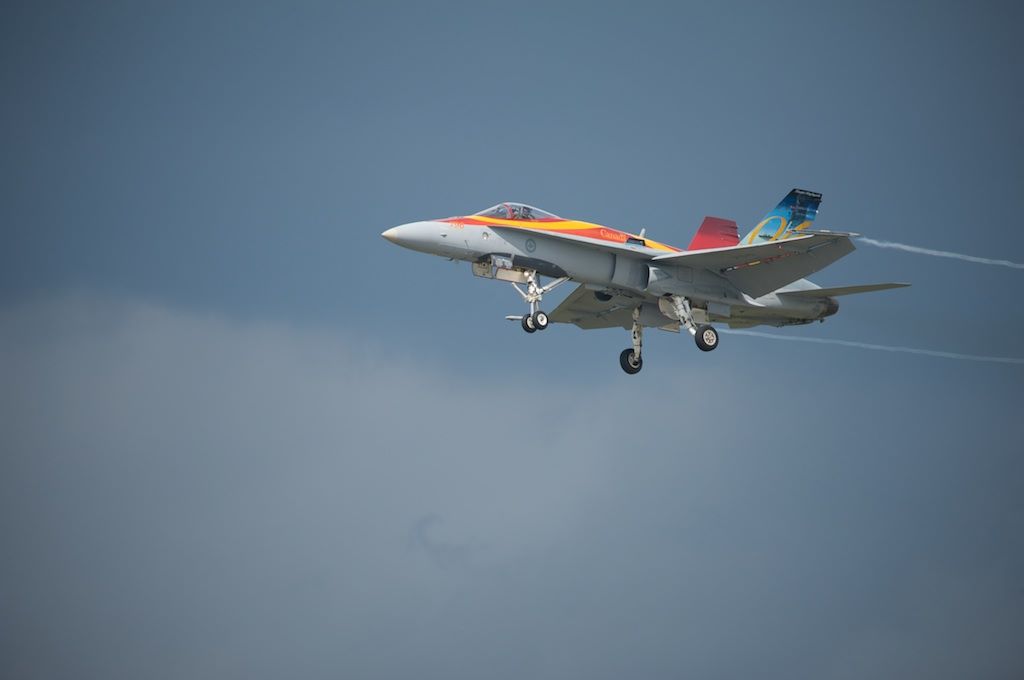
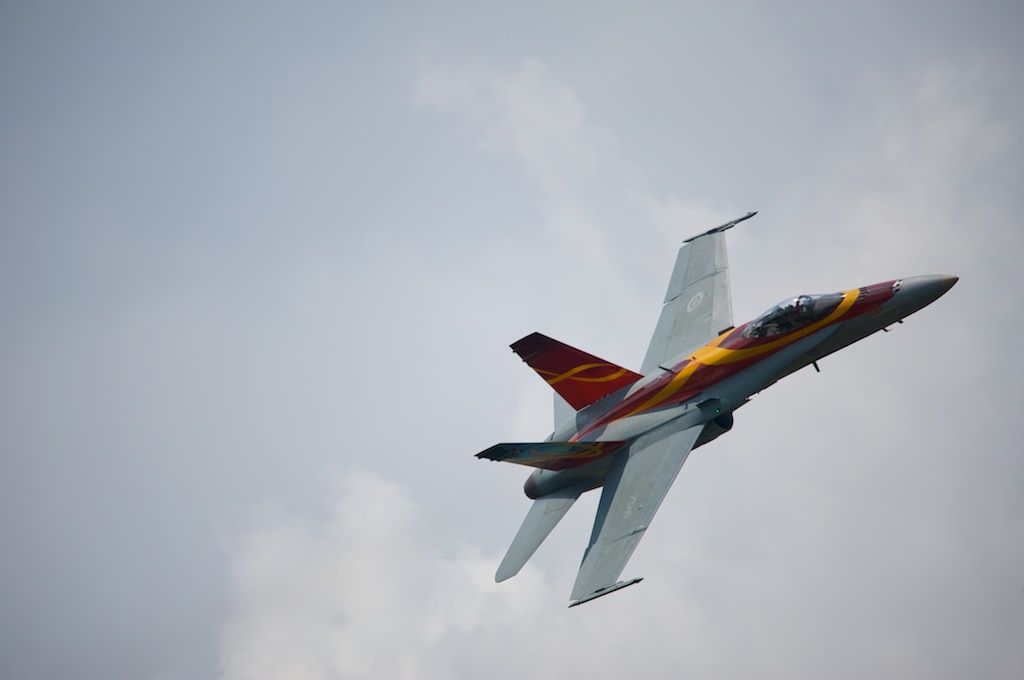
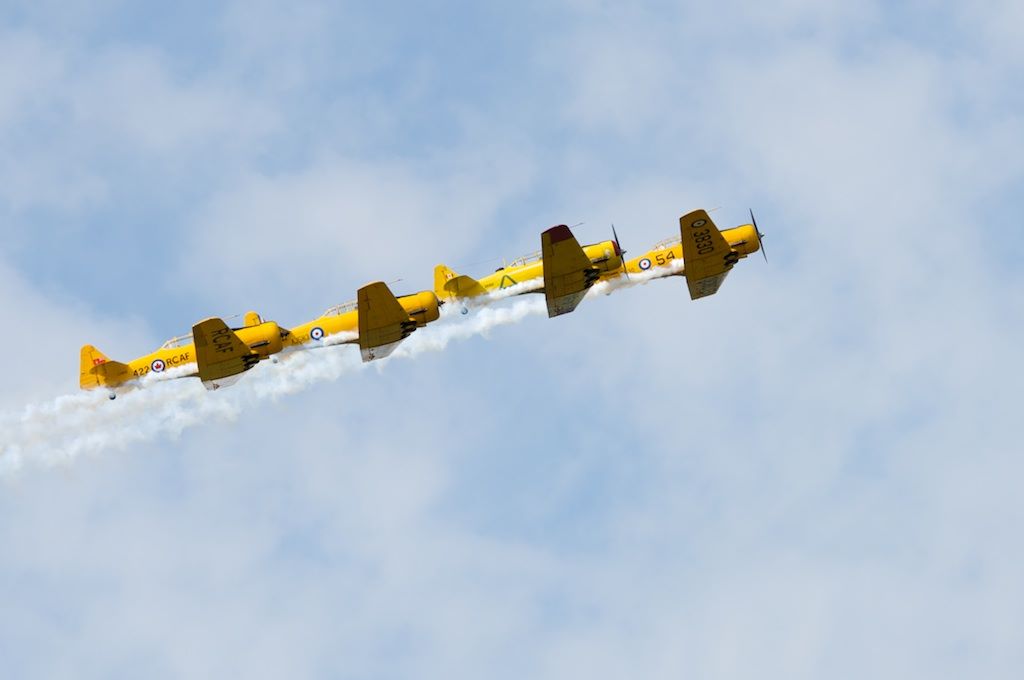
Waterloo weekend air show
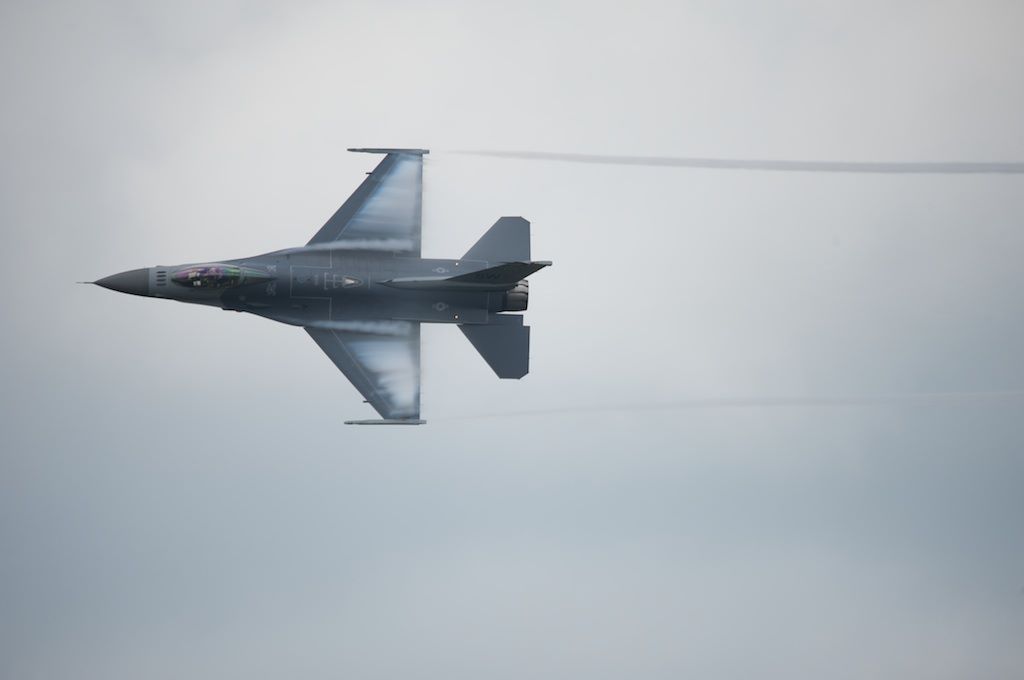 |
| F-16 |
 |
| CF-18 |
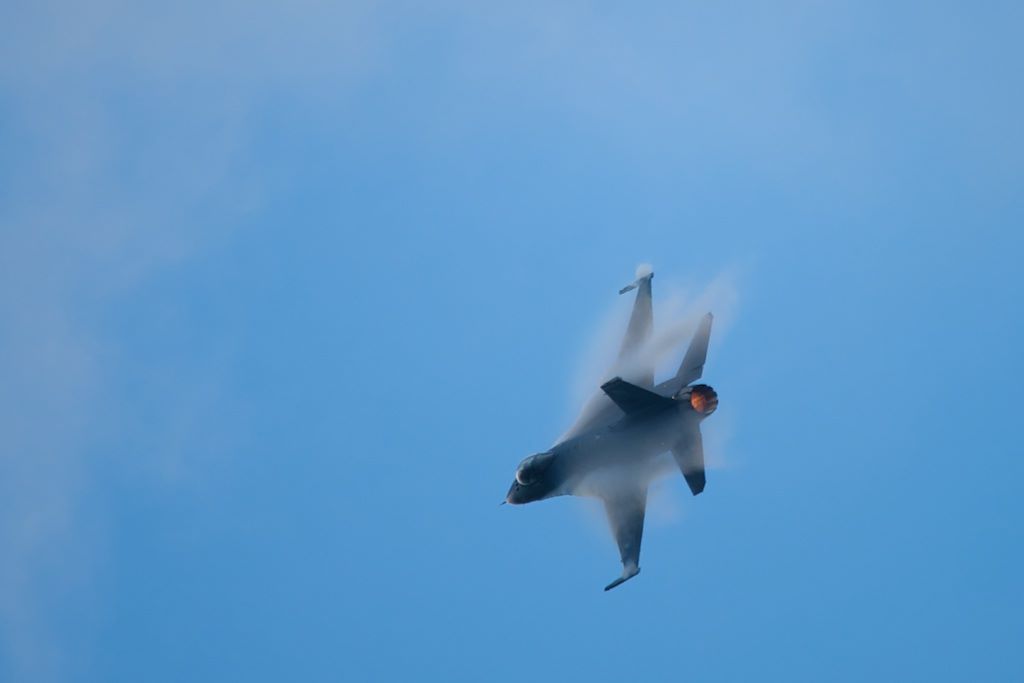 |
| F-15 |

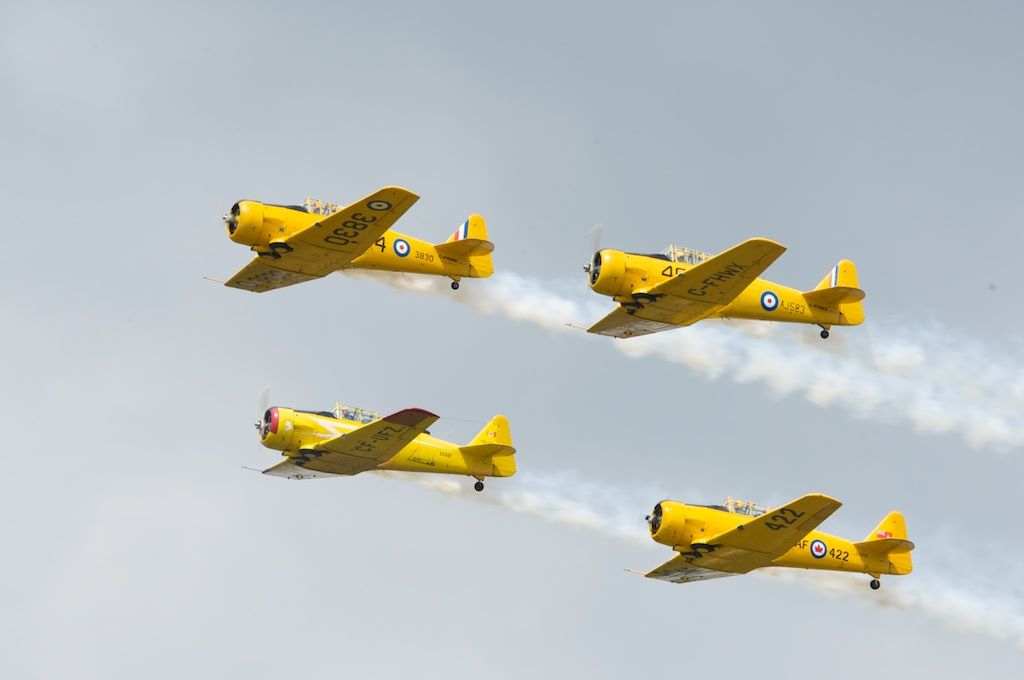 |
| The Harvard |
 |
| Snow Birds |



 |
| P40 Kitty Hawk |

Mike Weir, VE9KK, is a regular contributor to AmateurRadio.com and writes from New Brunswick, Canada. Contact him at [email protected].
Handiham World for 24 August 2011
Welcome to Handiham World!
[email protected]
Handiham Manager

But first – Help us win the Dr. Dave Challenge!
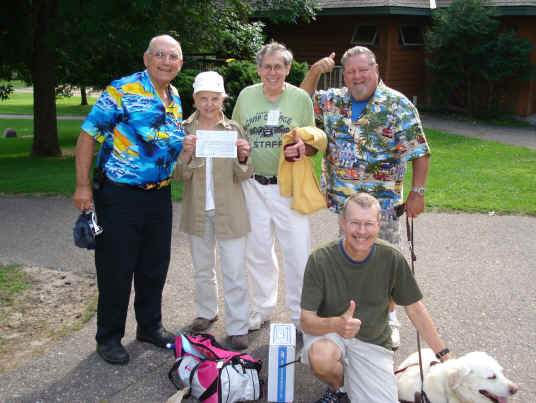
Photo: Bill, K9BV; Lucy, KE6QNX, Dr. Dave, KN0S, Bill, N6HBO & Guide Dog Heldy, and Pat, WA0TDA (kneeling in front.) Thumbs up for a pass for Lucy at the VE session.
Nancy can take credit card donations via the toll-free number, 1-866-426-3442, or accept checks sent to our Courage Center Handiham address:
Courage Handiham System
3915 Golden Valley Road
Golden Valley, MN 55422
Be sure to put a note saying “Dr. Dave Challenge” somewhere in the envelope or on the note line of the check. If you donate online as detailed toward the end of your weekly e-letter, be sure to designate to Handihams and then send me an email letting me know you donated to the Dr. Dave fund: [email protected].
Thank you so much for your support!

Pat Tice, WA0TDA, is the manager of HANDI-HAM and a regular contributor to AmateurRadio.com. Contact him at [email protected].
 Ham Radio Deluxe |
 W5SWL Electronics |
 Ham Radio Prep |
 KB3IFH QSL Cards  Hip Ham Shirts  HamRadioAuctions HamRadioAuctions Reliance Antennas Reliance Antennas Enigma Shop Enigma Shop |  morseDX  Ni4L Antennas  R&L Electronics R&L Electronics antennas.us antennas.us QRV QRV |
- Matt W1MST, Managing Editor
