 |
 Amateur TV Gone Digital [VIDEO]
 2 September 2011 | by
 After only 78 views on the website yesterday, I figured I should step up my game. One aspect of Ham Radio that I started to look at was Digital Amateur TV. The analog version, while still around, I’m sure is fun, but digital seems more my speed, being a Ham and a Geek. So here are a few things to kind of wet the appetite for Amateur Television. One is a simple link to a website in the Netherlands, with all kinds of information on digital amateur television. It’s in English, so don’t worry about busting out your Dutch to English dictionaries or Google Translate. There is also a nice site from a group in Ohio with some great info. I saw the link for this a while ago in QST, I think.
The other is just the guys from Ham Nation talking about Amateur Television. Now I haven’t seen this episode yet, but it’s one that I really should sit down and watch. So, here ya go.
73.
Rich also writes a Tech blog and posts stories every Tuesday and Thursday on Q103, The Rock of Albany’s website, as well as Amateur Radio stories every Monday thru Friday on AmiZed Studios and hosts a podcast called The Kim & Rich Show with his fiance’ Kim Dunne.
Rich Gattie, KB2MOB, is a regular contributor to AmateurRadio.com and writes from New York, USA. Contact him at [email protected].
Nifty Accessories Winners!
Congratulations to:
Jim, AF5S
Frank, NF8M
Francisc, YO4PX
Larry, KI6ZQY
Jim, KK4DJX
They’re the five winners of our Nifty Accessories giveaway!
Thanks to everyone for participating and stay tuned for our next contest.
Matt Thomas, W1MST, is the managing editor of AmateurRadio.com. Contact him at [email protected].
D-STAR for iOS Devices
I know what you’re thinking and no, unfortunately no one has created an app to access the D-STAR digital amateur radio network from an iOS (iPhone, iPad) device. At least not yet. But there is an app to help you know who’s online and what repeaters are near your location. The app is called DSTAR and is available via the iTunes App Store. Now please sit down and brace yourself for the cost. Yes, the D-STAR app for iOS devices is $9.99 USD.
Yes, I know what you are also thinking. I would have to agree. The app is a bit pricey. While I certainly don’t expect someone talented enough to develop an app and make it available for free. There is a certain spirit of amateur radio which I do agree with. This spirit is of sharing and helping. After all the Echolink app for iOS devices is absolutely free. I even blogged about this app here. But I digress, after all this blog post is not about the absolutely free Echolink app, but about the D-STAR app.
Before I get started, please allow me to add a brief disclaimer. The review I’m providing was not solicited by the developer/manufacturer of the product. I purchased the product the exact same way anyone else would and whether or not the developer/manufacturer of the product reads this blog posting is none of my concern. I do not rate products by assigning it a value of x number of stars and I typically do not suggest whether you should consider buying or avoiding. I provide as detailed of a description as possible and let you decide if is something you can’t live without.
 I guess I’m a sucker for amateur radio related apps. I practically live by my iPhone and iPad and every few weeks I do a search for amateur radio and ham radio in the iTunes app store. I typically download and test just about everything free and if something catches my eye that is not free, if I think I can use it, I’ll buy it. This is how I came to own the D-STAR app.
The D-STAR app opens to the menu screen and you’ll see seven different menu options. These options are Last Heard, Last Heard Map, Repeaters Near Me Map, Repeaters Near Me List, All Stations List, Settings and Disclaimer. By the way, the app is the same regardless if you are using it on the iPhone or iPad.

Let’s explore the Settings option first. The screen is fairly self-explanatory. My Call is your callsign and My Repeater is the local repeater you typically connect to. For some reason the app doesn’t appear to retain the My Repeater information. Auto-load on start is on and Minutes of data I also left at the default setting.
Since the local repeaters in my area are all located in the Rocky Mountain foothills (about 40 miles or so from Denver) I had to adjust the “Near me radius” out some from the default setting. I opted to set it at 100 miles just in my testing. Finally I turned on the “convert Km to Miles” as being an American…that just works better for me. Again, other than My Repeater, the app remembers the rest of the settings each time I launch it.

The next few screens I’ll show you are all fairly self-explanatory as well. The Last Heard is simply a list of the stations “last heard” on the D-STAR network. This is the same data which populates on the d-starusers.org website, which has always been a good resource to check which users are active etc.
One note about the Disclaimer screen (which I’m not going to show). The developer of the app reminds us “the information we see on the Last Heard page is made possible by the system admins who have installed the DStarMonitor program on their gateway computer systems.” I guess some system admins may not have installed this software and therefore the ability for you to see active users or even yourself may not work. I guess it is safe to say if you see this data on the d-starusers.org site, then all should work on this app as well.

The Last Heard map provides a visual representation of users based on location. If you touch a pin, it’ll provide you the callsign and the location of the station.

The Repeaters Near Me List (not shown) looks much like the Last Heard list. It just lists out the D-STAR repeaters near you based on the settings you established in the settings screen (near me radius). The Repeaters Near Me Map (shown left) might be more helpful to review first. You’ll see your location based on the green pin and the repeaters near you in red. Clicking a pin provides the repeater name and frequencies. You can then switch to the list view for even more information and repeater capabilities.
By the way, both the Last Heard List (of stations) and Repeaters Near Me list can be easily exported from the iOS device and sent via email. Also, you can drill down into a individual station and even touch a callsign for QRZ.com details about the individual station. This just simply opens a browser screen and you see the QRZ profile data just the same as you would from a regular PC.
I believe I will find more use for this app when operating mobile or traveling. When operating from home, it’s just too easy to get this same data from a regular PC when I’m in the shack.
In closing, the price of this app is going to seriously turn a lot of hams away. Yes, I realize most everything having to do with D-STAR already has more cost associated to it than non D-Star equipment. It is perhaps unfair for me to suggest what this app might be worth. After all, I did pay full price for it. But perhaps the developer would actually sell more copies of the app for a less expensive price and actually turn a larger profit. But this is simply just my opinion.
I’ve owned the app for about two months and the developer has pushed out one upgrade which contained some bug fixes and the enhancement to export the list data via email. I’m hopeful this means the app is still being developed and while I’ve found no bugs in functionality, future updates might contain additional functionality.
Until next time….Thank you for reading.
73 de KD0BIK/AE
Jerry Taylor, KD0BIK, is a regular contributor to AmateurRadio.com and writes from Colorado, USA. He is the host of the Practical Amateur Radio Podcast. Contact him at [email protected].
9/11 Special Event Stations Will Be On The Air
It’s very hard to believe it’s been 10 years since that horrible day when nearly 3 thousand people were killed. I’m sure many of us remember where we were when we found out. It’s a fixed point in time, to use Doctor Who terminology. To commemorate this event, Special Event stations will be on the air. Here is a list of the stations and details from the ARRL’s website:
- The Pentagon Amateur Radio Club, K4AF, will be on the air 7 AM-9 PM Saturday, September 10 (1100-0100 UTC, Saturday, September 10 through Sunday, September 11). Active operating frequencies will be posted during event on the K4AF website. This Special Event is to honor all those lost on September 11, 2001, with special remembrance of the 184 people who lost their lives at the Pentagon and on board American Airlines Flight 77.
- The Blair Amateur Radio Society, W3PN, will be operating N3U/FLT93 from September 8-15 in memoriam of United Flight 93 that crashed near Shanksville, Pennsylvania. This year’s activity will take place during tenth anniversary and the Memorial Dedication for the Victims of United Flight 93. To receive a QSL card, please send a self-addressed, stamped envelope to Blair Amateur Radio Society, W3PN, 112 E Wopsononock Ave, Altoona, PA 16601.
- The Northeast Wireless Radio Club, N2WC, will be on the air Sunday, September 11 from 12 noon until 6 PM EDT (1700-2300 UTC). NWRC members will be operating in the General class bands on Phone, CW and Digital; please check the clusters for frequency updates. You can receive a Special Event QSL card when you send a $2 donation to Northeast Wireless Radio Club, 213-37 39th Avenue, Suite 175, Bayside, NY 11361.
- The Kings County Repeater Association, KC2RA, will be on the air 9 AM-5 PM EDT (1300-2100 UTC) on Saturday, September 10. Look for KC2RA on 7.250 and 14.295 MHz, as well as EchoLink node 132967 (KC2LEB-R) and the KC2RA repeater at 146.430 (CTCSS 136.5). KC2RA members will be offering a special QSL card for the event. To receive a card, please send a self-addressed, stamped envelope to KC2RA 9/11 Memorial Event, PO Box 280288, Brooklyn, NY 11228-0288. (This was previously posted on AmiZed Studios)
- The Symbol Technologies Amateur Radio Club, W2SBL, will be on the air September 10-11 on the following frequencies: 3.911, 7.240, 14.070 and 50.135 MHz, as well as D-STAR REF10C. STARC members will read the name of a person killed in the attacks with every QSO. A Special Event QSL card is available when you send a self-addressed, stamped envelope to Symbol Technologies Amateur Radio Club, W2SBL, One Motorola Plaza, B-13, Holtsville, NY 11742.
73.
Rich also writes a Tech blog and posts stories every Tuesday and Thursday on Q103, The Rock of Albany’s website, as well as Amateur Radio stories every Monday thru Friday on AmiZed Studios and hosts a podcast called The Kim & Rich Show with his fiance’ Kim Dunne.
Rich Gattie, KB2MOB, is a regular contributor to AmateurRadio.com and writes from New York, USA. Contact him at [email protected].
Elecraft K3 filters…AGAIN!!!
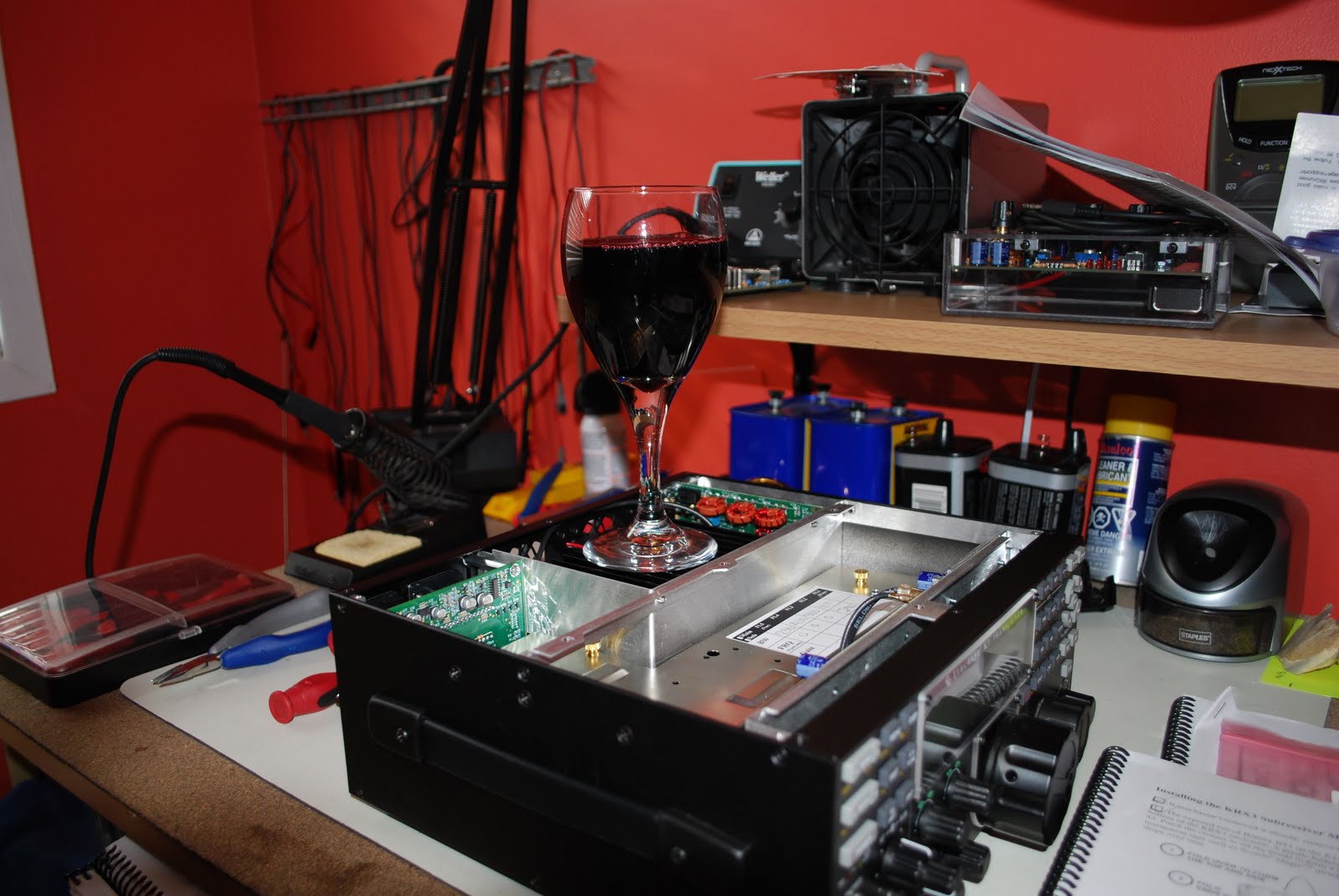 |
| All done... an event worth celebrating |
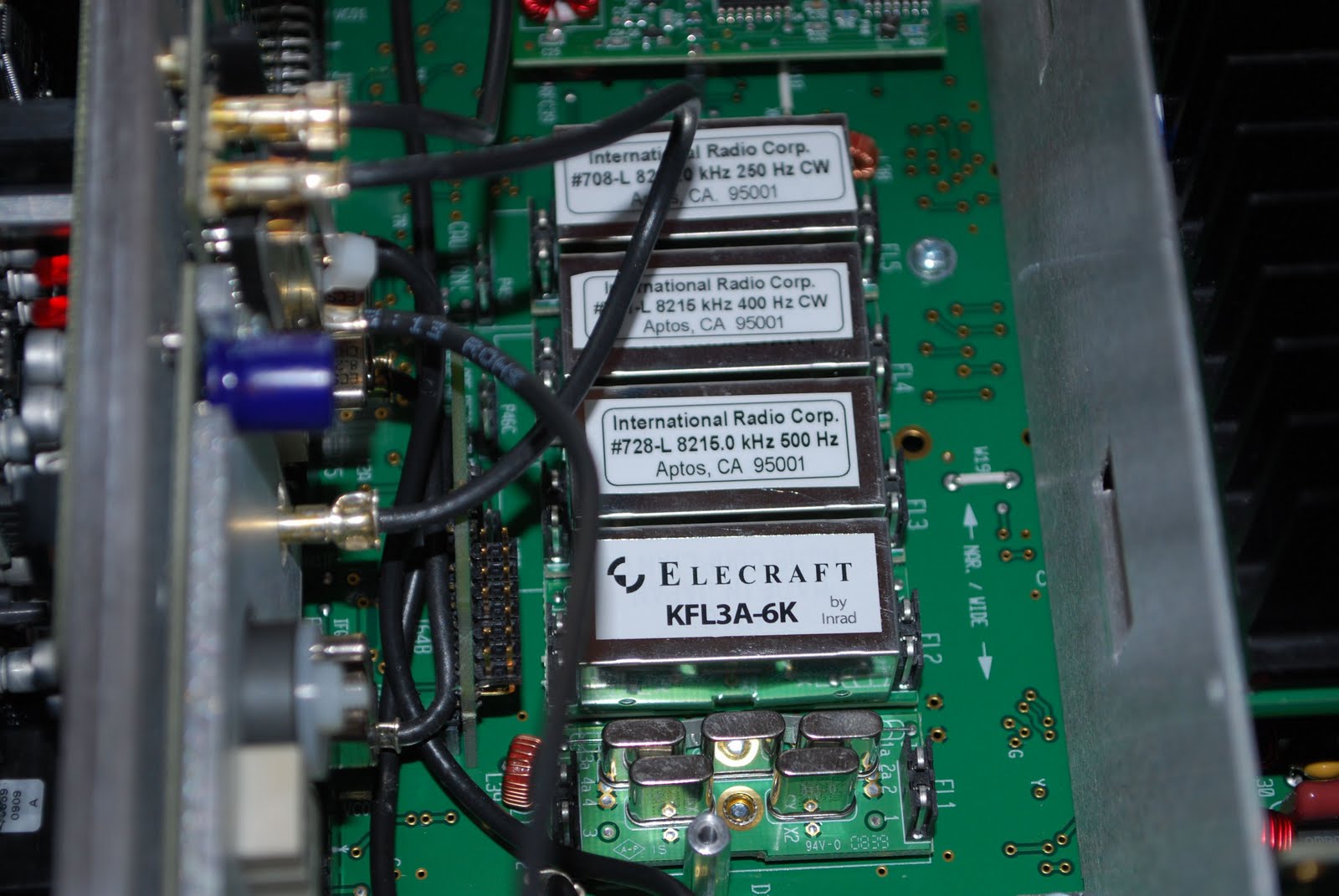 |
| Before the change |
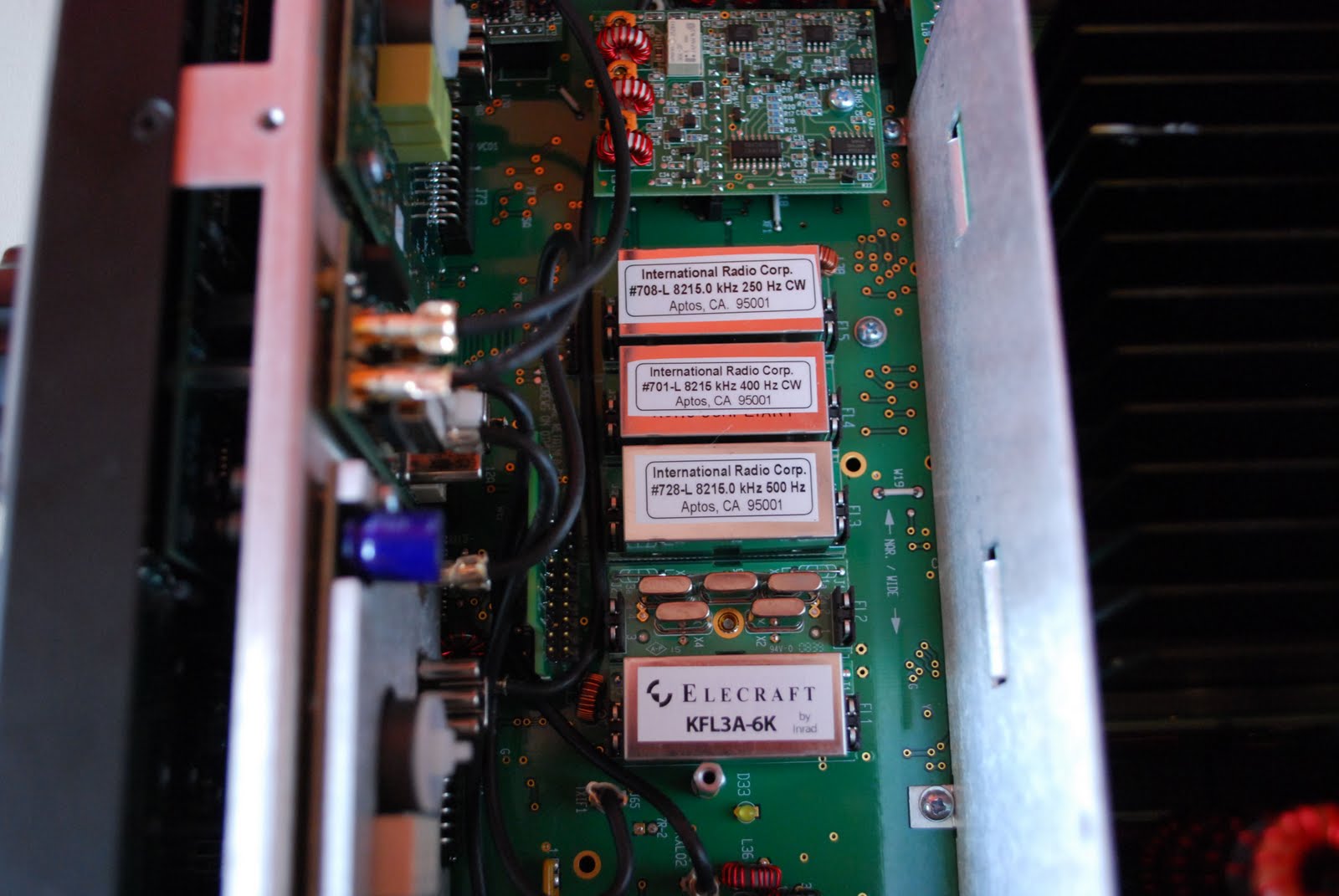 |
| After the change |
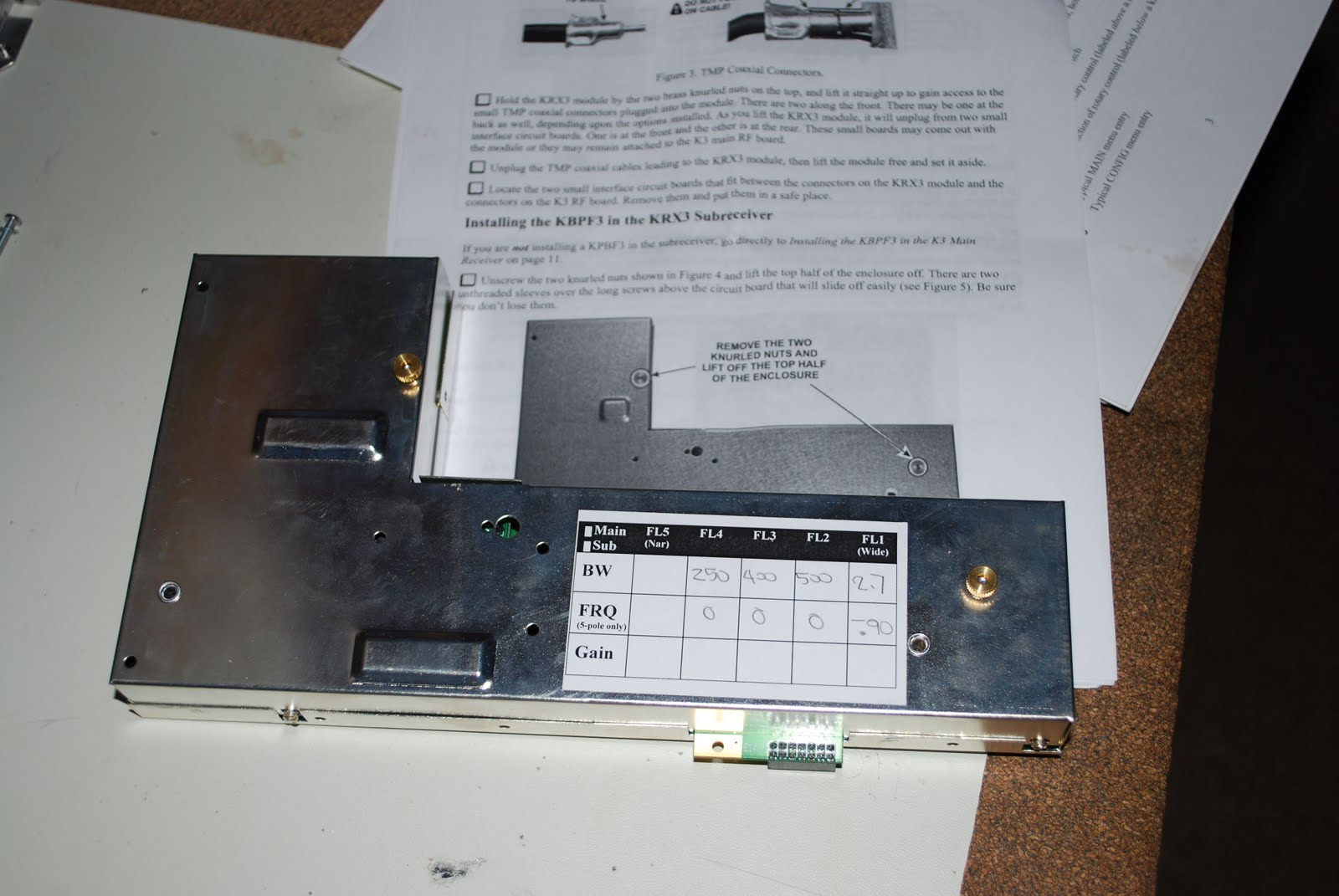
put back together I realized I had not put the filters in descending order. For some reason I started with the 2.7khz and then the 6.0khz. So it was now time to disassemble the K3 AGAIN to switch the order of 2 filters. While the rig was apart I also wanted to open up the sub-receiver....what the heck eh. It has it's own set of filters which had to match the main receiver's order of filters.
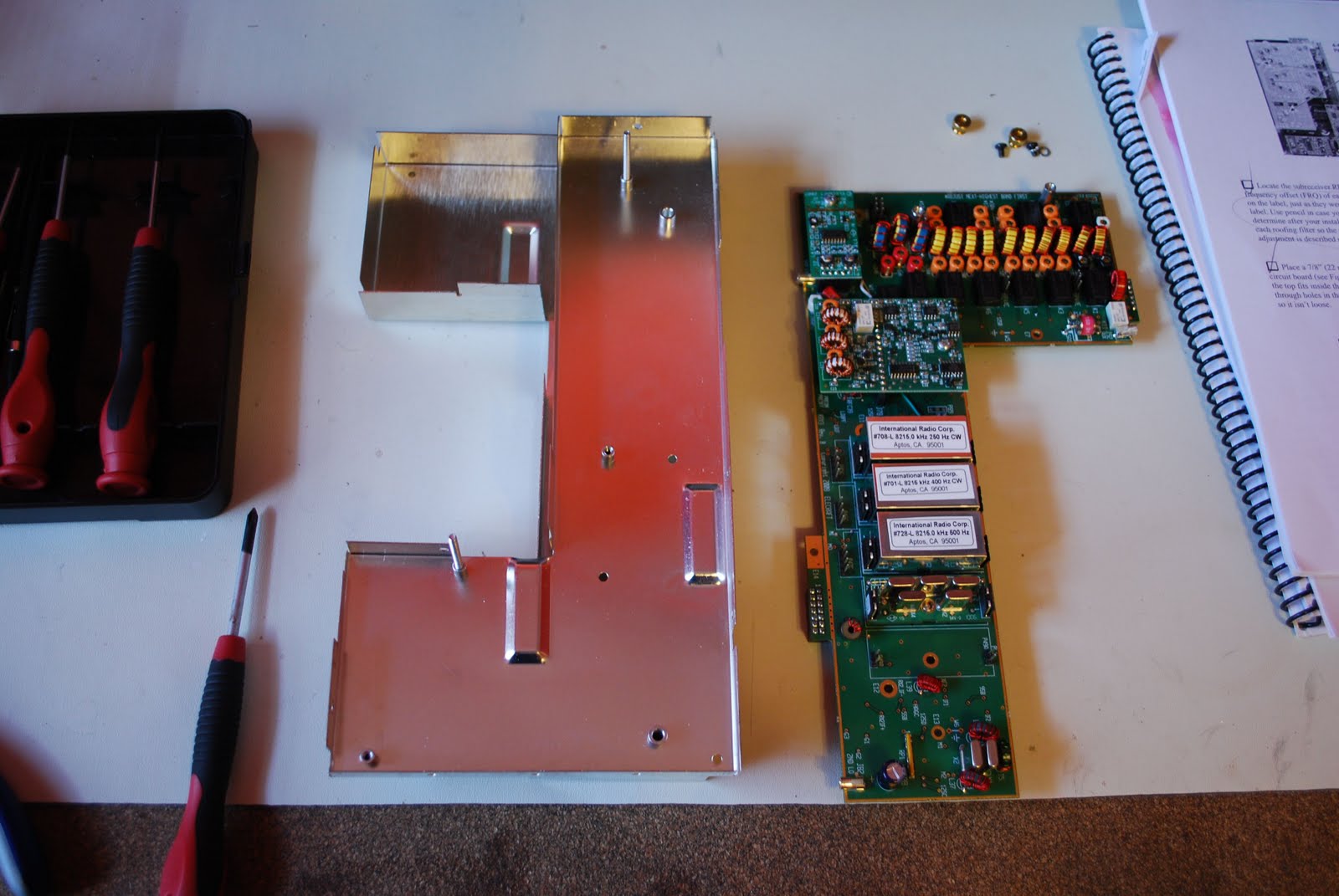 |
| The sub-receiver apart filters switched |
 |
| sub-receiver back together now to change labeling |

Mike Weir, VE9KK, is a regular contributor to AmateurRadio.com and writes from New Brunswick, Canada. Contact him at [email protected].
Ham Nation 15

Irene response, AIRSSat-1, APRS tracking, and more.
Guests: Mike Corey, W5MPC, Don Arnold, W6GPS, and George Thomas, W5JDX
Download or subscribe to this show at http://twit.tv/hn.
We invite you to read, add to, and amend our show notes at wiki.twit.tv.
Thanks to Joe Walsh who wrote and plays the Ham Nation theme.
Thanks to Cachefly for the bandwidth for this show.
http://dts.podtrac.com/redirect.mp4/twit.cachefly.net/video/hn/hn0015/hn0015_h264b_864x480_500.mp4
http://dts.podtrac.com/redirect.mp4/twit.cachefly.net/video/hn/hn0015/hn0015_h264b_640x368_256.mp4
http://www.podtrac.com/pts/redirect.mp3/twit.cachefly.net/hn0015.mp3
Dr. Bob Heil, K9EID, is the founder of Heil Sound and host of TWiT.tv's Ham Nation which streams live each Tuesday at 6:00pm PT (9:00pm ET) at http://live.twit.tv. Contact him at [email protected].
Handiham World for 31 August 2011
Welcome to Handiham World!

 | Aesthetics. The antenna will be unsightly. Yes, you and I know that a good antenna is a thing of beauty, but your spouse and neighbors may not like seeing that monstrosity in the blue sky above your ham shack. This is an especially relevant concern these days when traditional TV antennas have pretty much disappeared because of TV cable and small satellite TV dish antennas. The TV antenna free clean look of the typical suburban roofline makes that HF antenna stick out like a sore thumb! |
| Power lines! They run where they run, and that is often exactly in the wrong place when HF antenna installation is concerned. Older neighborhoods typically have lines running along alleyways at the rear or side of a property. Power lines might also line the street in front of the house. The “drop” from the main power pole to the house sometimes crosses large sections of the property. You cannot safely run wire antennas above or below power lines, and running your antenna parallel to a power line may result in a higher than average interference from power line noise. |
| No antenna supports. Your lot may just not have any natural place to support a wire antenna. The trees may be too small or in the wrong places. |
| Budget! Your budget may not be generous enough to have a tower in the back yard. Like it or not, you may have to make do with less. |
| Space. Actually, it’s the lack thereof! Most city lots are a challenge when you are talking about getting wire antennas up for bands like 160 and 75 meters, but some are really, really small. |

Pat Tice, WA0TDA, is the manager of HANDI-HAM and a regular contributor to AmateurRadio.com. Contact him at [email protected].
 Ham Radio Deluxe |
 W5SWL Electronics |
 Ham Radio Prep |
 KB3IFH QSL Cards  Hip Ham Shirts  HamRadioAuctions HamRadioAuctions Reliance Antennas Reliance Antennas Enigma Shop Enigma Shop |  morseDX  Ni4L Antennas  R&L Electronics R&L Electronics antennas.us antennas.us QRV QRV |
- Matt W1MST, Managing Editor
