 |
 ICQ Podcast S04 E19 – SSB Field Day (11 September 2011)
 11 September 2011 | by
 Series Four Episode nineteen of the ICQ Podcast has been released. News Stories include :-
- Special Event Stations mark tenth anniversary of 9/11
- Battle of Britain special event station
- Attacker kills W9WPH on hiking trip
- Scout amateur radio team on Mount Snowdon
- 6th form students space project
- Second Japanese D-Star reflector
- Codar Radar on 24 MHz ended
- OH8X Tower Jump
- Full licences at Mid Ulster Amateur Radio Club
- Asteroid fly-by receiving opportunity
- LED lighting causes radio interference
- 15 months for teen radio pirate
- UK Propagation charts for September 2011
- New 2m repeater channels
- Take your hand-held to work' day
Your feedback and Martin (M1MRB reports from a SSB Field Day.
Colin Butler, M6BOY, is the host of the ICQ Podcast, a weekly radio show about Amateur Radio. Contact him at [email protected].
Gibson Girl Radio

Gibson Girl Survival Radio. Photograph by Arnold Reinhold on Wikimedia Commons (using Creative Commons share-alike 3.0 license)
I have recently finished reading “Unbroken” by Lauren Hillenbrand which is a compelling and in parts disturbing account of the life and especially the World War II exploits of the US Olympic runner Louie Zamperini. Within the book there is the mention of an emergency radio called a ‘Gibson Girl’ which I had not heard about. Upon investigation I found details of the radio on Louis Meultsee’s website “Radio for the Warrior”. He explains that this radio is derived from a German emergency radio, the NSG2 or Not Sende Gerät 2 which had been retrieved by the British during World War II. They had copied the design and made their own called the ‘Dinghy Transmitter T-1333′. In 1941 another retrieved German set was sent to the USA and that led to the development of the SCR-578 which became know as the ‘Gibson Girl’. This nickname is attributed to the curved sides of the radio which were to facilitate the gripping of the radio between the legs to aid the hand cranking of the generator. This seems to have reminded people of the shape of the women drawn by Charles Dana Gibson in the late nineteenth century.

The German, British and American radios operated on the international distress frequency of 500kHz. Crystal controlled oscillators were used in the German and British radios, but the Americans used a valve based oscillator. A circuit diagram can be found at the ‘Radio for the Warrior’ website. Inside an enclosure in the radio was a reel of wire for the antenna (you can see the circular hinged door in the photograph above) which could be raised by a kite. There was a variable capacitor for tuning the antenna (see the circuit diagram) which could be adjusted from a knob on the radio front. Power was generated by hand cranking and there were two automatic modulation modes, which included ‘SOS’ and a long dash (presumably for direction finding) as well as a manual keying mode. Beside the radio signal a light could be generated by the cranking of the set and modulated too.

Along with the kite there were a range of other included accessories that are listed here, plus a photograph of an operator who looks were much like he is not in a survival situation! An article about the radio with some focus on the kite came out in issue 93 of ’The Kiteflier’.
After World War II the radio was continued to be produced and it moved into the shortwave bands by using the emergency frequencies of 8280 or 8364 kHz.
If anyone has one of these radios in their possession and has photograph or if they have used one I would be interested to hear.
Finally, if you want to know more of the Louise Zamperini story and do not expect to be reading the book ‘Unbroken’ then watch the video below. If you think you may read the book then I strongly recommend not watching the video as it reveals so much of the story.


Alan Steele, VA3STL, is a regular contributor to AmateurRadio.com and writes from Ottawa, Ontario. Contact him at [email protected].
I’ll never forget
 There have been events in history where individuals will always remember where they were, who they were with and what they were doing when the event happened. For the generation of my grandparents, that day was December 7, 1941 when Pearl Harbor was attacked. For the generation of my parents, that day was November 22, 1963 when President John F. Kennedy was assassinated in Dallas, Texas. As I watched the Space Shuttle Challenger disaster unfold on January 28, 1986 I was certain this would be the day which I would clearly remember for the rest of my life and certainly hoped none other would ever prove to be greater. After all, I was only 19 years old, in my first year of college and grew up in small town Texas. By the way, I still do remember very much what I was doing, who I was with and where I was on that tragic day.
Tuesday, September 11, 2001 began just like every other day for me. I woke up early (around 6 AM MT) I had showered, dressed and was downstairs drinking a cup of coffee and watching Fox News by 6:20 AM. This was pretty much a morning ritual for me. Because my commute was less than five minutes, I typically wouldn’t leave my apartment until around 6:45 or so. On this day, I wasn’t in that big of a hurry. I had been working long hours as I was planning to fly to London later that week. It was shaping up to be a beautiful day in the mile high city and from what I could see while watching Fox News, New York City was also looking beautiful.
My apartment was relatively small. From my kitchen I could hear the TV in the living room and heard the initial report of a plane hitting the World Trade Center. The time was 6:46 AM MT (8:46 AM ET). I stepped into the living room and watched/listened for updated news. Initial reports was it was a small airplane (perhaps a sightseeing plane) which hit the WTC. The Fox anchors talked about how clear the sky was overhead in NYC. Thoughts of perhaps the pilot suffered a heart attack or aircraft malfunction were more or less what most believed had happened.
As the time approached the top of the hour, I was really intrigued in what had happened. I remember at the top of the hour Fox and Friends passed it off to Jon Scott who happens to be a pilot. Again for several minutes the speculation into what had happened to the pilot or to the airplane was the topic of discussion. Fox had switched to an anchor outside the studios and I was just about ready to turn the TV off and drive to the office. Again, it looked like an accident and I would follow up with what happened once I got to the office.
As I was reaching for the remote, what I saw next on TV will forever be in my memory. It was 7:03 AM MT (9:03 AM ET) when the outside live shot showed a second plane flying into the second tower of the World Trade Center. It became clear to me and to the entire nation that we were under attack. Yes, one aircraft could accidentally hit the WTC, but two? Absolutely not. It was also very clear the second plane was not a small sightseeing plane, but a large airliner. For the next 15 minutes or so I sat on the edge of my sofa watching the events unfold in New York City. I (and certainly like many Americans) was in total dis-belief at what I had just watched happen.
Part of my job responsibilities (both then and now) was/is to manage our business continuity and disaster recovery processes for the customer support organization at my company. While we (at the time) didn’t have an office in the NYC area, I wanted to get into my office so that I could be prepared for what ever else might happen on this day. At this time, only the two WTC towers had been attacked. I was not aware there were two other planes.
I quickly drove to the office and of course most everyone had already heard about the attacks in NYC. I’m asked by a colleague if I had heard of the events and said yes, I had watched the information regarding New York. He said, but have you heard about Washington DC? It soon became very clear this was not just an attack on New York and the World Trade Center. This was much, much larger.
Internet access from the office became really slow with employees checking the various news sites, emailing friends and family. We had small TV’s in the lobby of the building connected to a DirecTV feed and I went down to try to get more information. I was not only concerned about what other attacks might be planned, but also on the WTC attack which I had watched earlier from my apartment. I wanted to see what progress had been made on extinguishing the fires and of course get updates on the rescue efforts.
I made it downstairs to one of the TV’s. Smoke was still pouring from the top of both towers, within seconds the south tower began to collapse. I honestly couldn’t believe what I was watching. It wasn’t long after the south tower collapsed that we heard word of United Flight 93 crashing near Shanksville, PA. I had already went back upstairs to make a few phone calls. I remember hearing some employees talking about the north tower collapse. Again…I just couldn’t believe it.
At some point in the day, an announcement was made or perhaps there was a company email. But what ever the delivery mechanism, the message was to let us all know that all employees had been accounted for. I doubt very seriously if much work got done that day. As I said, I was scheduled to fly to London in a few days. After hearing about all flights being grounded for possibly a few days, I spoke to my boss and determined I would not be traveling as scheduled.
I remember going home and making myself a fairly stiff drink. Sometime around 9 PM I went out to the hot tub. It was a cool evening and I remember looking up in the sky and seeing and hearing nothing. This was odd as I lived near the flight path for Centennial Airport (KAPA) and Denver International (KDEN) is only about 25-30 miles and at just about any time of the day and evening you can see the planes coming in for landings and departing. I do recall hearing a few jet fighters and seeing various types of military aircraft. I’m sure this was the case over most every major metropolitan city.
Like many Americans, I did a lot of praying and in doing so asked God a lot of questions. I have tried to pray for peace each and every day since the attacks and pray for the those who are making sacrifices and sometimes the ultimate sacrifice to ensure our freedoms both at home and abroad.
In 2005 through the course of two acquisitions, Oracle acquired Peoplesoft who had acquired JD Edwards in 2003. On the four year anniversary of 9/11 I learned something I didn’t know previous. While JD Edwards didn’t lose any employees in the attacks, Oracle had lost eight employees that day. Most will know the name of one employee in particular. This employee, along with many other brave individuals fought back in what possibly should be considered the first battle won over terrorism and that employee was Todd Beamer. Todd and many other brave individuals fought back on United Flight 93. While they gave their life, they did it so many others could live. Of course we now suspect that Flight 93 was headed for the US Capitol Building or the White House.
In 2007 I realized a childhood dream to get my amateur radio license. I remembered the speech which President George W. Bush made in January 2002 when he announced the creation of the USA Freedom Corps. During that State of the Union address, President Bush asked Americans to serve a cause greater than themselves. I answered that call by joining the Denver Police Depts. Volunteers in Policing Unit and DAREC, Denver Amateur Radio Emergency Communications. In the course of just 3 years I had volunteered over 250 hours in that program.
Yes it is easy to say “I’ll never forget”. Through illness or old age there may come a time when I just don’t remember. But for now, I will remember and each year on September 11th (as I have done for the past 9 years), I’ll wake up early and I’ll go downstairs, make a cup of coffee, turn on the TV (yes Fox News Channel) and I’ll say a little prayer and prepare myself to watch, to remember and even cry a little. I hope all American’s will remember, I hope all American’s will pray and I hope all American’s will cry a little.
Thank you for reading and for allowing me to cross post this across my different blogs.
God Bless the United States of America.
Jerry
Jerry Taylor, KD0BIK, is a regular contributor to AmateurRadio.com and writes from Colorado, USA. He is the host of the Practical Amateur Radio Podcast. Contact him at [email protected].
A new Elecraft KX3 video !!!

Mike Weir, VE9KK, is a regular contributor to AmateurRadio.com and writes from New Brunswick, Canada. Contact him at [email protected].
LHS Episode #065: Bottoms Up
 In today’s long-awaited episode of LHS, we tackle a topic from a few episodes back, that of Open Hatch, the Open Source collaboration project. In another segment, Richard explores what it’s like to go through the process of getting your first amateur radio license. Among these topics we also mention the ICQ Podcast from the UK, Windows 7, AT&T Uverse, wget and a bunch of other topics of interest to ham radio and Linux operators alike. If you like our episodes, or even if you don’t, please send us along some feedback via the web or via our call-in hotline. Thanks for listening!
73 de The LHS Guys
Russ Woodman, K5TUX, co-hosts the Linux in the Ham Shack podcast which is available for download in both MP3 and OGG audio format. Contact him at [email protected].
My Astron power supply is humming a tune I don’t know…….
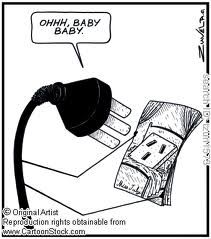
 I thought it was them and it did seem when I turned off the lights it went away.....well that theory was short lived when the power supplies hummed again with the lights off....how romantic is that, lights off and the glow of two Astron power supplies....I digress.... I then ran an extension cord to another outlet that I knew was not on the same circuit as were the trouble was coming from. That seemed to be the fix things the supplies are running great now with no more hum. As I write this post it seems that the over head compact florescent light (that is on the same circuit) has a flicker to it. I changed the bulbs to incandescent lights and the flicker is still there. I checked the voltage at the outlet and it is 120.1 volts AC. I have gone down to the main panel and checked all the connections and they were fine. I am going to have to investigate loose connections and neutral troubles on this circuit this weekend. But for now the Astron supplies are running just fine on the other outlet.
Mike Weir, VE9KK, is a regular contributor to AmateurRadio.com and writes from New Brunswick, Canada. Contact him at [email protected].
An Extra Update
Before I get started with the updated news on what is happening with my extra class upgrade application with the FCC, I want to say a very special thank you to the ARRL and to Perry Green, WY1O who just contacted me via email.
I’ve blogged about and mentioned the value on my podcast I believe we as amateur radio operators receive from being members of the ARRL many times. I must admit, this value was only something I had heard others mention or read directly through the efforts of the ARRL to identify why hams should join the league. I personally had not (until now) been on the receiving end of any direct assistance from the ARRL. Of course, I believe this is normal. After all, we purchase insurance based on what a company tells us they can and will do and frequently never actually see or need the benefit. But we know and trust it is there when needed.
I can tell you from first hand experience, the ARRL benefit we all receive through membership is very much worth the cost. Within 24 hours of my initial email to the ARRL Regulatory and Advocacy group I had received a response. Not just any response, but a response very much worthy of answering my questions, explaining what it all meant and informing me they had contacted the FCC on my behalf. WOW…
Now to the update. The questions I asked of the ARRL Regulatory and Advocacy group was along the lines of what did “alert list review” mean, why was I on this list and what can be done to move my application along to a full approval status. All my questions (and more) were answered.
First what does “Alert List Review” mean? As provided on the FCC’s website, by definition an “Alert List Review” is:
A list maintained by the FCC staff that identifies potential categories of "problem" applications so that ULS can identify them and send them offline for manual processing. The alert list function can then be used to flag applications based on the identity of the applicant, the spectrum being applied for, or the type of license being sought. For example, if an application is received for spectrum that is the subject of an ongoing rulemaking proceeding, that application would be offlined by ULS. The staff would then need to override a system alert in order to grant the application.
Now to the “why am I on this list" question and this is really where the ARRL helped me. The ARRL contacted the FCC on my behalf and was able to determine I was off-lined for additional research as there is another individual with a variation of my name who they needed to hold, or hold for research.
Mr. Green went on to inform me that I was fully cleared and would have been “released” and granted sooner, if it were not for the person who manually handles this review process wasn’t on vacation. Some may think “why is this all down to one person”, well in my job I have a lot of responsibilities that simply don’t get done when I’m out sick or on vacation and it just simply is what it is.
I also want to state for the record, the FCC never did say that I had done anything wrong. This was simply my own “jumping to conclusions” in trying to figure out what all this meant and what was going on. I have absolutely no reason to believe (nor do I believe) I was singled out for any reason whatsoever, other than the simple fact my name is similar to another name which needs to be handled in a different manner.
Finally, I fully agree with the processes and procedures the FCC has in place. My only regret in all this was I wished I had just simply contacted the ARRL versus reading into the information given to me through various social media and the additional forum research I conducted. This put me more on the defensive and really didn’t do anything to resolve the problem and answer my questions.
In closing, yes we do live in the information age. We expect almost immediate results and when something doesn’t follow an expected path we do tend to question things. However, I’m reminded of the fact that those who received their license long ago simply didn’t enjoy the short amount of time between testing and actually getting on the air as we do today. Brand new technician class hams can leave a VE session on a Saturday and in most cases may be able to get on the air the very next weekend. We should better appreciate this fact and be thankful to those who work hard to make all this happen.
Until next time….
73 de KD0BIK/AE
Jerry Taylor, KD0BIK, is a regular contributor to AmateurRadio.com and writes from Colorado, USA. He is the host of the Practical Amateur Radio Podcast. Contact him at [email protected].
 Ham Radio Deluxe |
 W5SWL Electronics |
 Ham Radio Prep |
 KB3IFH QSL Cards  Hip Ham Shirts  HamRadioAuctions HamRadioAuctions Reliance Antennas Reliance Antennas Enigma Shop Enigma Shop |  morseDX  Ni4L Antennas  R&L Electronics R&L Electronics antennas.us antennas.us QRV QRV |
- Matt W1MST, Managing Editor
