 |
 California QSO Party, Dude
 8 September 2011 | by
 The last 24 hours here in Upstate NY has been flood warnings and weather watches, and I want to get away from that for a bit. A good place to go, I think, is California. So why not join in on their 45th running of their QSO Party which is probably the largest in the U.S.

Image of Flag of California/Wikipedia
So the object of the party is of course to work as many stations in the Golden State as possible on phone and CW. Stations may be worked once per mode/band combination for points with California Counties (58 of them) as individual multipliers. And California stations will get credit for working stations inside and outside of the state with US States and Canadian Provinces as their multipliers. The party runs from 16:00 GMT October 1st till October 2nd at 22:00 GMT.
The Northern California Contest Club sponsors the CQP and offers a variety of awards open to stations inside and outside of California. Some of the awards include plaques for the top operators in the Youth (under 18) and YL categories. California QSO Party chairman, Rick “Rhino” N6RNO, says that last year the contest attracted a record number of log submissions, and they are hoping to beat the previous record this year, by as big a margin as they can.
The rules for the contest, as well as a complete list of awards can be found on their website.
73.
Rich also writes a Tech blog and posts stories every Tuesday and Thursday on Q103, The Rock of Albany’s website, as well as Amateur Radio stories every Monday thru Friday on AmiZed Studios and hosts a podcast called The Kim & Rich Show with his fiance’ Kim Dunne.
Rich Gattie, KB2MOB, is a regular contributor to AmateurRadio.com and writes from New York, USA. Contact him at [email protected].
Ham Nation 16

Elecraft’s new toy, more about ARISSat-1, adding a regulator to George’s DC power supply, and more.
Guests: Steve Bible, N7HPR and George Thomas, W5JDX
Download or subscribe to this show at http://twit.tv/hn.
We invite you to read, add to, and amend our show notes at wiki.twit.tv.
Thanks to Joe Walsh who wrote and plays the Ham Nation theme.
Thanks to Cachefly for the bandwidth for this show.
http://dts.podtrac.com/redirect.mp4/twit.cachefly.net/video/hn/hn0016/hn0016_h264b_864x480_500.mp4
http://dts.podtrac.com/redirect.mp4/twit.cachefly.net/video/hn/hn0016/hn0016_h264b_640x368_256.mp4
http://www.podtrac.com/pts/redirect.mp3/twit.cachefly.net/hn0016.mp3
Dr. Bob Heil, K9EID, is the founder of Heil Sound and host of TWiT.tv's Ham Nation which streams live each Tuesday at 6:00pm PT (9:00pm ET) at http://live.twit.tv. Contact him at [email protected].
Handiham World for 07 September 2011
Welcome to Handiham World!

[email protected]
Handiham Manager

Help us win the Dr. Dave Challenge!
Nancy can take credit card donations via the toll-free number, 1-866-426-3442, or accept checks sent to our Courage Center Handiham address:
Courage Handiham System
3915 Golden Valley Road
Golden Valley, MN 55422
Be sure to put a note saying “Dr. Dave Challenge” somewhere in the envelope or on the note line of the check. If you donate online as detailed toward the end of your weekly e-letter, be sure to designate to Handihams and then send me an email letting me know you donated to the Dr. Dave fund: [email protected].
Thank you so much for your support!
W0GLU License Plate

This vintage automobile license plate was issued to Rex Kiser, W0GLU, in 1971 by the State of Minnesota. It has renewal stickers for 1972 and 1973. Rex is now a silent key, but had literally decades of volunteer experience for the Handiham program. The license plate was a gift to us from Miriam Kiser, Rex’s wife.
Rex’s specialty was repairing and modifying amateur radio equipment for the use of our members with disabilities. He soon became our crew leader, taking charge of shop activities. Back in the early days, the modifications to equipment included mounting clothespins on band-switch knobs so that people with muscle weakness could get enough leverage to change bands by themselves. The Handiham System also kept a “fleet” of loaner CW transceivers, Ten-Tec Century 21 models. These would be modified by Rex and his crew for use by blind hams. The mod included cutting away part of the plastic bezel covering the radio’s frequency display dial and putting tactile bumps on the dial to mark frequency intervals. The blind user could put his or her fingertips through the hole in the bezel and feel the raised markings on the frequency display dial. This was about as analog a frequency display as you can get! It was only in later years that frequency displays started going digital and the door began opening to voice frequency announcements.
In later years, Rex and his crew installed voice modules in radios like the venerable Kenwood TS-440SAT, a very popular radio that appeared in the late 1980’s. The VS-1 speech module made it the most blind-friendly HF radio of its day, and the built in automatic antenna tuner in the SAT version freed blind users from the hassle of fiddling with manual tuners. Needless to say, Rex and his crew knew these radios inside and out!
W0GLU was also a regular net control station on the PICONET, which meets daily except Sundays on 3.925 MHz. I would describe Rex as a well-rounded ham radio operator who enjoyed many aspects of radio and electronics. Injured serving his country during WW2, shrapnel pierced his spinal column and he never walked again. That didn’t keep Rex from driving his own car and maintaining his considerable upper body strength. I was surprised when he decided to take up adapted skiing with his disabled vets group, but I shouldn’t have been. As I said, Rex was a well-rounded guy, interested in helping others by volunteering and in living a good and worthy life.
Rex Kiser, W0GLU – A great ham radio operator who inspires us still.

Image: Rex poses for the camera in the Handiham repair shop.

Pat Tice, WA0TDA, is the manager of HANDI-HAM and a regular contributor to AmateurRadio.com. Contact him at [email protected].
MMVARI – a skimmer for RTTY
I enjoyed a drink and a meal with Justin, G4TSH on Monday evening. One of the things we talked about was some software called MMVARI. This software to decode RTTY has the ability to decode a number of streams. Ideal if you’re running a pileup from a DXpedition. Or, for those of us at home, to have a display of RTTY activity across a portion of the band.
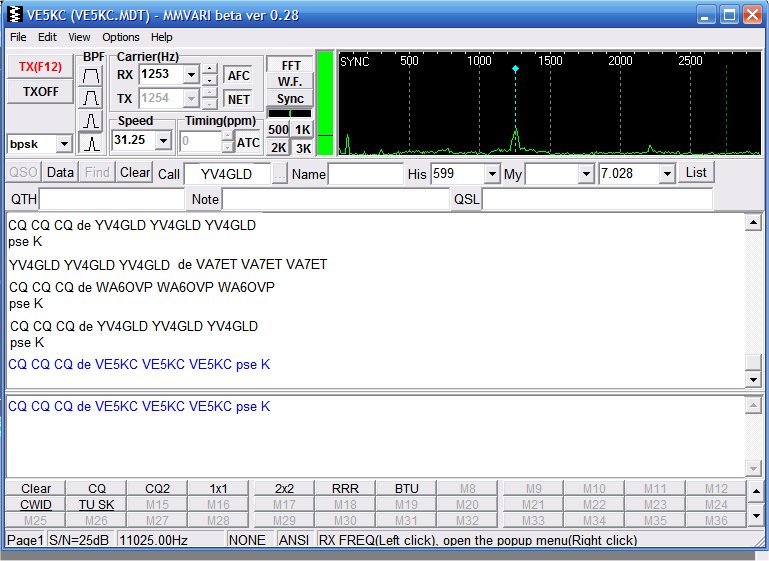
You can see it in action from CE0Y/I2DMI in this video
From some quick googling around it looks like the software can be integrated into the N1MM contest logging software for RTTY contesting. I know one DXpedition group who are planning to use it too…
Haven’t downloaded this and tried it out myself, but it definitely looks of interest.

Tim Kirby, G4VXE, is a regular contributor to AmateurRadio.com and writes from Oxfordshire, England. Contact him at [email protected].
Two new 2m repeater channels
According to the UK repeaters website, two new 2m repeater channels have been internationally agreed:
- 144.9750MHz input / 145.5750MHz output (RV46)
- 144.9875MHz input / 145.5875MHz output (RV47)
Though these channels are not available for use in the UK yet, the wording of the announcement suggests that they eventually will be.
Looks like we dinosaurs who still insist on calling the calling channel S20 are going to have to give up QSYing to S23!

Julian Moss, G4ILO, is a regular contributor to AmateurRadio.com and writes from Cumbria, England. Contact him at [email protected].
A day of ham radio
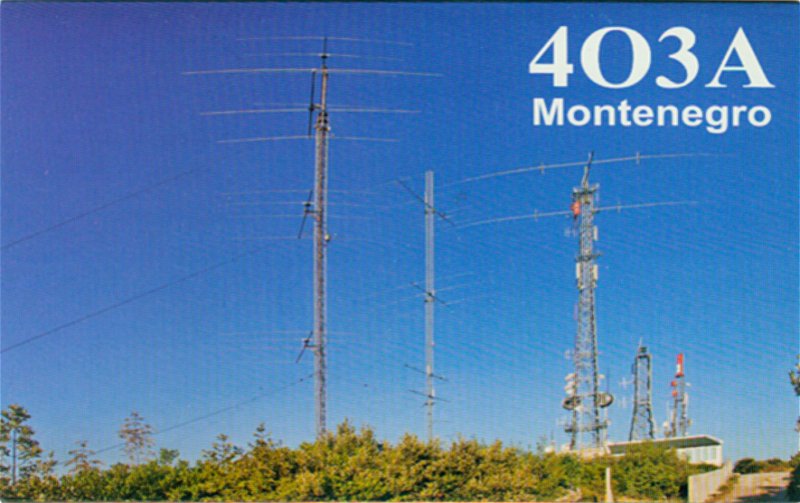
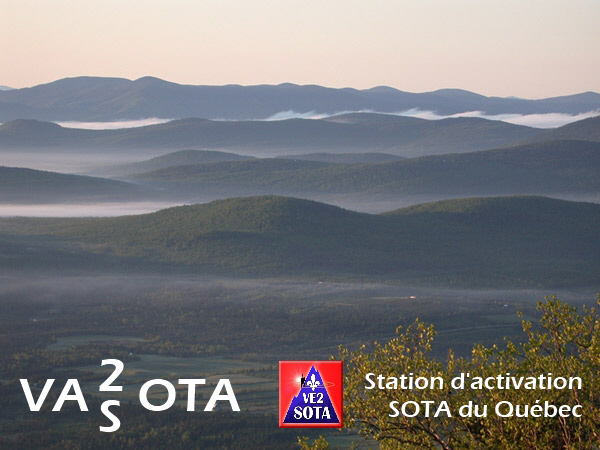
 So I setup VFO B on the k3 for 14.060 using my new Grove HS-900 antenna. This way I was able to listen for VA2OTA with in my right ear and on VFO A cruise all the other bands for contacts with my left ear. While waiting for VA2OTA my left ear picked up 4O3A at 14.019 I gave him a call and he came right back with a 599...not bad for 5 watts and an attic dipole. It was a very short QSO as he had many in line
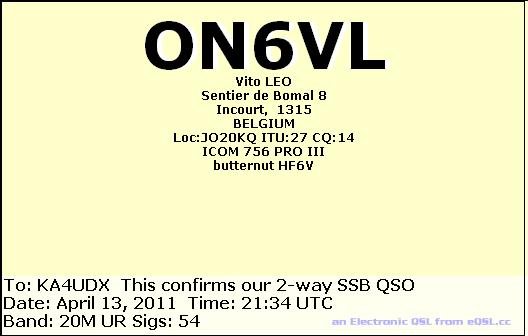
 waiting for him. I was hearing some action in my right ear but it was only other stations working VA2OTA so it was off to VFO A again to see what was out there. 40 meter was not to busy as it was still early so back to 20 meters. I came on a QSO that was just ending so I waited and called Vito ON6VL he came back to me and gave me a 559 report. Conditions were changing and Vito was starting to loose me so we ended our QSO. It was back to the computer and someone who posted a spot for VA2OTA said they had to use the audio peak filtering on their K3. That got me thinking and I not only used the APF (a link to YouTube for an example) but diversity mode as well. BINGO it worked at 14.060 VA2OTA jumped out of the noise floor. Now mind you it was...JUST....above the noise floor. I waited for my turn as there was a line up wanting to make contact. I gave him a call and he came back to me we exchanged reports and that was it. So over all the radio time was a success.

Mike Weir, VE9KK, is a regular contributor to AmateurRadio.com and writes from New Brunswick, Canada. Contact him at [email protected].
ARISSat-1 One Month in Service
This one is going to be a little short, but here is some highlights of the ARISSat-1 on the event of it’s 1 month of service, and the 1 month of me trying to still receive it. While I am not bitter, I do cry myself to sleep sometimes at night, knowing I may never get to hear it. And if you believed that last sentence, I have some bridges in New York City I would like to offer you a great deal on.
So, here are some of the articles I have posted about ARISSat-1:
Watch ARISSat-1 Deploy on NASA TV [VIDEO]
Track and Watch ARISSat-1 on The Go!
ARISSat-1 the Easy Way [VIDEO]

Photo Courtesy of AMSAT
Also, Douglas, KA2UPW/5 has reported that over 3000 frames of telemetry data has been sent in from the satelitte in the last 2 days. So things are still looking good. If you have any images from the SSTV on the satellite, please share them. I would love to see them.
Now, I haven’t really added much more on the ARISSat-1 because I didn’t want to get too bogged down with it. There are a ton of other stores I wanted to touch on as well. And I will be as we move forward. One of which is an Apple Cider Mobile as Autumn approaches and Apple Cider becomes the new beer for the evenings. Along with cider donuts and cheese curds and all the other goodies you can get at those small stores at family apple orchards here in Upstate NY. All this makes for a fun night at the radio on my favorite 2 meter repeater.
73.
Rich also writes a Tech blog and posts stories every Tuesday and Thursday on Q103, The Rock of Albany’s website, as well as Amateur Radio stories every Monday thru Friday on AmiZed Studios and hosts a podcast called The Kim & Rich Show with his fiance’ Kim Dunne.
Rich Gattie, KB2MOB, is a regular contributor to AmateurRadio.com and writes from New York, USA. Contact him at [email protected].
 Ham Radio Deluxe |
 W5SWL Electronics |
 Ham Radio Prep |
 KB3IFH QSL Cards  Hip Ham Shirts  HamRadioAuctions HamRadioAuctions Reliance Antennas Reliance Antennas Enigma Shop Enigma Shop |  morseDX  Ni4L Antennas  R&L Electronics R&L Electronics antennas.us antennas.us QRV QRV |
- Matt W1MST, Managing Editor
