 |
 Where’s the Love West Mountain Radio?
 22 September 2011 | by
 So again, I am looking in the QST, and I found that West Mountain Radio is offering a new RigBlaster. Sweet! I love their products. So I read on and notice something is missing from the info on the website and in the QST ad. Does it support Mac?

Photo Courtesy of West Mountain Radio
Now I have been a convert from PC for about 4 years now. My very first computer was a Commodore 64, which I then upgraded to an Amiga 500. I have been and will always be an Amiga user at heart. For me, Macs are the closest thing to a main stream Amiga, other than an Amiga which are pretty expensive nowadays. But you can read more about that as well as listen to that on the Amiga Roundtable podcast that is produced here at AmiZed Studios. So now that I am a Mac user, I want the full experience. Ham Radio included.
I have an older Macbook Pro in the shack for my main machine. I do have a small PC, but it’s slow and I built it for an entirely different use. So it wouldn’t be practical to use that. But with the release of the RigBlaster Advantage, which looks to be an awesome product I would use in a heart beat on my Mac, I don’t know if it’s Mac compatable. Yes, Macs 90% of the time work with everything, but it would be nice to have that little bit of info to know that it will, without having to go hunt for a driver, like I did for my USB to serial interface I got. It works perfectly, but it would have been nice if I knew I had to go download them from the chip maker since they weren’t included on the disc I was given with it.
I was going to buy a RigBlaster Data Jack Plug and Play for my Mac, when i was told by the gentleman from Quicksilver, that it wasn’t supported on Mac. So I got a NoMic. When I got home and did some checking, I discovered it can work with Macs. I admit, this is more a pet peeve then anything, but still. It would be nice to know. I mean, there has to be more than one person at West Mountain with a Mac. OK, so I shall finish my rant here and just say that it would be nice to have that info from the manufacturer directly, instead of getting anecdotal evidence from a Google search.
But in case you’re wondering, here’s a link to the specs on West Mountain’s website.
73.
Rich also writes a Tech blog and posts stories every Tuesday and Thursday on Q103, Albany’s #1 Rock Station website, as well as Amateur Radio stories every Monday thru Friday on AmiZed Studios and hosts a podcast called The Kim & Rich Show with his fiance’ Kim Dunne.
Rich Gattie, KB2MOB, is a regular contributor to AmateurRadio.com and writes from New York, USA. Contact him at [email protected].
My new club talk: ‘My World of VHF’
A few months ago, my friends at the Oxford and Harwell clubs both asked if I could come and give a talk to them. It’s something that I enjoy doing – it’s always good to meet people and if in some small way that I can encourage them to try something new or take a deeper interest in the hobby, then I’m delighted. What could I talk about though?
I decided to base the talk around the VHF/UHF column that I write for Practical Wireless in which I aim to cover as many aspects of VHF/UHF as I can and perhaps encourage people to look at their VHF/UHF radios in a different way.
I presented the talk for the first time at the Oxford club on Tuesday evening and I think it went ok! If as a presenter you enjoy it, it’s generally a fair sign! It’s always interesting to hear different perspectives from people.
– A first reaction from one attendee, ‘VHF? Is there anyone on it these days?’. It was fun explaining that yes, there really is!
– Another interesting suggestion was that the introduction of CTCSS on VHF/UHF repeaters had led to a decline in activity. I explained that although to use many repeaters you need to send a CTCSS tone, you don’t have to have CTCSS Decode on. So, if another repeater comes up on your frequency, you can still hear it. That’s certainly how I set my rigs up, although it sounded like not all rigs allowed this. I’d be surprised if CTCSS’ introduction had singularly led to a decline, but I’ve been surprised before….
– A very interesting discussion and heartfelt plea from an attendee about the RSGB’s VHF/UHF awards and how poorly supported they are. Obtaining QSL cards, on 432MHz in particular, apparently, had proven very difficult. But the member in question said that details of the RSGB’s VHF/UHF awards had not featured prominently in Radcom for many moons – did the society still have a commitment to them?
An interesting and enjoyable evening – thank you, ODARS! And I’m looking forward to visiting Harwell in a couple of weeks – and I’ll try and tweak the talk a bit by then!

Tim Kirby, G4VXE, is a regular contributor to AmateurRadio.com and writes from Oxfordshire, England. Contact him at [email protected].
AmateurLogic.TV 33: One Jam Packed Show
George visits the Twit.tv studios and interviews Randy Hall, K7AGE. Tommy visits the Huntsville Hamfest. Jim builds an Audio Isolation Interface. Peter shows us the DATV QSO Party.
George Thomas, W5JDX, is co-host of AmateurLogic.TV, an original amateur radio video program hosted by George Thomas (W5JDX), Tommy Martin (N5ZNO), Peter Berrett (VK3PB), and Emile Diodene (KE5QKR). Contact him at [email protected].
Revised 50MHz bandplan for Region 1
Via an article on the Southgate ARC site, I noticed that the UK Six Metre Group had published a commentary on the new bandplan for 50MHz as agreed at the IARU Region 1 conference held in August 2011 in Sun City, South Africa.
The main new feature of the bandplan is that the majority of beacons will move from the lower portion of the band to the segment between 50.400 and 50.500, although synchronised beacons will share a segment from 50.000 to 50.030. Also, the new CW segment sees a ‘Future International Calling’ frequency at 50.050 and an Intercontinental Calling frequency at 50.090.
EME has a segment from 50.310 to 50.320 and MS from 50.320 to 50.380
A WSPR frequency is established at 50.401 plus or minus 500Hz with a beacon exclusive band from there to 50.500.
Digital Voice gets a mention in the top section of the band for the first time.
The new bandplan is set to take effect from 1st January 2012, although beacons have until the end of 2014 to move. See the bandplan here

Tim Kirby, G4VXE, is a regular contributor to AmateurRadio.com and writes from Oxfordshire, England. Contact him at [email protected].
The Value of Time
Last month, Ernest, AA1IK, wrote about a frustration that we’ve all experienced, an operator on the other end who needlessly sends unnecessary information. In the particular QSO Ernest described, the other op totally botched a QSO in bad QSB (fading) conditions by repeating his callsign numerous times but sending their call only once or twice. The barely-uttered callsign was consumed by QSB on each return, propagation closed, game over.
Most radio amateurs understand the value of getting the most signal out and being able to pick signals out of the mud on receive, going to great lengths to improve antenna systems and buying great rigs with good receivers and linear amplifiers to get more signal. However, it seems many don’t understand basic information transmission and the value of time, or perhaps better stated, the value of airtime.
I see this quite a bit during Field Day. Operators in search-and-pounce mode will say or send the callsign of the station they’re calling, despite there being only one station on frequency calling CQ. Stations calling CQ when getting a weak caller will spend forty seconds telling the station they didn’t get their full callsign and list the several possibilities they thought it was.
The practice is even more annoying in emcomm. Ever hear a station take 120 seconds to tell a SkyWarn net control that it’s raining at their house but otherwise there’s nothing reportable happening?
The amount of information that can be conveyed is a function of the rate of communication (baud rate/wpm), the noise on the channel (signal-to-noise ratio), and the time available to communicate. Talk faster or send CW at a faster rate and you can send more information in a given amount of time. If the signal to noise ratio is low, you may need to send or talk slower (perhaps using more phonetics) and you’ll need more time to communicate the same amount of information. Sending redundant information not needed for “error correction” or information already known by the receiver is a waste of communication channel time. Those familiar with digital communications will recognize the parallels between digital protocols and algorithms and what I’m describing above.
Phone operators and really any radio amateurs who want to understand efficient radio communication should listen to their local 911 dispatch frequencies. Airtime is very valuable, and wasting it can result in lost property and lives. You’ll hear exchanges like this after a page goes out and a unit is responding:
Fire company unit: “County 901.”
County Control: “County.”
Fire company unit: “901 responding.”
County Control: “901 responding, 123 Main Street, dwelling fire.”
Fire company unit: “In route”
County Control: “Nineteen twenty-three”
In this exchange the unit informed county they were responding, they got the information on the call, and county confirmed the whole exchange with the time at the end. Granted, public safety communications are usually on clear channels with little noise, but can you imagine some of the exchanges we hear on amateur radio in a public safety environment?
CW operators tend to be more efficient by default as the CW mode naturally encourages a level of terseness that’s not intuitive in phone operation. But some CW operators in weak signal and contest situations have room for improvement, needing to avoid needless callsign repeating, “URs” and “QSLs”.
This lack of understanding by many in amateur radio of the value of airtime and how to use it efficiently is one of my ongoing pet peeves. To some extent I can understand in this day and age why a radio amateur may not be well versed in complex electronic theory, but communicating efficiently is basic and it doesn’t take much to learn how to do it, people just need to apply some logic, listen, and learn.


Ham Nation 18

Hosts: Bob Heil (K9EID), Gordon West (WB6NOA), and Leo Laporte (W6TWT)
World Trade Center antennas, insurance for portable gear, DVOM vs. AVOM, remote calling, and more.
Guests: Drew Scelba (N2RFA) and George Thomas (W5JDX)
Download or subscribe to this show at http://twit.tv/hn.
We invite you to read, add to, and amend our show notes at wiki.twit.tv.
Thanks to Joe Walsh who wrote and plays the Ham Nation theme.
Thanks to Cachefly for the bandwidth for this show.
http://dts.podtrac.com/redirect.mp4/twit.cachefly.net/video/hn/hn0018/hn0018_h264b_864x480_500.mp4
http://dts.podtrac.com/redirect.mp4/twit.cachefly.net/video/hn/hn0018/hn0018_h264b_640x368_256.mp4
http://www.podtrac.com/pts/redirect.mp3/twit.cachefly.net/hn0018.mp3
Dr. Bob Heil, K9EID, is the founder of Heil Sound and host of TWiT.tv's Ham Nation which streams live each Tuesday at 6:00pm PT (9:00pm ET) at http://live.twit.tv. Contact him at [email protected].
Handiham World for 21 September 2011
Welcome to Handiham World!
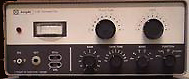
Image: Knight-Kit T-60 transmitter

Pat Tice, WA0TDA, is the manager of HANDI-HAM and a regular contributor to AmateurRadio.com. Contact him at [email protected].
 Ham Radio Deluxe |
 W5SWL Electronics |
 Ham Radio Prep |
 KB3IFH QSL Cards  Hip Ham Shirts  HamRadioAuctions HamRadioAuctions Reliance Antennas Reliance Antennas Enigma Shop Enigma Shop |  morseDX  Ni4L Antennas  R&L Electronics R&L Electronics antennas.us antennas.us QRV QRV |
- Matt W1MST, Managing Editor
