 |
 The Value of Time
 22 September 2011 | by
 Last month, Ernest, AA1IK, wrote about a frustration that we’ve all experienced, an operator on the other end who needlessly sends unnecessary information. In the particular QSO Ernest described, the other op totally botched a QSO in bad QSB (fading) conditions by repeating his callsign numerous times but sending their call only once or twice. The barely-uttered callsign was consumed by QSB on each return, propagation closed, game over.
Most radio amateurs understand the value of getting the most signal out and being able to pick signals out of the mud on receive, going to great lengths to improve antenna systems and buying great rigs with good receivers and linear amplifiers to get more signal. However, it seems many don’t understand basic information transmission and the value of time, or perhaps better stated, the value of airtime.
I see this quite a bit during Field Day. Operators in search-and-pounce mode will say or send the callsign of the station they’re calling, despite there being only one station on frequency calling CQ. Stations calling CQ when getting a weak caller will spend forty seconds telling the station they didn’t get their full callsign and list the several possibilities they thought it was.
The practice is even more annoying in emcomm. Ever hear a station take 120 seconds to tell a SkyWarn net control that it’s raining at their house but otherwise there’s nothing reportable happening?
The amount of information that can be conveyed is a function of the rate of communication (baud rate/wpm), the noise on the channel (signal-to-noise ratio), and the time available to communicate. Talk faster or send CW at a faster rate and you can send more information in a given amount of time. If the signal to noise ratio is low, you may need to send or talk slower (perhaps using more phonetics) and you’ll need more time to communicate the same amount of information. Sending redundant information not needed for “error correction” or information already known by the receiver is a waste of communication channel time. Those familiar with digital communications will recognize the parallels between digital protocols and algorithms and what I’m describing above.
Phone operators and really any radio amateurs who want to understand efficient radio communication should listen to their local 911 dispatch frequencies. Airtime is very valuable, and wasting it can result in lost property and lives. You’ll hear exchanges like this after a page goes out and a unit is responding:
Fire company unit: “County 901.”
County Control: “County.”
Fire company unit: “901 responding.”
County Control: “901 responding, 123 Main Street, dwelling fire.”
Fire company unit: “In route”
County Control: “Nineteen twenty-three”
In this exchange the unit informed county they were responding, they got the information on the call, and county confirmed the whole exchange with the time at the end. Granted, public safety communications are usually on clear channels with little noise, but can you imagine some of the exchanges we hear on amateur radio in a public safety environment?
CW operators tend to be more efficient by default as the CW mode naturally encourages a level of terseness that’s not intuitive in phone operation. But some CW operators in weak signal and contest situations have room for improvement, needing to avoid needless callsign repeating, “URs” and “QSLs”.
This lack of understanding by many in amateur radio of the value of airtime and how to use it efficiently is one of my ongoing pet peeves. To some extent I can understand in this day and age why a radio amateur may not be well versed in complex electronic theory, but communicating efficiently is basic and it doesn’t take much to learn how to do it, people just need to apply some logic, listen, and learn.


Ham Nation 18

Hosts: Bob Heil (K9EID), Gordon West (WB6NOA), and Leo Laporte (W6TWT)
World Trade Center antennas, insurance for portable gear, DVOM vs. AVOM, remote calling, and more.
Guests: Drew Scelba (N2RFA) and George Thomas (W5JDX)
Download or subscribe to this show at http://twit.tv/hn.
We invite you to read, add to, and amend our show notes at wiki.twit.tv.
Thanks to Joe Walsh who wrote and plays the Ham Nation theme.
Thanks to Cachefly for the bandwidth for this show.
http://dts.podtrac.com/redirect.mp4/twit.cachefly.net/video/hn/hn0018/hn0018_h264b_864x480_500.mp4
http://dts.podtrac.com/redirect.mp4/twit.cachefly.net/video/hn/hn0018/hn0018_h264b_640x368_256.mp4
http://www.podtrac.com/pts/redirect.mp3/twit.cachefly.net/hn0018.mp3
Dr. Bob Heil, K9EID, is the founder of Heil Sound and host of TWiT.tv's Ham Nation which streams live each Tuesday at 6:00pm PT (9:00pm ET) at http://live.twit.tv. Contact him at [email protected].
Handiham World for 21 September 2011
Welcome to Handiham World!
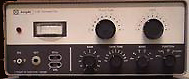
Image: Knight-Kit T-60 transmitter

Pat Tice, WA0TDA, is the manager of HANDI-HAM and a regular contributor to AmateurRadio.com. Contact him at [email protected].
Who’s Using 6 Meters?
When I got my new QST the other day, I was flipping through it and found myself on the quick stats page. One of the questions was pretty simple and easy. Do you use 6 meters? WOW! The answer floored me.

Maps Courtesy DX Sherlock
According to this stat, 84% don’t use 6 meters. Why? I know when I got on it, it was usually very quiet and no activity. What could the reason be? Everyone says it’s a fun band. I don’t think it’s lack of equipment. Most new all mode HF/VHF/UHF radios for the past 5 or so years, have had 6 meters built into it. And antennas can’t be the issue, as anyone could build a simple dipole for 6 meters. Even a 6 meter beam is pretty inexpensive. I got one at a Hamfest 4 years ago for like $60.
When I was at my local club meeting just last week, one of the guys asked what I was using and suggested I try PSK31, as that was a demonstration we had just watched, on 10 meters. Easy to get a vertical antenna up and a quick mode to setup as well. I like the idea, but I also want to get on 6 meters. He said yeah 6 is good, but the problem is no one is usually on there. Which brings me back to my question. Why not?
Yeah, DX on 6 can be fun when it’s hopping, but why not local stuff? SSB or AM. There’s an FM repeater listed for the area, but I’ll be damned if I can hear it. I’m starting to think it doesn’t exists anymore. But if it’s a lack of people, keeping 6 meters quiet, aren’t we just feeding the whole catch 22 cycle? I’m thinking maybe I should get the 6 meter dipole up and do a local 6 meter net on SSB. But now I put the question to you. If you’re not on 6 meters, why not?
73.
Rich also writes a Tech blog and posts stories every Tuesday and Thursday on Q103, Albany’s #1 Rock Station website, as well as Amateur Radio stories every Monday thru Friday on AmiZed Studios and hosts a podcast called The Kim & Rich Show with his fiance’ Kim Dunne.
Rich Gattie, KB2MOB, is a regular contributor to AmateurRadio.com and writes from New York, USA. Contact him at [email protected].
Insidious computer hardware conspiracy ?
1. Is it possible (i.e. cost-effective) to implement in the cpu some mechanism that intentionally disables it after a predetermined amount of usage?
2. Can such an implementation be made undetectible?
3. Do any cpu manufacturers actually do this?
A few months ago I wrote about some failing technology, now I got the feeling there is a conspiracy going on. After a succesfull restore of my Windows Vista OS and some radio software like WSPR, HRD, JT65HF. And finally installing the drivers to communicate with the radio. I could not start the computer yesterday, fans were running but that was it. First I thought it was the videocard, but replacing it by a new one I already bought last year did not change anything. There were also no usual beeps from the bios and the LED which is normally blinking was not doing anything as well. So what could I do? I checked memory and all connectors, they were all ferm in place. I suspect the powersupply but what if I buy a new one and it is another problem? Well, I decided to bring it to the nearest computershop for examination so we have to wait. But now the strange thing…..a colleague from my job has exactly the same computer. He had the same problem with the videocard in the warranty period. And believe it or not this morning I told him my computer had probabely died, he couldn’t believe it as he has exactly the same problem and experience with his computer since last weekend !!!! So that’s why I think this has to be a kind of insidious computer hardware conspiracy !!!
Bas, PE4BAS, is a regular contributor to AmateurRadio.com and writes from Groningen, Netherlands. Contact him at [email protected].
LHS Episode #066: His Name is Ted
 It’s no mystery that we at Linux in the Ham Shack are big fans of the application known as fldigi. We’ve even had the author of the program, W1HKJ, on the program to talk about it. We consider it one of the best Linux-native programs for ham radio ever written. That being said, one of our longtime listeners has also written some small, efficient and easy to use ham radio programs for operating PSK, logging, learning and transmitting CW and more. His name is Ted, WA0EIR. We’ve mentioned Ted in the past, but this time we decided to take a real gander at his applications. There’s plenty of Linux and ham radio goodness sandwiching the main segment as well so no one will go away disappointed. Thanks for listening, and keep fighting the good fight!
73 de The LHS Guys
Russ Woodman, K5TUX, co-hosts the Linux in the Ham Shack podcast which is available for download in both MP3 and OGG audio format. Contact him at [email protected].
USS Pampanito, NJ6VT, Is On The Air [VIDEO]
I didn’t post anything yesterday because I wasn’t feeling well, so to make up for it I give you this. Southgate ARC has a story posted about the USS Pampanito, a World War II Balao class Fleet submarine, that is docked at pier 45 at Fisher Man’s Wharf in San Fransisco. They have an Amateur Radio station on board and it’s on the air.The Pampanito has been converted into a museum and memorial back in 2007, that is open daily. During WWII, the vessel made six patrols of the Pacific ocean and sunk six Japanese ships and damaged four others. One of the stops on the tour of the Pampantio is the radio room, where the Amateur Radio station is setup. Rem, K6BBQ, has made a video of the radio room showing some Hams making contacts from the submarine. Rem says about the video, “..I’ve added some special effects to go along with the Pampanito’s WWII history.”
This kind of reminds me of the USS Slater, that is docked here in Albany, NY. Here is Rem’s video. Enjoy.
73.
Rich also writes a Tech blog and posts stories every Tuesday and Thursday on Q103, The Rock of Albany’s website, as well as Amateur Radio stories every Monday thru Friday on AmiZed Studios and hosts a podcast called The Kim & Rich Show with his fiance’ Kim Dunne.
Rich Gattie, KB2MOB, is a regular contributor to AmateurRadio.com and writes from New York, USA. Contact him at [email protected].
 Ham Radio Deluxe |
 W5SWL Electronics |
 Ham Radio Prep |
 KB3IFH QSL Cards  Hip Ham Shirts  HamRadioAuctions HamRadioAuctions Reliance Antennas Reliance Antennas Enigma Shop Enigma Shop |  morseDX  Ni4L Antennas  R&L Electronics R&L Electronics antennas.us antennas.us QRV QRV |
- Matt W1MST, Managing Editor
