 |
 Waiting list update
 31 October 2011 | by
 On Halloween Steve Weber KD1JV has announced to the AT-Sprint Yahoogroup he’s considering planning to take orders online for the ATS-4B at 11:11:11 AM, EDT on the 11th November, 2011. Clearly a time and date not to be forgotten. Shipping would follow close behind then. One exciting aspect of this latest ATS-4B version is the planned integrated CW/PSK decoder on a daughter board, planned for a January release.
And the other hotly awaited item for the QRP and HFpack crew, the new Elecraft KX3 is now likely not to start shipping until the new year, 2012 I presume. An apparently hastily written update indicates “KX3 estimated ordering date (Winter 2001) and shipping date (January)”.
UPDATE: We’re getting closer. On 2 November this has been updated to “KX3 estimated ordering date (Nov/Dec 2011) and shipping date (Late January)” [my emphasis].
I’m dreaming of an expensive Christmas.
Stephen Rapley, VK2RH, is a regular contributor to AmateurRadio.com and writes from New South Wales, Australia. Contact him at [email protected].
Each DXpedition QSO makes someone happy…
I remember a conversation way back when I was on the D68C expedition to the Comoros islands in the Indian Ocean. John G3WGV and Mark M0DXR were talking about the pleasure that people get from making contacts with DXpeditions. Mark summarised it in a way that I’ve always remembered, “for each QSO we make, we’re making someone happy”. It’s a magical way of looking at it and it would be nice to think that it is true.
I was reminded of this reading Dave Richards’ AA7EE’s blog about his QSO with T32C on 80m with a homebrew QRP and a 40m dipole! It’s a great story but what makes it even better is that the operator from T32C, Franky, ON7RU read the blog and commented on it! What really makes it is Dave’s clear surprise and pleasure at making the QSO.
Having operated a few DXpeditions over the years, I can safely say that it’s stories like these that make it all the more enjoyable. I remember back at 3B9C, I randomly strolled over to a spare station which was free and put out a call on 10m FM on 29.600MHz. A fair few came back and I worked my way through. Soon, I heard a familiar voice calling me, MW0TTU.
Mo, MW0TTU is the aunt of my friend Kelvin, GW4TTU and we had worked many a time on VHF from the South Wales hills. Simply, I replied without callsigns, “Hello Mo, what a lovely surprise, you’re five and nine in Rodrigues”.
It was lovely to hear Mo’s surprised voice as she said “Who’s that? Who’s that!”. Of course I explained quickly and did the more formal exchange of reports and then got back to the pileup, but it was a magical exchange.
It’s the QSOs like that that really surprise people and make them happy.

Tim Kirby, G4VXE, is a regular contributor to AmateurRadio.com and writes from Oxfordshire, England. Contact him at [email protected].
Nationwide EAS Test on November 9th
The FCC, FEMA and NOAA are going to be conducting a nationwide test of the EAS system, November 9th, 2011. Mainly to be sure, that it works, as a national test has never never been done. While states have done local tests on a weekly and monthly basis, no one is sure if an alert on a national scale was to go out, that it would 100% work.

Photo Courtesy of Wikipedia
So on November 9th, at around 2pm, someone, somewhere at the FCC or FEMA or NOAA, will push the activate button, and TVs and radio stations across the US will play the familiar tones we all know, when we hear an alert for a storm warning or some other event. Some of the differences will be that on TVs, you may see a background image on the screen as the scrolling text goes by, telling you this is all just a test. Some may not see the background image. Also the test will last for 3 minutes, as compared to 2 minutes for all others. The main reason is to make sure the code is getting to everyone to activate. So you could see a few systems slow on the catch up. Think of it like dominoes.
Now from my experience with the EAS system, working in broadcasting, sometimes the recording length on the Endec device that radio stations use, are only set for 2 minutes to record the audio. I don’t know if this will override all that and go live as soon as it hears the codes come across, or if the units will record the audio allowing manned studios to replay the alert in a break of the programming. I think there was only 1 or 2 times that we broking into programming to play an alert. Most of the time, it was at a scheduled pause in the programming.
But either way, this should be an event to see. The whole system tested at once. I wish the guys conducting the test good luck that this system works, and I hope we’ll never have to use it either.
73.
Rich also writes a Tech blog and posts stories every Tuesday and Thursday on Q103, Albany’s #1 Rock Station website, as well as Amateur Radio stories every Monday thru Friday on AmiZed Studios and hosts a podcast called The Kim & Rich Show with his fiance’ Kim Dunne
Rich Gattie, KB2MOB, is a regular contributor to AmateurRadio.com and writes from New York, USA. Contact him at [email protected].
Web Site Outage
Sorry for the recent Web site downtime. It was a stupid error on my (K5TUX’s) part. Also, it drives home the need for me to separate the production Web server from the development one. Hopefully that will be accomplished in the near future and downtime like was experienced over the last few days will not happen again. Thank you for hanging in there and welcome back to the site.
73 de K5TUX
Russ Woodman, K5TUX, co-hosts the Linux in the Ham Shack podcast which is available for download in both MP3 and OGG audio format. Contact him at [email protected].
CQ-VHF magazine available as a digital download
When I lived in Canada, I regularly bought a copy of CQ-VHF magazine. Edited by Joe N6CL, it’s an accessible, enthusiastic and informative look at the VHF/UHF scene.
When I moved back to the UK I occasionally looked at subscribing, but the costs to ship it to the UK were pretty high. I happened to look again the other day and was delighted to see that I could subscribe to the magazine as a digital download for a very reasonable $18.

The Fall 2011 issue should be available this week and I am looking forward to browsing it on my iPad!

Tim Kirby, G4VXE, is a regular contributor to AmateurRadio.com and writes from Oxfordshire, England. Contact him at [email protected].
Another Great HF Slacker Weekend
 I had previously admitted to being an HF slacker…that is, I only really enjoy the high frequency bands when the DX is loud and plentiful on 15 and 10 Meters. For almost a half decade, I’ve listened to the True HF Enthusiasts say things like “move to the lower bands when the solar activity is weak.” Fortunately, things are starting to change.
This weekend was the CQ Worldwide DX Contest (SSB) and the propagation was outstanding on the higher bands. I heard some people say that 10 Meters was never this good before but I suspect their memories may be faulty. But make no mistake, conditions were really awesome. Here’s a report from radio-sport.net.
I was up at our cabin in the mountains, running the FT-950′s 100 watts into a trap dipole at about 30 feet. Clearly, this is not your Big Gun Station but I was able to make 177 contacts, operating most of Saturday and a few hours on Sunday. Mostly, I was just chasing DX and trying to pick up a few new countries. I have to admit that my memory had a little rust problem concerning international call sign prefixes (where is C5A anyway?) but the N1MM software helped me out.
In the end, I did contact a dozen or so new countries, ranging from Mongolia to Croatia. I sure hope these guys upload their logs to Logbook of the World. I really don’t want to be chasing down those QSL cards manually. As I said, I am an HF Slacker.
73, Bob K0NR
Bob Witte, KØNR, is a regular contributor to AmateurRadio.com and writes from Colorado, USA. Contact him at [email protected].
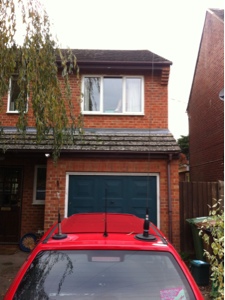
Sirio 4000PL mobile antenna ready for 10m FM

Tim Kirby, G4VXE, is a regular contributor to AmateurRadio.com and writes from Oxfordshire, England. Contact him at [email protected].
 Ham Radio Deluxe |
 W5SWL Electronics |
 Ham Radio Prep |
 KB3IFH QSL Cards  Hip Ham Shirts  HamRadioAuctions HamRadioAuctions Reliance Antennas Reliance Antennas Enigma Shop Enigma Shop |  morseDX  Ni4L Antennas  R&L Electronics R&L Electronics antennas.us antennas.us QRV QRV |
- Matt W1MST, Managing Editor
