 |
 KX3 on Ham Nation
 14 November 2011 | by
Mike Weir, VE9KK, is a regular contributor to AmateurRadio.com and writes from New Brunswick, Canada. Contact him at [email protected].
SoftRock Ensemble RXTX IF modification
This is a pretty simple modification that converts a SoftRock Ensemble RXTX SDR RF interface board from “common-IF” (RX and TX share the same antenna port) to “split-IF” (RX and TX have separate ports). Split-IF is the standard for high-performance transverters on the 50-, (70-), 144-, 222-, and 432-MHz amateur bands.
So, I had a look at the RXTX schematics (here, here, and here) and considered the following options for where to break the RX and TX portions of radio:
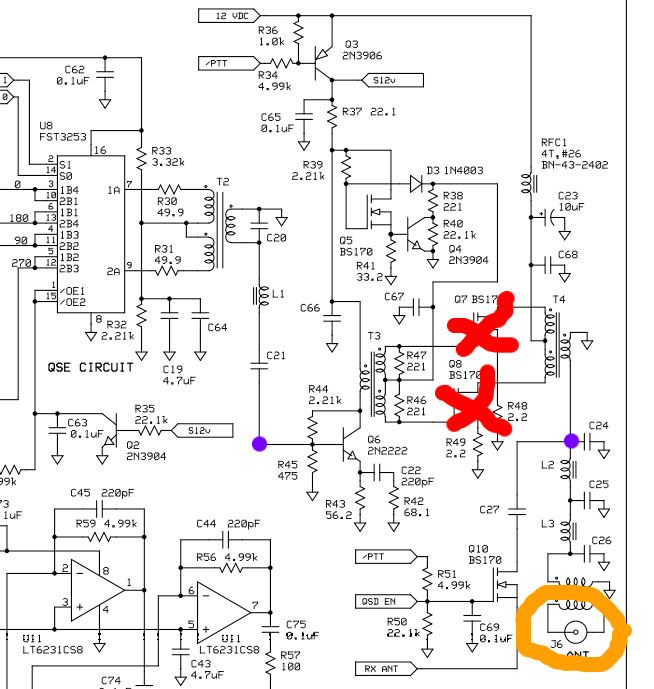
The purple dots were the first option. Unfortunately, these locations on the actual printed circuit board were not easily accessible to miniature coax and this process would involve significant surgery to perform and restore the modification. The second alternative I considered was the red Xs…jumpering over the BS170 PA transistors. By this time, I was looking for a way to avoid butchering the original circuit too much. So, I elected for option three, which was to install a second T/R switch at the antenna jack (golden circle). This had at least two advantages, the first of which was being minimally invasive. The big advantage, though, is that the radio could be operated at its design output and run through a fixed or step attenuator on the TX side to the transverter. This meant that I would be assured of having a reasonably clean signal to work with if I configured the radio correctly. It also meant that I could operate the radio as designed if I simply disabled the the second T/R switch and connected the antenna to the default port.
So, here is the modification that I came up with using parts I had in my junk box. KB9YIG ships the Ensemble RXTX with a couple of spare BS170 FETs that can be used in place of the 2N7000. I just had a lot of 2N7000s and thought I’d save the BS170s in case I ever burnt one in the RXTX.
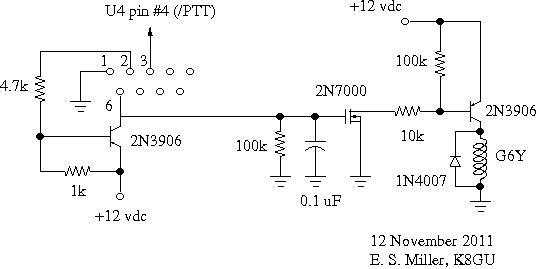
The interface to the transverter is through a DB9 connector. PTT for this transverter is +12 volts (as done with the TS-930S) on pin 6. Pin 1 is ground. Pins 2 and 3 are shorted together in the transverter cable connector to enable the modification in the SoftRock. The right portion of the schematic with the relay driver and Omron G6Y relay is based on the T/R switch from W1GHZ’s “Multiband Transverters for the Rover” that I decided not use on the microwaves when I found a cheap source of SMA coaxial relays. An I2C decoder would be great to put band data on the other pins to select a transverter (or transverter cascade for the microwaves).
The whole mess works great from a switching standpoint. When I key the PTT on Rocky or PowerSDR, it switches the TX line and keys the transverter. I’m a little ambivalent about the quality of transmitted signal that’s actually coming out. I think it’s good enough if you live in a sparsely-populated area, but I have a lot of VHF neighbors that I’d rather not upset. So, I need to do some more testing on this—a lot of it is getting the RXTX and PowerSDR configured correctly. It appears that the I/Q channels are flipped on my sound card (Audigy 2 ZS) between transmit and receive. I don’t know if that’s a wiring error in my breakout box or whether it’s normal. Spectra to come at some point…
Ethan Miller, K8GU, is a regular contributor to AmateurRadio.com and writes from Maryland, USA. Contact him at [email protected].
Eventually they will snap!
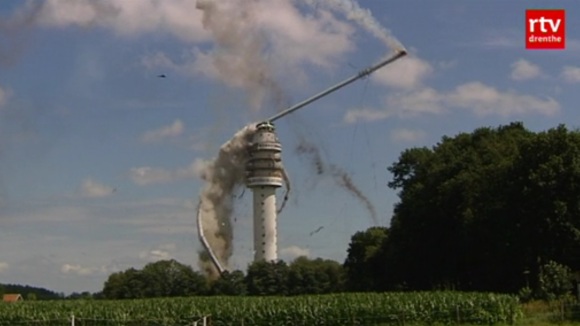
I‘ve been busy to set up to 84m horizontal loop again today. The XYL was not too happy with this. First it is a ugly thing in her garden and second we are still busy to finalize building the new bathroom and I should have spend time for that too. But then, the PA-beker contest is only this weekend, the bathroom is still there next week. It’s always a struggle to divide time between so many things especially when you got a hobby. Well, I always thought the militairy glasfiber mastparts I have to build the supporting poles of the loop antenne would be unbreakable. But the first mast snapped when I tried to get it up. Anyway, I got some spares and the next one did hold it. The loop is up again. Now, a test on 80m didn’t work out, I called several times but no one replied. I heard PA0PSA and YT2SS calling but they didn’t hear me. So I switched to 40m, a few calls to 9A6DX and we had a nice chat. Report 5/5 with 5W into the loop is not that bad. A quick modulation report guide me to another setting of the Turner +3B mike I now have connected to the Yaesu. I hope I’m ready for tomorrows PA-beker contest.
Bas, PE4BAS, is a regular contributor to AmateurRadio.com and writes from Groningen, Netherlands. Contact him at [email protected].
N1MM logger issues with the FT817
 |
| N1MM on the right VFO B… |
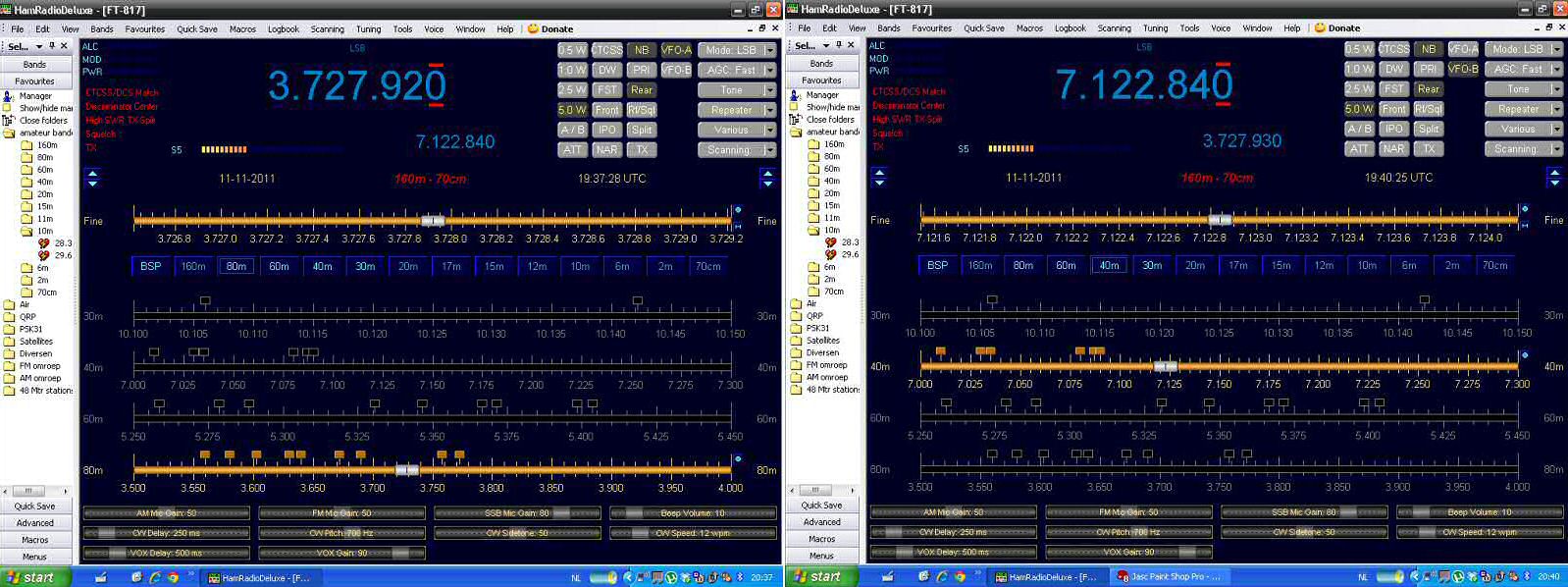
Well I decided to use N1MM for the upcoming PA-beker contest event. So first thing of all the preparations I have to do before I’m ready is to connect the FT817 to N1MM. That is done by the famous ZLP modem I described earlier in my blog. The problem only is that my laptop assigned the modem to virtual COM port 11. First problem, N1MM only knows 8 COM port assignments. Luckely someone had encountered that problem before and to solve this you only have to follow the N1MM help document on this subject. Once it was solved I had the FT817 communicating with N1MM. Next problem is that N1MM only reads VFO A, VFO B shows 0,00 MHz even when I switch to VFO B this does not change. I asked for a solution in some internet forums and discussed the problem with PE2KM who has a FT817 as well. Kees tried the same set up with his radio and has exactly the same issue I have. Now I’m in contact with one of the programmers I think on the N1MMlogger yahoogroup to see if we can solve this problem as apparently Ham Radio DeLuxe does read both VFOs and I can switch between them.
 |
| HRD left VFO A, right switched to VFO B |
Bas, PE4BAS, is a regular contributor to AmateurRadio.com and writes from Groningen, Netherlands. Contact him at [email protected].
SoftRock Ensemble RXTX
A few photographs of my latest tinkering—a SoftRock Ensemble RXTX. This unit provides all of the hardware necessary to have a software-defined radio (SDR) transceiver that uses a computer soundcard for ADC and DAC. It is available here as a kit. They are kitted in batches of 20-100 every few weeks and usually sell out within 24-48 hours.
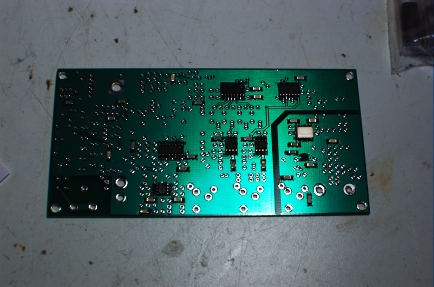
I originally had little interest in doing a full SDR transceiver (preferring receivers only) until it occurred to me that I could modify the RXTX as an IF strip for VHF/UHF transverters like many have done with the FlexRadio Systems rigs. So, I have developed a modification that is minimally invasive to the operation of the RXTX. At build time, you choose a nearly octave-wide “super band” for operation. This one was built for the 20-30 MHz band, covering the 15-, 12-, and 10-meter Amateur bands, as well as the 25-28 MHz IFs that I (will) use with present and planned transverters for the 6-, 2-, 1.25-, and 0.70-meter bands.
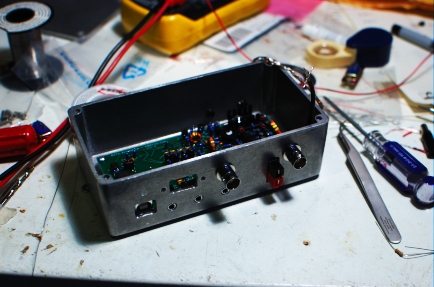
I’m not sure I have the enthusiasm to build another SoftRock. There are a lot of trifilar transformers to wind. The final result looks pretty good and seems to work. I’m going to put it on the spectrum analyzer soon to see how clean the output is and how I should balance the drive for the transverters. Then, I will also include a write-up of how the modifications are done. (I promise that writeup is the same place as the control circuit schematic for the 50-MHz transverter!)
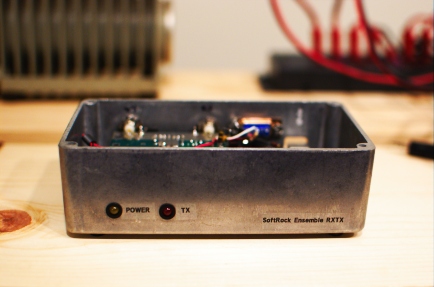
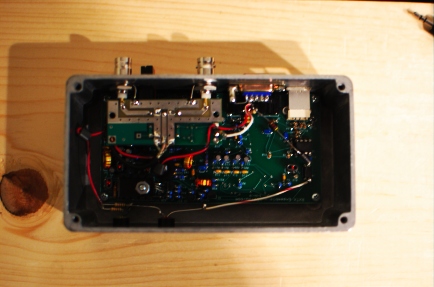
Here, you can see the W1GHZ relay board for doing split-IF T/R switching. If the transverter control cable (DB-9) is disconnected, the SoftRock switches to common-RF for regular 15-/12-/10-meter operation.
Ethan Miller, K8GU, is a regular contributor to AmateurRadio.com and writes from Maryland, USA. Contact him at [email protected].
The CFL is coming and Im not referring to the Canadian football league….
 |
| The way of the future? |
CFL thing??? Now since I have had them for some time now I do want to clear up some myths and truths about these types of lights. One of the myths is they just don't last long....well for 4 years I have not changed one CFL!!! Oh and believe me we do not live in the dark here either. I get my exercise up and down stairs turning off lights that somehow just get left on??? They do take some time to get to full illumination that is an annoying truth and if the room is cool it's even longer. There are some newer ones out there that are supposed to be "instant on" I have seen these CFL's in action and they are not at all like our friend the incandescent light were we are used to poof and there is light. Another myth....well for my home is that they cause RFI. I have not found this to be the case my rig (Elecraft K3,K2) does not show any S meter change if the lights are on or off. It's the Plasma TV here that kills me!!! Another truth is they do cast a "different" type of light from the light bulb, you do get used to it. The CFL market now offers cool white, warm white and reading lights so they have come a long way. I have not had a chance to test these as my darn CFL's wont burn out!!! Here is a myth and a truth combination, the myth is you will save on your hydro bill each month.....the truth is not until you have paid for the out of pocket cost of the CFL's!! Speaking of cost I did say in the opening paragraph that our household has "almost" gone CFL. In our bathroom we have a vanity light that is just great. It takes what is called 6 fat Albert 40 watt bulbs. I still have the incandescent ones and this past weekend replaced them all with......you guessed it with the BAD incandescent ones. Why you ask???? well for 6 it cost me 12.00 to go with CFL fat Albert's your looking at 96.00!!!! It sure would take a long time to get that money back in hydro savings.

Mike Weir, VE9KK, is a regular contributor to AmateurRadio.com and writes from New Brunswick, Canada. Contact him at [email protected].
My Introduction to SOTA

I can’t honestly say that I knew a whole heck of a lot about SOTA prior to a week or so ago. Sure I figured it had something to do with activating mountain tops and had figured out what the acronym stood for. By the way, SOTA stands for Summits On The Air. The general idea of SOTA is much of that with IOTA (Islands On The Air) or LOTA (Lighthouses On The Air). Ironically, the same weekend I worked my first SOTA station, I also worked my first lighthouse. Since there aren’t very many lighthouses in Colorado, I decided I would read up on and become more familiar with SOTA. I believe I’ll be able to find a few summits here in the Centennial State to keep me busy for a while.
My first SOTA QSO sort of came by accident. I had been tuning up and down the band looking for W3T which was the Nikola Tesla special event station operating out of New York. I had noticed W3T spotted on a few of the DX clusters, but never heard them or the stations I did hear operating on the posted frequency were clearly not W3T. I turned to Twitter to see if anyone else had either worked W3T or heard them. I was just about to send my tweet when I saw a twitter posting from K0BAM. Jim lives over in Delta, Colorado. Anyway, his Twitter posting read something like W7IMC operating QRP SOTA from Idaho 14.343. I gave the big dial on the front of my Yaesu FT-950 a spin up to 14.343 and listened for a few minutes.
The bands have been in fine shape most of the day. I had worked several US stations and even a JA on 10m just before this. The signal I was hearing from Idaho sounded like it was coming from Idaho Springs, Colorado (just up I-70 from me). I listened a few seconds more and the mountaintop station called Whiskey, Seven, India, Mike, Charlie QRZ. I quickly came back with Kilo, Delta, Zero, Bravo, India, Kilo and just like that I was in QSO with my first SOTA station.

As I previously stated, Scott’s (W7IMC shown right) 5w signal was booming into Colorado and we quickly exchanged pleasantries and he told me he was located on Regan Butte and provided the SOTA identifier of W7/SR-181. I knew Scott had others who wanted to work him and I wished him luck with his activation and said my 73 and logged the QSO in my logbook. I stayed on frequency and listened for another three or four QSO’s and picked up more information about the SOTA program. Of course, I quickly pulled up Google (Google is our friend) and soon found a couple of interesting websites.
The first website is the SOTA main home on the web. SOTA actually began over in the UK and slowly migrated throughout Europe and eventually we caught on over here. SOTA refers to each particular area as an association and there are 54 such associations around the world. Each association is managed by a volunteer called an association manager. The association which serves the Denver Front Range area is W0. W0 is managed by wG0AT, Steve Galchutt. You may know Steve from his Youtube videos featuring Rooster and Peanut his two pack goats.
Each association will have anywhere from a few qualifying summits and some have several thousands. In the case of W0, we have 1,791 qualifying summits. Enough to keep me busy for a long time. All total there are over 42,000 qualifying summits world wide.
Now we have two different ways to participate in the SOTA program. We can lace up our hiking boots, grab our portable gear and activate a qualifying summit. This is called an activator. Or we can grab a cup of coffee, head down to our comfortable shack. This is called a chaser. Obviously the success of the program requires both types of participants. Of course, an activator can work other mountain top activations.
Both activators and chasers can log their contacts into the SOTA database. Points are awarded for both categories. For what I hope is an obvious reason, those performing the activator role earn more points than those chasing. In addition, each qualifying summit may have different points earned based on degree of difficulty.
With winter coming on with a bang in the Colorado high country, I’ll spend the next few months learning more about SOTA and working other SOTA station activations as I can. Check out the SOTAwatch database for upcoming activations and current spots.

Finally, if you’re an iOS user (iPhone, iPad, iPod Touch). Check out the Pocket Sota app. It’s .99 cents in the iTunes App Store. The app provides a listing of all the associations which you can drill into to find detailed information about each of the qualifying summits including a map view.
The image to the left represents 219 qualifying summits in the Front Range region of the W0 association. While some of these are 14,000+ peaks, many are not. Those that aren’t just might be accessible even in the early winter months and I might just have to investigate a possible activation as KD0BIK/P. However, before I really get serious about this, I need to update my portable power setup.
I’m looking at the nanophosphate technology so many of our fellow amateur’s are raving about. Unlike the 12v 7.5Ah batteries I use today, which weigh in at a whopping, back breaking 5+ pounds. The 9.2Ah version is only a little over 3 pounds. Also, as I understand…the nanophosphate batteries last until the last milliamp is gone from the battery, all while holding their voltage. Yes the cost is much greater than SLA models. But I feel this could be well worth it.
Until then, I’ll be watching the SOTAwatch database for activations as well as keeping my ears open for any I happen to hear on the bands. I’ll make sure to document any such activities be it chasing or activations right here.
Until next time….
73 de KD0BIK (Jerry)
Jerry Taylor, KD0BIK, is a regular contributor to AmateurRadio.com and writes from Colorado, USA. He is the host of the Practical Amateur Radio Podcast. Contact him at [email protected].
 Ham Radio Deluxe |
 W5SWL Electronics |
 Ham Radio Prep |
 KB3IFH QSL Cards  Hip Ham Shirts  HamRadioAuctions HamRadioAuctions Reliance Antennas Reliance Antennas Enigma Shop Enigma Shop |  morseDX  Ni4L Antennas  R&L Electronics R&L Electronics antennas.us antennas.us QRV QRV |
- Matt W1MST, Managing Editor
