 |
 The Elecraft P3 has arrived……
 11 December 2011 | by
 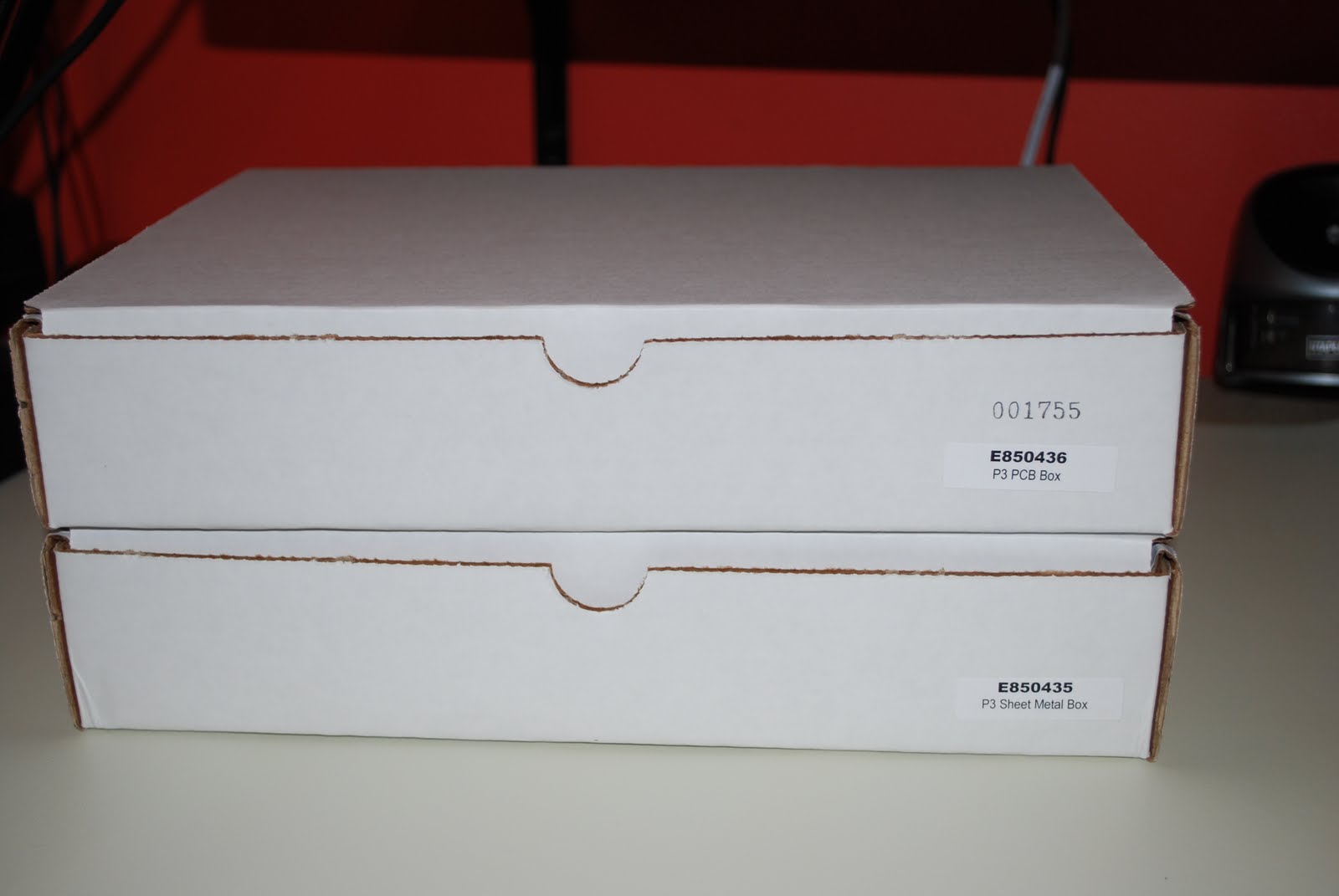 |
| The shipment arrived |
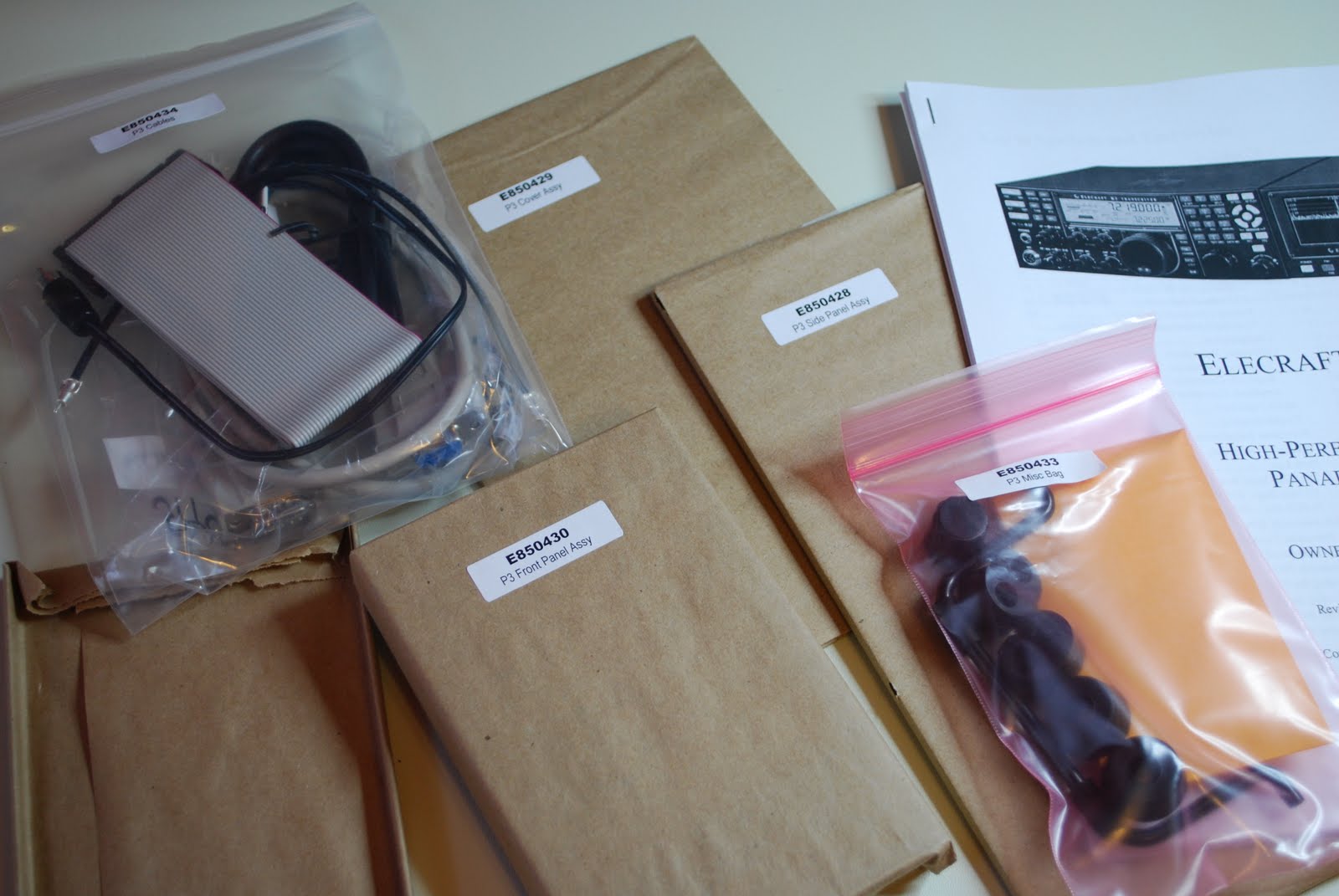 |
| Ready to go |
surrounded in bubble wrap. I sat down Saturday afternoon as the morning was dedicated to putting up the Christmas tree and decorating our home. As always I took inventory of all the parts I encourage anyone who orders any kit to make sure you do the inventory. This kit is another of Elecraft's solder-less kits. It comes with the boards (front panel board with LCD, rear I/O board and rear RF panel
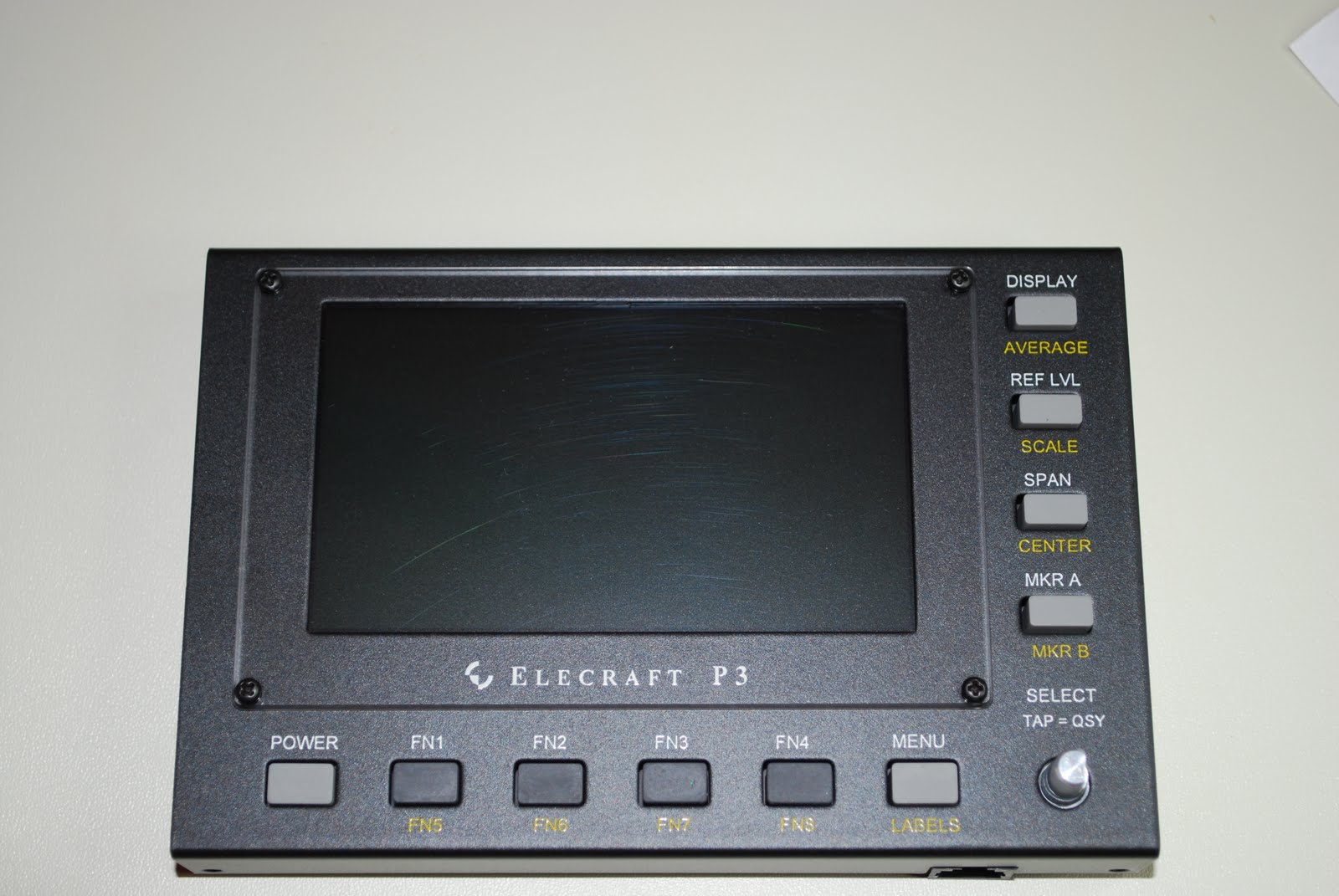 |
| Front panel done |
 |
| I/O board installed |
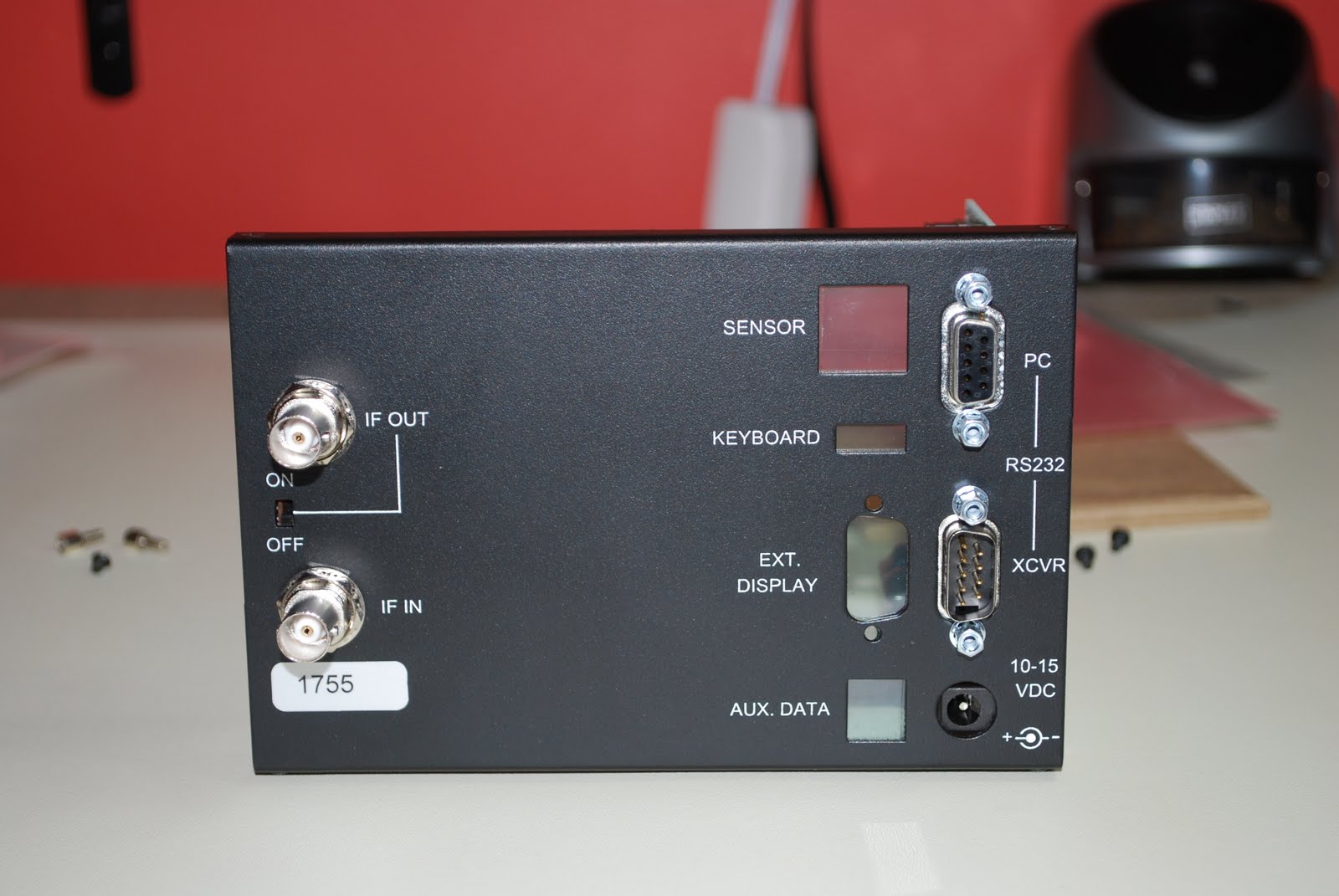 |
| Back panel |
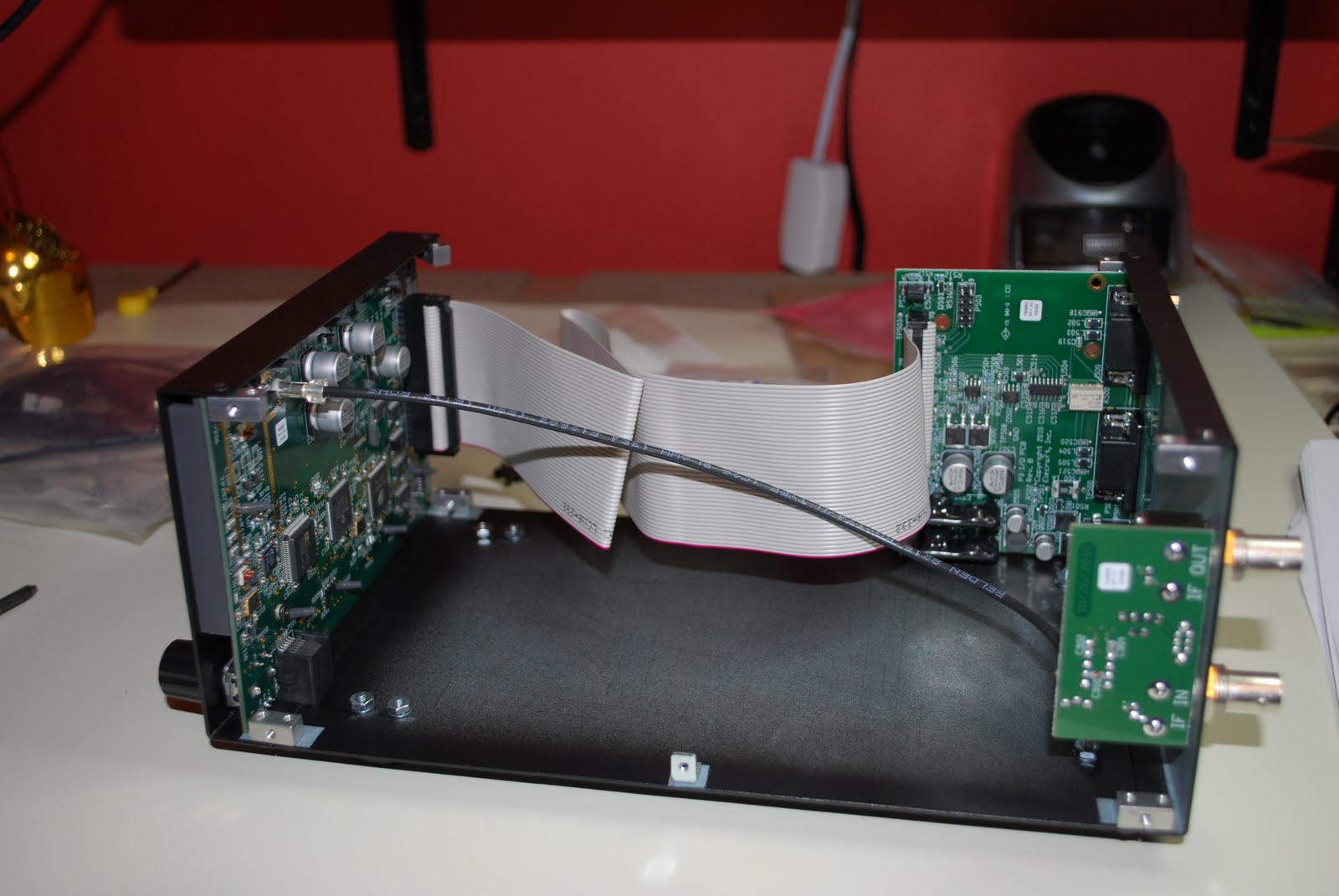 |
| The finished product |
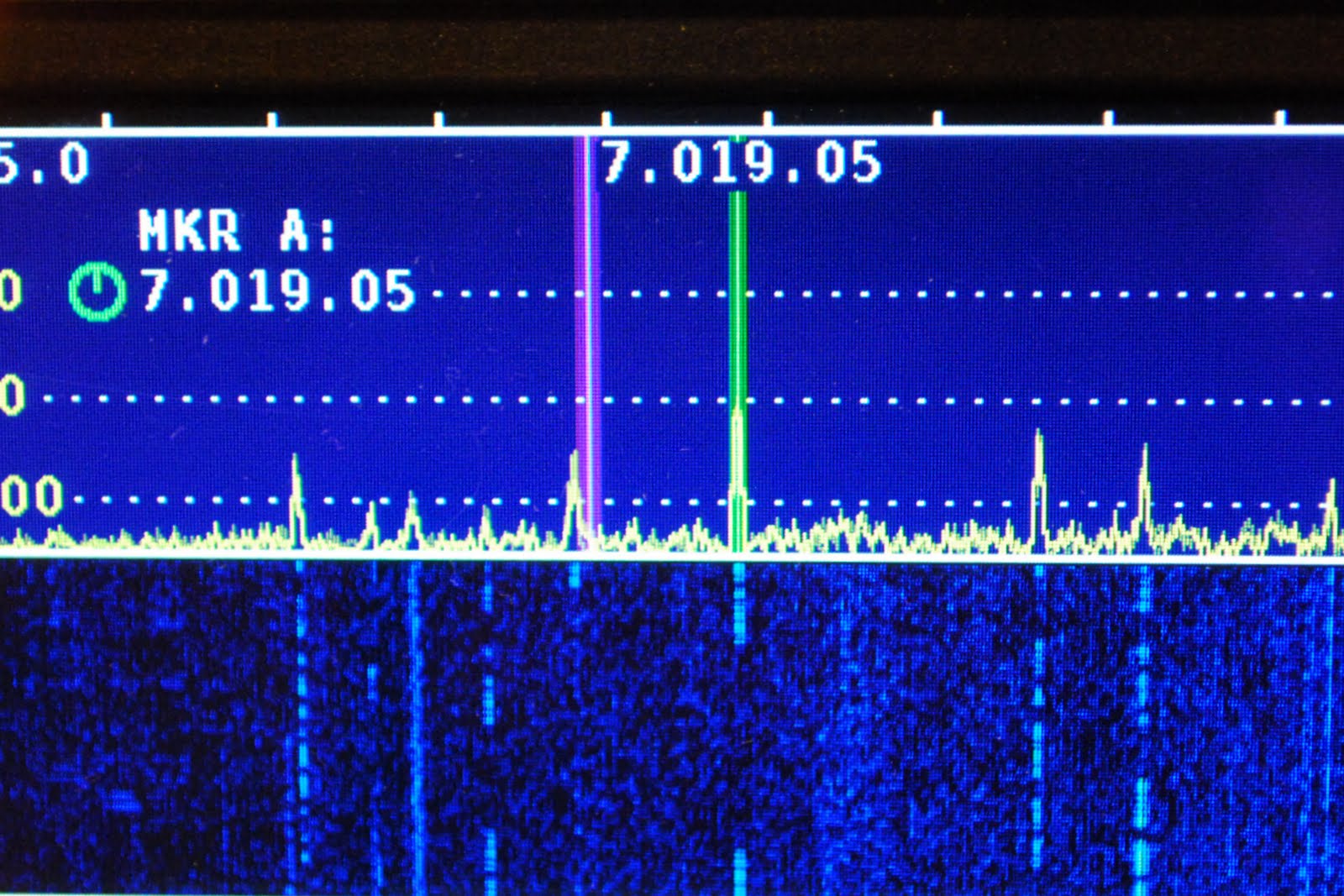 |
| Hooked up to K3 |

Mike Weir, VE9KK, is a regular contributor to AmateurRadio.com and writes from New Brunswick, Canada. Contact him at [email protected].
I am great! Again?
Well, this time it was more luck than anything else. Let me explain.
I promised a while back that I would tell you about me enjoying the newly repaired TS-440S. I do enjoy it, that’s not the problem, but the amount of enjoyment is short. How come? My power supply consist of two 7 Ah SLA batteries, which I charge with a wall-wart. With a 100 Watts output I can operate for an hour and that’s it. Even in listening mode it’s not more than a few hours longer as the set draws quite a current. When the batteries go flat it takes some 18 hours to charge them again, so I have to plan my activity very well.
So meet Mr. Jack Huang, a.k.a. BU2BA. 
He is living down the street from my mother-in-law, on the edge of Banqiao. He is quite an active ham and so it was obvious that I paid him a visit when I first arrived here a year ago. He has a room full of transceivers and a small dipole on the roof of his 15 storey apartment building, so he is limited to daytime operation due to noise. It’s always nice to chat with him and he is much more technical than I ever will be.
I had to sell off all my 220 Volt power supplies before we moved here, because Taiwan has 110 Volt coming out of the wall sockets. Jack had an old 30 ampere PSU lying around which he sold me together with a Yaesu FT-690mkII for a good price. It is a locally made PSU, so no circuit description, modded with a fan and – to be honest – some shoddy soldering. It worked fine until I started to have problems with RF feedback. Over the course of a few months it became worse and worse until I couldn’t even draw 1 Amp of current out of it. With my modest test equipment and knowledge I measured everything I could: all normal. I put in some new transistors and an IC in the voltage regulating circuit, just in case. Learned a lot about PSU’s in the process, but I still couldn’t find the cause. I even made a video of it.
Back to Jack with the 10 pounds of heavy metal. With his sophisticated equipment he tested the whole thing: couldn’t find anything wrong, either. Then he hooked up a 50000 uF capacitor instead of the 2×10000 uF which were in the PSU and waddayaknow? It worked! Out with the old, in with the new. You guessed it: still the same problem.
I am not a technician by nature. I approach everything with logic, curiosity, trial-and-error and by eliminating the impossible. And then there is my gut feeling which said: “it’s the voltage regulator, sonny!” So with the PSU gutted on my bench I noticed this trimming potentiometer on the voltage regulator controlling pin 2 of the CA723CE IC. Time for a dose of curiosity: what does it do if I turn it? Well, it creaked and squeaked a bit and all of a sudden the PSU came back to life. I hooked up a halogen lamp and no problem drawing 2 amps. I hooked up my TS-130v and no problem drawing 4 amps. I would have hooked up my TS-440S, but the kids called for dinner and Sinterklaas was also scheduled to pay us a visit that night (he never forgets Dutch ex-pats, because he is a really nice Saint), so I left it there.
I later took out the potentiometer and couldn’t measure a steady resistance at any point. I guess it is a 20 MOhm one, but I only had a 1 MOhm at hand. That one did the job too, so I was right in time for the ARRL 10 meter contest. All’s well that ends well. So, am I great or am I just lucky?
Hans "Fong" van den Boogert, BX2ABT, is a regular contributor to AmateurRadio.com and writes from Taiwan. Contact him at [email protected].
More on JT65A
Since getting the JT65-HF program working with my equipment, I’ve been having a great time with the mode. It really is amazing what you can work. It’s a very relaxing mode and you can easily be working someone on JT65 on HF and having a local QSO on VHF, which is quite fun.
Over the last few weeks, I’ve had JT65A contacts on 3.5, 7, 14 and 28MHz. The most satisfying bands have been 3.5 and 28MHz. On a number of occasions, I’ve hooked the receiver up to the computer in the morning and left the JT65 program running all day, to see what I can hear. Because I’ve configured the program to upload what it hears to the reverse beacon network and the PSK Reporter website, it’s easy to keep track of what propagation is like, from my desk or from the train! I shall have to work out some remote control so that I can make some QSOs at lunchtime.
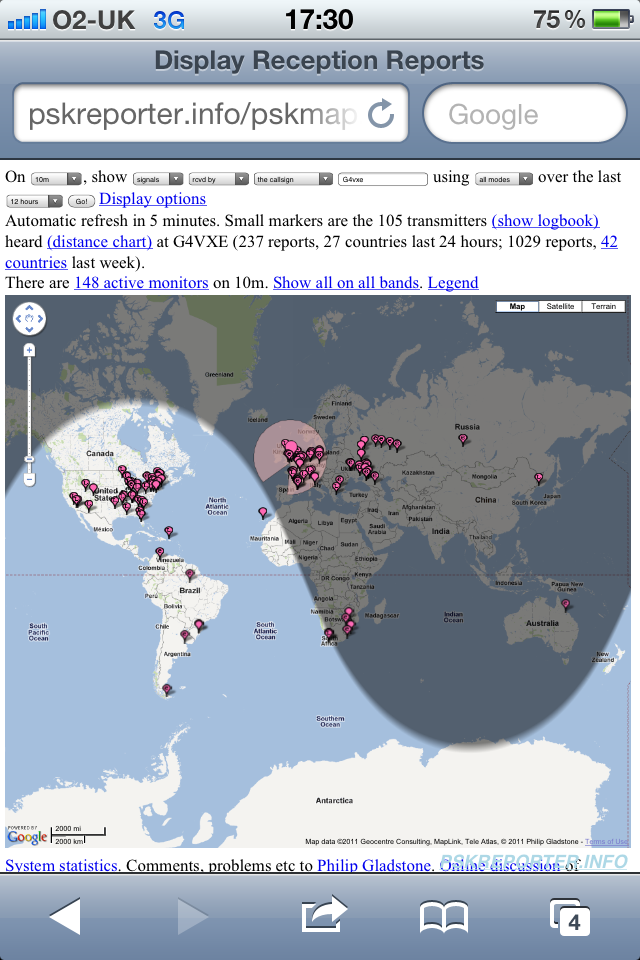
The image above shows a ‘typical to good’ day on 28MHz JT65. Generally the first signals are heard around 0700z and the last ones around 1730z – plus or minus.
In the evenings I have been trying out 3.5MHz JT65 and have been surprised by the results. Some of the notable contacts have been UN9LEI and KP4ED with lots of contacts in between! Hoping to work VK6 at some point, as that would be a nice one in the evening.
Great mode! I’m so glad I tried it. Can’t wait to get the K1JT modes working with my FT847 for VHF/UHF!

Tim Kirby, G4VXE, is a regular contributor to AmateurRadio.com and writes from Oxfordshire, England. Contact him at [email protected].
Tis the season….for 70MHz FM!
Not much from me during the last few weeks. A busy time at work, with three new websites going live in the space of two weeks – so most brain cycles going towards that during the lunchtimes that I normally use for a bit of blogging!
Over the last couple of weeks, I’ve been turning the 70MHz FM rig on a bit more often. I realise that 70MHz FM is a winter band/mode for me. During the summer, the antenna is usually connected up to the CW/SSB rig in case of a bit of Sporadic E. With the chances of that significantly lower now, I’ve been enjoying some more local contacts.
Good to work Geoff, G3NPI near Buckingham last weekend and to hear how active the band is on FM now. Clearly the combination of PMR kit and imports from the Chinese market has been a popular one. Keen to work a few people using the new Wouxun Dual Band handhelds when it’s warm enough to go out portable again.
This morning I had a nice QSO with Ted G3XUX/P near Winchester. I worked Ted through the MB7FM parrot, but we were also able to exchange signals directly, which is nice over the 40-45 mile or so path between us. Listening to MB7FM whilst I was doing a few jobs showed several other stations active, so if you have 70MHz FM, it’s well worth switching the gear on and making some calls as you can.

Tim Kirby, G4VXE, is a regular contributor to AmateurRadio.com and writes from Oxfordshire, England. Contact him at [email protected].
ARRL 10m contest part 1

First of all thanks all that replied to my previous post and send me best wishes and health I really appreciated it. Actually I don’t feel that ill when I keep quiet. But from what I heard Pneumonia can be very treacherous and I don’t want to end at the hospital. So, I heated up the radioshack and did a few hours of DX on 10m today in the ARRL contest. So far not too bad. I worked VK as new DXCC on 10m SSB (VK6IR had the honor). And of course lot’s of other nice DXCCs. Actually when the USA/Canada came in strong the band was that crowded I decided to call CQ up in the 28.800-815 to take some rest and was surprised that there actually was response. I was even spotted on the DX cluster! Band closed very early but I already stopped at 15:15 UTC as my little QRP Anneli was awake from her afternoon nappy and I was very tired as well. Tomorrow is a new day with new chances.
Bas, PE4BAS, is a regular contributor to AmateurRadio.com and writes from Groningen, Netherlands. Contact him at [email protected].
December 2011 Giveaway Winners
First of all, I want to take a moment to thank the sponsor of this giveaway, Ed from Import Communications. This isn’t the first time Ed has sponsored a giveaway and I hope everyone appreciates his generosity and ham radio spirit. Anyone who has worked with Ed will tell you that he’s a great guy and full of integrity. It’s a real pleasure to work with him to help him give away great stuff!
If you’re one of the 16 winners, please send me an e-mail (editor at amateurradio dot com) with your name, callsign, and mailing address and I will compile the list and forward it to Ed.
Without further delay, here are the winners of our December 2011 giveaway: Read the rest of this post
Matt Thomas, W1MST, is the managing editor of AmateurRadio.com. Contact him at [email protected].
Ham Nation 28

Hosts: Bob Heil (K9EID), Gordon West (WB6NOA), and George Thomas (W5JDX)
Wayne (W6IRD) and Sharon (K6IRD) Spring show off their shack and workshop, manufacturer’s day at the Atlanta Ham Radio Outlet, surface mount soldering, and more.
Guest: Gary Pearce (KN4AQ)
Download or subscribe to this show at http://twit.tv/hn.
We invite you to read, add to, and amend our show notes at wiki.twit.tv.
Thanks to Joe Walsh who wrote and plays the Ham Nation theme.
Thanks to Cachefly for the bandwidth for this show.
http://dts.podtrac.com/redirect.mp4/twit.cachefly.net/video/hn/hn0028/hn0028_h264b_864x480_500.mp4
http://dts.podtrac.com/redirect.mp4/twit.cachefly.net/video/hn/hn0028/hn0028_h264b_640x368_256.mp4
http://www.podtrac.com/pts/redirect.mp3/twit.cachefly.net/hn0028.mp3
Dr. Bob Heil, K9EID, is the founder of Heil Sound and host of TWiT.tv's Ham Nation which streams live each Tuesday at 6:00pm PT (9:00pm ET) at http://live.twit.tv. Contact him at [email protected].
 Ham Radio Deluxe |
 W5SWL Electronics |
 Ham Radio Prep |
 KB3IFH QSL Cards  Hip Ham Shirts  HamRadioAuctions HamRadioAuctions Reliance Antennas Reliance Antennas Enigma Shop Enigma Shop |  morseDX  Ni4L Antennas  R&L Electronics R&L Electronics antennas.us antennas.us QRV QRV |
- Matt W1MST, Managing Editor
