 |
 Christmas Gifts for The Ham Radio Operator
 13 December 2011 | by
 One year, the YL asked me what I wanted for Christmas. I told her, anything Ham Radio related would be a great gift for me. After about 30 seconds of awkward staring at each other, she asked where she could find those kinds of things, as she isn’t a Ham Radio op. I promptly pointed her to the ARRL website, but I also found another option for this year!

Photo Courtesy of TechNote Time
So I did a fast Google search and sure enough, the search algorithm, came through again with the website TechNote Time. They do have some unique gifts for Ham Radio operators and the prices do seem reasonable. The one that stood out to me was the On Air sign in neon blue. When I do get my “man cave” and have my shack all setup, this sign will have a nice place in it.
The Christmas ornaments are a nice touch for the Ham Radio family tree. They are made of porcelain and come in a few different designs. There’s also decals, novelty signs warning you of electrical shock or RF radiation, and more. So some nice gifts to be had. The trick is, dropping the subtle hints to the shopper who is looking.
They also have gifts not related to Ham Radio, but some could still fit the bill. They even offer gift certificates, if you’re not sure what to get. So there are a bunch of options available. If you’ve already completed your shopping, they well done! If not, you still have a little time to left to get something unique and nice for the Ham Radio op on your list.
73.
Rich Gattie, KB2MOB, is a regular contributor to AmateurRadio.com and writes from New York, USA. Contact him at [email protected].
Link between radio use and brain tumours?
A news item in the December 2011 CQ magazine caught my attention yesterday. It reported that a Danish study of more than 350,000 people found no evidence of a link between cellphone use and cancer. Cancer rates have not increased during the time that cellphone use has become widespread. “That’s good news” I thought.
However, some websites that reported the story carried the additional information that the Danish researchers found a hint of a link between heavy phone use and the rare but usually fatal glioma brain tumours – exactly the bugger I have. Not such good news after all, then.
Another study by Swedish researchers found an increase in cancer in areas of the brain exposed to microwave energy during a mobile phone call. Most of this data was from users of older analogue phones which run higher power and cause three times the exposure of newer digital systems. However that would still apply to use of VHF and UHF FM hand-helds which are typically operated at a power of 5 watts.
I think you would have to be an extremely active ham radio operator to expose yourself to as much RF as a heavy mobile phone user. But most hams are using much lower frequencies – though potentially higher power levels. Are the frequencies commonly used by hams more or less likely to cause cancer? I don’t think anyone definitively knows the answer to that.
But it is certainly food for thought. I’d be more inclined now to use my HTs on low power or with a speaker mic so as to get the antenna further from the head. And if you must use indoor or stealth antennas that can only be sited a few feet from the operating position, life’s too short for QRO!

Julian Moss, G4ILO, is a regular contributor to AmateurRadio.com and writes from Cumbria, England. Contact him at [email protected].
ARES in a Small Town
I’m afraid I haven’t spend much time on the air lately, because what time I have for ham radio has been devoted to a project that began as an idea for a blog post and has grown . . . and grown . . . and grown! I hope to write it all up when everything comes together, but I don’t want to give it away just yet. For now I’ll just give you a few clues: I’ve been assembling some test equipment, including an inductance-capacitance meter kit and a signal generator kit, and I received a tantalizing shipment in the mail today from a fellow who wrote a stellar article in QST 31 years ago. Stay tuned!
 On another front, I finally got to meet a local ham who is the IT manager at the hospital in our small town (population ~3K) — Mr. Andrew Rosenau, KCØYFY. I’ve been meaning to introduce myself to him ever since moving out here, but when I found out a few days ago that he is our county’s ARES (Amateur Radio Emergency Services) Emergency Coordinator, I sent him an email right away. He replied immediately, and today, after wrapping up a meeting in another part of the hospital, I ambled over and chatted with him for a few minutes in his office.
Behind him on his desk sat an HF rig, a 2M rig, and a TNC. Andy explained that he was a ham before moving here, and he got involved with ARES when the hospital became interested in EmComm. But with so few hams in our area (only 14 in the whole county), there hasn’t been much in the way of ARES activity. I volunteered to do what I could, and he said that for starters I could act as a back-up operator there at his station if he were unavailable in time of need.
It turns out that Minnesota has a huge packet network, and a radio club in a nearby town has even installed an antenna right in our city to extend this network. That was news to me! I’m going to have to dig up my old TNC and see if I can get it running. As much as I prefer CW, I have to admit that it does seem like an excellent way to handle traffic in an emergency.
ARES has always interested me. I’ve never been involved in it before, back when I lived in the Twin Cities, but now I think I owe it to my community. It appears that while there is less opportunity to do much ARES work out here in the sticks, there is also more opportunity for one ham to make a difference. So far Andy has been all alone in his effort — if even one ham chips in, that would double the number of ARES operators in our county.
Andy’s wife is a ham, too! I hope to have them over for dinner one of these days and get to know them better.


Todd Mitchell, NØIP, is a regular contributor to AmateurRadio.com and writes from Minnesota, USA. He can be contacted at [email protected].
Post-post Thanksgiving Leftover Leftovers
FoxNews.com Media Hit on 700K Amatuers in the US
While doing my usual trolling of the internet, I found a quick little media hit from a Fresno, CA, Fox news station, on the number of licensed Hams in the US. I figured I would share this one.
Rich Gattie, KB2MOB, is a regular contributor to AmateurRadio.com and writes from New York, USA. Contact him at [email protected].
ARRL 10 Meter Contest
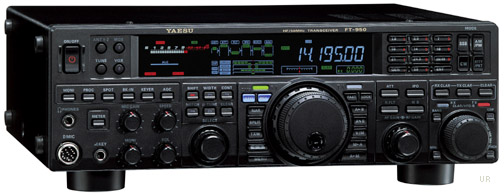 Usually I don’t focus on the ARRL 10 Meter contest, especially when the solar activity has been so low. However, band conditions have really picked up and 10 Meters is alive and kicking. We have quite a few new Technicians that are discovering the wonder of worldwide HF propagation with even a modest station.
I decided to operate from our cabin up in the mountains. I haven’t been happy with the performance of my trap dipole on 10 Meters, so I wanted to try something different. I pulled a twinlead J-pole antenna out of the basement and strung it up in a tall pine tree. This basically gave me a 1/2-wave vertical on 10 Meters and I was pleased with the performance.
I had a great time with the 10 Meter contest, operating for part of Saturday and Sunday.
You’ve got to like a contest that has:
- Only one band, so no fretting about which bands to focus on
- CW or SSB, take your pick or do both
- Lots of DX
- Work anybody anywhere
- You can sleep at night and not miss anything
I mostly searched and pounced around but did manage a few runs with my mighty wire antenna. Not being a real CW operator, I did decide that I would push myself to make 10 CW contacts. Most of those guys are going way too fast for me, but I got it done.
ARRL10M Score Summary Sheet
Start Date : 2011-12-10
    Band Mode QSOs Pts Cty
      28 CW    10   40   8
      28 USB  254  508  72
 Total        264  548  80
Score : 43,840
73, Bob K0NR
Bob Witte, KØNR, is a regular contributor to AmateurRadio.com and writes from Colorado, USA. Contact him at [email protected].
10m ARRL contest part 2
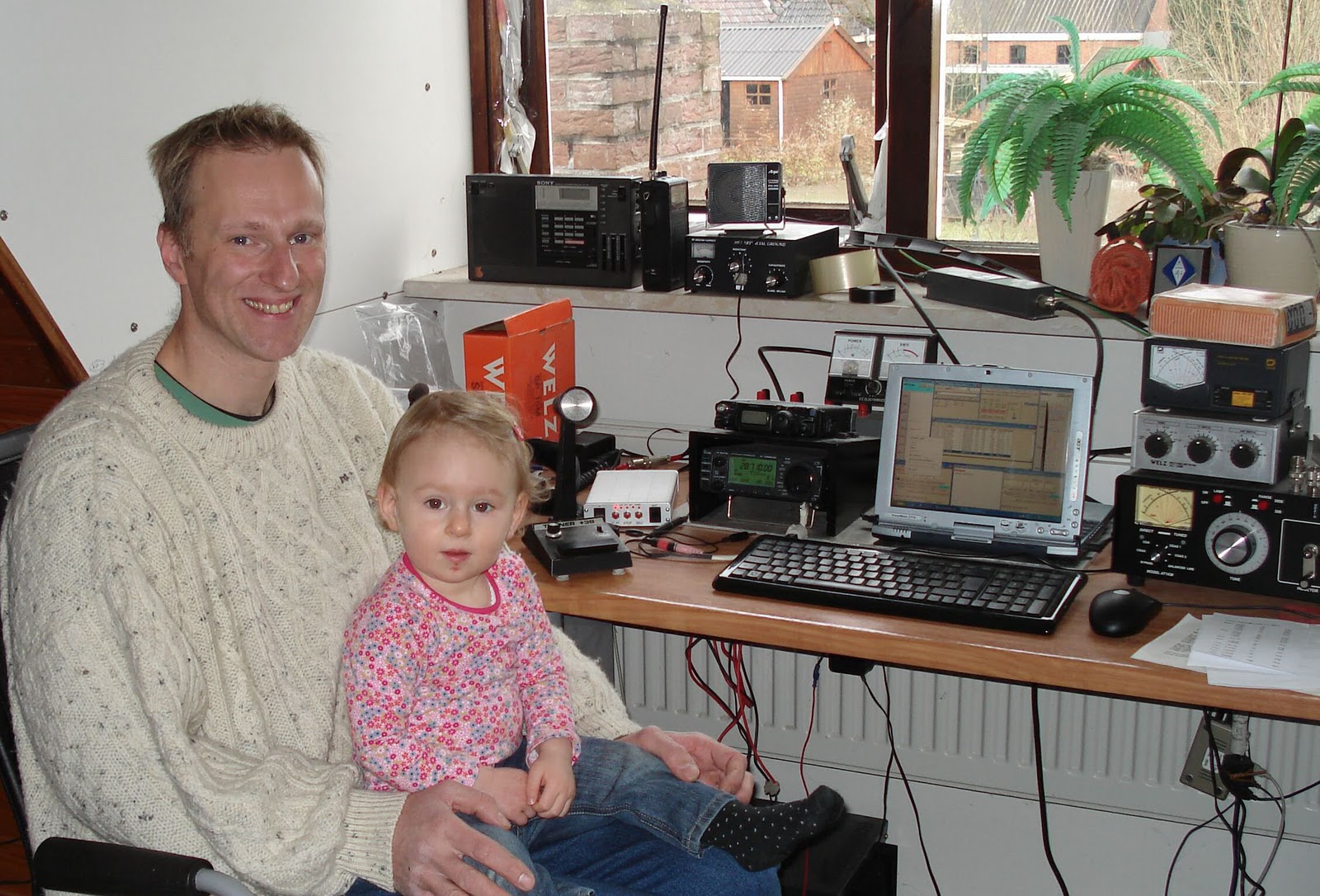
What can I tell, can propagation get any better? I only made 15 QSOs in the morning as my second operator did not know which buttons to push, so I had to follow her with my eyes constantly before she would switch off the entire station. That almost happened! Anyway, when she was away and in bed for her afternoon nappy I made te rest of the QSOs and stopped at 200. 15:15 UTC like yesterday. At that time the greyline was jumping in and the frequency went crazy. Worked 1 station/minute last 20 minutes. Signals booming from Europe, South, Central and North America with signals over S-9. Real fun to contest like this even without a beam. So different from my first ARRL 10m contest in 2006 when I actually obtained first place in the same category as now because I was the only participant! A overview: 2006-22 QSOs, 2007-30 QSOs (as PA25HSG), 2008-20 QSOs, 2009-21 QSO’s, 2010-5 QSOs, 2011-200 QSOs. What a difference!! Lot’s of nice DXCC worked a few new ones on 10m. A all band new one today was Guam which was surprisingly easy to work, and as he worked a lot of Dutch stations there seems to be a small path of propagation in between. Don’t know how many USA/Canada stations I worked as I lost count, I probabely worked some new states. A list of interesting DXCC:
A61BK (UAE), UA9XL (As.Russia), RK8I (Uzbekistan), HS0ZDG (Thailand), V25R (Antigua&Barbuda), VK6IR (Australia), UN6P (Kazachstan), CE1DY (Chile), AU2JCB (India), B7P (China), LV5V (Argentina), CO2CW (Cuba), SV5DKL (Dodecanese), HI3TEJ (Dominican Rep.), TR8CA (Gabon), BX5AA (Taiwan), EK6TA (Armenia), KP2A (US Virgin Isl.), TI5N (Costa Rica), NH2DX (Guam), HZ1FI (Saudi Arabia), PU2LEP (Brazil), HK1NA (Colombia).
Bas, PE4BAS, is a regular contributor to AmateurRadio.com and writes from Groningen, Netherlands. Contact him at [email protected].
 Ham Radio Deluxe |
 W5SWL Electronics |
 Ham Radio Prep |
 KB3IFH QSL Cards  Hip Ham Shirts  HamRadioAuctions HamRadioAuctions Reliance Antennas Reliance Antennas Enigma Shop Enigma Shop |  morseDX  Ni4L Antennas  R&L Electronics R&L Electronics antennas.us antennas.us QRV QRV |
- Matt W1MST, Managing Editor
