 |
 Just for fun
 26 February 2012 | by
 It’s been over two months since I last posted, and I realized that part of the reason for that is that I’ve been waiting for something “important enough” to write about. Along the same lines, I’ve skipped operating in a couple of contests recently where I’d done so in the past because I didn’t have enough time to put in more than a couple of hours in the chair. I decided to fix both of those things recently.
Last weekend was one of the “big” contests, the CW version of the ARRL DX contest. In this contest, DX stations work US & Canadian stations, and vice-versa. (As opposed to contests where anybody works anybody, or are primarily US/Canada only.) This is a 48 hour contest, and while I’ve never operated for that entire period, I do usually try to spend time operating both during the day and in the evening to take advantage of different types of propagation at the different times of day. Last weekend, I didn’t have time to do that, but I did have a few hours on Sunday afternoon. I decided to spend the afternoon working whatever stations I could. When I operate in a contest, I like to have some kind of goal for myself. For this contest, I knew that I wasn’t going to beat my own personal best, so I decided that I’d do nothing but work multipliers for my first 100 QSOs.
Generally, this is kind of silly thing to do, especially for person who works in “Search & Pounce” mode, where you’re trying to just make contacts. Multipliers have additional value, and there are all kinds of strategies on working multipliers versus just working stations, but most of those apply to bigger stations who know they’ll be competitive. In any case, I decided that it would be fun to do, and that’s exactly what I did. Once I hit 100 QSOs I started working any other station that I found, but I still managed to work 141 multipliers out of 169 contacts.
My final score was only a bit over 71,000 points, which in this contest, is very low, but I did have a good time doing it, and that’s the point. Hopefully, this will get me “back in the saddle” for both contesting and working on my blog.
For anyone interested, here’s my claimed score:
         Band    QSOs    Pts  Cty
           7      35     105   22
          14      66     198   58
          21      56     168   49
          28      12      36   12
       Total     169     507  141
       Score : 71,487
Opera on 6
I haven’t used the Opera digital mode on HF for a bit as it seemed that interest had dropped off and there is not much point in beaconing in no-one is receiving. It seems to be one of those modes where there is a resurgence of interest whenever there is something new to try. This weekend the new thing was some fast Opera modes for use on VHF so I fired up the K3 on 6m (50.700MHz) to see if I could receive anything.
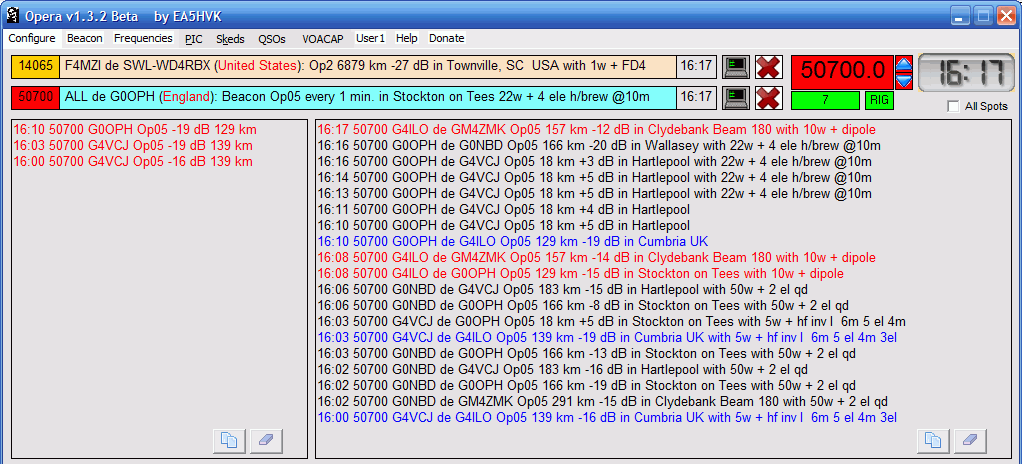
As you can see, not only did I receive some other stations but my own Opera signals were received around the UK. No great DX, but I was only using 20W to my attic dipole and would not expect to hear anything on 6m at this time.
If enough people were prepared to use it, this could be a good tool for discovering Sporadic-E openings on the VHF bands. The 30 second transmit cycle seems more appropriate for this type of propagation than WSPR’s two minute periods.

Julian Moss, G4ILO, is a regular contributor to AmateurRadio.com and writes from Cumbria, England. Contact him at [email protected].
Mistaken identity
A couple of weeks ago I came across FreeTrak, a PIC based APRS tracker developed by N0QBH. I have wanted to build a small ‘grab-and-go’ tracker for a while now. The FoxTrak works fine but is too big and bulky by the time it is paired with an HT. The TH-D72 is too much hassle as I need strong reading glasses to see the LCD screen and inevitably go out with some essential menu option disabled. Consequently these days I rarely bother taking APRS with me when Olga and I go for a walk around town.
I sent off for a couple of PIC 16F628A microcontrollers, thinking that I could program them in my EasyPIC5 development board. But when I tried, I immediately hit a snag.
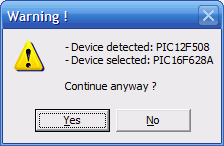
My PICFlash programmer detects a PIC 12F508 instead of a PIC 16F628A.
I don’t think I’ve been sold a fake MCU. If I remove the 16F628A so there is no micro plugged in at all I still receive the same warning. So I don’t know what to do. I’ve bricked too many PIC chips by programming them with the wrong settings to try crossing my fingers and clicking Yes. So it looks like my FreeTrak project is not going to get off the ground.

Julian Moss, G4ILO, is a regular contributor to AmateurRadio.com and writes from Cumbria, England. Contact him at [email protected].
ICQ Podcast S05 E05 – 100th Episode (26 February 2012)
Series Five Episode Five of the ICQ Podcast has been released. News Stories include :-
- 1st Interplanetary CubeSat Workshop
- New HF shortwave radio station callsign
- 13cm threat in Sweden
- Bahrain 70 MHz beacon A92C/B
- Open Mission Control software
- Craggy Island Dxpedition Group
- MIT offer free online electronics course
- G0KYA's February HF Propagation
- Android App for UK Band Plan 2012
- D-Star in Namibia V53W
- Radio Amateur to command ISS
- Field day BBQ cookbook published
Your feedback, Steve Nicholls, G0KYA Progation Report, and our 100th episode roundtable discussing the past and future of Amateur radio.
Colin Butler, M6BOY, is the host of the ICQ Podcast, a weekly radio show about Amateur Radio. Contact him at [email protected].
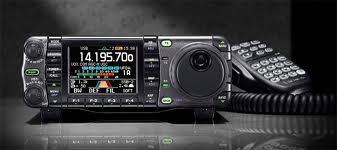
Yaesu FT-818 fact or fiction??
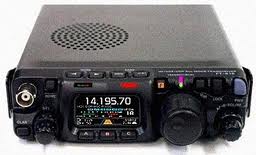
- All mode, all bands 1.8-1296MHz with 5MHz and 70MHz
- 5W RF (2W 1296MHz)
- 3.5AHr Li-Ion battery pack (2hr charging)
- Built in random wire and whip auto-ATU
- Full colour OLED display
- Multi-function DSP noise reduction
- RF Speech processor

Mike Weir, VE9KK, is a regular contributor to AmateurRadio.com and writes from New Brunswick, Canada. Contact him at [email protected].
Big Day Out at Wyong
Just back from a few hours spent at the annual field day at Wyong hosted by the Central Coast Amateur Radio Club. This has to be the big day out for Australian radio amateurs. People came from near and far. It’s a good barometer of the health of the hobby and the local industry supporting it.
I was delighted to see – as the first exhibit as you enter – a full display of the Elecraft K-line presented by Gary VK4FD. Only thing missing was a KX3. Gary of course is an enthusiast, not an employee of Elecraft. A pretty good indicator of the passionate support the company enjoys.

The flea market became pretty busy as the morning progressed, but maybe not as many stalls as previous years. One stall that stood out for me at least was Stephen VK2SPS’s which included his offering of keys and bugs, surplus to his collection as he focuses on homegrown Australian manufactured keys. Eagle-eyed visitors will spot the McElroy bug (top, centre) and an interesting wooden based French military key towards bottom right.

Brilliant sunny weather, but not too hot to spend some time wandering about looking for a bargain or three. Also saw an impressive display of homebrew gear from members of the ARNSW Homebrew group.
Stephen Rapley, VK2RH, is a regular contributor to AmateurRadio.com and writes from New South Wales, Australia. Contact him at [email protected].
The ARRL Handbook
 My family sure was nice to me on my birthday this past Wednesday! One of the gifts I received was something I’ve wanted, but I couldn’t bring myself to cough up the cash for it: the 2012 edition of The ARRL Handbook for Radio Communications, graciously given to me by my daughter. Since the most recent copy on my shelves was several decades old, I was glad to get my hands on it.
I can see why this is a required textbook for the classes my friend Scott has been taking. He is a Signalman with BNSF Railway and periodically travels to Kansas City for training (no pun intended). The ARRL Handbook is a great resource for more than just ham radio operators. It is well-written and comprehensive — so comprehensive that I felt like an ignoramus as I paged through it on my birthday! I may have my Amateur Extra Class, but now I see more clearly than ever how little I really know.
But don’t let that scare you away from this book, Technicians. There’s still plenty in this book that you will find accessible, and anyhow we’re never going to learn if we don’t push ourselves.
One thing that isn’t covered in this book is the topic of operating procedures. But I can see why this topic has been relegated to a book of its own
As with most of the ARRL library, you’ll find this book cheaper over at Amazon


Todd Mitchell, NØIP, is a regular contributor to AmateurRadio.com and writes from Minnesota, USA. He can be contacted at [email protected].
 Ham Radio Deluxe |
 W5SWL Electronics |
 Ham Radio Prep |
 KB3IFH QSL Cards  Hip Ham Shirts  HamRadioAuctions HamRadioAuctions Reliance Antennas Reliance Antennas Enigma Shop Enigma Shop |  morseDX  Ni4L Antennas  R&L Electronics R&L Electronics antennas.us antennas.us QRV QRV |
- Matt W1MST, Managing Editor
