 |
 Ennerdale
 20 March 2012 | by
 Following on from the kind words I received about the scafell pike photo I thought I’d share this one with you. I took it whilst attempting the Ennerdale horseshoe last August. The horsehoe is a 25 mile hike round the summits and it has 21 summits to activate. Some for SOTA (Summits on the air) and some are WOTA (Wainwrights on the air).

The photo was taken from the Summit of Green Gable which ended up being the second to last activation. The clouds came in as did the rain and so I made my way down to the valley floor and had a 6 mile walk back to the car which was parked at the base of the small fell at the front of the horseshoe in the middle of the picture. Crummock and Buttermere are the lakes on the right and Ennerdale lake is hidden round the back of Pillar on the left hand side. The western lakes are not as popular as the central lakes (Derwent, Windemere etc) and even though its only a few miles from a few small towns there was hardly a sole there.
Each year there is a marathon running race round the horseshoe. No cheating you have to go round all the summits! tempted?
Anyway I hope you liek the photo and if you’re ever in the lakes then listen out on 145.500Mhz as there may be someone activating a summit close to where you are.
Alex Hill, G7KSE, is a regular contributor to AmateurRadio.com and writes from Cumbria, UK. Contact him at [email protected].
Last day of Winter
Spring officially begins in about 5 hours from right now. But the weather here today had to be record breaking, or darn near close to it. As I left work today, for the drive home at 5:00 PM, it was 77F (25C) – on March 19th!
The extended forecast for the next week is informing us that daytime high temperatures will be in the upper 60’s and into the 70s’ and that on Thursday, we may even break 80F (27C).
I was telling Bob W3BBO during our weekly Echolink chat the other day, that we will probably pay for this with a Memorial Day holiday weekend in the 50s (13C).
Ah yes, W2LJ is ever the optimist!
On a radio note, I tried getting on the bands a few times over the weekend only to hear not much of anything. The bands seemed to be dead for me. BUT ….. the bands have been real good for my friend Jim W4QO, who announced that he finished working the countries he needed to accomplish Diamond DXCC – all QRP. Way to go, Jim – a hearty hand shake and slap on the back for you!
72 de Larry W2LJ
QRP – When you care to send the very least!

Larry Makoski, W2LJ, is a regular contributor to AmateurRadio.com and writes from New Jersey, USA. Contact him at [email protected].
Geomagnetic data reveal unusual nature of recent solar minimum
An interesting article appeared on physorg.com yesterday regarding changes in the Earth’s magnetic field and its relation to solar activity. Although short on detail it hints at significant changes going on within our sun.
Since the mid-1800s, scientists have been systematically measuring changes in the Earth’s magnetic field and the occurrence of geomagnetic activity. Such long- term investigation has uncovered a number of cyclical changes, including a signal associated with 27-day solar rotation.
This is most clearly seen during the declining phase and minimum of each 11-year solar cycle, when the Sun’s magnetic dipole is sometimes tilted with respect to the Sun’s rotational axis. With the Sun’s rotation and the emission of solar wind along field lines from either end of the solar magnetic dipole, an outward propagating spiral-like pattern is formed in the solar wind and the interplanetary magnetic field that can drive 27-day, and occasionally 13.5-day, recurrent geomagnetic activity.
Recurrent geomagnetic activity can also be driven by isolated and semipersistent coronal holes, from which concentrated streams of solar wind can be emitted.
During the most recent solar minimum, which took place from 2006 to 2010, however, several researcher groups noticed 6.7-day and 9-day recurrent changes in geomagnetic activity, and similar patterns in the interplanetary magnetic field, and the solar wind. Using modern data covering the previous two solar minima, these higher-frequency occurrences were judged to be unusual.
Love et al. analyzed historical geomagnetic activity records from 1868 to 2011 and find that the 6.7-day and 9-day recurrent changes were actually unique in the past 140 years.They suggest that the higher-frequency changes in geomagnetic activity are due to an unusual transient asymmetry in the solar dynamo, the turbulent, rotating plasma deep within the sun which generates the magnetic field.
More information: Geomagnetic detection of the sectorial solar magnetic field and the historical peculiarity of minimum 23-24 Geophysical Research Letters, doi:10.1029/2011GL050702 , 2012
Provided by American Geophysical Union
“Geomagnetic data reveal unusual nature of recent solar minimum.”
March 19th, 2012. http://www.physorg.com/news/2012-03-geomagnetic-reveal-unusual-nature-solar.html
Owen Morgan, KF5CZO, is a regular contributor to AmateurRadio.com and writes from Texas, USA. Contact him at [email protected].
Linux Outlaw on LHS
The live recording of LHS Episode #079 is being moved to today, March 19th, at approximately 4:30pm CDT (2130 UTC). This is to accommodate our very special guest, Fabian “Fab” Scherschel of the Linux Outlaws podcast. We might even get a cameo from Dan Lynch as well; no word on that yet. So if you can, please join us for the live broadcast and visit with us in the chat room during the show.
73 de The LHS Guys
Russ Woodman, K5TUX, co-hosts the Linux in the Ham Shack podcast which is available for download in both MP3 and OGG audio format. Contact him at [email protected].
Shame on me………………

Early spring+great weather=yard work, house cleaning, garden prep and blah blah blah and therefore it's > (greater than) ham radio which = shame on me! I have not had really any time for radio!
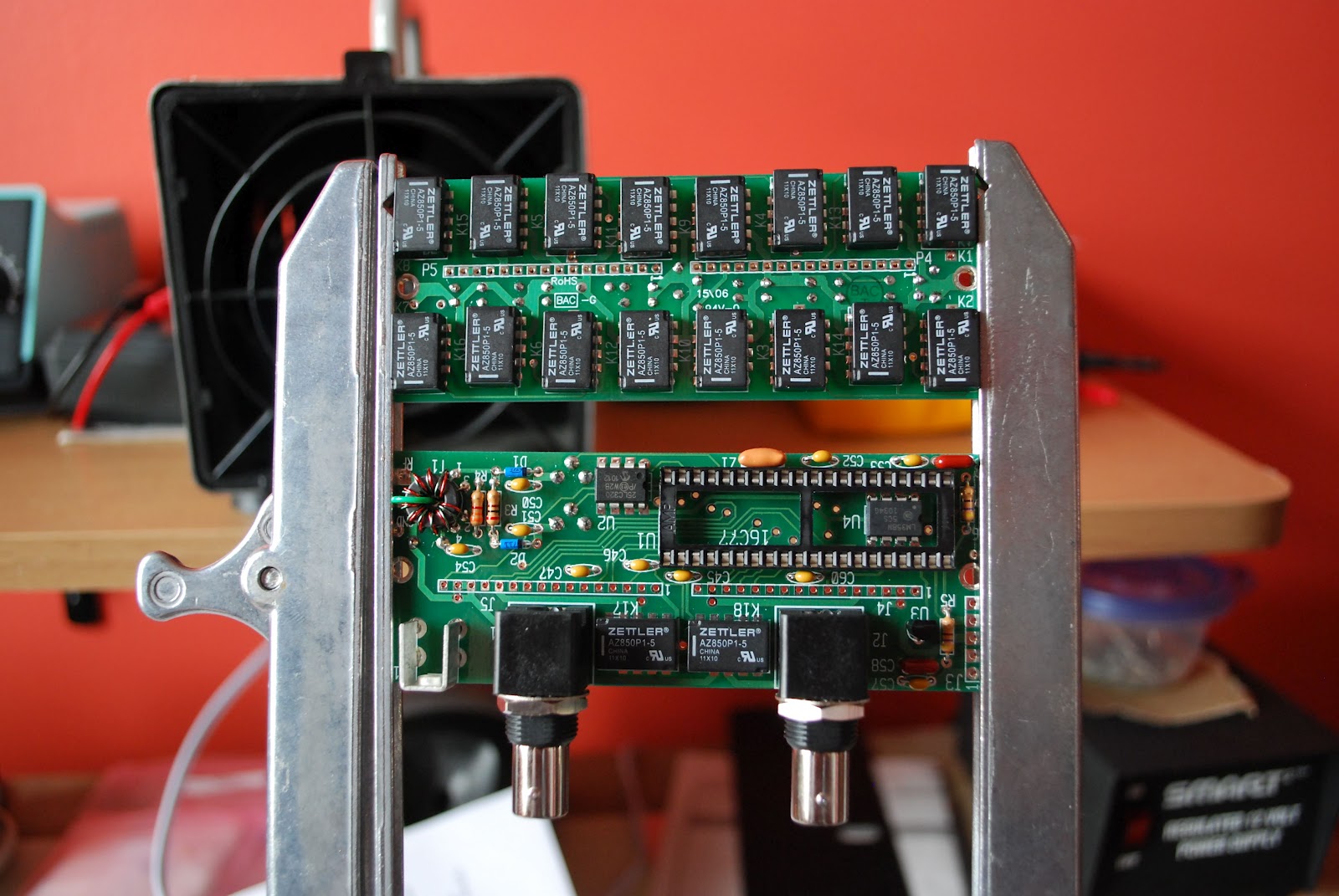 |
| KAT2 in the works |
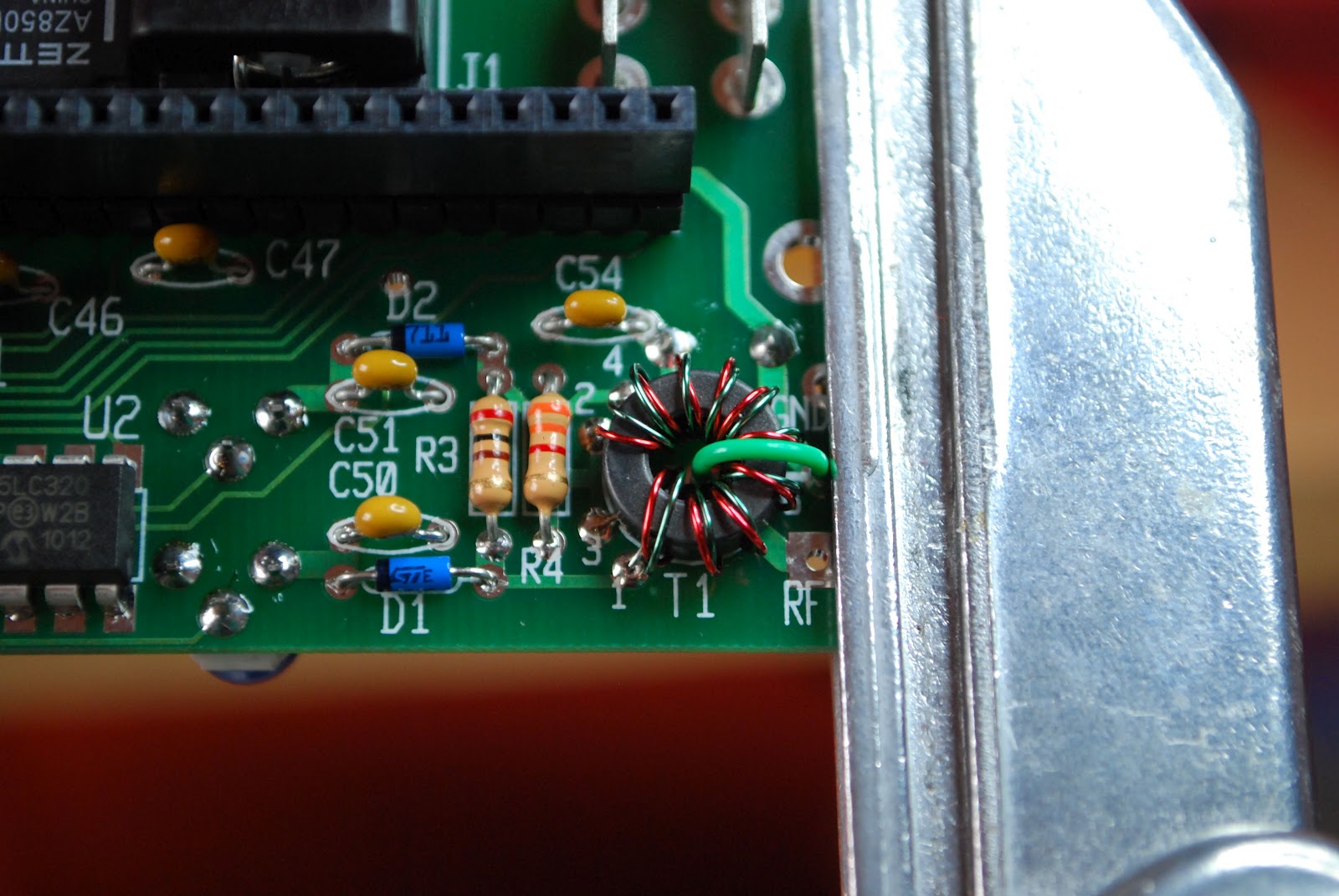 |
| The joys of toroid winding |


Mike Weir, VE9KK, is a regular contributor to AmateurRadio.com and writes from New Brunswick, Canada. Contact him at [email protected].
2012 Virginia QSO Party
I’ve written about the Virginia QSO Party a number of times in the past, so I’m going to keep this posting relatively short. I needed to spend some time getting my gear together for my trip to Florida later this week (where I plan to activate IOTA NA-034), but that left time for some contesting. There were a number of contests this weekend, but I decided to jump into the Virginia QSO Party (VaQP) as I’ve always had a lot of fun. I’m going to re-post my “soapbox” comments from my posting to the 3830 contest scores list. (That’s an email list where folks post their “claimed” scores after a contest. It’s not authoritative, but it gives you a quick chance to see how well you did as compared with other a lot fast than the official scores.)
Here’s what I wrote:
The VaQP is one of my favorite state QSO parties,and I’m glad that I had time to participate this year after missing the last couple of years. Given my location in northern NJ, the only bands that are usable are 40 & 80 (I’ve made a couple of contacts in the past on 160, but I don’t really have an antenna and it’s usually not worth the effort). This year, I had plans that kept me out Saturday evening so I didn’t get on to 75/80 at all. Late Sunday afternoon I tuned around for a bit on 80m but decided that instead of trying to work just the couple of stations that I could hear, I’d stick with 40 and submit as SOSB/40 (mixed mode).
I like this contest for a few different reasons: First, there’s enough activity to keep things going, but not so much that it’s a fight for a little-pistol station like me to have to work to make contacts. I could work everyone I could hear, and I appreciate the nice signal reports that I got from many stations. (Just 100w into a G5RV at about 35′ here.) Second, this is one of the few contests where I can get on and actually hold a run frequency for pretty much as long as I’d like. That’s not something that I get in the big DX contests! Third, this has got to be one of the friendliest bunch of of folks in any contest. When I had a small pileup going (for “rare” NJ!) I would move pretty quickly, but most times I had plenty of time to just throw in a quick word or two, and it was nice hearing when I was a new mult, or just having someone thank me for getting on to help give out points. It’s things like that the remind me why I like this contest so much.
Thanks to the organizers for putting this on, and I look forward to working everyone next year.
(SOSB/40 means that I operated as a single operator on just one band, which was 40m). That pretty much sums it up. I spent a total of around 7.5 hours between Saturday and Sunday in this contest, and it really just flew by. Here’s my score summary (which is very short, since I only used 40m this time):
 Band  CW Qs  Ph Qs  Dig Qs
----------------------------
   40:   26    154
----------------------------
Total:   26    154      0  Mults = 70  Total Score = 16,950
Become A Ham–A Shameless Plug
In addition to my amateur radio blogging, I also host an amateur radio podcast titled the practical amateur radio podcast (PARP). I began podcasting about amateur radio in 2008. PARP is currently in its 5th season and I’m looking forward to many more.
When I was in the final stages of preparing for both my technician and general class exams, I used a set of flash cards from Flash and Pass. I would ask my wife to read the questions to me and I would try to answer. This was especially handy when I wasn’t near a computer and couldn’t take the online sample tests. This process actually worked well for me and helped me polish my knowledge.
In the summer of 2010 when the new US Technician question pool became active, I decided I would create an audio only version of the flash card process. I used the ARRL version of the study guide and the question pool which accompanies that book to record the question, the four possible answers, followed by the question again and then finally announce the correct answer.
I believe the basis for success in using this method depends on first reading the study guide. Second, the use of online sample test sites (many different ones are available), I recommend a site some friends of mine maintain called Ham Tests. However, I really believe it is important for the student to READ THE BOOK!!! Then (and only then) download my twenty audio sessions.
Each audio session is anywhere from 12 to 30 minutes in length (perfect for commute to work or school) and contain every question in the current question pool unless that question relates to a visual diagram. The tech and general pools do have some questions that ask you to reference a diagram. I mention these during the appropriate audio session only as a reminder to study the question directly from the book.
As of today, I have the Become A Ham US Technician (2010 – 2014) and US General (2011 – 2015) sessions available. These sessions are available free of charge. I will record the US Extra (2012 – 2016) audio sessions sometime late Spring or early summer to coincide with the new extra class question pool which starts 1 July 2012.
You can download/stream these audio sessions direct from MyAmateurRadio.com by clicking on the Become A Ham tab. Alternatively, you can also download these sessions via RSS. The RSS links to the Become A Ham US Tech and US General can be found on MyAmateurRadio.com on the Become A Ham tab.
I’ve received many positive comments on both the technician and general audio programs and I’m truly pleased to know many have experienced benefit from the audio programs. If you are preparing for either the US Technician or the US General amateur radio exam, please visit MyAmateurRadio.com. Good Luck!!!
Until next time…
73 de KD0BIK
Jerry Taylor, KD0BIK, is a regular contributor to AmateurRadio.com and writes from Colorado, USA. He is the host of the Practical Amateur Radio Podcast. Contact him at [email protected].
 Ham Radio Deluxe |
 W5SWL Electronics |
 Ham Radio Prep |
 KB3IFH QSL Cards  Hip Ham Shirts  HamRadioAuctions HamRadioAuctions Reliance Antennas Reliance Antennas Enigma Shop Enigma Shop |  morseDX  Ni4L Antennas  R&L Electronics R&L Electronics antennas.us antennas.us QRV QRV |
- Matt W1MST, Managing Editor
