 |
 The 2012 MNVOAD Training Conference: Lake County RACES/ARES®
 2 April 2012 | by
 This post was updated on 4/2/12 after Mr. Angelos kindly corrected me on several points.

Mr. Peter Angelos, KCØKRI
The 2012 MNVOAD Training Conference was well-worth attending! My favorite part, of course, was the presentation by Peter Angelos, KCØKRI, on the Lake County, MN RACES/ARES® response to the Pagami Creek Fire in September, 2011. His “keystone” speech was the first of the many sessions that day, and the only plenary session (the other 15 sessions were breakouts). While he focused upon RACES/ARES®, he also discussed principles that apply to any voluntary organization.
Here are my notes from Mr. Angelos’ presentation, in the order presented:
- The Pagami Creek Fire
- RACES/ARES® fills gaps in existing communication-systems, and reduces load on those systems.
- A lightning strike on 8/18/11 13 miles east of Ely started a fire that ultimately caused $23M in response expenses in Lake County. On 9/12/11 this became the largest fire in Minnesota since 1918, with 92,682 acres and over 800 workers assigned through 10/17/11. Fires are an annual occurrence in Lake County, the home of the famed BWCA (Boundary Waters Canoe Area); what made this fire unusual was its size.
- Cell phone coverage is the only phone service available in some parts of the area, and in some parts not even that. An 800 MHz public-safety trunked system using portable antennas was also set up to provide coverage.
- Many hours of training and dedication go into RACES/ARES® in preparing for an event like this.
- RACES/ARES® personnel stayed far behind the actual fire line.
- The Lake County RACES/ARES® group is a “spring chicken,” having been organized in mid-2009.
- On 9/12/11, RACES/ARES® was activated when the fire suddenly grew from 11,000 to 70,000 acres in only 24 hours due to winds gusting up to 35 mph. This drove the fire 16 miles in one day, toward a populated area. As evacuations increased, RACES/ARES® was activated. (In the Q & A that followed, one person asked how many messages were passed. Mr. Angelos said that only a handful of messages were actually passed. The activation of RACES/ARES® was a proactive attempt to prepare for a catastrophe in case this fire reached populated areas. When it became clear that this was not a threat, RACES/ARES® was deactivated.)
- As the smoke plume blew as far as Milwaukee, WI and Minneapolis, MN, the potential for health & welfare inquiries increased.
- A RACES/ARES® communicator was attached to the evacuation shelter manager. Hams were also located at the incident command post, staging area, evacuation checkpoints, and the EOC. The goal was to handle non-emergency traffic to take the load off police, fire, and rescue channels.
- The log of messages kept by RACES/ARES® is helpful for post-event evaluation.

Lake co. RACES/ARES® portable tower, AMCV and MCT deployed at a Canadian National RR mock fuel spill exercise in Two Harbors MN on September 14, 2010. Photo by BJ KDØHHW. (http://n0lcr.org)
The Lake County RACES/ARES® group uses two state-of-the-art vehicles, each outfitted with a PSN (Public Switched Network capable of establishing a cellphone network), as well as 2m/75cm FM/Packet and all HF modes including WinLink, WINMORE, Pactor, and other digital modes. One of these vehicles is a trailer of their own (the “MCT”), while the other is an RV (the “AMCV”) purchased by an 11 county consortium in the northeast Minnesota Arrowhead Region (with help from a grant). This vehicle can provide video conferencing and internet connection via satellite.
- The repeater network available is huge, extending from Ely, MN to Solon Springs, WI.
- RACES/ARES® deployed for a total of five days, suspending operations on 9/16/11 after contributing 633 man-hours. The Lake County RACES/ARES® group provided 445 of these hours, with the remainder provided by mutual aid from RACES/ARES® groups in four neighboring counties.
- The Relationships Necessary for Success
- The Lake County RACES/ARES® group would never have been invited to participate if it weren’t for the well-established relationships that had been built with Lake County Emergency Management and the Lake County Sheriff’s Office.
- Professional conduct and standard ICS documentation-procedures are essential for establishing credibility with served agencies.
- Served agencies expect to see stuff like this duty roster.
- None of this could have happened without the “four C’s” (communication, coordination, collaboration, and cooperation), the hallmark of VOAD. They couldn’t invite themselves to drills — they had to participate in non-emergency events like local marathons and sled dog races to demonstrate their capability and build relationships. Only then did they get invited to their first drill.
- Lake County RACES/ARES® volunteers are required to complete FEMA courses IS-100b, IS-200b and IS-700a.
- These hams are volunteers with the Lake County Emergency Management Department. They are required to have security background checks, they all have photo ID’s issued by Lake County, and they are even insured by the county.
- As a result of this relationship-building, the Lake County Emergency Manager got her amateur radio license (KDØHHW) and joined this RACES/ARES® group herself.
- So much credibility has been established with served agencies that this RACES/ARES® group has been entrusted with the housing and maintenance of the AMCV.
- Building these relationships is “complicated” but worth it. Their relationships are so good now, Mr. Angelos said, “We even have a Christmas pot-luck dinner together.”

Not only was this presentation of RACES/ARES® center-stage at the conference, but the Bloomington, MN Amateur Radio Association had a great display set up out in the vendor’s area, complete with a couple of Buddipoles and HF/VHF radios. Mr. Wayne Snyder, KCØZJB was kind enough to send me some photographs:
If you get a chance to attend a VOAD conference like this, I heartily encourage you to do so. Not only did I learn from KCØKRI’s presentation, I also learned quite a bit from several other breakout sessions. It is clear that ARES® work is not conducted in a bubble. To be efficient and effective (much less to even be invited to participate) in an emergency we must develop relationships with the agencies we serve, from governmental entities to other voluntary organizations. The time to do that is not at the time of the emergency itself, but long before. Conferences like this one can be a great way to learn from each other.


Todd Mitchell, NØIP, is a regular contributor to AmateurRadio.com and writes from Minnesota, USA. He can be contacted at [email protected].
Fred Whitton challenge support
A few years ago, when children, pets and work didn’t need so much attention I took part in a bike race (commonly called a sportive) which took in 6 passes in the lake district (kirkstone, honister, Newlands, Whinlatter, Hardknott and Wrynose) in a 112 mile day out on 2 wheels. This time I shall not be cycling but helping out with the local Raynet group.
Saturday had us checking the local communication paths for the various areas. It’s the first time I’ve been involved in any of this kind of thing so Paul, 2E0EET took me through the basics and now I’m looking forward to being a spectator and watching those who’ve trained for months on end to attempt this formidable ride.
It took me over 7:30 hrs when I did it do giving up the same amount of time with the rig at cockley beck (not too far from the Hardknott summit) seems a small price for my earlier enjoyment.
Alex Hill, G7KSE, is a regular contributor to AmateurRadio.com and writes from Cumbria, UK. Contact him at [email protected].
Seeing the big picture
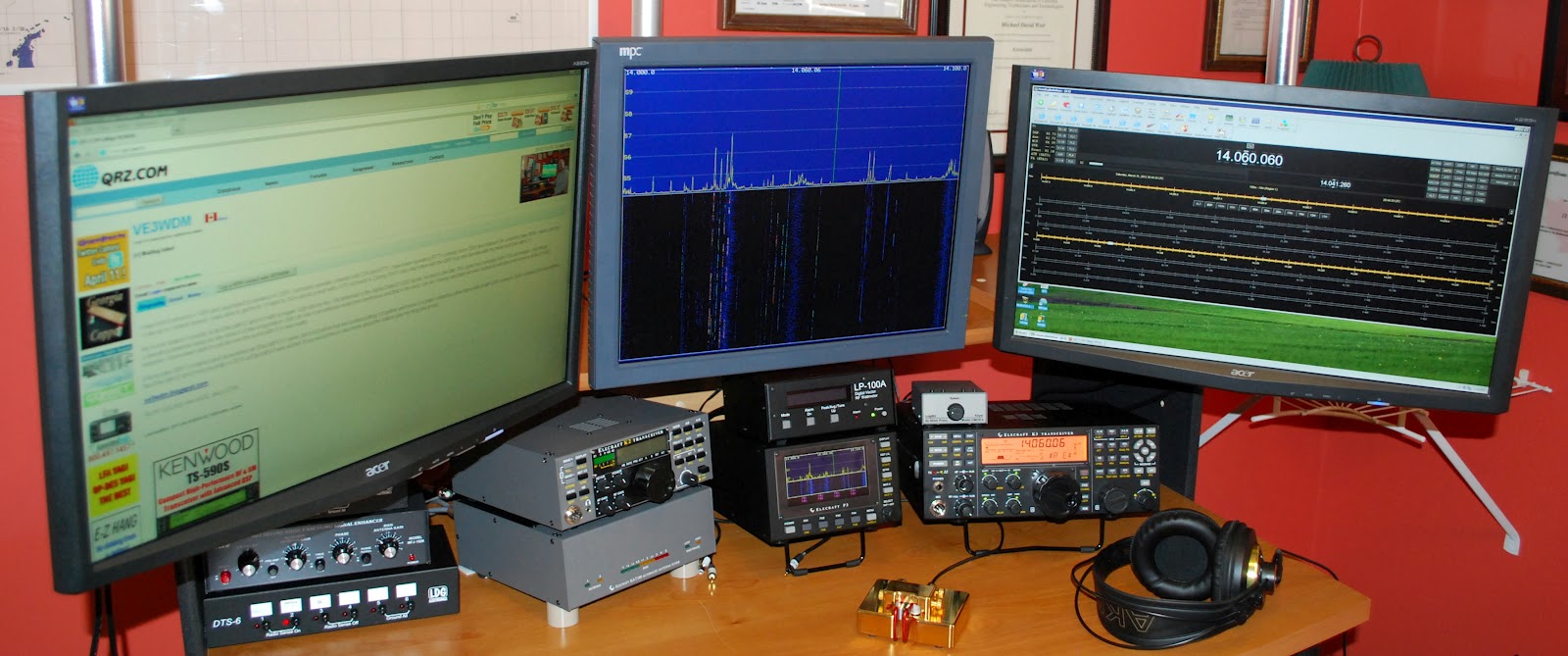 |
| The new setup |
 |
| Old setup |
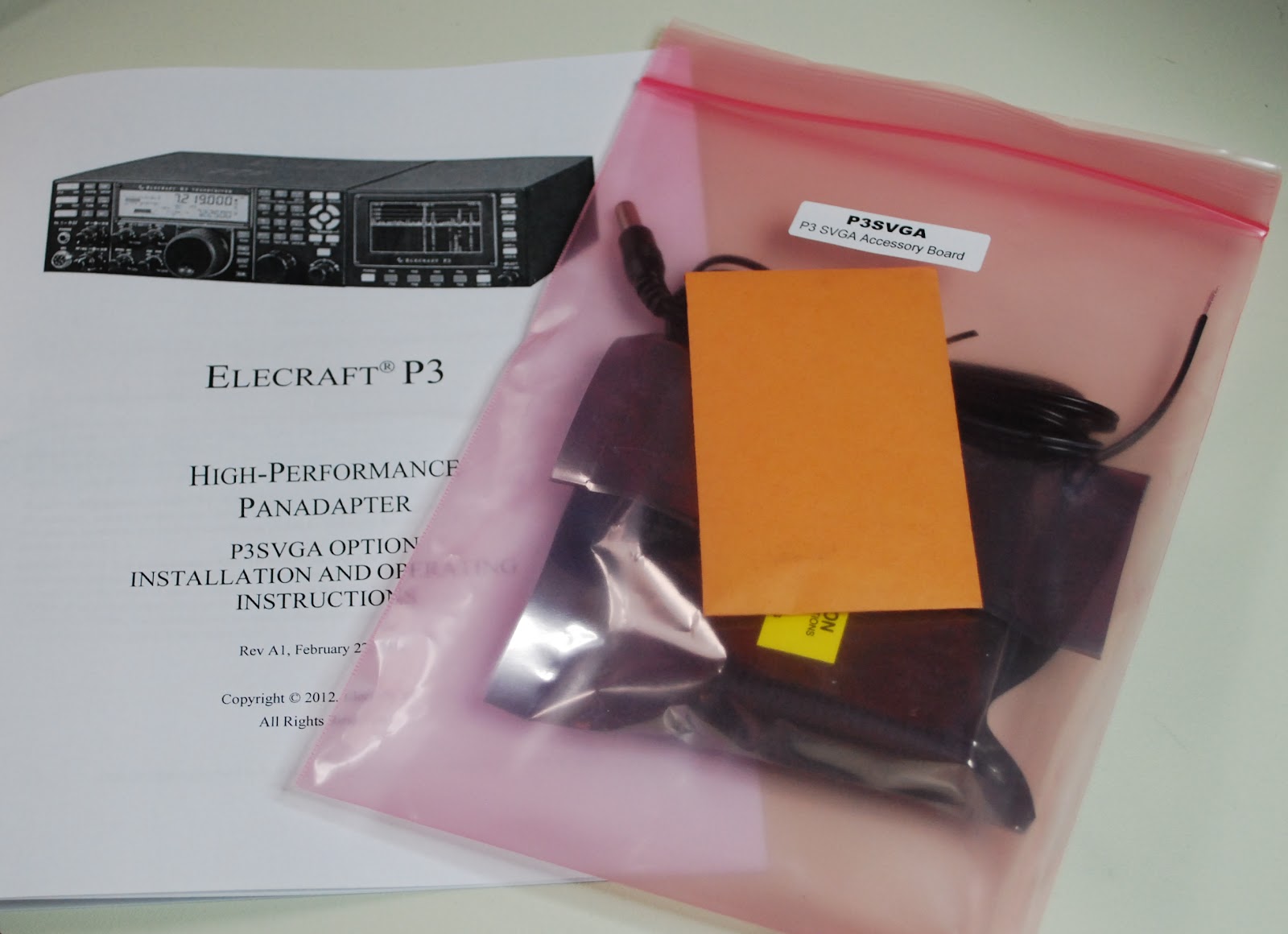 |
| New P3 SVGA |
time to give it a whirl. As a side note I kept a monitor that I was not using but knew I would use it some day. Well the day came when I needed a monitor for the SVGA it's great when I can reuse! The P3 was hooked back into K3 I then powered up the K3 and P3.......BUT the monitor was blank!!! Well lets reboot and try again.....NOTHING..........It them came to me go to the Elecraft site and update the P3's software. I did that and low and behold the monitor came to life with a great looking band scope! It sure is nice to have a scope up close and personal. Now Elecraft has plans to add mouse control, RTTY and CW decoding and more suggestions are piling in. When I added the new monitor I had to do some moving of equipment on the desk. The LP-100A, MFJ 1026 and the LDG switches all found a new home. The monitor was mounted on
moveable arm so when not in use I can move it out of the way. When the final position for all the equipment
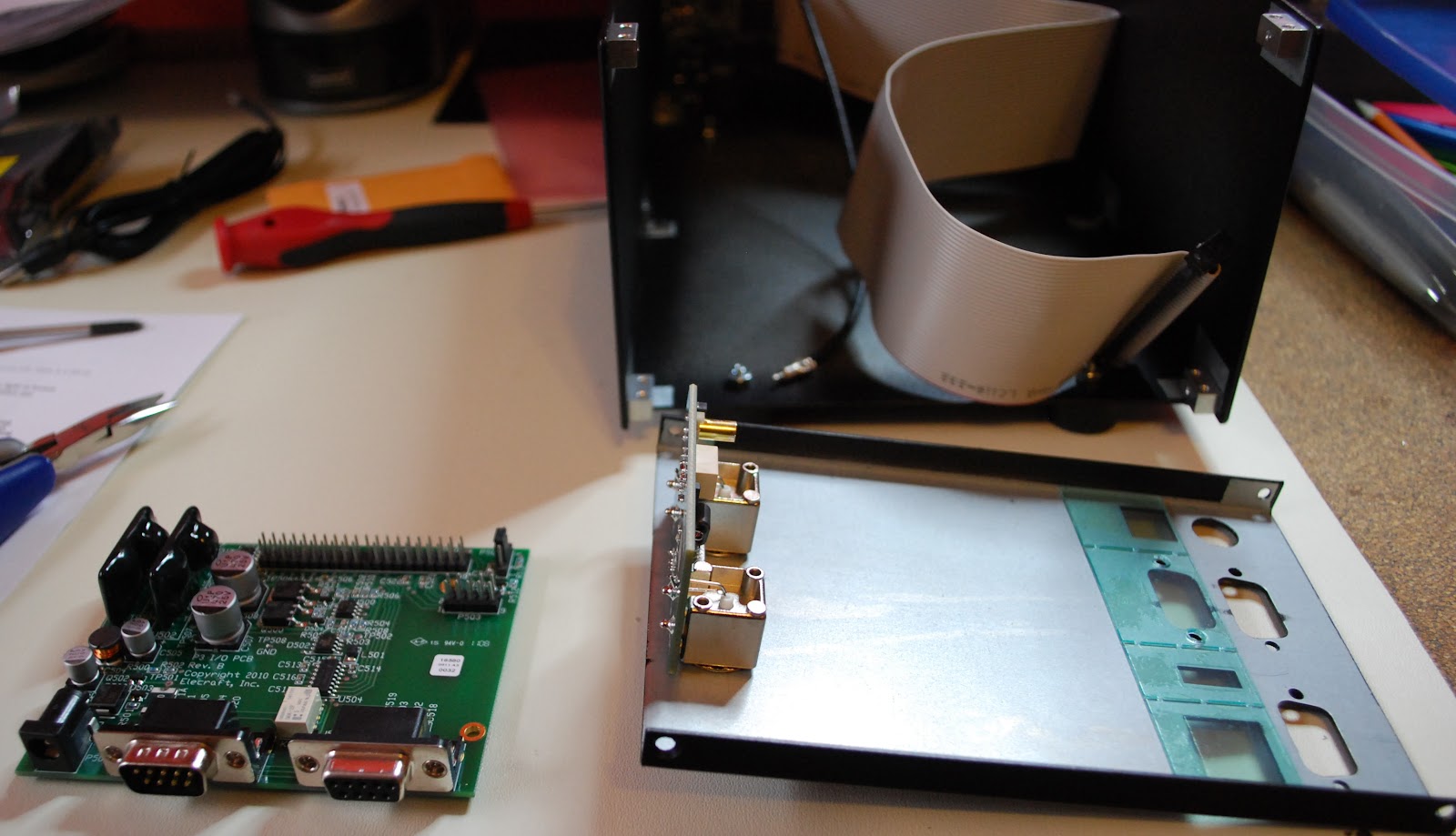 |
| P3 apart and ready for SVGA |
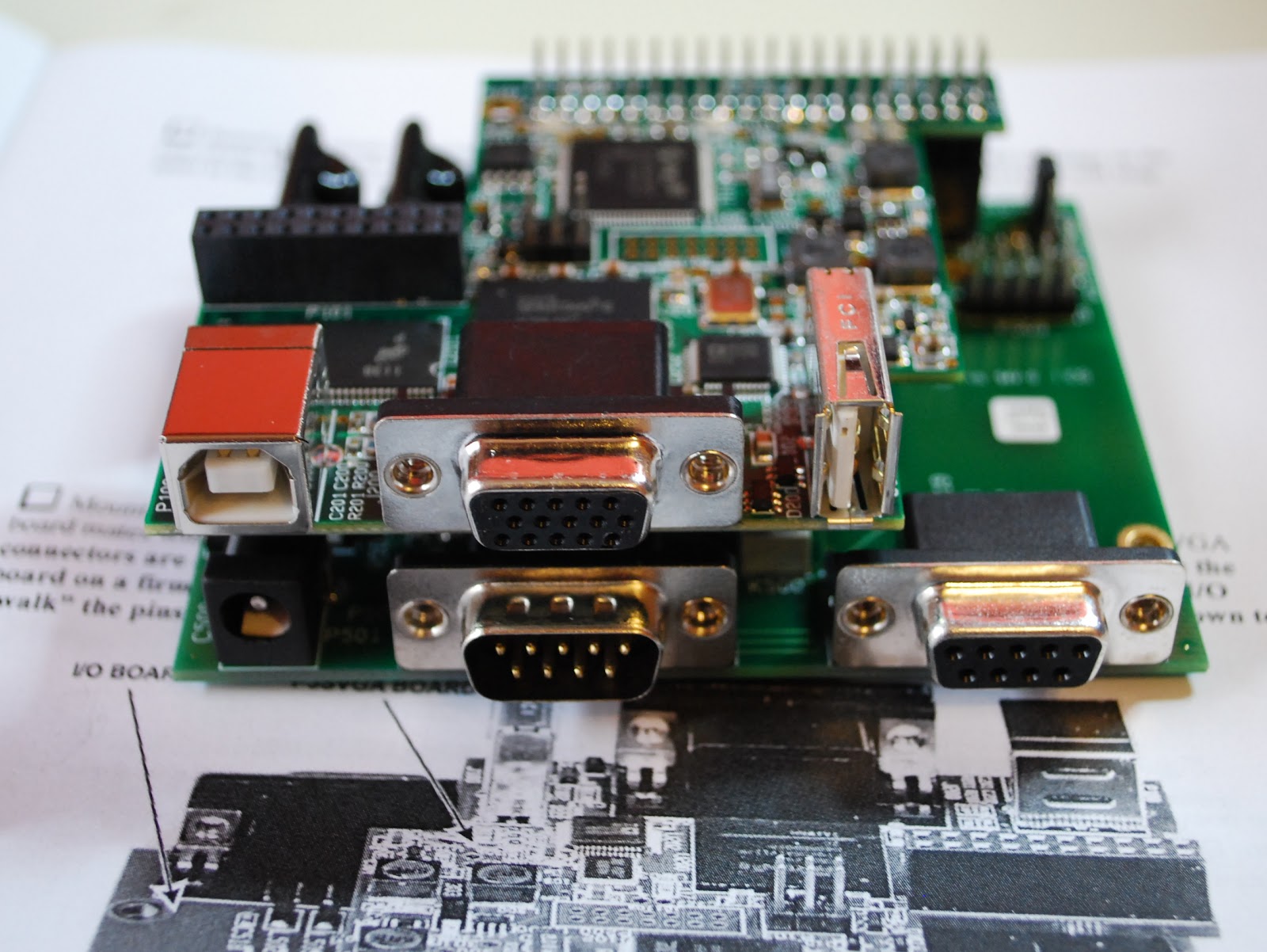 |
| SVGA installed |
labeled cables. My next project is to investigate logging software, radio control software and propagation software. I have been using a hodge-podge of software and I want to clean up the software end of my ham hobby so now it is time to look at some of the free ham software out there....any suggestions would be great!
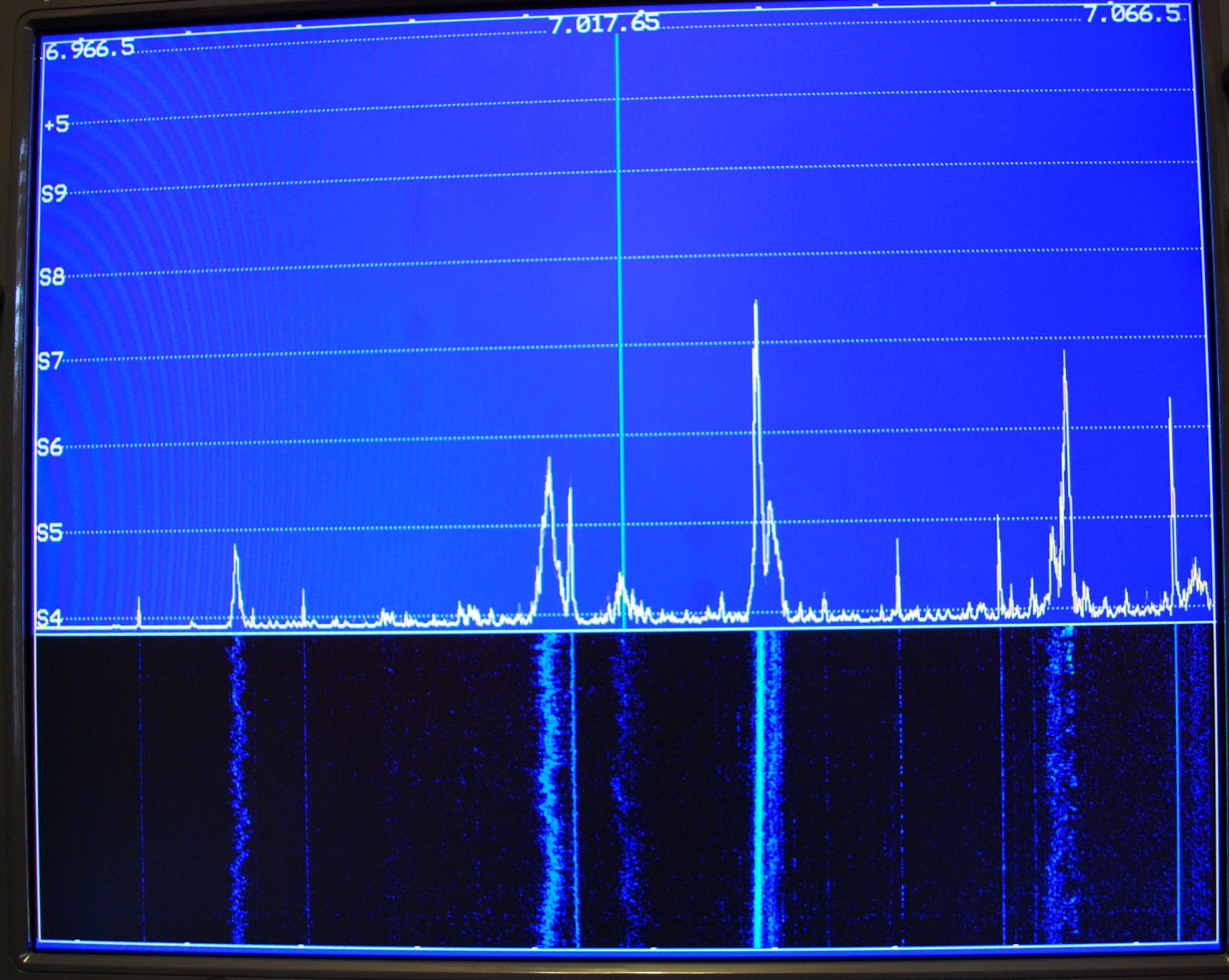 |
| View on the monitor |
 |
| Monitor out of the way |

Mike Weir, VE9KK, is a regular contributor to AmateurRadio.com and writes from New Brunswick, Canada. Contact him at [email protected].
Too bad they consider this an April Fool’s joke!
But even in a joke there’s truth to be found.
“It’s a dot and a dash. To have a conversation with the entire world. It’s great.”
Yes, yes it is.
72 de Larry W2LJ
QRP – When you care to send the very least!

Larry Makoski, W2LJ, is a regular contributor to AmateurRadio.com and writes from New Jersey, USA. Contact him at [email protected].
The Next Step in Electronic Communication
 It figures: I just get done blogging about the history of electronic communications and Google takes the topic to the next level. Recognizing the inherent problem of cramming a QWERTY keyboard onto a Smart Phone, Google has gone back to the future by adopting a simple binary input device that uses DOTS and DASHES. That’s right, the new Gmail Tap uses Morse Code.
Google has apparently rediscovered what CW operators knew all along: Morse Code is extremely efficient for text communication.
Go to the Gmail Tap web page to get the full story.
73, Bob K0NR
Bob Witte, KØNR, is a regular contributor to AmateurRadio.com and writes from Colorado, USA. Contact him at [email protected].
Elecraft Taking Orders for K10
On the heels of the first KX3 shipping last week, Elecraft announced that it will begin taking orders for a new transceiver, the K10. The rig is intended to continue the Elecraft radio lineage, known for its high quality and performance. Specifications are not yet available for the rig, nor is a feature list as the rig has yet to be prototyped or designed. Several amateurs speculated that the rig will have both CW and phone capabilities and will cover all HF bands and 6 meters. More daring prognosticators predicted the rig would be 12 volt powered and have a built in antenna tuner option. Elecraft fans appear to be equally split on whether the K10 would be a kit, a real kit, or pre-assembled.
Immediately upon the announcement, eHam created a reviews area for the new transceiver and several reviews of it were posted shortly thereafter. Harold, KA3KXS, gave a glowing review noting that the rig will “probably look nicer and perform better than the overrated Yaesu FT DX 5000 or the marginal Icom IC-7800″, though he admitted to never operating either rig.
Asian markets reacted positively to the Elecraft announcement with the Nikkei index up nearly 21%. Europeans were equally enthusiastic with rallies in nearly all European markets. EU officials who have been suffering for a long time for the first time in months had a rosy economic outlook for Europe. Here in the US, both the NASDAQ and New York stock exchanges experienced furious trading, with both markets up over 37% at the closing bell. NASA recorded slight anomalies in the orbits of the moon, Venus, and Mars.
Meanwhile, Ebay was flooded with listings for new in-the-box Elecraft KX3 units, with sellers indicating that yet to be received rigs were being sold to raise money to purchase K10s. As of this writing, bids on several KX3s had exceeded list price by over 180%.
The announcement promises to make for a lively and exciting Dayton Hamvention® this year, with the ham community abuzz about the K10. Several participants have coordinated a “K10 Room” where attendees can sit on the floor and silently meditate, imagining what the rig will be like.


New WSPR map
In case you didn’t know about it already, check out this new map of recent WSPR spots. (Editor’s note: please be advised that we have had a report of this link freezing a computer and requiring a reboot. I do not believe that it’s a malicious link, but it may be very resource intensive to load…)
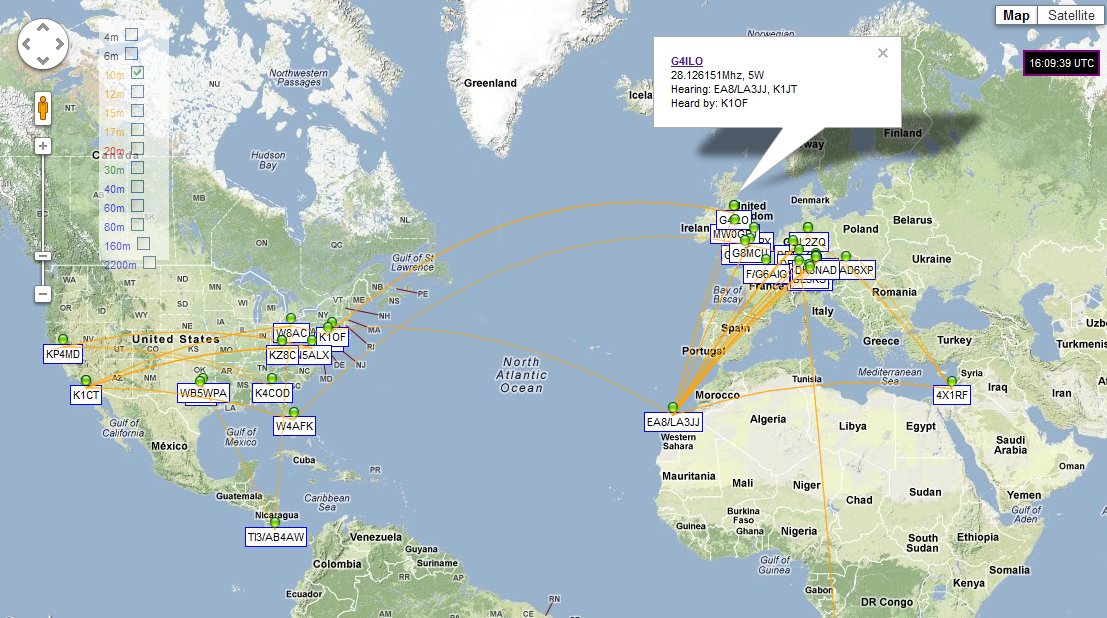
It’s much faster than the ‘official’ one, which could bring Firefox to its knees on a slow computer. And it remembers allyour preferences including zoom level. A must-bookmark, if you’re a WSPR fan.

Julian Moss, G4ILO, is a regular contributor to AmateurRadio.com and writes from Cumbria, England. Contact him at [email protected].
 Ham Radio Deluxe |
 W5SWL Electronics |
 Ham Radio Prep |
 KB3IFH QSL Cards  Hip Ham Shirts  HamRadioAuctions HamRadioAuctions Reliance Antennas Reliance Antennas Enigma Shop Enigma Shop |  morseDX  Ni4L Antennas  R&L Electronics R&L Electronics antennas.us antennas.us QRV QRV |
- Matt W1MST, Managing Editor
