 |
 I never expected I would shake the hand of an astronaut: Meeting Paolo Nespoli
 29 April 2012 | by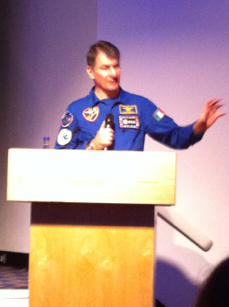
On Friday afternoon, I was scanning my Twitter feeds and saw a tweet from @spacekate. Kate said that on Saturday afternoon, ESA astronaut Paolo Nespoli would be in London, giving a talk at the Royal Aeronautical Society about his flights on the ISS. Kate also said that there were tickets still available and that better still, they were free!
Somewhat unusually, the calendar was co-operative and I was able to book tickets for myself and the boys (Julie was going to a series of talks in Oxford).
When we arrived, we were told that Paolo was running late. Somehow you expect an astronaut to arrive in a fast car. In fact poor Paolo had come by coach, which had been delayed by a cycle race! Whilst Paolo was waiting for his laptop and talk to catch up with him, he was happy to take questions, so I was really excited to be able to ask him about his visual memories of the trip.
The talk was fascinating. Even a 15 year old pronounced it ‘cool’. High praise indeed. But it was. Amazing to learn about some of the effects of zero gravity on the human body from someone who has actually experienced it – and what being launched in a Soyuz feels like (gentler than the shuttle, although the Soyuz ‘rides harder’ further into the flight).
Predictably, Paolo’s photos were stunning, no surprise to those of us who followed his tweets from space and his Flickr stream. A slide which caused much laughter was a shot of Italy from space – being noticeably brighter than its’ neighbours. Especially when Paolo explained that Italy imports a large quantity of its’ electricity.
One of Paolo’s slides featured a shot of one of the two amateur stations on the ISS. He explained that he and Cady Coleman had 77 contacts with schools during their flight – a record that he was proud of. To an audience which included school children and teachers, he encouraged schools who were interested in having a radio contact with the ISS to get in touch with the project.
All too soon, the presentation was over, but as Paolo was dashing out the door, I had the opportunity to thank him for his amateur activity from the Space Station and have a quick chat.
I never expected that I would shake the hand of an astronaut!

Tim Kirby, G4VXE, is a regular contributor to AmateurRadio.com and writes from Oxfordshire, England. Contact him at [email protected].
Gearing up for portable mobile op’s
 |
| The new "ham mobile" |
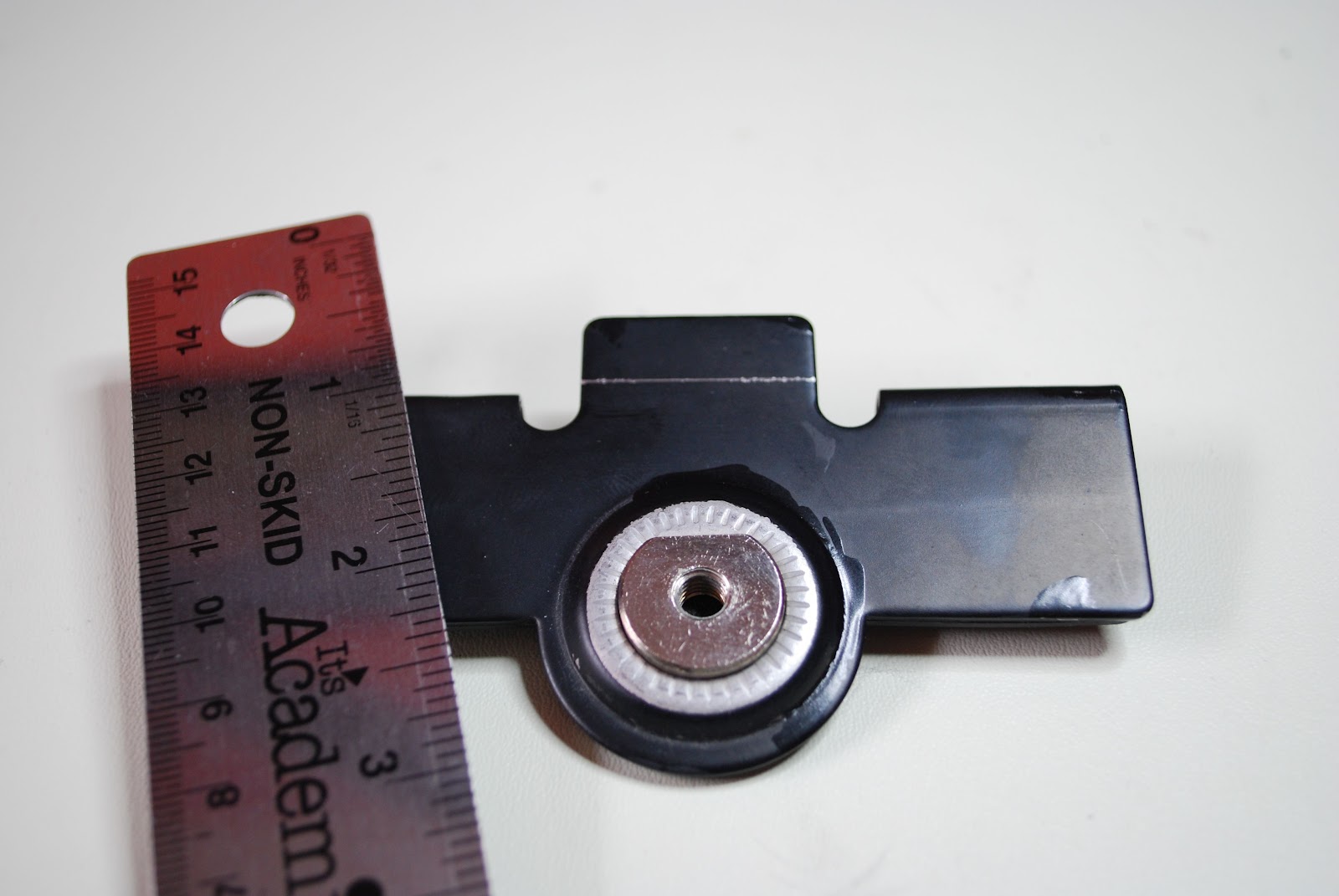 |
| Removing some metal from the K400 |
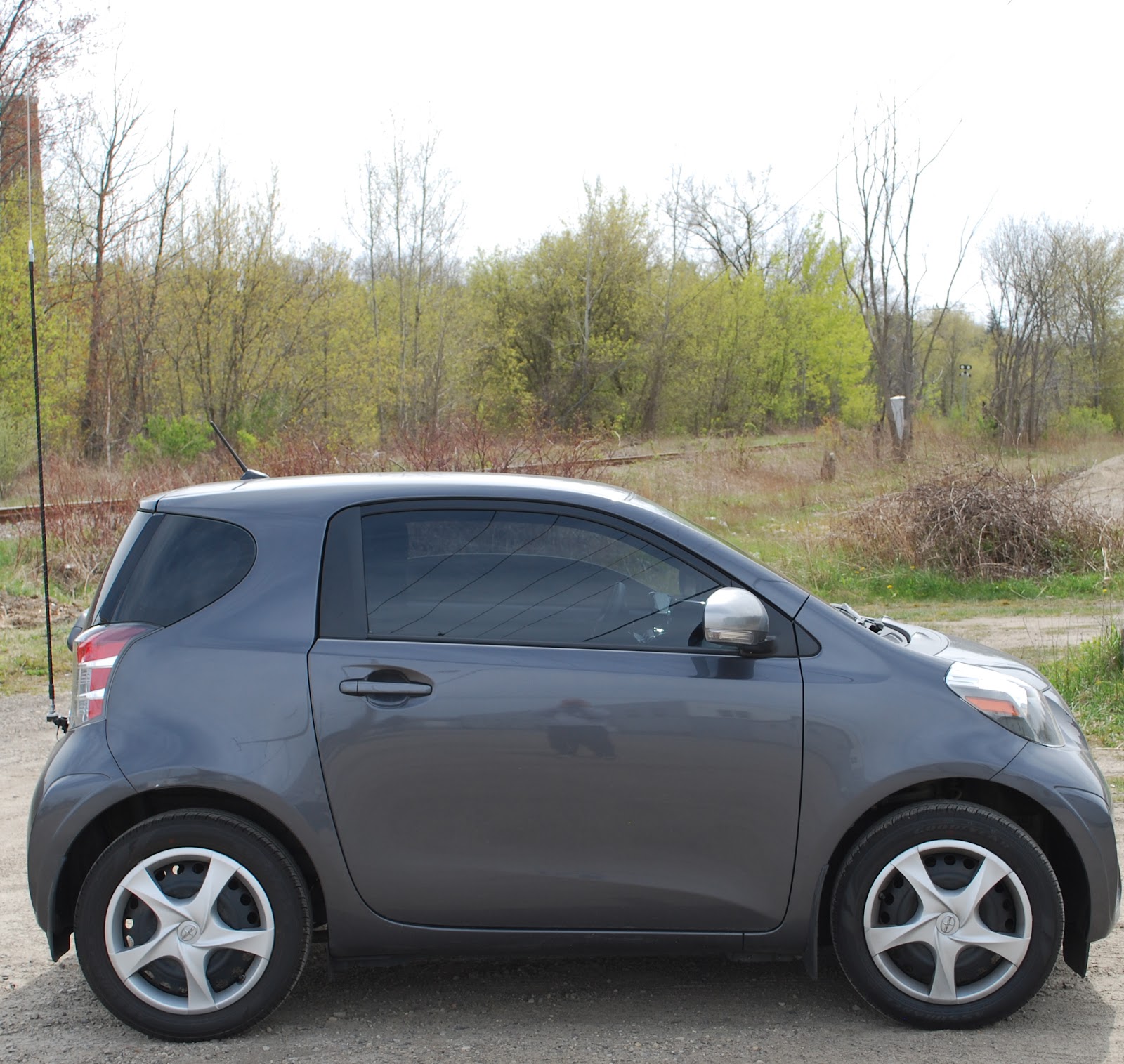
setting up an antenna system that was easy to deploy and worked well. Now there was a small hitch in the plans that happened about 2 weeks ago Julie and I decided to downsize our
 |
| Need another bag |
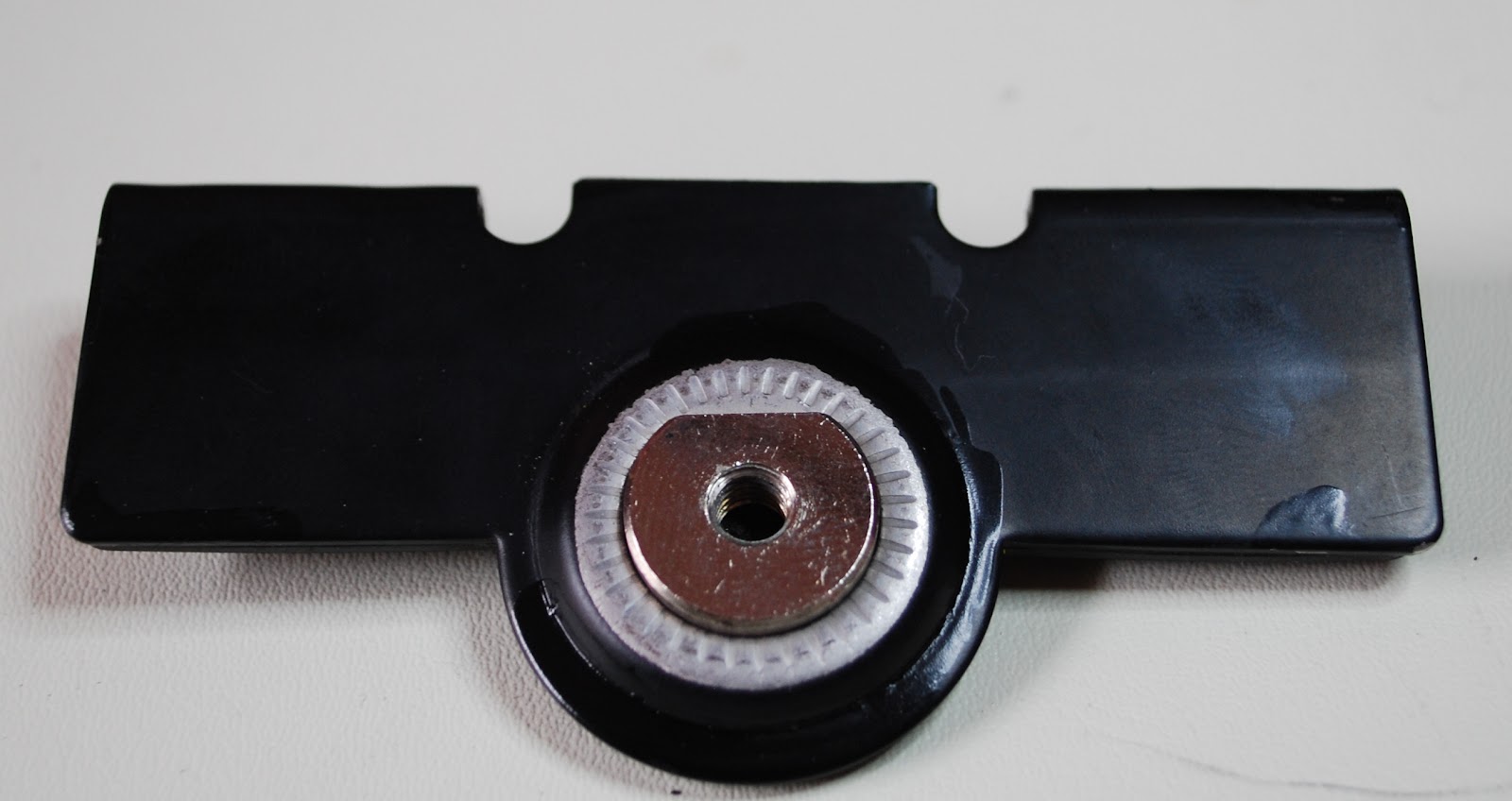 |
| New and improved mount |
cars!! We both had large 4 door Chev Malibu's and loved them.....but so did the gas pumps! We both upgraded to the Scion IQ's half the gas and half the size. Now this meant plans had changed for my summer mobile portable operations....well not really. The Scion is a hatchback and I would just have to use my trunk mount Diamond K400 as a hatchback mount. There was just one small mod that had to be done to the mount to allow it to work on the Scion. That involved removing a small part of the flange that stopped the hatch from closing as it rubbed on the bumper. With that done the K400 fit perfectly on the Scion's hatchback. I was still going to use my faithful and reliable Palomar mono band mobile whips. With the Scion being a much smaller car I was not sure what the reduced ground plain was going to do to the SWR?? I was prepping for the worst thinking that the SWR was going to be high no matter how I adjusted the stinger on the whip but the K2 antenna tuner would fix that. Well to my pleasure the 20m whip at 14.060 is 1.5 and the 40m whip at 7.030 is 1.4. This was with some adjusting of the length of the stinger but very pleasing
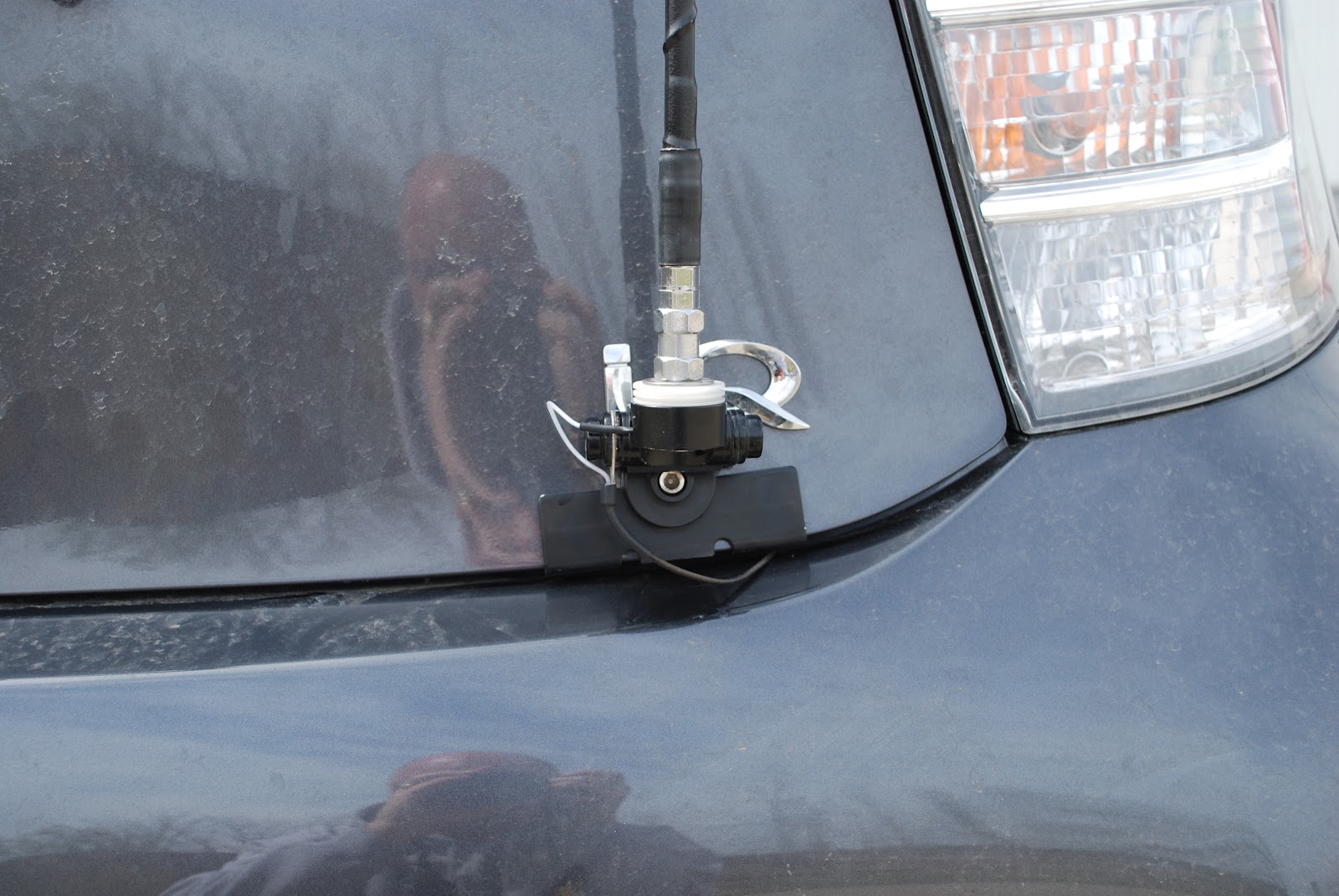 |
| K400 installed |
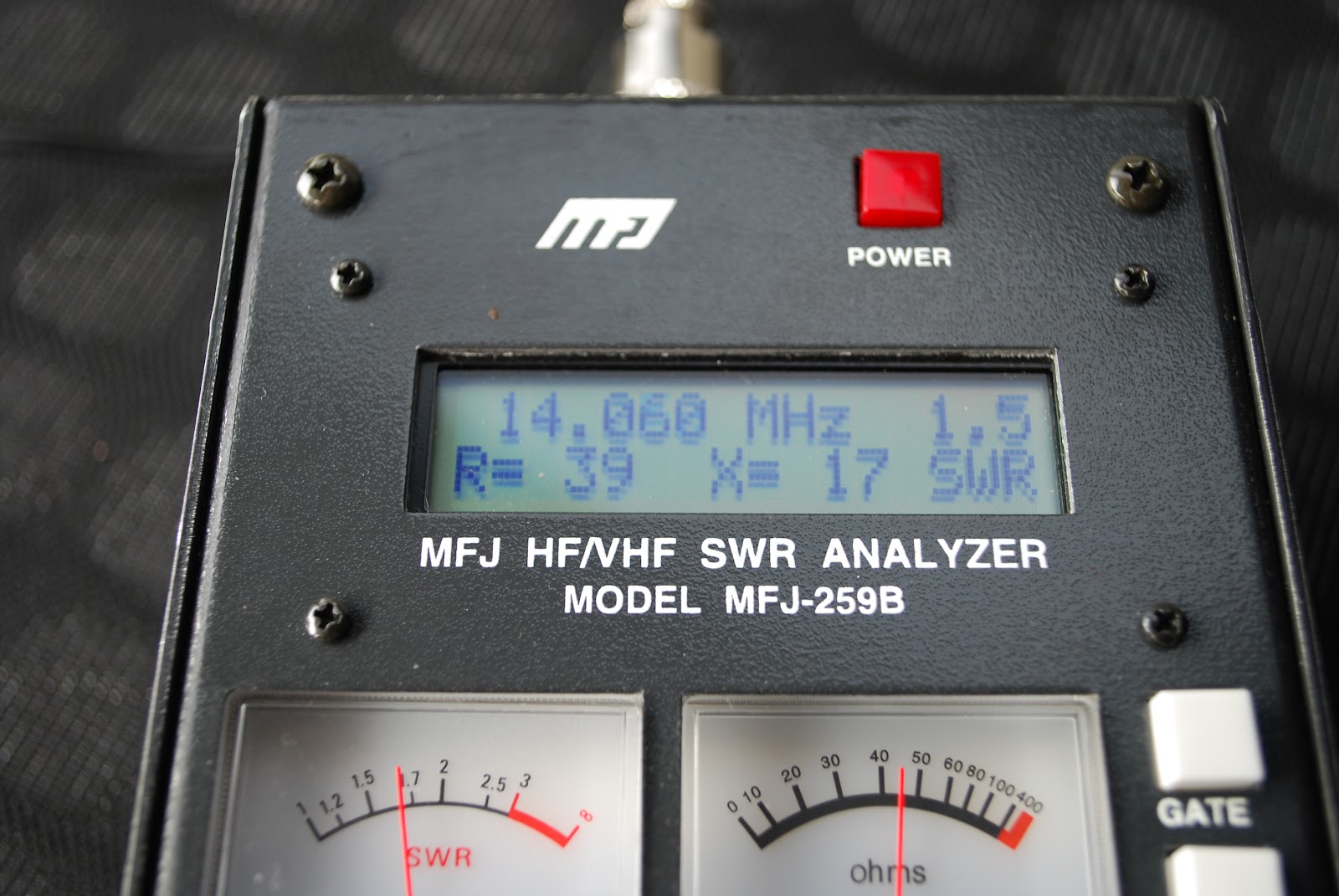 |
| SWR on 20m's |

Mike Weir, VE9KK, is a regular contributor to AmateurRadio.com and writes from New Brunswick, Canada. Contact him at [email protected].
RFinder for iOS now available in the App Store

RFinder, the BEST repeater locator app on Android is now available in the iOS App Store. Bob has been working hard on getting approval for awhile now, and people like me who switched from Android to iOS have been waiting for this. If you’ve used any of the other available repeater apps and been disappointed, you really must try this one. Worth every penny at $9.99. If you’ve used Bob’s Android version you will be pleasantly surprised by the huge speed increase with the iOS release due to an upgrade to the database the app uses. Note to Android users: this will also speed up the original Android version on RFinder.
RFinder shows you all repeaters in your location in a selectable radius, or allows you to override the location for a custom search. Sorts by location, frequency, callsign, or displays on a map. Locates all repeaters in the database by band ( you choose which band or bands) 10M thru 1200. Corrections and additions can be submitted for paid users. Give it a try!
RFinder in the App Store. For iPhone and Ipad.
–Neil. W2NDG
Neil Goldstein, W2NDG, is a regular contributor to AmateurRadio.com and writes from New York, USA. Contact him at [email protected].
Is Radio Shack returning to its roots?

1975 Radio Shack Catalog
As a kid, I used to enjoy the arrival of each year’s Radio Shack catalog. I would thumb through and think of all of the things I could do with the bounty of electronics within. I know, I know, Radio Shack was a joke compared to some of the larger electronics retailers of the sixties and seventies, but for a kid in the boonies of upstate NY, it was all I had. I started with the solderless 65-in-1 kit, and graduated to bigger and better things. I built several of the P-Box kits, and tackled the Globe Patrol regenerative SW kit when I was about 11. I wish I still had them. I found an archive of the catalogs in my uncle Win’s basement at one point. They were in his ham shack (S.K. W1PVC) neatly organized on a shelf. Now, years later, the archive exists online. For those of you that like to reminisce, go check out RadioShackCatalogs.com. Unfortunately looking through these is a little depressing as we not only miss what RS once was, but also miss some of the now defunct competitors out there, like Lafayette Radio (although there appears to be a company called Lafayette Radio on the web, selling mobile and marine gear).
I mentioned in my introduction post, that I have some potential hams in the family. I recently went to Radio Shack to purchase a Gordon West technician study guide for the better half (yes, they have it), and was surprised at the HUGE display of Arduino, Make, and Parallax products. Now, I know that The Shack, as they like to be called now, was carrying a small assortment of these things already, but they have GREATLY expanded the selection. In the Manhattan RS that I went to, there was the equivalent of 2 vertical wall sections, and a third section on an endcap. I hear that they had a large display at last year’s MakerFaire.
Will this lead to some Amateur Radio gear, or at least some related accessories? Time will tell. They surprised us once before with an unexpected return to Ham Radio in 1990 with the HTX-100. Maybe someone in Fort Worth is looking at the companies they are trying to compete with by becoming a cellphone store and realizing that they aren’t doing well either (Best Buy?). I have also noticed that some of the stores that eliminated the component section, seem to have now added the component cabinet that some stores had retained back to their stock.
Someone on the repeater the other night called Arduino, Make, Raspberry Pi, etc., the modern erector set. I would like to believe that. I think it’s time to start building some things. Makes me feel like I’m 11 all over again. 73!
–Neil W2NDG
Neil Goldstein, W2NDG, is a regular contributor to AmateurRadio.com and writes from New York, USA. Contact him at [email protected].
Something old, something new.
Something old …
As a young boy in Australia my two favorite hangouts were my grandfather’s shed or practically anywhere that electronics were sold. The two largest electronic component retailers in my home town were Tandy (Radio Shack) and Dick Smith Electronics. They both sold kits, tools, ‘100 in 1 Labs’ and other assorted gear but Dick Smith eventually became known as the experimenters store due to their greater range.
 |
| Original Radio Shack calculator |
If you would like to make one of these yourself then Adafruit Industries has created a PDF document you can print and cut out for create your own resistor value calculator.
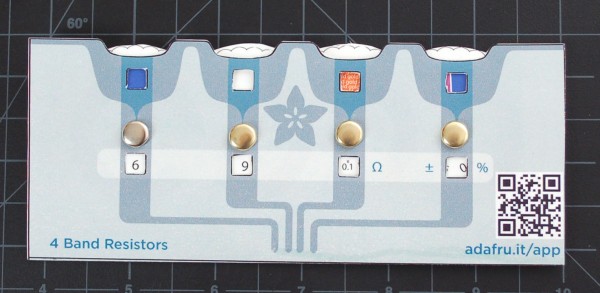 The PDF file is available from Adafruit Industries or a copy is also here. Once you print it out, a little cutting and folding should produce something like the example of the right. The Adafruit design uses brass paper fasteners (remember those?) but any fastener could be used that would allow the wheel inside to rotate freely. It would be best to print on heavy card stock if you have the ability as it will give the calculator some strength.
Something new …
If you happen to have one of those new fangled iDevices you can download Circuit Playground. It has a few more features than the old Radio Shack calculator and looks great on the iPad.
More features are being added but the list at the moment includes:
- Decipher resistor & capacitor codes with ease
- Calculate power, resistance, current, and voltage with the Ohm’s Law & Power Calc modules
- Quickly convert between decimal, hexadecimal, binary or even ASCII characters
- Calculate values for multiple resistors or capacitors in series & parallel configurations
- Store, search, and view PDF datasheets
- Access exclusive sneak peaks, deals & discounts at Adafruit Industries
You can download it from the iTunes Store or, if you have an Android, you can check out ElectroDroid for similar functionality.
As time goes on there are more and more useful utilities available for electronic experimenters on iOS and Android devices. Since more and more equipment today is becoming computerized do iOS and Android devices represent the future of test equipment?
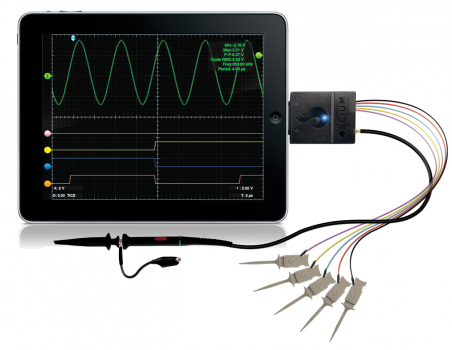 |
| iMSO-104 iPad Oscilloscope |
Owen Morgan, KF5CZO, is a regular contributor to AmateurRadio.com and writes from Texas, USA. Contact him at [email protected].
Is there an inexpensive kit for the Technician 10M phone band?
 In the comments for the kit roundup, a reader asked me about this, so I looked through the list again, and found the lowest priced kit available that will cover at least a portion of the 28.300 to 28.500 range. The YouKits TJ2A seems to be the only choice, but only after adding the accessory crystal pack #2. He pointed out the inexpensive MKARS80 as an example of a great SSB kit for very little money, but not covering a band available to a technician-class ham. On a side note, I wonder if it is possible to create an MKARS10? Here is my reply:
I’m not sure why there aren’t more SSB kits for 10 meters. In the list here you can try the Youkits TJ2A (http://youkits.com/ or the eBay store) and build it for 10 meters by ordering crystal option package #2. They only show one optional package on the website, but two in their eBay store for some reason. According to their specs this will give you 28.326 – 28.420. You might have luck contacting them directly and trying to order one with the correct BPF components for 10 meters with the initial kit package and save a few $$.
Another suggestion is to step up to general. I started studying as soon as I got my tech, and took the test about 6 weeks later. Tech-to-general is a pretty easy jump (mush easier than general-to-extra) and will give you the ability to use some of these other kits (like the aforementioned bargain-basement MKARS80).
A third option is to pick up a used Radio Shack HTX-10 or HTX-100 rig on eBay or at a hamfest. I have a Magnum-257 in the car (same rig as the HTX-10) that I picked up for $125. That rig with a modified 11 meter whip has been heard in Europe, Africa, and all over South America from here with 25 watts. In fact, my first contact on HF as a new ham was with France! I wish that good fortune on any new ham. It certainly got me interested in getting more great contacts.
Whatever path he chooses I’m sure it will be enjoyable. Once you make that first contact you catch the fever, and can’t wait for more.
–Neil W2NDG
EDIT: Andrew AC8JO reminded me about the Softrock RX/TX SDR kits, which can be built with 17, 12, and 10 meters at 1 watt. (you select the bands when you build, the kit comes with parts necessary for all). The kits are $89 when available. See http://www.kb9yig.com to order, or the Yahoo Group Softrock40 for announcements of upcoming availability or units to purchase. I hear that it is a moderately difficult build for a newbie, but there is PLENTY of info online to assist you.
Neil Goldstein, W2NDG, is a regular contributor to AmateurRadio.com and writes from New York, USA. Contact him at [email protected].
DCS: Also Reflecting Our National Traits
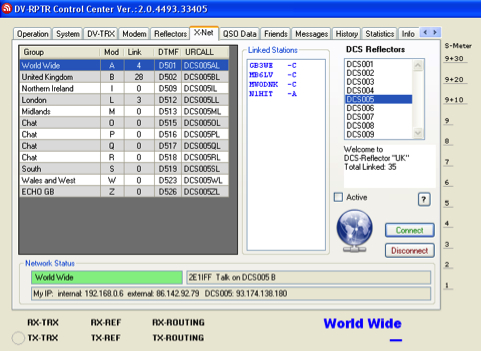 |
| UK DCS005 shown on he excellent (German) DV-RPTR Control Centre software |

Rob Law, MW0DNK, is a regular contributor to AmateurRadio.com and writes from Anglesey, Wales. Contact him at [email protected].
 Ham Radio Deluxe |
 W5SWL Electronics |
 Ham Radio Prep |
 KB3IFH QSL Cards  Hip Ham Shirts  HamRadioAuctions HamRadioAuctions Reliance Antennas Reliance Antennas Enigma Shop Enigma Shop |  morseDX  Ni4L Antennas  R&L Electronics R&L Electronics antennas.us antennas.us QRV QRV |
- Matt W1MST, Managing Editor
