 |
 Bad band conditions
 12 July 2012 | by
 My trip to the top of Mount Prospect was a semi-bust. Band conditions were not to be. Steve NU7T sent me this on the Polar Bear e-mail reflector:
Sorry Larry Bear,
ALERT: X-Ray Flux exceeded M5
Threshold Reached: 2012 Jul 12 1626 UTC
NOAA Scale: R2 – Moderate
Potential Impacts: Area of impact centered on sub-solar point on the sunlit side of Earth. Extent of blackout of HF (high frequency) radio communication dependent upon current X-ray Flux intensity. For real-time information on affected area and expected duration ( 1800 z ).Grrrrrr
15m – 6dB attenuation Grrrrrr
20m – 3 dB attenuation Grrr
40m – 17 dB attentuation Grrrrrrrrrrrrrrrrr
Steve, NU7T PB #300
And Steve was 10000000% correct – the entire time I was at the summit, I heard one, watery and warbly signal on 20 Meters. All my CQing went for naught. I was heard on the Reverse Beacon Network, however (by at least one skimmer):
| WZ7I |  W2LJ W2LJ | 14061.0 | CQ [LoTW] | 7 dB | 20 wpm | 1629z 12 Jul |
Oh well, Maybe things will pick up for tomorrow. In any event, I’ll post some of the photos I took, later tonight.
72 de Larry W2LJ
QRP – When you care to send the very least!

Larry Makoski, W2LJ, is a regular contributor to AmateurRadio.com and writes from New Jersey, USA. Contact him at [email protected].
Prospect Mountain Summit
Is the plan for tomorrow. It doesn’t qualify as a SOTA Summit, but as per the brochure, the views are supposed to be breathtaking
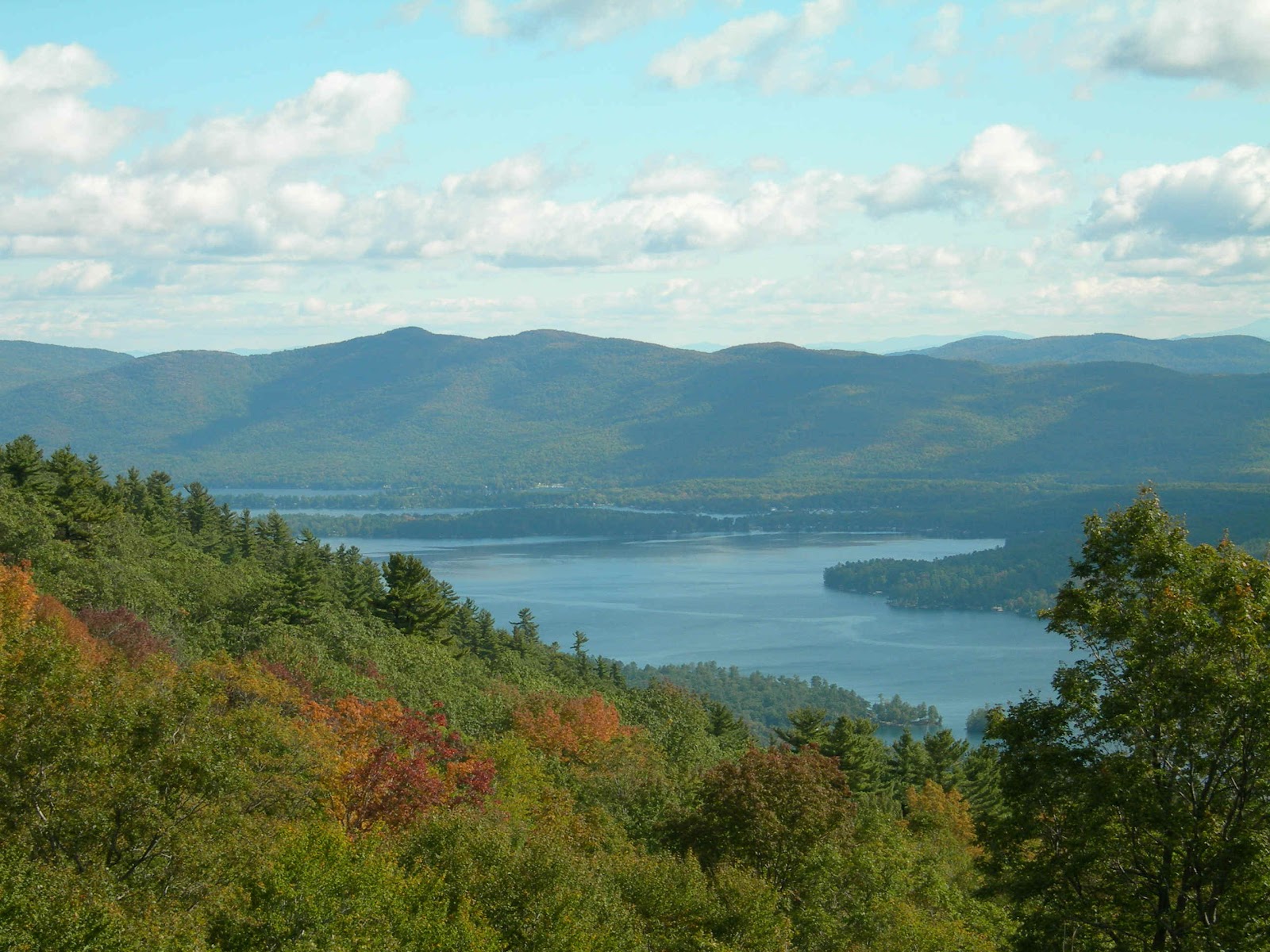
There’s supposedly a picnic area at the summit, so maybe I can toss the EFHW up a tree and make some contacts.
I’ll take my phone alone and will hopefully will be able to spot myself on QRPSPOTS.
72 de Larry W2LJ
QRP – When you care to send the very least!

Larry Makoski, W2LJ, is a regular contributor to AmateurRadio.com and writes from New Jersey, USA. Contact him at [email protected].
Ham Radio Aboard the Disney Wonder Cruise Ship
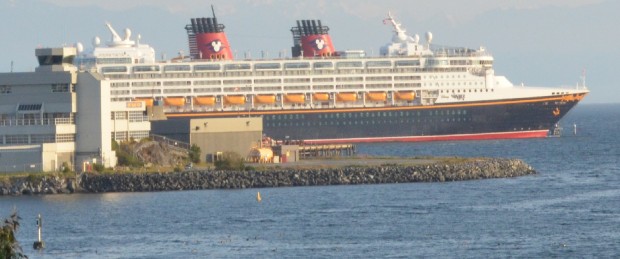
As a new ham (got my Technician and General last February), I am excited to try out all areas of amateur radio. Being eighteen years old, I’m also willing to schlep my rig wherever I can. This past week, I went on an Alaskan cruise with Disney Cruise Lines and I decided to try HF while on the Disney Wonder.
I began investigating cruise ship operation via Google, where I found mixed reports of success. It seems a lot of cruise lines don’t allow ham radio use onboard. I found a story from one ham who had success with Disney, so I started by simply sending an email to Disney Cruise Lines. I wrote:
I am a licensed amateur radio operator and I was wondering if I am allowed to operate my radio while I am on my cruise this summer in Alaska. I have heard other people have gotten permission in the past to do this, I would really appreciate the opportunity to. Thank you for your time!
A day or two later, I got a response stating that “Ham Radios may be brought onboard; however, there is no guarantee that they will function.” A little vague, the reply was enough to make me to continue on in my ventures.
Disney’s ships are registered in the Bahamas so I needed a reciprocal license to operate. Of course, I did all of this research way too late. However, I emailed the Utilities Regulation & Competition Authority, which is the responsible party for amateur radio in the Bahamas. To my surprise, they were extremely helpful and said while it using takes nearly a month, if I scanned and emailed the necessary forms, a copy of my passport ID page, a copy of my FCC license, and pay the $35 fee via credit card, I would get approved in time. Still a little unsure, I proceeded.
I still needed permission from the master of the ship, and I thought it would be impossible to prior to the cruise. I decided to write a nice letter and send it to the Disney Cruise offices in Florida as well as the port in Seattle where the cruise left from. On both, I simply addressed it to the “Disney Wonder Captain.”
I was pleased to receive a nice reply from the Florida offices on an official letterhead stating it was no problem as long as I did not cause any interference. About a week later, I received an email from the captain’s assistant stating Captain Thord Haugen “enjoyed reading my letter and has no problem with you operating your radio onboard.”
Now I was really excited! My license officially came via email the day before I left. I packed up my Yaesu FT450D, MFJ manual tuner (thanks to N8PZD, Clark for lending it to me!), and a 15m, 20m, and 40m Hamstick. Once onboard, I set up, mounted the Hamstick on my veranda and grounded it to the ship’s hull. Stupidly, I didn’t take any photos of my setup, but it was pretty simple. I fired up the rig and made a QSO as we left Seattle.
However, that is where my HF experience ended. I turned off the rig, came back later and found my radio wasn’t working. Unfortunately, I couldn’t do anything else on HF. Right now, my rig is on its way back to Yaesu for a warranty claim. All wasn’t lost as I brought my FT60R too and listened to all the port operations. I also worked 2 meters FM in various ports including Skagway, Alaska where the mountain repeater system got me to Whitehorse, Canada (about 100 miles).
In the end, it was quite an experience – both Alaska itself and ham radio. While I was really disappointed my rig died after all the pre-cruise work, I hope some others can benefit from my experience. Plus, I’m sure I’ll try it on another cruise in the future. It was pretty cool to be able to say “Maritime Mobile aboard the Disney Wonder Cruise Ship off the coast of Alaska” and I would recommend at least investigating if you are going on a cruise. I’ve heard Holland America has a written policy allowing ham radios, and they are probably your best bet if looking for a “ham radio cruise.” If you have any questions, feel free to email me. 73!
Tony, KD8RTT
Tony Milluzzi, KD8RTT, is a special contributor to AmateurRadio.com and writes from Ohio, USA. Contact him at [email protected].
Waldo Canyon Wildfire in Colorado
You probably already heard about the terrible wildfire on the west side of Colorado Springs. The fire burned 18,247 acres, destroyed 346 homes and killed 2 people.
Here’s a map of how the fire progressed over time.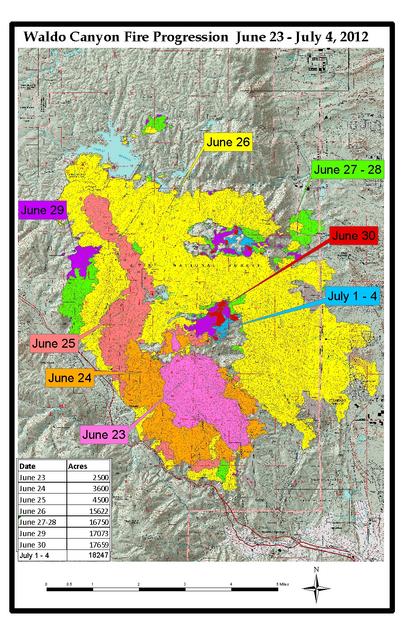
18,247 acres is a little more than 28 square miles of area burned. Think about a fire that consumes 28 square miles in your back yard. Pretty sobering.
Here’s a time lapse video that shows the fire from a distance.
The Denver Post has some of the best photos of the fire as it burned structures on the northwest side of Colorado Springs.
There were two major ham radio activities (that I am aware of) in response to the fire:
The RACES team (Special Communications Unit) attached to the El Paso County Sheriff’s office staffed the Emergency Operations Center in Colorado Springs. I did help out for one 12-hour shift, a relatively minor role.
Pikes Peak ARES supported the Red Cross, who operated the emergency shelters for ~32,000 people that had to evacuate their homes. The Pueblo newspaper ran an article about this.
The real heroes are the firefighters that battled the blaze, especially on that terrible Tuesday night when so many houses were lost. Those guys and gals are awesome!
- 73, Bob K0NR
Bob Witte, KØNR, is a regular contributor to AmateurRadio.com and writes from Colorado, USA. Contact him at [email protected].
On the trail
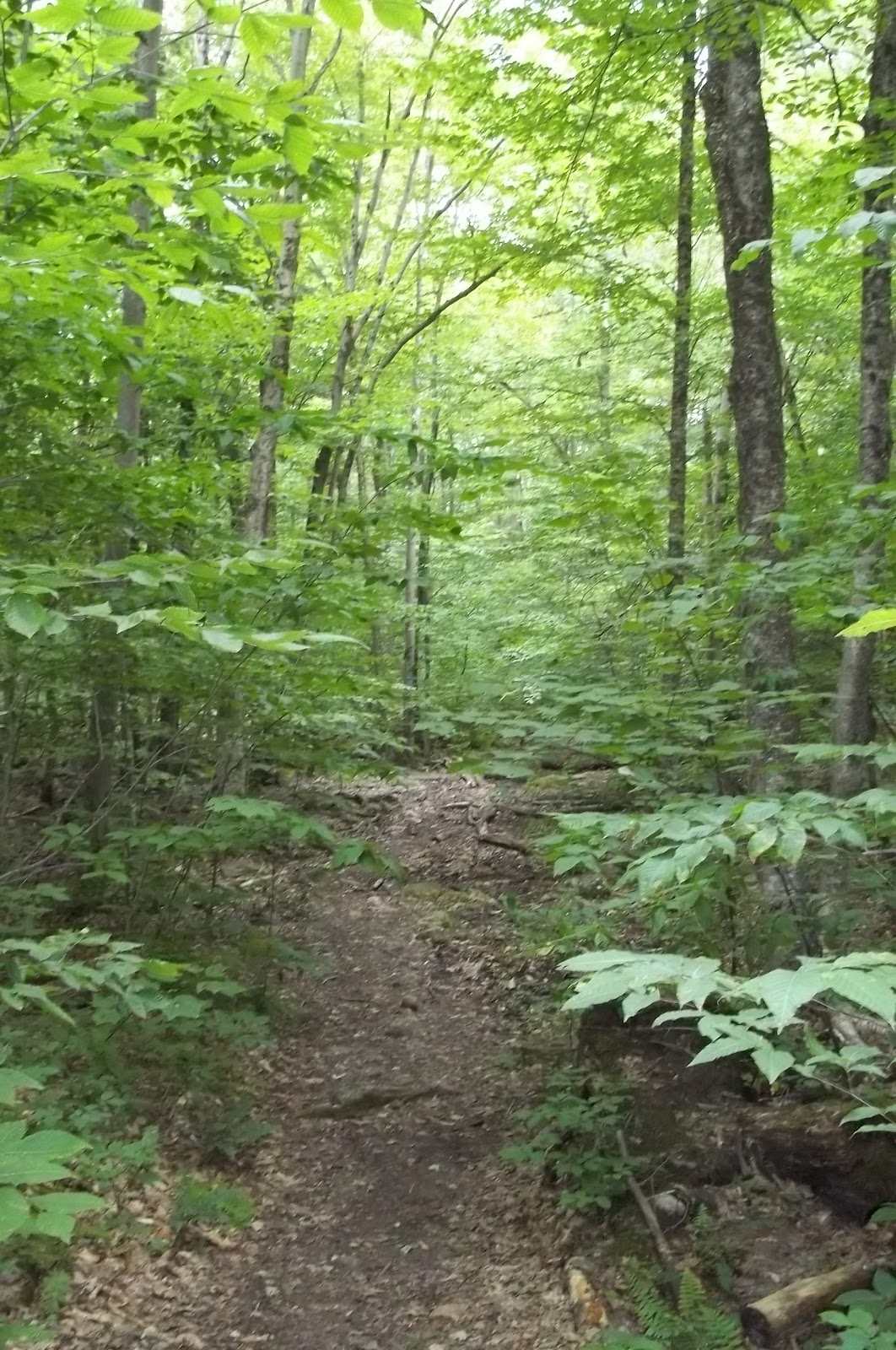
Did a little exploratory hike on the trail today, sans radio, just to see what the trail looked like.
I had to turn back early as a thunderstorm came on quickly, and I didn’t want to be out in that. I did come across some beaver and a red fox. I think they were quite startled by me Tomorrow is planned, so I might try again on Thursday.

72 de Larry W2LJ
QRP – When you care to send the very least!

Larry Makoski, W2LJ, is a regular contributor to AmateurRadio.com and writes from New Jersey, USA. Contact him at [email protected].
Heartwarming: My Son Takes My Old Novice Callsign, KAØCEM

Novice Station KAØCEM, circa 1978.
Today my son, Antonio, was granted my old Novice call sign from 1978: KAØCEM. He has wanted this call sign ever since he began studying for his Technician license. What a moving thing this is to behold my son showing such honor to his father, if even in such a trivial matter as an amateur radio call sign. It gives me pause to contemplate my relationship with Antonio and the man he has become.
Back in 1996, when he was born, I could not foresee the year 2012. I’ll never forget that day when we came home from church to hear a message from Antonio Maset, the director of our adoption agency. Our hearts leaped to hear him say that a baby boy had been born the night before in Guatemala City. Mr. Maset said he would call back later that evening. We spent the afternoon with another adoptive family with a boy from Guatemala, and my wife and I looked at each other in awe when the mother told us we should have a name picked out when Mr. Maset called us back. Watching her boy and imagining a son of our own like him, our minds whirled as we tried to grasp the magnitude of what was happening.
When we went home and waited for the phone to ring, the minutes crawled by like hours. Finally, the phone rang and my wife and I each picked up. Antonio Maset was on the line with Helen de Rosal, the lady who ran the home where this little baby would spend his early days. We eagerly told them that we did indeed want to adopt this little baby, and we told them we wanted to name him after Mr. Maset. Thus was my son named Antonio before he left the hospital that day. Five months later, after our lawyer in Guatemala City finalized the adoption with the courts, I flew to Guatemala to bring Tonito (as we called him then) to the American Embassy for a visa. And a day later, I delivered him into my wife’s loving arms at the Minneapolis-St. Paul airport as my daughter and a host of smiling friends and relatives looked on.

Antonio’s last lab in book one of the Electronic Learning Lab: a frequency meter using 555 & 4046 chips.
Now Antonio is sixteen, and he has chosen my old Novice call sign as his own. As heartwarming as it is, this symbolic gesture reminds me of far more important things about my son. Most importantly he has given himself to Jesus Christ; as a Christian he is as much my brother in the church as he is my son. He has grown up to be a respectful, hard-working young man who disdains teen culture and loves ham radio because he gets to talk with adults who treat him as an adult. He adores his sister, respects his mother, and honors me not only as his father but as his homeschool-teacher. He keeps up with his chores, and he willingly tilled and planted the garden this year. He loves playing classical guitar, riding and training horses, and reloading various kinds of ammunition.
And now, he’s a ham radio operator — with my old Novice call sign. He wants to master CW, but until then he is active on 2 meter FM and 10 meter SSB. He has registered as an ARES operator, and last night he even passed his first radiogram on the Yellow Medicine County ARES Training Net (a radiogram that I need to pass along on the MN Section Net today!). Not bad for being a ham for only one month!
I pray that God will guide Antonio as he continues to grow in wisdom and stature. Son, may you always keep amateur radio and your other pursuits in their proper place, and strive above all else to bring glory to God as you seek to know him and love him — not only to live well, but to die well.


Todd Mitchell, NØIP, is a regular contributor to AmateurRadio.com and writes from Minnesota, USA. He can be contacted at [email protected].
RTLSDR help? RTL2838U and SDR?
Buyer beware! David, G4ASR reports that he ordered the same USB stick using the details in my previous post and when he installed his device, it shows up as an RTLSDR/RTL2838U which SDRSHARP does not recognise. We can see some references to this chip working under Linux, but not under Windows.
Does anyone know if this can be made to work with SDRSHARP or indeed any other SDR software working under Windows?

Tim Kirby, G4VXE, is a regular contributor to AmateurRadio.com and writes from Oxfordshire, England. Contact him at [email protected].
 Ham Radio Deluxe |
 W5SWL Electronics |
 Ham Radio Prep |
 KB3IFH QSL Cards  Hip Ham Shirts  HamRadioAuctions HamRadioAuctions Reliance Antennas Reliance Antennas Enigma Shop Enigma Shop |  morseDX  Ni4L Antennas  R&L Electronics R&L Electronics antennas.us antennas.us QRV QRV |
- Matt W1MST, Managing Editor
