 |
 Technician License Class – Sept 2012
 14 July 2012 | by
  Monument, Colorado
Saturday Sept 29 and Saturday Oct 6 (8 AM to 5 PM) 2012
Location: Tri-Lakes Monument Fire Station 1
Sponsored by the Tri-Lakes Monument Fire Radio Association
The Technician license is your gateway to the world-wide excitement of Amateur Radio…
- Earn your ham radio Technician class radio privileges
- Pass your FCC amateur radio license exam right in class on the second day
- Multiple-choice exam, No Morse Code Required
- Live equipment demonstrations
- Learn to operate on the ham bands, 10 Meters and higher
- Learn to use the many VHF/UHF FM repeaters in Colorado
- Find out how to participate in emergency communications
There is no cost for the class (donations accepted)
However, students must have the required study guide:
HamRadioSchool.com Technician License Course $19.95
And pay the FCC Exam Fee: $15.00
Advance registration is required (no later than one week before the first session, earlier is better!)
To register for the class, contact: Bob Witte KØNR
Email: [email protected] or Phone: 719 659-3727
For more information on amateur (ham) radio visit www.arrl.org or www.wedothat-radio.org
Bob Witte, KØNR, is a regular contributor to AmateurRadio.com and writes from Colorado, USA. Contact him at [email protected].
HamRadioSchool.com
 I haven’t blogged in a few weeks. Work has kept me busy and I’m still making solid progress on the new basement ham shack, home office, podcast studio and just general all-round man-cave. I’ll try to get an update on the new ham shack published soon. However, I wanted to take some time to write a quick blog post to tell you about some really fantastic news. A friend of mine and fellow club member, Stu Turner W0STU debuted his HamRadioSchool.com license course system today.
The HamRadioSchool.com license course is an integrated learning system, combining the best of proven traditional methods with new media to provide an overall learning experience never experienced before in amateur radio.
The Book – The HamRadioSchool.com Technician License Course, is honestly the missing book we’ve been looking for. This material contains more than just the public domain questions. When used, the student will actually learn and not just memorize.
The Website – The HamRadioSchool.com interactive website offers a fun and highly informative electronic magazine for new hams. New features and new content will be introduced frequently.
The Apps – The HamRadioSchool.com tablet and smart phone apps provide book-coordinated question pool quizzes and full exam practice from anywhere and at anytime. The HamRadioSchool app will also track progress to ensure the student sees all of the pool questions and remembers areas of weakness so you know exactly where you need to focus your attention.
Yes there are other study materials and methods available, however these often encourage memorization and leave the student without truly understanding the content. The HamRadioSchool.com Technician License Course material promotes true understanding with simplicity in an easy to follow program.
If you are interested in earning your US FCC Technician class amateur radio license, skip the rest and go for the best! Please visit the HamRadioSchool.com website to learn more about the program.
Until next time…
73 de KD0BIK
Jerry Taylor, KD0BIK, is a regular contributor to AmateurRadio.com and writes from Colorado, USA. He is the host of the Practical Amateur Radio Podcast. Contact him at [email protected].
K3 VFO problem – help!
I’m on 6m with my Elecraft K3 and I’ve noticed that VFO B is following VFO A. Whatever frequency I dial using VFO A and the main tuning knob, VFO B changes with it. On other bands the VFOs are not linked like this but turning the VFO B knob does nothing.
Obviously I accidentally pressed something I shouldn’t have, so I don’t know what to do to undo the action. Does anyone know what I should do to get VFO B working normally again? Switching off and switching on again didn’t solve the problem.
UPDATE: VFO B was not changing because LOCK was on. Having turned LOCK off I can change VFO B independently using the knob. VFO B and VFO A now show different frequencies, but if I turn the VFO A knob, VFO B now changes by the same amount! I don’t seem to have SPLIT on, in fact when I press SPLIT the message SPL N/A is shown.

Julian Moss, G4ILO, is a regular contributor to AmateurRadio.com and writes from Cumbria, England. Contact him at [email protected].
Bands are in recovery mode
Or so it would seem.
I didn’t revisit the mountain top today, just stayed near the cabin and slapped the Buddistick atop the Jeep. I garnered a QSO with Sam K9GHD on 20 Meters this afternoon. There was a lot of QSB, but we were still able to manage a QSO.
Sam was using his IC-746 at 5 Watts to a dipole and he was a good 549. We chatted for a bit and then I went QRT to enjoy the lake for our last day here at Lake George.

This week went buy way too fast. I love it up here and am going to miss it until we come back up here next summer.
72 de Larry W2LJ
QRP – When you care to send the very least!

Larry Makoski, W2LJ, is a regular contributor to AmateurRadio.com and writes from New Jersey, USA. Contact him at [email protected].
The ARRL Radiogram, Part 1
 Who knew the ARRL radiogram could be so easy to send and receive — and so enjoyable? All those old-time NTS operators, of course! The National Traffic System — the “Relay” in the American Radio Relay League — has been around since 1915, yet never have I had the courage to take part until now. I wish I’d done it sooner. My son, a ham for only a month, has already passed two radiograms of his own! How about you? Would you like to give it a try?
 The first step is to find a net that is part of the NTS. I found one by searching the ARRL database (click here) for a “Section Net” in Minnesota. Unfortunately the database is a bit cluttered, so it may require a bit of patience as you sift through the listings and tune around listening for a listed net. But that’s not a bad way to start, really. Patient listening will get you far in this hobby, especially when you’re trying to learn something new.
Once I found the MN Section Phone Net on 3860 kHz I listened to a few sessions before checking in. My biggest fear was that I might be asked to receive a radiogram without understanding the procedure. But I didn’t have anything to worry about — surprisingly, very little traffic is actually passed these days. The same is true of the SD NEO Net which immediately follows the MN Section net on that frequency.
We need more radiograms in the system. It doesn’t matter how trivial your message is, honestly. Know somebody who has a birthday coming up? Send him a radiogram! It is a novel way to send a greeting, and it helps keep the NTS running the way it’s supposed to. As the ARES EC for my county I have a vested interest in the proficiency of the NTS, which works closely with ARES during a disaster. But I digress.
 To learn how to send and receive a radiogram I turned to The ARRL Operating Manual For Radio Amateurs. The chapter on traffic handling is very well written; read through it a couple of times and you’ll be ready to handle radiograms by a voice-mode. CW is a little tougher because it involves unique prosigns and Q-signals — the book is indispensable as a starting-point, but I’m still not ready to check into a CW traffic net quite yet. I’m listening when I can, though, and learning.
Before passing a radiogram in the NTS, I practiced sending and receiving a test-radiogram with my son on 2 meter simplex. Then I practiced sending a test-radiogram to the Yellow Medicine County ARES Training Net on our local 2 meter repeater. We were ready to do it for real. On the next Training Net my son sent me a bona fide radiogram bound for his friend in Virginia. No turning back now — I couldn’t let my son down! The next chance I had to put it into the NTS was with the SD NEO Phone Net, so I tuned in, gulped, and took the plunge. Pretty soon the radiogram was on its way and I was grinning. This is easy!
In my next post I’ll describe how to compose a radiogram. Obviously I’m new at this, but that also means some of these things are fresh in my mind. I hope it will help one of you get on the air and send a radiogram!


Todd Mitchell, NØIP, is a regular contributor to AmateurRadio.com and writes from Minnesota, USA. He can be contacted at [email protected].
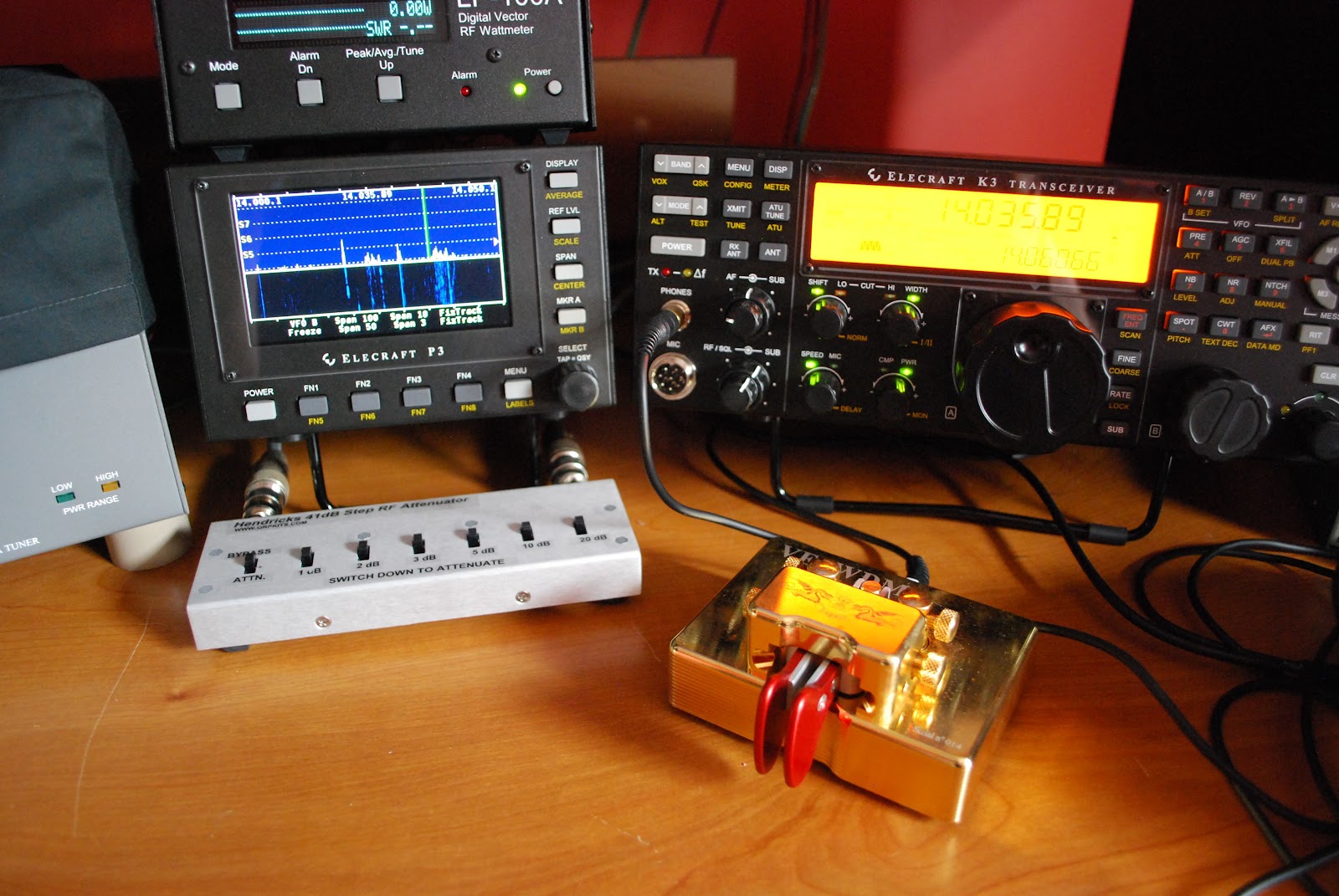
Hendricks 41dB attenuator built and added to the mix
 |
| Hendricks attenuator in service |
 |
| Final testing |
Now when I want to use the attenuator it's a matter of selecting antenna B on the K3 and Ant B selected on the DTS-4 and I am ready to go with all the setting on the K3 done.
- Have fun and enjoy!!
- Look for DXCC's I do not have so I can add to my ARRL Diamond count.
- See if I can beat my miles per watt record of 45,868 miles.
- Have fun and enjoy!!
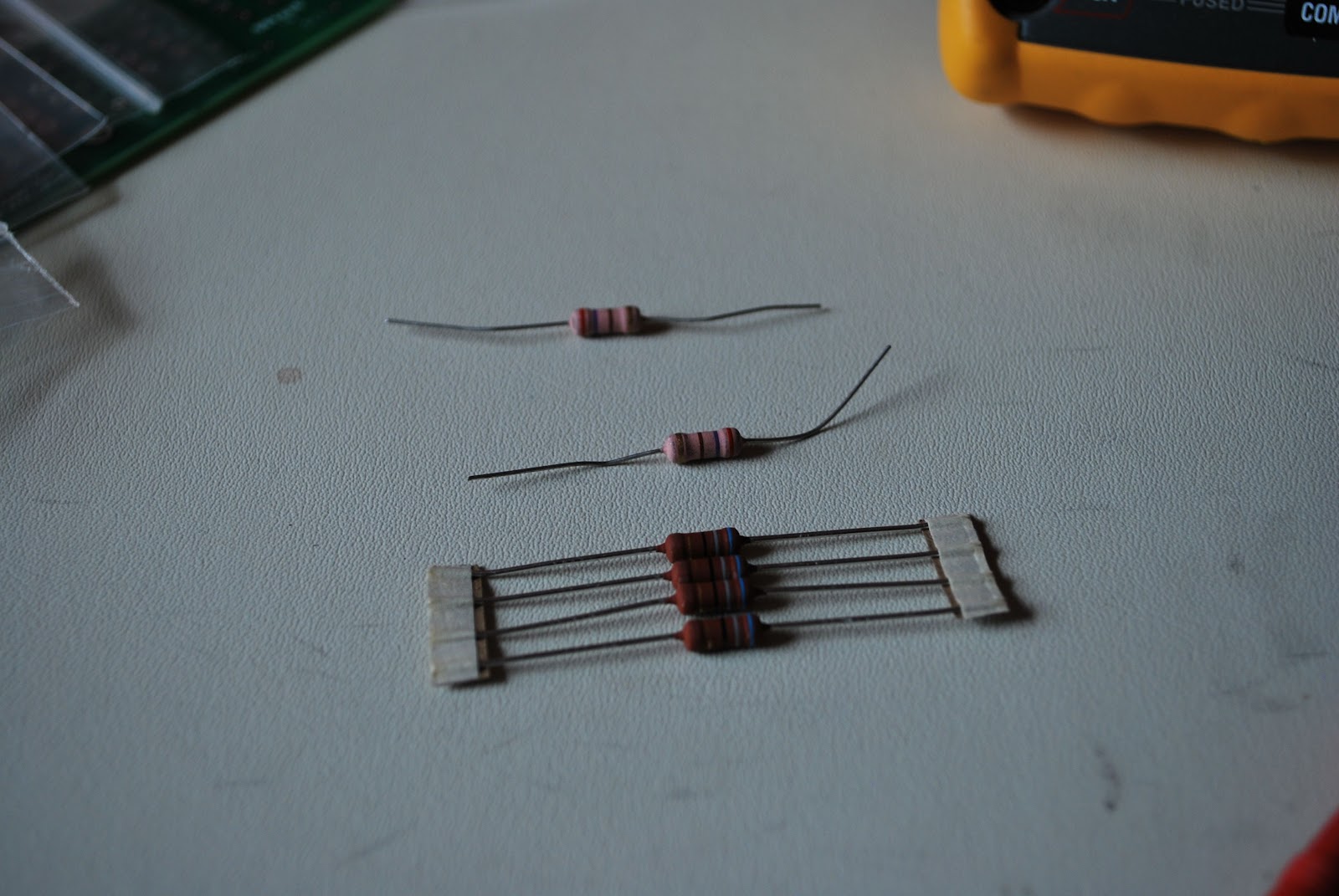 |
| Some of the extra parts |

Mike Weir, VE9KK, is a regular contributor to AmateurRadio.com and writes from New Brunswick, Canada. Contact him at [email protected].
June 6 and 10 report and other bits
Martin Harrison, G3USF has sent me the June short form report from the 6 and 10 club. It is available at the usual place, here. I trust you find it useful.
Personally I have barely touched the rig over the last couple of weeks. What with a broken PSU and a phenomenally expensive replacement switch that cost me more to put it in the post than the switch itself. The cheeky monkeys also sent it second class post so they made a tidy profit on sending it as well as on the switch. Hmmmmm.
Once I’ve got the PSU fixed, hopefully this weekend then I’ll be back up and running fully, just in time for the poor band conditions I’m reading about.
On another note I’ve had a wrestle with the Raspberry Pi as have a few other hams and its been tough going. Being a computer half wit I can’t really programme so I’m attempting to convert the little knowledge I have into making applications like Xastir run on the RPi. I’ve managed that but can I get the maps to work. Well simply, no I can’t. Still as a digipeater it has the potential but it needs a bit of extra hardware to accept audio in. Currently the board does audio out but not in. I expect that as time does on the platform will get developed further and bits and pieces will be produced in a similar fashion to the Arduino. At the moment its a bit like the wild west.
I should really spend the time fixing the PSU rather than playing with the RPi. That reminds me I need to fix the bike as well.
Alex Hill, G7KSE, is a regular contributor to AmateurRadio.com and writes from Cumbria, UK. Contact him at [email protected].
 Ham Radio Deluxe |
 W5SWL Electronics |
 Ham Radio Prep |
 KB3IFH QSL Cards  Hip Ham Shirts  HamRadioAuctions HamRadioAuctions Reliance Antennas Reliance Antennas Enigma Shop Enigma Shop |  morseDX  Ni4L Antennas  R&L Electronics R&L Electronics antennas.us antennas.us QRV QRV |
- Matt W1MST, Managing Editor
