 |
 cAPS Lock Anguish!
 19 August 2012 | by
 Several times a week I have been on the brink of writing this. It’s time to get it off my chest. I curse whoever it was that decided to place the caps lock key to the left of the A on the keyboard. For what seems like one time in two when I go to type a letter “a” I hit caps lock instead (or as well.) I hAVE USually typed several more letters before I realize my mistake and have to bACKTRack, to the accompaniment of loud cursing.
A couple of decades ago, in the days of MS-DOS, it was possible to write a little program called a TSR (from Terminate and Stay Resident.) This program could intercept your keystrokes and convert them to anything you liked. I wrote one that trapped Shift+3 and turned it into the pound sign instead of the US default hash (#). Microsoft provided a utility called KEYB.COM that could do this but it occupied several K of memory and in those days you counted every byte.
I don’t know if that is possible in Windows. But I’d really love a program that could intercept the caps lock key and turn it into an A (or rather, an a) unless you gave it a long press!

Julian Moss, G4ILO, is a regular contributor to AmateurRadio.com and writes from Cumbria, England. Contact him at [email protected].
UV-5R programming again – and USB drivers!
Last weekend I decided I wanted to put four or five new frequencies into the memories in the UV-5R. No drama – I got out the USB lead, plugged into the laptop and was about to start the programming software, when I noticed that the driver hadn’t started properly – no Com port available!
Odd – it was fine last time I used it. So I tried reinstalling using the installer. No luck. Tried another version of the installer, no. Tried a generic driver. No. Then I remembered there was something funny about having to manually install ser2pl.sys. No.
After all this about an hour had passed and I only wanted to program about 6 simplex frequencies in. My patience was exhausted and I decided to program it manually.
This weekend I found the original install CD for the programming lead and I thought – great, I can definitely make it work now. Plugged the lead in, ready to set up the drivers and…
Yes, you’ve guessed it, it worked straight away without me having to reinstall or do anything. Why? I have no idea…..

Tim Kirby, G4VXE, is a regular contributor to AmateurRadio.com and writes from Oxfordshire, England. Contact him at [email protected].
Today was a very good day
Amateur Radio-wise, that is!
At the VE session this morning, we were able to welcome three new Hams into the fold. Well, make that two and one revert. One of the candidates was a Ham years ago; but let his license lapse. So maybe it would be more accurate to say that we welcomed three potentially active Hams into the fold.
I guess I am from another era; as I get frustrated (a bit) when the first question out of a new Ham’s mouth is something to the effect of, “So where can I get a good price on a dual band handheld?” Man, when I was studying for my Novice ticket, the LAST thing I wanted was an HT. All I had my sights on was HF and working the bands. In fact, I didn’t get my first VHF radio until nearly a year after I was licensed.
I got my ticket in December of 1978. Spent November and December and part of January assembling my station, which was a “pre-owned” Drake 2-NT transmitter (which was my Christmas gift from my parents that year) and a Heathkit HR-1680 receiver which I saved up for and built all by myself. That receiver was the very first of many Heathkits that I was to build. Between buying, building and making an antenna, I had my first QSO on January 29th, 1979. And it was an HF QSO. I still have that QSL card, framed in my basement. Can’t recall the entire call of the poor victim that I plied my nasty fist on, but I do remember his name was Adam and he was KA9something.
My first VHF radio was a Tempo1 handheld, the very first to have a synthesized VFO, not relying on crystal control. I bought it a year later, after I had upgraded to General, specifically to assist in the 1980 Winter Olympics Torch Run. Those were the Lake Placid “Do you believe in miracles?” Olympics and the torch run traveled right through Central NJ on its way to Lake Placid. I was with a local club providing communications in an ARRL led effort. I still have the Public Service Commendation hanging on the shack wall that commemorated that event.
But for me, VHF and UHF were never a Number One favorite. Don’t get me wrong, I have spent A LOT of time on UHF and VHF repeaters – making friends, doing public service and all kinds of stuff. But in W2LJ’s mind, when Ham Radio pops up in a little thought balloon, it’s always a picture of an HF radio, making worlwide contacts. Just me, I guess.
I had another treat this afternoon, working my good friend, Bob W3BBO, who also took the plunge and just very recently got a K3. He finished building his this past week and this was our very first K3 to K3 QSO.

Larry Makoski, W2LJ, is a regular contributor to AmateurRadio.com and writes from New Jersey, USA. Contact him at [email protected].
Lest you think
that we bloggers never get on the air and just sit behind the keyboard all the time ……
I had a very FB QSO with fellow blogger Dan KB6NU on 30 Meters tonight. I was calling CQ and Dan answered. Dan is working on his Extra Class study guide, so we chatted for a bit and reminisced about our own exam experiences. Dan and I have actually worked numerous times on the HF bands – it’s always nice to run into him.
That was followed by two more rag chews, one with Tom, N8TL and Jim NH4C. Both were on 30 Meters, also. The 88′ EDZ antenna seems to do a very good job for me on 30 Meters. A far cry from the G5RV. Not to say that the G5RV wouldn’t load on 30 Meters – it did. But I get much better signal reports with the EDZ and I feel like I’m warming up the ionosphere instead of just the antenna wire.
I was going to go to the NJQRP meeting tomorrow; but received a request to help out at a VE session with the Raritan Valley Radio Club at the Somerset County Fire Headquarters building in Hillsborough, NJ. It’s been a while since I have participated in a VE session and I do want to keep my credentials up. Besides, it’s a much closer trip for me to Hillsborough, than it is to the NJQRP meeting. I’d say the trip to the VE session is about a 1/2 hour to 40 minute (if there’s traffic) ride from here. The ride to the NJQRP meeting is an hour and a half from here – easy. With gas prices going up yet again, I think I’ll stay closer to home.
72 de Larry W2LJ
QRP – When you care to send the very least!

Larry Makoski, W2LJ, is a regular contributor to AmateurRadio.com and writes from New Jersey, USA. Contact him at [email protected].
Ham Nation 60

http://dts.podtrac.com/redirect.mp4/twit.cachefly.net/video/hn/hn0060/hn0060_h264m_1280x720_1872.mp4
http://dts.podtrac.com/redirect.mp4/twit.cachefly.net/video/hn/hn0060/hn0060_h264m_864x480_500.mp4
http://dts.podtrac.com/redirect.mp4/twit.cachefly.net/video/hn/hn0060/hn0060_h264b_640x368_256.mp4
http://www.podtrac.com/pts/redirect.mp3/twit.cachefly.net/hn0060.mp3
Hosts: Don Wilbanks (AE5DW), Gordon West (WB6NOA), and George Thomas (W5JDX)
Amanda returns, back to school with Gordon, capacitive reactance, and more.
Guests Amanda Alden (K1DDN), and Cheryl Lasek (K9BIK)
Download or subscribe to this show at http://twit.tv/hn.
Submit your own video to Ham Nation! See the Video Guidelines, http://www.frozen-in-time.com/guide/
We invite you to read, add to, and amend our show notes at wiki.twit.tv.
Thanks to Joe Walsh who wrote and plays the Ham Nation theme.
Thanks to Cachefly for the bandwidth for this show.
Running time: 1:01:55
Dr. Bob Heil, K9EID, is the founder of Heil Sound and host of TWiT.tv's Ham Nation which streams live each Tuesday at 6:00pm PT (9:00pm ET) at http://live.twit.tv. Contact him at [email protected].
Like listening to a symphony
It was a tough day at work, but ……
I was really lucky tonight and both Foxes in the 20 Meter QRP Fox hunt were loud into New Jersey. I got both their pelts quite quickly and they were both VERY honest 599s into NJ. This was kind of an unexpected surprise, and a quite welcome one at that. Tuning around 20 Meters a few minutes prior to the hunt, I saw that the ambient noise level on the band is around an S7. I was expecting to be skunked as a result.
But TJ W0EA and John K4BAI have superb ears and both heard me really quickly. And as a side benefit of working them so early, I can now sit here and relax and listen. It’s like listening to a fine piece of music. Both are masters of their frequencies – firing off QSOs with liquid ease. If not like a symphony, then it’s certainly like a fine ballet; or perhaps akin to enjoying a piece of velvety smooth chocolate.
Bravo to both Foxes. It was not only good working both of you; but a joy to listen to your efforts working others. Fine codesmanship (new word?) is a wonderful thing.
72 de Larry W2LJ
QRP – When you care to send the very least!

Larry Makoski, W2LJ, is a regular contributor to AmateurRadio.com and writes from New Jersey, USA. Contact him at [email protected].
Transformerless tube power supply
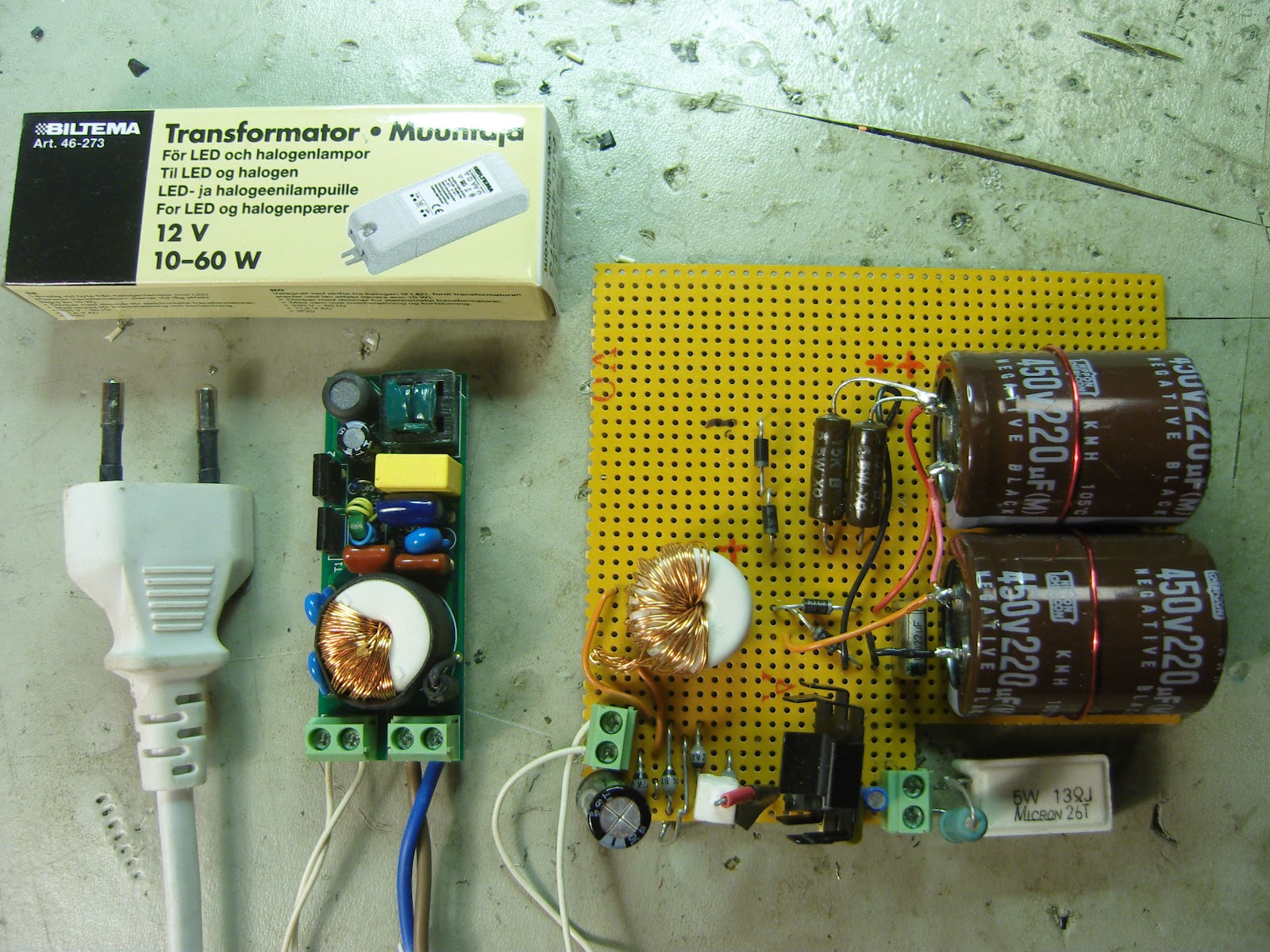
In 2012 bulky power transformers that work directly from the power grid at 50/60 Hz have mostly disappeared. My objective here is to modernize the power supply for a one-tube transmitter in the same way.
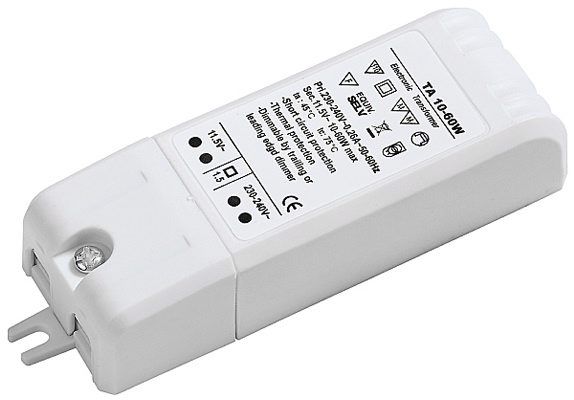
The circuit is based on an electronic transformer for LED or halogen lamps. Electronic transformers usually have a minimum power rating, below which they will not start. This one can tolerate a lower load than most and gives out 12 Volts for a load from less than 10 W and up to 60 W.
My target circuit is the AA8V/W8EXI 6CL6 one-tube transmitter (5 Watts or so). It needs 6.3 Volts for the filament (0.65 A), about 350 Volts DC for the plate and a regulated voltage of 200 Volts DC or so for the screen.
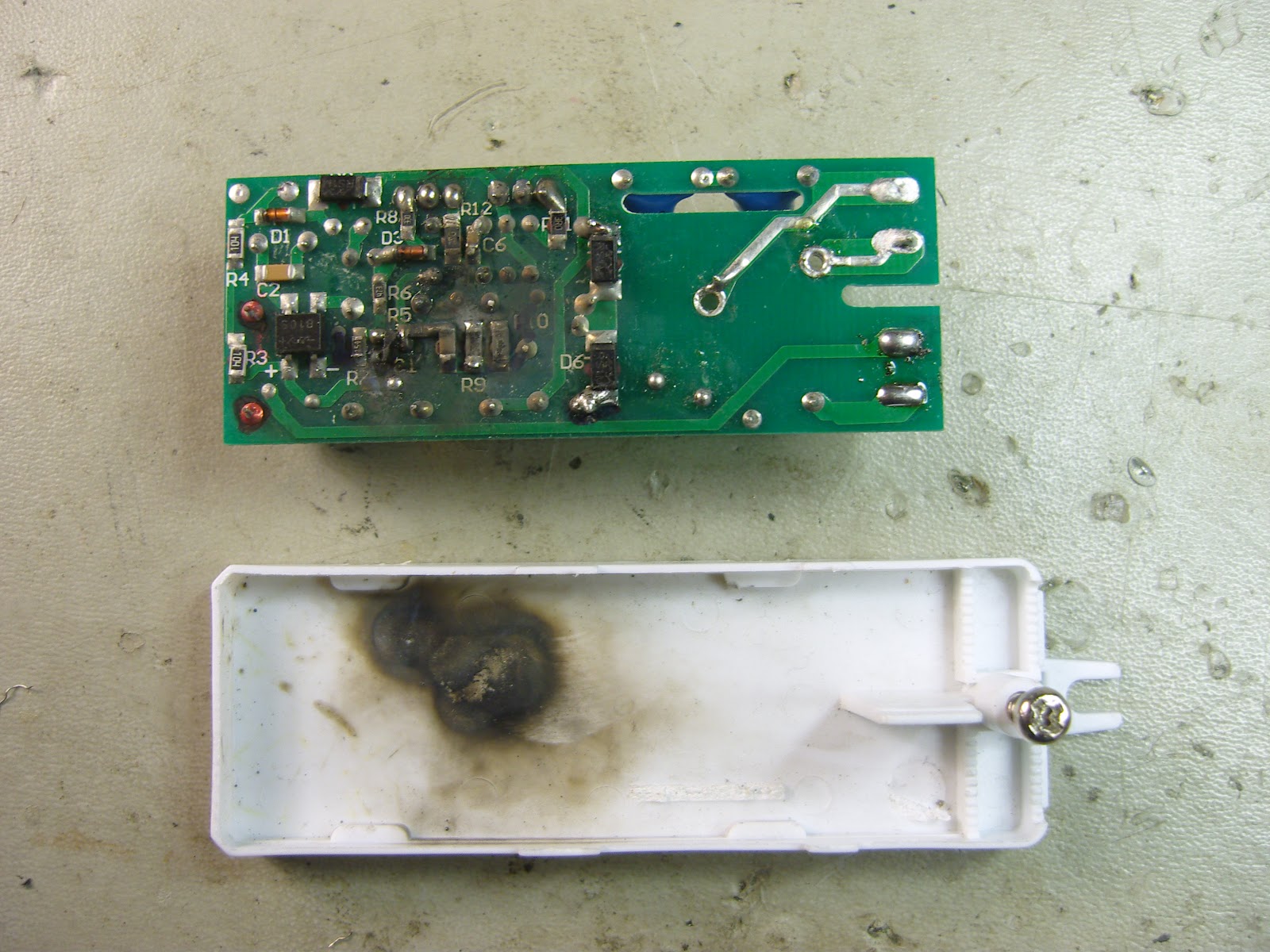
First I was inspired by DL2YEO and his Power Supply for small Tube Amplifiers. His approach was to redesign and rewind the high-frequency transformer (hmm, also a transformer, albeit a tiny one) of the circuit in order to get the desired high and low voltages. It takes some research to find the number of windings per volt and then to fit two secondary windings on the transformer which originally only had a single one. I tried this, but ended up with a burnt, shorted circuit. I concluded that it is too easy to make a mistake in this way.
My second approach was to reuse the small transformer from the burnt supply. I had to wind the original secondary back on it. The transformer is now reversed so the old secondary is used as the primary winding in order to step up the 12V AC. Then with a voltage doubler and filter capacitors I was able to get a DC voltage of 330 V. A series resistor and two 100 V Zener diodes in series gave me the regulated screen supply.
 The filament voltage is obtained from the 12 VAC, which is rectified and regulated with a LM317 voltage regulator to give 6.3 VDC. This is shown in the lower part of the veroboard where a load resistor that simulates the tube’s filament is attached to the green terminal block.
Because the whole circuit runs at about 45 kHz, only fast-recovery rectifiers can be used, not the ones that are used at 50/60 Hz. The electronic transformer is from the Nordic retailer Biltema (part no 46-273, sorry no English web page).
I only hope now that this power supply won’t generate a lot of noise for the receiver.
Sverre Holm, LA3ZA, is a regular contributor to AmateurRadio.com and writes from Norway. Contact him at [email protected].
 Ham Radio Deluxe |
 W5SWL Electronics |
 Ham Radio Prep |
 KB3IFH QSL Cards  Hip Ham Shirts  HamRadioAuctions HamRadioAuctions Reliance Antennas Reliance Antennas Enigma Shop Enigma Shop |  morseDX  Ni4L Antennas  R&L Electronics R&L Electronics antennas.us antennas.us QRV QRV |
- Matt W1MST, Managing Editor
