 |
 The pursuit of The Elser-Mathes Cup
 11 August 2012 | by
  The story of the Elser-Mathes Cup may be familiar to many of you. For those of you who are not in the know, you can get all the details from the article by Fred Johnson Elser, W6FB/W70X, in the November 1969 issue of QST. To summarize, the establishment of the Elser-Mathes Cup in 1929 was directly inspired by the leaps and bounds up to that point in radio technology combined with Hiram Percey Maxim’s fascination with the planet Mars. The cup is to be awarded in recognition of the first amateur radio two-way communication between Earth and Mars. I would bet that the cup’s initial establishment was somewhat tongue-in-cheek. Although Fred Johnson Elser’s QST article, on the tail of the success of Apollo 11, gave the cups existence and purpose a good deal more veracity.
How close are we to finally awarding the Elser-Mathes Cup? Lets look at some recent milestones:
Earth-Moon-Earth Bounce
In January 1953, Ross Bateman, W4AO, and Bill Smith, W3GKP successfully bounced at 2M signal off the Moon.
Signal reception of Voyager 1

On March 31, 2006, German radio amateurs successfully received transmissions from Voyager 1 which was already well outside the Solar System (~7,436,464,581 miles away from Earth).
Earth-Venus-Earth Bounce

On March 25, 2009, German radio amateurs achieved another first by bouncing a 2.4 GHz CW signal off of Venus – which at its closest point to Earth is a mere 24,000,000 miles away and 162,000,000 miles at its furthest.
Earth-Mars-Earth Bounce?
Mike Brink, ZR6BRI, has definitely done his homework to show the feasibility of radio amateurs bouncing a signal off of Mars (which has a distance from Earth that varies from 36,000,000 miles to 250,000,000 miles).
However, bouncing a signal off of Mars will not win The Elser-Mathes Cup. The amateur contact must be two-way.
 Could the Mars Science Labratory (Curiosity) fulfill the role as the second party of an amateur QSO?
Curisoity does have UHF communication capability. One of Curiosity’s antennas is nicknamed “Big Mouth” and is used to send large data sets to one of three orbiters around Mars: the Mars Reconnaissance Orbiter (which will probably do most of the work), Mars Odyssey Orbiter, or the European Space Agency’s Mars Express orbiter. The orbiter then relays the data via the Deep Space Network (DSN) back on Earth using X-Band.
“Big Ear” is Curiosity’s high-gain, directional X-Band antenna that can be used to communicate directly with the DSN on Earth. “Little Ear” is an omni-directional, X-Band antenna that is designed to be used primarily to receive low data rate transmissions from the DSN.
Putting aside the fact that Curiosity’s X-Band frequencies are outside the authorized US amateur frequency allocation and given the German amateurs success with Voyager and Venus – amateur communication with Curiosity looks possible (but probably not with my Arrow II antenna).
So, if it is possible for Joe Amateur (along with a heap load of expensive gear) to have a QSO with Curiosity – what would prevent the actual hacking of Curiosity?
Damon Poeter’s August 9th article “How to Hack NASA’s Curiosity Mars Rover” takes a look at this proposition. Mr. Poeter all but dismisses the possibility of a private citizen contacting Curoisty and instead focuses at actually hacking through NASA’s control system. Then on August 10th, Mr. Poeter submits “Unknown Actor Soliciting Partners for Mars Rover Hack”. Now, possibily, there are individuals who are actually trying to hack their way through NASA by soliciting help in determining what frequencies are used to communicate with the orbiters above Mars.
Here on an IT secuirty forum, a question is asked concerning the secuirty of Curiosity. One of the responses is from a former controller who is somewhat familiar with NASA’s general communications protocal with spacecraft and identifies the transmission of bogus communications to Curiosity as a possibility. Although the post’s author identifies that the capability to conduct such an act would have to be another country (…. and everyone loves pointing the finger at China).
It is easy to forget that radio amateurs have been intercepting space communications for sometime, with Sputnik’s signal on 20.007 MHz and Apollo 11 communications being primary examples.
All this being said, I think The Elser-Mathes Cup will continue to gather dust for a bit longer.
Scott Hedberg, NØZB, is a regular contributor to AmateurRadio.com and writes from Kansas, USA. Contact him at [email protected].
First KX3 mod
I carried out my first modification to the KX3 – or rather to the KXPD3 paddle. It was the mod to solve the missing dah problem. I hadn’t experienced it, but it was one of those issues that would rear its head at the most inconvenient opportunity so I decided to do the mod. This involved disassembling the KXPD3, cutting one track and bridging two pins on the key’s circuit board.
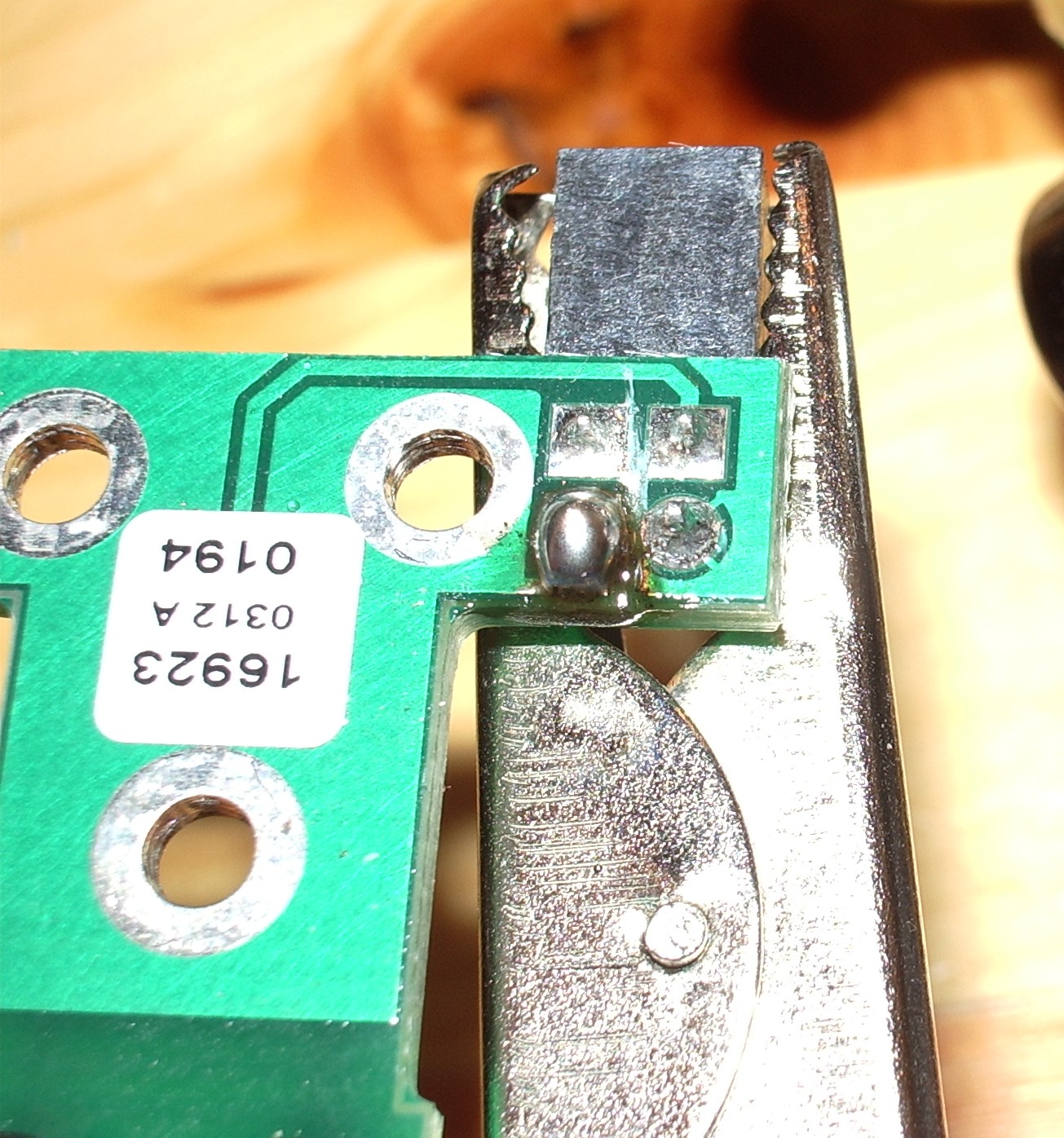
The KXPD3 came apart easily, in fact rather too easily as it disintegrated into its component parts before I had a chance to see how it went together. That’s the trouble with taking apart something that has a spring in it!
I then cut the track indicated and bridged from one pin to the adjoining track. Why is it so difficult to make a solder bridge when you actually want to.
I reassembled the KXPD3. Before I did I dismantled a couple of 409Shop complimentary ball point pens to see if they would provide an alternative spring for the paddle. They did, but they didn’t seem to be weaker than the original (the only way to alter the tension with this key is to change the spring) so I reassembled using the original.
After that I connected the KX3 up to a dummy load to try out the modified key and confirm that I hadn’t broken it. The key still worked, and my sending was still as bad as it was before, so all was as expected.
I hade a tune around on 40m and heard one of the special even stationsfor the Olympics, 2O12L. He was loud enough to be an easy contact with the QRP KX3 – but I was getting no transmit output! Eventually I switched to the K3 and worked 2O12L followed in quick succession by the Welsh Olympic special event station 2O12W.

After I had completed the cotacts I switched back to the KX3 to find out why I was getting no SSB output. I found that VOX was working, the rig was switching to transmit, but I was still getting no output.
Eventually aftter much tearing of hair and playing with settings I discovered the reason for the problem. I had turned the power down to 0.0W when I was testing the keyer…
Words fail me.

Julian Moss, G4ILO, is a regular contributor to AmateurRadio.com and writes from Cumbria, England. Contact him at [email protected].
Sunday !!!
There’s still time to get a number for the Skeeter Hunt, if you are so inclined. I will honor any request e-mailed to me by 0400 UTC Sunday (12:00 Midnight Saturday).
The weather here in Central NJ is supposed to be sunny with a high of around 87F. Hope you all get a chance to participate – and even more so ….. hope you all have fun and enjoy the event!
Remember, if you’re going to claim credit for the homebrew key bonus, you have to send me a photo of your key along with your entry.
72 de Larry W2LJ
QRP – When you care to send the very least!

Larry Makoski, W2LJ, is a regular contributor to AmateurRadio.com and writes from New Jersey, USA. Contact him at [email protected].
Sometimes shipping costs drive me NUTS!!!
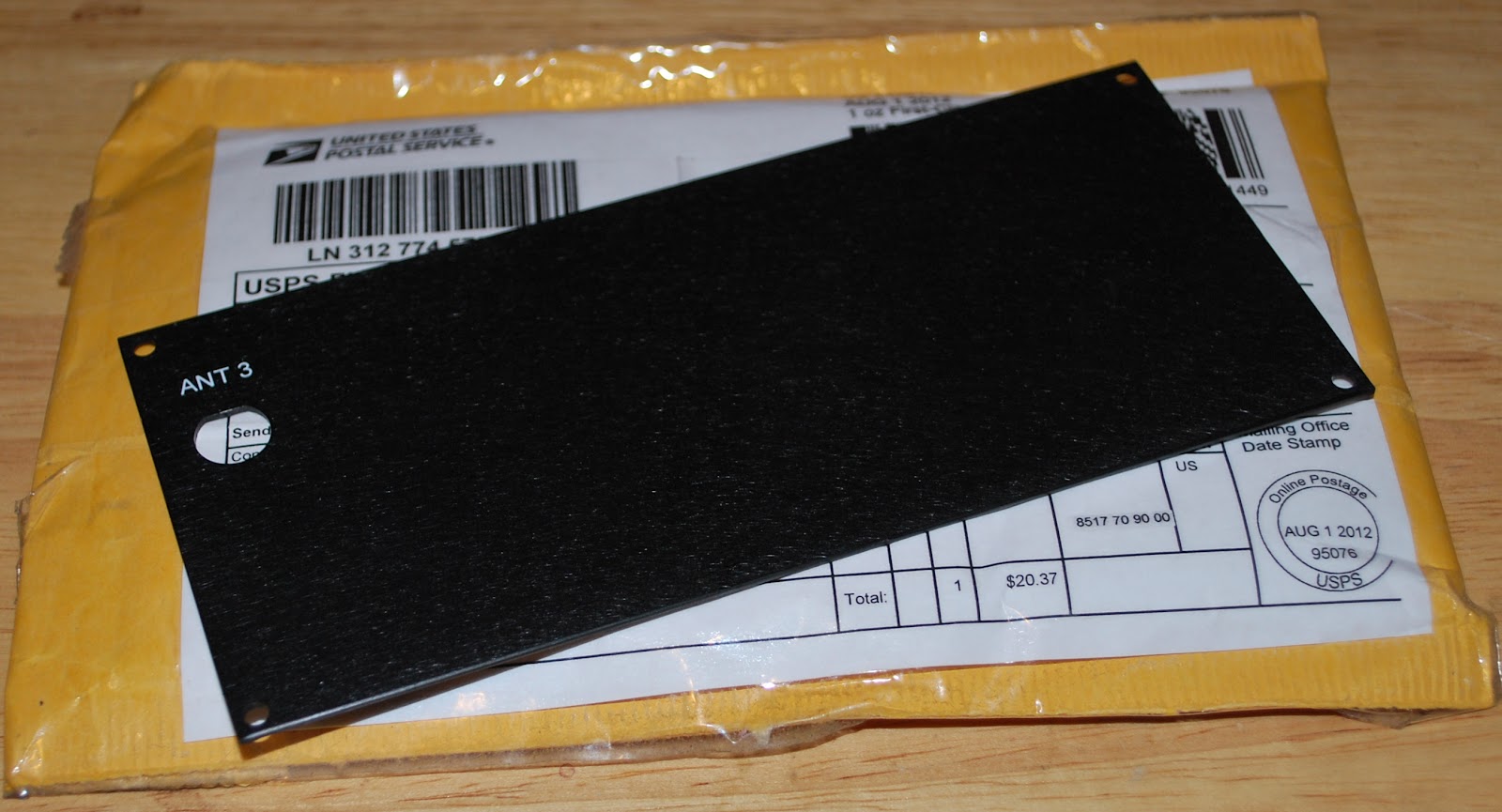 |
| KPA3 cover plate |
arrived looking at the bill the plate cost 20.37 and the shipping was 10.00!!!
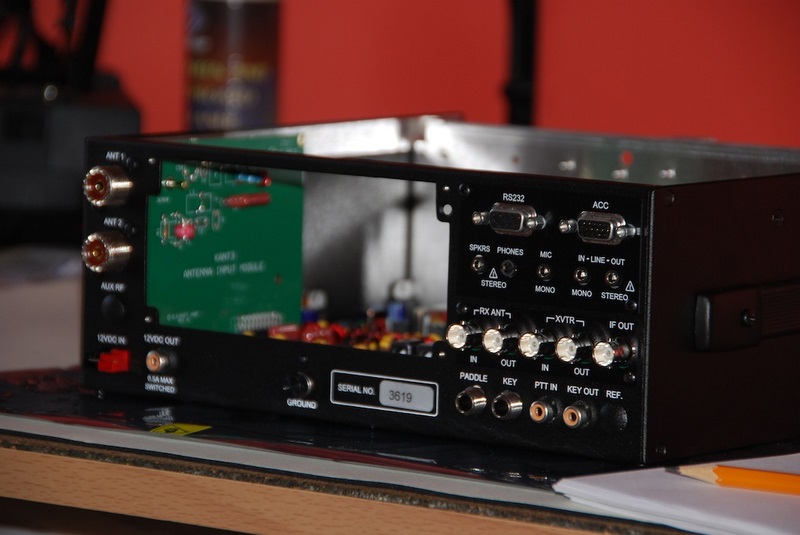 |
| Opening when fans are removed |
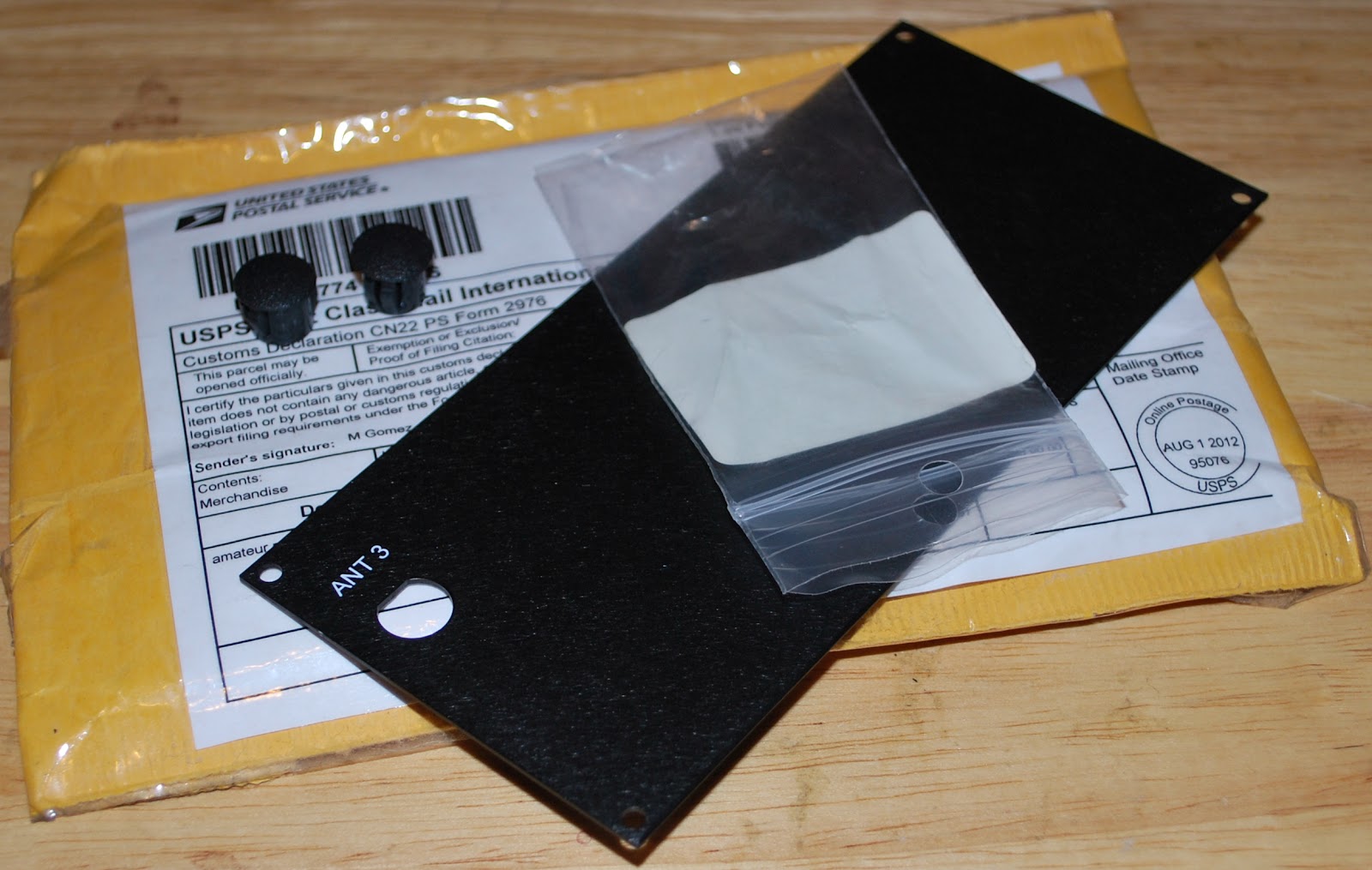 |
| Plastic plugs |

Mike Weir, VE9KK, is a regular contributor to AmateurRadio.com and writes from New Brunswick, Canada. Contact him at [email protected].
A good deal(er)
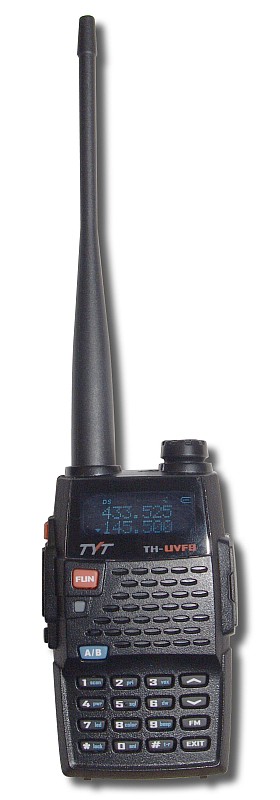
If you are a UK amateur and you like Chinese radios you’d probably never think of buying them from anywhere other than direct from China or Hong Kong, most likely using eBay. Ham radio dealers in Britain are widely regarded (rightly or wrongly) as rip-off merchants who work out the price by replacing the dollar with a pound sign and then adding on a bit more for good measure. Their pleas that the UK price includes VAT and the cost of providing a warranty usually fall on deaf ears.
In one of the discussion groups someone mentioned buying a radio from a British firm called Sinotel UK. I went to their web site and saw that they carried several models of hand-helds from China, including a new one I hadn’t seen before: a TYT UVF9 (pictured right.) But what particularly caught my attention was their prices, which were little more than what I have been paying buying on eBay. Their cheapest model, the Vero Telecom UV-X4 (similar to the Baofeng UV-3R) was just £29.99 (yes, a brand new dual band radio for 30 quid.) A UV-5R eas £34.99. The radio that had caught my eye, the TYT UVF9, was £47.99. It would cost me $68.50 from 409shop and I’d have to wait a couple of weeks for it.
I am not associated with Sinotel UK and have not even bought anything from them but if I want yet another Chinese handy to add to my collection I probably will.

Julian Moss, G4ILO, is a regular contributor to AmateurRadio.com and writes from Cumbria, England. Contact him at [email protected].
Experiments with Chirp – sending an audio URL….
In amateur radio terms, Chirp is an ambigious term! In this context, we’re not talking about your CW transmitter warbling up and down the band and we’re not talking about a neat package for programming your handheld.
Two or three weeks ago, Rory Cellan Jones presented an item on the BBC about an application called Chirp that runs on smartphones. It provides the ability to transfer files between devices using audio.
Let’s say I’ve a picture or a URL on my phone that I want to send you. I start the Chirp application on my phone, as do you. I select the photo that I want to send you and press the button. First of all, the application quickly uploads the picture to the Chirp server. Once it’s done that, it sends a series of tones which your phone ‘hears’. The tones act as like an audio QR code and provide your phone with a URL with which it can access the picture that I uploaded.
Julie and I have been using Chirp to transmit photos between our iPhones and iPads – it’s easier than emailling photos back and forth.
The other evening I was talking to David M0TFY on GB3WH and we were talking about Chirp and we wondered whether it would work on the air. After all, how often do you want to send someone a URL or an email address over the air? If you’re like me, pretty frequently! Something like Chirp would work well.
Our experiment of using Chirp using our iPhones miked into the radio across GB3WH failed. However, I’ve a feeling that if we tried simplex we might be more successful – my suspicion was that some of the tones that Chirp uses were not being passed by the audio circuitry of the repeater.
Even if the Chirp application doesn’t work over the air (which I think it probably should) – it might be an interesting project for someone to write something that would use tones that would pass over the air readily and robustly to send URLs or eMails…
The Chirp application is free and runs on iPhones. You can read about it here or download it from the App Store.

Tim Kirby, G4VXE, is a regular contributor to AmateurRadio.com and writes from Oxfordshire, England. Contact him at [email protected].
TechDay 2012 – Your Start in Amateur Radio
 Come join us on Saturday, September 15th, 2012 (9:00 AM to 2:00 PM) at the Tri-Lakes Monument Fire Administration Complex at 166 Second St. in beautiful Monument, CO for a half day workshop aimed primarily at the new Technician Licensees to help them get started in ham radio. While you’re here you’ll learn what it takes to be a ham radio operator, brush up on your DXing skills, test your own ham radio equipment, check out some sweet mobile radio installations, and ask an Elmer “What’s so cool about 10 meters?”
Getting started in ham radio has never been so much fun!
Presentations
9:30 am – Youth DXpedition to Costa Rica
by Anna Veal WØANT
10:30 am – Mountaintop Operating
by Steve Galchutt WGØAT
11:30 am – Home Station Setup
by Anna Veal WØANT
12:30 pm – Getting On the Air
by Brandon Hippe KDØPWF
1:30 pm – Radio Equipment 101
by Shel KFØUR
* Each presentation is approximately 15 minutes with 5 minutes of Q&A at the end. Events subject to change
Booths – Open 9AM to 2PM
Get Your Radio Programmed with Local Repeater Freqs by RT Systems
hosted by Kyle Hippe KYØHIP & Cole Turner WØCOL
Check Your Radio Performance
hosted by Bob Witte KØNR
See an HF Station
hosted by Dan Scott WØRO & Stu Turner WØSTU
Ask Any Question – The Elmer Booth
hosted by Paul Swanson AAØK & Shel KFØUR
Understand Mobile Installations
hosted by James Bucknall KDØMFO & Ethan Bucknall KDØMFP
Getting Your Ham Radio License
hosted by Brandon Hippe KDØPWF & Eric Hippe NØHIP
Ham Radio & Public Service
hosted by Randy Meadows KNØTPC
Sponsors
Tech Day 2012 is proudly sponsored by the WØTLM Amateur Radio Club and the Pikes Peak Radio Amateur Association.
Get the one page flyer in pdf format here.
Direct any questions to Bob KØNR
Bob Witte, KØNR, is a regular contributor to AmateurRadio.com and writes from Colorado, USA. Contact him at [email protected].
 Ham Radio Deluxe |
 W5SWL Electronics |
 Ham Radio Prep |
 KB3IFH QSL Cards  Hip Ham Shirts  HamRadioAuctions HamRadioAuctions Reliance Antennas Reliance Antennas Enigma Shop Enigma Shop |  morseDX  Ni4L Antennas  R&L Electronics R&L Electronics antennas.us antennas.us QRV QRV |
- Matt W1MST, Managing Editor
