 |
 Robust Packet Radio
 26 August 2012 | by
 A couple of days ago Chris, HB9DDF sent me an email asking how to configure APRSIS32 to work with the SCS Tracker / DSP TNC. Digging through my configuration files to get the information he needed I thought: why not put the 30m APRS gateway back online? It had been off since I went into hospital last year and the K2 and magnetic loop were hardly ever used.
 |
| SCS Tracker DSP TNC and Elecraft K2 at G4ILO |
I don’t know if propagation is lousy or whether things have changed since I was last on HF APRS but there seemed to be a lot less activity on the 30m APRS frequency today. An hour went by without my receiving anything. I did, however, hear quite often the “whooshing” sound of Robust Packet Radio (RPR) stations a few hundred Hz down. So I decided to configure the TNC to work in RPR mode.
Robust Packet is a mode obtainable in 300baud and 600baud versions that has been designed to take advantage of the capabilities of digital signal processing (DSP) in order to obtain reliable communication over a normal less than perfect HF path. To anyone who has experience only of traditional 300baud FSK packet RPR has too be seen to be believed. Packet after packet was decoded and displayed by APRSIS32 while conventional packet transmissions on the adjacent channel just flickered the DCD lamp and were discarded due to errors.
Robust Packet is a proprietary mode developed by SCS and is only supported by SCS TNCs. As far as I know no description exists that would enable someone to develop a PC implementation that uses a sound card. In that respect it is pretty much like Icom and D-Star. I would much rather use an open standard.
 |
| G4ILO-10 joins the Robust Packet Network |
But RPR works where the old-fangled 300baud FSK invented to work on the analogue modems of 30 years ago doesn’t. I think it is in keeping with the spirit of ham radio to use state of the art technology where it provides clear benefits to communication.
So G4ILO is now part of the Robust Packet Network.

Julian Moss, G4ILO, is a regular contributor to AmateurRadio.com and writes from Cumbria, England. Contact him at [email protected].
ICQ Podcast S05 E18 – South London Amateur Radio Roundtable (26 August 2012)
Series Five Episode Eighteen of the ICQ Podcast has been released. News Stories include :-
- New Section Boundaries for Ontario
- Radio Exam Question Updates
- Floods in the Philippines hit Manilla
- Father and Son complete SOTA England
- Vanity call sign fee to increase
- Retaining New and Young Radio Amateurs
- QST Managing Editor killed in house fire
- SU30ASR Special Event
- QST Managing Editor killed in house fire
- Amateur Radio Technical Article Archive
- Radio Amateur reaches Mongolia in Fiat Panda
- Operations at 2O12L
Listener mailbag and Ed Durrant VK2ARE reports from Australia and Martin (M1MRB) and Colin (M6BOY) are joined in a South London Amateur Radio Roundtable with John Stacy, Chris Howard (2E0CTH) and Martin Rothwell M0SGL).
Colin Butler, M6BOY, is the host of the ICQ Podcast, a weekly radio show about Amateur Radio. Contact him at [email protected].
SD memory cards…great when they work!!!
 |
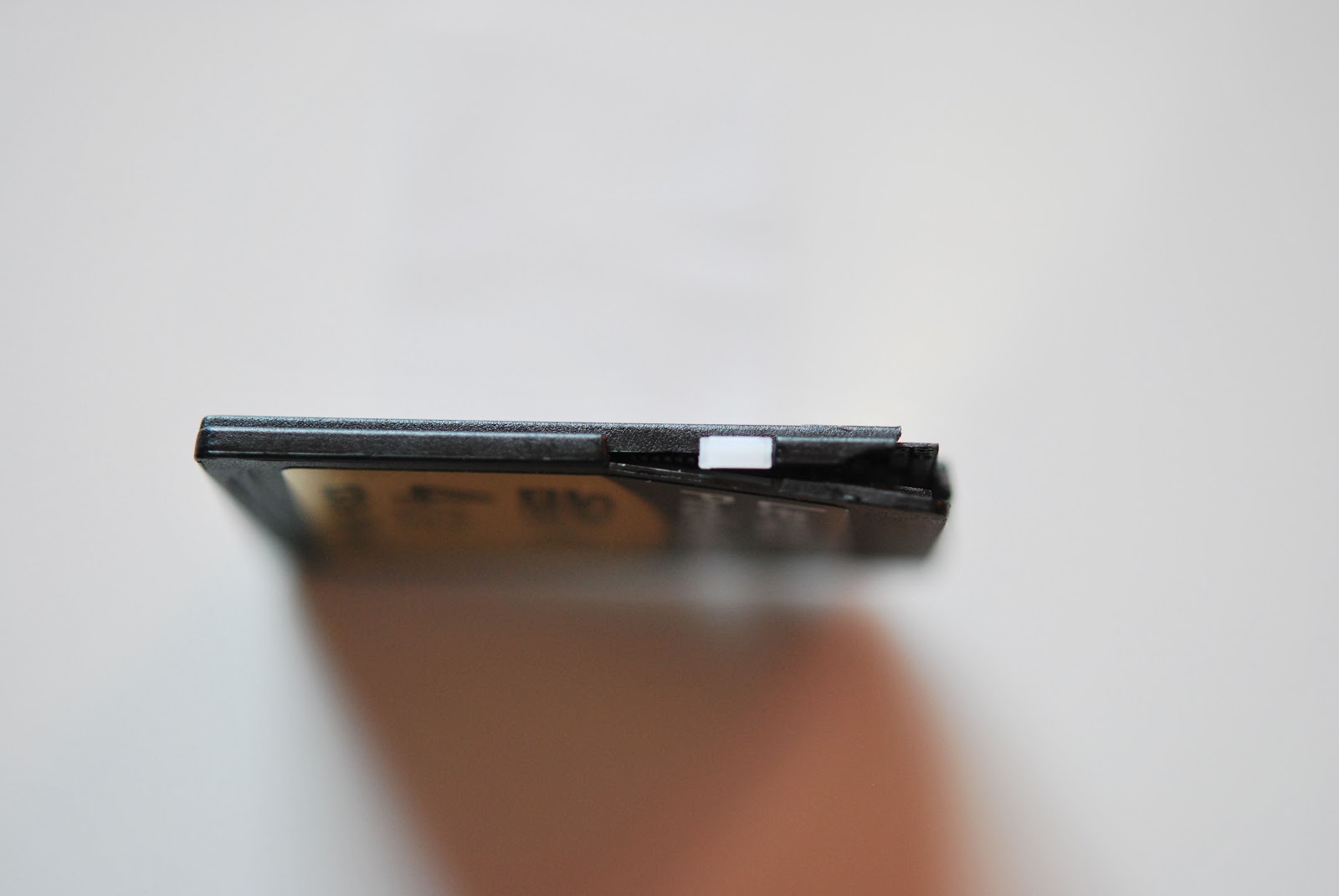
| Missing fingers on SD card |
Just like a sore tooth that gets better just before the dentist visit....the camera would work just fine at the camera store. Today the camera worked great and when I go home I wanted to email a contacts I had that turned into a very nice QSO.
 |
| Seam problem |
Seemed the SD card knew I was in a hurry and wanted pictures to add to an email. The computer told me it could not recognize the memory card. The card was then put back in the Nikon D60 but now it too would not recognize the card either. GREAT here we go again I thought but after close examination I found the card to have some damaged fingers at the far right!!! I went on the internet and downloaded some programs that claimed they could recover pictures from damaged SD cards. I didn't have any luck with these programs other than them taking up space on my hard drive. I still was getting a
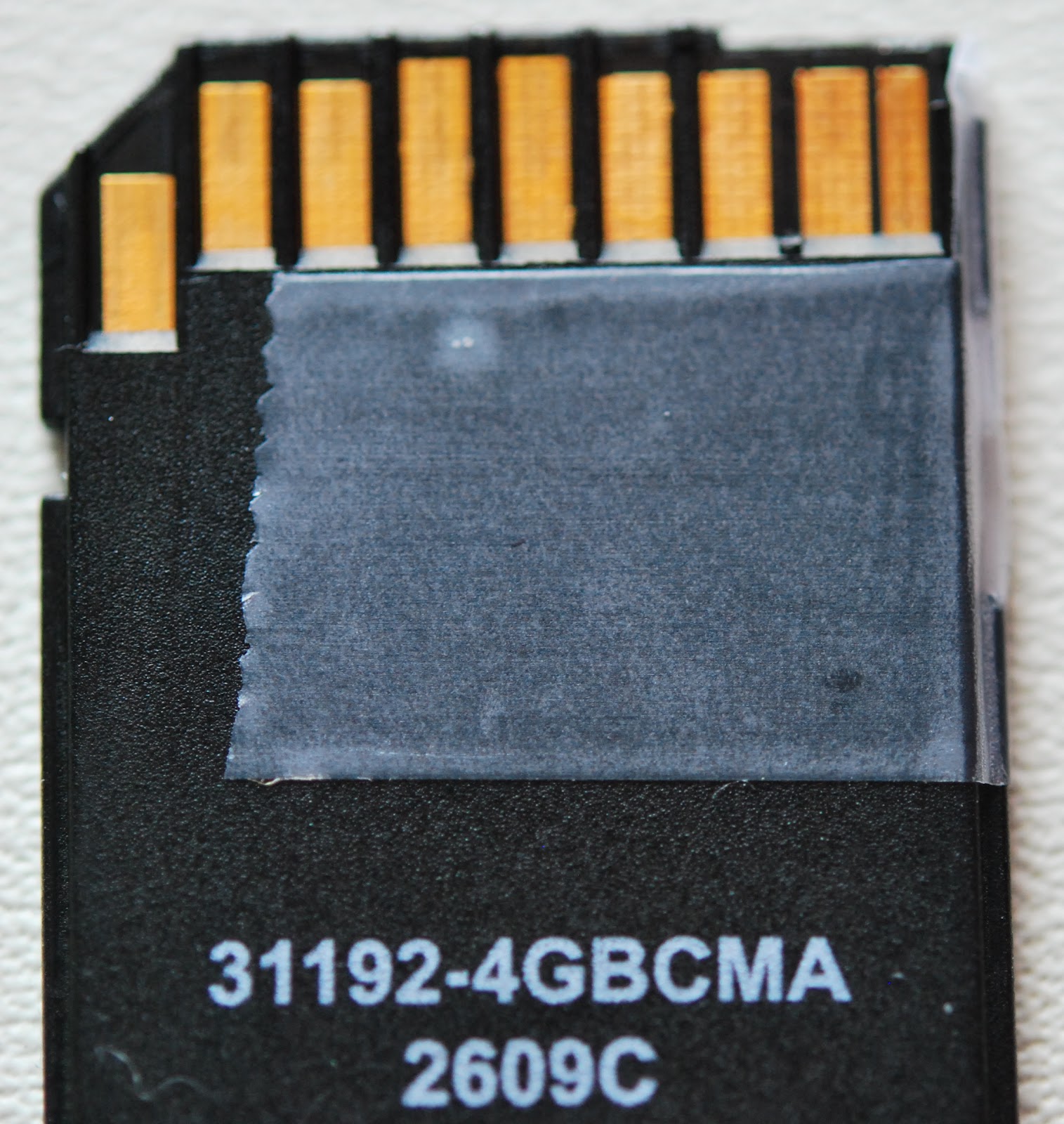 |
| The fix until all was downloaded |

Mike Weir, VE9KK, is a regular contributor to AmateurRadio.com and writes from New Brunswick, Canada. Contact him at [email protected].
RIP Neil Armstrong

Neil Armstrong, the first man to set foot on the surface of the Moon, died today at the age of 82. The cause of death was from complications from heart bypass surgery which occurred earlier this month.
Neil Armstrong was a humble hero, who did not seek the limelight; and was always eager to praise those who shared in the efforts to land an American on the moon.
You will be sorely missed, Neil. You were larger than life to those of us who grew up with Mercury, Gemini and Apollo.
72 de Larry W2LJ
QRP – When you care to send the very least!

Larry Makoski, W2LJ, is a regular contributor to AmateurRadio.com and writes from New Jersey, USA. Contact him at [email protected].
Antenna Restrictions on Mt. Evans? The Conclusion
I finally received a letter from the Clark Creek Ranger District regarding my encounter on Mt. Evans (read the first part of the story if you are not familiar with it). It took me almost six weeks and several e-mails to get an official statement from the Ranger District. I guess an underfunded federal agency has more pressing issues to deal with.
The good news is that it was an over-eager FS employee who kicked me off the mountain.
The bad news is that, according to the letter, the Federal Code of Regulation [36 CFR 261.10(a)], which applies to communication equipment, is written with some built-in ambiguity and might be interpreted differently in other Forest Service units.
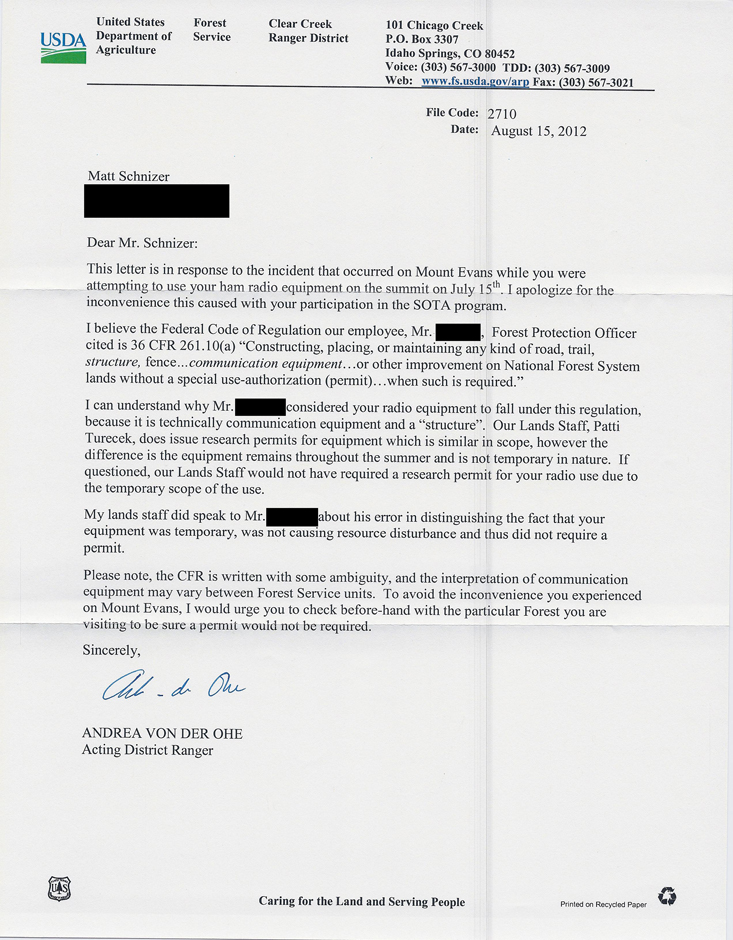
Official Response
Well, I will deal with another interpretation if and when I run into another issue. The Clear Creek Ranger District interpretation however makes sense to me – chapter closed!
I really appreciate the clarification.
Read the entire letter by clicking on the thumbnail to the right.
That’s my last post from Mt Evans but there are two more pictures I wanted to share. The first one was shot at the Summit Lake trail-head early in the morning. The trail starts on the right side of the picture, goes up the ridge to Mt. Spalding and over to Mt. Evans.
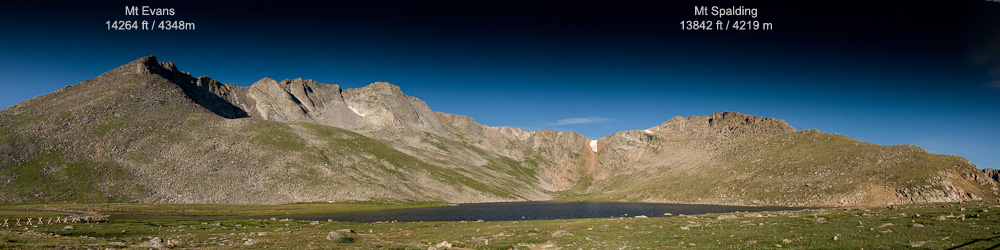
Panorama of the Mt. Evans Area
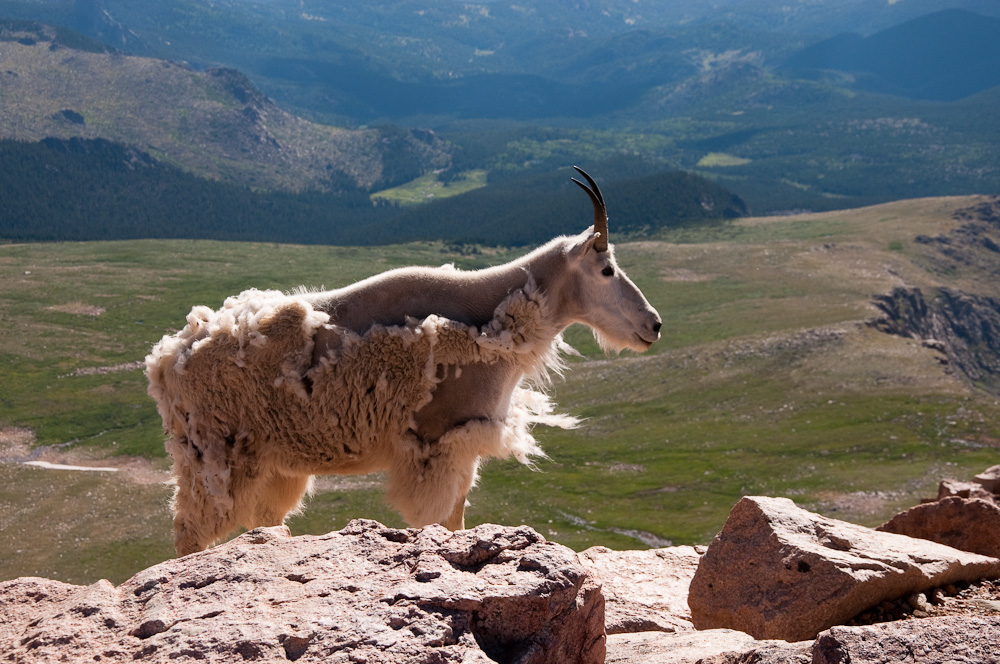
Mountain goat on Mt. Evans
The second picture is from a close encounter of the third kind… well, not quite but is was remarkable. This unflinching mountain goat approached me. The picture is shot with a 52mm lens, not a tele-photo lens. He came up to me at arms lengh… too close for my taste. I normally try to keep a save distance between wild animals and myself, but this guy was not shy at all. Since I had never heard about occurrences of rabies in mountain goats and since I received some goat combat lessons earlier in the year (courtesy of Rooster) on my trip to Mt. Herman, I took the chance to take some real close-up shots instead of retreating.
73, Matt/KØMOS
Matt Schnizer, KØMOS, is a special contributor to AmateurRadio.com and writes from Colorado, USA. Contact him at k0mos at schnizer.com.
Info needed
Ed, PE5ED and Wijn are developing a project called the IARL. They are trying to collect as much data as they can on repeaters and beacons. This will be freely available via the website and also through an app for smartphones.
They already have quite a lot of information for western Europe though I have already spotted a couple of errors relating to local repeaters. If you can help with corrections or sources of data they would like to hear from you.

Julian Moss, G4ILO, is a regular contributor to AmateurRadio.com and writes from Cumbria, England. Contact him at [email protected].
FCC Says “What Restrictive Covenant Problem?”
From the ARRL web site:
On August 20 — in response to a Spring 2012 Congressional directive — the Federal Communications Commission released its findings on the Uses and Capabilities of Amateur Radio Service Communications in Emergencies and Disaster Relief: Report to Congress Pursuant to Section 6414 of the Middle Class Tax Relief and Job Creation Act of 2012.
There was hope that the thousands of comments from amateur radio operators concerning the restrictions that homeowners associations place on the use of antennas would get the FCC’s attention. Maybe the FCC would see that the overall effectiveness of the amateur radio service for emergency use is being limited by these arbitrary, overly restrictive rules? (See a summary of my comments here.)
But, the FCC responded with this simple statement:
Moreover, while commenters suggest that private land use restrictions have become more common, our review of the record does not indicate that amateur operators are unable to find homes that are not subject to such restrictions. Therefore, at this time, we do not see a compelling reason for the Commission to revisit its previous determinations that preemption should not be expanded to CC&Rs.
I am not surprised by this response but still disappointed.
73, Bob K0NR
Bob Witte, KØNR, is a regular contributor to AmateurRadio.com and writes from Colorado, USA. Contact him at [email protected].
 Ham Radio Deluxe |
 W5SWL Electronics |
 Ham Radio Prep |
 KB3IFH QSL Cards  Hip Ham Shirts  HamRadioAuctions HamRadioAuctions Reliance Antennas Reliance Antennas Enigma Shop Enigma Shop |  morseDX  Ni4L Antennas  R&L Electronics R&L Electronics antennas.us antennas.us QRV QRV |
- Matt W1MST, Managing Editor
