 |
 Solar Powered Ham Shack
 11 September 2012 | by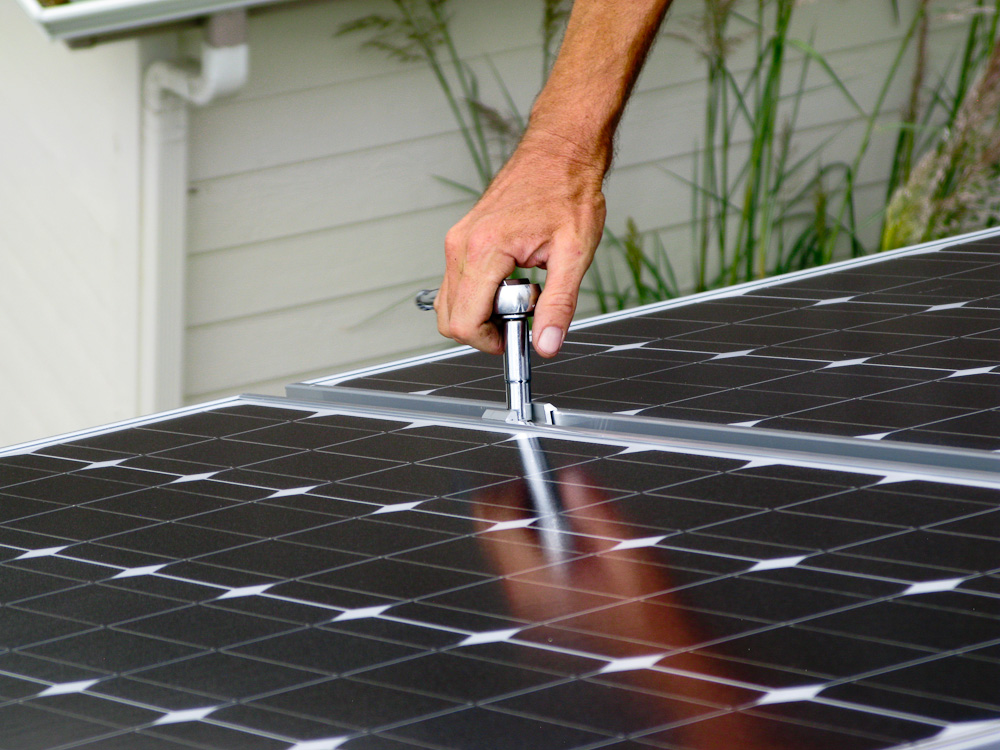
Adding the panels
Finally everything fell in place… my shack is running on solar power only. An idea/project I have been pursuing for years but the circumstances were never perfect… until this July. Last fall, a hailstorm took care of the roof and I had to replace it. In July I was able to secure a large chunk of money from our City which is offering a (very) limited number of rebates for Photovoltaic (PV) installations. Together with the federal tax credits it will put the ROI within my life expectancy. Good enough for me.
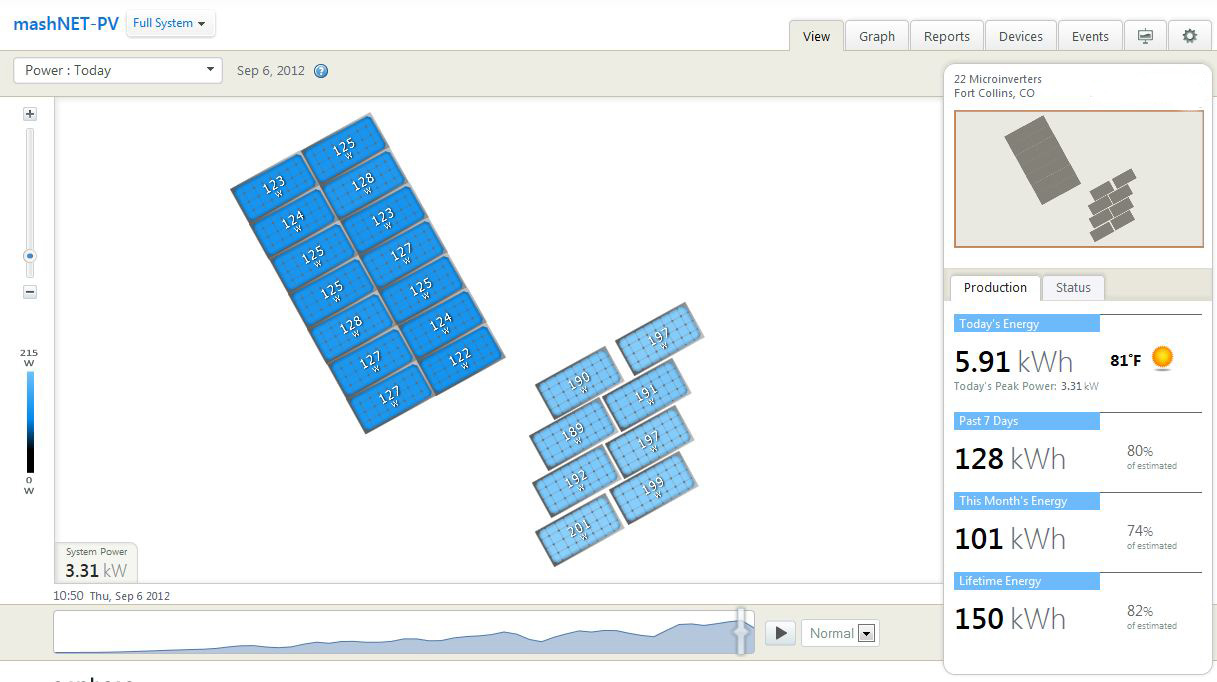
PV: Panel Monitor
The complete system is a grid tied, 5.5 kW system – 22 panels organized in two arrays (one south and one west facing). Each panel has a microinverter to optimize production and to add some ‘intelligence’ to the system. Monitoring and trouble shooting is a breeze. I can literally see when a bird poops on a panel and degrades my production 🙂
Since my shack consists only of a Yaesu FT-817, I am using the excess energy in the rest of the house. It should produce over 100% of our typical electricity usage per year if everything goes according to plan – I guess time will tell.
Here a short clip of the installation:
Please add your questions and comments through Youtube.
Matt Schnizer, KØMOS, is a special contributor to AmateurRadio.com and writes from Colorado, USA. Contact him at k0mos at schnizer.com.
Remember
W2LJ

Larry Makoski, W2LJ, is a regular contributor to AmateurRadio.com and writes from New Jersey, USA. Contact him at [email protected].
Reminder: TechDay 2012 in Monument, CO

 Just a quick reminder of TechDay 2012 coming up this Saturday. This event is designed to help the new Technician Licensee get started in amateur radio. However, everyone is welcome!
Come join us on Saturday, September 15th, 2012 (9:00 AM to 2:00 PM) at the Tri-Lakes Monument Fire Administration Complex at 166 Second St. in beautiful Monument, CO for a half day workshop aimed primarily at the new Technician Licensees to help them get started in ham radio. While you’re here you’ll learn what it takes to be a ham radio operator, brush up on your DXing skills, test your own ham radio equipment, check out some sweet mobile radio installations, and ask an Elmer “What’s so cool about 10 meters?”
Bring your questions, bring your radio and join us for TechDay!
More information is available here.
Note that TechDay is being held at the Tri-Lakes Fire Admin Complex in downtown Monument and not at one of the fire stations.
73, Bob K0NR
Bob Witte, KØNR, is a regular contributor to AmateurRadio.com and writes from Colorado, USA. Contact him at [email protected].
The case of the ……
Well Dr Watson, its wobbly metal.
Enough of the Tom Foolery and down to the serious business of an issue that must be fairly common. Drilling larger diameter holes in flexible metal sheet generally found on hobby cases. Just in case you were wondering though Tom Fool (aka Tom Skelton) is apparently a ghost of a Jester at our local castle, Muncaster so here’s hoping he’s had plenty of opportunity to wander round the house and grounds with odd shaped holes in his thin sheet metal parts.
A lot of trouble I have with when its time to put a project in a case is that the 16mm hole needed for an SO239 for example causes me no end of trouble. I have tried a number of different ways to make the holes without giving a figure of 8 or elongated hole. Step drills tend to give slightly better results that piloting and increasing the bit size. I have found that the latter can easily end up with a poor hole if any vibration is imparted into the case.
So what’s the answer, well, I just don’t know. Punching would seem to be a better solution as would routing the holes but in the case of pre folded sheet I’m sure this isn’t too practical. I’m wondering if people have had better results with other ways of making these holes.
Alex Hill, G7KSE, is a regular contributor to AmateurRadio.com and writes from Cumbria, UK. Contact him at [email protected].
I tried and I tried…..
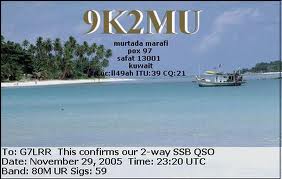 |
| It was not addressed to me....this time!!! |
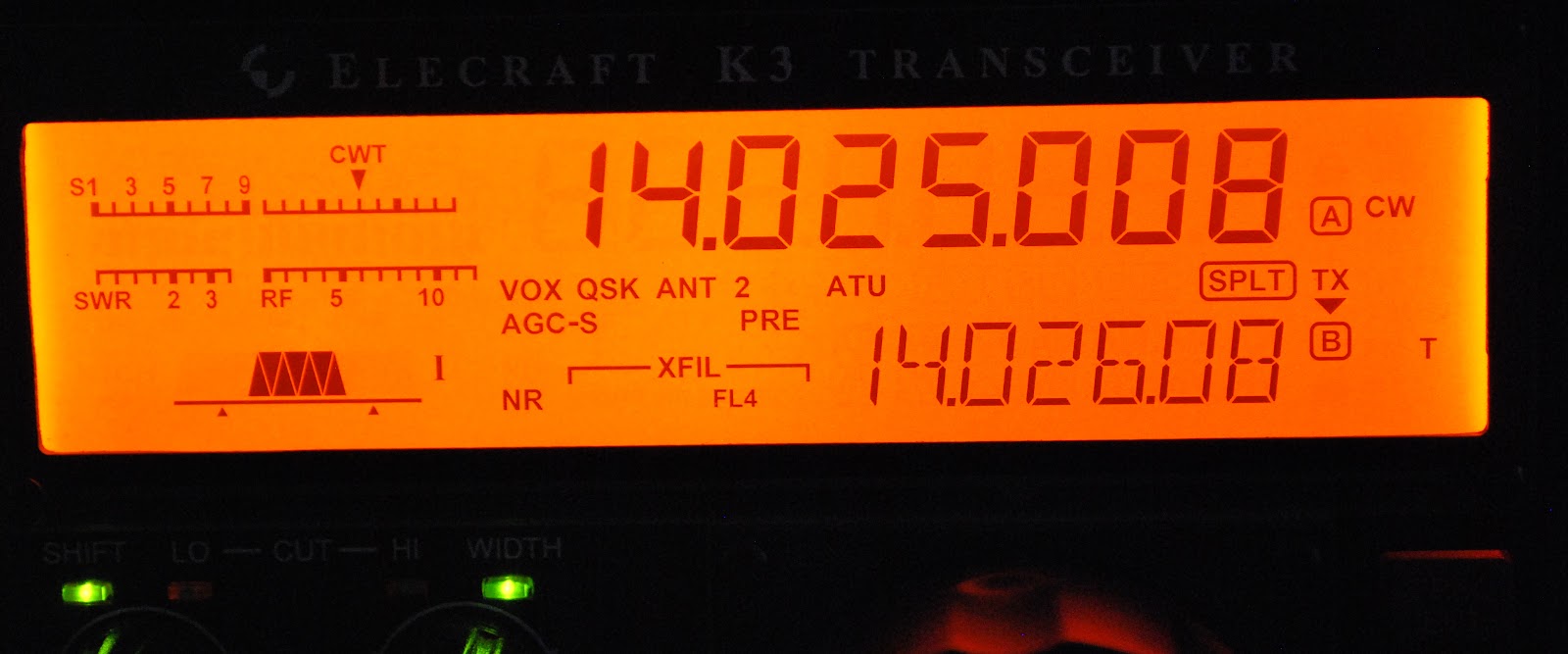 |
| Just not meant to be today. |
is just simply deaf. Just as fast as he came in.... he was gone and just replaced with static at 23:15!! Did I make the contact....NO.... but I gave it may best effort and it was not my time. This is what I love about ham radio it's the surprises that help sharpen your skills but at the same you understand that you have so much more to learn.......it just never becomes boring!!!

Mike Weir, VE9KK, is a regular contributor to AmateurRadio.com and writes from New Brunswick, Canada. Contact him at [email protected].
A beautiful day!
I got up this morning for my daily walk – well, actually, I don’t do a daily walk, anymore. Saturday and Sunday, I get up early and go for a walk. Monday through Friday, I spend a half hour on my elliptical machine in the basement – but I digress.
I woke up this morning to the beginnings of a beautiful day! Yesterday was positively tropical, hot and humid, with the threat of severe thunderstorms and tornadoes all day. One minute it would be sunny, the next it was dark and threatening. While other areas in the North East were not so lucky, I praise God, that in South Plainfield, all we got was some really heavy rain from about 5:00 to 6:00 PM yesterday evening. After that, the temperatures dropped, dry air moved in and you can honestly say that today is one of the “Ten Best of the Year”.
Weather issues aside, the object of this post is to relate that I did something yesterday that I have not done in a very long time – about 9 years to be exact.
I made a contact using SSB.
Yes, I know – totally out of character; but I did it and surprised myself in the process. After mowing the lawn yesterday, I had a little bit of down time, so I went down to the shack to spend a little bit of quality time behind the rig. Alas, 12 Meters, 15 Meters and 17 Meters were a vast wasteland. 20 Meters was not bad; but had very little activity in the CW portion of the band. So I decided to switch the K3 over to USB, and went “up” the bad to see if perhaps there were any special event stations doing their thing.
Didn’t hear any of those, either. But I was hearing a lot of loud European stations working the WAE contest. So I thought to myself, “I wonder if one might hear me …….. hmmmmm”. I twiddled the dial looking for a particularly loud one – there were a good number of them. Then I heard a call sign that sounded interesting – 3Z2X. AC log informed me that it was Poland. All the better, the country that my ancestors came from!
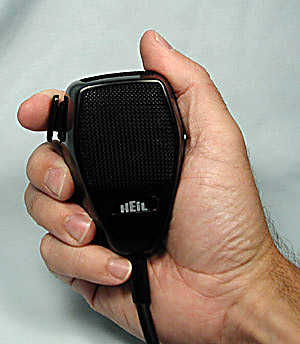
Using my noodle, I pumped the K3 up to 10 Watts – still QRP by definition (I may be a little crazy; but I’m not insane – SSB and QRO? No way!). Then, I picked up that funny looking little box that you speak into – I think it’s called a microphone and pressed the button thingy on the side. Announced my call sign and actually heard him call me back! I gave the contest exchange, got his and then sat there kind of amazed. 10 Watts via SSB all the way to Poland – and he heard me! We spoke to each other, exchanged information and said good-bye. It worked. I was amazed.
I made a few more and it was fun but it wasn’t enough to convert me from being a dyed-in-the-wool CW op. But it did hold out hope for me that, in the future, I may be able to work Special Event stations that choose not to have CW as one of the modes that they employ. It also encouraged me to maybe dip a toe into the pool when the QRP-ARCI holds their annual QRP SSB Sprint. I never participated in one of those before. This year just might be different.
72 de Larry W2LJ
QRP – When you care to send the very least!

Larry Makoski, W2LJ, is a regular contributor to AmateurRadio.com and writes from New Jersey, USA. Contact him at [email protected].
Happenings over the last few weeks
D3AA from Angola: I had seen for many evenings D3AA on the spotting networks, I found either there was a huge pileup trying to contact him OR he just was not there even after laying in wait on the frequency for 15 minutes or so. Then one evening as I was looking at my Elecraft P3 pan-adapter, I noticed a signal to one side of the frequency I was monitoring. I spun the VFO and to my surprise it was D3AA calling CQ!!! He was just above the noise and I could copy him fine so I called and he came back to me first call with a 559 and he is in the log.
UPDATE....I UPLOADED THE WRONG SOUND FILE....ALL IS GOOD NOW.
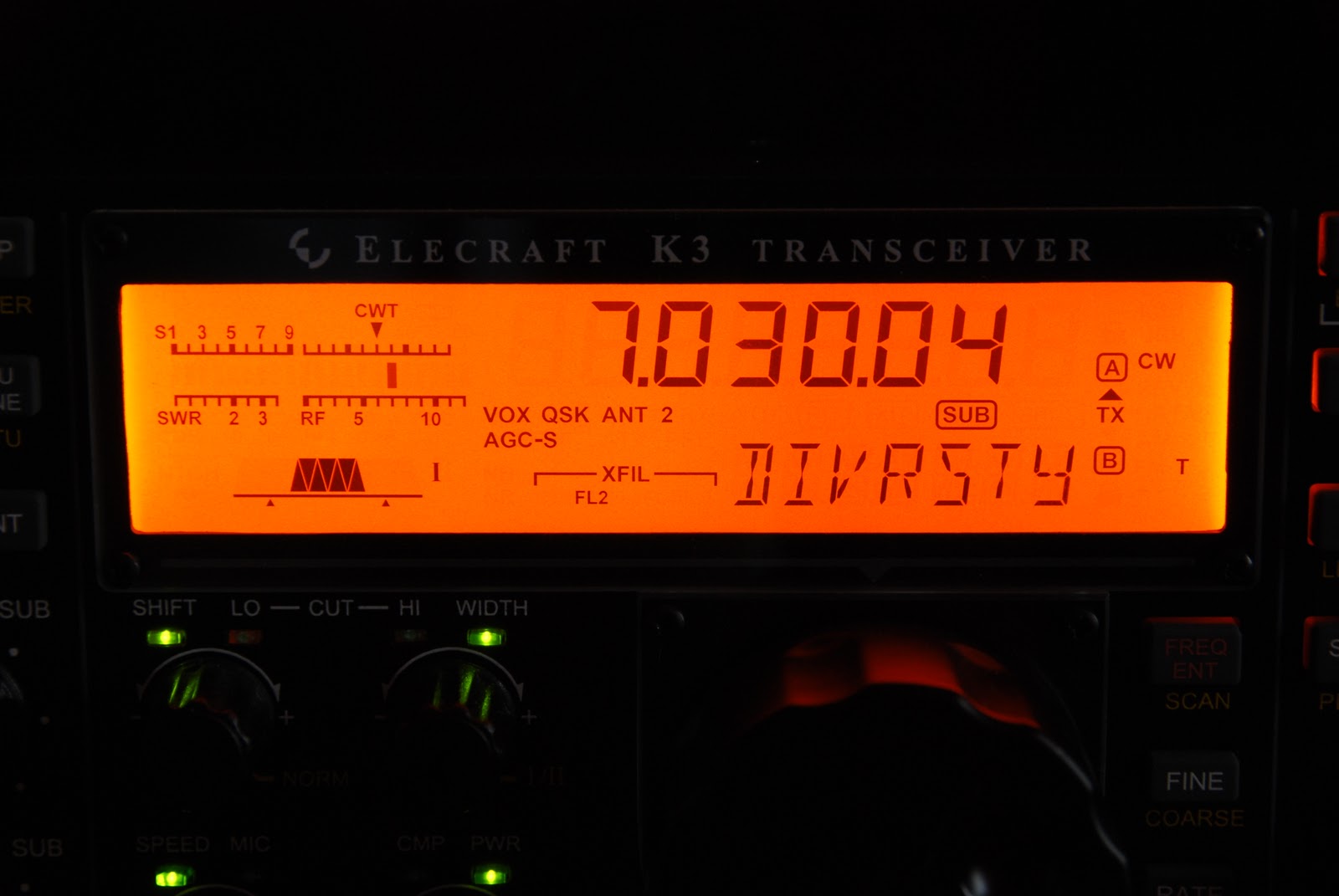
Here is an audio sample from my K3 of a DX-pedition operating split ( calling on one frequency and listening on another frequency) using the main and sub-receiver. You can very clearly hear the pileup in one ear and the DX in the other ear...you have to have some headphones on to hear this. There is a point were a station is calling on the DX's calling frequency.
This is just but another feature of the k3 that allows me to snag DX-peditions and add them to my DXCC count.

Mike Weir, VE9KK, is a regular contributor to AmateurRadio.com and writes from New Brunswick, Canada. Contact him at [email protected].
 Ham Radio Deluxe |
 W5SWL Electronics |
 Ham Radio Prep |
 KB3IFH QSL Cards  Hip Ham Shirts  HamRadioAuctions HamRadioAuctions Reliance Antennas Reliance Antennas Enigma Shop Enigma Shop |  morseDX  Ni4L Antennas  R&L Electronics R&L Electronics antennas.us antennas.us QRV QRV |
- Matt W1MST, Managing Editor
