 |
 Frankenstorm
 27 October 2012 | by
 Here in the US we usually have a “storm of the century” every few years, but this coming week we’re having a “storm of a lifetime”. Dubbed by the media as “Frankenstorm”, Hurricane Sandy is projected to hit the east coast somewhere between the North Carolina/Virginia border and New York City sometime on Monday. A few hours ago the models were putting the path right over my QTH, and now they’re projecting the path south of the Radio Artisan lab. Either way we’re going to get a bunch of rain, probably 6 to 10 inches. Earlier in the week it was looking like the hurricane would collide with a high pressure system from Canada that would turn it into a monster snowstorm, essentially a “noreaster” snow hurricane!

So today I’m busy getting gas for the generator, stockpiling water, putting away anything that isn’t tied down, and installing some temporary guy lines on my modest 40 foot tower. In addition to the generator, I have 150 Ah of solar-charged battery to run rigs. Since we live in the country we’re pretty well stocked up on food, ammo, and liquor should things get ugly. The only bad thing is that I work at home, so there’s no excuse to not get to work next week.

10m WSPR spots 26 Oct 2012
 |
| 10m WSPR spots @ G4ILO 26 October 2012 |
A really good haul of spots, especially considering that time out was taken around lunch time to try and make a few contacts. If these conditions keep up, the weekend’s CQ WW contest will be very interesting.

Julian Moss, G4ILO, is a regular contributor to AmateurRadio.com and writes from Cumbria, England. Contact him at [email protected].
Oh, joy!
I received a telephone call tonight from South Plainfield’s Director of Emergency Management. He wanted to know if I can come down to the Emergency Operations Center on Saturday from 12:00 Noon to 4:00 PM to help distribute sand bags to the various South Plainfielders who want them. Possibly Sunday, too. Good thing I wasn’t planning on participating in the CQWW DX SSB Contest this weekend.
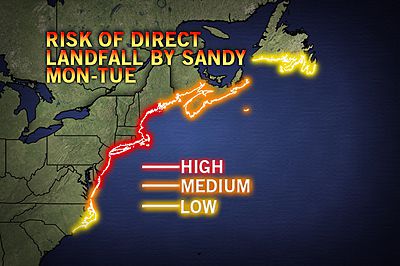
All of this in anticipation of Hurricane Sandy arriving sometime early next week. Of course, I offered my assistance immediately. Hurricane Irene is still fresh in my mind, even though it’s been 14 months since she graced us with her presence. She was the most destructive storm to hit New Jersey – ever.
The forecasts are all over the map, if you’ll pardon my pun. Anywhere from nothing but some strong wind, to the possibility of a “White Hurricane” if a cold front from Canada moves into place at just the proper time. We had a “White Hurricane” back in 1991, the much vaunted “Perfect Storm”. I still vividly remember THAT one and am not looking for a repeat performance. I thought those were supposed to be “once in a lifetime” events, anyway!
Here’s hoping and praying that Sandy is so impressed with her pre-arrival media coverage, that she turns out to be nothing more than a big fizzle!
By the way, got on the air tonight looking for some good DX in advance of the big DX contest this weekend. I didn’t check out the TelNet Cluster; but I suspect all the DXers must have been hanging out in the SSB portion of the bands as there was nothing doing in the CW sections. Dead as a door nail. Can you say, “Disappointing”?
72 de Larry W2LJ
QRP – When you care to send the very least!

Larry Makoski, W2LJ, is a regular contributor to AmateurRadio.com and writes from New Jersey, USA. Contact him at [email protected].
Back up on my captcha soap box

So my latest Captcha rant is......this week I was going to post a comment on a blog and on the comment page it contained the Captcha along with the comment box. There was the blur, the wave and numbers as usual so I filled in the maze and then added my comment. I proceeded to hit the post button I was then informed my Captcha attempt did not match....surprise surprise!! I was instructed to hit the back button and try again. To my surprise my comment was gone and I had to start all over again!!! Is this the NEW Capthca....mess up and your punishment is to start all over again. I guess from now on I am going to have to add but another step to my comment process, highlight and copy the comment in case I am punished and have to start again and maybe again and again....you get the idea.
I am stepping off my soapbox now........thank you.
Mike Weir, VE9KK, is a regular contributor to AmateurRadio.com and writes from New Brunswick, Canada. Contact him at [email protected].
Ham Nation 70

http://dts.podtrac.com/redirect.mp4/twit.cachefly.net/video/hn/hn0070/hn0070_h264m_1280x720_1872.mp4
http://dts.podtrac.com/redirect.mp4/twit.cachefly.net/video/hn/hn0070/hn0070_h264m_864x480_500.mp4
http://dts.podtrac.com/redirect.mp4/twit.cachefly.net/video/hn/hn0070/hn0070_h264b_640x368_256.mp4
http://www.podtrac.com/pts/redirect.mp3/twit.cachefly.net/hn0070.mp3
Hosts: Gordon West (WB6NOA) and George Thomas (W5JDX).
The CQ World Wide contest this weekend, obtaining a commercial radio telephone license, and more.
Guests: Don Wilbanks (AE5DW), Julian Frost (N3JF), and Mike Ferreira (WT6H).
Download or subscribe to this show at http://twit.tv/hn.
Submit your own video to Ham Nation! See the Video Guidelines, http://www.frozen-in-time.com/guide/
We invite you to read, add to, and amend our show notes at wiki.twit.tv.
Thanks to Joe Walsh who wrote and plays the Ham Nation theme.
Thanks to Cachefly for the bandwidth for this show.
Dr. Bob Heil, K9EID, is the founder of Heil Sound and host of TWiT.tv's Ham Nation which streams live each Tuesday at 6:00pm PT (9:00pm ET) at http://live.twit.tv. Contact him at [email protected].
10m WSPR spots 25 Oct 2012
 |
| 10m WSPR spots @ G4ILO 25 October 2012 |
No WSPR map yesterday as I spent too much time making phone (SSB, FM) and digital (PSK31) contacts on 10m. Today it seems as if half the stations I hear (or see) I have already worked!

Julian Moss, G4ILO, is a regular contributor to AmateurRadio.com and writes from Cumbria, England. Contact him at [email protected].
Get your head in the cloud.
Even though my day job is completely centered around Information Technology I still miss changes and shifts in technology that happen practically under my nose. As much as I hear vendors speak about “The Cloud” I haven’t had much time to investigate and discover if this “new technology” is something I can put to use.
If you already know what “The Cloud” is then you can skip the following paragraph, otherwise please read on:
The easiest way to understand the cloud is to think of it as a utility, like electricity. When you plug a device into a wall outlet, electricity flows. You didn’t generate the electricity yourself. In fact, you probably have no idea where the electricity was generated. It’s just there when you want it. All you care about is that your device works. Cloud computing works on the same principle. Through an internet connection (the equivalent of an electrical outlet), you can access whatever applications, files, or data you have opted to store in the cloud–anytime, anywhere, from any device. How it gets to you and where it’s stored are not your concern (well, for most people they’re not).
There is no end to the stream of interesting projects that are being developed “in the cloud” and its hard to keep track of them all. Some projects have turned into things that we’re all familiar with; Flickr, Facebook & Twitter are a few examples. Some appear and vanish like the proverbial “Flash in the pan” and, since you generally lose access once they run out of steam, it can be disappointing if you have invested any time in those applications.
I’ve collected a few cloud based applications/services here that might be of interest to the radio amateur and/or experimenter. They look like they should stick around for a while and have already reached a fair level of maturity:
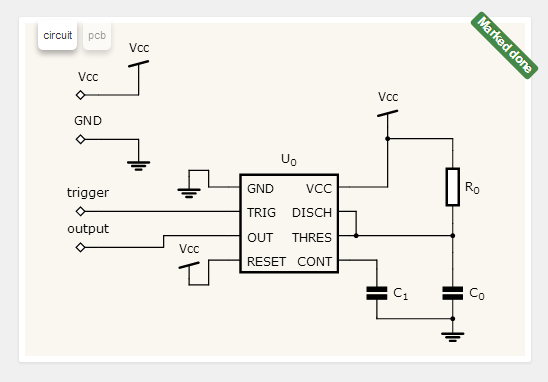
circuits.io: Described as a free circuit editor in your browser, it is actually a lot more. You can not only design practically any kind of circuit using just a web browser, you can turn that circuit into a printed circuit board and then BUY that PCB board online. Several different technologies had to come together to make this into an effective tool. This tool is fairly new but is becoming very popular. Hopefully it will stick around and continue to mature into something great.
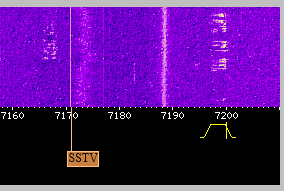
WebSDR: While arguably not a “cloud application” it does allow you listen to software defined radios, using a web browser, from anywhere you have internet access.
There are multiple sdr receivers located across the globe using a variety of receivers and antennas. Some are tuned to the HF bands while others cover VHF & UHF bands.
This is an invaluable free service provided by institutions and individuals at their own cost.
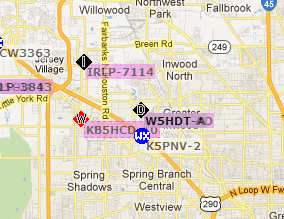
APRS.fi: The distributed network of Automatic Packet Reporting System stations, repeaters, clients and map servers could be considered to be “of the cloud” before the cloud even existed. With an APRS equipped radio you can log your position from a GPS, over the air & through another ARPS receiver. This is then sent out (usually) across the internet to other systems which in turn can map your location or update other APRS clients or radios. APRS has also been extended to include the ability to text message which is particularly useful in locations where cell phone SMS messages or email are not possible!
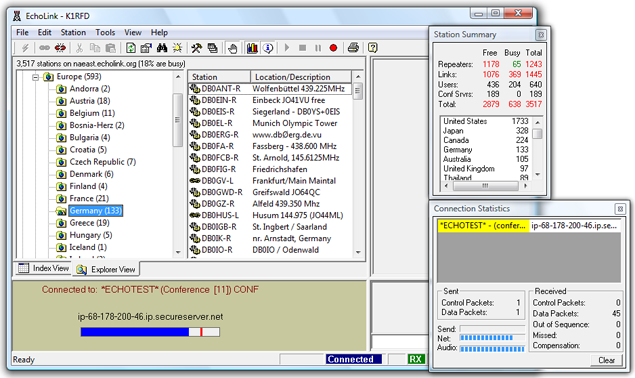
Echolink: Like APRS, Echolink links the Internet to amateur radio. However Echolink links the audio and PTT (push to talk) signals from a radio or software client to a radio in another physical location. If you’re stuck in a hotel room or another location without access to a radio you can still “get on the air” using an Echolink client on your Windows, Linux, iOS or Android computer & handheld device. Most Echolink connected stations are VHF/UHF but there are HF stations connected as well. Echolink is not designed to replace radio to radio communications but instead increases the connectivity of amateur radio operators and allows hams, who otherwise would not be able to operate, the pleasure of getting on the air.
As you can see, some of these “cloud apps” pre-date the idea of cloud computing by quite a while. Just another example of amateur radio folks being ahead of the curve without even realizing it.
Owen Morgan, KF5CZO, is a regular contributor to AmateurRadio.com and writes from Texas, USA. Contact him at [email protected].
 Ham Radio Deluxe |
 W5SWL Electronics |
 Ham Radio Prep |
 KB3IFH QSL Cards  Hip Ham Shirts  HamRadioAuctions HamRadioAuctions Reliance Antennas Reliance Antennas Enigma Shop Enigma Shop |  morseDX  Ni4L Antennas  R&L Electronics R&L Electronics antennas.us antennas.us QRV QRV |
- Matt W1MST, Managing Editor
