 |
 Handiham World Weekly E-Letter for the week of Wednesday, 02 January 2013
 2 January 2013 | by
 Pat Tice, WA0TDA, is the manager of HANDI-HAM and a regular contributor to AmateurRadio.com. Contact him at [email protected].
Tecsun PL-360
 |
| Tecsun PL-360 |
The only item of radio equipment in my Christmas stocking this year was a Tecsun PL-360 FM/MW/SW DSP receiver. These smartly-styled radios in black or silver are widely available on eBay for less than £30 including postage from China. The radio looks and feels a much better quality item than you might expect at that price.
The PL-360 covers medium wave, Band 2 FM (with stereo decoder) and 13 short wave bands from 2300 to 21950 kHz. Unlike most cheap short wave radios that have a frequency counter displaying the frequency of an analogue VFO, the Tecsun PL-360 is a true digital radio having a fully synthesized PLL VFO.
The Tecsun is also a digital radio in that it is DSP based not the usual superhet. The benefits are immediately apparent when you listen to the radio – it has that clear, open sound characteristic of DSP receivers. The internal speaker does not deliver much bass but you really hear the difference, especially listening to FM stereo, when using earphones, of which a Walkman-style pair are included.
For AM use Tecsun supplies a rotatable ferrite rod antenna that plugs in to the top of the radio. This can be used over a frequency range of 150 to 1710 kHZ, though note well that this radio does not have a long wave band. The 7-section telescopic whip antenna is 38cm (15in) long and is used on the short wave and FM bands.
 |
| Showing the rotatable MW antenna |
The tuning control is a click-stopped rotary encoder which tunes the radio in 1 kHz steps on short wave and 9 or 10 kHz steps on medium wave. The radio can be tuned outside the broadcast bands but this is rather a tedious exercise due to the 1 kHz steps – there is no provision for direct frequency entry using a keypad. The Tecsun PL-360 does not demodulate CW or SSB so there is not much point in tuning into the amateur HF bands – a pity, though that is not unexpected at this price level.
For tuning the Tecsun has a neat trick inherited from TV receivers. Called Easy Tuning Mode (ETM) the radio first tunes the entire MW, SW or FM frequency range and stores all the frequencies on which a signal was heard in memory. You can then tune from one signal to the next using the click-stopped tuning control. This makes short wave listening really easy and pleasurable. Doing an ETM scan of the short wave bands takes a few minutes. The feature is a useful tool for checking out HF propagation, though it’s a pity the tuning range stops at 22 MHz.
Power is provided by 3 x AA cells which may be standard alkaline or NiMH rechargeable (not supplied.). A charging circuit is built-in and power may be applied using a mini-USB socket on the side, so you can charge the batteries from a PC (using an appropriate USB cable) or a mobile phone charger. A charger is not included, but you do get a long wire antenna that clips on to the top of the telescopic whip for improved short wave reception, and a nice faux-leather case.
As an alternative to the Easy Tuning Mode the receiver may be tuned manually and frequencies entered into memories, but as mentioned earlier this is quite tedious. There is no programming software that would enable memories to be set up using a computer. There is a built-in clock which is quite accurate and includes an alarm function. The radio also has a temperature sensor and displays both temperature and time even when switched off.
To sum up, the Tecsun PL-360 is a portable radio of surprisingly good quality and performance for the money. Its Easy Tuning Mode makes casual listening a pleasure, the audio quality is excellent and the provision for rechargeable batteries is welcome. At less than £30 it is a real bargain.
Julian Moss, G4ILO, is a regular contributor to AmateurRadio.com and writes from Cumbria, England. Contact him at [email protected].
Today was a lot of fun
Well, actually last night AND today were a lot of fun! And there’s more to go tonight as the 40 Meter QRP Fox hunts start up again tonight.
I ended up working only three stations last night. First, I had a quick 2X QRP QSO with Dave NE5DL down in Texas on 20 Meters to start SKN off. That was followed by two rag chews. The first was on 40 Meters with N4LZY, Jerry in Tennessee and was followed by a chew with K3OWZ, John in PA. John was using a Heathkit Apache and a National NC303 receiver. Good stuff!
I was on the air off and on for a good portion of today. I worked Dan SM5IMO in Sweden, and had a nice chat with John VE1BA in Nova Scotia. John was running three Watts and had a killer signal into NJ. That was followed up by a nice chat with another John – K4BAI in Georgia. John and I meet up in the QRP sprints and the Fox hunts. John is a “Ham’s Ham” and a gentleman to boot. It’s always extremely nice hooking up with K4BAI.
I worked Dave K3Y/2 on 40 Meters. LOUD signal into New Jersey from New York state.
The I had an experience that was unique. I was working Stan AEØSL on 20 Meters when the band kicked out on us and we both faded away into the QSB. From there, I jumped on up to 17 Meters and worked VP2MRV in Montserrat. After finishing up with Nao, I began to tune around 17 Meters and whom should my wandering ears hear calling CQ? None other than Stan AEØSL, who I had just worked only minutes before on 20 Meters. He was much, much louder on 17 Meters and we were able to finish up our busted QSO. Now how many times has that happened to you? Dare I say – not many?
I then finished up my afternoon by busting a small pileup to work K1GI/VP9 in Bermuda. A pileup for Bermuda you ask? Well, yes. There were hardly ANY signals on 17 Meters, so in this instance, even Bermuda was like chum to a shark.
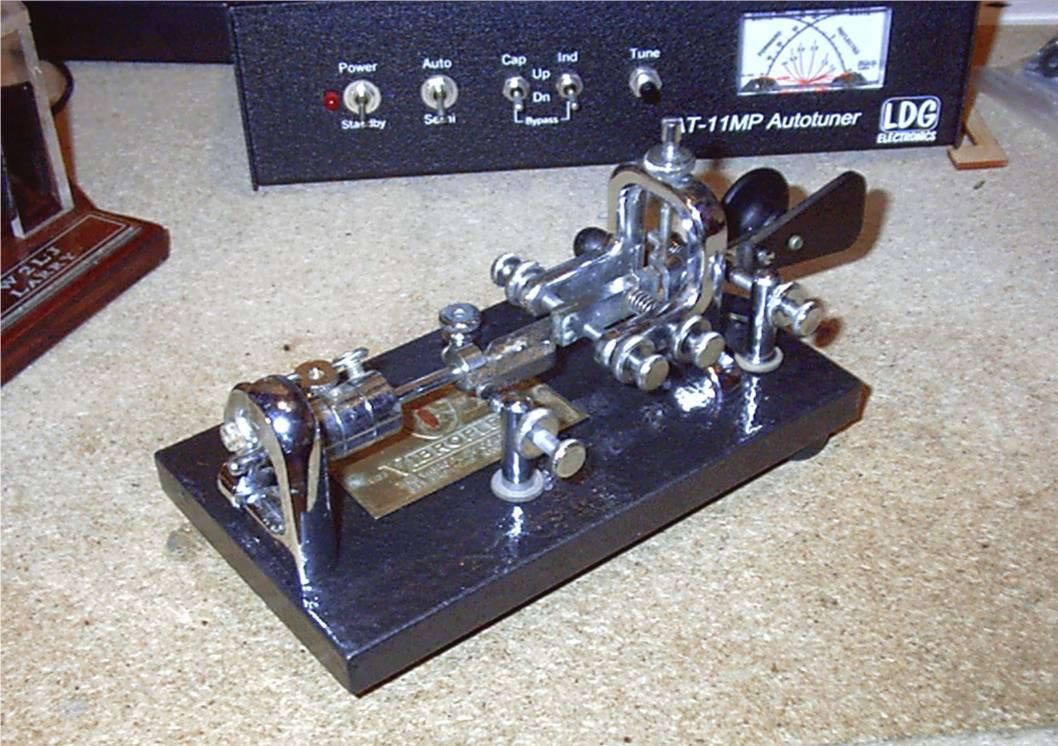
Last night and today, the majority of my Morse was sent with my Vibroplex Original that I restored a few years back. I was surprised how quickly I was able to send decent presentable code. It’s like the old adage about riding a bicycle – that once you learn, you never forget. I didn’t sound atrocious to the point that I was embarrassed to be using it; because believe me, if I was that bad I would not have subjected anyone’s ears to a bad cacophony of dits and dahs. Also, the Reverse Beacon Network was picking up my CQs, so the skimmers were able to decode my sending. And if the computers were able to figure it out, then a real live Ham should have had even less trouble.
It’s been a long time since I’ve had the opportunity to spend so much of a day in the shack, behind the radio. I thoroughly enjoyed it and could get quite used to it, given the chance.
72 de Larry W2LJ
QRP – When you care to send the very least!
Larry Makoski, W2LJ, is a regular contributor to AmateurRadio.com and writes from New Jersey, USA. Contact him at [email protected].
Operating in Hawaii
I’ve been in Hawaii for the last two weeks. I operated QRP with a wire antenna on several occasions.

This is the cottage we stayed at during the first week. There are lots of pictures, but it’s pretty long to post here. To read it, please go to my web page at http://www.w1pid.com/hawaii/hawaii.html
Happy New Year, Jim W1PID
Jim Cluett, W1PID, is a regular contributor to AmateurRadio.com and writes from New Hampshire, USA. Contact him at [email protected].
Obligatory New Years Post
Greetings and Happy New Year! Our celebration last night was one that married 40-somethings with kids often have — a night spent at home watching Dick Clark’s New Years Rockin’ Eve.
On the amateur radio front, this past weekend I participated in the Stew Perry Challenge, a 160m all CW contest. I debated whether to go QRP or 100 watts and decided to go with 100 watts. Although I can’t brag about the amazing performance that QRP and a rather modest inverted L would have given, I certainly had as much if not more fun than last year’s event. I netted over 180 contacts in my casual operating effort, even bagging about six west coast stations. I think the Stew Perry Challenge is a cool little contest, perhaps underrated. Its uncommon exchange for an HF contest, grid squares, and its unique scoring that takes into account distance and worked station transmitter power makes for an interesting contest. I wrote in my notes for 2013 that I have make a serious effort and do all 14 hours in the test next year.
I can’t say I have any hardcore amateur radio News Years resolutions, other than “do what I like and like what I do”. I started following this mantra three years ago and it has served me well. I tend to avoid getting into rituals but one I do want to start after authoring one last year is getting at least one amateur radio article published each year in a mainstream magazine (i.e. QST or CQ). I also tend to avoid competition, but I want to “up my game” in the PA QSO Party and also make more than a casual effort in one of the big contests.
In the Radio Artisan lab there are two main projects in progress. I have a working prototype of the Arduino based balanced antenna tuner. It’s been a technically challenging project, but very interesting. I still need to improve the SWR sensor performance and develop some shortcuts in the tuning algorithm to lessen the tune time. The other project is learning KiCad, an open source EDA program for developing schematics and PC boards. In the next week or two I will publish a post on my experiences. It’s not perfect but it’s definitely a viable replacement for the venerable and popular Eagle program.
Here’s to a healthy and prosperous 2013. Work, eat, sleep, and play radio.

Anthony, K3NG, is a regular contributor to AmateurRadio.com.
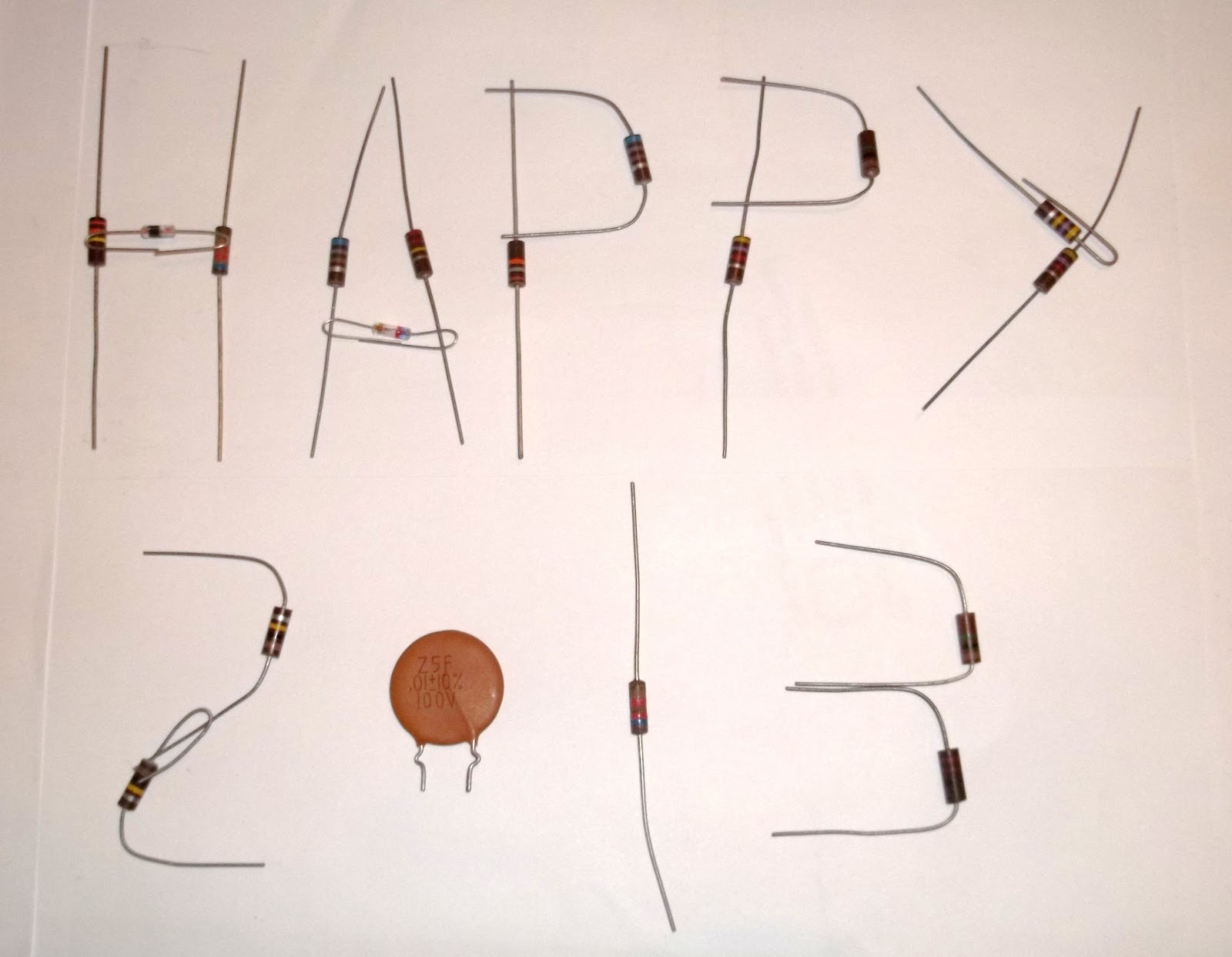
Happy New Year!
72 de Larry W2LJ
QRP – When you care to send the very least!
Larry Makoski, W2LJ, is a regular contributor to AmateurRadio.com and writes from New Jersey, USA. Contact him at [email protected].
Technician License Class – April 2013
 Monument, Colorado
Saturday April 13 and Saturday April 20 (8 AM to 5 PM) 2013
Location: Tri-Lakes Monument Fire Station 1
Sponsored by the Tri-Lakes Monument Fire Radio Association
The Technician license is your gateway to the world-wide excitement of Amateur Radio…
- Earn your ham radio Technician class radio privileges
- Pass your FCC amateur radio license exam right in class on the second day
- Multiple-choice exam, No Morse Code Required
- Live equipment demonstrations
- Learn to operate on the ham bands, 10 Meters and higher
- Learn to use the many VHF/UHF FM repeaters in Colorado
- Find out how to participate in emergency communications
There is no cost for the class (donations accepted)
However, students must have the required study guide:
HamRadioSchool.com Technician License Course $19.95
And pay the FCC Exam Fee: $15.00
Advance registration is required (no later than one week before the first session)
This class usually fills up, so don’t delay!
To register for the class, contact: Bob Witte KØNR
Email: [email protected] or Phone: 719 659-3727
For more information on amateur (ham) radio visit www.arrl.org or www.wedothat-radio.org
Bob Witte, KØNR, is a regular contributor to AmateurRadio.com and writes from Colorado, USA. Contact him at [email protected].
 Ham Radio Deluxe |
 W5SWL Electronics |
 Ham Radio Prep |
 KB3IFH QSL Cards  Hip Ham Shirts  QRV QRV Reliance Antennas Reliance Antennas |  morseDX  Ni4L Antennas  R&L Electronics R&L Electronics antennas.us antennas.us |
- Matt W1MST, Managing Editor
