 |
 Pearl Harbor Day
 7 December 2012 | by
 December 7th, 1941, “A date which will live in infamy”. These words were uttered by Franklin Delano Roosevelt, the 32nd President of the United States, after the Imperial Japanese Navy attacked Pearl Harbor. Eight US Naval battleships were damaged, four of them were sunk. In addition, three cruisers, three destroyers, a mine layer and one anti-aircraft training ship were all destroyed or sunk. 2,402 Americans lost their lives, and 1,282 were wounded.

The very next day, The Congress of the United States declared a state of war with Japan, and three days later declared a state of war with the Axis powers of Europe.
World War II, which was to last until 1945, was a period of time where electronics and electronic innovations blossomed. Because of the war effort, radios became smaller, lighter, tougher and were built to withstand all kinds of battle conditions.
The Amateur Radio Service in the United States was shut down for the duration of the war, with the exception of drills and excersizes conducted by the Radio Amateur Civil Emergency Service, or RACES as we still know it today. Many Hams, young and old alike, volunteered for duty in the Armed Forces, serving in the Signal Corp in the Army and as radiomen in the Navy.
But there were other operators, too.
These were clandestine radio operators, who put their lives in peril. Some lived behind enemy lines. Others parachuted into or otherwise secretly gained access to territory that was behind the enemy lines in the European Theater of Operations. They volunteered their radio skills to get critical information from behind those lines to the Commanders of the Allied Forces. The average lifetime of one of these brave radio ops was about six months. They were either extricated, or lost their lives as they were ruthlessly hunted by the German and other Axis armies.
These were the original QRPers, operating tiny little radios, often putting out less power than we QRPers are accustomed to today. Because of their mission, their antennas were also stealthy, and not because they were worried of upsetting their neighbors. No, these antennas were stealthy because if they were discovered, it cost the operators their lives. The “go kits” of these valiant operators often included cyanide or other poison pills, as while discovery meant death, it also meant a period of gruesome torture before that end.
Some of the stories of these clandestine radio operators, as well as the equipment they used were chronicled in a book called, fittingly enough, “The Clandestine Radio Operators” by Jean-Louis Perquin. It is still available at Amazon.
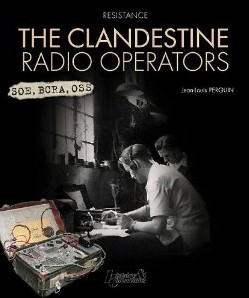
So the next time you’re operating your “flea power” radio, whether it be from the comfort of your shack, or in the grandeur of the great outdoors, say a silent prayer for those who went before us – on a mission that had life and death consequences. Their valiant efforts helped to preserve the freedoms that allow us to continue operating our “clandestine radios” today.
72 de Larry W2LJ
QRP – When you care to send the very least!
Larry Makoski, W2LJ, is a regular contributor to AmateurRadio.com and writes from New Jersey, USA. Contact him at [email protected].
A Strange and Wonderful Experiment
Today Hanz W1JSB and I went out for a hike. We wanted to make a couple of QSOs on 40 meters. We worked New York and Pennsylvania and didn’t even bring a rig with us! Huh? Hanz used his cell phone to operate his FT-817 remotely at home. It was strange and wonderful.
We hiked east from the Sanbornton dump toward Giles Pond. It was about 33F, but sunny. We hiked around the back side of this field and stopped along the trail about a half mile from the pond.

Hanz pulled out his Samsung cell phone and started pressing buttons. First he connected to his Windows box in the shack and fired up Ham Radio Deluxe. Then he established a link using Skype so we’d have audio. Then he got CWType running so he could key the rig. His FT-817 at 5 watts was hooked up to a center fed dipole through an LDG auto tuner.

Hanz had a grin on his face as keyed “KA2KDJ de W1JSB” onto the cell phone keyboard. Gary answered right away from New York. It was magic. Then Hanz told him how he was operating.
For a video of the QSOs see http://www.w1pid.com/strange/strange.html
“FB CPY,” Gary sent back. “UR 579” Gary was a 599 and clear as a bell. They chatted for about 5 minutes. Hanz’s fingers were getting cold, so he sent 73 and TNX. As we started walking back down the trail we heard another station calling Hanz! “W1JSB de AA3OI/QRP” What the heck? we thought. A pileup. So Hanz answered Joe AA3OI and they had a quick QSO.
Pretty cool… what started as a goofy experiment actually worked. Are we going to stop bringing rigs and antennas on our hikes? No way, this was just a proof of concept, and not really very practical. But it sure was a hoot and Hanz demonstrated that he could certainly do a pedestrian mobile operation without lugging radio, batteries and antennas.
-end-
Jim Cluett, W1PID, is a regular contributor to AmateurRadio.com and writes from New Hampshire, USA. Contact him at [email protected].
Tough 80 Meter QRP Fox hunt tonight
It was a tough go on the 80 Meter QRP Fox hunt tonight.
First off, I never heard TJ WØEA in Iowa at all. This was not a surprise; as Iowa is a tough haul for 80 Meters. I really wasn’t expecting to hear TJ at all. What did surprise me was that I didn’t hear any of his pursuing Hounds, either.
I did manage to get into Lee AA4GA’s log. A QSO between Georgia and New Jersey is way more realistic for 80 Meters. But there was a ton of QRM and some pretty loud QRN which made it a bit tougher than it should have been. I got in Lee’s log with 11 minutes to go – these hunts last 90 minutes. So there was 79 minutes of trying to figure out Lee’s listening sequence, dealing with QRM, etc.
One thing that made it a lot easier was using the KX3 tonight and making use of the “Dual Watch” function. For those of you who don’t have a KX3, this is where you use both the main receiver and the sub-receiver together. You turn on the Dual Watch function and plug in a pair of stereo headphones. The main receiver goes to one ear while the sub-receiver goes to the other ear. This makes it a breeze to find where the last successful Hound was transmitting, tune the sub-receiver there and then go to town with operating split. As long as the two frequencies do not exceed a 15 kHz split, the Dual Watch function takes a lot of the guess work out of operating split.
The W3EDP served me in good stead again tonight, getting me a “one-fer” – one out of two Fox pelts. Hey, if I was a Major Leaguer, a .500 batting average would make me a very wealthy man!
72 de Larry W2LJ
QRP – When you care to send the very least!
Larry Makoski, W2LJ, is a regular contributor to AmateurRadio.com and writes from New Jersey, USA. Contact him at [email protected].
Morse Express 2012 Christmas Key
Have you been a good little Ham this year? Maybe Santa will leave one of these in your stocking!

The 2012 Morse Express Christmas Key
In Celebration of the Season… Morse Express has commissioned its twelfth annual Christmas Key.
Our 2012 Christmas Key is a fully functional miniature telegraph key made by GHD Telegraph Key in Sendai City Japan. It incorporates traditional Japanese craftsmanship with GHD’s impeccable engineering and finish.
In keeping with GHD’s larger keys, the Morse Express 2012 Christmas Key is fully adjustable, with precision pin bearings at the trunnion, miniature binding posts, comfortable knob, and perfect balance. The contacts are hard-silver and the distinctive oval base is finished in satin chrome. The knob is hand-turned mahogany, and there are four small anti-skid rubber feet on the bottom. GHD’s Toshihiko Ujiie uses both modern and traditional techniques to produce a miniature key that will be equally at home in the radio shack, in the field, or decorating a Christmas tree.
According to Marshall Emm (N1FN), “the Christmas keys have always been a labor of love for me, and my first priority has always been usability. GHD has brought considerable expertise to the manufacture of the Christmas keys, and the 2012 key is a little gem.” The 2012 Christmas Key measures 2″ by 1-1/8″ at the base and it weighs two and a half ounces. Each key has a label with “Christmas 2012” and a unique serial number in the limited edition of 150 keys. The 2012 Christmas key will add something special to straight key operations through the Holiday Season and on Straight Key Night.
LT-MX12 Morse Express 2012 Christmas Key available at http://www.MTechnologies.com/xmas
Ho, Ho, Ho!
72 de Larry W2LJ
QRP – When you care to send the very least!
Larry Makoski, W2LJ, is a regular contributor to AmateurRadio.com and writes from New Jersey, USA. Contact him at [email protected].
LHS Episode #096: Worst. Episode. Ever.
 Sometimes an episode comes along that defies description. This is one of those times. Richard was exhausted from his job. Russ was exhausted from life in general. Topics were a bit thin. Both hosts found their way into the sauce for the evening. Everything conspired to make Episode #096 one of the worst on record. We’re writing this summary in the hopes that you’ll look at it, ask yourself, “How bad can it be?” and listen anyway. Despite the less than ideal circumstances, the content is still relevant, informative and even fun. Hm. Maybe this isn’t the worst episode after all. You be the judge.
73 de The LHS Guys
Russ Woodman, K5TUX, co-hosts the Linux in the Ham Shack podcast which is available for download in both MP3 and OGG audio format. Contact him at [email protected].
Ham Nation 76

http://dts.podtrac.com/redirect.mp4/twit.cachefly.net/video/hn/hn0076/hn0076_h264m_1280x720_1872.mp4
http://dts.podtrac.com/redirect.mp4/twit.cachefly.net/video/hn/hn0076/hn0076_h264m_864x480_500.mp4
http://dts.podtrac.com/redirect.mp4/twit.cachefly.net/video/hn/hn0076/hn0076_h264b_640x368_256.mp4
http://www.podtrac.com/pts/redirect.mp3/twit.cachefly.net/hn0076.mp3
Hosts: Bob Heil (K9EID), Gordon West (WB6NOA), and George Thomas (W5JDX).
Gordon receives an RCA award, setting up an APRS iGate, Bob’s switch panel, and more.
Guests: Don Wilbanks (AE5DW), Julian Frost (N3JF), and Cheryl Lasek (K9BIK).
Download or subscribe to this show at http://twit.tv/hn.
Submit your own video to Ham Nation! See the Video Guidelines, http://www.frozen-in-time.com/guide/
We invite you to read, add to, and amend our show notes at wiki.twit.tv.
Thanks to Joe Walsh who wrote and plays the Ham Nation theme.
Thanks to Cachefly for the bandwidth for this show.
Dr. Bob Heil, K9EID, is the founder of Heil Sound and host of TWiT.tv's Ham Nation which streams live each Tuesday at 6:00pm PT (9:00pm ET) at http://live.twit.tv. Contact him at [email protected].
 Ham Radio Deluxe |
 W5SWL Electronics |
 Ham Radio Prep |
 KB3IFH QSL Cards  Hip Ham Shirts  HamRadioAuctions HamRadioAuctions Reliance Antennas Reliance Antennas Enigma Shop Enigma Shop |  morseDX  Ni4L Antennas  R&L Electronics R&L Electronics antennas.us antennas.us QRV QRV |
- Matt W1MST, Managing Editor
