 |
 Wild winter nights
 6 February 2013 | by
 The UKAC contest series is a vhf contest that runs throughout the year on Tuesday evenings. Each Tuesday has a different band allocated and last night’s was the turn of the 2m band.
This normally quiet band (up here at least) has plenty of activity to keep even the most relaxed operators busy for 2 and a half hours. I count myself in that category. Although last nights entertainment was far from relaxing.
I operate portable from ai reasonable hill close to home. The car is my qth with the ft 817 providing the noisey end and a portable mast with my excellent 5 ele lfa yagi doing the ‘pointing’. A drive on plate holds the outside parts in place. Except last night when very strong winds were rocking the yagi and the car so much I thought I was going to end up with a mast and antenna as a bonnet ornament.
By 9:30 I’d had enough but tried a few more station before packing up and retreating to a cosy house.
It’s a very addictive thing this contesting but I really think I should get extra points for enduring fierce weather!
Alex Hill, G7KSE, is a regular contributor to AmateurRadio.com and writes from Cumbria, UK. Contact him at [email protected].
Comfy chair
I picked up the office chair that I had ordered from Staples on Saturday. It is their Lockridge Manager’s chair which is currently on special. It normally goes for $89.99, but is $50.00 off for an online price of $39.99.
It is definitely filling the bill. I spent 90 minutes behind the key tonight hunting Foxes on 40 Meters. Not only did I bag two pelts, but when I got out of the chair to head upstairs, my back and hips gave nary a whimper. This sure is a far cry from that folding metal chair that I was using. When I would get out of that thing, I felt like I was ready for either a walker or a chiropractor.
Band conditions were so-so. Both Foxes were loud for a good portion of the hunt, but at times the QSB was tough to deal with. I am also pretty sure both Foxes had high local QRN to deal with as each one was asking for multiple repeats of exchange information. Once again, persistence paid off and both Foxes were worked. Hats off to Paul K4FB and TJ W0EA.
I am going to be placing an order in the next few days with either Mouser or Jameco for some parts. There are plans in the latest Sprat for a rather simple 40 Meter WSPR transmitter. I don’t plan to get too involved with the mode, but it looks like a rather easy build, and I am itching to really homebrew something.
I haven’t built anything in a while that wasn’t pre-kitted. I enjoy the process of buying and gathering the parts. From the looks of the article, this seems to be a project that lends itself well to perf board construction. I already have an ample supply of NE612s, so this will be a purchase of various needed resistors and capacitors, depending on whatever is not already in my junk box.
The final cost should be way under what I have seen some kit prices going for.
73 de Larry W2LJ
QRP – When you care to send the very least!
Larry Makoski, W2LJ, is a regular contributor to AmateurRadio.com and writes from New Jersey, USA. Contact him at [email protected].
Buying batteries on Ebay
Yesterday I wanted to experiment with using a ferrite rod antenna for WSPR. I was using my AA-200 antenna analyzer to try to tune the antenna when it suddenly restarted. I switched it off and on again and as soon as I chose any function the analyzer restarted again.
The last time I used the AA-200 I remember the batteries ran out so I charged it. It appears that after 6 years of use the rechargeable battery pack won’t hold a charge.
 |
| AA-200 antenna analyzer and open battery pack |
I’m useless at taking things apart but Olga managed to open the battery pack to reveal a shrink wrapped pack of 4 AA cells. I could have ordered a replacement from Strikalite but their price was £20. I found an Ebay seller in Hong Kong whose price was a quarter of that. So for the sake of a few days wait I could save myself £15.
I ordered the battery pack, but this morning there were two emails in my inbox saying “We are sorry to tell you that we are not allowed to dispatch batteries recently for the customs are very strict on exporting batteries.” Is this something new? It’s the first I have heard of it. I’ve certainly bought battery packs (including batteries for handheld transceivers)from China on Ebay before.
The seller has refunded my money (or at least he has said he will.) In the meantime I found a UK seller of Chinese batteries, Vapextech UK, which, while not as cheap as the Hong Kong seller, is still a third of the price of Strikalite. Having said that, Strikalite is still a good firm to go to if you want to refurbish a ham radio battery pack and like me you are useless at taking battery packs apart.
Julian Moss, G4ILO, is a regular contributor to AmateurRadio.com and writes from Cumbria, England. Contact him at [email protected].
Somebody gonna get this guy licensed?
Link sent to me courtesy of my good friend, Marv K2VHW:
72 de Larry W2LJ
QRP – When you care to send the very least!
Larry Makoski, W2LJ, is a regular contributor to AmateurRadio.com and writes from New Jersey, USA. Contact him at [email protected].
More of a Shout than a Whisper…..
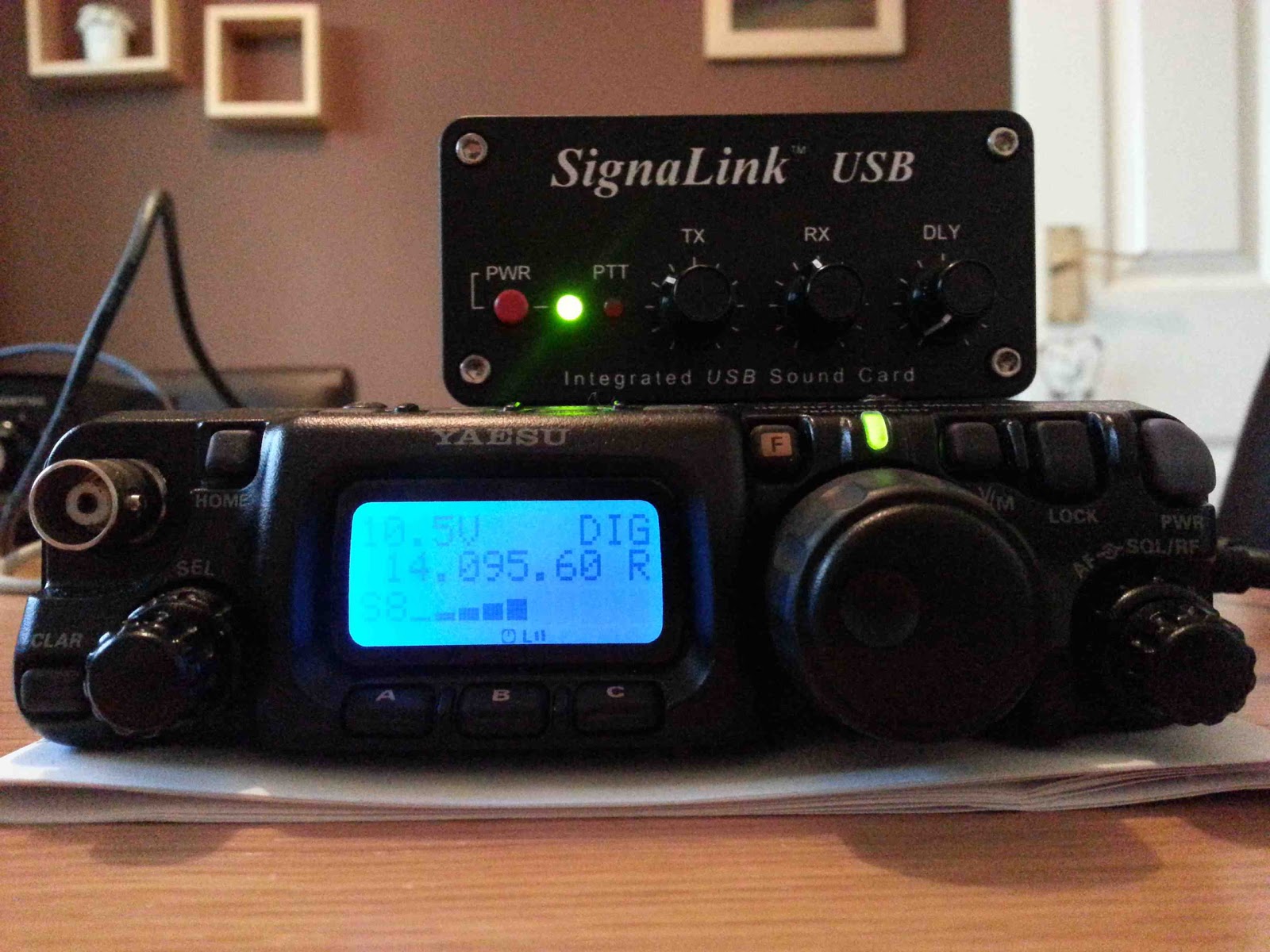 |
| FT-817 and Signalink USB Interface |
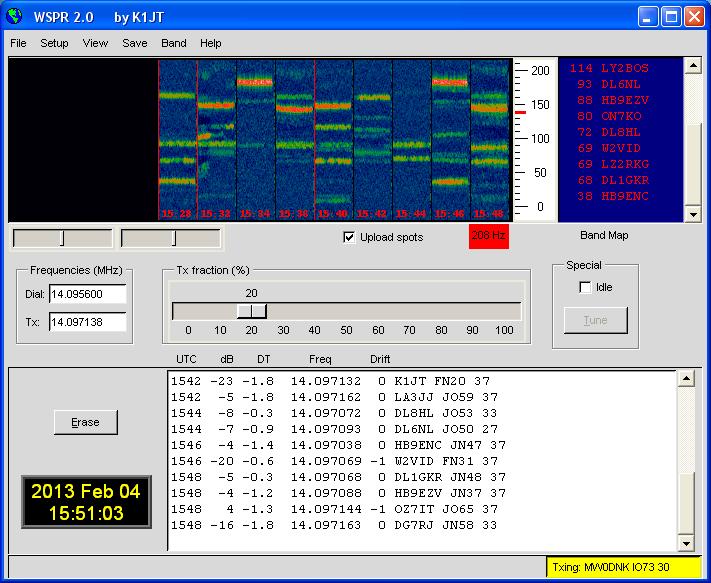 |
| WSPR Control Software |
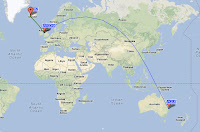 |
| 10 mins on 17m! |
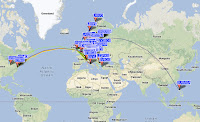 |
| 10 mins on 20m! |
Rob Law, MW0DNK, is a regular contributor to AmateurRadio.com and writes from Anglesey, Wales. Contact him at [email protected].
My second DV QSO
 |
| Elie, OD5KU |
Just as I was finishing writing my previous post I heard someone else calling on the 20m DV frequency. It was Elie, OD5KU. Yesterday I had heard him working a French and then a Dutch station but signals were weak and not good copy at all.
I replied to Elie but he couldn’t make out my call. I tried several times and was about to give up when he called again with solid copy. Perhaps he had turned his beam my way. I tried calling one more time. This time he heard my reply and we had a good QSO with several periods of solid copy punctuated by occasional break-ups. These occurred when QSB took the digital signal down to near-invisibility in the FreeDV waterfall. I doubt that good SSB copy would have been possible at those times either.
I managed to make a recording of the end of this QSO so you can get an idea of the audio quality. It was recorded off-air using my Olympus digital voice recorder, then played back using the mic input of the USB sound dongle to make an MP3 file. Given the way it was created I think the clip is quite a good example of the FreeDV audio quality. As you’d expect from a digital signal either it’s all there or you just get gobbledygook. It doesn’t degrade gracefully.
Is this the future of ham radio? Have a listen and let me know what you think.
Julian Moss, G4ILO, is a regular contributor to AmateurRadio.com and writes from Cumbria, England. Contact him at [email protected].
Antenna modification (with a little help from the wind)
I may have mentioned more than once that we live in a rather small apartment. It’s the upstairs of a cape-cod-style home, which is shoe-horned onto a tiny corner lot. The only trees are 4 old silver maples (often called swamp maples) scattered around the

Silver Maple (from Cornell)
front and side yards. The maple directly opposite the window where my equipment resides is not very healthy. This has both benefits and hindrances. On the negative side, we have to watch the cars, because it rains tree limbs in windstorms. On the plus side however, it makes it easy to shoot wires into the sturdier parts of the tree, and once a year, I get the most amazing crop of maitake mushrooms growing around the base (easily 12-15 pounds of them). I’ve mentioned to the landlord that the whole thing will come down in the next superstorm we get, but he seems content to have it stand there for now, threatening the house and any cars parked in the vicinity. For now, I decided to take advantage of the accessibly to the higher branches.
I threw a length of 16 ga wire up into the tree about a month or so ago, and connected the other end to my MFJ 941-D tuner. I estimate the wire to be around 38 feet. With this setup I have been able to tune up well on 20M and OK on 40M and 10M. My holiday present from KD2CHE this year was an old Atlas 210X, in excellent operating condition. This setup got me contacts in Florida, Michigan, Maine, Manitoba, Missouri, and Puerto Rico. The morning after the crazy windstorm this past week, I was amazed to see that the random wire was still up. That day however, the winds continued, and when I got home I discovered that Mother Nature seems to think that the best type of antenna for me is an inverted-L. One of the smaller limbs that I had managed to throw the chunk of wood I tied the far end of the wire to, had snapped in the storm, but the wire simply dropped through the tangle of remaining branches, and now dangled about 8 feet off of the ground.
I had planned on fixing, and improving on this over this past weekend, but before I did, my son and I fired up the Atlas on Saturday morning. The wind mod seemed to actually improve my performance on 10M, and had no effect on 20M. I made contacts with Belgium, and Serbia on 20M, and started getting lots of 10M contacts from the Southwest, and one from Washington State. Since it was the 10-10 Winter SSB contest weekend, I got my required 10 contacts easily, and joined 10-10 (76641).
I don’t want to put up anything more elaborate at this place. With the resources available, and an antenna-phobic landlord, this is about as far as I can go. Also, if all goes well, we won’t be there much longer. The next place will have to be antenna-friendly. I spent some time Sunday re-stringing the wire (now about 60 feet) through the old maple, and now over to a second maple at the end of our driveway. A quick test showed it was still working, and got 2 more contacts in the Southwest.
Ham Radio on a Shoestring, While Living in a Shoebox. Does that sound like a good book-title?
73 – W2NDG
Neil Goldstein, W2NDG, is a regular contributor to AmateurRadio.com and writes from New York, USA. Contact him at [email protected].
 Ham Radio Deluxe |
 W5SWL Electronics |
 Ham Radio Prep |
 KB3IFH QSL Cards  Hip Ham Shirts  HamRadioAuctions HamRadioAuctions Reliance Antennas Reliance Antennas Enigma Shop Enigma Shop |  morseDX  Ni4L Antennas  R&L Electronics R&L Electronics antennas.us antennas.us QRV QRV |
- Matt W1MST, Managing Editor
