 |
 Sure you did!
 4 March 2013 | by
72 de Larry W2LJ
QRP – When you care to send the very least!
Larry Makoski, W2LJ, is a regular contributor to AmateurRadio.com and writes from New Jersey, USA. Contact him at [email protected].
Classic WSPR vs WSPR-X
Are you a fan of WSPR mode? Have you tried K1JT’s new program WSPR-X yet?
 |
| Comparing classic WSPR to WSPR-X |
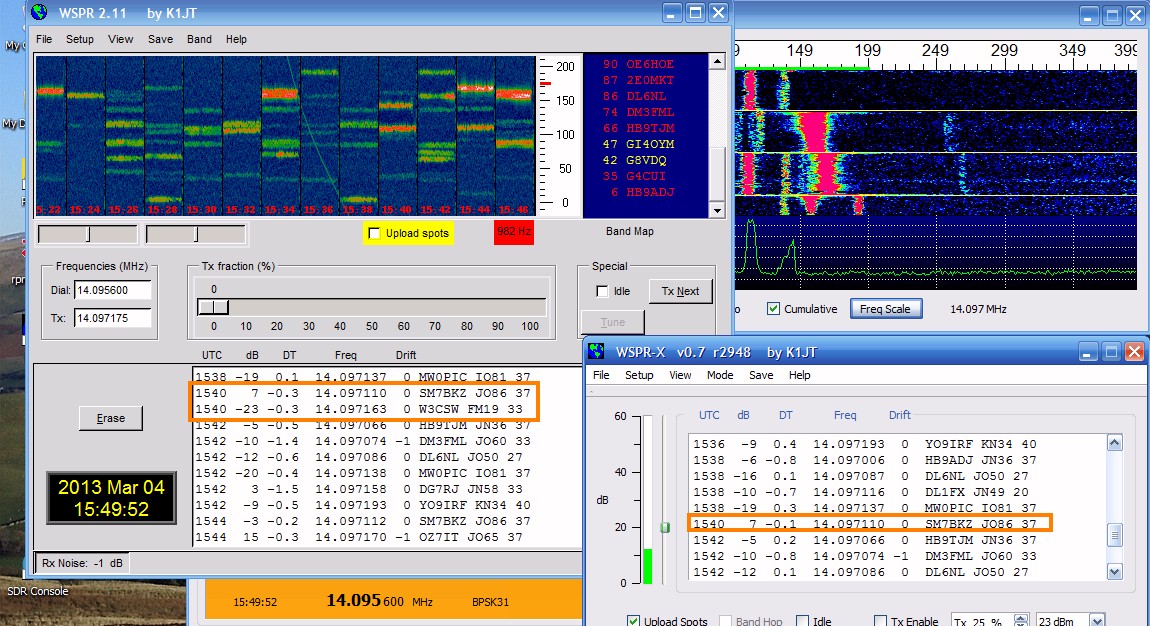
I decided to switch to the newer program as the older ‘classic’ version won’t work with VSPE virtual serial ports. But I had a sneaky feeling that WSPR-X was not decoding some of the traces it should. So I decided to run both programs in parallel, using the same sound card, the same radio, the same data source. Sure enough, WSPR-X is missing about 1 decode in 10 compared to WSPR 2.11. There is no apparent common factor between the signals it missed. They are not at the extremes of the frequency range, close to the limit of timing error nor especially faint.
Look at the screenshot above and look at the decodes for 1540. Classic WSPR has decoded two signals for this interval whilst WSPR-X has decoded only one. The signal from W3CSW was missed. Later signals from the same station were decoded. That is just one example. I only needed to wait a few minutes to find another.
I set the older WSPR to save .wav files and when these were processed by WSPR-X using its File Open option the result was the same as when the signals were received off-air. The same transmission was missed in each case.
WSPR-X seems a bit faster to run the decodes than WSPR. It prints them up on the screen before classic WSPR does. There are sometimes slight differences in the dB and DT figures, but not enough to worry about. Has anyone else noticed this?
Julian Moss, G4ILO, is a regular contributor to AmateurRadio.com and writes from Cumbria, England. Contact him at [email protected].
DX today, but not QRP
Turned on the K3’s afterburner to 80 Watts in order to work TX5K on Clipperton and TZ6BB in Mali.
This was the first time I have ever heard Mali on the air. My concern was to just get them in the log. He was very loud on 17 Meters. Afterwards, I did one of those “V-8 forehead slaps”, thinking that he may have been loud enough to work QRP.
I could have tried again at 5 Watts, but somehow it didn’t seem “quite cricket” to try and work them again on the same band so soon.
I heard TX5K again a bit later, and almost as loud on 12 Meters. I tried for a while to break the pileup, but my 5 Watts wasn’t up to it. I will have to try later this week. If conditions keep up like they were today, I should be able to snag them again on 17 Meters via QRP. Patience and persistence will be the key.
I also began working on my PigRig while monitoring the pileups for TX5K. I got all the parts inventoried (yes, everything was there) and got the first few resistors soldered in before I had to step out for a while. Serial #81 is slowly coming to life!
72 de Larry W2LJ
QRP – When you care to send the very least!
Larry Makoski, W2LJ, is a regular contributor to AmateurRadio.com and writes from New Jersey, USA. Contact him at [email protected].
Seems doing nothing is doing something…..
 |
| RFI Friday night |
1. I changed out the video cables and wrapped them with chokes as well.....did nothing.
2 Moved the monitors to other locations on the operating desk...that was loads of fun and it too did nothing.
3. Tried running the K3 just off battery power and.... nothing.
4. Ran the monitors from the 12 volt Astron power supply and again nothing.
5 Put snap on chokes on ALL cables coming out of PC and the ALL cables from each monitor.....NOTHING!
6. Even tried tin foil on the back of the monitor and grounding it...only made monitor look sci-fi.
7. Put 1:1 balun on the coax coming out of the K3 and still had problem.
8. Tried my Elecraft K2 (maybe just a K3 problem) found same issue with K2.
 |
| Sunday...not to bad |
9. Plugged monitors into separate AC outlets on different circuits and did not fix issue.
10. Ran a ground up to each monitor and video card on the PC (PC is already grounded) and nothing.
11.Repositioned screen to see if that made any difference I thought it did but turned out not to.
So that was how my Saturday was spent and from doing all the above I was able to find out a few things that I hope may ring a bell on how to solved the RFI isssue
1. As I move my hand closer to the monitor the RFI increases.
2. When the rig is on the dummy load the RFI is gone.....but so is everything else regarding signals.
Now it's Sunday and I have come to the understanding that I am going to just have to live with the problem. I know where it is coming from that sometimes that is half the battle! I am going to do some reading and thinking about the issue. I came into the shack to just roll the desk back up against the wall and tidy up the room. I then turned on the K3 along with the PC and for some reason the RFI is still there but not as much at all!!! Seems doing nothing is doing something!!
Mike Weir, VE9KK, is a regular contributor to AmateurRadio.com and writes from New Brunswick, Canada. Contact him at [email protected].
Ghosts on JT9-1
I spent a couple of hours working JT9-1 on 20m this afternoon. I only messed up once when I forgot where I was in the sequence. I could do with the software showing the outgoing message in the log as well.
Julian Moss, G4ILO, is a regular contributor to AmateurRadio.com and writes from Cumbria, England. Contact him at [email protected].
2013 QRP To The Field Pre-Announcement
From Paul NA5N on QRP-L:
“Head’s Up” – Initial announcement:
The 2013 QRP TO THE FIELD will be held on SATURDAY, APRIL 27, 2013
QRP TO THE FIELD is the annual “get out of the house and operate somewhere from the field” QRP event and contest. It is also the annual event for QRP-L, as this is where it is exclusively administered.
PROBLEMS:
1. Our solar maximum is very disappointing, making contacts more difficult
than should be expected at this point in the solar cycle.
2. #1 above discourages many QRPers from participating
3. #1 and #2 means fewer stations to work for our efforts.
4. We have new hams and new QRPers joining our ranks all the time, both
CW and SSB, with various skills wanting to get on the air.
PROPOSED CHANGES:
SOTA (Summits on the Air). Last year, we joined forces with SOTA for plenty of new stations to work and a new measure of fun (with those strange exchanges!). We will join forces again with SOTA for the increased on-the-air activity for us both. Most SOTA stations are QRP. SOTA does not have an organized annual event; QRPTTF can serve as their annual special event, as well as ours, for increased activity.
THEME: QRPTTF has always been unique by having a “theme” each year. Last year it was SOTA and summits. This was last year only. The different themes for QRPTTF will continue … though, I haven’t figured out YET what this year’s theme will be. Ideas welcome. I wasn’t expecting to live past the Mayan Calendar thingie!
CW vs. SSB: For years, I have been asked to add an SSB category to QRPTTF. There are few organized events for SSB QRPers, and many QRP-L members are SSB QRPers. We also have plenty of new QRP hams who are SSB only. Many SOTA stations also find SSB more convenient from those mountain tops.
Therefore, I have decided to add SSB to QRPTTF this year to those who prefer SSB or are no-code QRPers.
I NEED YOUR HELP.
It’s been years (like decades) since I’ve had an SSB QSO on HF. I know nothing about it, what frequencies are REALLY used, etc. I need someone who is willing to serve as the Contest Manager for the SSB side of QRPTTF and accept the summary sheets. Results can be published on your website, or of course, my existing site http://www.zianet.com/qrp/ Please contact me privately if you are interested.
Again, I see QRPTTF (and the Zombie Shuffle) as events for the QRP-L community and our new SOTA friends. I am always interested in your comments or thoughts on the above to bring more fun and enjoyment to the majority of us. Hopefully, adding SSB will be one.
There are yet no rules for this year’s QRPTTF (not much different than in the past). I will wait until I have a volunteer SSB Contest Manager before finalizing this year’s rules and get some feedback from SOTA on their preferred SSB protocols. But basically, get on the air, work stations, have fun. The rest are just details!
72, Paul NA5N
Socorro, NM
http://www.zianet.com/qrp/
72 de Larry W2LJ
QRP – When you care to send the very least!
Larry Makoski, W2LJ, is a regular contributor to AmateurRadio.com and writes from New Jersey, USA. Contact him at [email protected].
This Interference Seems to Follow Me Everywhere
 A few weeks ago, I was at my day job working diligently on something. I popped up the SotaWatch web site to see of anyone was out activating SOTA summits. Sure enough, Steve (AKA Goathiker, AKA WG0AT) was headed up Mt Herman for the day. (I have recently declared Mt Herman to be the Most Radioactive Summit in Colorado…at least for amateur radio.)
When I had a few minutes break, I went out to my amateur-radio equipped SUV in the parking lot to call Steve on 146.52 MHz. Steve came back to my call and we made a quick contact and he was in the log. Even though he was an easy line-of-sight path away, I had trouble copying him. Opening the squelch revealed that I had a large noisy signal sitting on 146.52 MHz. I didn’t think too much of it and assumed it was coming from the vast array of electronic equipment inside the building.
As I left work that day, I tuned to 146.52 MHz to see how quickly the interference disappeared as I drove away. I was surprised to find that the interference did not go away, it was covering a wide area. On my commute home, the noise was remarkably constant. This interference seems to follow me everywhere! Eventually, it sunk in that the interference was coming from my own vehicle. Huh, I didn’t have that problem before.
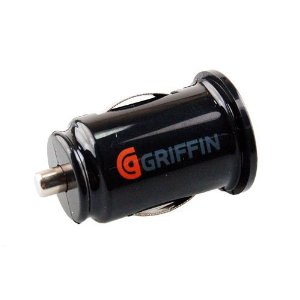
When I arrived home, I turned off the ignition and the noise was still there. I started disconnecting everything in sight, trying to make the noise disappear. Finally, I unplugged the cute little USB charger/adapter that was inserted into the cigarette lighter socket. Bingo, the interference disappeared. It seems that this little adapter has a switching circuit in it that is generating a large amount of hash. I have not investigated it fully, but it trashes out a substantial portion of the 2 Meter ham band.
It used to be my favorite adapter. Buyer beware.
73, Bob K0NR
Bob Witte, KØNR, is a regular contributor to AmateurRadio.com and writes from Colorado, USA. Contact him at [email protected].
 Ham Radio Deluxe |
 W5SWL Electronics |
 Ham Radio Prep |
 KB3IFH QSL Cards  Hip Ham Shirts  HamRadioAuctions HamRadioAuctions Reliance Antennas Reliance Antennas Enigma Shop Enigma Shop |  morseDX  Ni4L Antennas  R&L Electronics R&L Electronics antennas.us antennas.us QRV QRV |
- Matt W1MST, Managing Editor
